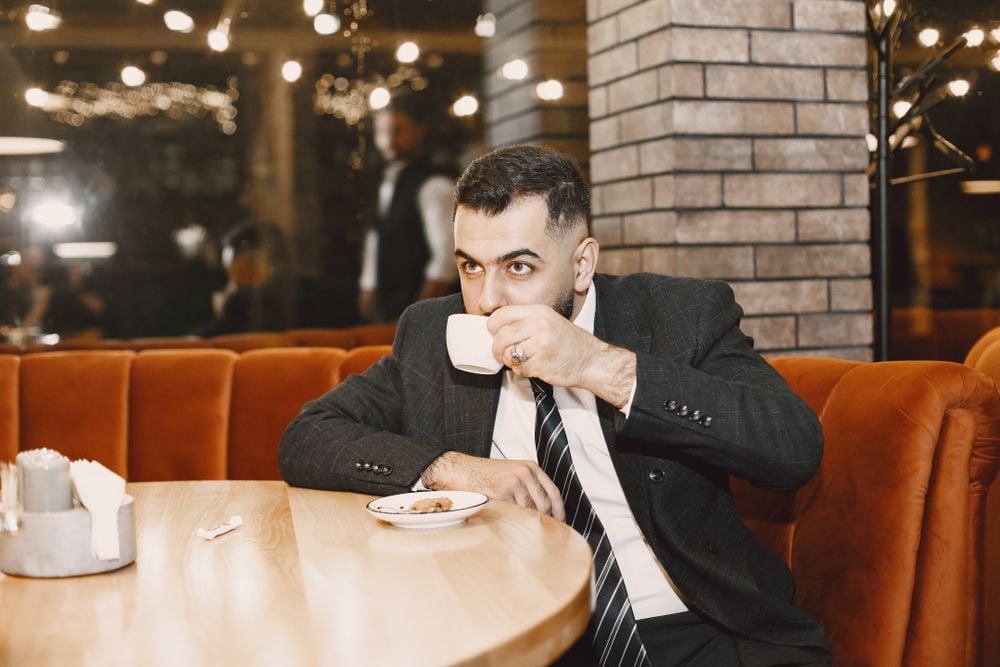
On the last ordinary morning of my marriage, I made my husband coffee in the mug that said BEST HUSBAND.
I’d bought that mug eleven years ago at a gas station in Ohio, on the drive home from our honeymoon. It was cheap white ceramic with red letters, the kind of thing you buy as a joke. Brad loved it. He drank out of it every single morning. When it chipped near the handle five years ago, I tried to throw it away, and he took it out of the trash and glued it.
That morning, I filled it with black coffee, no sugar, the way he liked it, and set it on the counter by the stove.
He came downstairs at seven-fifteen.
He was wearing his blue shirt. The good one. The light blue button-down I’d bought him for our tenth anniversary, the one I’d told him brought out his eyes. He hadn’t worn it in months.
And he was wearing cologne.
Brad doesn’t wear cologne. Not to work. Not on weekdays. He has one bottle, a gift from his mother years ago, and it sits on his dresser collecting dust. He wears it on our anniversary and at Christmas.
It was a Tuesday in late October.
“You look nice,” I said.
He didn’t look at me.
“Meeting downtown,” he said. “Big client. Might run late.”
He picked up the BEST HUSBAND mug. He looked at it for a second. Then he set it back down on the counter without drinking any.
He kissed me on the forehead. He’d done that every morning for eleven years. He picked up his keys and his briefcase and went out to the car.
I stood in the kitchen and looked at the full mug of coffee getting cold beside the stove.
My name is Emily Hale. I’m forty-one years old. I teach second grade at Westbrook Elementary. That Tuesday was a teacher planning day, so I was home.
Brad is forty-four. He’s an architect. For the last six months, I’d been watching my husband turn into a stranger.
It started in April.
He came home late one night, almost midnight, with a cut above his right eyebrow and a bruise spreading across his forehead. He said he’d slipped on the stairs at his office. He said he’d hit his head on the railing. He said he was fine.
The next week, his car was gone. He said he’d hit a deer on the highway and it was in the shop. It stayed in the shop for a month.
After that, everything changed.
He forgot things. Little things at first. Where he put his keys. Whether he’d already eaten lunch. My sister Megan’s husband’s name, even though he’d known Kevin for twelve years.
Then bigger things.
He forgot our anniversary in May. Our eleventh. He didn’t get a card or say anything. When I brought it up that night, he looked at me with this blank, frightened expression, like I’d spoken a foreign language. Then he said he’d been busy at work and he was sorry.
He forgot where he parked his car three times in one month. Once he called me from a parking garage downtown, almost crying, because he’d been walking up and down the levels for forty minutes.
He came home furious one night in July, saying he’d had to fire a young draftsman named Eric for leaking plans to a competitor. He paced the kitchen ranting about it. The next morning, at breakfast, he called Eric’s cell phone and asked him why he hadn’t come in to work.
I watched him do it. I thought he was lying. I thought it was some kind of game. I thought he was trying to cover for something.
He started working late. Two nights a week, then three. He’d come home after eleven smelling like a perfume I didn’t recognize. Something sweet. Vanilla and something else.
He started taking phone calls in the garage.
He stopped sleeping. I’d wake up at three in the morning and find his side of the bed empty, and he’d be sitting at the kitchen table in the dark, staring at nothing.
When I asked him what was wrong, he said, “Nothing, Em. I’m just tired.”
When I asked him if he was having an affair, he looked at me for a long time. Then he said, “No,” in a voice so flat and empty that I didn’t believe him for one second.
On October fourteenth, he told me he was working late again. He didn’t come home at all that night. I slept alone. I lay awake until almost three, and then I finally fell asleep, and when I woke up, he was in the shower like nothing had happened.
That was the night I decided I’d finally stopped loving him.
I didn’t say it out loud. I didn’t tell anybody, not even Megan. But I lay there in our bed that morning listening to the shower run and thought, very clearly, I’m done.
I was wrong about that. But it would take me a long time to find out why.
That Tuesday morning, after Brad left in his blue shirt and his cologne, I found his phone on the kitchen floor.
It must have fallen out of his jacket pocket when he leaned over to kiss me. It was face-down on the tile by the refrigerator.
I picked it up. I wasn’t going to look at it. I want to be honest. I’d never once gone through Brad’s phone in eleven years of marriage. Not once.
But as I picked it up, the screen lit up.
A text message.
From: Chloe
Room 412. Today’s the day. You promised you’d tell her.
I stood in my kitchen holding my husband’s phone.
Chloe Dawson. His assistant. She was thirty-two, with long auburn hair and a big laugh. I’d met her at his office Christmas party the year before. She’d hugged me. She’d told me Brad talked about me all the time.
Room 412.
Today’s the day.
You promised you’d tell her.
I knew where Brad’s company held all its client meetings. The Marriott downtown, across from his office building, the one with the rooftop restaurant.
I picked up my car keys.
I don’t remember the drive downtown. I remember parking in the garage across the street. I remember walking into the lobby of the Marriott in my jeans and my old gray cardigan, with my hair still in a messy ponytail from the morning. I remember getting into the elevator with a businessman holding a coffee, and pressing 4, and watching the numbers light up.
The fourth-floor hallway was long and quiet and carpeted in dark red.
I found Room 412 at the end of it.
I didn’t knock. I didn’t know what I’d say if I knocked.
I just stood outside the door with my hand flat against the wall beside it.
I could hear voices inside. Muffled through the wall. A man and a woman.
Brad’s voice. Low. I couldn’t make out the words.
Then Chloe’s voice, louder. Upset. Crying, maybe.
“You have to tell her, Brad. Today. You can’t keep doing this. You can’t keep lying to her. It’s killing you.”
Brad said something I couldn’t hear.
“She deserves to know,” Chloe said. “All of it. Before something happens.”
I stood there with my hand on the wall.
Then I heard Brad say, very clearly, “When I tell her, she’s going to leave me, Chloe. She’s going to want a divorce.”
I took my hand off the wall.
I walked back down the long red hallway to the elevator, and I went home.
When I got home, the house was quiet.
I walked into the kitchen. The BEST HUSBAND mug was still sitting by the stove, full of cold coffee.
I picked it up. I poured the coffee down the sink. I set the mug down beside the sink and stood there with both hands on the edge of the counter.
That’s when I noticed the pharmacy bag.
It was a small white paper bag from CVS, folded over at the top and stapled shut, sitting on the counter by the fruit bowl. I hadn’t seen it that morning. I was sure it hadn’t been there.
My name was written across it in black marker.
EMILY.
I stared at it. I didn’t open it. I didn’t touch it.
I was still standing there, staring at that bag, when the doorbell rang.
Three times.
Not twice. Not the quick, impatient double press Brad used when he forgot his keys.
Three slow, deliberate rings.
I walked down the hallway to the front door. I’d left it unlocked. It had swung open a few inches in the wind.
For a moment, I thought about not answering.
Then the woman outside said my name.
“Emily?”
My blood went cold.
I knew that voice. I’d heard it an hour earlier through the wall of a hotel room.
Chloe.
I pulled the door the rest of the way open.
She wasn’t wearing the big confident smile I remembered from the Christmas party. Her mascara was smeared down both cheeks. Her auburn hair was soaking wet. It had started raining on my drive home, and she wasn’t wearing a coat.
In her hand was a thick brown envelope.
She looked past me into the house.
“Is Brad here?”
“No,” I said.
She swallowed hard.
“Then we need to talk.”
I stepped aside. I don’t know why. I should have slammed the door in her face.
She came in without another word.
We stood in my kitchen. Neither of us spoke for several seconds. The rain was drumming on the window over the sink.
Then her eyes landed on the BEST HUSBAND mug sitting beside the sink.
“Did he drink it?” she said.
I went stiff.
“What?”
“The coffee,” Chloe said. “This morning. Did he drink it?”
My stomach tightened.
“How do you know about the coffee?”
Chloe looked at me with an expression I couldn’t read.
It took me a second to figure out what it was.
Fear.
Not guilt.
Fear.
“He texted me this morning,” she said. “At seven-twenty. From the car. He said the coffee smelled wrong. He said he didn’t drink it.” She looked at the mug. “He’s been scared that someone’s putting something in his food. In his drinks. For weeks.”
“Who?”
She didn’t answer that.
“I told him,” she whispered. “I already did what he asked me to do. Everything.”
“What did he ask you to do?”
She set the brown envelope down on my kitchen table.
“He asked me to help him leave you,” she said.
The words hit me harder than I expected. Even after the hotel. Even after hearing it through the wall.
I laughed once.
Not because anything was funny. Because sometimes your body doesn’t know what else to do with pain.
“Leave me,” I said.
“He said you’d want a divorce,” Chloe said. “Once he told you. He said he was going to tell you today.”
Today.
The word echoed in my head.
The hotel. The cologne. The blue shirt.
Everything suddenly looked different.
“He wasn’t going to a meeting,” I said.
“No.”
“He was meeting you.”
“Yes.”
“And he was going to come home tonight and tell me he wanted a divorce.”
Chloe looked at me for a long moment.
“That’s what I thought he meant,” she said slowly. “At first.”
Then she whispered, “But that’s not why I came here.”
I looked down at the envelope on the table.
“What is that?”
She didn’t answer right away.
Instead, she said, “Have you ever seen your husband’s medical records?”
A chill crawled up my arms.
“No.”
“Then you should.”
She pushed the envelope across the table toward me.
My fingers were shaking as I opened it.
The first page was a medical report from Brookside Neurology Clinic.
Brad’s name was at the top. Bradley Thomas Hale. DOB 03/14/1982.
The date was April thirteenth. Six months ago. The morning after he came home with the cut on his forehead.
I read the first few lines.
Patient presents following motor vehicle collision. Loss of consciousness at scene, approximately four minutes. Diagnosis: moderate traumatic brain injury with post-concussive syndrome. Anterograde and retrograde memory deficits noted.
I stopped reading.
I read it again.
I couldn’t understand what I was looking at.
“What is this?” I said.
Chloe sat down across from me at the kitchen table.
“Brad’s been seeing a specialist,” she said. “Dr. Abernathy at Brookside. For six months. Every other Thursday.”
“For what?”
She looked at me.
“Memory loss,” she said.
I stared at her.
“No.”
“He’s been forgetting things, Emily.”
“Everyone forgets things.”
“Not like this.”
She reached into her purse and pulled out another sheet of paper. A list, written in her own neat handwriting.
“He forgot your anniversary in May,” she said.
I didn’t say anything.
“He forgot where he parked his car three times in August. I had to come get him once.”
My mouth went dry.
“He forgot a meeting with the Hendersons and told them he got stuck in traffic.” She slid another page across. “He forgot he’d already fired Eric.”
I remembered that.
Brad coming home furious that night, pacing the kitchen, insisting Eric had betrayed him. Then the next morning at breakfast, picking up his phone and calling Eric to ask why he hadn’t come in.
I’d watched him. I’d thought he was lying. I’d thought he was playing some kind of game.
He hadn’t been lying.
He’d forgotten.
Chloe’s voice got softer.
“I know what you heard,” she said. “At the hotel. I saw you. In the hallway. Through the peephole. When you left.”
I looked up sharply.
“I know what you think,” she said. “And some of it’s true.”
“You slept with my husband,” I said.
Her eyes filled with tears.
“Yes,” she said.
I’d known. Of course I’d known. I’d known since the perfume. Since the late nights. Since October fourteenth.
But hearing her say it in my kitchen was different.
“How long?” I said.
She looked down at her hands on the table.
“It started in February,” she said. “At a conference in Chicago. It went on for about six weeks.” She swallowed. “He ended it. In March. He said he couldn’t do it to you. He said he was going to tell you everything.”
“He didn’t.”
“No,” Chloe said. “Because then the accident happened.”
“What accident?” I said. “He slipped on the stairs at work. He told me. He hit his head on the railing.”
Chloe shook her head slowly.
“He didn’t slip on any stairs, Emily,” she said. “He crashed his car. On Route 9. On April twelfth.”
I couldn’t breathe.
“He told me he hit a deer,” I said. “The car was in the shop.”
“The car was totaled,” Chloe said. “It went off the road into a ditch. It flipped over. He was unconscious for four minutes. I know because I was the one who called 911.”
I stared at her across my kitchen table.
“You were there.”
“Yes.”
“Why?”
She took a breath.
“That’s the rest of what’s in the envelope,” she said. “And he made me promise never to tell you.”
She pulled out one last piece of paper.
It was a handwritten note. On a page torn from a yellow legal pad.
Brad’s handwriting. I’d have recognized it anywhere. Tall, narrow capital letters, the way architects write.
If Emily asks what happened, don’t tell her about the first envelope. It’s not safe for her to know.
I looked up at Chloe.
“What first envelope?”
She went pale.
“I don’t know exactly what was in it,” she said.
“You just said you did what he asked.”
“I did.”
“What did you do, Chloe?”
Her voice dropped to a whisper.
“I mailed something,” she said. “Two weeks ago. A sealed envelope. He gave it to me and told me to mail it from the post office across town, not near the office. He made me promise not to open it.”
“Mailed it to who?”
“A lawyer,” she said. “Somebody named Levin. Downtown. That’s all I know.”
Chloe looked toward the open front door. Then toward the stairs. She was shaking.
“I wasn’t supposed to come here,” she said.
“Why not?”
“Because Brad told me never to come to this house,” she said. “Ever.”
“Why?”
She looked straight at me.
“Because he said if I ever came here,” she said, “you’d be in danger.”
The room seemed to tilt.
I thought about the phone on the kitchen floor that morning. The text message. You promised you’d tell her.
I thought about the pharmacy bag.
My name, written across it in black marker.
I got up and grabbed the bag off the counter. I tore it open at the staples.
Inside was a small orange prescription bottle.
My name was printed on the label. HALE, EMILY. Our address. A prescription number. Take one tablet by mouth daily.
I’d never been prescribed anything in my life. Not in years. Not even an antibiotic.
I handed it to Chloe.
She read the label. Her face changed.
“What?” I said.
She didn’t answer.
“Chloe. What is it?”
She turned the bottle over in her fingers, slowly.
“This isn’t from his doctor,” she said. “Brad’s medicine comes from Brookside. In a white bottle. This is from a pharmacy that closed down two years ago.” She held it up to the light from the window. “And look.”
The label was peeling at the corner.
Underneath my name, there was a second label. An older one. Stuck on first, and then covered up.
A different name.
HALE, BRADLEY.
A different prescription number. The name of a clinic. Brookside Neurology.
And under that, handwritten in pen on a little white appointment sticker:
Follow-up: Wed. 10/30, 9:00 a.m.
Tomorrow.
“Emily,” Chloe whispered. “This wasn’t bought for you.”
“Then why is my name on it?”
She stared down at the bottle.
“Because somebody wanted you to think it was,” she said. “Somebody wanted you to open that bag and find pills with your name on them that you don’t remember getting.”
“Why would anybody want that?”
Chloe looked at me with wide, frightened eyes.
Before she could answer, we heard a noise upstairs.
A floorboard creaked.
We both froze.
Then another.
Then slow footsteps. On the staircase. Coming down.
Chloe grabbed my arm.
“Is there anybody else in the house?” she whispered.
“No,” I whispered back.
The footsteps stopped.
We waited. I could hear my own heartbeat. I could hear the rain on the window.
Nothing.
Then Brad’s voice came from upstairs.
“Emily?”
My heart slammed against my ribs.
Chloe’s face went white.
“He’s here,” she said.
“How?” I whispered.
She shook her head. “I left him at the hotel. Forty minutes ago. He said he was going to drive around and think.”
Brad called again from the top of the stairs.
“Emily, don’t let her talk to you. Please.”
Then Brad appeared at the top of the staircase.
His blue shirt was soaked through with rain. His hair was wet and messy. There was mud on his shoes.
And his face was completely different from the man who’d kissed my forehead three hours earlier.
He looked terrified.
Not angry.
Terrified.
He stared down at Chloe.
“You weren’t supposed to come here,” he said.
Chloe stood up.
“I had to,” she said. “Brad, I had to. She was standing outside the hotel room. She heard us. She thinks you’re leaving her.”
Brad’s eyes moved to the orange bottle in my hand. Then to the brown envelope on the table. Then to the medical report spread out beside it.
His face collapsed.
“Oh, God,” he said.
I took a step toward the stairs.
“What have you done?” I said.
He didn’t answer.
“Brad. How did you get in the house?”
“Through the back door,” he said. “I came in the back way. I didn’t want anybody to see my car.” He gripped the banister. “Em, I was trying to protect you.”
“From what?”
His eyes filled with tears.
“From me,” he said.
And then he said something that made every betrayal I’d ever imagined suddenly feel small.
“I don’t remember what I did to you, Emily.”
The house went silent.
I stared up at my husband.
He looked down at me like a stranger.
“I don’t remember most of this year,” he said. “I wake up some mornings and I don’t know what day it is. I find notes in my pocket in my own handwriting that I don’t remember writing. I find receipts for places I don’t remember going.” He was crying now. “I don’t remember half of what I’ve done to you. But I know it was bad. I can see it on your face.”
He took a breath.
“But someone else remembers,” he whispered. “Someone else remembers everything.”
From somewhere upstairs, a phone started ringing.
Not Brad’s phone. Brad’s phone was in my cardigan pocket.
Not mine. Mine was on the kitchen counter.
A third phone.
And it was ringing from inside our bedroom.
“Don’t answer it,” Chloe whispered.
But I was already walking toward the stairs.
I was halfway up when Chloe grabbed my wrist from behind.
“Emily, don’t.”
Her fingers were ice cold.
I pulled away.
“If there’s a phone in my bedroom,” I said, “I have a right to know why.”
Brad stepped aside on the landing to let me pass.
He didn’t try to stop me.
That frightened me more than if he had.
I reached the bedroom door.
The ringing had stopped.
For three seconds, there was complete silence.
Then the phone rang again. One sharp buzz. Then another.
I pushed the door open.
Our bedroom looked exactly the way I’d left it that morning. Brad’s side of the bed was made. My novel was on the nightstand with a bookmark sticking out. The curtains were half open, and the rain was running down the window.
Nothing looked wrong.
Except for the phone.
It was sitting under Brad’s pillow. Just the corner of it sticking out.
A small black phone I’d never seen before in my life.
I picked it up.
There was no wallpaper. No case. No contacts.
Just one notification on the screen.
1 new voicemail.
My thumb hovered over it.
Then I pressed play.
At first, there was only static. A low crackling hiss.
Then my own voice filled the room.
“Brad, if you’re listening to this, something has gone very wrong.”
I nearly dropped the phone.
It was my voice. Exactly my voice. The way I talk when I’m frightened, a little high and fast.
Chloe was behind me in the doorway.
“What is it?”
I held up a hand.
My recorded voice kept going.
“I don’t know if you’ll remember making this recording. That’s the problem.”
I turned and looked at Brad. He was standing in the doorway next to Chloe now. His face had gone completely gray.
“Do not trust anyone who tells you the accident was your fault.”
My heart stopped.
“And whatever happens, don’t let them take you back to the clinic.”
The recording ended.
Nobody moved.
“What clinic?” I said to Brad.
He stared at the phone in my hand.
“I don’t know,” he said.
“You said you don’t remember what you did to me.”
“I don’t.”
“Then why does my voice know about a clinic? I never recorded that. Brad, I’ve never said those words in my life.”
He shook his head slowly. “I don’t know, Em. I don’t know.”
“Play it again,” Chloe said quietly.
I did.
The same voice. My voice. The same warning.
But this time, I heard something I’d missed.
At the very end, under the static, there was another sound. A door closing. And then a man’s voice, very faint.
“She’s awake.”
Chloe’s eyes went wide.
“Did you hear that?”
I nodded.
Brad suddenly reached out and grabbed for the phone.
“Give me that,” he said.
I pulled it away from him.
“Why?”
“I need to destroy it.”
“Why?”
“Because whoever made that recording knows where we live,” Brad said. “They were in our bedroom, Emily. They put it under my pillow.”
“That doesn’t answer my question.”
He looked at me.
For the first time that whole terrible morning, I saw real panic in his eyes. Not guilt. Not shame. Panic.
“Because that’s not your voice,” he said. “You never said that. You’d never say the clinic. You don’t even know about the clinic.”
“Then whose voice is it?”
“I don’t know,” Brad said. “But I know who wants me to stop going to it.”
Then I noticed something else.
A tiny red light was blinking on the top edge of the black phone.
Blinking. On and off.
Recording.
Somebody was recording us. Right now.
I held it up.
“Who’s listening?” I said.
Brad’s face changed.
“Put it down.”
“No.”
“Emily, put it down.”
“Why?”
“Because if they’re listening,” Brad said, “they know we’re talking about them.”
“Who?”
He looked toward the bedroom window.
“That’s what I’ve been trying to remember for six months,” he said.
A car engine started outside.
We all froze.
I ran to the window.
There was a dark sedan parked across the street, in front of the Petersons’ house. An old one. Dark green, boxy, with tinted windows and a dent in the front fender. The engine was running. The windshield wipers were going.
I’d seen that car before. I was sure of it. In my rearview mirror. Parked outside Westbrook Elementary. At the end of the grocery store parking lot.
As I watched, it pulled away from the curb and drove off slowly down our street.
Chloe whispered, “He knows.”
I turned around.
“Who, Chloe?”
She opened the brown envelope one more time.
There was one last photograph inside. A glossy four-by-six print.
She handed it to me.
I looked down at it.
It was a picture of me.
Asleep.
In this bed. In this bedroom. Lying on my side with my hand under my cheek and my hair across the pillow.
It had been taken from the corner of the room near the closet.
From about six feet away.
My blood ran cold.
“When was this taken?”
Chloe shook her head.
“Brad found it in his briefcase last week. He doesn’t know how it got there.”
There was a little orange timestamp printed in the bottom corner. The kind old digital cameras used to put on photos.
10/14 2:13 AM.
I knew that date.
October fourteenth. The night Brad told me he was working late. The night he never came home. The night I slept alone and lay awake until almost three.
The night I decided I’d stopped loving him.
I’d fallen asleep around two.
At two-thirteen, someone had been standing in my bedroom.
I turned the photograph over.
There were four words written on the back, in black ink.
She remembers everything now.
My hands started shaking so hard the picture rattled.
“Who wrote this?”
Brad took it from me. He stared at the handwriting.
Tall, narrow capital letters. The way architects write.
“I did,” he whispered.
I stared at him.
“You?”
He nodded slowly.
“That’s my handwriting,” he said. “But I didn’t write it. I wasn’t here. I was at the office that night with Chloe and the lawyer until four in the morning. I know I wasn’t here.” He looked at me. His hand was shaking. “But that’s my handwriting, Em.”
Then the bedroom door slammed shut behind us.
All three of us jumped.
It was the wind. I’d left the front door open downstairs, and the wind had blown straight up the stairwell. That was all.
But my heart was pounding so hard I couldn’t hear anything else.
The black phone vibrated in my hand.
A new message appeared on the screen.
No number. No name.
Just six words.
Ask Chloe what happened that night.
I turned slowly toward her.
She was crying.
“Chloe?” I said.
She didn’t answer.
“What happened that night? April twelfth. What happened?”
She wiped her eyes with the back of her hand.
“I wasn’t going to tell you,” she said. “I promised him.”
“Tell me now.”
She looked at Brad. Then back at me.
“The night of the accident,” she said. Her voice broke. “I wasn’t just the one who called 911.”
She took a breath.
“I was in the car,” she said.
Brad took a step backward. He hit the doorframe.
“No,” he said.
“Yes.”
“You told me you weren’t there. You told me you were driving behind me. You told me you just saw it happen.”
“I lied,” Chloe said.
“Why?” I said.
Chloe looked at me with tears running down her face.
“Because I was in the passenger seat,” she said. “Because I was holding the documents in my lap. And because I saw who forced us off the road, and Brad doesn’t remember, and I didn’t want him to have to know.”
“Who?” I said.
She looked toward the bedroom window.
“Someone was following us,” she said. “For miles. In a green car. They came up beside us on Route 9 and turned the wheel into us. On purpose.”
“Who, Chloe?”
She hesitated.
Then she said a name.
And the moment I heard it, I understood why Brad had looked so terrified on that staircase.
It was the name of someone who’d been dead for eight years.
My father.
My father’s name hung in the bedroom like a ghost.
“That’s impossible,” I whispered.
Chloe shook her head.
“I know what you’re thinking.”
“My father died eight years ago,” I said. “Of a heart attack. In his garden. I was there. I held his hand in the ambulance.”
“I know.”
“Then why did you say his name?”
“Because that’s what Brad said,” Chloe said. “That night. Lying in the ditch. Over and over. Before the ambulance came. It was Emily’s dad. It was Emily’s dad’s car.”
I turned toward my husband.
He was staring at the floor.
“Brad?”
He finally looked up at me.
“I thought your father was following us,” he said quietly. “I remember that much. It’s one of the only things I remember about that night. I thought I saw his car in the rearview mirror.”
“Why?”
“Because it was his car, Em,” Brad said. “Or one exactly like it. The old green Buick.”
My heart pounded.
My father had driven a green 1994 Buick LeSabre for twenty years. He’d loved that car. He’d kept it spotless. He used to wash it every Sunday in the driveway with a bucket and a sponge, singing Johnny Cash.
When Brad and I first started dating, the very first time he came to my parents’ house for dinner, he saw that car in the driveway and stopped dead.
“My dad had that exact car,” he’d said. “Same year. Same color. Same dent in the fender. My brother and I used to sit on the hood and…”
Then he’d stopped talking. And changed the subject.
I never knew what he meant.
“The person following you,” I said slowly, “wasn’t my father.”
“No,” Chloe said.
“Then who was it?”
Chloe looked at Brad.
“His brother,” she said.
I stared at her.
“Brad doesn’t have a brother,” I said.
Brad sat down slowly on the edge of our bed.
He put his face in his hands.
“I did,” he said.
The room went completely silent.
“His name was Daniel,” Brad said into his hands. “We were twins.”
I’d been married to this man for eleven years. I’d met his mother. I’d been to his father’s funeral last year. I’d heard every story about his childhood a hundred times.
I had never once heard the name Daniel.
“Why have you never told me?” I whispered.
Brad lowered his hands.
“Because Daniel died when we were seventeen,” he said. “That’s what my parents told me. That’s what I’ve believed for twenty-seven years.”
Chloe reached into the envelope one more time. She took out an old, faded photograph and laid it on the bed between us.
Two teenage boys stood in a driveway next to a green Buick LeSabre with a dent in the front fender. They were both grinning. Both wearing jeans and white T-shirts. Arms slung over each other’s shoulders.
One of them was Brad. Seventeen years old, with a bad haircut and braces.
The other one had the same face.
Exactly the same face. The same eyes. The same jaw. The same crooked smile.
But something about it made my stomach tighten. Something harder around the eyes.
“He didn’t die,” Chloe said quietly.
Brad looked up at her.
“That’s what we were told,” he said.
“No,” Chloe said. “He disappeared. Your father told everyone he died because he didn’t want to admit what really happened.”
“What really happened?” I said.
Brad shook his head slowly.
“There was a fight,” he said. “The summer we were seventeen. Daniel and my dad. In the garage. I don’t know what it was about. I just heard yelling. Then Daniel took the Buick and drove off. And three days later, my dad sat me and my mom down at the kitchen table and said Daniel had been killed in a car accident in Pennsylvania. He said there’d been a private funeral. He said we were never to talk about Daniel again.” Brad’s voice cracked. “So I didn’t. Not for twenty-seven years. Not even to you.”
“And he came back?” I said.
“Six months ago,” Chloe said. “Right after Brad’s father died.”
Then Chloe told me the rest.
She told it slowly, sitting on the edge of our bed with the rain running down the windows, while Brad sat with his head in his hands and nodded at the parts he remembered.
When Brad’s father died last fall, his will left everything to Brad. The house. The savings. Hale Lumber, the family business, which had been sold a few years earlier for a lot of money.
Three months after the funeral, in February, a lawyer contacted Brad. He represented someone named Daniel Hale. He had a second will. A handwritten one, dated two years before Brad’s father died, leaving half of everything to Daniel.
It was a forgery. Brad was almost sure. But he couldn’t prove it.
Then, going through his father’s things in March, Brad found the proof. A box of letters in the attic. Letters Daniel had written to their father over twenty-seven years. Asking for money. Threatening him. And a signed statement their father had made to his own lawyer, years ago, saying he’d never write Daniel into a will no matter what, and explaining why.
The documents.
“He was going to give them to the police,” Chloe said. “On April twelfth. That’s where we were going. To meet a detective. I was holding the box in my lap.”
And Daniel had followed them. In the old green Buick he’d driven away in at seventeen and kept for twenty-seven years. And on a dark curve on Route 9, he’d pulled up beside them and turned his wheel into theirs.
“I was trapped in the car,” Chloe said. “Brad was unconscious. I was screaming. And Daniel walked down into the ditch in the rain and looked at us through the broken window. And he took the box of documents off my lap. And he walked away.”
“Why didn’t you tell the police?”
“I did,” Chloe said. “I told them everything. But Brad didn’t remember any of it. And I was having an affair with him. And there was no other car at the scene. And no documents.” She shook her head. “They thought I was lying. To cover for Brad crashing the car. They wrote it up as a single-car accident.”
“But the documents,” I said. “The first envelope.”
“Copies,” Brad said quietly. “I’d made copies. In March. And then I forgot I’d made them.” He almost laughed. “For six months, I forgot. Then two weeks ago, I found them. In my own desk drawer at the office, under a stack of blueprints. With a note in my handwriting on top. DON’T LOSE THESE AGAIN.”
“So he had Chloe mail them,” I said, “to a lawyer.”
“Mr. Levin,” Brad said. “Our family’s old lawyer. For safekeeping. And then Daniel found out.”
Everything suddenly connected.
The black phone, planted under Brad’s pillow so we’d think someone could get inside the house anytime they wanted. Because someone could.
The photograph of me asleep at two-thirteen in the morning, so I’d feel watched in my own bed.
The voicemail in my voice. Brad said Daniel had always been good at voices when they were kids. He’d imitate their teachers, their father, the guy on the news. These days, Chloe said, you could fake anybody’s voice with a computer and a few minutes of recording. And I’d left plenty of voicemails on Brad’s old phone, which had gone missing from the wrecked car.
Don’t let them take you back to the clinic. Because the clinic was helping Brad remember. And if Brad remembered April twelfth, Daniel was finished.
The note on the back of the photograph. She remembers everything now. In Brad’s handwriting, because identical twins often have nearly identical handwriting. Daniel had spent twenty-seven years copying Brad’s. He’d forged their father’s will in the same hand.
And the pharmacy bottle with my name on it. An old empty bottle of Brad’s medicine, relabeled, filled with something, and left on my counter. So I’d open it and find pills I didn’t remember getting. So I’d start to wonder if I was the one losing my mind.
Somebody wanted the Hale family so frightened and confused that nobody would trust anything they remembered.
I looked at Brad.
“So you weren’t planning to leave me?” I said.
He shook his head slowly.
“No.”
“At the hotel. You told Chloe I’d want a divorce.”
“Because I was going to tell you everything, Em,” he said. “Today. About the affair. About the accident. About Daniel. About lying to you for six months. And I thought, once you heard all of it, you’d leave me.” His voice broke. “I wouldn’t have blamed you.”
I looked at Chloe.
She looked down at her hands.
“I’ve been helping him,” she said. “Since the accident. Driving him to the clinic. Keeping track of his appointments. Keeping notes on what he forgets. Covering for him at work so they wouldn’t fire him.”
“For how long?” I said.
“Six months,” she said. “Too long. I should have come to you in April.”
A painful silence followed.
I still couldn’t forget the vanilla perfume on his shirts. The late nights. The phone calls in the garage. The way he’d said No when I asked if he was having an affair, in that flat empty voice.
Even with an explanation, the betrayal had still happened. In February, before any accident, before any brother, my husband had slept with another woman in a hotel in Chicago.
Nothing Daniel had done could change that.
“You lied to me,” I told Brad.
“I know.”
“You cheated on me. Before any of this.”
“I know.”
“You made me feel crazy. For six months. You let me think I was imagining things.”
“I know.”
“You let me lie awake on October fourteenth thinking you didn’t love me anymore.”
Tears filled his eyes.
“I was terrified, Em,” he said.
“So was I,” I said.
He nodded.
“I should have trusted you,” he said. “In February. In April. Every single day since. I should have told you everything.”
“Yes,” I said.
“I am so sorry.”
For the first time in months, I saw my husband without the excuses.
Not the charming man in the blue shirt. Not the man in his mother’s cologne. Not the stranger at the kitchen table at three in the morning.
Just Brad.
Broken. Frightened. And finally honest.
I didn’t forgive him right then. I want to be clear about that.
Forgiveness isn’t a switch you flip.
It’s a door.
And that day, sitting on the edge of our bed with the rain coming down, I wasn’t ready to open it.
But I was ready to stop running from the truth.
I called the police that afternoon.
Not the local station that had written off the accident in April. I called the state police. I asked for a detective. A woman named Detective Paula Grant came to our house at five o’clock. She sat at our kitchen table with a notepad for three hours.
She listened to the voicemail in my voice. She looked at the photograph of me asleep. She looked at the black phone, still blinking its red light. She looked at the pharmacy bottle. She read Brad’s medical records and Chloe’s notes.
She called Mr. Levin, the lawyer, who confirmed he had the envelope Chloe mailed. Unopened. In his safe.
She listened to Chloe tell the whole story of April twelfth again, start to finish.
“Did the officers who responded in April ever test the paint on Mr. Hale’s car?” Detective Grant asked. “For a second vehicle?”
Chloe shook her head.
Detective Grant wrote something down and underlined it twice.
They found Daniel two days later.
He’d been living in a rented farmhouse forty minutes outside the city, under a different name. The green Buick was in the barn. There was dark blue paint scraped along the passenger side, from Brad’s car, from Route 9.
Inside the farmhouse, they found the original box of documents Daniel had taken from Chloe’s lap in April. He’d never destroyed them. Detective Grant said she thought maybe he’d wanted to keep the proof of what his father thought of him.
They also found photographs. Dozens of them. Of our house. Of Brad’s office. Of me walking into Westbrook Elementary. Of me sleeping.
There was a key to our back door on a hook by his front door.
And on his computer, they found the program he’d used to fake my voice.
Detective Grant called us that evening.
“He’s being charged,” she said. “Assault with a vehicle. Burglary. Stalking. Forgery. Attempted fraud. And we’re looking at what was in that pill bottle.”
“What was in it?” I asked.
“Sugar,” she said. “Plain sugar pills. He wanted you to think you were being drugged. He wanted both of you to doubt yourselves.” She paused. “Mrs. Hale, I’ve been doing this for nineteen years. I’ve seen men try to steal money a lot of ways. I’ve never seen one try to do it by making people believe they were losing their minds.”
“And the coffee?” I said. “Brad thought the coffee tasted wrong.”
“We tested the mug,” she said. “It was just coffee.”
I looked across the kitchen at Brad. He was sitting at the table with his head in his hands.
“He was so scared,” I said, “he couldn’t even trust his own coffee.”
“That,” Detective Grant said quietly, “was the whole point.”
Our marriage didn’t magically go back to normal after that. I want to be honest about that too.
For months, Brad kept going to Dr. Abernathy at Brookside, every other Thursday, for his memory. Slowly, very slowly, the fog started to lift. He stopped losing his car. He started remembering names. One morning in December, out of nowhere, at breakfast, he remembered April twelfth. The green car in the rearview mirror. His brother’s face through the driver’s window. He sat at the kitchen table and cried for an hour.
I drove him to his appointments now. Not Chloe.
And I started going to a therapist of my own. A kind older woman named Dr. Weiss, in an office above a bakery.
Not because I was broken.
Because I needed to understand what had happened to me. To sort out what I’d actually seen, what I’d only been told, and what someone had tried to make me believe.
We started couples counseling in January.
The affair came up in the very first session. It was supposed to. It came up a lot of times after that. There were sessions where I yelled. Sessions where Brad didn’t say anything for fifty minutes. A session where I told him, in front of Dr. Weiss, that I didn’t know if I’d ever trust him again, and he said, “I know. I’ll wait anyway.”
We learned to talk again.
Slowly. Honestly. Without secrets.
Chloe quit her job at Brad’s firm in November. She moved to Denver to be near her sister.
Before she left, she came by the house one more time. She stood on the front porch. She didn’t come inside.
“I’m sorry,” she said. “For Chicago. For February. For all of it. You didn’t deserve any of it.”
“No,” I said. “I didn’t.”
“I’m not asking you to forgive me.”
“Good,” I said. “Because I don’t know if I can.”
She nodded.
“For what it’s worth,” she said, “he talked about you every day. Even when he couldn’t remember what day it was, he remembered you.”
Then she walked down the porch steps to her car.
I watched her drive away. I didn’t wave. But I didn’t slam the door either.
In March, Brad’s mother came to visit.
She sat at our kitchen table, a small gray-haired woman of seventy-six, and held her coffee cup in both hands. Brad had told her everything. About Daniel. About the farmhouse. About Route 9.
“Your father lied to us,” she said to Brad. “For twenty-seven years. He told me Daniel was dead because he couldn’t stand to tell me our son was a stranger.” She shook her head. “I believed him. I mourned a boy who was alive the whole time. And he grew up so angry.”
“It’s not your fault, Mom,” Brad said.
“No,” his mother said. “But I wish someone had told me the truth. Even if it was terrible. I’d rather have known.”
I looked at Brad across the table.
He was looking at me.
One morning, almost a year after that rainy Tuesday in October, I came downstairs and found Brad already in the kitchen, making coffee.
He’d been up early. The sun was coming through the window over the sink.
He held out a mug.
It wasn’t the BEST HUSBAND mug. That one was gone. He’d thrown it away himself, in the spring, after one of our harder sessions with Dr. Weiss. He hadn’t asked me. He’d just come home one evening and said, “I threw out the mug,” and I’d said, “Okay,” and that was all.
Instead, he’d bought two plain white mugs. Ordinary ones from the grocery store, without words on them.
He handed one to me.
“I made yours first,” he said.
I took it. It was exactly right. A little milk. One sugar.
I smiled.
“You remembered,” I said.
He laughed softly.
“I remember everything now,” he said.
I looked at him over the edge of my mug.
“Even the hard things?”
“Especially those,” he said.
He reached across the counter and took my hand.
“I don’t want to forget any of it, Em,” he said. “Not one day. Not even the bad ones. I lost six months already. I’m not giving up any more.”
I squeezed his fingers.
On the refrigerator, under a magnet shaped like an apple from one of my second graders, there was a new photograph.
The two of us. Standing in our backyard in September, with the late afternoon sun behind us. Megan had taken it at her birthday barbecue. Brad had his arm around my shoulders. I was laughing at something he’d said.
There was nothing hidden in it. Nobody watching from across the street. No one in the corner of the room.
Just us.
I looked at Brad.
“Are you happy?” I asked him.
He thought about it for a long moment. He didn’t answer right away. He’d stopped answering things right away. Dr. Weiss said that was a good sign.
“I’m grateful,” he said finally.
“For what?”
“That I got another chance,” he said. “That you gave me one. When I didn’t deserve it.”
I smiled.
“And what about me?” I said.
He looked straight into my eyes.
“That you gave yourself one too,” he said.
That was when I understood something.
The ending I’d been waiting for wasn’t the day Brad apologized. It wasn’t the day Detective Grant called to say they’d found Daniel. It wasn’t even the day the whole truth finally came out, sitting on our bed in the rain.
It was waking up one ordinary Tuesday morning and realizing I wasn’t afraid anymore of what I might find out.
Not afraid of the phone on the kitchen floor. Not afraid of a bag on the counter with my name on it. Not afraid of the dark green car across the street.
I’d survived the lies. I’d survived the fear. And I’d survived the version of myself who had lain awake on October fourteenth believing she wasn’t worth being loved honestly.
Brad lifted his plain white mug.
“To starting over,” he said.
I lifted mine.
“To starting over,” I said.
Our mugs touched with a small, ordinary clink in the morning sunshine.
For once, that sound didn’t remind me of betrayal.
It sounded like a beginning.

Adrian Hawthorne is a celebrated author and dedicated archivist who finds inspiration in the hidden stories of the past. Educated at Oxford, he now works at the National Archives, where preserving history fuels his evocative writing. Balancing archival precision with creative storytelling, Adrian founded the Hawthorne Institute of Literary Arts to mentor emerging writers and honor the timeless art of narrative.