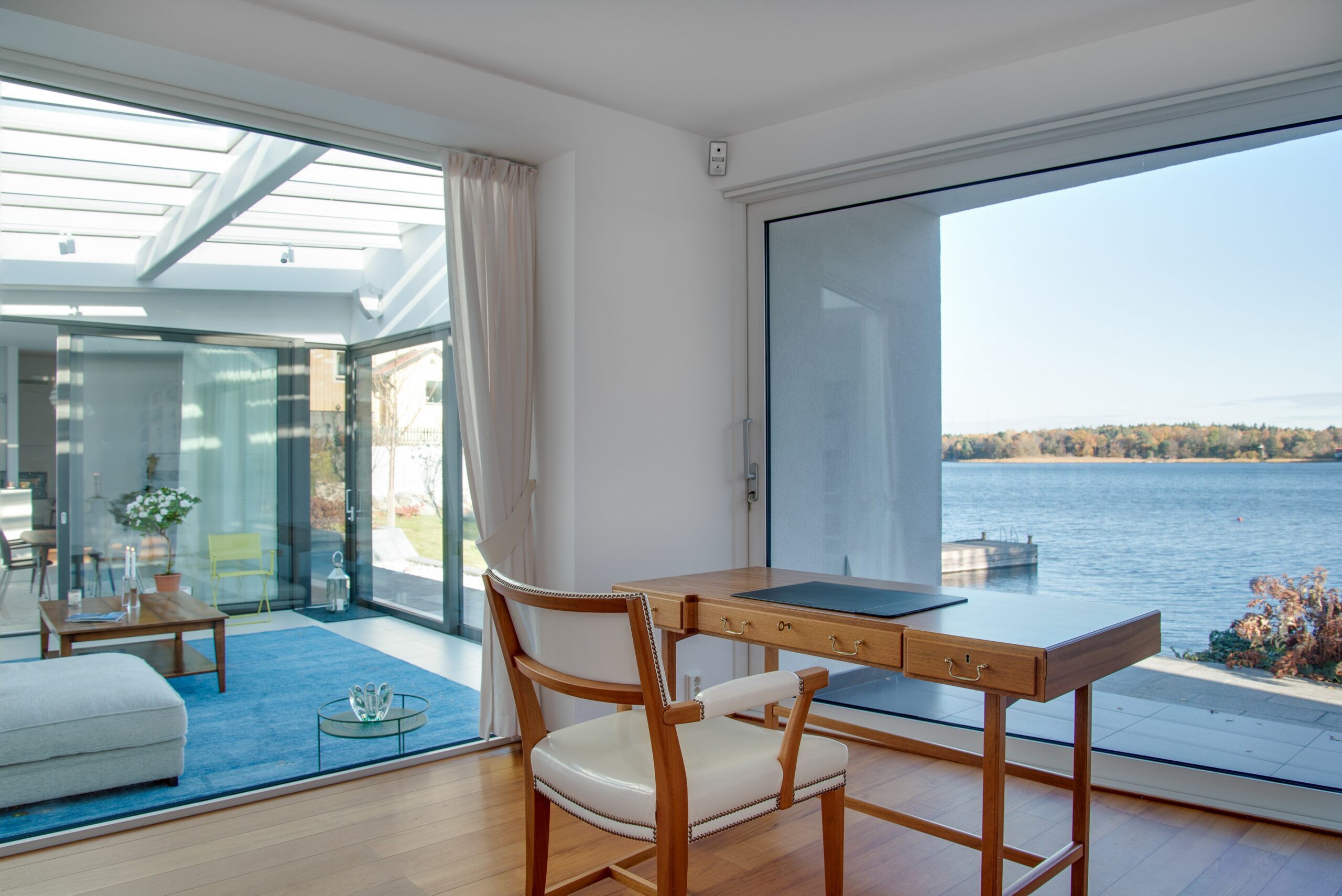
“You go down there, what, once a month?” he said. “It’s just sitting there.”
I set my cup down on its saucer.
“No.”
That was all. One word.
I’ve always believed that a no with a speech attached is an invitation to negotiate. And I had nothing to negotiate.
Colby’s smile stayed on his face a second too long, like a porch light somebody forgot to turn off.
Darcel put down her fork.
“Some people have more houses than kindness,” she said.
I didn’t look at her. I looked at Colby.
“I’d rather you didn’t ask me again in front of Davey.”
He laughed like I’d made a joke.
At the door, buckling Davey into his car seat, he looked at me over the roof of the car.
“You’ll change your mind,” he said. “Everybody does.”
Karina didn’t look at me at all.
I stood in my driveway until their taillights disappeared. Then I went inside and washed every dish by hand, slowly. The way you do when you need your hands busy so your mouth won’t be.
After that brunch, my daughter’s calls changed.
For years, Karina had called me almost every day. Sometimes for a minute, sometimes for an hour. Usually from the car around 3:40, on her way home from school.
By June, it was twice a week. By July, it was Sundays.
Here’s the part I’m least proud of. I let it happen.
Since Wy died, I’d grown afraid of one particular silence. The one where my phone doesn’t ring at 3:40 in the afternoon.
I was afraid that if I pushed, Karina would choose peace in her own house over honesty with her mother. And then I’d lose the last person on earth who called me Mom every day.
So I didn’t push. I rehearsed conversations in the shower and never had them.
Meanwhile, I kept the beach house going by myself. I paid the windstorm insurance premium, $4,180. I paid the property taxes. I paid a man named Hollis $150 to check the storm shutters before hurricane season. I drove down every few weeks, rang the bell, opened the windows, and said good morning to Wy’s glasses on their hook like an old fool.
In the middle of June, on a Wednesday night, my phone rang at 10:07.
It was Elmore Toller, our next-door neighbor on Turnkey. Elmore is seventy-eight, a retired shrimp boat captain and a widower. He has kept our spare key in a coffee can on his kitchen shelf since 1994.
“Loretta,” he said, “somebody’s been asking about your house down at Tumor’s.”
Tumor’s Bait and Tackle sells live shrimp and birthday cards at the same counter.
“Asking what?” I said.
Elmore took a long time to answer.
“A fella in his forties. Polo shirt with a boat company on it. Asked Mr. Tumor if the Benbo place sits empty all winter. Asked if you kept a lockbox. Asked who had a key.”
I sat down on my kitchen stool.
“What did Mr. Tumor tell him?”
“Told him he sells bait, not real estate. Then he called me.” Elmore cleared his throat. “I didn’t see the man myself. I won’t swear to who it was. But I know what kind of shirts your son-in-law wears.”
So did I.
Colby still wore his Gully Marine polos three months after the dealership closed. He said they were good shirts. They were.
“Elmore,” I said, “please don’t confront anybody. If you see anything, just call me.”

Laura Bennett writes about complicated family dynamics, difficult conversations, and the quiet moments that change everything. Her stories focus on real-life tensions — inheritance disputes, strained marriages, loyalty tests — and the strength people find when they finally speak up. She believes the smallest decisions often carry the biggest consequences.