I turned eighteen on a Tuesday, and my family celebrated by telling me to leave.
There was no cake on the kitchen table that morning. No card. No candles. Just my father sitting across from me with his coffee, his wife stirring sugar into hers, and my stepbrother leaning back in his chair with his feet up on the rung of mine, looking strangely comfortable.
“Sit down, Nathan,” Dad said.
I sat.
“You’re eighteen now,” he said. “You’re an adult. Which means we’re done taking care of you.” He took a sip of coffee. “You need to move out.”
For a second, I honestly thought he was joking. My father didn’t joke much, but I thought maybe this was some kind of weird birthday prank. Maybe there’d be a cake in the fridge after all.
There wasn’t a cake.
“I still have three months of high school left,” I said. “Where am I supposed to live until graduation?”
Dad shrugged.
“You’ll figure something out.”
His wife, Carla, gave me one of her gentle smiles. The kind that never reached her eyes. She’d been giving me that smile for six years, ever since she married my father and moved into our house with her son.
“We’ve already packed your things, sweetie,” she said. “To make it easier for you.”
She nodded toward the front door.
Three white plastic bags were sitting on the floor beside it. Kitchen trash bags, the kind with the red drawstrings. I could see the sleeve of my gray hoodie sticking out of one of them.
Eighteen years of my life, and it fit in three trash bags.
Then I remembered my savings.
I’d been working since I was fifteen. Grocery shifts at Kessler’s Market, stocking shelves and bagging groceries after school. Washing dishes on weekends at a pizza place downtown. I’d skipped football games and parties and sleepovers. I’d saved almost every paycheck.
By my eighteenth birthday, I had a little over three thousand dollars in a savings account at First Federal. It was supposed to get me through the summer after graduation. A deposit on an apartment. A used laptop for community college. Food.
It was the only safety net I had.
“Where’s my money?” I said.
Dad barely looked up from his coffee.
“We used it,” he said.
“You what?”
“Applications. Fees. Things your brother needed.” He shrugged again. “Consider it rent. For living here.”
I couldn’t believe him.
I looked at Ethan, my stepbrother. He was a year older than me, a freshman at the state university, home for spring break. He was staring down at his cereal bowl.
I looked at Carla. She was still smiling.
I looked back at my father.
They’d taken the only safety net I had. Then they’d handed me three plastic bags and pointed at the door.
I carried my three bags out to my car.
It was a 2006 Honda Civic, silver, with a dented back bumper and a check engine light that had been on for two years. I’d bought it for nine hundred dollars from a guy at work. It was the only thing I owned that my father couldn’t take.
I put the bags in the back seat. I got in the driver’s seat. I closed the door.
I’d promised myself I wouldn’t cry until the door was closed.
I lasted about ten seconds.
I should tell you about my family, so the rest of this makes sense.
My mother died when I was seven. A car accident on an icy road. I remember her laugh, and the way she sang along to the radio in the car, always getting the words wrong on purpose to make me giggle. I remember her blue winter coat. That’s about it.
After she died, it was just me and Dad for five years.
He wasn’t a warm man, even then. He worked long hours as a manager at a company downtown. He came home late and ate dinner in front of the TV. He didn’t hug much. He didn’t talk much. But he was there.
When I was twelve, he married Carla. She had a son, Ethan, one year older than me. They moved into our house, into my mother’s old sewing room, and everything changed.
Ethan got the bigger bedroom. Ethan got the new clothes. Ethan got a car for his sixteenth birthday. When I turned sixteen, I got a card from Carla with twenty dollars in it and a note that said Happy birthday! Maybe start saving for your own car.
So I did.
I asked about my grandparents once. I was nine. My friend Tyler had gone to his grandpa’s farm for the weekend, and I wanted to know why I didn’t have a grandpa with a farm.
“Your mom’s parents died before you were born,” Dad said. “So did mine.”
“What was your dad like?”
Dad’s face went hard.
“He’s dead, Nathan,” he said. “That’s all you need to know about him.”
I never asked again.
There were no photographs of him in our house. No birthday cards. No phone calls. No family visits. Nothing that ever gave me any reason to think my father was lying.
For the next nine days, my car was my bedroom, my closet, and the only private space I had in the world.
I kept going to school. Pretending everything was normal felt easier than explaining the truth. I got up before sunrise and drove to the high school and showered in the locker room before anybody else got there. I wore the same two pairs of jeans over and over. I joked around with my friends in the hallway, and none of them had any idea where I slept.
Food became something I calculated instead of something I enjoyed.
I had forty-one dollars in my wallet, and that was it. I ate half my school lunch and wrapped the other half in a napkin for dinner. I bought the cheapest gas I could find, five dollars at a time. After school, I drove around looking for quiet parking lots and side streets where nobody would notice a teenager sleeping in an old Honda.
The Walmart parking lot was good for a few nights, until a security guard knocked on my window at two in the morning. The lot behind the public library worked for three nights. A church parking lot on Grove Street worked for one.
I slept with my seat tipped back and my gray hoodie bunched up under my head. It was March. It got down into the thirties at night. I’d wake up at three in the morning shivering, run the engine for ten minutes to get warm, then turn it off to save gas.
I didn’t tell anybody. Not my friends. Not my teachers. Not my boss at Kessler’s. I was too ashamed.
By the ninth day, my gas tank was almost empty.
I had six dollars left in my wallet.
I was driving down Fifth Street after school, looking for somewhere to park for the night, when the car made a horrible grinding noise and the engine just stopped. The check engine light was flashing. The dashboard went dark.
I managed to coast it into the alley behind a row of restaurants downtown. I squeezed it in between a dumpster and a delivery truck behind a diner called Ray’s.
Then I sat there behind the steering wheel for almost an hour.
I didn’t know what to do. I didn’t have money for a tow. I didn’t have money for a mechanic. I didn’t have money for anything.
I hadn’t eaten since lunch the day before.
Eventually, hunger was stronger than embarrassment.
I got out of the car and walked toward the back door of Ray’s Diner.
There were three big black trash bags sitting by the dumpster. I’d seen the kitchen guys throw them out earlier. I was hoping somebody had thrown away bread. A sandwich. French fries. Anything I could safely eat.
I’d never done this before. I want you to know that. I stood there in front of those trash bags with my hands shaking, telling myself it was fine, nobody would see, people did this all the time.
I reached for the first bag.
That’s when somebody behind me said my name.
“Are you Nathan Brooks?”
I froze with my hand on the trash bag.
I turned around slowly.
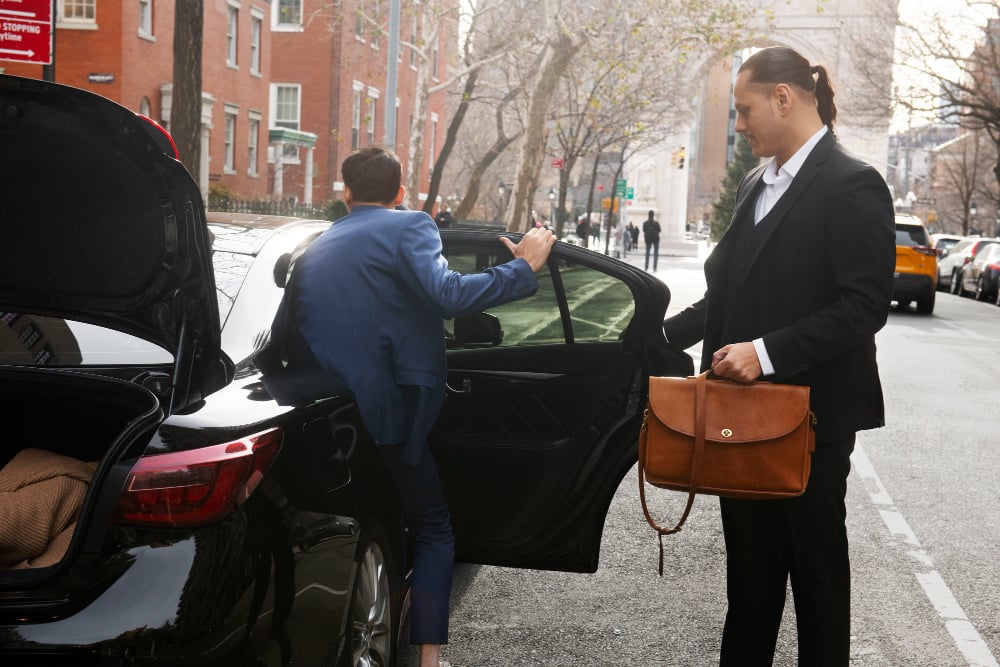
A man was standing at the end of the alley. He looked completely out of place. He was maybe sixty, with silver hair and a perfectly tailored charcoal suit. His shoes were black and so shiny they reflected the light from the diner’s back door. He was carrying a brown leather briefcase that probably cost more than my entire car.
My face went hot. He’d seen me. He’d seen me reaching into the trash.
“Who wants to know?” I said.
He walked toward me. He reached into his jacket pocket and handed me a business card.
Richard Hartwell. Hartwell & Associates. Attorney at Law.
“I’ve been searching for you, Nathan,” he said.
Nobody had ever said those words to me before. Not once in my whole life.
“Searching for me? Why?”
“I represent the estate of James Brooks,” Richard said.
I stared at him.
“James Brooks,” I said slowly.
“Your grandfather.”
I almost laughed. It came out like a cough.
“My grandfather died before I was born,” I said.
Richard’s expression changed. It went very serious and very gentle at the same time.
“That isn’t true, Nathan,” he said. “James Brooks died three weeks ago. On February twenty-sixth. He was eighty-one years old.”
I stood there in that alley and stared at him.
My father had told me my whole life that his father was dead. He’s dead, Nathan. That’s all you need to know about him.
“That’s not possible,” I said.
Richard set his briefcase down on top of a wooden pallet and opened it.
“Your grandfather left very specific instructions,” he said. “He wanted us to find you immediately after his death. Before anyone else could reach you.”
“Why?”
Richard’s eyes moved past me. To my broken-down Honda squeezed between the dumpster and the delivery truck. To the three trash bags I’d been about to open. To me, in my dirty jeans and my wrinkled gray hoodie.
Then he looked back at me.
“Because he left everything to you,” he said.
I thought I’d heard him wrong.
“He what?”
Richard explained it slowly, like he knew I wouldn’t believe it the first time.
James Brooks owned a house on the north side of the city. He had investment accounts. And he owned a company called Brooks Holdings. A commercial real estate and development firm, Richard said. One of the biggest in the state.
According to my grandfather’s will, none of it had been left to my father.
All of it had been left to me.
Ten minutes earlier, I’d been reaching into a trash bag behind a diner looking for something to eat.
Now a stranger in a three-thousand-dollar suit was telling me I’d inherited more money than I could imagine.
I should have felt relieved. Happy. Something.
Instead, something about Richard’s face made me uneasy. There was something he wasn’t saying yet.
“But there’s a condition,” he said.
He reached into his briefcase and took out a thick brown envelope.
My full name was written on the front in black ink, in old-fashioned slanted handwriting.
Nathan James Brooks.
James. My middle name. I’d always thought it was just a name.
My hands suddenly felt very cold.
“What condition?” I said.
Richard held the envelope out toward me.
“Your grandfather left instructions,” he said. “Specifically for you.”
I reached for it.
Richard didn’t let go right away. He looked straight into my eyes.
“And once you read them, Nathan,” he said quietly, “you’re going to understand why your father spent eighteen years making sure you believed your grandfather was dead.”
Before I could open it, the back door of the diner banged open.
A big man in a stained white apron came out carrying another trash bag. He had a gray beard and forearms covered in tattoos. He stopped when he saw us. He looked at Richard in his suit. Then at me standing by the dumpster.
“Everything okay out here?” he said.
“Fine,” I said quickly.
The man looked at me for a long moment. Then at my Honda. Then at the trash bags.
“Kid,” he said. “You hungry?”
I didn’t answer. I couldn’t.
“Come inside,” he said. “Both of you. I’m Ray. I don’t let anybody eat out of my dumpster. Health code.” He almost smiled. “Grilled cheese and tomato soup. On the house.”
So that’s where I read my grandfather’s instructions for the first time. In a red vinyl booth in the back of Ray’s Diner, with a grilled cheese sandwich and a bowl of tomato soup that I ate so fast I burned my tongue.
Richard sat across from me with a cup of black coffee he didn’t drink. He waited until I’d finished eating before he said anything else.
Then he opened the brown envelope for me and laid the contents out on the table, one thing at a time.
The first thing was an old photograph.
It showed my father, maybe thirty years younger, standing in front of a big brick building with a sign that said BROOKS HOLDINGS. Next to him stood an older man with silver hair and a strong jaw.
The older man had my eyes. Exactly my eyes. Dark brown, set deep, with heavy eyebrows.
I turned the photograph over.
There was writing on the back, in the same slanted handwriting as the envelope.
My grandson Nathan, age 3, at the park. He has his grandmother’s laugh.
I turned it back over. That wasn’t a picture of me. It was my father and grandfather.
Then I realized there was a second photograph stuck to the back of the first one. I peeled them apart.
It was me. Three years old. At a park I didn’t remember, on a swing, laughing, with my mother pushing me. Somebody had taken it from a distance, from across the playground.
My mother was still alive in that picture.
“He took that himself,” Richard said quietly. “Your grandfather. He used to drive to the park near your house on Saturdays, when your mother was still alive. Just to watch you play. Your mother knew. She used to let him come close sometimes, when your father wasn’t there.”
I couldn’t breathe.
“My mother knew him?”
“She did. They were close. She was the one who wanted you to have his name. James.” Richard paused. “After she died, your father cut him off completely. He wouldn’t let James anywhere near you.”
Richard told me the rest slowly.
My grandfather hadn’t died before I was born. He’d been alive for every single year of my life except the last three weeks.
My father had known that the whole time.
My father worked for him. He’d worked at Brooks Holdings for twenty-five years. That was the company downtown where he was a manager. The place he went every morning in his suit. The place he came home from late every night. It was my grandfather’s company.
Dad had told me he worked for “a real estate firm.” He never once said the name.
“Your father and grandfather had a difficult relationship,” Richard said carefully. “James kept him on at the company. Gave him a vice president title in one of the smaller divisions. But he never trusted him with anything important. Six years ago, when James was first diagnosed with heart disease, your father tried to have himself declared his only heir. He went to court. He hired lawyers. He argued that James was no longer mentally competent to run the company.”
“What happened?”
“He lost,” Richard said. “Badly. And afterward, your grandfather changed his will.”
“To me?” I said.
“To you.”
I didn’t understand.
“Why would a grandfather I’ve never met,” I said, “leave everything to me?”
Richard was quiet for a moment.
“Because you never met him,” he said, “but he met you. Many times. From a distance.”
He opened another file. A thick one.
It was full of photocopies. Letters. Birthday cards. Christmas cards. Photographs. An invitation to a Fourth of July picnic at Brooks Holdings. A letter offering to pay for a summer camp. A birthday card with a fifty-dollar bill drawn on the inside in pencil, with a note: The real one is in the mail, Nathan.
Every single one was addressed to me.
“Thirty-two pieces of correspondence,” Richard said. “Over eleven years. Starting when you were seven, right after your mother’s funeral. Some were sent to your house. When you didn’t answer, he started sending them to your school. Then to your job at Kessler’s Market.”
I stared at the pile.
I’d never received a single one.
“When you didn’t respond,” Richard said, “he thought maybe you didn’t want to hear from him. Maybe your father had told you terrible things about him. He was heartbroken. But he didn’t give up. Four years ago, he hired a private investigator.”
He laid a set of photographs on the table.
They were all of my father.
My father standing at our mailbox, holding an envelope. My father walking up the driveway with letters in his hand. My father at the recycling bin behind our garage, tearing something into pieces. My father in the front office of my high school, talking to the secretary, taking an envelope from her.
The dates were stamped in the corner of each picture. They stretched across four years.
Suddenly, every birthday I’d spent believing I had no grandparents felt different.
Every Christmas. Every Grandparents’ Day at school, when the other kids’ grandparents came and I sat by myself.
James hadn’t forgotten me.
He’d been writing to me the whole time. Thirty-two times.
And my father had made sure I believed nobody on that side of my family cared whether I existed.
I put my hands flat on the table to stop them from shaking.
“What’s the condition?” I said. “In the will.”
Richard handed me the last few pages.
I read them twice.
According to my grandfather’s instructions, I couldn’t return to my father’s house for thirty days after being contacted by the estate. During those thirty days, I had to stay financially independent. I couldn’t access the inheritance. I couldn’t use any of its accounts. I couldn’t live in my grandfather’s house or use any of his property.
At the end of thirty days, I’d meet with the board of Brooks Holdings and decide whether to accept what he’d left me.
I looked up at Richard.
“So I’m supposed to survive,” I said slowly, “exactly like this?” I pointed out the diner window toward the alley, where my dead Honda was still sitting by the dumpster. “For thirty more days?”
Richard glanced toward the window.
“You already have been, Nathan,” he said quietly. “For nine.”
Anger replaced the shock. It came up hot and fast in my chest.
My grandfather had known me. He’d watched me grow up. And his last wish was for me to prove I could survive without his money? While I was sleeping in my car?
“That’s cruel,” I said.
“James didn’t know your father would throw you out on your birthday,” Richard said. “Nobody did. He wrote that condition two years ago. For a different reason.”
“What reason?”
“To protect you,” Richard said. “From your family.”
He leaned forward.
“Your grandfather knew your father would try to get his hands on the money the minute you inherited it,” he said. “If you were living in his house, under his roof, he’d pressure you. He’d guilt you. He’d tell you it was family money. He’d put papers in front of you, a power of attorney, a trust agreement, and tell you to sign. You’re eighteen. You’d have trusted him. You’d have signed.”
I thought about my father across the kitchen table that morning. Consider it rent.
“The thirty days keep you away from him,” Richard said. “Legally. While the estate is settled. While the company’s lawyers make sure everything is airtight. While you find out the truth about him.” He paused. “And while you find out who you are before the money has a chance to tell you.”
Then Richard showed me one more thing.
Bank records. From First Federal. My savings account.
“Your father told you your savings paid for your stepbrother’s applications,” Richard said. “And household expenses.”
“Yeah.”
Richard pointed to a line on the statement.
A withdrawal. February ninth. Three weeks before my grandfather died. Five weeks before my birthday. The entire balance. $3,214.63.
Then he pointed to another document. A receipt from a law firm downtown. Same date. Same amount. Paid by my father.
“Your savings paid for legal fees,” Richard said. “Your father’s legal fees. He hired a lawyer to contest your grandfather’s will, the minute he found out James was dying.”
I stared at the numbers.
All those Saturday mornings bagging groceries at Kessler’s. All those Sunday nights scraping cheese off pizza pans. Every paycheck I’d saved.
It had paid for my father’s lawyer. To take my inheritance away from me.
“There’s a clause in the will,” Richard said. “Section nine. If Daniel Brooks knowingly concealed your inheritance from you, interfered with James’s correspondence to you, or misused money belonging to you, he gets nothing from the estate. Not a dollar. And he could face legal action.”
“So Dad loses everything?”
“If the evidence holds,” Richard said. “Yes.”
Before I could process that, Richard took a small black flash drive out of his briefcase. He plugged it into an adapter on his phone.
“Your grandfather made a recording,” he said. “Shortly before he died. He wanted you to see it.”
He turned the phone toward me.
It was a video of a conference room. A long table. Big windows with a city skyline behind them.
My father was sitting on one side of the table.
On the other side sat an old man in a wheelchair, with an oxygen tube under his nose.
The man from the photograph. Older now. Much thinner. But unmistakably alive.
My grandfather.
My father was leaning forward across the table.
“You need to reconsider,” Dad said. “Leaving everything to Nathan. He’s eighteen. He’s a kid. He works at a grocery store.”
“He works,” my grandfather said. His voice was thin and raspy. “That’s more than I can say for some.”
“He’s weak,” Dad said. “He’s soft. He’ll run your company into the ground in a year.”
My grandfather looked at him for a long time. He looked almost disappointed.
“No,” he said. “He’s not weak, Daniel. He’s unspoiled.”
Then my grandfather said, very clearly, “When I die, Nathan inherits everything. The house. The accounts. The company. All of it.”
My father sat back in his chair.
And then he said the words that killed the last excuse I might have made for him.
“Then I’ll make sure he never knows.”
The video ended.
I sat there in the red vinyl booth at Ray’s Diner, staring at the black screen of Richard’s phone.
“When was that?” I said.
“Six weeks before your eighteenth birthday,” Richard said.
And suddenly, everything made sense.
Dad hadn’t thrown me out because adulthood magically started the morning I turned eighteen. He knew James was dying. He knew the estate would start searching for me as soon as James died. He knew Richard would come to the house.
He needed me gone before anyone could find me.
He’d taken my savings so I’d be desperate. He’d put me in my car with three trash bags and six days of gas so I’d disappear.
“What happens now?” I said.
“You have thirty days,” Richard said.
“And after that?”
“You meet the board of Brooks Holdings,” he said. “And you decide whether you want what your grandfather left you.”
He closed his briefcase. Then he stopped.
“There’s one advantage, Nathan,” he said.
“What?”
“Your father doesn’t know we’ve found you.”
I looked out the diner window at my broken-down car, where I’d spent nine nights believing I had nothing and nobody.
Nine days ago, my father had handed me three plastic bags and sent me away.
Now I knew the truth.
I wasn’t the unwanted son with nowhere to go.
I was the heir my father had spent eighteen years trying to hide.
The next thirty days were nothing like what people picture when they hear the word inheritance.
I didn’t move into a mansion. I didn’t buy new clothes. I didn’t touch a single dollar from my grandfather’s accounts.
Richard couldn’t give me money. The will was clear. But he could connect me with people who helped kids in exactly my situation.
That first night, he drove me to Haven House, a youth shelter on the east side of the city for kids between sixteen and twenty-one. It was an old brick building that used to be a convent. Ray had his cousin tow my Honda to a lot nearby, for free. “You can pay me back when you’re rich,” Ray said, and winked, like he didn’t believe it for a second.
At Haven House, a caseworker named Tasha met me at the door. She was in her thirties, tough and kind, with braids pulled back in a scarf and a voice that didn’t let you argue.
“You got a bed, a locker, three meals a day, and a curfew of ten o’clock,” she said. “You go to school. You keep your job. You don’t bring trouble. Deal?”
“Deal,” I said.
She showed me to a little room with two narrow beds, a dresser, and a window that looked out at a parking lot. My roommate was a quiet fifteen-year-old named Marcus whose mom had kicked him out when her new boyfriend moved in.
I unpacked my three plastic bags into the dresser. It took about four minutes.
That night, I slept in a real bed for the first time in nine days.
I slept for eleven hours.
I kept going to school. I kept working at Kessler’s. I asked my manager, Mrs. Ortiz, for extra shifts, and she gave me every one she could. I saved every paycheck again, from zero.
At first, I resented my grandfather for the condition. I’d lie awake at night in that narrow bed listening to Marcus breathe and think, He had all that money. He could have saved me. And he made me do this instead.
But somewhere between classes and work shifts and nights lying awake, I started to understand what he wanted.
He needed me to find out who I was before the money had a chance to decide for me.
He’d watched my father grow up with everything. And he’d watched what that did to him.
Richard brought me the letters during the second week.
The originals, not the copies. The ones the investigator had pulled out of our recycling bin. Some of them were torn and taped back together. Some had coffee stains. A few were missing pieces.
I read them all in one night, sitting on the floor of my little room at Haven House with my back against the bed.
The first one was from when I was seven, right after Mom’s funeral.
Dear Nathan,
I’m your grandfather. Your daddy’s father. I knew your mother very well, and she loved you more than anything in the world. I’m so sorry she’s gone. If you ever want to talk about her, I have lots of stories. She used to bring you to see me when you were little. You probably don’t remember. You used to pull my eyebrows.
Love, Grandpa James
There was a phone number at the bottom.
I read them in order. The birthday cards. Happy 9th Birthday! I hear you like dinosaurs. The Christmas cards. A letter when I was thirteen, after I made the honor roll. How did he know that? A letter when I was fifteen, after I got the job at Kessler’s. Proud of you for working. Your grandmother worked at a grocery store when I met her.
The last one was dated January of my senior year. Two months before he died.
Nathan,
I don’t know if you’ve received any of my letters. I suspect you haven’t. I’m getting old, and the doctors don’t give me long. I want you to know that you have never, for one day of your life, been forgotten. Not by me. Not by your mother.
Whatever your father has told you, please know that I am proud of you. I have always been proud of you.
Love always, Grandpa
I sat on that floor and cried until Marcus woke up and asked if I was okay.
“Yeah,” I said. “I just got some mail.”
During the third week, Ethan found me.
My stepbrother. He showed up at Kessler’s on a Saturday afternoon while I was stocking cereal in aisle six.
I almost dropped a box of Cheerios.
“What are you doing here?” I said.
He looked terrible. He hadn’t shaved. He had dark circles under his eyes.
“I’ve been looking for you,” he said. “For three weeks. Mom and Dad keep saying you’re fine. That you’re staying with a friend. But none of your friends know where you are.” He swallowed. “I called the school. I called the hospital. I thought you were dead, Nate.”
I stared at him.
In six years, Ethan had never once called me Nate.
“I’m staying at a shelter,” I said. “Haven House. On the east side.”
Ethan’s face crumpled.
“A shelter?”
“Dad threw me out on my birthday,” I said. “You were there. You were eating cereal.”
“I know,” Ethan said. “I know. I didn’t say anything. I should have said something.” He rubbed his face with both hands. “Dad told me you were going to stay with Tyler’s family. He said you’d already set it all up. He said you wanted to leave.”
“I didn’t want to leave,” I said. “I slept in my car for nine days.”
Ethan didn’t say anything for a long time.
“He also told me,” he said finally, “that your savings paid for my college applications. Mom said the same thing.” He looked at me. “But I paid for my applications myself, Nate. With money from my summer job. I have the receipts.”
We stood there in aisle six between the Cheerios and the Frosted Flakes, looking at each other.
“Then where did your money go?” Ethan said.
I didn’t tell him. Not yet. Richard had told me not to discuss the estate with anybody in the family until the thirty days were up.
“You should ask your stepdad,” I said.
Ethan looked at me for a long moment. Then he nodded slowly and left.
He came back the next Saturday with a bag of groceries from a different store, a whole bag, and left it with Tasha at Haven House for me. He didn’t ask to see me. There was a note inside. Sorry. — E.
On the thirtieth morning, Richard pulled up outside Haven House in a black sedan.
He got out and opened the back door for me.
“You ready?” he said.
I looked down at what I was wearing. A clean white shirt and dark trousers from the donation closet at Haven House. Tasha had ironed them for me herself. And my only decent shoes, black ones I’d bought at Goodwill for my junior prom.
“As ready as I’ll ever be,” I said.
Tasha was standing on the front steps of Haven House with her arms crossed. Marcus was standing next to her.
“Go get ’em, Brooks,” Tasha said.
Richard drove me downtown.
Brooks Holdings headquarters was a thirty-two-story tower of glass and steel on Washington Avenue. I’d driven past it a hundred times in my life. I’d never once looked up at it.
Seeing my grandfather’s name across the top of that building made everything I’d learned suddenly feel real.
“What if they don’t accept me?” I said in the elevator. My voice cracked a little.
“They will,” Richard said.
“How can you know that?”
Richard looked over at me.
“Because your grandfather planned for everything,” he said.
The boardroom was on the top floor. It was bigger than the whole house I’d grown up in.
There were floor-to-ceiling windows on three sides, looking out over the entire city. A long, polished wooden table that seated twenty people. Leather chairs. A huge screen on one wall.
Seven people were sitting around the table. Executives, attorneys, accountants, senior partners. At the far end sat an elderly woman with white hair in a neat bun and pearl earrings.
She stood up when I walked in.
“Nathan Brooks,” she said. “I’m Margaret Ellis. I’ve been chair of this board for nineteen years. And I worked beside your grandfather for thirty-one.” She held out her hand. “He spoke very highly of you.”
I shook her hand.
Hearing that still hurt, in a strange way. I’d spent eighteen years believing James never knew me at all. Now I was finding out he’d known far more about my life than I’d ever known about his.
“Thank you, ma’am,” I said.
Before the meeting could begin, Richard stood up.
“Before we proceed,” he said, “there’s one unresolved matter.”
He nodded at the receptionist by the door.
The boardroom door opened.
My father walked in.
Carla came in right behind him, in a pink blazer. Then Ethan.
Dad stopped dead the moment he saw me.
The color drained out of his face. All of it. Every bit.
For several seconds, neither of us said anything. The whole boardroom was silent.
He’d been invited as a shareholder and a division vice president. Margaret had sent the notice. Special session regarding the estate of James Brooks. He’d come expecting to fight for his inheritance.
He hadn’t expected me.
“What is he doing here?” Dad demanded.
“Nathan was invited,” Richard said calmly. “By the estate.”
Dad looked straight at me.
“You’ve been looking for me?”
“No,” I said.
His face tightened.
“I didn’t find you,” I said. “They found me.”
Carla recovered first. She always did.
She put on that gentle smile and stepped forward with her hands clasped in front of her.
“Oh, Nathan, sweetie, we’ve been so worried about you!” she said. “Your father has been beside himself. He only asked you to leave to teach you some responsibility. To help you grow up. You understand that, don’t you?”
I almost laughed.
Instead, I looked over at Richard.
“Then let’s talk about responsibility,” I said.
Richard placed a folder on the polished table.
Dad recognized it immediately. I watched him recognize it.
Richard opened it and spread the photographs across the table. One by one.
Dad at the mailbox. Dad carrying envelopes up the driveway. Dad at the recycling bin, tearing letters into pieces. Dad in the front office of my high school, taking an envelope from the secretary.
Carla stared down at the pictures.
“Daniel,” she said slowly. “What is this?”
“I was protecting him,” Dad said quickly. “From my father. I didn’t trust James’s intentions. You don’t know what kind of man he was, Carla. He was manipulative. He would have poisoned Nathan against me.”
Margaret Ellis looked at my father over the top of her reading glasses.
“Concern,” she said, “does not explain destroying thirty-two documented pieces of correspondence over eleven years, Daniel. Including birthday cards to a seven-year-old boy whose mother had just died.”
Ethan was looking back and forth between his stepfather and the photographs. His face was getting paler.
Then Richard laid my bank records on the table next to the pictures.
That was when everything changed for Ethan too.
“Dad,” he said. His voice cracked. “Did you really take Nathan’s savings?”
My father didn’t say anything.
“The three thousand dollars,” Ethan said. “You told me it went to my applications. I paid for my applications. I told you that. I showed you the receipts.”
Dad finally spoke.
“It was family money,” he said.
“No,” I said. “It was mine.”
“Three thousand, two hundred and fourteen dollars and sixty-three cents,” Richard said. “Withdrawn on February ninth. Paid the same day to the law firm of Brennan and Cole. For legal fees in Daniel Brooks’s challenge to the will of James Brooks.”
My father stared at the table for a long time.
“It went to legal fees,” he finally admitted. “For the company. For our family. For all of us.”
Carla turned and stared at him.
“You told me it paid for Ethan’s college applications,” she said slowly.
Ethan’s face went white.
“You lied to me too?” he said. “You used my name? To cover for stealing from Nate?”
Dad slammed his palm down on the polished wood. The whole table jumped.
He pointed across the table at me.
“You think,” he said, “just because some dead old man left you a company, you’re suddenly better than us?”
I looked at him calmly.
I’d been dreaming about this moment for thirty days. Lying in that narrow bed at Haven House. Stocking cereal at Kessler’s. I’d imagined screaming at him. Crying. Throwing the bank statement in his face.
Now that it was here, I just felt calm.
“No,” I said. “I’m exactly the same person I was thirty days ago.”
His anger faltered for a second.
“But now,” I said, “I know the truth.”
Richard picked up a remote control from the table.
The lights in the boardroom dimmed. The big screen behind Margaret lit up.
My grandfather appeared on it.
Sitting in his wheelchair, in this same boardroom, with the oxygen tube under his nose.
My father froze completely.
The recording played.
My grandfather saying I would inherit everything. The house. The accounts. The company. All of it.
Then my father’s voice filled the boardroom.
“Then I’ll make sure he never knows.”
The recording kept going. Further than Richard had shown me at Ray’s Diner.
My grandfather leaned forward in his wheelchair. His voice shook.
“You’d destroy your own son, Daniel? For money? For a company?”
And my father, sitting across from his dying father, said:
“He’s not my son anymore. He’s Ellen’s son. He’s yours. He was never mine.”
Ellen was my mother.
The video stopped.
Nobody in the boardroom said anything.
Carla turned slowly and looked at her husband. Like she was seeing him for the first time. Like she was realizing that every story he’d ever told her about me had been another lie.
Ethan put his face in his hands.
Then Margaret Ellis slid a document across the table to me.
I looked down at it.
My grandfather had left me sixty-eight percent of Brooks Holdings.
Controlling ownership.
And with it came one decision that nobody else in that room could make for me.
Whether my father would still have a place in the company.
I stared at that document for a long time.
Sixty-eight percent. My grandfather hadn’t just left me money. He’d left me control. He’d given me the power to decide whether the man who’d thrown me out on my birthday kept his job.
Dad finally looked at me.
“Nathan,” he said.
For the first time I could ever remember, his voice didn’t sound commanding. It sounded afraid.
“You wouldn’t do this,” he said.
“Do what?”
“Destroy my career. Everything I’ve built.”
I shook my head slowly.
“You destroyed your own career, Dad,” I said.
“I made mistakes,” he said. “I know that. I made mistakes.”
“No,” I said. “Taking my savings wasn’t a mistake. Intercepting thirty-two letters over eleven years wasn’t a mistake. Telling me for eighteen years that my grandfather was dead wasn’t a mistake. Throwing me out of the house on my birthday because you knew the lawyers were coming wasn’t a mistake.” I took a breath. “Those were choices. Every single one.”
“I am your father,” he said.
“And I was your son,” I said.
That silenced him.
I laid my bank statement on the table in front of him. Then the photographs. Then the copies of my grandfather’s letters, the whole stack, thirty-two of them.
“You knew Grandpa was alive,” I said. “My whole life. You stole every chance I had to know him. He used to come to the park to watch me on the swings. Mom let him. And after she died, you made sure I never saw him again. And then, when you found out he was leaving everything to me, you took my money and threw me out.”
Dad lowered his eyes.
“I was scared,” he said quietly.
“Of what?”
He was quiet for a long time.
“That you’d leave me behind,” he said. “That you’d get everything and I’d get nothing. That he’d choose you over me. Like he always did.”
For a moment, I couldn’t believe he’d actually said it.
“You were the one who left me, Dad,” I said. “You left me in a driveway with three trash bags.”
Margaret Ellis cleared her throat.
“The board has reviewed all the evidence,” she said. “Effective immediately, Daniel Brooks is removed from every executive position at Brooks Holdings.”
Dad stared at her.
“You can’t do that,” he said.
“The controlling shareholder can,” Margaret said.
Everybody at the table turned and looked at me.
I took a breath.
“Yes,” I said.
Margaret explained the rest. Dad’s access to company accounts and confidential records would be suspended while attorneys investigated the intercepted mail, my missing savings, and his attempts to gain control of my grandfather’s estate. Under section nine of the will, he’d lose any inheritance. The estate’s lawyers would decide whether to file charges.
My father looked at me across that long, polished table.
Then he said a word I’d almost never heard from him in eighteen years.
“Please.”
I’d imagined that moment for thirty days. I’d thought I’d feel powerful. Satisfied. Victorious.
I didn’t.
I just felt exhausted.
“I won’t stop the investigation,” I said.
His shoulders dropped.
“You thought taking everything from me would make me disappear,” I said. “Instead, all you did was teach me I could survive without you.”
Richard stood up.
“There’s one final matter,” he said.
He handed me a small white envelope. My name was written across the front in my grandfather’s slanted handwriting. Just Nathan.
I opened it carefully. My hands were shaking.
It was a short letter. One page.
Nathan,
If you’re reading this, you’ve survived the thirty days. I’m sorry I asked that of you. I’m sorry for whatever your father has done. I wish I could have protected you from all of it. But I couldn’t erase hardship from your life. All I could do was leave you a chance to build something afterward.
There’s something I need you to understand.
You were never unwanted. You were never forgotten. And you were never the burden they made you believe you were.
Your mother loved you more than anything on this earth. So did I.
You were my grandson. And I was always, always proud of you.
Grandpa
My vision blurred. I couldn’t see the words anymore.
For eighteen years, I’d wondered why nobody from that side of my family ever came looking for me. Every empty mailbox on my birthday had felt like proof that I didn’t matter.
But my grandfather had written thirty-two times.
Someone had been trying to tell me I mattered all along.
I folded the letter carefully and put it in my shirt pocket, over my heart.
Then I looked at Margaret Ellis.
“I’ll accept the inheritance,” I said.
My father looked up.
“But I have one condition of my own,” I said.
Margaret smiled slightly.
“What condition, Mr. Brooks?”
“I finish high school first,” I said. “And I want to keep my job at Kessler’s until I graduate. Mrs. Ortiz is short-staffed.”
Margaret Ellis laughed. It was a warm laugh, and it surprised everybody at that table.
“Your grandfather,” she said, “would have said exactly the same thing.”
Dad left the boardroom without another word.
Carla followed him, but not right away. She stood by the door for a long moment, looking back at me.
“I didn’t know,” she said quietly. “About the letters. About the money. I swear I didn’t know.”
“You packed my bags,” I said.
She looked down at the floor.
“Yes,” she said. “I did.”
Then she left.
Ethan stayed.
He sat in the leather chair at the end of the table with his face in his hands for a long time after everyone else had gone. Margaret, the lawyers, the accountants. Just him and me and Richard, and the city spread out below the windows.
“I’m moving out,” Ethan said finally. “Of their house. I can’t live there anymore.”
“Where will you go?”
“My dorm. I’ll get a summer job. I’ll figure it out.” He looked up at me. “Like you did.”
I sat down in the chair next to him.
“I’m sorry, Nate,” Ethan said. “For six years. For the bigger bedroom. For the car. For eating cereal while he threw you out. For not saying anything. For all of it.”
“You didn’t know,” I said.
“I knew enough,” Ethan said. “I knew he treated you different. I just didn’t want to see it. Because it was easier for me.”
I didn’t say anything.
“Can we…” Ethan stopped. “I don’t know. Can we start over? Maybe?”
I looked at him for a long time. My stepbrother. Who’d driven around the city for three weeks looking for me. Who’d left a bag of groceries with Tasha.
“Maybe,” I said. “Slowly.”
Three months later, I walked across the graduation stage at Lincoln High School.
First in my class. Valedictorian.
I gave the speech. I didn’t talk about the car or the shelter or my grandfather. I talked about how sometimes you don’t find out who you are until everything is taken away. I talked about how the people who help you aren’t always the people you expected. I mentioned Ray. And Tasha. And Mrs. Ortiz at Kessler’s.
Dad wasn’t there. Neither was Carla.
Ethan came.
He sat near the back of the gym with Marcus from Haven House and Tasha, who’d taken the afternoon off. Ray was there in a clean shirt with his tattoos showing. Mrs. Ortiz was there. Richard was there, in a different perfect suit, sitting in the front row with Margaret Ellis.
When my name was called, I walked across the stage and took my diploma.
I glanced, just for a second, at the empty seats near the front, where my father should have been.
For the first time, they didn’t hurt.
I finally understood that what I was worth had never depended on whether my father chose me.
After graduation, I went to visit my grandfather’s grave.
It was in a quiet cemetery on the north side of the city, under a big oak tree. The stone was simple. James Nathan Brooks. Beloved Husband. Proud Grandfather.
Right next to it was another stone.
Ellen Marie Brooks. Beloved Mother. She sang loud and wrong.
My mother.
I hadn’t known she was buried there. My father had told me she was buried in another state, near her family. Another lie.
My grandfather had bought the plot next to hers. He’d made sure they’d be together.
I sat down on the grass between them. I stayed there for a long time.
I told them about the shelter. About Ray’s grilled cheese. About Ethan. About the speech.
I told my grandfather I’d read all thirty-two letters. Every single one.
That fall, I started at the state university, studying business. Part-time, so I could also start learning at Brooks Holdings. Margaret Ellis became my mentor. She was tough and patient and told me exactly what she thought of every mistake I made.
“Your grandfather made worse ones,” she always said. “He once bought a shopping mall in a swamp.”
I kept the company. But I decided that inheriting my grandfather’s business didn’t mean I had to keep everything exactly the way it had been.
The first thing I did, as soon as Margaret said I was ready, was create a scholarship fund. The James and Ellen Brooks Scholarship, for students who’d lost their homes or aged out of foster care or been kicked out by their families. Full tuition, plus housing.
The second thing was an emergency housing program for young people between eighteen and twenty-one who suddenly found themselves with nowhere safe to go. We partnered with Haven House. Tasha runs it now.
The third thing was a quiet arrangement with Ray. A standing account at his diner. Anybody who shows up at his back door hungry gets fed. No questions. The bill comes to Brooks Holdings.
Ray tried to refuse.
“I don’t need your money, kid,” he said.
“I know,” I said. “That’s why I’m giving it to you.”
Every year on my birthday, I make a donation to Haven House in my grandfather’s name.
I’ve never forgotten those nine nights in my car. The cold at three in the morning. The security guard knocking on my window. The church parking lot. The trash bags behind Ray’s.
I know how quickly a teenager can go from having a bedroom to carrying everything he owns in plastic bags.
I never threw those three bags away.
They’re folded up in a drawer in my office now, on the thirty-second floor of the building with my grandfather’s name on it.
Not because I want to remember my father throwing me out.
Because I want to remember the boy who survived it.
My father lives in an apartment across town now. Carla left him six months after the boardroom. The estate’s lawyers reached a settlement with him. He paid back my $3,214.63, with interest, and he’ll never work at Brooks Holdings again. I didn’t push for charges. I didn’t need to.
He sends me a birthday card every year now.
I read them. I don’t answer them. Not yet.
Maybe someday. I don’t know.
But I read every one. Because I know what it’s like to never get the letters.
Years later, people started asking how someone so young had learned to run a company.
They expected me to talk about business school. Investment strategies. Some secret my grandfather passed down to me.
My answer was always the same.
“I learned how to build something,” I’d tell them, “when I had nothing.”
And when people asked about my father, I didn’t hide the truth. I didn’t spend my life trying to punish him either.
I just said, “He taught me what kind of man I never want to become.”
My father gave me three plastic bags and a driveway.
My grandfather gave me a future.
But the life I built after that wasn’t something either one of them gave me.
I built it myself. In a narrow bed at Haven House. In aisle six at Kessler’s. In a red vinyl booth at Ray’s Diner, with a grilled cheese sandwich and a brown envelope with my name on the front.
No inheritance could define it. No family could control it. Nobody could ever take it away.
It finally belonged entirely to me.

Laura Bennett writes about complicated family dynamics, difficult conversations, and the quiet moments that change everything. Her stories focus on real-life tensions — inheritance disputes, strained marriages, loyalty tests — and the strength people find when they finally speak up. She believes the smallest decisions often carry the biggest consequences.