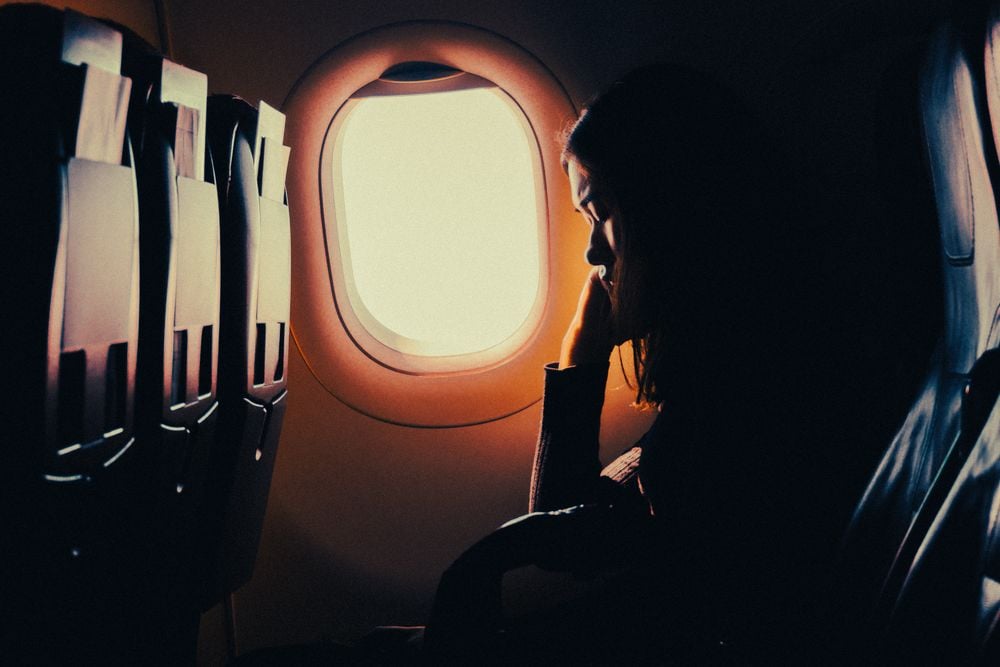
When the captain’s voice came over the speakers, I was lying on the floor of an airplane with my newborn daughter on a paramedic’s knees.
“Ladies and gentlemen,” he said, “there’s something important the mother needs to know before we open the doors.”
My whole body went cold.
The mother. That meant me.
I looked up at Ramon, the paramedic who had just delivered my baby on the floor of the rear galley. He was holding her in a pile of airline blankets, watching her chest go up and down, up and down, much too fast.
I grabbed his sleeve.
“What’s wrong with her?” I whispered. “Is there something wrong with her that you didn’t tell me?”
He didn’t answer right away.
And in that one second of silence, I was sure. I was absolutely sure that something terrible had happened to my daughter, and everyone on that plane knew it except me.
Five days earlier, my father collapsed while watering his tomatoes.
He was seventy-one years old. He’d been growing tomatoes in the same backyard in Mesa, Arizona, for forty years. Big, ugly heirloom ones, purple and yellow and striped. He talked to them. He named the best plants after baseball players. He claimed that was why they grew so well.
My sister, Rachel, found him lying in the dirt between the rows, with the hose still running.
She called me from the ambulance.
I was at home in Chicago, standing in our half-finished nursery, holding a can of paint. Pale green. I’d been trying to decide if it was too green.
“Hannah,” Rachel said. Her voice was very thin. “It’s Dad. It’s his heart. You need to come.”
My husband, Daniel, booked us on the first flight out the next morning.
I was thirty-four weeks pregnant. Our first baby. A girl. Up until then, the pregnancy had been boring, in the best way. No problems. No scares. My doctor, Dr. Abrams, had laughed at my last appointment and said, “Honestly, Hannah, you’re the most uneventful patient I’ve had all year.”
I called her from the car on the way to the airport.
“Is it safe to fly?”
“Your last checkup was perfect,” she said. “Thirty-four weeks is fine for domestic flights. Drink water. Walk the aisle every hour. Go be with your dad.”
So we went.
Dad was unconscious when we got to the hospital.
He was lying in a bed in the cardiac ICU with tubes in his nose and wires taped to his chest. A machine next to him beeped in a slow, steady rhythm. He looked so small. My father had never looked small in his whole life. He was a big, loud man who worked thirty-five years for the water department and could still carry a bag of potting soil under each arm.
Rachel was sitting in the chair next to him. She stood up when we came in and hugged me so hard it hurt.
“They don’t know,” she said into my shoulder. “They keep saying they don’t know.”
The cardiologist came in a little while later. A tall woman with gray braids and kind, tired eyes.
“He had a significant heart attack,” she said. “We’ve put in a stent, and the blood flow is better. But he was without oxygen for a while before your sister found him. We need him to wake up on his own. I can’t promise you that he will. I wish I could.”
For two days, I sat beside his bed.
Rachel and I took shifts. Daniel brought us coffee and sandwiches and made phone calls to people I didn’t have the energy to call. He took care of everything. He’s good at that. He’s an engineer. When the world is falling apart, he makes a list.
I talked to Dad the whole time. The nurse said it might help. She said people sometimes hear more than you’d think.
So I told him everything I could think of.
I told him about the nursery. About the green paint I couldn’t decide on.
I told him about the crib.
“Daniel put it together last weekend,” I said. “He wouldn’t let me help. He said he had a system. He read the instructions three times. Three, Dad. And he still put the whole front panel on backward. The little bars were facing inward. When he stepped back to admire it, he said, Huh, and then he just stood there for like a full minute.”
I held Dad’s hand. It was warm and heavy and didn’t move.
“He had to take the whole thing apart and do it again,” I said. “He was so mad. You would have laughed so hard. You would have laughed until you had to sit down.”
The machine beeped.
On the second night, I told him about the name.
It was late. Rachel had gone home to shower and sleep. Daniel was asleep in the chair in the corner, with his head tipped back and his mouth open.
“I picked a name,” I whispered to my father. “For the baby. I know what I want to call her. I haven’t even told Daniel yet. We keep going back and forth, and every time we make a list, we don’t agree on anything. But I know. I’ve known for weeks.”
I squeezed his hand.
“And I’m not telling you until you wake up,” I said. “So you’d better wake up. Because you’re going to want to hear this one.”
On the third morning, his eyes opened.
I was half asleep in the chair with my head on the edge of his bed. Something moved under my cheek. His fingers.
I sat up so fast I knocked over a cup of water.
He was looking at me. His eyes were blurry and red. But he was looking right at me.
“Dad?”
He opened his mouth. It took him a few tries. His voice was a dry little scratch.
“You look terrible,” he whispered.
I started laughing and crying at the same time.
“Nice to see you, too,” I said.
He managed a smile. A small crooked one, just one corner of his mouth.
I ran into the hallway and shouted for the nurse.
By the next afternoon, he was complaining about the coffee.
“It tastes like somebody boiled a sock,” he told the nurse. “A dirty sock. A sock from a gym.”
The nurse, a young guy named Marcus, laughed. “I’ll tell the kitchen you said so, Mr. Reyes.”
“Tell them I said they should be ashamed.”
Rachel sat on the other side of the bed with her arms crossed, shaking her head. But she was smiling. It was the first time I’d seen her smile in four days.
“He’s back,” she said to me. “God help us all. He’s back.”
The doctors said he’d need weeks of rest and then cardiac rehab. A new diet. No more lifting forty-pound bags of soil. No more working in the yard in the middle of the afternoon in July.
Dad listened to all of it with the face of a man who had no intention of following a single rule.
That evening, he asked Rachel and Daniel to give us a minute.
When they’d left, he patted the bed beside him. I sat down carefully, because my back hurt and my belly made everything awkward.
“Okay,” he said. “I’m awake. What’s her name?”
I shook my head.
“Not yet.”
“Hannah. You promised.”
“I said I’d tell you when you woke up,” I said. “I didn’t say when you woke up the first time. I want to tell you in person, with her here. When you can hold her.”
He squinted at me.
“That’s cheating.”
“You taught me how to cheat at Monopoly,” I said. “This is your fault.”
He laughed. Then he winced and put his hand on his chest, and I panicked, and he waved me off.
“I’m fine,” he said. “I’m fine. Listen to me.”
He took my hand.
“Go home,” he said.
“Dad…”
“Go home, Hannah. I’m going to be fine. Rachel’s here. Your Aunt Lupe’s driving in tomorrow from Tucson. I’ll have more women fussing over me than I know what to do with.” He squeezed my fingers. “You’ve got somebody else to worry about now.”
“I want to stay.”
“I know you do,” he said. “But I don’t want you having that baby in Arizona. All your stuff is in Chicago. Your doctor’s in Chicago. Go home.”
I didn’t say anything.
“Promise me something,” he said.
“What?”
“Promise me you’ll come back,” he said. “With my granddaughter. As soon as the doctors say you can. And you’ll put her in my arms in my backyard, next to the tomatoes. And then you’ll tell me her name.”
I looked at him for a long time.
“I promise,” I said.
That night, in the hotel, I couldn’t sleep.
My lower back had been aching all day. A dull, heavy ache, low down, right where my spine met my hips. I’d felt it starting in the morning, when I was sitting by Dad’s bed.
I blamed the hospital chairs. Those chairs are terrible. Hard plastic seats and wooden arms, designed by someone who has never had to sit in one for fourteen hours straight.
I’d barely slept in three nights. My legs were swollen from standing beside his bed. My feet hurt. Everything hurt.
It was easy to explain away one more thing.
Daniel didn’t like the idea of flying home so soon.
“We could stay another couple of days,” he said in the morning, while I was packing. “Just until you’re rested. Your back’s been bothering you.”
“My back’s been bothering me since week twenty,” I said. “That’s what backs do when you’re carrying a bowling ball in front of you.”
“Hannah.”
“Dr. Abrams said it was fine. Dad wants us to go. I want to go home. I want to sleep in my own bed.” I zipped up the suitcase. “I want to finish painting the nursery.”
He looked at me for a long moment.
“Okay,” he said. “But I’m carrying everything.”
“You were always going to carry everything.”
At the airport in Phoenix, he hovered.
He carried both bags. He carried my purse. He tried to carry my water bottle. He walked so close behind me that he kept stepping on the back of my shoes.
At the security line, he looked around.
“Want me to find a wheelchair?” he asked.
“I’m pregnant,” I said. “Not made of glass.”
“I know,” he said. “I’m still allowed to worry.”
I turned around and kissed him on the cheek. He smelled like the hotel soap.
“Worry quieter,” I said.
We boarded behind a man in a navy suit.
He was maybe sixty. Tall, with silver hair combed straight back, and an expensive watch, and the kind of shoes that click on the floor. He was talking on his phone. Loudly. Sharply. The way people talk when they don’t care who hears.
“I said I’d be there,” he said into the phone. “I said I’d be there. Stop changing things without asking me.”
The woman beside him was about his age. She had short gray hair and a soft cardigan and a garment bag over her arm. She touched his elbow. She looked uncomfortable. Embarrassed.
“Please stop,” she whispered.
He ignored her.
“No. No. That’s not what we agreed on. I’m not going to argue about this on the phone.”
The woman took out her own phone and started typing something. She typed fast, with her thumbs, looking down.
“We’ll make it,” she said to him quietly. “We’ll make it.”
Finally, he hung up. He didn’t say goodbye to whoever was on the other end. He just jabbed the screen with his thumb and shoved the phone into his jacket pocket.
He looked annoyed. Like the whole world was standing in his way.
I forgot about him as soon as we found our seats.
We were in row twenty-three. I had the aisle, so I could get up to use the bathroom. Daniel had the middle. The window seat was empty.
Across the aisle sat an older woman. She was probably seventy-five. White hair in a braid. A purple sweater with little embroidered birds on it. A paperback mystery in her lap and a tin of mints.
She looked over at me while I was trying to buckle my seatbelt around my stomach.
“Peppermint?” she said, holding out the tin. “It helps with the ears on the way down.”
“Thank you,” I said, and took one.
“I’m Teresa,” she said.
“Hannah. And this is Daniel.”
She looked at my belly. “Is this your first?”
I nodded.
She smiled at Daniel. A big, slow, knowing smile.
“Then you,” she said to him, “are about to discover a whole new kind of tired.”
Daniel laughed. “I’ve heard.”
“You’ve heard,” Teresa said, shaking her head. “Oh, honey. Hearing isn’t the same thing at all.”
For the first hour, everything was normal.
I watched half of a cooking show on the little screen in the seat in front of me. Something about a man trying to make a wedding cake in a kitchen that kept catching on fire. I ate the cheese crackers Daniel had bought at the airport. I drank my water, like Dr. Abrams said.
I texted Rachel. How’s he doing?
A few minutes later, she sent back a picture.
It was Dad in his hospital bed. He was holding up a paper coffee cup with both hands, looking straight into the camera with the most disgusted face I’ve ever seen. Like someone had handed him a cup of mud.
Underneath, Rachel had typed:
HE’S ALREADY COMPLAINING ABOUT THE PORTIONS.
I laughed out loud. Teresa looked over and smiled.
Then a sharp pain went across my lower back.
It wasn’t like the ache from before. It was different. It started in the middle of my spine and wrapped around both sides, like somebody had put a belt around me and was pulling it tight.
I sucked in my breath.
I shifted sideways in the seat. I put my hand on my lower back and pressed.
After a few seconds, it let go.
I sat there and waited. Nothing happened. I let out my breath.
Hospital chairs, I told myself. Three nights in hospital chairs. Two hours on a plane.
A few minutes later, it happened again.
“Are you okay?” Daniel asked.
He’d been reading something on his tablet. Now he was looking at me.
“Probably,” I said. “She’s been kicking all morning. I think she’s sitting on a nerve or something.”
He looked at me a little longer. Then he went back to his tablet.
But the next pain made me grab the armrest so hard my knuckles went white.
I looked at the clock on my phone.
I waited.
Seven minutes later, it came again.
Then five minutes after that.
I told myself I was counting wrong.
I’d read all the books. I’d taken the childbirth class at the hospital in Chicago, the one on Tuesday nights, where we all sat on yoga balls and practiced breathing and watched a video that made Daniel go pale. I knew what contractions were. I knew what it meant when they started coming closer together.
But knowing it in a classroom on a yoga ball was completely different from feeling it up here. Thirty-five thousand feet up. In seat 23C. With a peppermint in my mouth.
It couldn’t be that. It just couldn’t. I had six more weeks.
Braxton Hicks, I told myself. False labor. Your body practicing. It happens all the time. They talked about it in class.
I got up to go to the bathroom.
Daniel started to get up too.
“I’m just going to the bathroom,” I said. “I’ll be right back.”
The bathroom was at the back of the plane. Six rows. I made it to the door and got inside and locked it.
And then another wave hit, and I bent over the tiny metal sink with both hands on the edges and my forehead almost touching the mirror. I couldn’t breathe. I couldn’t think. I just held on.
When it finally passed, I looked up at myself in the mirror.
My face was gray. There was sweat at my hairline.
I splashed some water on my face. I dried it with a paper towel.
On my way back to my seat, another one came. Halfway down the aisle. I had to stop and hold on to the top of an empty seat, bent over, with my eyes squeezed shut, until it let go.
A man in a window seat looked up from his laptop and stared at me.
When I got back to row twenty-three, Daniel saw my face.
He put his tablet down.
“What’s wrong?”
“I think I need some water,” I said.
“Hannah.”
“I just need some water.”
He didn’t argue. He reached up and pressed the call button.
A flight attendant came down the aisle. She was in her forties, with dark hair pulled into a tight bun and very calm eyes. Her name tag said OLIVIA.
“What can I get you?”
“My wife isn’t feeling well,” Daniel said.
Olivia looked at me. Then she crouched down in the aisle beside my seat so she was at eye level with me.
“Are you feeling faint?” she asked.
“No,” I said. “Just cramping.”
“How far along are you?”
“Thirty-four weeks.”
I watched her face change. It was a small change. Just a little tightening around her eyes. But I saw it.
“Can you tell me how far apart the pains are?” she said.
Before I could answer, another one hit.
I grabbed Daniel’s hand. I bent forward as far as my belly would let me. I heard myself make a sound I didn’t recognize.
And I heard Daniel counting. Quietly. Right next to my ear. One. Two. Three. Four. All the way up to fifty-two, until I could breathe again.
When it was over, Olivia was still crouched there, watching me.
“About five minutes,” Daniel told her. “Maybe less.”
Olivia nodded. She stood up.
“I’m going to ask if there’s a medical professional on board,” she said.
I caught her sleeve.
“Please,” I said. “Please don’t scare everyone. I’m sure it’s nothing. I’m sure it’s just…”
Olivia looked down at me. Her voice was gentle. But it didn’t leave room for arguing.
“My priority is making sure you’re safe,” she said. “And your baby. Everyone else can handle being a little scared.”
Then she walked quickly to the front of the plane.
A minute later, her voice came over the speakers.
“Ladies and gentlemen, if there is a doctor, nurse, or other medical professional on board, please press your call button or identify yourself to a member of the crew.”
All around us, heads turned. People looked up from their screens. Somebody stood up a few rows ahead to see what was going on.
I wanted to disappear into my seat.
Teresa reached across the aisle and put her hand on my arm.
“You’re all right, sweetheart,” she said. “You’re all right.”
A man near the back of the plane pressed his call button.
He came up the aisle a minute later. He was maybe forty, broad-shouldered, with a short beard and a gray hoodie and a backpack slung over one shoulder. He knelt down in the aisle beside me.
“Hi,” he said. “My name’s Ramon. I’m a paramedic. I’m just flying home from a conference. Can I ask you some questions?”
I nodded.
He asked me when the pain started. Whether it was in my back or my front or both. Whether the baby was still moving. Whether I’d had any fluid, any bleeding. Whether I felt any pressure, low down.
I answered every question. My voice was shaking.
When I said yes to the pressure, he went very still for a second.
Then he turned and looked up at Olivia.
“Can you contact the medical team on the ground?” he said. “I need to talk to them.”
Olivia nodded and went to the front.
I grabbed Ramon’s hand.
“Am I in labor?” I whispered.
He looked at me. He didn’t look away.
“I think you are,” he said.
“No,” I said. “No. I still have six weeks.”
“I know.”
“I have six weeks,” I said again. Like saying it twice would make it true. “The nursery isn’t finished. I haven’t even finished painting it. Her clothes aren’t washed. You’re supposed to wash all the little clothes first, in the special detergent. And the car seat is still in the box. We haven’t even taken it out of the box. Daniel was going to watch a video on how to install it this weekend.”
I knew I wasn’t making sense. I couldn’t stop.
Ramon held my eyes.
“None of those things matter right now,” he said quietly. “Not the paint. Not the clothes. Not the car seat. Only you and your baby matter. Okay? That’s it. That’s the whole list.”
I nodded. Tears were running down my face.
Daniel was holding my other hand so tight it hurt.
A few minutes later, the captain came on.
His voice was calm and slow, the way pilots always sound.
“Ladies and gentlemen, this is Captain Hollister. Due to a medical emergency on board, we’ll be diverting to Milwaukee, which is the nearest suitable airport. We expect to begin our descent shortly. Thank you for your patience and cooperation.”
There was a little murmur through the cabin.
Somebody a few rows back sighed. Loudly. On purpose. So people would hear.
Then a man’s voice, behind us.
“We’re almost at our destination. Why can’t we just keep going?”
I looked back over my seat.
It was the man in the navy suit.
He was sitting about four rows behind us, on the other side, in an aisle seat. The woman with the short gray hair was next to him. She had her hand on his arm again.
Olivia had come back down the aisle. She stopped beside his row.
“Sir,” she said. “We have a medical emergency.”
“I understand that,” he said. “I do. But has anyone even asked whether she can wait?”
Daniel turned all the way around in his seat.
“My wife is in labor,” he said.
The man glanced at me. Just for a second. The way you glance at a car that’s parked badly.
“And there are hospitals near the airport we were supposed to land at,” he said. “Good ones. Chicago’s forty-five minutes away. It’s not like we’re over the ocean.”
“The crew has made its decision,” Olivia said. “Please stay seated, sir.”
I wanted to say something. I wanted to turn around and ask him if he thought I could just decide not to have a baby. If he thought I could hold it in. If he thought this was something I’d planned, to ruin his afternoon.
But another contraction hit, and I couldn’t say anything at all.
Teresa turned around in her seat.
She looked at the man in the navy suit over the top of her glasses. The way a teacher looks at a kid who’s been talking during a test.
“She’s frightened enough,” Teresa said. Her voice was quiet, but it carried. “Whatever appointment you have, it can wait.”
The man opened his mouth.
Olivia raised one hand and pointed, very firmly, at his seat.
He closed his mouth.
He sat back.
The woman next to him looked down at her lap. Her face was red.
After that, everything happened fast.
Olivia and another flight attendant, a young guy named Kevin, cleared out the space in the rear galley, behind the last row of seats. They pulled out the metal carts and moved them. They put down blankets on the floor, the thin blue airline blankets, a whole stack of them.
Ramon and Daniel helped me stand up and walk to the back. It was only six rows. It felt like a mile. I had to stop twice and hold on to people’s seats. One woman reached up and held my hand while a contraction went through me, and then she let go without saying anything.
Kevin pulled a curtain across the galley so the rest of the plane couldn’t see.
Ramon helped me lie down on the blankets. Daniel knelt behind me and held my shoulders up, so I wasn’t flat on my back.
The floor was hard and cold and vibrating with the engines.
Then Teresa appeared at the edge of the curtain.
She’d taken off her purple sweater. The one with the little embroidered birds. She held it out, folded into a square.
“Put this under her head,” she said.
Ramon took it and slid it under my head. It was soft and warm and smelled like peppermint.
“Thank you,” I said.
“Don’t thank me,” Teresa said. “Just do good work.” And she went back to her seat.
Ramon opened a white plastic case that Olivia had brought him. The crew’s emergency medical kit. There was a smaller sealed bag inside it, labeled in red letters: OBSTETRIC.
He tore it open and started laying things out on a clean towel. Gloves. Clamps. Scissors. A little blue bulb syringe. More towels. A tiny knit cap.
That tiny knit cap was what scared me the most. It was so small.
Through the curtain, I could hear Olivia on the cabin telephone, the one on the wall by the galley. She was talking fast and low. I couldn’t hear most of it.
But I heard two words very clearly.
“Priority exit.”
I assumed she meant us. Me and Daniel. Getting off the plane first, when we landed.
I’d find out later that she didn’t.
I gripped Daniel’s hand.
“I don’t want her born here,” I said.
“I know,” he said.
“Not on the floor of a plane. I don’t want her born on the floor of a plane.”
“I know, Hannah. I know.”
“What if she can’t breathe?”
I felt his hands on my shoulders go stiff. I looked up at him. All the color had drained out of his face.
He didn’t have an answer. For the first time since I’d known him, my husband didn’t have a list.
Ramon leaned in close.
“Hannah,” he said. “Look at me. We’re preparing for her. Everything she needs, I’ve got right here. You need to listen to me now. Not the noise. Not the engines. Not the people out there. Just me. Okay?”
I nodded.
The contractions started coming almost on top of each other. There was barely any space between them. Just enough time to take one breath.
In between, I kept trying to remember when the ache had started.
At breakfast, in the hotel? When I was eating that terrible hotel waffle?
In the car, on the way to the airport?
Yesterday, sitting by Dad’s bed?
Had I been in labor for hours without knowing it? Had I been in labor while I was standing in the security line, telling Daniel I wasn’t made of glass?
Beyond the curtain, I heard a man’s voice rise.
I couldn’t make out the words. Just the tone. Angry. Impatient.
Then Olivia’s voice, very firm.
“Sir. You need to remain seated.”
I barely heard her.
Nothing I did seemed to bring the ground any closer. We were still up there. Still flying. I could feel it in the floor. In the hum of the engines under my back.
And then the pain changed.
It wasn’t pain anymore. It was pressure. Enormous, heavy pressure, low down, like my whole body was being pushed in one direction.
I couldn’t stop myself.
I started pushing.
“She’s too early,” I cried. “She’s too early. She’s too early.”
“I know,” Ramon said. “But she’s coming now. She’s decided. We’re going to help her.”
Daniel pressed his forehead against mine. From behind, upside down. I could feel his breath on my face. It was shaking.
“You’re not doing this alone,” he said. “You hear me? You’re not alone. I’m right here.”
Our daughter was born at 2:47 in the afternoon, Central Time.
We were still at cruising altitude. Roughly thirty-five thousand feet above the ground. Somewhere over Wisconsin.
For a terrible moment, there was no cry.
I couldn’t see her. Ramon had her. He was bent over her with his back to me, doing something with his hands. Fast. Very fast.
I heard him talking. Low. Steady. I couldn’t hear the words.
I heard the hum of the engines.
I heard Daniel breathing, right next to my ear. Short, fast breaths.
I didn’t hear my baby.
“Please,” I whispered. “Please. Please. Please.”
Nobody answered me.
The seconds went on and on. I don’t know how many. Five. Ten. It felt like an hour.
“Please,” I said again.
Then came a thin, furious wail.
High and scratchy and outraged. Like a kitten that had been stepped on. Like she was absolutely furious about the whole thing and wanted everyone to know.
It was the most beautiful sound I’ve ever heard in my life.
“She’s breathing,” Ramon said. “She’s breathing. Good girl. That’s it. Yell at me. Go ahead.”
Daniel let out a broken sound. A laugh and a sob at the same time.
I burst into tears.
On the other side of the curtain, somebody started clapping. Then somebody else. Then I heard what sounded like the whole back half of the plane clapping, and someone whistled, and Teresa’s voice said, “Oh, thank God. Thank God.”
Ramon worked fast.
He clamped the cord with two plastic clips from the kit and cut it between them with a pair of scissors. He dried her off with a towel. He used the little blue bulb to clear her nose and mouth. He bundled her up in two clean blankets and pulled the tiny knit cap over her head.
Then he held her on his knees and watched her. Her color. Her breathing. He put two fingers on her chest.
He checked me, too, for bleeding, while Olivia stood at the edge of the curtain with the phone, repeating everything he said to the crew up front.
“She’s small,” Ramon said. “I’d guess maybe four and a half pounds. She needs to get to a hospital as soon as possible. Her breathing’s fast. But she’s pinking up. She’s responding. She’s moving everything.” He looked at me. “She’s a fighter, Hannah.”
“Can I touch her?”
“Yes. Gently.”
He took my hand and guided one finger to her cheek.
She was warm. Impossibly warm. And so tiny. Her whole face was smaller than my palm. Her eyes were squeezed shut. Her mouth was open and still yelling, a little quieter now.
I stroked her cheek with one finger.
“Hi, Nora,” I whispered.
Daniel went very still behind me.
“You picked Nora?” he said.
I looked up at him.
“I was going to tell you,” I said.
“When?”
“I wanted to tell Dad first,” I said. “I promised him. And then I was going to tell you. I swear. I just…”
“You told me we’d decide together,” Daniel said.
We had a list. On our refrigerator in Chicago. Two columns. His names and my names. Every time one of us added a name, the other one crossed it out. He’d crossed out Nora twice. He said it sounded like a grandmother.
I stared at him.
“Are we really doing this now?” I said. “Right now? On the floor of an airplane?”
He looked down at her. At her tiny face under the knit cap. At her mouth, open and furious.
He shook his head. He was smiling through his tears.
“No,” he said. “No. Nora’s perfect.”
The plane finally began to descend. I felt it in my stomach, that little drop. The engines changed their sound.
Ramon kept Nora on his knees, wrapped up, close to his body to keep her warm. He watched her the whole time.
Her breathing scared me. It was so quick. Little fast breaths, like she’d been running. Her chest went up and down, up and down, too fast to count.
Every few seconds, I asked him.
“Is she okay? Is she all right?”
“We’re watching her closely,” Ramon said. Every single time. Patient. Calm. “Help is waiting. Just a few more minutes.”
Then the captain’s voice came over the speakers.
“Ladies and gentlemen. There’s something important the mother needs to know before we open the doors.”
My stomach went tight.
The mother. That meant me.
I looked at Ramon. His face didn’t change, but he didn’t say anything, either.
My mind went straight to the worst place. Something was wrong. Something was wrong with Nora, and the doctors on the ground had told the captain, and the captain was going to tell me now, in front of everyone, over the loudspeaker.
Her breathing. They must have heard about her breathing. Ramon must have told them something on the phone that he didn’t tell me.
I grabbed his sleeve.
“What’s wrong with her?” I whispered. “Is there something wrong with her that nobody told me?”
The captain kept talking.
“Our ground team has arranged for neonatal responders to board through the front door as soon as we’re parked at the gate,” he said. “They will need a completely clear aisle, all the way from the front of the aircraft to the rear galley, where the mother and baby are waiting.”
I let go of Ramon’s sleeve.
I started to breathe again.
That was what I needed to know. That help was coming. That’s all.
Ramon squeezed my hand.
“See?” he said softly. “Told you. Help is waiting.”
But the captain wasn’t finished.
“We’ve also had a request,” he said, “for a passenger to disembark before the medical team boards.”
There was a pause.
“That request has been denied,” the captain said. “For the safety of the mother and child, no one may stand, enter the aisle, or collect luggage until the crew gives the all-clear. Thank you for your cooperation.”
The speaker clicked off.
I lay there on the blankets.
A passenger had asked to get off the plane before the people coming to help my baby could even get on.
I remembered the man in the navy suit. We’re almost at our destination. Why can’t we keep going?
And I remembered Olivia on the phone. Priority exit.
She hadn’t been talking about us. She’d been talking about him. He’d asked to be let off first. And she’d been calling the captain to stop him.
Daniel was staring at the curtain. His jaw was tight.
“They’re not going to let him,” he said.
I looked down at Nora, on Ramon’s knees, breathing her fast little breaths.
“They’d better not,” I said.
The plane touched down.
I felt the tires hit the runway. A hard bump, then another. The engines roared as the plane slowed down. Something in one of the overhead bins rattled.
But I didn’t look at anything except Nora’s face.
After the plane stopped at the gate, there was a moment of complete quiet in the cabin.
Then a voice rose. A man’s voice. From somewhere in the middle of the plane.
“I’m not asking to hold anybody up,” he said. “I just need to get off first. That’s all. I’ll be out of the way in thirty seconds.”
Olivia’s voice answered immediately. Sharp. Clear. Loud enough for the whole plane to hear.
“Sir. Stay in your seat.”
Within a few minutes, the front door of the plane opened.
I heard footsteps coming fast down the aisle. The clear aisle. All the way from the front to the back.
The curtain opened.
Three people in navy blue uniforms came into the galley. Two women and a man. They were carrying bags and a clear plastic box on wheels with a little padded mattress inside. A transport bassinet. It had its own heater and its own oxygen tank attached to the side.
One of the women knelt down beside Ramon and started examining Nora. The other one knelt down beside me and started checking me. My blood pressure. My pulse. Asking me questions.
Ramon gave them a report. Short. Clear. Times. Numbers. Everything he’d done. The time she was born. The time she started crying. Her breathing rate.
The woman examining Nora listened and nodded. She put a tiny mask over Nora’s face, connected to a little bag. She stuck a sticker on Nora’s foot that connected to a little monitor.
Then she lifted my daughter up and laid her in the transport bassinet. She closed the clear lid.
I reached for her.
“Can I hold her? Just for a second?”
“I’m sorry,” the responder said. She was already strapping the bassinet in. “I need both hands to keep her safe. She needs to go now. We’re taking her straight to the ambulance. Children’s Hospital is ten minutes away. You’ll be right behind her. I promise you’ll see her in twenty minutes.”
I put my hand on the clear plastic lid. Nora was right underneath it, in her little knit cap, with the tiny mask over her face.
“Okay,” I said. “Okay. Go. Go.”
That’s when the curtain at the edge of the galley moved.
The man in the navy suit was standing in the aisle.
He had his phone in his hand. His jacket was on. His bag was over his shoulder. He’d gotten up anyway.
“So we’re all just waiting?” he said. “The baby’s here. She’s crying. She’s fine. Can the rest of us go now?”
Olivia stepped between him and the responders.
“Please sit down, sir,” she said.
“I’ve been sitting down for an hour.”
Ramon looked up at him from where he was still kneeling on the floor next to me.
“You can’t judge a premature baby’s condition by looking at her,” Ramon said. His voice was very quiet. “She’s five and a half weeks early. She’s breathing too fast. She needs oxygen. She might need a lot more than that. We don’t know yet.”
The man rubbed his forehead.
“Look, I’m glad she’s okay,” he said. “Really. I am. But I had somewhere important to be.”
I pushed myself up on one elbow.
“We don’t know if she’s okay,” I told him.
My voice was hoarse. I’d been screaming for half an hour.
“We don’t know,” I said. “Please. Please just let them take her.”
He stared at me.
He stared at me like he’d forgotten I could hear him. Like I’d been a problem on the plane, an inconvenience, and he’d forgotten that the problem was a person lying on the floor in a pile of airline blankets, bleeding, with her baby in a plastic box.
The woman who’d boarded with him appeared behind him in the aisle. She touched his sleeve.
“Please,” she whispered. “Please, Richard.”
He looked at her.
Then, slowly, he stepped back into the nearest empty row.
The responders lifted the bassinet and wheeled Nora past him, down the long clear aisle, toward the front door.
Every single passenger stayed in their seat as she went by. Nobody stood up. Nobody reached for a bag. A few people put their hands over their hearts. A little girl in a window seat waved.
I watched until the bassinet disappeared through the front door.
Then the man’s phone rang.
He looked at the screen. He answered it.
“Emily,” he said. “Sweetheart. I’m trying. I’m trying. We’ve landed somewhere else. We had to divert. There was a woman having a baby.”
He listened.
Then he turned sharply toward the woman with the gray hair, who was still standing in the aisle.
“Melissa told you what?”
The woman, Melissa, lowered her eyes. She didn’t say anything.
I remembered her typing on her phone when we boarded. Typing fast. While he was yelling at somebody. And I remembered the airline Wi-Fi.
“No, Emily,” the man said. “No. I asked a reasonable question. That’s all. I asked if we could keep going to Chicago. That’s a reasonable question.”
There was another pause.
“Your wedding starts in two hours,” he said. “Two hours, Emily. I can still get there by car if I leave right now. Milwaukee’s not that far. I’ll get a car service. I’m supposed to walk you down the aisle.”
I stared at him.
His daughter’s wedding.
That was it. That was why he couldn’t stand to wait. That was why he’d been so desperate to get off the plane first. That was who he’d been yelling at on the phone when we boarded. I said I’d be there. Stop changing things without asking me.
His daughter was getting married today. And he was supposed to walk her down the aisle.
For one second, I almost felt sorry for him.
He rubbed his forehead.
He was quiet for a long time, listening.
Then his whole face changed.
“What do you mean,” he said slowly, “you don’t want me there?”
The aisle had gone completely silent.
Everybody nearby was listening. Nobody was even pretending not to.
“You know I say things I don’t mean when I’m stressed,” he said. His voice was different now. Softer. Almost pleading. “You know that, Emily. You know how I get.”
He listened again.
“That was years ago,” he said. “That was years ago, Emily. You’re still bringing that up? Today? Of all days?”
Another pause.
“Your mother?” he said. “You want your mother to walk you down the aisle? Instead of me?”
He swallowed.
“You’re really doing this,” he said, “over one mistake?”
Whatever she said next made him go completely silent.
He just stood there in the empty row with the phone pressed against his ear. He didn’t say anything else. After a while, he lowered the phone and looked at the screen. The call was over.
He suddenly looked much older. Like the silver hair and the expensive suit had been holding him up, and now they weren’t anymore.
Melissa stood beside him in the aisle. She didn’t touch his arm this time. She just waited.
A few minutes later, two more responders came and helped me onto a stretcher. They strapped me in and lifted me up and started wheeling me down the aisle toward the front of the plane.
Daniel walked behind me, carrying both our bags and my purse and Teresa’s purple sweater, which he’d forgotten to give back.
As they wheeled me past the man’s row, he looked up at me.
“I’m sorry,” he said. “I wasn’t thinking.”
I wanted to tell him how scared I’d been.
I wanted to tell him about those seconds when there was no cry. When I lay on the floor of that plane and begged please, please, please, and nobody answered me. When I thought my daughter had been born dead at thirty-five thousand feet because I’d blamed a backache on a hospital chair.
I wanted to tell him that while he was asking if the plane could keep going, I’d been wondering if my baby would ever breathe.
But I didn’t.
I just looked toward the front door, where Nora had disappeared.
“She wasn’t thinking about your schedule either,” I said quietly. “She was just a baby who needed help.”
He didn’t say anything.
They wheeled me off the plane.
As we went past the front row, Teresa reached out and touched my hand.
“Go see your girl,” she said.
“Your sweater,” I said. “Daniel has your sweater.”
“Keep it,” she said. “Wrap her in it someday and tell her about the crazy old lady on the plane.”
Olivia was waiting at the front door. She’d been there the whole time, standing between the cockpit and the cabin like a guard.
“Thank you,” I said as they wheeled me past. “Thank you for not letting him off.”
Olivia’s calm face cracked, just a little.
“In twenty-two years,” she said, “that’s the first baby I’ve ever seen born on one of my flights. Nobody was getting in her way.”
Nora spent nine days in the neonatal intensive care unit at Children’s Hospital in Milwaukee.
She weighed four pounds, nine ounces. Ramon had guessed almost exactly right.
For the first three days, she needed breathing support. A little tube with two prongs that went into her nose and blew air into her lungs, to help them stay open. Her lungs weren’t quite ready yet. Five and a half weeks wasn’t much, the doctors said. But it was enough to matter.
When I first got to the NICU, wheeled up from the maternity floor in a wheelchair, a nurse named Bea met us at the door. She was in her sixties, with reading glasses on a beaded chain and a cardigan covered in cartoon ducks.
Before she let me touch anything, she explained every single tube and wire and monitor.
“This one’s her heart,” she said, pointing to a green line on a screen. “This one’s her oxygen. This one’s how fast she’s breathing. This one’s the nasal cannula, which helps her lungs. And this little guy on her foot is the sensor that tells us all of that.”
She showed me where I could put my hand. She showed me how to slide my fingers through the round hole in the side of the incubator and touch Nora’s back.
I was grateful for every single calm word. Every single one.
But I couldn’t stop staring at Nora’s chest. Waiting for the next rise. And the next one. And the next one.
Every time a monitor alarm went off, my heart stopped.
They went off a lot. A soft little bing-bing-bing. Sometimes it was Nora’s monitor. Sometimes it was another baby’s. Sometimes it was just a sensor that had slipped off her foot.
Every time, I’d sit straight up in the chair and stop breathing and stare at the screen.
Every time, Bea would come over, look at the numbers, adjust a wire, and say, “She’s fine, honey. She just kicked her sock off. She’s a kicker.”
On the fourth day, I finally held her.
They took her out of the incubator, with all her wires, and laid her on my bare chest, under a warm blanket, skin to skin. She was so light. Lighter than a bag of sugar. She curled up into a ball and put her little fist against my collarbone and went to sleep.
I didn’t move for three hours.
Daniel sat beside us the whole time, with his hand on my back. He didn’t make a single list.
Dad called every morning.
Every single morning, at exactly eight o’clock, Milwaukee time. Rachel held the phone up to his ear in the cardiac rehab ward in Mesa.
“How’s my girl?” he’d say.
“She gained an ounce.”
“An ounce! That’s huge. That’s practically a whole tomato.”
“She opened her eyes this morning for almost five minutes.”
“She’s looking around. She’s checking everything out. Smart girl.”
On the second morning, I finally told him her name.
I hadn’t wanted to do it on the phone. I’d wanted to do it in his backyard. I’d promised. But I couldn’t wait anymore.
“Her name’s Nora,” I said.
There was silence on the other end of the line.
“Dad?”
“Nora,” he said finally. His voice sounded strange.
My mother’s name was Eleanor. Everyone called her Nora. She died when I was fifteen. Breast cancer. Dad had never remarried. He’d never even dated. He still kept her reading glasses on the kitchen windowsill, next to the dish soap, where she’d left them.
“Nora,” he said again, very quietly.
“Is that okay?” I said.
I heard him breathing. I heard Rachel in the background, saying, “Dad? Dad, are you okay?”
“That’s the best thing anybody’s ever told me,” he said.
Then he had to give the phone back to Rachel, because he couldn’t talk anymore.
After that, every single morning, he said the same thing at the end of the call.
“You tell that girl,” he said, “her grandpa’s waiting for a proper introduction.”
On the ninth day, they took Nora off all the monitors and wires. She was breathing on her own. She was eating from a bottle. She weighed four pounds, fifteen ounces.
“She’s ready,” the NICU doctor said. “Take her home.”
Daniel went out to the parking lot and finally took the car seat out of its box. We’d had his brother drive it up from Chicago. He sat in the back of the rental car for forty-five minutes, watching the installation video on his phone and reading the instructions three times.
Then he came back in to get us.
“I did it,” he said. “It’s in. It’s in the right way. I checked it twice. I had a nurse check it.”
“Is it facing backward?” I asked.
“It’s supposed to face backward,” he said. “For babies. That’s the correct way. I looked it up.”
I started laughing so hard I had to sit down.
We drove home to Chicago that afternoon. Ninety minutes. I sat in the back seat next to Nora the whole way, watching her sleep in her car seat, which was facing backward, correctly.
Her clothes weren’t washed. The nursery wasn’t finished. The walls were still half white and half pale green.
None of it mattered.
That first night, she slept in the crib. The one Daniel built backward and then rebuilt. The bars were facing the right way.
I stood over it for an hour, watching her chest go up and down.
Daniel came and stood next to me.
“It’s not too green,” he said quietly, looking at the walls. “The paint. I’ve decided. It’s the right green.”
About a month later, the airline called.
A woman from their customer care department. She was very polite. She said they’d received a letter for us. From a passenger’s family member. She said it was entirely up to us whether we wanted to receive it. If we said no, they’d respect that.
“Who’s it from?” I asked.
“A woman named Emily,” she said.
I thought about it for a whole day.
Then I said yes.
The letter came a week later, in a plain white envelope. Two pages, handwritten in blue ink.
Emily wrote that she was the daughter of the man in the navy suit. His name was Richard, she said. She knew we’d probably heard him that day. She was sorry for that.
She wrote that the woman sitting next to him on the plane was Melissa. Her aunt. Her mother’s sister. Melissa had been traveling with him because she was coming to the wedding too, and because Emily had asked her to “keep an eye on Dad.”
She wrote that Melissa had used the flight’s Wi-Fi to text her during the flight. She’d told Emily exactly what her father was saying. About the plane. About me. About why couldn’t we just keep going.
When she told me, Emily wrote, I was sitting in the bridal suite in my wedding dress. My mom was doing my hair. And I just started shaking.
She wrote that her whole life, she’d spent explaining away her father’s anger. When he yelled at waiters. When he yelled at her mother. When he said something cruel at her high school graduation, in front of all her friends, that she’d never forgotten. That was the mistake he’d mentioned on the phone. The thing from “years ago.”
Every time, she wrote, I told myself he didn’t mean it. That he was just stressed. That he meant well underneath. And I made everyone else make the same excuses for him. My mom. My friends. My fiancé.
When Aunt Melissa told me he was trying to get off the plane before the people who were coming to help your baby, I finally realized something. I’d been asking everyone else to excuse him my whole life. And I didn’t want to do it anymore. Not on my wedding day.
I kept telling myself he meant well, she wrote. I finally realized I was asking everyone else to make the same excuses.
She wrote that her mother had walked her down the aisle.
She cried the whole way, Emily wrote. So did I. It was beautiful. It was the most beautiful thing that’s ever happened to me.
I’m not writing to ask you to forgive my father. That’s not my job. And it isn’t yours, either, unless you want it to be. I just wanted you to know that the choice I made that day was mine. Not yours. You didn’t ruin anything. You didn’t cause anything. I’ve been thinking about making that choice for a long time. Your daughter just gave me the push I needed.
I hope she’s healthy. I hope she’s home. I hope she grows up with a dad who would never, ever make her feel like she was in the way.
With love, Emily.
I read her letter twice.
Then I handed it to Daniel, and he read it, and then he went out on the back porch for a while by himself.
I didn’t celebrate her father missing that wedding.
People expected me to. When I told my friends the story, they said things like, “Good! Serves him right!” and “Karma!”
But I didn’t feel that way.
I thought about him standing in that empty row on the plane, with the phone against his ear, getting older right in front of me. I thought about him being sixty years old and finding out, at the worst possible moment, that his daughter had finally stopped making excuses for him.
I didn’t feel happy about it.
I hoped he would change. Truly. I hoped that someday, Emily would have a baby of her own, and her father would hold it, and he’d be gentle.
That was all I hoped.
In March, when Nora was four months old, and the doctors said she was strong enough to travel, we flew back to Arizona.
Daniel booked the bulkhead seats. He brought three bags of baby supplies, a printed list of every pediatrician within ten miles of Dad’s house, and a portable fan.
On the plane, he asked the flight attendant if there was a medical professional on board. Just in case.
“Daniel,” I said. “She’s four months old. She’s not going to be born again.”
“I’m still allowed to worry,” he said.
Rachel picked us up at the airport in Phoenix.
She burst into tears the second she saw Nora. She held her in the parking garage for ten minutes before she would let us put her in the car seat.
“She looks like Mom,” Rachel kept saying. “Hannah, she looks exactly like Mom.”
When we pulled into Dad’s driveway in Mesa, he was standing in the backyard.
He wasn’t supposed to be. He was supposed to be resting. Cardiac rehab, three days a week. No yard work. Strict orders.
He was standing in the middle of his tomato beds in a straw hat, holding the garden hose.
He’d lost about twenty pounds. He looked thinner and older. There was a scar on his wrist from the IV.
But when he saw us coming around the side of the house, his whole face lit up like I hadn’t seen since before Mom died.
He dropped the hose. It flopped around in the dirt, spraying water everywhere. Nobody turned it off.
I walked across the yard with Nora in my arms.
She was wrapped in a purple sweater with little embroidered birds on it. Teresa’s sweater. It was much too big for her. It came all the way down past her feet.
I stopped in front of my father, right there next to the tomatoes, the way I’d promised.
“Dad,” I said. “This is your granddaughter.”
I put her in his arms.
He held her carefully. Very carefully. Like she was made of glass. Even though I’d told everyone, over and over, that she wasn’t.
Nora looked up at him with her big dark eyes. She stared at his straw hat. Then she reached up with one tiny hand and grabbed his chin.
Dad laughed. And then he was crying, standing in the dirt with the hose still running all over his shoes.
“Hello, Nora,” he whispered. “Hello, sweetheart. I’ve been waiting for you.”
He looked at me over the top of her head.
“Proper introduction,” he said.
“Proper introduction,” I said.
That night, after Nora was asleep in the portable crib in Rachel’s old bedroom, Dad and I sat on the back porch with two cups of coffee.
It was good coffee. His coffee. Strong and black.
“Much better than the hospital,” I said.
“Anything’s better than the hospital,” he said. “Sock water.”
We sat there for a while, listening to the crickets.
“Rachel told me about the plane,” Dad said. “The whole thing. The man in the suit. The paramedic. The old lady with the sweater.”
“Teresa.”
“Teresa.” He nodded slowly. “And the flight attendant who wouldn’t let that man off.”
“Olivia.”
He was quiet for a long time.
“When you’re a kid,” he said, “you think the important people are the ones in charge. The ones in suits. The ones who are always in a hurry to get somewhere.” He took a sip of his coffee. “Took me seventy-one years and a heart attack to figure out it’s mostly the people who stop. The ones who see somebody struggling and just stop what they’re doing and make room.”
He looked out at his tomatoes in the dark.
“Rachel stopped,” he said. “She stopped and turned off the car and came around the back of the house because she thought she heard the hose running too long. If she’d been in a hurry, I’d be dead.”
I put my hand on his arm.
“Remember their names, Hannah,” he said. “Ramon. Teresa. Olivia. You tell that girl their names.”
Last week, we asked the airline to forward a photograph to Ramon.
It’s a picture of Nora at six months old. She’s lying in her crib, the one Daniel built twice, under the pale green walls. She’s wearing a yellow onesie with a little tomato on it that Dad bought her. She’s smiling. A big, gummy, open-mouthed smile, with both fists in the air.
She weighs fourteen pounds now. She’s in the fiftieth percentile. Our pediatrician says you’d never know she was early.
On the back of the photograph, I wrote:
She made it home. Thank you for helping us get here.
Nora won’t remember that flight.
She won’t remember the floor of the rear galley, or the hum of the engines, or the thin blue blankets. She won’t remember the seconds when she didn’t cry, or the moment she did.
She won’t remember the man in the navy suit, standing in the aisle, asking if everyone could just go.
But one day, when she’s old enough, we’ll tell her the whole story.
We’ll tell her about the paramedic who knelt on the floor and told her mother to listen to him, not the noise. About the flight attendant who stood at the front door like a guard. About the old woman who took off her own sweater and folded it into a pillow.
About a whole plane full of strangers who stayed in their seats, and kept the aisle clear, and put their hands over their hearts as she went by.
We’ll tell her about the people who made room for her.

Adrian Hawthorne is a celebrated author and dedicated archivist who finds inspiration in the hidden stories of the past. Educated at Oxford, he now works at the National Archives, where preserving history fuels his evocative writing. Balancing archival precision with creative storytelling, Adrian founded the Hawthorne Institute of Literary Arts to mentor emerging writers and honor the timeless art of narrative.