“If you mention my name again, I promise you’ll be going straight back to prison.”
My sister said it calmly, the way you’d tell someone their shoe was untied.
Then she tossed a thick white envelope onto the grass in front of my feet. It landed with a soft thump. One corner had torn open, and I could see the edges of hundred-dollar bills inside, wrapped in a rubber band.
I was standing in Opal Hargrove’s backyard in Worthington with a wet bedsheet in my hands and two clothespins in my mouth. I took the clothespins out slowly.
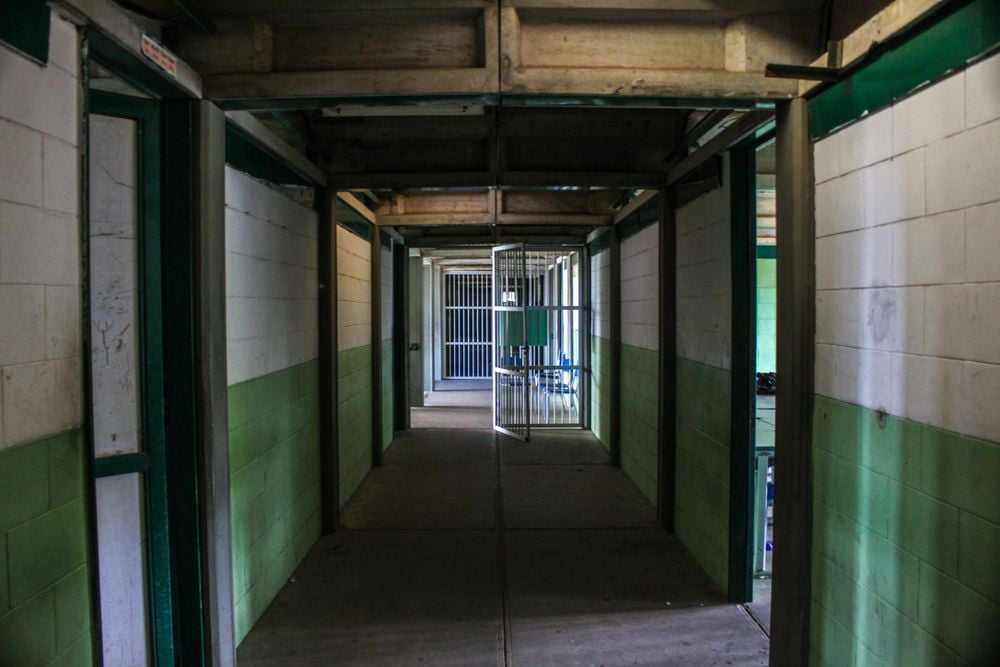
It had been six weeks since my release from prison.
Six weeks, and the sound of a slamming door still made me sit straight up in bed at night with my heart pounding. Six weeks, and I still asked permission before I opened the refrigerator.
Now Monica was standing in front of me, outside a house that wasn’t mine, threatening to send me back.
And on her wrist was our father’s watch.
The gold one, with the scratched face and the brown leather band. The one he’d pressed into my hand in the hospital, two days before he died, and said, “You keep this, Becky. You’re the one who’ll keep time for everybody.”
The one I’d left in the top drawer of my nightstand the morning the police came to my house.
Monica saw me looking at it. She didn’t cover it up. She turned her wrist a little so the sun caught the glass.
“Pick up your money,” I told her. My voice was shaking, but I kept going. “You already took four years of my life. You’re not buying the ones I have left.”
Monica smiled. It was a cold, small smile. I’d seen it before, when we were kids, right before she told our mother that I was the one who broke the lamp.
“You still think you can win,” she said.
To explain how my sister and I ended up facing each other across a clothesline that day, I have to start six weeks earlier, at the front gate of the Ohio Reformatory for Women in Marysville.
My name is Rebecca Hale. I’m thirty-six years old.
I spent almost four years behind bars, serving a five-year sentence for fraud I didn’t commit.
Before all of that, I owned a company called Buckeye Medical Supply. We distributed medical equipment to private clinics around central Ohio. Wheelchairs, blood pressure monitors, exam tables, hospital beds for home care. I started it from nothing, in a tiny rented storefront between a nail salon and a tax office. I had a comfortable house in Dublin, a suburb outside Columbus, with a red front door and a backyard with a maple tree.
And I was married to Trevor Mallory, a man I’d thought of as my closest friend.
When I walked out of that prison gate, everything I owned fit inside a clear plastic bag. Two pairs of jeans. Three shirts. Some underwear. A hairbrush. A paperback book with the cover torn off.
And seventy-five dollars in release money, in an envelope with my name typed on it.
That was it. That was what was left of my whole life.
Nobody came to pick me up.
I’d called Trevor from the prison phone two weeks before my release date. Then again one week before. Then again three days before. It rang and rang. The last time, it went straight to voicemail, and the message said the mailbox was full.
I’d called Monica too. Her number had been changed.
So I took the bus.
I sat in the back row, by the window, with my plastic bag in my lap. A woman across the aisle was eating a bag of chips, and the crinkling sound was so loud and so normal that I started crying, very quietly, so nobody would notice.
I hadn’t heard anybody eat chips in almost four years.
Here’s what I knew when I got out.
Trevor had taken control of my company after my arrest. Monica was still running its finances, the way she had for six years before everything happened.
And my house, my house with the red door, had a mortgage on it that I had never signed. I’d found out from a letter my lawyer forwarded to me in prison, eight months before my release. A bank I’d never heard of. A loan I’d never asked for. My signature, supposedly, at the bottom.
I’d written to Trevor about it. Three times.
He never wrote back.
For nine days, I looked for work.
I stayed at a women’s shelter on the east side of Columbus. They let you stay two weeks if you were looking for a job. The bed was narrow, and the woman in the bunk above me talked in her sleep, but it was clean, and nobody counted me at night.
Every morning, I put on my one good shirt, a blue button-down that was a little too big for me now, and went out.
The first place was a dental office looking for a receptionist. The office manager was a friendly woman with a lot of bracelets. She liked me. She said so. She said, “You’re exactly what we need.” Then she said they just needed to run a quick background check.
She called me the next afternoon.
“I’m so sorry, Rebecca,” she said. “It’s just… with patient information, and billing… I’m sure you understand.”
I said I understood.
The second place was a warehouse. The third was a hardware store. Both times, it went the same way. A nice interview. A handshake. A background check. A phone call.
I’m sure you understand.
The fourth place offered me something. Overnight office cleaning in a business park twenty miles north of the city, eleven at night to seven in the morning. Nine dollars an hour.
“When can you start?” the man asked.
“What’s the address?” I said.
He told me.
There was no bus that went there at night. I didn’t have a car. I didn’t have the money for a car. I didn’t even have a permanent address to put on the paperwork, because the shelter only let you use theirs for two weeks.
I thanked him and hung up.
Then I sat on a bench outside the shelter and counted my money. Forty-one dollars left.
I did the math three times. It didn’t get any better.
On the ninth day, I took a bus up to Worthington because a coffee shop there had a HELP WANTED sign in the window. When I got there, the sign was gone.
I was so tired and hungry that I walked into the little grocery store next door to buy a banana and a carton of milk. Two dollars and eighteen cents.
On my way out, I passed the community bulletin board by the door. Lost cats. Guitar lessons. A church rummage sale.
And an index card, handwritten in careful blue ink, in old-fashioned cursive.
Live-in woman wanted to cook and keep house. Room, board, and $600 a week. Must be honest and able to work. Inquire: Mrs. O. Hargrove.
There was a phone number at the bottom.
I read it twice.
Then I took the card off the board, put it in my pocket, and walked to the pay phone outside, because I didn’t have a cell phone.
The woman looking for help was Opal Hargrove. She was seventy-four years old and a widow, and she lived alone in a white two-story house on a quiet street lined with oak trees.
She opened the door before I even knocked.
She was wearing a navy blue dress with a white collar, and her white hair was pinned up in a neat twist at the back of her head. She was small and straight-backed, with a cane she didn’t seem to need much. But it was her eyes I noticed. Sharp gray eyes, like a schoolteacher’s. Eyes that seemed to see things I was working very hard not to show.
She looked me up and down. My too-big blue shirt. My worn-out sneakers. The plastic grocery bag with a banana in it.
“Come in,” she said. “Wipe your feet.”
We sat in her kitchen. It smelled like coffee and lemon dish soap. There was a stack of newspapers on one chair and a shoebox full of crumpled receipts on the counter.
“Can you cook real home-cooked food?” she asked. “Not out of a box. I mean real food.”
“Yes, ma’am.”
“What can you make?”
“Pot roast. Chicken and dumplings. Meatloaf. My mother’s chili. I can bake bread, if you have a decent oven.”
She nodded slowly. “Can you keep books?”
I almost laughed.
“Better than I cook,” I said.
One of her white eyebrows went up.
She looked at me for a long moment.
“Then you start tomorrow,” she said.
I almost said yes. I almost just took it and ran.
But I’d spent nine days watching people’s faces change on the phone. I didn’t want to see hers change after I’d already unpacked.
“Mrs. Hargrove,” I said. “Before you decide, there’s something you should know. I just got out of prison. Nine days ago. I served almost four years for fraud.” I took a breath. “I didn’t do it. But I know everybody says that.”
She didn’t say anything right away.
She picked up her coffee cup and took a sip. She put it down again. She looked at me over the rim of it.
“I asked if you knew how to work,” she said. “Not whether your life has been perfect.”
I just sat there.
“Tomorrow,” she said. “Seven o’clock. I like my eggs scrambled soft, and I like my coffee strong enough to stand a spoon in. Can you manage that?”
“Yes, ma’am,” I said. My voice cracked a little.
“Good. Now eat that banana before it goes brown. You look like you haven’t had a real meal in a week.”
That evening, I moved into a small bedroom on the second floor, at the back of the house. It had a single bed with a white chenille bedspread, a wooden dresser, a lamp with a fringed shade, and a window that looked out over Opal’s backyard. There was a clothesline out there, strung between two metal poles. A vegetable garden with tomato cages. A bird feeder.
I set my plastic bag on the dresser.
Then I closed the bedroom door.
I just stood there with my hand on the doorknob.
For almost four years, I hadn’t been allowed to close a door. Other people decided when doors opened and when they shut. A guard with keys. A buzzer. A loudspeaker. Count time, six times a day.
I turned the doorknob and opened the door again. Then I closed it. Then I opened it.
I did it four times.
Nobody yelled. Nobody came.
I sat down on the edge of the bed and put my face in my hands. I didn’t cry. I just sat there and listened to the quiet of a room that was, for now, mine.
For the first few days, Opal and I kept things completely professional.
I made breakfast at seven. Soft scrambled eggs and coffee strong enough to stand a spoon in. I made lunch at noon and supper at six. I washed her clothes and ironed her dresses and dusted the china cabinet in the dining room, which was full of little porcelain birds.
She ate alone at the dining table. I ate alone in the kitchen. That was how she wanted it, and I didn’t mind. I was used to eating fast and alone.
On the third day, I started on the shoebox.
It was full of receipts. Grocery receipts. Pharmacy receipts. Utility bills. Bank statements she’d stuffed in there without opening. Some of them went back two years.
I sat at the kitchen table after supper with a pencil and a legal pad and sorted them into piles. By category. By month. I made a little ledger in neat columns. Income on one side, expenses on the other.
When I was done, I found two problems. Her cable company had been charging her twice a month for eleven months. And the man who mowed her lawn had been billing her for weekly service in the winter, when nothing grows.
I wrote it all down and left the legal pad on the dining table next to her coffee cup in the morning.
She read it while she ate her eggs. She didn’t say anything for a long time.
Then she looked up at me over her glasses.
“You weren’t always a housekeeper, were you?”
“No, ma’am,” I said. “I used to run a company.”
I waited for the questions. What kind of company? What happened? Who were you before?
She just nodded and picked up her phone and called the cable company and gave them a piece of her mind for twenty minutes straight.
That was the first time I really liked her.
But something outside that house started to bother me.
On my fifth day, I was out sweeping the front porch in the morning when I noticed a gray sedan parked across the street. A plain car. Four doors. Tinted windows. The kind of car nobody looks at twice.
It was just sitting there with the engine running.
I kept sweeping. When I looked up again, it pulled away from the curb and drove off down the street.
I told myself it was nothing. A neighbor. A delivery driver checking his phone.
Four days later, it was back.
Same car. Same spot across the street. I was sweeping the porch again, and this time, the driver’s window was down a few inches. I could see a man inside. Middle-aged, with a baseball cap.
He was holding up his phone. Pointed at the house.
Taking pictures.
When he saw me looking, the window went up, and the car drove away fast.
I had a feeling I knew who’d sent him.
Trevor. Trevor, who never answered my calls. Trevor, who had my company and my house.
But I didn’t have any proof. Just a feeling. And I’d learned in a courtroom in Franklin County that feelings don’t count for anything.
So I did what I’d learned to do in prison. I wrote it down.
I bought a small spiral notebook at the grocery store for a dollar ninety-nine. On the first page, I wrote the dates and times of both sightings. A description of the car. A description of the man. And the license plate. Or at least the first four characters, which was all I could catch before it drove away. HKD 4…
I hid the notebook under the mattress in my room.
Some habits you don’t lose.
On my twelfth day, Opal came into the kitchen at a quarter to six, while I was setting out her supper tray.
“Leave that,” she said. “I made soup.”
I looked over at the stove. There was a big pot on the back burner I hadn’t noticed. It smelled like chicken and celery and thyme.
“You cooked?”
“I cooked for fifty-one years before you came along, young lady,” she said. “I can still do it once in a while. Sit down. You’re eating with me tonight.”
I didn’t know what to say. So I sat down.
She ladled out two bowls of chicken soup. Real chicken soup, with thick noodles and big chunks of carrot. She put a basket of bread rolls on the table between us and a dish of butter.
As she set down the rolls, she said, very casually, like she was asking me to pass the salt:
“Rebecca, why were you in prison?”
My fingers tightened around my spoon.
I looked down at the soup. The steam was rising off it in little curls.
I’d been asked that question a hundred times. By lawyers. By guards. By other women in my unit. By a parole officer with a mustache who never once looked up from his clipboard.
But nobody had ever asked me like she asked it. Like she actually wanted to know the answer.
“Because my husband and my sister stole money using my name,” I said. “And then they convinced everyone I was the one who did it.”
Opal didn’t react. She just buttered a roll.
“Tell me,” she said.
So I told her.
I told her how I’d started Buckeye Medical Supply eleven years ago, when I was twenty-five, with fourteen thousand dollars I’d saved from waitressing and a small business loan my father co-signed. How I rented that tiny storefront between the nail salon and the tax office. How I spent every Sunday for three years driving around central Ohio in my old Honda, with a trunk full of brochures, knocking on the doors of private clinics, trying to get them to buy from me instead of the big national companies.
How the first contract I ever got was from a family doctor in Delaware, Ohio, named Dr. Ferris, who bought six exam tables and said, “You’re the first salesperson who’s ever asked me what I actually need.”
How it grew. Slowly. Then faster. Forty clients. Then eighty. Then a real warehouse, and eleven employees, and a delivery van with our name painted on the side.
How I met Trevor at a medical supply trade show in Cincinnati, when I was twenty-eight. He was a sales rep for a wheelchair company. He was funny and easy to talk to, and he bought me a terrible hotel coffee and made me laugh about how terrible it was. We were married a year and a half later.
“He came to work at Buckeye after the wedding,” I said. “He handled sales. He was very good at it. People liked him. Everybody likes Trevor.”
“And your sister?”
“Monica ran the administrative side. Payroll. Billing. Vendor payments. She’s three years younger than me. She was working at a bank when I started the company. I hired her when we got big enough to need someone full-time on the books.” I stirred my soup. “I trusted them both. Completely. I never once thought I needed to check.”
Then I told her about Loretta.
Loretta was Trevor’s mother. She was a retired school librarian, kind and funny, with a laugh that sounded like a hiccup. She’d never had a daughter, and she treated me like one from the very first day.
In the spring of 2021, she got sick. Ovarian cancer. Trevor’s father had been dead for years, and Trevor said he couldn’t handle hospitals. They made him panic. So I went. I drove her to every appointment. Every scan. Every chemotherapy session. I slept in the chair next to her bed when she had surgery.
For almost three months, I was barely at the office.
“I’d check my email at night,” I said. “I’d sign things when Monica sent them over. But I wasn’t really watching. I couldn’t. I was holding Loretta’s hand while she threw up into a plastic tub.”
And during those three months, unauthorized money transfers started going out of Buckeye’s accounts. Under my login. With my approval code.
The money went to a supplier called Halston Ridge Supply. A company I’d never ordered from. Never even heard of.
By the time our bank flagged it, more than three hundred thousand dollars was gone.
“Once the investigators got involved,” I said, “Trevor testified that I’d told him to make those payments. He said I’d been under a lot of stress with his mother, and I’d made some bad decisions. He said I’d asked him to cover for me.” I set the spoon down. “And Monica brought in paperwork. Emails. Approval forms. All of it looked like it backed up what he said.”
“Your own sister,” Opal said.
“My own sister.”
“And your lawyer?”
“He was a nice man,” I said. “He tried. But he couldn’t prove their evidence was false. It was my word against theirs. And there were two of them, and they had papers, and I just had my word.”
The jury was out for four hours.
When the foreman read the verdict, Trevor was sitting in the second row behind the prosecutor’s table. He looked down at his shoes.
Monica was sitting next to him.
She looked straight at me.
Opal listened to all of it without interrupting. Not once. She just sat there with her soup going cold and her hands folded on the table.
When I finished, she was quiet for a long time.
“Do you have any documents?” she said. “From those years?”
I hesitated.
“I kept a few copies,” I said. “When things started to go wrong, before I was arrested, I printed some things out. A few emails. A bank statement. I didn’t really know what I was looking for. I just knew something was wrong. I hid them in a safe deposit box in my maiden name, at a bank Trevor didn’t use. My lawyer never even used them. He said they didn’t prove anything.”
Opal nodded slowly.
Then she pushed back her chair and stood up, holding on to the edge of the table. She walked out of the kitchen with her cane. I heard her open a drawer in the front hall.
When she came back, she was holding a small piece of paper, folded in half. She put it down on the table in front of me.
I unfolded it.
There was a name and a phone number, written in that same careful blue cursive.
Russell Keane.
“He’s a forensic financial investigator,” Opal said. “He helped me once. When I had trouble with my ex-husband.”
“Your ex-husband? I thought you were a widow.”
“I’m both,” she said. “I divorced the first one and buried the second one. The first one was named Leonard, and he hid sixty thousand dollars from me in our divorce. Russell found every penny of it. In about two weeks.” She sat back down. “He doesn’t work miracles, Rebecca. But he knows how to find lies that are hidden in numbers.”
I stared at the name on that piece of paper.
For the first time since that jury foreman stood up, I felt something I’d almost forgotten about.
It wasn’t hope. Not exactly. It was smaller than hope. It was more like the idea of hope. Like seeing a light on in a house far away when you’re lost in the dark.
“I can’t pay him,” I said. “I have six hundred dollars a week, and I owe you for the soup.”
“Talk to him first,” Opal said. “Then worry about paying him.”
Then she reached into the pocket of her navy dress and took out her cell phone.
“There’s something else you need to know,” she said. “I was going to wait and see what you told me before I showed you.”
She put the phone face up on the table and slid it across to me.
It was a text message. It had come in the night before, at 10:47 p.m.
Mrs. Hargrove, I understand you have recently hired a woman named Rebecca Hale. You should know she is a convicted felon and is considered dangerous. She has a history of stealing from people who trust her. I am prepared to offer you $3,000 to dismiss her immediately. No questions asked. Please reply to this number.
I read it twice.
I didn’t need to read it a third time. I recognized the phone number.
It was Monica’s.
Her personal cell. The number I’d been calling from prison for the first year, before she changed it. The one I’d memorized when she got her first cell phone in high school.
She hadn’t changed it after all. She’d just blocked mine.
“That’s my sister,” I said.
My voice sounded very far away.
“I thought it might be,” Opal said. “Scroll down.”
I scrolled down.
There was a photograph attached to the message.
It was my house. My house in Dublin, with the red front door and the maple tree in the backyard. The red door had faded to a dull pink. The grass was long and brown. There were dead leaves piled against the porch steps.
And in the front yard, stuck in the dead grass, there was a sign.
FOR SALE.
Underneath the picture, there was one more line of text.
It looked like it had been sent by accident. Like Monica had meant to send it to somebody else and sent it to Opal instead. There were no capital letters. It had the rushed look of a text you type while you’re doing something else.
before rebecca finds out what we did with the deed we need to get her out of ohio
“Does your sister know where you work?” Opal asked.
“She shouldn’t,” I said. “I haven’t told anyone. I don’t have anyone to tell.”
I looked at the message again.
It had been sent from Monica’s phone. I knew that. But the photograph of my house could have been taken by anyone.
The gray sedan came into my head immediately. The man in the baseball cap with his phone pointed at the house.
“I think someone’s following me,” I said. “There’s been a car. Twice. A gray sedan, across the street. A man was taking pictures.”
I told her about the notebook under my mattress.
Opal didn’t panic. She didn’t gasp or grab my arm or tell me to call the police. She just took her phone back and looked at the message one more time, very calmly.
“Then keep everything,” she said. “Every message. Every license plate. Every phone call. We’re not going to hand them any information, and we’re not going to hand them any opportunities.” She put the phone back in her pocket. “And we’re not going to answer this.”
“You’re not going to take the three thousand dollars?” I said. I was only half joking.
She looked at me over her glasses.
“Young lady,” she said, “I have been insulted many times in my life. But that’s the first time anybody’s ever thought I could be bought for three thousand dollars.”
That afternoon, I called Russell Keane from Opal’s kitchen phone.
His office was near downtown Columbus. He agreed to see me the next day.
He wasn’t what I expected. I’d pictured some slick guy in an expensive suit. Russell Keane was about forty, tall and a little rumpled, with reading glasses pushed up on his forehead and a cardigan sweater with a coffee stain on the sleeve. His office was small and full of filing cabinets. There was a dying plant on the windowsill.
He listened to my whole story without saying a word. He took notes on a yellow legal pad. When I finished, he put down his pen and looked at me for a long moment.
“I want to be honest with you, Rebecca,” he said. “I’m not going to promise you anything.”
“Okay.”
“I need to review the case file. All of it. And you need to understand something. A final conviction doesn’t just disappear because somebody finds a few inconsistencies. The courts don’t work that way. But if there’s genuinely new evidence, evidence that wasn’t available at your trial, then an attorney can evaluate whether there’s a way to present it.”
“That’s all I want,” I said. “Someone to look.”
He nodded.
“Then bring me what you have,” he said.
The next day, I took the bus to the bank where I’d hidden my safe deposit box four years ago. My hands were shaking when I signed the card. I was terrified it would be gone, or empty, or that they’d tell me it had been closed for unpaid fees.
It was still there.
Inside was a thin manila folder. Four printed emails. One business bank statement. Buckeye Medical Supply’s original incorporation documents, with my name on every page as the sole founder and majority owner.
That was it. That was everything I’d managed to save from my old life.
I took the folder to Russell’s office.
He spent almost two hours looking at those few pages. He didn’t talk. He just read, and made notes, and read again, and held two pages side by side and compared them, and made more notes.
I sat in the chair across from his desk and watched the dying plant.
Finally, he tapped the bank statement.
“This says three hundred and twenty thousand dollars was transferred to Halston Ridge Supply,” he said. “Over about ten weeks. Supposedly for an equipment purchase. Hospital beds and patient lifts.”
“That equipment never arrived,” I said. “We never got so much as a box.”
“Who had access to approve payments over a certain amount?”
“Me and Monica,” I said. “Trevor could request a payment. He could put in a purchase order. But he couldn’t approve one on his own. Anything over five thousand needed one of us.”
Russell turned the bank statement around so it faced me. He pointed to a line near the bottom of the page, in small gray type. It was a notation I’d looked at a hundred times without really seeing.
Auth. Admin ID: MH-17.
“Whose code is that?” he asked.
I stared at it.
“That’s Monica’s,” I said slowly. “MH. Monica Hale. Seventeen was her employee number.”
“At trial,” I said, “they talked about that. The prosecutor said that code only showed who typed the transaction into the system. Not who approved it. Monica testified that she entered the payments because I told her to, and then I approved them with my own login.”
Russell nodded.
“That may be true,” he said. “It may be exactly what that code means. That’s the problem with copies. They don’t tell you everything.” He took off his glasses. “We need the original records, Rebecca. The bank’s actual logs. Not somebody’s conclusions drawn from a printout.”
He gave me an assignment.
“Go home,” he said, “and reconstruct the whole thing. Every single day you can remember, from the time Loretta got sick until the day you were arrested. Every hospital visit. Every phone call with Trevor or Monica. Every time you logged in to the company system. Every time you signed something. Write it all down. In order. Don’t skip anything because it seems small.”
For three evenings, after I’d washed the supper dishes and Opal had gone to bed, I sat at her kitchen table and rebuilt my life.
I used a calendar I bought at the drugstore. A big paper one with a box for every day. I filled in what I could remember. Then I asked Opal if I could use her computer, and I went through Loretta’s old Facebook page, which was still up, and found photographs she’d posted from the hospital. Dates. Captions. Becky brought me the good pudding today! Day 3 of round 2.
I found my old phone number and asked the carrier for my call records from 2021. They said it would take weeks.
I wrote down every conversation I could remember with Trevor about the company. Every time Monica sent me something to sign.
On the third night, around midnight, I found it.
According to the prosecution’s records, I had personally logged in and approved an eighty-nine-thousand-dollar transfer to Halston Ridge Supply at 11:43 in the morning on June 18, 2021.
I knew that date. It had been in the court papers. I’d read it so many times in my cell that I could see the numbers when I closed my eyes.
But now I was looking at my paper calendar. At the box for June 18.
And at the photograph on Loretta’s Facebook page from that morning. Loretta in a hospital gown, giving a thumbs-up. Procedure day! Becky’s here holding my hand. Wish me luck!
June 18 was the day Loretta had her port put in. A small surgery. A little device under the skin of her chest, so they could give her chemotherapy without finding a new vein every time.
I’d been at the hospital from seven in the morning until four in the afternoon.
And I remembered something else.
I remembered sitting in the surgical waiting room. I remembered my phone buzzing. It was Trevor.
“Becks,” he said, “Monica’s having some payroll problem. Something’s stuck in the system, and the guys aren’t going to get paid on Friday. She needs to log in as you to fix it. Can you just give her your phone for a little while? She’s on her way over. She’ll bring it right back.”
Monica showed up at the hospital twenty minutes later. She hugged me. She asked how Loretta was. She said, “Don’t worry about a thing. I’ll handle it.”
And she took my phone.
The phone that had my banking app on it. The phone that got the two-step verification codes.
She was gone for almost two hours.
When she came back, she handed me the phone and a cup of vending machine coffee and said, “All fixed.”
I sat there at Opal’s kitchen table at midnight and stared at that calendar box.
It didn’t prove anything. Not by itself. I knew that. It didn’t prove Monica had used my phone to approve that transfer. Maybe she’d fixed the payroll, just like she said.
But it showed a way.
A way it could have happened, without me.
For four years, everybody had asked me, If you didn’t approve those transfers, who did? How? And I’d never had an answer. I’d just kept saying, I don’t know. I don’t know. It wasn’t me.
Now, for the first time, I had a how.
I asked the hospital for whatever records they still had from June 18, 2021. Visitor logs. Surgery times. It took them two weeks, but they sent a letter confirming the time of Loretta’s procedure and that I’d been listed as her designated support person on site that day.
And I found something even better in my folder from the safe deposit box.
One of the four emails I’d printed out was from Monica. Sent at 9:52 a.m. on June 18, 2021.
Hey Becks, Trev said he told you about the payroll thing. I’m heading to the hospital now. I’ll need your phone for a bit, okay? Sorry!! Love you. Tell Loretta hi.
I’d printed it four years ago because something about it had bothered me. I hadn’t known why.
I gave everything to Russell.
He read the email twice. Then he looked up at me, and for the first time, he almost smiled.
“Well,” he said. “That’s something.”
Russell introduced me to Helen Marsh a few days later.
Helen was a criminal defense attorney in her fifties, with short gray hair and a voice like gravel. She’d spent twenty years as a public defender before going into private practice. Her office walls were covered in framed newspaper clippings about cases she’d won. And a few she’d lost, which surprised me.
“I keep those up so I don’t get cocky,” she said when she saw me looking.
She agreed to review my entire criminal case. All of it. The trial transcripts. The evidence. The appeal my first lawyer had filed and lost.
“I’m looking at whether we can file a petition,” she said. “A request to vacate your conviction based on new evidence of actual innocence. That’s a very high bar, Rebecca. Courts don’t like to undo jury verdicts. We would need to show that there’s new evidence, evidence that couldn’t reasonably have been found at the time of trial, and that it’s strong enough that no reasonable jury would have convicted you if they’d seen it.”
“Do we have that?”
“Not yet,” she said. “Maybe. We’ll see.”
“How much is this going to cost?”
Helen looked at Russell. Russell looked at the ceiling.
“Opal called me,” Helen said. “We’ve worked something out. Don’t worry about it right now.”
“I can’t let her pay for…”
“Rebecca,” Helen said. “With respect. You have a lot of things to worry about. That’s not going to be one of them today.”
Meanwhile, I went looking for Gordon Pierce.
Gordon had been Buckeye’s outside accountant for five years. A quiet, careful man in his sixties who wore sweater vests and brought his own lunch in a paper bag every day. He’d done our quarterly books and our taxes. He’d stopped working for us about six months after my arrest. I’d never known why.
I found him on the internet. He’d retired and was living in Westerville, about twenty minutes away.
My first instinct was to go knock on his door. Just show up and ask him what he knew.
But I’d been in prison for four years. I knew how that would look. A convicted felon showing up uninvited at an old man’s house, asking questions about money.
So instead, I asked Helen to reach out to him. Formally. Through her office. A request for an interview, with his own lawyer present if he wanted.
I didn’t expect him to say yes.
He said yes.
Gordon came to Helen’s office on a Wednesday afternoon. He was wearing a sweater vest. He looked thinner than I remembered, and older, and very nervous. His hands were shaking. He was carrying an old, battered accordion folder, held shut with a thick rubber band.
When he saw me, he stopped in the doorway.
“Rebecca,” he said.
“Hi, Gordon.”
He sat down across from me at Helen’s conference table. He put the folder on the table and kept both hands on top of it, like he was afraid it would float away.
“I should have spoken up years ago,” he said. “I’ve been thinking that every day for four years. I should have come forward. I should have called somebody. I didn’t. I was scared, and I told myself it wasn’t my business, and I was retiring anyway.” He looked at me. “I’m sorry. I’m so sorry.”
I didn’t know what to say. So I just said, “You’re here now.”
He took the rubber band off the folder.
Inside were copies of accounting reconciliations. Monthly reports he’d prepared for Buckeye in 2021 and 2022, comparing what the company’s books said against what the bank statements actually showed.
He’d kept copies of everything before he left. “Old habit,” he said. “Forty years of accounting. You keep copies of everything.”
He spread the pages out on the table. He walked Helen and Russell through them, line by line, using a pencil to point.
The money that went to Halston Ridge Supply hadn’t stayed there. Within days of each payment, most of it had been moved again. To an account belonging to a different company. A company called TM Strategic Consulting, LLC.
And according to the business registration Gordon had pulled from the state, the authorized agent for TM Strategic Consulting was Trevor Mallory.
TM.
Trevor Mallory.
I sat very still.
Helen was writing fast. Russell had his glasses back on and was leaning over the table, looking at the pages.
“That’s not all,” Gordon said quietly.
He reached into the very back of the folder and pulled out a stapled document. Maybe eight pages. He laid it on the table and turned it around so it faced me.
MINUTES OF SPECIAL MEETING OF SHAREHOLDERS
BUCKEYE MEDICAL SUPPLY, INC.
March 14, 2022
I read the first page.
It said that a meeting had been held in a private office at Buckeye’s warehouse on March 14, 2022. It said that Rebecca Hale, majority shareholder, had personally attended. It said that I had voluntarily transferred sixty percent of my ownership in Buckeye Medical Supply to Trevor Mallory, giving him controlling interest in the company.
It said I’d done this “in consideration of his continued management of company operations during her legal difficulties.”
At the bottom of every single page, there was a signature.
My signature.
Or something that looked very, very much like it.
I read the date again.
Then again.
Then I put my finger on it, like I could hold it still.
“That’s impossible,” I said.
Russell looked up.
“Why?”
“Because on March 14, 2022, I was already in custody,” I said. “I was arrested in January. I couldn’t make bail. I was in the county jail from January until my trial in September. I didn’t leave that jail on March 14. I didn’t even go to court that day. I didn’t have a hearing. I was in a cell.”
The room went very quiet.
“I know exactly where I was,” I said. “I was in Pod C, bunk 14, in the Franklin County jail. I remember because it was my mother’s birthday. I asked the chaplain if I could call her grave. That’s a stupid thing to ask, I know. You can’t call a grave. But I asked.”
Nobody said anything.
“And this,” I said, tapping the paper, “says I was sitting in an office at our warehouse. Signing away my company.”
Gordon explained what had happened.
A few weeks after my arrest, Monica had come to his office with those meeting minutes. She’d asked him to update Buckeye’s corporate stock ledger to show the transfer. To make Trevor the majority owner on paper.
“I asked her how Rebecca could sign this from jail,” Gordon said. “She said there was a lawyer who’d brought it to you. She said it was all done properly. I asked to see the lawyer’s paperwork. She said she’d send it.” He shook his head. “She never sent it.”
“What did you do?” Helen asked.
“I refused to sign off on the next quarter’s reconciliation,” Gordon said. “I told her I couldn’t certify the books with an ownership change I couldn’t verify. I told her I’d need documentation.” He swallowed. “Two weeks later, they fired me. Trevor sent a letter. He said they were going in a different direction.”
Helen started working that same day.
She requested certified custody records from the Franklin County jail. Official documents showing exactly where I’d been every day from January to September 2022. She requested every visitor log. Every attorney visit log. Every court transport record.
“If anyone brought you a document to sign in jail,” she said, “there’ll be a record. Lawyers have to sign in. Notaries have to sign in. If there’s nothing on March 14, there’s nothing.”
For the first time, we had something besides my word against theirs.
We had paper.
Two days after Gordon’s interview, my phone rang.
I’d bought a cheap prepaid phone by then, with my first paycheck from Opal. Only four people had the number. Opal. Russell. Helen. And the parole office.
But the number on the screen was one I knew by heart.
Trevor.
I stood in Opal’s kitchen and watched it ring three times. Four times.
Then I answered.
“Quit harassing Gordon,” Trevor said.
No hello. No how are you. No I’m sorry I didn’t pick you up from prison. Four years, and that was the first thing my husband said to me.
His voice sounded exactly the same. That easy, friendly voice that everybody liked.
“I’m not harassing anyone,” I said.
“He’s an old man, Becks. He’s confused. He doesn’t need you dragging him into your mess.” He sighed, like I was being difficult. “You already lost once. Let it go. Move somewhere. Start over. I’m trying to help you here.”
“How did you get this number, Trevor?”
He didn’t answer.
“I won’t discuss this with you again,” I said. “Not without lawyers.”
He hung up.
I stood in the kitchen with the phone in my hand.
Then I took out my little spiral notebook and wrote down the date, the time, and every word he’d said, as close as I could remember.
Then I called Helen and told her.
“Good,” she said. “Don’t talk to him again. If he calls, don’t answer. Let it go to voicemail. Save everything.”
“Helen,” I said. “How did he get this number? Only four people have it.”
She was quiet for a second.
“I don’t know,” she said. “But I’d like to.”
The following Thursday, I was in the backyard, hanging freshly washed sheets on the clothesline.
It was a bright, windy October morning. The sheets kept snapping in the breeze and slapping me in the face, and Opal was sitting on the back steps with her coffee, laughing at me.
Then I heard a car stop near the side of the house.
I looked over the clothesline.
It was the gray sedan.
The passenger door opened.
My sister stepped out.
I hadn’t seen Monica since the day of my sentencing. She’d changed. Her hair was shorter and lighter, expensively highlighted. She was wearing a camel-colored wool coat and tall leather boots and big sunglasses. She looked like a woman who’d done very well for herself in the last four years.
The man in the baseball cap stayed behind the wheel.
Monica walked across Opal’s side yard, straight through the grass, and stopped on the other side of the clothesline. She was carrying a thick white envelope and a large manila folder.
She took off her sunglasses.
“Hi, Becky,” she said.
Opal stood up on the back steps. She didn’t come down. She just stood in the doorway with her cane, watching.
“We’re offering you ninety thousand dollars,” Monica said. She didn’t bother with small talk either. Just like Trevor. “That’s ten in here.” She held up the envelope. “Cash. The other eighty when you sign an agreement. You stop this ridiculous investigation. You stop talking to Gordon. You stop talking to lawyers. And you leave Ohio. Go to Florida. Go to Arizona. Go anywhere you want.”
“I’m not signing anything,” I said.
Monica’s smile disappeared.
That’s when she said it.
“If you mention my name again,” she said, “I promise you’ll be going straight back to prison.”
And she tossed the envelope onto the grass in front of my feet.
That was when I saw the watch.
Our father’s gold watch, with the scratched face and the brown leather band, on my little sister’s wrist.
“Pick up your money,” I told her. “You already took four years of my life. You’re not buying the ones I have left.”
“You still think you can win,” Monica said.
I didn’t pick up the envelope.
Neither did she.
It just lay there in the grass between us, with the torn corner and the hundred-dollar bills peeking out.
“Do you know how little time you have,” Monica said, “before your house is sold?”
A wave of cold dread went through my whole body.
“What did you do?” I said.
She opened the manila folder and took out a stack of papers. She held them out over the clothesline.
I took them.
It was a copy of a deed. My deed. The house with the red front door. There were stamps all over it, official stamps, and handwritten notes from the county recorder’s office in the margins.
And behind the deed, there were more papers. A mortgage. A loan agreement. A notice of default.
“The house secures a debt that’s in default,” Monica said. “Three hundred and forty thousand dollars. The bank’s going to foreclose. If you keep pushing, Becky, you’re going to end up with absolutely nothing. At least this way, you walk away with ninety thousand dollars.”
I skimmed the pages. My hands were shaking so badly the paper rattled.
The mortgage had been signed by Trevor. On my behalf. Under a general power of attorney. A legal document that supposedly gave him the right to do anything he wanted with my property while I was unable to act for myself.
My signature was at the bottom of that power of attorney.
I stared at it.
Then I noticed the document number. A long string of numbers printed in small type in the upper right corner, next to the notary’s stamp.
I knew that number.
I didn’t know it by heart, but I knew the first part of it. I’d seen it before.
It matched an old power of attorney I had actually signed. Years ago, back in 2020. A limited power of attorney. I’d signed it at a notary’s office in Dublin so Trevor could handle some routine paperwork for the business while I was away at a trade show for a week. Renewing a vehicle registration for the delivery van. Picking up certified mail. Signing for packages.
That was all it allowed. Administrative things. For one specific week.
It didn’t give anyone the right to sell my house. Or mortgage it. Or anything close to that.
Monica leaned across the clothesline. Close enough that I could smell her perfume. Something expensive and floral.
“You have until tomorrow to accept,” she whispered. “After that, neither your little house nor that old woman will be able to protect you.”
She glanced past me, toward the back steps. Toward Opal.
Then she put her sunglasses back on, turned around, and walked back across the grass to the gray sedan.
She left the envelope lying on the lawn.
The car pulled away.
I stood there in the backyard holding the papers, with the sheets snapping on the line beside me.
They hadn’t just faked my signature.
That was the thing I couldn’t stop thinking about. They hadn’t just forged my name on a piece of paper.
They’d taken something real. A genuine document I’d actually signed, for a small and harmless reason, years before any of this happened. And they’d used its number, its notary stamp, its official record, to build something enormous and false on top of it.
Something that looked real to a bank. Something that looked real to a county recorder.
Just like the payments from my phone. Just like the meeting minutes. Real pieces, put together into a lie.
And unless I could challenge it the right way, through the right legal channels, I was going to lose the last thing in the world that still had my name on it.
Opal came down the back steps slowly, with her cane.
She looked down at the envelope in the grass. Then at me.
“Leave it,” I said. “Don’t touch it.”
“I wasn’t going to touch it,” she said. “I was going to take a picture of it before we call your lawyer.”
She took out her phone and took three pictures of the envelope lying on the lawn, from three different angles. Then she took a picture of the license plate of the gray sedan, which was just turning the corner at the end of the street.
HKD 4719.
“There,” she said. “Now you’ve got the rest of it.”
That night, I couldn’t sleep.
I didn’t even try. I sat at Opal’s kitchen table with the deed spread out in front of me and a cup of coffee going cold at my elbow.
I read every page. Then I read them again. I read the tiny print. I read the recorder’s notes in the margins.
Around two in the morning, I heard the stairs creak.
Opal came into the kitchen in a pale blue bathrobe and slippers, with her white hair down around her shoulders. I’d never seen it down before. It came almost to her waist.
She sat down across from me.
“Are you going to take the money?” she asked.
I shook my head.
“No,” I said. “But I’m not going to sit around and let them do whatever they want while I wait for somebody else to save me, either.”
She nodded slowly, like that was the answer she’d been hoping for.
I took a blank sheet of paper from her legal pad. I wrote three questions on it, numbered, in big letters.
1. Who actually used the power of attorney?
2. What transaction did it make possible?
3. Why does this deed have the same document number as my old limited one?
Opal read them over my shoulder.
“Good,” she said. “Now go to bed. You can’t fight anybody on two hours of sleep.”
“I slept on two hours of sleep for four years.”
“And look how well that went,” she said.
I laughed for the first time all day.
At seven o’clock the next morning, I called Helen.
She told me exactly what to do. Reject Monica’s offer, in writing, through Helen’s office. Don’t sign anything. Don’t touch the cash. Send photographs of every single page Monica had left.
“And Rebecca,” she said. “That thing she whispered about Opal. Write it down. Exactly. Word for word. And the time.”
I’d already written it down.
That afternoon, Helen and I went to the Franklin County recorder’s office.
We stood at a long counter while a woman with purple reading glasses typed my address into her computer. She printed out a stack of records and slid them across to us.
The house was still titled in my name. That was the first thing. It still belonged to me.
But a mortgage lien had been recorded against it in November 2022. Two months after I was convicted. While I was in Marysville.
Trevor had signed for the loan as my agent. Under a power of attorney.
And the power of attorney that the recorder’s office had on file for that transaction was my original limited one. The one from 2020. The one for the delivery van registration and the certified mail.
“Can I see the actual document?” Helen asked. “The power of attorney itself?”
The woman pulled it up on her screen and turned it toward us.
Helen read it very slowly.
“This authorizes him to sign for packages,” she said. “And renew a vehicle registration. And pick up certified mail. For seven days in March of 2020.” She looked at the woman behind the counter. “It doesn’t say anything about real estate.”
The woman looked at the screen. She frowned.
“No,” she said slowly. “It doesn’t.”
“This changes things,” Helen said as we walked back to her car. “This changes a lot. We need certified copies of everything. And we need to look at exactly how that power of attorney was presented to the bank. What they were shown. Who notarized the loan.”
“Can we stop them from foreclosing?” I asked. “Monica said tomorrow.”
“Monica’s not a judge,” Helen said. “We can ask the court for emergency relief. We can challenge whether that lien is even valid.” She stopped beside her car and looked at me. “But I want to be straight with you. That doesn’t mean the bank will just vanish. Or that everything gets fixed tomorrow. This is going to take time.”
I nodded.
Strange as it sounds, I was grateful for that.
For four years, people had made me promises. Don’t worry, Becky, the truth will come out. Don’t worry, the jury will see. Don’t worry, we’ll appeal. I’d learned that promises don’t mean anything.
A straight answer was worth more to me than all the reassurance in the world.
For the next few weeks, I split my days in two.
In the mornings and evenings, I took care of Opal. Breakfast at seven. Lunch at noon. Supper at six. Laundry. Ironing. Her doctor’s appointments. Her walks around the block at four o’clock, which she insisted on taking every single day, even in the rain.
In between, I gathered evidence.
Helen filed the emergency motion to stop the foreclosure. The judge granted a temporary hold while the court looked at the lien. Not a win. Just a pause. But it was a pause.
Russell traced the money. I checked dates against approvals against emails, over and over, at Opal’s kitchen table, until the columns blurred.
One night, going through old Buckeye emails that Helen had gotten through a records request, I found something I’d completely forgotten.
It was an email from Trevor. Sent to me about three weeks before Loretta got really sick. In March 2021.
Becks, I’ve got a huge opportunity. A big clinic network in Dayton wants to go with us for all their home care equipment. It’s a monster contract. But we need to stock up on inventory first, and our credit line won’t cover it. Can we ask the bank to raise it to $400K? I’ve already talked to them. They just need your approval.
I remembered that email.
I remembered sitting at my desk and reading it. I remembered calling him and saying, “That’s a lot of money, Trev. Let me look at the numbers first.”
“It’s a huge opportunity, Rebecca,” he’d said. “We can’t lose it over cash flow.”
“I know. Just give me a couple of weeks. I want to see the contract.”
And then Loretta’s doctor called. And I never looked at the numbers. And I never saw the contract.
I never approved that credit line increase.
But according to the bank’s records, which Helen had also requested, the bank had released the money anyway. Four hundred thousand dollars. Under a request that showed my approval.
And most of that money had gone straight to Halston Ridge Supply.
When I laid all the records next to each other, next to Gordon’s reconciliations and my paper calendar and the bank statements, I could finally see how it fit together.
Trevor saw a way to pull money out of the company. A fake supplier. A fake contract. A credit line big enough to hide it.
Monica controlled the administrative side. She had my login information. She had access to my phone. She had her own approval code, MH-17.
And I was gone. For three months. Sitting in hospital waiting rooms holding Trevor’s mother’s hand.
They didn’t even have to hide it from me. I just wasn’t there to see it.
And then, when the bank flagged it, the suspicious payments became the very evidence they used to accuse me.
They’d built the crime, and then they’d built the case.
But there was still one question I couldn’t let go of.
How did the jury convict me? I’d said, over and over, It wasn’t me. I was at the hospital. Why didn’t anyone check?
Helen found part of the answer in my original defense file.
My first attorney, a nice man named Mr. Briggs who I’d hired with what was left of my personal savings, had put up some evidence in my favor. Character witnesses. My history with the company. Loretta’s illness.
But he hadn’t gotten the technical records. The bank’s electronic logs that would have shown exactly which device approved each transaction, from which location, at what time. He hadn’t requested them before the deadlines passed. By the time he thought to ask for them, the court wouldn’t allow it.
“So the court only had what was in front of it,” Helen said. “Trevor’s testimony. Monica’s paperwork. The approval records that looked like they came from you. And on that evidence, the court decided it was enough.”
I sat there in her office, staring at the defense file.
“That doesn’t mean everyone conspired against you,” Helen said gently. “The prosecutor wasn’t in on it. The judge wasn’t in on it. The jury wasn’t in on it. They just saw what they were shown. It means we have to prove facts that couldn’t be proven back then.”
For four years, I’d believed that everyone had chosen not to believe me. That the whole world had looked at me and decided I was a liar.
Now I saw something worse.
Nobody had needed to choose anything.
Trevor and Monica had used real paperwork. Real codes. Real gaps in the investigation. My own inability to rebuild what had happened while I was sitting in a hospital waiting room.
They hadn’t needed to fool every single person in that courtroom.
They’d only needed their story to look a little more convincing than mine.
One afternoon in November, Russell called me at Opal’s.
“I’ve got an update,” he said. “Can you sit down?”
I sat down at the kitchen table.
“Between Gordon’s records, the original case file, and the bank records Helen’s gotten through the court, we’ve established a clear financial connection,” he said. “Halston Ridge Supply and TM Strategic Consulting. Halston Ridge was a shell. A company that only existed on paper. It was registered by a man who turns out to be Trevor’s old college roommate. There were never any medical equipment deliveries. Not one. Not a single shipping record anywhere.”
“Where did the money go?”
“Split up. Moved through four different accounts. Most of it ended up with TM Strategic. Some went to an account in Monica’s name.” He paused. “And Rebecca. Some of those transfers kept happening after you were arrested. Into the spring of 2022. While you were sitting in the county jail.”
I closed my eyes.
“Your signature doesn’t explain what they did afterward,” Russell said. “You can’t approve payments from a jail cell.”
“But it does show who kept benefiting,” I said.
“Exactly,” Russell said.
That evening, after Opal went to bed, I sat by the window in the front room, in the armchair by the lamp. I was looking out at the dark street, at the place where the gray sedan used to park.
And I started to cry.
It was the first time I’d cried since I walked out of that prison gate. Not on the bus. Not at the shelter. Not when the dental office called. Not when Monica threw the money at my feet.
Nothing had been fixed yet. I knew that. I was still a convicted felon. My house still had a lien on it. Trevor and Monica were still out there, living their lives.
But for almost four years, I’d been telling the same story over and over. To lawyers. To guards. To the women in my unit. To myself, at night, in my bunk. It wasn’t me. It wasn’t me. It wasn’t me.
And nobody believed it.
Now, for the first time, there were pieces of paper, real pieces of paper that other people had found, that said the same thing.
It wasn’t her.
I didn’t hear Opal come down the stairs.
I just felt the other end of the couch sink a little. I looked up. She was sitting there in her pale blue bathrobe, with her hair down.
She didn’t say anything. She just sat with me.
After a while, I wiped my face with my sleeve.
“I used to think being strong meant not crying,” I said.
“Then you thought something foolish,” Opal said.
I started laughing. I couldn’t help it. I was crying and laughing at the same time, and it came out as a sort of snort, which made me laugh harder.
Opal smiled.
Then she opened her arms.
I leaned over, and she held me. The first time we’d ever hugged. She smelled like lavender soap and coffee. She patted my back slowly, the way you’d pat a child who’d woken up from a bad dream.
“There,” she said quietly. “There now.”
My mother had been dead for eleven years. Nobody had held me like that since.
Two weeks later, Trevor and Monica’s lawyers sent Helen a formal settlement offer.
They’d raised the amount. One hundred and thirty thousand dollars. In exchange, I would give up certain claims to the house and the company. And I would agree not to take any further legal action against either of them.
Helen walked me through it at her conference table.
“A private agreement can’t make a criminal investigation go away,” she said. “They know that. You can’t sign away a crime. But some of the terms in here could seriously weaken your civil case. Your claim to the house. Your claim to the company.” She folded her hands. “I can look at possible counter-terms if you want. Negotiate something better.”
“What do you think I should do?”
“I think it’s not my decision,” Helen said. “What do you want to do, Rebecca?”
I looked at that piece of paper for a long time.
One hundred and thirty thousand dollars.
I’d be lying if I said I wasn’t tempted. That money could have bought me a small apartment. A used car. Enough to start something small. A little consulting business. A cleaning company. Anything.
After four years in a cell, the idea of just walking away and having a quiet life was so appealing it almost hurt.
But I thought about Gordon. Fired after twenty-two years in accounting because he refused to sign off on a lie.
I thought about my employees at Buckeye. Eleven people. Delivery drivers. Warehouse guys. Our receptionist, Tonya, a single mom with twins. Russell had found records showing that after I went to prison, Buckeye had started missing payroll. Paychecks bounced. People quit. The company sank into debt while Trevor’s consulting firm got richer.
And I thought about my house. The red front door. My furniture. My clothes. My father’s photograph, which had been on the mantel above the fireplace when the police came. A picture of him on his fishing boat, laughing, with a fish the size of a loaf of bread.
I didn’t know if it was still there.
“I won’t take money in exchange for silence,” I said finally. “If they want to talk about restitution, real restitution, they’ll have to admit to specific things they owe. And they’ll do it through the courts. Not in a private deal.” I pushed the paper back across the table. “My innocence isn’t for sale.”
Helen nodded. Just once.
“Then we keep going,” she said.
Helen asked the court for orders preventing Trevor and Monica from moving or selling any more of the disputed assets while the case went on. The house. The company. The money in TM Strategic.
The judge granted them.
We also sent everything we’d found, about the forged documents and the money that kept moving after my arrest, to the county prosecutor’s office.
I’ll be honest. I’d seen a lot of TV shows in prison. I’d expected something dramatic. Police cars. Handcuffs. Trevor being dragged out of his office in front of everybody.
That’s not what happened.
What happened was paperwork. Investigators read documents. They sent subpoenas to banks. They interviewed people. Gordon. Tonya. Dr. Ferris. Loretta’s oncology nurse, who remembered me sleeping in the chair next to her bed. The notary in Dublin who’d stamped my limited power of attorney in 2020.
It was painfully slow.
Sometimes whole weeks went by without anything happening. I’d call Helen and she’d say, “Nothing new. Be patient.” I’d hang up and scrub Opal’s kitchen floor until my knees hurt.
Trevor changed lawyers. Then changed them again. Monica’s lawyer told the investigators that every single thing she’d ever done at Buckeye had been on my instructions. That she’d just followed company procedures. That she was an employee doing her job.
But every month, the records made that harder to believe.
One of the most important pieces was that shareholder meeting from March 14, 2022.
Helen got the certified custody records from the county jail. They showed, in black and white, with official seals, that I had been in Pod C, bunk 14, all day on March 14, 2022. No court transport. No attorney visits. No notary visits. No visitors at all.
I couldn’t have been at any meeting.
And when investigators looked at how those meeting minutes got into Buckeye’s corporate records, they found more problems. The “witness” listed on the minutes was a Buckeye employee who had already quit the company two months earlier. The document had been created on a computer in Monica’s office. The signatures on every page were almost exactly the same, down to the tiniest loop, like they’d been traced.
Real signatures are never exactly the same.
For the first time, it wasn’t just my word against my sister’s. It wasn’t a family fight anymore.
It was something that could be tested against facts.
The petition to vacate my conviction took months.
Helen kept reminding me, over and over, that new evidence didn’t guarantee anything. “Courts don’t like to admit mistakes,” she said. “Be ready for anything.”
I had to testify again.
I sat in a courtroom in the same county building where I’d been convicted. Different courtroom. Different judge. The same smell of floor wax and old paper. My hands were shaking under the table. Opal sat in the second row in her navy dress, with her cane across her knees.
I described my old job. My responsibilities. Loretta’s surgery. The phone. The two hours.
And I answered questions that brought back every bad memory of my first trial.
One question stung the most. The lawyer for the state asked it very politely.
“Ms. Hale, why did you give your sister access to sensitive banking information? Your login. Your phone. Your verification codes?”
I took a breath before I answered.
“Because she’d worked with me for years,” I said. “I trusted her ability. I trusted her as my sister. I let her have access I shouldn’t have let anyone have, without controls. That was a mistake. I know it was.” I looked at the judge. “But trusting someone isn’t the same as telling them to commit fraud.”
I didn’t try to pretend I’d been a perfect business owner.
I hadn’t been.
I’d made mistakes. When Loretta got sick, I stopped watching the company. I signed things Monica sent me without reading them. I’d set up our internal finance system so that the same few people had too much power, with nobody checking anybody. Any good accountant would have told me to separate those permissions. Gordon actually had told me, once, years earlier. I’d said I’d get to it.
Those mistakes were mine. I said so, out loud, in that courtroom.
But I never approved stealing from my own company.
The judge’s decision came in April.
Helen called me at six in the morning and said, “Come to my office. Now. Don’t stop for coffee.”
I took two buses. I ran the last three blocks.
She was standing in her doorway when I got there. She didn’t say anything. She just handed me a document.
My petition had been granted. The court found that the new evidence undermined the foundation of my conviction. The conviction was vacated.
And the court had declared me actually innocent.
“Rebecca,” Helen said. “You now have a court decision that says you’re innocent. Not just that they couldn’t prove it. Innocent.”
I read my name on that piece of paper.
Then I read it again. And again. Rebecca Ann Hale. Actually innocent.
I’d imagined that moment so many times. In my bunk at night. In the shower. In the yard. I’d imagined jumping up and down. Screaming. Crying with joy. Calling everyone I knew.
That’s not what happened.
What happened was a sadness so big and so heavy that I couldn’t talk. I just stood there in Helen’s office, holding the paper, and I couldn’t make a single word come out.
My legal status had changed. On paper, I wasn’t a criminal anymore.
But no piece of paper could give me back what I’d lost. My father’s grave, which I’d never visited because he died while I was awaiting trial and I couldn’t go to the funeral. Loretta, who’d died while I was in Marysville, who’d sent me a card every month until she was too sick to hold a pen. Four birthdays in a cell. Four Christmases eating cold turkey off a plastic tray.
All the nights I’d lain awake knowing that not one single person in the world believed me.
“Is it over?” I asked finally.
“This part is,” Helen said. “The investigation into Trevor and Monica, and the fight for your property, those are on their own track. That’ll take longer.”
I went outside and stood on the sidewalk in front of Helen’s building.
I called Opal.
She picked up on the first ring. She’d been waiting by the phone.
“I’m not guilty anymore, ma’am,” I said.
There was a little pause.
Then she said something that made me start crying right there on the sidewalk, with people walking around me.
“To me,” Opal said, “you never were.”
The rest of it took a lot longer.
Prosecutors kept tracing the money and examining the forged documents. Gordon testified formally and turned over everything in his battered accordion folder. Forensic accountants spent months going through bank records.
About five months after my exoneration, prosecutors got indictments against Trevor and Monica. Fraud. Forgery. Theft.
They both kept fighting it. They were released while their cases went forward, under conditions set by the court. Monica’s lawyer gave a statement to a local newspaper saying she was “confident she would be vindicated.”
I read that article at Opal’s kitchen table and felt something strange.
I understood that an indictment didn’t mean they were guilty. Not yet.
After everything that had happened to me, after watching what an accusation can do when there isn’t enough evidence behind it, I wasn’t going to treat a charge like a conviction. Not even for them.
I just waited.
Nearly two years after my release, both cases began to come to an end.
Trevor took a plea agreement first. His lawyers had seen the bank records. He admitted to specific fraudulent transactions and was sentenced to prison time and ordered to pay restitution.
Monica went to trial. It lasted eight days. I didn’t go. Helen told me about it afterward. The jury was out for three hours.
She was convicted on most of the charges.
In separate civil proceedings, the court threw out the fake transfer of my company shares. The March 14, 2022, meeting minutes were declared void. The mortgage lien on my house, the one Trevor signed with my old limited power of attorney, was ruled invalid and removed.
I got back controlling ownership of Buckeye Medical Supply.
I got back my house.
Neither of them had survived in one piece.
Buckeye was buried in debt. We’d lost most of our customers. The delivery van had been sold. The warehouse lease had lapsed, and the landlord was suing for back rent.
My house had water damage from a burst pipe that nobody had fixed for months. Half the furniture was gone. Sold, Russell guessed. The yard was a jungle.
Getting the house back didn’t give me back the money I’d lost. And signing the papers that said Buckeye was mine again didn’t make it a real company.
For months, I sat in an empty office with an accountant named Mae, a sharp young woman Gordon recommended. We went through every debt. Every creditor. Every unpaid bill. We called the creditors one by one and negotiated. We figured out which parts of the business could actually survive and which couldn’t.
We sold equipment we didn’t need. We gave up projects I’d once thought were the most important things in the world.
I called my old employees.
Four of them came back. Tonya, the receptionist, was one of them. She hugged me in the parking lot for a full minute and said, “I always knew it wasn’t you, Becky. I always knew.”
Others had moved on. They had new jobs, new lives. They didn’t want to come back.
I respected that. I told them so.
After everything I’d been through, I wasn’t the same woman who’d run Buckeye before, either.
One afternoon in late spring, I finally went to my house.
I opened the red front door with a brand new key. The locksmith had changed all the locks that morning.
The door was still faded to pink. The paint was peeling off in strips.
I’d imagined that moment a thousand times. Walking back into my house. In prison, I used to close my eyes and walk through it in my head. Room by room. The kitchen with the blue tile. The living room with the big window. The bedroom with the quilt my mother made.
Now I walked through it for real.
The kitchen tile was cracked and stained. The living room smelled like mildew. In the bedroom, the bed frame was still there, but the mattress was gone, and so was my mother’s quilt.
I went to the fireplace in the living room.
The mantel was empty.
I stood there for a long time.
Then I went to the hall closet and opened it. There were some cardboard boxes stacked on the floor, things nobody had wanted to sell. Old tax files. Christmas ornaments. A box of my books.
At the very bottom of the third box, wrapped in a dish towel, I found it.
My father’s photograph. On his fishing boat. Laughing, with that fish the size of a loaf of bread.
The glass in the frame was cracked straight across his chest. But his face was fine.
I sat down on the floor of the hallway with my back against the wall and held it in my lap for a long time.
I’d thought I would move back in. That was always the plan. Fix it up, paint the door red again, and live there.
But sitting on that hallway floor, I realized I didn’t want to live there by myself.
Too many memories were stuck to those walls. Trevor making coffee in the kitchen in his boxer shorts. Trevor and me dancing in the living room on our first anniversary. Monica sitting at the dining table every Sunday night, eating my pot roast, laughing at Trevor’s jokes.
The police knocking on that red door at six in the morning.
I locked up and drove back to Worthington. I’d bought a used car by then, a little blue Ford, with money from Buckeye’s first profitable month.
Opal was in the front room, knitting, in the armchair by the lamp.
I sat down across from her.
“I want you to live with me,” I said.
Opal stopped knitting. She lowered the needles into her lap.
“Rebecca,” she said slowly, “you don’t need to take care of me out of gratitude. I hired you. I paid you. You worked very hard. We don’t owe each other anything.”
“It’s not gratitude,” I said. “It’s that with you, I learned how to feel like I had a family again. I don’t want to go back to that house and be alone. And I don’t want you to be alone in this one, either.”
Opal looked down at her knitting.
She was quiet for a long time.
“And what happens,” she said, “if someday you get married again? Or start a family of your own? You’re thirty-eight years old. You have your whole life. You don’t want some old woman rattling around your house, telling you how to scramble eggs.”
“I’m already building a family,” I said.
She didn’t say anything.
Then, very slowly, she reached across the space between our chairs and took my hand.
“Then I’ll accept,” she said. “But I want my own room. With my own bathroom. And I’m not giving up my walks.”
I laughed.
“Deal,” I said.
We spent the summer fixing up the house. Well, I fixed it up. Opal sat in a lawn chair in the front yard and supervised.
A crew replaced the water-damaged floors. I painted every room myself. I painted the front door red again. Bright red. Two coats.
We moved in that September.
Opal chose the bedroom at the back of the house, overlooking the garden. She said she wanted to watch the birds at the feeder in the morning. I bought her a bird feeder for her window.
I turned Trevor’s old home office into my own workspace. I took down his framed sales awards and his signed baseball and his leather desk chair. I put in a plain wooden desk and a good lamp and a bookshelf.
I hung my father’s photograph on the wall above the desk, in a new frame, with new glass.
On our first Sunday in the house, Opal and I made chicken pot pie together.
She made the filling. I made the crust. We argued about whether to put peas in it. She won.
As I set two plates on the dining table, I thought about something I’d never said out loud.
During those first weeks at Opal’s house, back when we ate in separate rooms and kept everything professional, I’d come back from Helen’s office or Russell’s office late in the evening, exhausted, and there would be a plate on the stove. Covered with foil. Still warm.
Opal never mentioned it. Not once. She never said, “I saved you supper.” She’d just be upstairs, already in bed, with the light off.
I’d eat standing up in her kitchen in the dark, and it was the best food I’d ever had.
I set the pot pie down in the middle of the table.
“Can I call you Mama Opal?” I asked.
Opal put one hand over her mouth.
She didn’t say anything for a while. Her eyes filled up.
“I thought you’d never ask,” she said finally.
I came around the table and hugged her, and we stood there in my dining room for a long time, while the pot pie got cold.
We didn’t care.
I stayed in touch with Russell after the case was over.
At first, it was just coffee. Once a month or so, at a little place near his office. He’d ask how Buckeye was doing, and I’d ask about his cases, and we’d talk about Opal. Russell and Opal had a running argument going about whether he needed a new cardigan. She said yes. He said his cardigan was fine.
Then the coffees turned into walks. Long walks along the river in Columbus, on Saturday afternoons. We talked about things that had nothing to do with money or courtrooms or forged signatures. His divorce, years ago. His daughter in college. My father. The books I’d read in prison. The dying plant on his windowsill, which, it turned out, had been dying for six years and refused to give up.
“Like you,” he said once.
“Like me,” I agreed.
Russell wasn’t some kind of hero who rode in and saved me and rebuilt my life. I want to be clear about that, because that’s not what happened.
He met me after I’d already started rebuilding it myself.
Slowly, over about a year, our friendship turned into something more.
Opal complained constantly that Russell was too serious.
“That man needs dancing lessons,” she told me at breakfast. “He walks like he’s carrying a filing cabinet on his back.”
“I’ll tell him.”
“Tell him I said so. Tell him Opal Hargrove said he needs to loosen up.”
I told him.
He promised he’d make an effort.
I wasn’t sure he meant it until one Friday evening in December. He showed up at our red front door carrying a stack of old vinyl records under his arm. Frank Sinatra. Six of them. He’d found them at an estate sale.
He walked into our living room, put one on the old record player Opal had brought from her house, and held out his hand to her.
“Mrs. Hargrove,” he said. “May I have this dance?”
Opal looked at his hand. She looked at me. Then she put down her knitting, picked up her cane, and stood up.
“About time,” she said.
They danced slowly to “The Way You Look Tonight,” in the middle of my living room, under the lamp. Russell was stiff and awkward and stepped on her foot twice. Opal laughed at him and told him to stop counting out loud.
I sat on the couch and watched them.
And I realized that this, this simple, ordinary thing, an old woman and a rumpled man dancing badly in my living room on a Friday night, mattered more to me than almost everything I used to think was important.
As for Monica, I never tried to contact her again.
During her trial, she sent me a letter. Through her lawyer. Three handwritten pages on yellow legal paper.
There was no real apology in it.
She wrote that Trevor had made all the big decisions. That he’d pushed her into it. That she’d only been trying to protect Buckeye when things started to fall apart. That she’d been scared of him.
And near the end, she wrote that I was partly responsible. That if I’d just accepted the settlement, none of this would have happened to her. That I’d “chosen” to let things get this bad.
I read it once.
I didn’t write back.
I put it in a folder with all my case documents, and I put the folder in a filing cabinet in my office, and I closed the drawer.
But I still remember when we were girls.
We shared a bedroom in our parents’ little house in Grove City. A narrow room with one window and one bed, because we couldn’t afford two. Whenever there was a thunderstorm, Monica would get scared. She’d scoot over until she was pressed up against my back, and she’d whisper, “Becky, tell me a story.”
So I would. I’d make up stories about a princess who lived on a fishing boat, like our dad’s. About a dragon who was afraid of thunder too. I’d keep talking until I heard her breathing slow down and I knew she’d fallen asleep.
Those memories haven’t gone anywhere. I don’t think they ever will.
But neither has the knowledge that she used my time in prison to make herself rich. That she wore our father’s watch on her wrist while she threatened to send me back.
The watch came back to me, in the end. It was listed in the restitution order, along with the other personal property taken from my house. Helen brought it to me in a small plastic evidence bag.
I wear it now. Every day. The scratched face. The brown leather band.
I’m the one who keeps time for everybody.
Our father used to say that families should stick together, no matter what.
He said it all the time. At dinner. On the boat. When Monica and I fought as teenagers, he’d sit us both down at the kitchen table and say, “You two are all you’ve got. Someday I’ll be gone, and you’ll be all you’ve got.”
For years, I thought that meant I had to forgive every betrayal. That being a good sister meant letting her back in, no matter what she did.
I don’t see it that way anymore.
You can treasure your memories of someone and still decide that they can never be part of your daily life again.
I don’t feel any joy when I think about Trevor and Monica’s sentences.
People expect me to. People say, “You must feel so vindicated.” I don’t. I just feel tired, mostly.
What matters to me is that the evidence was finally seen. That the truth was put on paper, with official seals, where no one can take it away again. That responsibility landed where it belonged.
Justice couldn’t give me back my four years.
But it gave me something else. It gave me the chance to live the rest of my life without carrying the blame for something someone else did.
A few weeks ago, I was cleaning out an old canvas bag from the back of my closet. The one I’d used when I first moved into Opal’s house. I hadn’t opened it in two years.
In the little zippered pocket on the inside, I found a piece of paper.
It was folded in half. It was soft and worn at the edges.
I unfolded it.
Russell Keane. And a phone number. In careful blue cursive.
I carried it into the kitchen. Mama Opal was standing at the counter in her blue bathrobe, making coffee strong enough to stand a spoon in.
“Look what I found,” I said.
She put on her glasses and looked at it. Then she smiled.
“An old scrap of paper,” she said.
“The scrap of paper that changed my life,” I said.
Opal took it from me and set it down on the kitchen table. She smoothed it flat with her palm.
“No, honey,” she said. “Your life changed because you had the courage to make that phone call. And to keep going. Even when nobody could promise you anything.”
That evening, I put that little piece of paper in a small wooden picture frame.
I didn’t hang it in my office next to the court ruling that says I’m innocent. I didn’t put it in the filing cabinet with the deed to the house or the papers that say Buckeye is mine again.
I put it on the mantel in the living room. Above the fireplace. Right where my father’s photograph used to be.
Next to a new photograph. One Russell took on the day we moved in. Opal and me, standing on the front steps in front of the bright red door, with our arms around each other, squinting into the sun.
I lost my freedom. I lost my marriage. I lost my sister. I lost almost everything I’d spent my whole adult life building.
But a woman I’d never met, a woman who wasn’t related to me at all, gave me a room and a job when nobody else in Ohio would take a chance on me. She asked if I knew how to work, not whether my life had been perfect.
And she became the mother I needed.
Trevor betrayed me for money. Monica helped destroy my name. But Opal Hargrove opened her door when I had nothing left but seventy-five dollars and a banana.
Someday, Monica will get out of prison. And maybe she’ll come find me. Maybe she’ll knock on my red door and ask me to forgive her.
If she does, I know I’ll need to listen to what she has to say. I owe that much to the little girl who used to press against my back during thunderstorms.
But listening doesn’t mean I have to let her back into my home.
Forgiveness is something I can choose for my own peace. For me.
Trust is something else entirely. Trust is a different choice.
And after everything I’ve been through, I’ve learned that sharing blood with someone never gives them the right to demand both.

Laura Bennett writes about complicated family dynamics, difficult conversations, and the quiet moments that change everything. Her stories focus on real-life tensions — inheritance disputes, strained marriages, loyalty tests — and the strength people find when they finally speak up. She believes the smallest decisions often carry the biggest consequences.