7:40 on a Saturday
The shot came from the fence corner at 7:40 on a Saturday morning.
I was in the kitchen with my hands in a bowl of pancake batter. The radio was on. KMA out of Shenandoah, the farm report, a man reading off the price of corn in a flat voice. Kinley was still upstairs asleep. It was the first Saturday in weeks she didn’t have to be up for anything.
Then the shot.
One crack, flat and hard across the pasture. It rattled the window over the sink.
You hear gunshots in the country. That’s normal. Somebody after a coyote. Somebody sighting in a deer rifle for November.
But not that close. Not from the fence corner. Not on a Saturday morning in October with the cattle out.
I set the bowl down. I didn’t wipe my hands. I went out the back door in my slippers and my barn coat and ran.
Domino was down against the wire.
On our side.
He was lying on his side in the brown grass at the northwest corner of our pasture, where our fence meets Vern’s. His legs were stretched out stiff. His big black-and-white head was pressed up against the bottom strand of barbed wire, like he’d fallen into it.
There was blood in the grass. A lot of it.
His eyes were open.
Our daughter Kinley raised him from a bottle calf.
He was born in a snowstorm in February two years ago, on the Petersen place three miles south. His mother died having him. Old Ray Petersen called me on the mail route and asked if Kinley wanted a calf to raise. She was nine.
Dale brought him home in the back seat of the pickup wrapped in a horse blanket. He was so small. Black and white, with one white patch over his left eye and three more on his side. Kinley took one look at him and said, “Domino.”
She fed him at five every morning for eight weeks, before the school bus.
A big plastic bottle with a red rubber nipple, full of warm milk replacer. She’d mix it in the kitchen sink in her pajamas and her boots and walk out to the barn in the dark with a flashlight. Every morning. Snow, rain, twenty below.
Then again at five at night, after school.
He followed her around the pasture like a dog. He’d come running when she called his name. He’d put his big head against her chest and push until she scratched behind his ears.
He was going to be our freezer beef this winter. Kinley knew that. She’d always known. That’s how it is on a farm. You raise an animal for food and you love it anyway. She’d made her peace with it in August. She’d cried. And then she’d picked the date with me, at the kitchen table, on the calendar from the co-op.
Two weeks from that Saturday. He was scheduled at the locker on the twenty-sixth.
Vern stood at the edge of his standing corn with a rifle.
Twenty yards away. On his side of the fence. In his canvas coat and his DeKalb cap, with a deer rifle held loose in his right hand, barrel pointed at the ground.
He wasn’t looking at me. He was looking at the steer.
“He was in my corn again,” he said.
I looked at the fence.
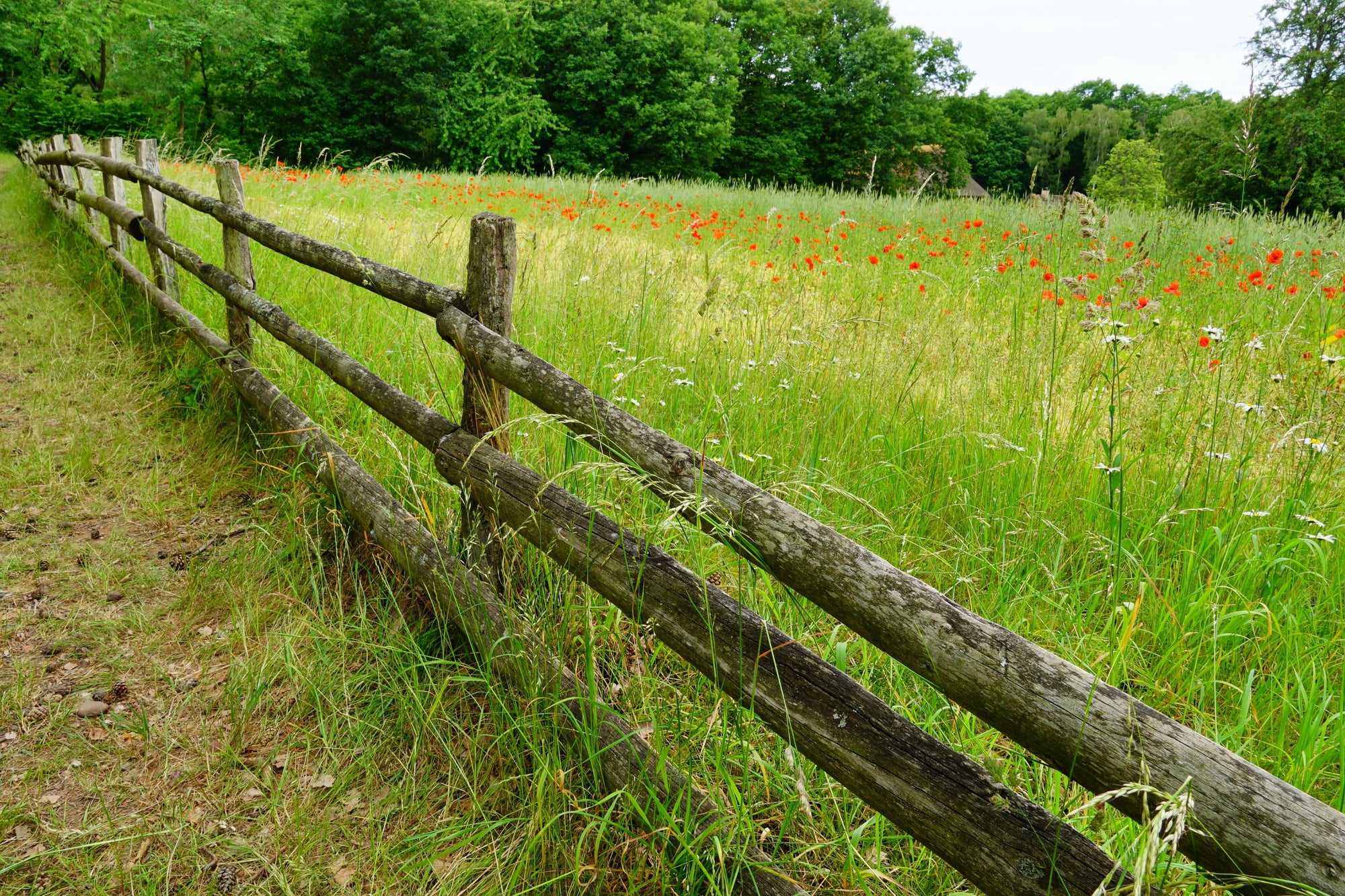
Four strands of barbed wire. Tight. Every strand pulled taut between the steel posts. Every staple where my husband put it.
Dale rebuilt that whole corner in April. I helped him. I held the wire stretcher while he cranked. I remember because I cut my thumb on a barb and bled all over my jeans. We went down the line together and checked every post and every staple, and when we were done, he plucked the top wire with his finger and it sang.
That fence was tight. Domino couldn’t have gotten through it. A rabbit couldn’t have gotten through it.
“Through what, Vern?” I said.
He didn’t answer.
He looked at me for a second. His face was gray and closed, like a barn door shut against the wind.
Then he turned and walked back toward his yard. Through the end rows of his corn. With his rifle in his hand.
He didn’t look back.
Chapter Two: Across That Fence
I could have called the sheriff.
I had my phone in my barn coat pocket. I could have pulled it out right there and dialed 911. Shooting somebody else’s livestock is a crime in Iowa. I know that much. Criminal mischief. Maybe more, depending on what it was worth.
I didn’t.
Vern is Dale’s brother.
Older brother. By four years. Vern is fifty-three. Dale is forty-nine. They grew up on the same farm, the one we live on now, the one their father, Harold Nyquist, farmed for fifty years. They shared a bedroom until Vern was fifteen. They played on the same Little League team. Vern taught Dale to drive a stick shift in the very pasture where Domino was lying dead.
When their father died nine years ago, he split the land. Dale got the home place. The house and the barns and two hundred and forty acres. Vern got the north half. Two hundred and forty acres of the best corn ground in the township, and the old Lindgren house their dad bought in 1988.
The fence between them is the line their father drew.
And Vern would be Dale’s brother across that fence for thirty more years.
That’s what I was thinking, standing there in my slippers in the wet grass. Thirty more years. Thanksgiving dinners. Funerals. Kinley’s graduation. Her wedding, someday.
A sheriff’s report would split the family. And it would split the road.
Everybody on Hollow Creek Road would take a side. They’d have to. Six families on a gravel road, and every one of them knew both brothers since they were boys. A report would sit in the paper in the sheriff’s log, and everybody would read it, and everybody would talk at the café and the co-op and the Lutheran church.
I’ve seen it happen. Over less. Over a cow. Over a ditch. Over a dog.
So I didn’t call.
I knelt in the wet grass beside Domino.
His big black-and-white side wasn’t moving. But I knew what I had to do. I’ve lived on a farm for nineteen years. I grew up on one before that.
I knelt and bled the steer with the knife off my belt.
You don’t waste an animal. Not ever.
My grandpa taught me that. When I was ten, on his farm in Kossuth County, a heifer broke her leg in a gopher hole, and he had to put her down. He did it quick and clean with a .22. And then he handed me a knife.
“You don’t waste her,” he said. “She gave her life. You make it count.”
I didn’t understand what he meant then. I do now.
I did it fast. The way you’re supposed to. So the meat would be good. So it would count.
My hands were shaking. I made them stop.
When it was done, I sat back on my heels in the bloody grass. My slippers were ruined. My barn coat was stained to the elbows. I looked at Domino’s open eye. The one with the white patch around it.
“I’m sorry, buddy,” I whispered. “I’m so sorry.”
Then I stood up and took out my phone.
Then I called Arnold Fogle at the locker in town.
The Plainview Locker. On Main Street, next to the Casey’s. Arnold’s family has run it since 1951. He butchers and processes beef and hogs for every farm in the county.
He answered on the second ring. “Locker.”
“Arnold,” I said. “It’s Jill Nyquist. I’ve got a steer down in my pasture. I need you to come get him. Now.”
There was a pause.
“The Domino steer?” Arnold said. “Kinley’s? He’s not scheduled till the twenty-sixth.”
“He’s down, Arnold.”
Another pause. Longer.
“I’ll be out inside the hour,” he said.
Chapter Three: The Top Wire
He was out inside the hour.
He came up our gravel lane in his white truck with the hoist on the back, the one he uses for on-farm kills. He’s sixty-eight, with a white crew cut and forearms like fence posts. He’s butchered our beef for nineteen years.
He parked by the pasture gate. He got out and walked across the grass to where Domino was lying. He looked at the steer for a long time.
He didn’t say anything about the bullet hole. He didn’t have to.
He walked over to the fence corner.
He looked at the posts. He looked at the wire. Four strands, tight.
Then he reached up and plucked the top wire with his thumb. Like a guitar string.
It sang. A high, clear twang that went down the whole line.
“That corner’s tight,” he said.
He didn’t say anything else. He looked across the fence. At Vern’s corn. At the end rows where Vern had stood with his rifle. At the house beyond, the old Lindgren place, with smoke coming out of the chimney.
He looked back at me.
“You want me to call anybody, Jill?”
“No,” I said.
He nodded slowly. Like he understood.
Then he went to get his hoist.
Kinley came across the pasture at a run.
I didn’t hear her coming. I was helping Arnold with the chains. I looked up and there she was. Running across the brown grass from the house in her pajama pants and her sweatshirt and her rubber boots. Her hair still messy from her pillow.
She’d heard the shot. Or she’d heard Arnold’s truck. Or she’d just looked out her bedroom window and seen the locker truck in the pasture and known.
I met her halfway and held on.
I dropped the chain and ran to her. I caught her in the middle of the pasture, about fifty yards from the fence corner, before she could get close enough to see. I wrapped both my bloody arms around her and held on.
She fought me. She tried to pull away. “Mom, let me go. Mom. Is that Domino? Mom!”
“Don’t look, baby,” I said. “Don’t look. Come back to the house.”
“Is it him?”
“Yes.”
She stopped fighting. She went limp against me. She was eleven years old and she was almost as tall as me now, and she sagged against me like she was three.
She didn’t cry until we reached the porch steps.
We walked back across the pasture together. My arm around her shoulders. Her face pressed against my shoulder so she couldn’t look back. She didn’t make a sound the whole way.
Then we got to the porch steps. And she sat down on the bottom one. And she looked at her rubber boots. The same ones she wore every morning to feed him.
And she broke.
I sat down next to her on the step. I held her while she cried. Big, gasping sobs. The kind that shake your whole body.
Behind us, in the kitchen, the radio was still playing. The pancake batter was still sitting in the bowl on the counter.
Out in the pasture, Arnold was working. I could hear the hoist.
“Who did it?” Kinley finally asked. Into my shoulder. “Mom. Who shot him?”
I didn’t want to tell her.
But I’ve never lied to my daughter. Not once. Not about Santa Claus, not about where babies come from, not about where hamburger comes from.
“Uncle Vern,” I said.
Chapter Four: Two Hundred Miles
Dale was two hundred miles away hauling corn for the co-op.
He drives a semi for the Plainview Farmers Cooperative during harvest. Runs corn from the elevator to the ethanol plant in Shell Rock and the river terminals in Dubuque. Twelve, fourteen hours a day. He was in Dubuque that Saturday, waiting in a line of semis at the terminal on the Mississippi.
I called him from the porch. He picked up on the first ring.
“Jill? What’s wrong?”
I told him.
He didn’t say anything for a long time. I could hear his diesel idling. I could hear other semis around him. Somebody’s air brakes hissing.
“He shot her steer,” he said finally. “Kinley’s steer.”
“Yes.”
“In our pasture.”
“Yes.”
“Is Kinley okay?”
I looked at her. Sitting on the porch step next to me with her knees pulled up, staring at the pasture.
“No,” I said.
He called his brother twice. No answer.
He told me later. He called from the terminal line in Dubuque. Vern didn’t pick up. He called again an hour later from the road. Vern didn’t pick up.
Dale got home at eleven that night. He’d driven straight through from Dubuque without stopping. He came in the back door and went straight up to Kinley’s room. She was asleep. He sat on the edge of her bed in the dark for a long time.
Then he came back downstairs and took a flashlight off the hook by the door.
That night he walked the fence with a flashlight.
The whole line. Every post. From the road all the way to the creek. Half a mile. I watched him from the kitchen window. A little circle of light moving along the fence line in the dark. Stopping at every post.
He was gone an hour and a half.
When he came back in, he set the flashlight on the kitchen counter. He sat down at the table across from me. He looked tired. Older than forty-nine.
“It’s tight,” he said. “Every strand. Every staple. The corner’s tight as a drum. There’s not a hair on a barb anywhere.”
I didn’t say anything.
“He’s my brother, Jill,” Dale said. “I’ve known him my whole life. I don’t know why he did it.”
“I know.”
“But it was your steer,” Dale said. “Yours and Kinley’s. You raised him. You paid for his feed.” He rubbed his face with both hands. “So it’s your call. Whatever you want to do. Call the sheriff. Don’t call the sheriff. I’ll back you either way.”
I thought about it for a long time. Sitting at that kitchen table at one in the morning.
“There’s something you should know,” Dale said. “Something I didn’t tell you.”
I looked at him.
“Vern had the line surveyed,” Dale said. “In August. He hired a surveyor out of Waterloo. The guy came out and walked it with a GPS. I saw him out there. I didn’t think anything of it.”
“And?”
“And Vern called me,” Dale said. “Right after Labor Day. He said the survey shows the fence is eighteen feet onto his side. The whole length. Eighteen feet by half a mile.” He looked down at the table. “He said Dad put it in the wrong place in 1972, and we’ve been grazing on his land for fifty years. He wanted me to move it.”
“What did you say?” I asked.
“I said no,” Dale said. “I said Dad put that fence there, and it’s been there fifty years, and it’s not moving.” He shook his head. “He hung up on me. We haven’t talked since.”
I sat there with that for a long time.
So that’s what he meant. He was in my corn again. Not corn. Grass. Eighteen feet of pasture that Vern believed was his.
Domino had been grazing on our side of a fence. On ground Vern thought he owned.
“That doesn’t make it right,” I said.
“No,” Dale said. “It doesn’t make it right.”
Chapter Five: Domino
Domino hung six hundred and forty pounds.
That’s hanging weight. The weight of the carcass after Arnold skinned it and cleaned it and hung it on a hook in his cooler. He called me on Monday to tell me.
“Six-forty,” he said. “Nice steer, Jill. Real nice marbling. Kinley did a good job with him.”
I didn’t say anything. I couldn’t.
“I’ll let him hang fourteen days,” Arnold said. “Same as I would’ve. Then we’ll cut him. You know how you want it?”
“I’ll call you,” I said.
About eighteen hundred dollars of beef.
That’s what Domino was worth. At the price of beef that fall. Steaks and roasts and ground beef. Enough to feed our family of three all winter. Into spring, if we were careful.
That was the plan. Eighteen hundred dollars we didn’t have to spend at the Fareway in town. Eighteen hundred dollars of meat that Kinley raised herself, with her own two hands, at five in the morning in the snow.
I thought about it all week. On the mail route. In the car.
I carry the mail on Hollow Creek Road five days a week. Rural Route 2 out of the Plainview post office. A hundred and twelve miles of gravel. Three hundred and eighty mailboxes. I’ve done it for eleven years.
I know every mailbox on it. I know who gets the Farm Journal and who gets the Successful Farming and who gets their medicine from the VA in Des Moines. I know who’s behind on their electric bill because the envelopes from MidAmerican Energy turn pink. I know whose kids are away at college because of the care packages going out.
I know Marge Hansen, who’s eighty-four and gets a letter from her sister in Norway every two weeks. I know Pete Larson, who farmed next to Harold Nyquist for forty years. I know the Brennans, who just had a baby. I know the Molinas, who moved up from Texas to work at the hog plant. I know old Mr. Thorson, who’s blind and listens to books on tape from the state library.
And I know Vern Nyquist. Whose mailbox sits on a post at the end of his lane.
On Thursday night, I sat down at the kitchen table with a legal pad.
Dale was gone again. Hauling corn to Shell Rock. Kinley was in her room. She’d barely come out since Saturday. She went to school and came home and went to her room and shut the door. She didn’t eat much. She didn’t go out to the barn.
I wrote down the names of every family on Hollow Creek Road.
There were six of them. Six families. Six porches.
Including Vern’s.
I called Arnold the next morning from the post office.
“Here’s how I want him cut,” I said.
I told him. Steaks. Ribeyes and T-bones and sirloins. Roasts. Chuck and arm and rump. A few packages of short ribs. And the rest in ground beef. One-pound packages. Wrapped in white butcher paper and labeled.
“And then,” I said, “I want you to divide it up.”
“Divide it?”
“Into seven,” I said. “Our share. And six boxes.”
Arnold was quiet on the phone for a long time.
“Six boxes,” he said.
“Six,” I said. “Roasts, steaks, and ground in each one. As even as you can make them.”
“Who are they for, Jill?”
“Everybody on our road,” I said.
Another long silence.
“Everybody,” Arnold said.
“Everybody,” I said.
I heard him breathe out. Slowly.
“Okay,” he said. “Okay. I’ll have them ready a week from Saturday. In waxed boxes. On the dock.”
Chapter Six: Six Times
We kept our share.
That was the first box. Bigger than the others. A family of three needs more than a widow. Arnold packed it full. Ribeyes and a chuck roast and twenty pounds of ground. Enough for the winter, if we stretched it.
The rest went into six boxes.
Roasts, steaks, and ground in each one.
Arnold packed them himself. In white waxed cardboard boxes with lids, the kind he uses for half beefs. Each one with a chuck roast and an arm roast. Two T-bones and two sirloins. Six pounds of ground beef. All wrapped in white butcher paper and labeled in Arnold’s square handwriting. GROUND. SIRLOIN. CHUCK RST.
About eighty dollars of beef in each box. Maybe more.
At the locker dock, Kinley sat on the tailgate with a marker.
It was Saturday morning. Two weeks after the shot. The day Domino was supposed to go to the locker in the first place. October twenty-sixth.
She hadn’t wanted to come. I hadn’t made her. But at the last minute, when I was going out the door with my car keys, she came down the stairs in her jeans and her barn coat.
“I want to come,” she said.
The dock behind Arnold’s locker is a concrete loading platform with a steel roller door. Arnold had the boxes stacked on a hand cart. Seven of them. White and clean.
We backed the pickup up to the dock. Kinley got out and sat on the open tailgate. She had a black Sharpie marker in her hand. She’d brought it from home in her pocket.
Arnold wheeled the boxes out one by one and set them in the truck bed.
As each one came, Kinley turned it over.
She wrote his name on the bottom of every box.
DOMINO.
In her careful sixth-grade handwriting. Big capital letters. Black marker on white wax.
Domino. Six times.
She didn’t write it on ours. Just the six.
I stood there on the dock and watched her do it. One box. Then the next. Then the next. Her tongue sticking out of the corner of her mouth the way it always does when she concentrates.
Arnold stood beside me with his arms crossed. He didn’t say anything.
When she finished the last one, she capped the marker and put it back in her pocket.
“So they know who he was,” she said.
Arnold made a sound. Like something got caught in his throat.
He turned around and went back into the locker. He didn’t come back out for a while. When he did, his eyes were red.
He didn’t charge me for the processing. I tried to pay. I had the checkbook out. He wouldn’t take it.
“Not for this one, Jill,” he said. “Not for Domino.”
Chapter Seven: The Route
Saturday I drove it with the boxes stacked in my pickup.
Hollow Creek Road. Six miles of gravel running north out of Plainview, past cornfields and bean stubble and pasture, to where it dead-ends at the creek. The road I drive five days a week with three hundred and eighty pieces of mail.
Not mail today. Beef.
Our own share rode in the bed behind them.
Our box was in the back, against the cab. The six boxes were stacked in front of it, closest to the tailgate, so I could reach them.
Kinley rode in the passenger seat with her hands folded in her lap.
A box on each porch.
A note in my route-book handwriting.
I’d written them the night before. On index cards. Six of them. The same words on each one.
From Kinley’s steer, Domino. Enjoy him.
I tucked each card under the lid of each box.
The Brennans were first. The young couple with the new baby. Nobody was home. I set the box on their porch next to the stroller and the pumpkins.
The Molinas were second. Rosa Molina came to the door holding a dish towel. I handed her the box. She read the card. She looked at me. Then past me at Kinley in the pickup.
“Domino?” she said. “The cow your girl raised?”
I nodded.
She put her hand on her chest. She didn’t say anything else. She just held the box against her hip and stood in her doorway and watched us drive away.
Old Mr. Thorson was third. He’s blind. I put the box in his hands so he could feel the weight of it. I read him the card out loud.
He held the box for a long time.
“Harold’s granddaughter,” he said. “Raised a steer.”
“Yes, sir.”
“Harold always said that girl had a way with animals.” He smiled. “Tell her I said thank you. Tell her I’ll think of him.”
Marge Hansen opened her door and just lifted her hand.
She’s eighty-four. She’s lived on Hollow Creek Road for sixty-one years. She was standing at her storm door in a housecoat when we pulled up. She’d seen us coming.
I carried the box up her porch steps. I set it down by the door.
She looked at the box. Then at the card. Then out at the pickup, where Kinley was sitting.
She didn’t say anything. She just lifted her hand. Toward the pickup. Toward Kinley. And held it there, up in the air, like a blessing.
Kinley lifted her hand back.
Pete Larson met us by his shed.
He’s seventy-eight. He farmed the quarter across the creek from Harold Nyquist for forty years. He was Harold’s best friend. He was a pallbearer at his funeral. He knows Dale and Vern better than anybody alive.
He was in his machine shed working on a grain auger when we pulled up. He came out wiping his hands on a rag.
He saw the box in my arms. He saw the name on the bottom. DOMINO, in black marker.
He stood there for a long time.
“That steer left his corner two weeks early,” he said.
I looked at him.
He knew. Of course he knew. Everybody on Hollow Creek Road knew. The shot carried. Arnold’s truck was seen. Somebody talked at the café.
“He did,” I said.
Pete took the box from me. He held it against his chest with both arms.
He held that box like it weighed a hundred pounds.
He didn’t ask whose fence.
He didn’t have to.
He just stood there in front of his machine shed, holding that box, looking past me. Up the road. Toward the end. Toward the last mailbox.
“You going up there?” he asked quietly.
“Yes.”
He looked at me for a long moment.
“Harold put that fence in in ‘72,” he said. “I helped him. I held the posts.” He shook his head. “He knew right where the line was. He put it there on purpose.”
“What do you mean?”
But Pete just shook his head again and turned and walked into his shed with Domino against his chest.
Chapter Eight: The Last Mailbox
Five porches.
Kinley stayed in the cab for the last one.
We pulled up at the end of Vern’s lane. The last mailbox on Hollow Creek Road before it dead-ends at the creek.
I put the pickup in park. I looked over at my daughter. She was looking straight ahead through the windshield. Not at Vern’s house. At nothing.
“You want to come?” I asked.
She shook her head.
I opened my door. I started to get out.
“Mom,” she said.
I stopped.
“Tell him his name,” she said as I got out. “Domino. Make sure he knows his name.”
Vern’s mailbox sits on a post at the end of his lane.
A big black rural box on a cedar post. NYQUIST in white reflective letters on the side. The flag’s been broken for two years. It hangs down crooked.
I’ve put mail in it for eleven years.
I know what comes. The Farm Journal. A seed catalog from Pioneer. Bills from MidAmerican Energy and the co-op. A statement from the Farm Credit office in Ames. A letter every month from the Social Security Administration, for Vern’s mother, Lorraine, who lived with him until she died last winter. He never stopped the letters. They kept coming. I kept delivering them.
And for the last eight months, letters from Farm Credit with FINAL NOTICE stamped on the front in red.
I stopped my dark red pickup beside it and dropped the tailgate.
Gray October sky. Low clouds coming in from the west. The wind out of the northwest, cold and wet, smelling like rain. Brown grass in the ditch. The corn on Vern’s side of the road still standing, dry and rattling. He hadn’t combined it yet. It was the end of October and he hadn’t combined.
I turned around and looked south, back down Hollow Creek Road.
Our farmhouse small and far back down the road. A little white house with a red barn, a mile and a half away, at the end of the gravel.
I took Vern’s box out of the bed of the pickup.
The last one. DOMINO written on the bottom in black marker. The card tucked under the lid. From Kinley’s steer, Domino. Enjoy him.
I stood there in my barn coat with his box against my hip.
I meant to walk it up to his porch like the others.
His lane is a quarter mile long. Gravel, with a strip of grass down the middle. The old Lindgren house at the end of it. White, two-story, with a sagging porch and a screen door that never quite shuts.
I took a step. Then another.
Then his front door opened.
Vern came down the lane slowly.
He was in his canvas coat. No rifle. No cap. His gray hair was messy, like he’d been running his hands through it. He walked down that quarter mile of gravel like a man walking to his own sentencing.
He’d been watching the whole road from his yard.
He must have been. He must have stood at his window and watched me stop at every mailbox on Hollow Creek Road. Watched me carry a white box up to every porch. Watched Marge Hansen lift her hand. Watched Pete Larson hold his box against his chest.
He knew what was in them. He knew whose name was on the bottom.
He stopped six feet from me and looked at the box.
He didn’t look at me. Just the box. Against my hip.
“What’s that,” he said.
Not a question. Just two words. Flat.
“Your share,” I said. “It was going on your porch.”
He reached out and took it from me.
He took it slowly. With both hands. Like it might be hot. Like it might bite.
He held it for a second. Then he turned it over.
He looked at the bottom.
DOMINO. In big capital letters. In black marker.
He looked at my daughter’s handwriting for a long time.
A long time. The wind blew. The corn rattled behind him. Somewhere down by the creek, a crow called.
He didn’t move. He just stood there at the end of his lane, holding a box of beef upside down, staring at one word.
Then he looked up at me.
His face had changed. The barn door was open. Everything that had been shut up behind it was standing there in his eyes. Gray and wet and broken.
“She wrote that,” he said.
“Yes.”
“Kinley.”
“Yes.”
He looked back down at it. His hands were shaking. The box trembled.
“His name,” he said. “I didn’t know his name.”
Chapter Nine: What Vern Said
“She asked me to tell you,” I said. “She said, Make sure he knows his name.”
Vern made a sound. Low. Like something breaking inside his chest.
He turned the box right side up. He held it against his stomach with both arms. The way Pete did.
“I didn’t know his name,” he said again.
“Why’d you do it, Vern?”
He didn’t answer for a long time.
He looked past me. Down the road. At our little white house a mile and a half away. At the pasture. At the fence corner where he’d stood with his rifle.
“Eighteen feet,” he said finally.
“The survey,” I said. “Dale told me.”
Vern nodded slowly.
“The bank sent a man out in July,” he said. “From Farm Credit in Ames. To appraise the land. For the loan.” He swallowed. “I’m behind, Jill. Two years. Corn was bad last year. Beans were worse. And Mom’s nursing home took everything before she died. Eleven months at Good Samaritan. Eighty-four hundred a month.”
I didn’t say anything.
“The appraiser said the acres don’t match,” Vern said. “Said the deed says two hundred and forty, but he could only find two hundred and thirty-eight. Said I’d better get a survey.” He shook his head. “So I did. Fourteen hundred dollars I didn’t have. And the surveyor said the fence is eighteen feet onto my side. All the way. That’s my two acres. That’s the difference.”
“I called Dale,” Vern said. “I asked him to move the fence. Just eighteen feet. Just so the bank would leave me alone.” He looked at the ground. “He said no. He said Dad put it there and it’s not moving.”
“So you shot Kinley’s steer.”
He flinched.
“I didn’t mean to,” he said. “I swear to God, Jill. I didn’t plan it. I got up that morning and there was another letter from Farm Credit. And I walked out to the end rows to check the corn because I can’t afford to combine it, I can’t afford the fuel. And I looked across that fence.”
He stopped.
“And there he was,” Vern said. “Eating grass. On my eighteen feet. Fat and happy. Dale’s steer on my land.” His voice broke. “And I had the rifle in the truck for coyotes. And I just…”
He couldn’t finish.
“He wasn’t Dale’s steer,” I said quietly. “He was Kinley’s. She fed him at five every morning before the school bus. For eight weeks. In the snow.”
Vern closed his eyes.
“I know,” he said. “I know that now. I’ve known it since Saturday. Since I watched her run across that pasture.” He opened his eyes. They were full. “I watched her from my window, Jill. I watched you catch her. I watched her sit down on your porch steps.”
He looked down at the box in his arms.
“I haven’t slept since,” he said. “Not one night.”
“Why didn’t you answer Dale?” I asked. “He called you twice.”
“Because I couldn’t,” Vern said. “What would I say? I shot your daughter’s steer because I’m losing my farm and I was mad at you about a fence our dad built?”
He laughed. A terrible, hollow sound.
“Lorraine’s gone,” he said. “My wife’s been gone six years. My boy’s in Denver and doesn’t call. I’ve got two hundred and thirty-eight acres of corn I can’t afford to combine and a bank that wants to take it. And my little brother’s got the home place and a wife and a daughter and a steer.”
He looked at me.
“I’ve never been so ashamed of anything in my life,” he said.
I didn’t say anything for a long time.
I’d been angry for two weeks. So angry I couldn’t sleep either. Angry while I bled that steer. Angry while I held my daughter on the porch steps. Angry while I drove the mail route past his mailbox every single day.
Standing there at the end of his lane, I was still angry.
But I looked at him. At his gray face and his messy hair and his shaking hands. Holding a box of beef with my daughter’s handwriting on the bottom.
And I thought about what my grandpa said. You don’t waste an animal. She gave her life. You make it count.
“Vern,” I said. “Do you want to tell her yourself?”
He looked up at me. Startled.
“She’s in the truck,” I said. “She asked me to tell you his name. But she’s right there.”
He looked past me at the pickup. At the passenger window. At Kinley’s face, behind the glass.
He was quiet for a long time.
“She won’t want to see me,” he said.
“I don’t know what she wants,” I said. “Ask her.”
Chapter Ten: Kinley
Vern walked to the pickup.
Slowly. With the box in his arms. He stopped beside the passenger door. He stood there for a long moment.
Kinley didn’t roll down the window. She looked at him through the glass. Her face didn’t move.
Then she opened the door.
She didn’t get out. She just opened it. And sat there in the passenger seat with her hands in her lap, looking at her uncle.
Vern stood there in the gravel. He held the box.
“Kinley,” he said.
She didn’t say anything.
“I shot your steer,” Vern said.
He said it plain. No excuses. I’ll give him that.
“I shot him, and I lied to your mom about why. He wasn’t in my corn. The fence was tight. Your dad built it right.” He swallowed. “I was angry at your dad about something that wasn’t Domino’s fault. And it wasn’t your fault. And I took it out on him.”
Kinley’s chin was shaking.
“I’m sorry,” Vern said. “I’m so sorry, honey. I know that doesn’t bring him back.”
Kinley looked at him for a long time.
Then she looked at the box in his arms. At the bottom of it. Where she’d written his name.
“Did you know he came when you called him?” she asked.
Vern shook his head.
“He did,” Kinley said. Her voice was very small. “Like a dog. If you stood at the gate and said Domino, he’d come running from the far end of the pasture. And he’d put his head against your chest and push.”
Vern’s face crumpled.
“He liked his ears scratched,” Kinley said. “Right here.” She touched the spot behind her own ear. “And he was scared of thunder. When there was a storm, he’d stand by the barn door till I came out.”
She was crying now. Quietly. Tears running down her face.
“I knew he was going to the locker,” she said. “I knew it. I’m not stupid. I live on a farm. I knew he was going to be our hamburger.” She wiped her face on her sleeve. “But I was going to say goodbye. On the twenty-sixth. I was going to walk him into the trailer myself and scratch his ears one more time and tell him he was a good boy.”
She looked up at her uncle.
“You took that,” she said. “That’s what you took. Not the beef. The goodbye.”
Vern couldn’t speak.
He stood there beside my pickup in the gravel with the box of beef in his arms and the wind blowing his gray hair. And he cried. Like I’d never seen a grown man cry. With his whole body. Shaking.
He didn’t wipe his face. He just stood there and let it come.
Kinley watched him.
Then my daughter did something I didn’t expect.
She got out of the pickup.
She stepped down onto the gravel in her rubber boots. She walked around the open door. She stood in front of her uncle.
She reached out and put her hand on the box. On top of it. On the white wax cardboard.
“His name was Domino,” she said.
“Domino,” Vern repeated.
“Say it like you mean it.”
Vern looked down at her.
“Domino,” he said. His voice broke in half on it.
Kinley nodded once.
“Okay,” she said. “Now you know who he was.”
Then she got back in the pickup and shut the door.
Vern stood there. He looked at me over the top of the cab.
“Jill,” he said. “I’ll pay for him. Eighteen hundred dollars. Every dime. I don’t have it now. But I’ll get it.”
“I don’t want your money, Vern,” I said.
“Then what do you want?”
I thought about it. About the eighteen feet. About the bank letters with FINAL NOTICE stamped in red. About two hundred and thirty-eight acres of corn rattling in the wind, unharvested at the end of October.
About Pete Larson. He knew right where the line was. He put it there on purpose.
“I want you and Dale to walk that fence,” I said. “Together. Sunday afternoon. And I want you to take Pete Larson with you.”
Chapter Eleven: The Fence
They walked it on Sunday.
Dale got home from Dubuque Saturday night. I told him everything. The boxes. The porches. Vern at the end of his lane. Kinley getting out of the pickup.
He sat at the kitchen table for a long time after I finished. He didn’t say anything.
Then he picked up the phone. And called his brother.
Vern answered on the first ring.
Sunday afternoon. Two o’clock. Gray and cold, with a little spit of rain.
Dale and Vern and Pete Larson met at the road end of the fence. I watched from the kitchen window. Kinley watched from her bedroom.
Three men in canvas coats and feed caps, walking a fence line in the drizzle. Pete in the middle, with his cane. Dale on one side, Vern on the other.
They walked the whole half mile. Slowly. Pete stopped at every post. He’d put his hand on it and say something. Dale and Vern would lean in to listen.
At the corner, where Domino died, they stopped for a long time.
Dale told me afterward. At the kitchen table that night.
“Pete knew,” he said. “About the eighteen feet. He’s always known. He helped Dad set those posts in ‘72.”
“What did he say?”
“He said Dad put it there on purpose,” Dale said. “He said Dad knew exactly where the surveyed line was. It runs right through a low spot by the creek. Floods every spring. Dad didn’t want to fence through a slough. So he set it eighteen feet north, on high ground.” He shook his head. “And he told Pete, someday I’ll fix the deed so it matches. And he never did.”
“So Vern’s right,” I said. “Technically.”
“On paper,” Dale said. “On the survey. But Pete says there’s a thing in Iowa law. When a fence has been there long enough, and both sides treat it as the line, it becomes the line. Even if the survey says different.”
“Acquiescence,” I said. I knew that word. I deliver a lot of mail to the lawyers in Plainview.
“That’s it,” Dale said. “Pete says after ten years in Iowa, a fence everybody’s lived by is the boundary. Fifty years, there’s no question. That eighteen feet is ours. Legally.”
He looked at me across the table.
“And then he told Vern something,” Dale said. “Pete did. Right there at the corner where Domino died.”
“What?”
“He said, your daddy put that fence on the high ground so his cattle wouldn’t drown in the slough. And he put it on your side because he figured you boys would always be on the same side of it anyway.”
Dale put his face in his hands.
“Vern sat down in the grass,” he said. “Right there in the corner. In the rain. Fifty-three years old. And he cried like a kid.”
“And you?”
“I sat down next to him,” Dale said.
They went to see a lawyer in Plainview the next week. Both of them. Together.
Her name was Rachel Ostrem. She does farm law. She’s been doing it thirty years.
She drew up a boundary line agreement. A legal document saying the fence is the line. Both brothers signed it. She filed it with the county recorder. She sent a copy to Farm Credit in Ames.
Then she did something else. Something Dale told her to do.
“I bought the two acres,” Dale told me that night. “From Vern. The eighteen feet.”
“Bought them? I thought they were ours already. Legally.”
“They are,” Dale said. “But Vern needed it in the books. For the bank. The appraiser said two hundred and forty acres. So now the deed shows two hundred and thirty-eight, and the bank knows why. And Vern’s got the money for those two acres.” He looked at the table. “Eleven thousand dollars. At fair value. Rachel figured it.”
I stared at him.
“We don’t have eleven thousand dollars, Dale.”
“We do,” he said quietly. “It’s my truck-driving money. From harvest. I was saving it for a new pickup.”
“Dale…”
“He’s my brother, Jill,” Dale said. “I’ve got a pickup that runs. He’s got a bank that wants his farm.”
Then, on the first Monday in November, at seven in the morning, I looked out the kitchen window.
There were combines in Vern’s corn.
Three of them. Coming down the rows in a line. A green John Deere. A red Case. And a yellow-and-green one I didn’t recognize.
And grain carts. And semis lined up at the end of Vern’s lane.
I knew the combines. The green one was Pete Larson’s. The red one was the Brennans’. The yellow-and-green one belonged to Tomas Molina, Rosa’s husband, who custom-harvested on weekends.
Dale was driving a grain cart.
I called him on his cell phone.
“Dale,” I said. “What is going on?”
“Pete called everybody,” Dale said. “Saturday night. After he walked the fence with us. He said Vern couldn’t afford to combine.” I could hear the engine. “So everybody on Hollow Creek Road is combining it for him. Fuel’s on the co-op. Arnold Fogle donated it.”
“Arnold?”
“Arnold,” Dale said. “He said Domino would’ve wanted it.”
Chapter Twelve: The Last Box
They had Vern’s corn in by Tuesday night.
Two hundred and thirty-eight acres. A hundred and ninety-one bushels an acre. Better than anybody expected. Vern sold it at the elevator in Plainview for enough to catch up the Farm Credit payments. Not all the way. But enough. The bank gave him a new note.
He tried to pay everybody back for the combining. Nobody would take it.
Pete Larson told him the same thing everybody else did.
“Harold helped me in ‘81,” Pete said. “When my barn burned. I’m just paying it back.”
Vern came to our house the Saturday before Thanksgiving.
He knocked on the back door. Dale was home. Kinley was at the kitchen table doing homework.
Vern stood on the back step in his canvas coat. He was holding a white waxed box.
His box. The one with DOMINO on the bottom.
“I haven’t opened it,” he said. “I couldn’t.”
He came in. He set the box on the kitchen table, in front of Kinley.
“I was wondering,” he said. “If maybe. For Thanksgiving.” He swallowed. “If we could all eat him together. Here. At Dad’s table. The whole family.”
Kinley looked at the box. Then at her uncle.
“So you can say goodbye?” she asked.
“So we all can,” Vern said. “I took yours. I thought maybe we could do it together.”
So on Thanksgiving Day, we ate Domino.
The chuck roast from Vern’s box. I cooked it all day in my grandmother’s cast iron Dutch oven, with carrots and potatoes and onions, the way my mother taught me.
There were eleven of us around Harold Nyquist’s old oak table. Dale and me and Kinley. Vern. Pete Larson. Marge Hansen, who drove her Buick down the road at ten miles an hour. Mr. Thorson, who Kinley walked across the yard on her arm. The Brennans and their baby. Rosa and Tomas Molina.
Arnold Fogle came for pie.
Before we ate, Dale asked Kinley to say grace.
She bowed her head. Everybody bowed their heads.
“Thank you, God, for this food,” Kinley said. “And for our family. And our neighbors.” She paused. “And thank you for Domino. He was a good steer. He came when you called him. He liked his ears scratched.”
Her voice wobbled. She kept going.
“He was scared of thunder,” she said. “But he wasn’t scared of anything else. Amen.”
Nobody said anything for a moment.
Then Vern said, “Amen.” Very quietly.
And everybody else said it. All eleven of us. And we passed the roast.
That was a year ago.
It’s October again now. Burning-leaves season. The corn’s coming off on Hollow Creek Road.
In April, Vern drove down to the Petersen place three miles south. Old Ray Petersen had a heifer that died calving in a snowstorm. Just like two years before. Left a bottle calf.
Vern bought him. Sixty dollars. He brought him home in the back seat of his pickup, wrapped in a horse blanket. He drove him straight to our place.
He didn’t keep him. He gave him to Kinley.
He’s red and white this time. A Hereford cross. Kinley named him Checkers.
“Because Domino was the game you lose,” she said. “And Checkers is the one where you get kinged.”
She feeds him at five every morning before the school bus. A big plastic bottle with a red rubber nipple. Mixed in the kitchen sink in her pajamas and her boots.
But not alone.
Every morning, at five, the yard light comes on at the old Lindgren house across the road.
And Vern walks down his lane in the dark, with a flashlight. Across the gravel road. Through our pasture gate.
He meets Kinley at the barn. He holds the flashlight while she mixes the milk. He stands at the stall door while Checkers drinks.
Neither of them says much. It’s five in the morning. They’re not big talkers, either one.
But I watch them from the kitchen window. Every morning. Two figures in the barn light, one tall and gray and stooped, one small and fierce in rubber boots.
Last Saturday, I was in the kitchen making pancakes at 7:40. The radio on. The farm report.
I looked out the window at the fence corner.
The northwest corner. Where our fence meets Vern’s. Four strands of barbed wire, tight. Every staple where my husband put it.
Checkers was standing there, at the corner, against the wire. On our side. Red and white and fat in the morning sun, swishing his tail.
And Vern was standing on the other side. Leaning on a fence post. Reaching over the top strand.
Scratching Checkers behind the ears.
I watched them for a long time.
Then Vern looked up. He saw me in the kitchen window. He didn’t wave. He just nodded once.
And then he reached up and plucked the top wire with his thumb.
I couldn’t hear it from the house. But I knew what it sounded like. I could see the wire vibrate in the light.
A high, clear note, singing all the way down the line.
Tight. The way his father built it. The way his brother keeps it.
The way it’s going to stay.

Adrian Hawthorne is a celebrated author and dedicated archivist who finds inspiration in the hidden stories of the past. Educated at Oxford, he now works at the National Archives, where preserving history fuels his evocative writing. Balancing archival precision with creative storytelling, Adrian founded the Hawthorne Institute of Literary Arts to mentor emerging writers and honor the timeless art of narrative.