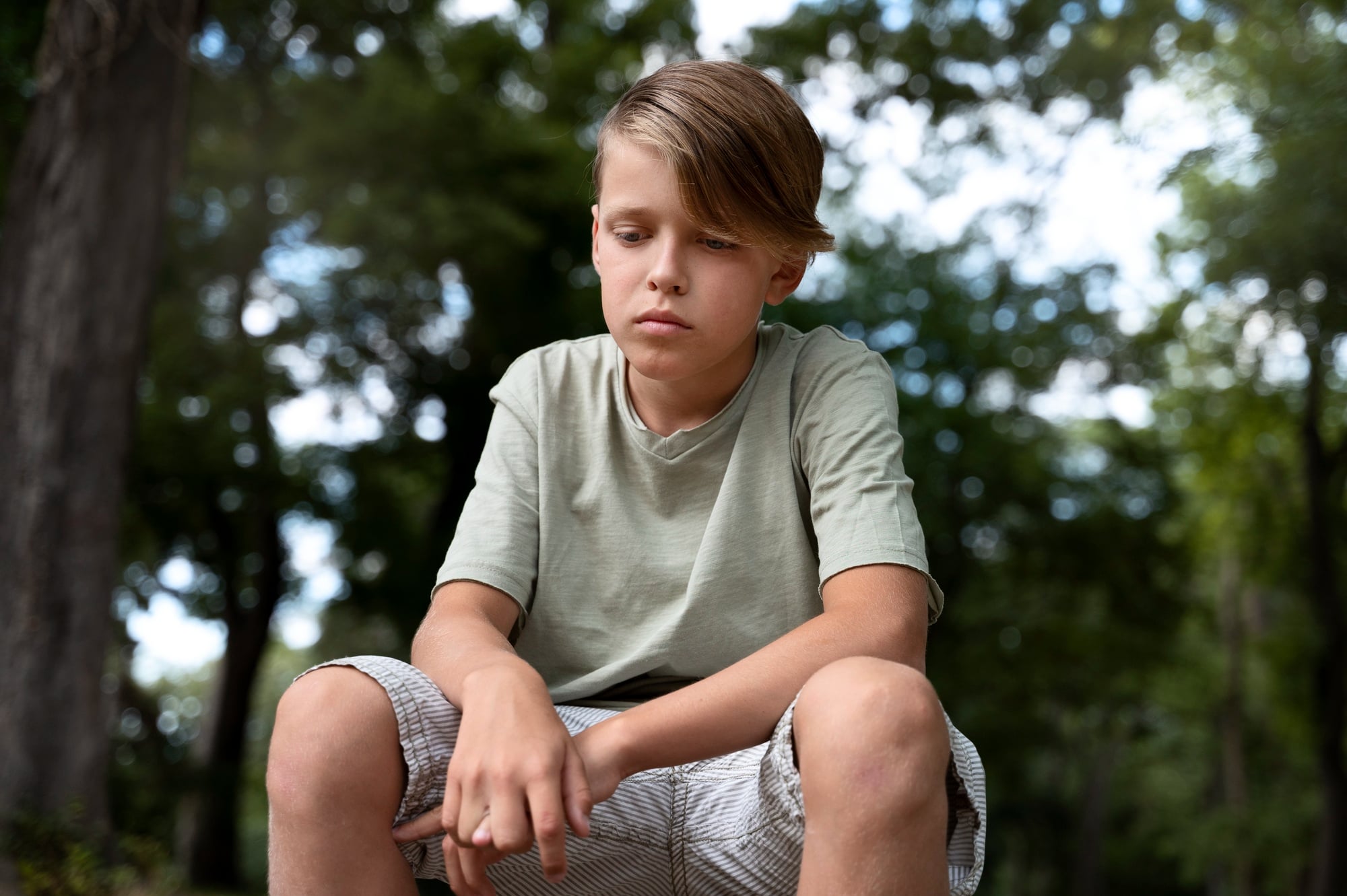
Two Sleeping Bags
Part One: Fridays
Every Friday for two months, I drove my son to his best friend’s house at six o’clock.
It was a routine. The kind of routine you stop thinking about after the third week. Finn would pack his blue duffel bag on Friday afternoon. His pajamas, his toothbrush, his Nintendo Switch, a bag of pretzels I knew he’d share with Owen. His dark-blue camping sleeping bag, rolled tight with the straps.
“You don’t need the sleeping bag,” I told him the first week. “Owen has a guest bed.”
“We like the floor,” Finn said.
I didn’t think anything of it.
My name is April Donnelly. I’m thirty-eight years old.
I’m a pharmacist at a Walgreens on the south side of Springfield, Missouri. I work days, Monday through Friday, seven to three-thirty. I live in a small brick ranch house on Cherry Street with my son, Finn, and an elderly beagle named Biscuit who sleeps twenty-two hours a day.
Finn is nine.
His father died when he was five.
It was a car accident. A drunk driver on Highway 65, on a rainy night in February. My husband, Danny, was coming home from his shift at the hospital where he worked as a respiratory therapist.
He never made it home.
Finn didn’t sleep alone for almost a year afterward.
He’d wake up at two or three in the morning, screaming. He’d come to my room and crawl into my bed and hold on to my arm like he was afraid I’d disappear too.
The counselor said it was normal. Grief in young children often shows up as fear of being alone at night. It would pass, she said, with time and patience.
It did pass. Slowly.
Part of the reason it passed was Owen.
Part Two: Owen
Owen Hale moved in two houses down when Finn was six.
He was a small, quiet boy with red hair and freckles and big glasses that kept sliding down his nose. He was the same age as Finn. Same grade at Pittman Elementary.
They met on the sidewalk the first week. Owen was drawing a map of the neighborhood in chalk. Finn asked what he was doing. Owen said he was marking where all the good climbing trees were.
They’ve been best friends ever since.
Owen’s mother, Beth, was a single mom then. She’s a nurse in the intensive care unit at Mercy Hospital. She worked nights. Long shifts. Twelve hours, sometimes more.
I’d keep Owen when she worked. Sometimes on weeknights. Sometimes on weekends.
And here’s the thing I didn’t understand until much later.
When Owen slept over, Finn slept through the night.
I noticed it the first month. Owen would come over with his red sleeping bag, the one with OWEN written on the bottom in black marker. They’d lay their sleeping bags side by side on Finn’s bedroom floor. They’d whisper and giggle until I yelled at them to go to sleep.
And Finn wouldn’t wake up screaming.
Not once. Not on a single night Owen was there.
I asked Finn about it once, when he was seven.
“Why do you sleep better when Owen’s here?” I asked.
He thought about it the way he thinks about everything. Slowly and seriously.
“Because if I wake up,” he said, “I can hear him breathing. And then I know I’m not by myself.”
Part Three: Wade
Beth met Wade Parker two years ago.
He was a sales rep for a medical supply company. He’d come into the ICU to demonstrate a new kind of IV pump. He asked her to coffee in the hospital cafeteria.
He was charming. Handsome in a salesman sort of way. Broad shoulders, a big smile, a firm handshake. He remembered everybody’s name.
They got married last spring. Six months ago. A small wedding in the backyard of Beth’s house, with string lights and a taco truck and a DJ.
I went. Finn went. Owen was the ring bearer, in a little gray suit with the sleeves too long.
Wade gave a toast. He talked about how lucky he was to be getting not just a wife, but a son.
He looked right at Owen when he said it.
Owen looked at his shoes.
I liked Wade.
That’s the part I can’t forget. I liked him.
He was friendly. Welcoming. He shook my hand at the wedding and said, “Any friend of Owen’s is family to us. Finn’s welcome anytime.”
After the wedding, Beth’s schedule changed.
The ICU was short-staffed. She picked up Friday and Saturday nights. Seven p.m. to seven a.m. It paid a differential. Wade’s sales job was commission-only, and money was tight, she said.
That’s when the weekend sleepovers started.
The first Friday in September, Owen called Finn.
“Can you sleep over?” he asked. “This weekend? My mom’s working and Wade said you could come.”
Finn asked me. I said yes.
I drove him over at six. Wade answered the door in a Kansas City Chiefs T-shirt with a beer in his hand.
“Finn!” he said. “Come on in, buddy. Owen’s in the back.”
He smiled at me.
“Don’t worry, April,” he said. “We’ve got pizza and a movie. I’ll have him back to you by noon on Sunday.”
He did. Sunday at noon, Finn came home. Tired. Quiet. I figured they’d stayed up late playing video games.
The next Friday, Owen called again.
And the next.
And the next.
Every Friday for two months.
I’d drive Finn over at six. Wade would answer the door. I’d watch Finn walk inside with his blue duffel bag and his dark-blue sleeping bag.
And I’d drive home believing everything was fine.
Part Four: 4:37 A.M.
At 4:37 on Sunday morning, I woke up to the sound of the kitchen door.
I know the exact time because I looked at the clock on my nightstand. The red numbers glowing in the dark.
4:37.
I lay there for a second, my heart pounding. Biscuit was asleep at the foot of my bed. He didn’t even lift his head.
I heard footsteps in the kitchen. Small ones. Slow ones.
I got up. I grabbed the baseball bat I keep by my bedroom door. I walked down the hall in my bare feet.
I flipped on the kitchen light.
My nine-year-old son was standing in the middle of our kitchen.
He was carrying two sleeping bags. One under each arm. Dusty. Wrinkled. Dragging on the floor.
He had an orange piece of paper in one hand, crumpled.
His knees were dusty. His face was smudged with dirt. His eyes were red-rimmed and exhausted. He was wearing his jacket over his pajamas.
And one of his shoes was wrapped in a plastic Walmart shopping bag. Tied around his ankle with the handles.
“Finn?”
He looked up when he heard his name. His face was nervous. Scared.
“Mom,” he said. “Please don’t be upset.”
I set the baseball bat down against the counter.
My eyes moved to the sleeping bags.
One was his dark-blue camping bag. The other was red.
I knew that red sleeping bag. I’d seen it on my son’s bedroom floor a hundred times.
OWEN was written across the bottom in black marker.
“Where’s Owen?” I asked.
Finn lowered his gaze.
“He’s still there,” he said.
“Still where?”
He didn’t answer right away.
“Inside the car,” he said.
For a moment, I wondered if I’d heard him correctly.
“Which car, sweetheart?”
“Wade’s old Buick,” Finn said. “The one behind his garage.”
I knew the car. A silver Buick LeSabre. Fifteen years old, at least. It had been parked on the gravel pad behind Beth’s garage since Wade moved in. He said it was his grandfather’s. He said he was going to fix it up someday.
It didn’t run. I was almost sure it didn’t run.
“Finn,” I said slowly. “Why were you sleeping in Wade’s car?”
His expression changed.
He looked at me with those tired, red eyes. And he said something that made my whole body go cold.
“Because Owen hasn’t been allowed to stay inside at night,” he said.
Part Five: Eight Weekends
I stared at him.
“What do you mean?” I said.
Finn shifted the sleeping bags in his arms.
“When his mom leaves for work,” he said, “Wade tells him he has to stay somewhere else.”
My heart sank.
Beth worked overnight. Friday and Saturday nights. Seven p.m. to seven a.m.
“And you’ve been staying with him?” I asked.
Finn nodded.
“How many weekends?”
He rubbed his tired eyes with the back of his hand.
“I’m not sure,” he said. “Maybe eight weekends.”
Eight weekends.
Since the first Friday in September.
For nearly two months, my son had been spending his weekends in a car. In October. In Missouri. While I’d been home in my warm bed, assuming he was staying up late playing Mario Kart.
Then I noticed the orange paper in his hand.
“Where did you find that?” I asked.
“Somebody left it on the windshield,” Finn said.
I took it from him. I unfolded it.
It was a notice from the Walmart on Battlefield Road. The big Supercenter about a mile from our house.
NOTICE: Overnight parking is not permitted on this property. Vehicles remaining after 6:00 a.m. will be towed at owner’s expense.
“Why was Wade’s Buick parked at Walmart?” I asked.
Finn hesitated.
“He brought it there last night,” he said.
“While you were both inside?”
He nodded.
“He towed it,” Finn said. “With his truck. With a chain. We were in the back seat.”
I had to hold on to the edge of the counter.
“Was Wade there with you?” I asked.
Finn shook his head.
“He left,” he said. “He said he’d come back in the morning before the store opened. He always comes back before Owen’s mom gets home.”
I tried to remain calm.
I’m a pharmacist. I deal with emergencies. Drug interactions. Overdoses. People screaming at me across the counter. I know how to keep my voice steady.
My voice was not steady.
“Where exactly is Owen now?” I asked.
“He’s in the back seat,” Finn said. “In the Buick. At Walmart.”
“Why didn’t he come home with you?”
Finn looked down at the sleeping bags.
“He was worried Wade would be upset,” he said.
Part Six: Please Don’t Be Angry
I grabbed my car keys off the hook by the door.
“Put your shoes on properly, sweetheart,” I said. “We’re going to bring him home.”
Finn reached out and gently caught my wrist.
“Mom,” he said. “Please wait.”
“What is it?”
He looked up at me.
“Please don’t be angry with Owen,” he said.
I knelt down in front of him on the kitchen floor.
“Why would I be angry with Owen?” I asked.
“Because he’s the reason I didn’t come home,” Finn said.
“Finn—”
“He told me I could leave,” Finn said. “The first night. He said I could call you. He said he’d be okay by himself.”
His eyes filled with tears.
“But I didn’t want him to be by himself,” Finn said.
He swallowed.
“He was scared, Mom,” he said.
I pulled him into a hug.
He was cold. His jacket was damp with dew. His hair smelled like dust and old upholstery.
I held him in the middle of the kitchen with the sleeping bags still under his arms.
For eight weekends, I’d believed my son was having fun.
Instead, he’d been keeping his best friend company through something no child should ever have to manage alone.
I felt a mixture of things I couldn’t name. Rage. Fear. Guilt so sharp it took my breath away.
But I knew the most important thing was making sure both boys were safe.
I knelt down. I untied the Walmart bag from around Finn’s shoe.
The sole of his sneaker was split almost all the way across. From the toe to the arch. Flapping.
“It broke,” Finn said. “On the way home. I put the bag on it so I could keep walking.”
I handed him his jacket. I grabbed mine off the hook.
“Come on,” I said. “You can tell me everything else while we’re driving.”
Part Seven: The Drive
Walmart was about a mile from our house.
Down Cherry Street to National Avenue. South on National to Battlefield Road. Left on Battlefield.
It was 4:46 a.m. The streets were empty. The traffic lights were blinking yellow. The air was cold. Thirty-eight degrees, the dashboard said.
Finn sat in the back seat with the two sleeping bags in his lap.
He told me while I drove.
He’d walked home. Alone. A mile. At four in the morning.
Down Battlefield Road in the dark, past the closed gas stations and the empty Taco Bell. Up National Avenue under the streetlights. With his shoe falling apart and two sleeping bags in his arms.
“Why did you bring the sleeping bags?” I asked.
“Owen said to,” Finn said. “He said you wouldn’t believe me unless I showed you. He said grown-ups never believe kids.”
He looked down at the red sleeping bag in his lap.
“He said you’d believe the sleeping bags,” he said.
“Why tonight?” I asked. “Why come home tonight? After eight weekends?”
Finn was quiet for a moment.
“Because of the paper,” he said. “The orange one. The man from Walmart put it on the window around three. With a flashlight.”
He swallowed.
“Owen read it,” Finn said. “It said they were going to tow the car at six. And Wade said he wouldn’t be back till six-thirty.”
“Owen said we’d get towed,” Finn said. “With us inside. To a tow lot. And nobody would know where we were.”
His voice cracked.
“And Owen’s been coughing,” he said. “A lot. Since last weekend. He used his inhaler three times tonight. He only had a little left.”
I gripped the steering wheel so hard my knuckles went white.
Owen has asthma. I’ve known that since he was six. Beth keeps an extra inhaler at my house, in the kitchen drawer by the stove.
Cold air triggers it.
“So I said I’d go get you,” Finn said. “And Owen said he’d stay with the car. In case Wade came back early. So he wouldn’t think we ran away.”
He looked out the window at the dark.
“He said if Wade found the car empty,” Finn said, “he’d get in really big trouble.”
Part Eight: Beth
At the first traffic light, I called Beth.
I used the car’s hands-free system. Her name came up on the dashboard screen.
It rang four times. Then it went to voicemail.
I tried again.
Voicemail.
She finally answered on my third attempt.
“April?” she said. “Is something wrong?”
I could hear the familiar sounds of a busy hospital behind her. Monitors beeping. A voice on an intercom. Somebody calling for a respiratory therapist.
“Yes,” I said. “Beth, please listen carefully.”
“What happened?”
“Finn just came home,” I said. “He says Owen has been staying in Wade’s car on weekends.”
There was a brief silence.
Then she gave a confused little laugh.
“What?” she said.
“I’m driving to Walmart now,” I said. “On Battlefield. Finn says Wade brought both boys there last night. In the Buick.”
“April, that doesn’t make sense,” Beth said.
“I know,” I said. “I’m trying to understand it too.”
“Where’s Owen?” Beth asked. Her voice was rising.
“He’s still in the car,” I said.
I heard her move somewhere quieter. The beeping faded. A door closed.
“Why would Owen be staying in Wade’s car?” she said. “April, what are you talking about?”
“Beth, I wish I had an answer.”
“But Owen shouldn’t even be home this weekend,” Beth said.
I looked at the road ahead.
“What do you mean?” I asked.
“Wade told me both boys were spending the weekend at your house,” Beth said.
I almost missed the turn into the parking lot.
“Beth,” I said slowly. “I’ve been dropping Finn off at your house every Friday.”
Another silence followed.
A long one.
I could hear her breathing. Fast. Shallow.
When she finally spoke, her voice sounded completely different.
“April,” she said. “Wade has been telling me Owen stays at your house.”
I turned into the Walmart parking lot.
It was huge and almost empty. A sea of white lines under tall orange lights. A few cars parked near the entrance. A street sweeper humming along the far edge.
Under the soft yellow parking lights, near the back of the lot, by the garden center fence, I spotted an older silver Buick.
Through the rear window, I could see a familiar young face looking in our direction.
Red hair. Big glasses.
I pulled into a space beside it.
“Beth,” I said quietly. “I can see your son right now.”
Part Nine: The Back Seat
I was out of the car before it stopped rolling.
Finn was right behind me.
I opened the back door of the Buick.
The smell hit me first. Old upholstery. Dust. Cold air. Something sour, like spilled milk.
Owen was sitting in the corner of the back seat.
He had a gray blanket wrapped around his shoulders. A thin one, the kind they give you on airplanes. He was wearing a hooded sweatshirt and jeans and two pairs of socks. No shoes.
His glasses were fogged. His lips were pale. He was holding his blue inhaler in both hands.
He was coughing. A tight, wheezing cough I could hear from the door.
He looked up at me.
He didn’t say anything.
He just started to cry.
“Hi, sweetheart,” I said. “It’s okay. I’ve got you.”
I climbed into the back seat. I pulled him into my lap. He was shivering so hard his teeth were chattering.
He was so light. Lighter than I remembered.
“I’m sorry,” Owen said into my shoulder. “I’m sorry, Mrs. Donnelly. I’m sorry. Please don’t tell Wade.”
“Owen,” I said. “You don’t have anything to be sorry for.”
“He said if I told anybody,” Owen sobbed, “Mom would get in trouble. He said they’d take me away from her. He said it would be my fault.”
I held him tighter.
“Nobody’s taking you away from your mom,” I said. “Nobody.”
Finn climbed in on the other side. He sat close to Owen. He didn’t say anything. He just put his hand on Owen’s back.
Owen reached over and grabbed Finn’s sleeve. He held on.
Through the car speaker, I could hear Beth.
I’d left the call connected on my phone in my pocket. She’d heard everything.
She was sobbing.
“Owen,” she said. “Owen, baby. It’s Mom. Can you hear me?”
Owen lifted his head.
“Mom?” he said.
“I’m coming, baby,” Beth said. “I’m coming right now. Stay with Mrs. Donnelly. I’m coming.”
Part Ten: The Inhaler
Owen’s cough was getting worse.
Tight. Wheezing. I could hear it rattling in his chest. His lips had a faint blue tinge in the orange light.
I’m not a doctor. But I’ve been a pharmacist for twelve years. I know what an asthma attack looks like.
“Owen,” I said. “How many puffs have you used tonight?”
He held up his inhaler.
“I don’t know,” he wheezed. “A lot. It’s almost empty.”
I took it from him. I shook it. It was nearly weightless. Maybe one or two puffs left.
“Okay,” I said. “Here’s what we’re going to do.”
I got the boys into my car. Into the back seat. I turned the heat all the way up. I wrapped Owen in my jacket and both sleeping bags.
Then I called 911.
The dispatcher was calm. She asked me questions. How old. How long. What color were his lips.
“An ambulance is on the way,” she said. “Stay with him. Keep him upright. Keep him warm.”
I sat in the back seat with Owen in my lap and Finn pressed against my side.
Owen was struggling to breathe. Each breath was a fight.
“I’m scared,” he whispered.
“I know, honey,” I said. “Help’s coming.”
Finn reached over and took Owen’s hand.
“Breathe with me,” Finn said. “Like Dr. Patel said. Remember? In for four. Hold for four. Out for four.”
Owen looked at him.
“In,” Finn said. “Two. Three. Four.”
Owen breathed in. Shaky.
“Hold,” Finn said. “Two. Three. Four.”
I stared at my son.
Dr. Patel is Owen’s pulmonologist. Finn must have gone with Owen and Beth to an appointment once. He’d remembered the breathing exercise.
“Out,” Finn said. “Two. Three. Four.”
Owen breathed out. A long, wheezing breath.
“Again,” Finn said.
They did it over and over. In the back seat of my car. In the Walmart parking lot at five in the morning.
Finn counting. Owen breathing.
Until the ambulance came.
Part Eleven: Mercy Hospital
The paramedics gave Owen a nebulizer treatment in the back of the ambulance.
Albuterol and oxygen through a mask. Within ten minutes, the blue was gone from his lips. His breathing slowed down.
They took him to Mercy Hospital. Where his mother works.
Finn and I followed in my car.
A police officer had arrived at the Walmart parking lot right behind the ambulance. Officer Delgado. A woman in her forties with tired eyes and a kind voice.
She took one look at the Buick. At the gray airplane blanket. At the empty juice boxes on the floor of the back seat.
At the orange tow notice on the windshield.
She took out her notebook.
“Ma’am,” she said to me. “I’m going to need you to come to the hospital and give a statement. And your son too, if he’s up to it.”
“He’s up to it,” I said.
Finn nodded.
“I’ll tell you everything,” he said.
Part Twelve: What Finn Told Them
At Mercy Hospital, in a small family room off the pediatric emergency department, Finn told Officer Delgado everything.
I sat beside him. Holding his hand.
Beth was in the room with Owen. She’d run down from the ICU on the fourth floor the second the ambulance pulled in. Still in her scrubs. Still wearing her hospital badge.
She hadn’t stopped holding her son since.
Finn told it slowly. Carefully. The way he tells everything.
The first Friday in September, I dropped him off at six. Wade answered the door.
They had pizza. They watched a movie. Wade drank beer on the couch.
Beth left for work at six-thirty.
At eight o’clock, Wade turned off the TV.
“He said we had to go outside,” Finn said. “He said it was a camping adventure. He said real men sleep outside.”
He looked at his hands.
“He took us out to the Buick,” Finn said. “Behind the garage. He gave us the sleeping bags and some juice boxes and a flashlight. He said we had to stay there till morning.”
“Did he say why?” Officer Delgado asked.
Finn nodded.
“He said people were coming to stay in the house,” Finn said. “Guests. He said they paid money. He said the boys couldn’t be in the house when the guests were there.”
Officer Delgado stopped writing.
She looked up.
“Guests,” she said.
“Grown-ups,” Finn said. “They came in cars. Sometimes two cars. Sometimes three. They stayed in the house all night. They left in the morning.”
“Where did Wade go?” Officer Delgado asked.
Finn shook his head.
“He left,” he said. “In his truck. He came back in the morning. Around six. Before the guests woke up. He’d make us pancakes in the garage on a camp stove. Then he’d drive us to the gas station to use the bathroom and brush our teeth.”
“Then Owen’s mom would come home,” Finn said. “And Wade would say we’d just woken up. And we’d go inside like nothing happened.”
“And then on Sunday,” Finn said, “Wade would drive me home at noon. And tell my mom we had a great time.”
Part Thirteen: The Listing
It took Officer Delgado about four minutes to find it.
She typed Beth’s address into a search engine on her phone. Then into a vacation rental website.
She turned the phone around and showed us.
COZY 3BR HOME — SPRINGFIELD, MO
Perfect for Bass Pro visitors, Missouri State football weekends, and family reunions! Quiet residential street. Sleeps 8. Full kitchen. Fire pit in backyard.
Available Friday and Saturday nights only.
$289/night.
There were pictures.
Beth’s living room. Beth’s kitchen. Beth’s bedroom, with a white comforter and decorative pillows I’d never seen before.
Owen’s bedroom. Made up with fresh sheets. His Pokémon posters taken down from the walls.
There were reviews.
Thirty-one of them. Five stars.
Great place! Host Wade was super responsive!
Clean and cozy. Perfect for our trip to Silver Dollar City.
Loved the fire pit! Would definitely stay again!
The first review was from the second weekend in September.
The most recent was from Friday night.
Beth was standing in the doorway.
She’d come out of Owen’s room to find me. She saw the phone in Officer Delgado’s hand. She saw the pictures.
Her own bedroom. Her own kitchen.
She took the phone.
She scrolled through the photos. Through the reviews. Thirty-one of them.
Her hands were shaking.
“He told me he was working weekends,” she whispered. “Trade shows. Medical supply conventions. Kansas City. Tulsa. Little Rock.”
She looked at me.
“He told me Owen was at your house,” she said. “Every weekend. He told me you offered. He said, April’s so great. She loves having Owen over. It’s good for Finn.”
“He told me Owen was at your house,” I said slowly. “I mean—he told me Finn was welcome at yours. That they’d have pizza and a movie.”
We looked at each other.
“He lied to both of us,” Beth said. “At the same time. Every weekend.”
“Eight weekends,” I said. “Five hundred and seventy-eight dollars a weekend.”
I did the math in my head.
“Almost forty-six hundred dollars,” I said.
Beth sat down in a chair. Hard. Like her legs had given out.
“While my son slept in a car,” she said.
Part Fourteen: Why
Officer Delgado found Wade at six-forty that morning.
He’d driven his truck back to the Walmart parking lot. To get the Buick. To tow it home before Beth’s shift ended at seven.
He found the Buick empty. The back door open. The orange tow notice still on the windshield.
And a patrol car parked right next to it.
He was arrested in the Walmart parking lot.
Felony child endangerment. Two counts. One for Owen. One for Finn.
I found out the rest later. From Beth. From the detective. From the court records.
Wade had debts.
Big ones. Sports betting. Online, on his phone. College football and NFL. Parlays. Prop bets. He’d started a year before he met Beth.
By the time they got married, he owed almost thirty thousand dollars. On credit cards. On a personal loan. On money he’d borrowed from a guy at his old job who was starting to make threatening phone calls.
He’d lost his sales job in August.
He never told Beth.
He got the idea from a friend. Rent out your house on weekends. Easy money. Three hundred a night.
But Beth was home on weekdays. And Owen lived there.
So he picked the weekends Beth worked nights.
And he needed Owen out of the house.
He couldn’t ask me to keep Owen. I’d tell Beth.
He couldn’t hire a babysitter. It would cost money. And the babysitter would ask questions.
So he told Beth that Owen was at my house.
And he told me that Finn was welcome at his.
And he put both boys in a broken-down car behind his garage. With juice boxes and an airplane blanket and a flashlight.
He’d spent the nights at a casino in Joplin.
Gambling the rental money.
Part Fifteen: The Neighbors
Last Saturday night, a neighbor had complained.
An older woman across the street. She’d noticed strange cars coming and going every weekend. Different people. Rolling suitcases.
She called the homeowners’ association. They sent Wade a warning text. Short-term rentals are prohibited. A vehicle behind your garage has been reported as a possible abandoned vehicle.
So Wade panicked.
He couldn’t leave the Buick behind the garage anymore. The HOA would see it. They’d see the boys.
So he hooked it to his truck with a chain.
And he towed it a mile and a half down Battlefield Road. To the back of the Walmart parking lot.
With both boys inside.
He told them it was another adventure.
“Camping at Walmart,” he’d said, laughing. “How cool is that?”
Then he left.
Part Sixteen: Why Finn Stayed
I didn’t ask Finn the hardest question until that night.
Sunday night. We were home. Owen was still at Mercy, under observation for his asthma. Beth was with him. She’d taken a leave of absence from the ICU that afternoon.
Finn was in bed. Biscuit was curled up at his feet.
I sat on the edge of his bed.
“Finn,” I said. “Can I ask you something?”
He nodded.
“Why didn’t you tell me?” I asked. “The first weekend. Or the second. Why didn’t you call me?”
He was quiet for a long time.
He looked up at the ceiling. At the glow-in-the-dark stars his father stuck up there when he was three.
“Owen asked me not to,” he said finally.
“He was scared,” Finn said. “Wade told him if anybody found out, the police would come. And they’d say his mom was a bad mom for leaving him with Wade. And they’d take him away and put him in a foster home.”
He swallowed.
“Owen’s dad left,” Finn said. “When he was a baby. His mom is all he has.”
He looked at me.
“Like you’re all I have,” he said.
I didn’t say anything.
I couldn’t.
“The first night,” Finn said, “Owen said I could go home. He said he’d be fine by himself.”
He looked down at his hands on the blanket.
“But I remembered,” he said. “After Dad died. When I couldn’t sleep. When I woke up screaming every night.”
“Owen used to sleep over,” Finn said. “And I’d wake up in the middle of the night. And I’d hear him breathing. And I’d know I wasn’t by myself.”
He looked at me.
“Owen didn’t leave me by myself,” Finn said. “When I was scared.”
He swallowed.
“So I didn’t leave him,” he said.
I put my hand over my mouth.
“Every night,” Finn said, “when Owen got scared, he’d wake me up. And I’d say, I’m here. And he’d go back to sleep.”
He pulled the blanket up to his chin.
“That’s all,” he said. “I just stayed so he could hear me breathing.”
Part Seventeen: What I Felt
I lay awake all night.
I didn’t sleep at all.
I thought about eight Fridays.
Eight times I drove my son to that house. Eight times I watched Wade answer the door with a beer in his hand. Eight times I said, Have fun, sweetheart. Be good.
Eight times I drove home.
I thought about the dark-blue sleeping bag.
You don’t need the sleeping bag. Owen has a guest bed.
We like the floor.
I thought about every Sunday at noon. Finn coming home tired. Quiet. Going straight to his room.
I thought it was video games. Staying up late. Normal kid stuff.
I never asked.
I’m a pharmacist. I spend my whole day noticing things. Drug interactions. Wrong dosages. A prescription that doesn’t look right.
I didn’t notice my own son was sleeping in a car.
I told Beth that, the next morning. At Mercy, in Owen’s room. While the boys watched cartoons on the TV mounted on the wall.
“I should have noticed,” I said. “I should have asked. I’m so sorry, Beth.”
Beth looked at me for a long time.
She’d been crying for two days. Her eyes were swollen. Her hair was a mess. She was still wearing her scrubs from Saturday night.
“April,” she said. “I’m his mother. He lives in my house. I married the man.”
She shook her head.
“If anybody should have noticed,” she said, “it was me.”
We sat in the hospital room together. Two mothers. Both drowning in the same guilt.
Then Owen looked over from his hospital bed.
“Mom,” he said. “Mrs. Donnelly. Can I say something?”
We both turned.
He was sitting up in bed with an oxygen cannula in his nose and a juice box in his hand. Finn was in the chair beside him.
“It’s not your fault,” Owen said. “Either of you.”
He looked at his juice box.
“Wade’s a really good liar,” he said. “He lied to me too. Every weekend. He said this was the last time. He said next weekend we’d sleep inside.”
“He’s the one who did it,” Owen said quietly. “Not you.”
Part Eighteen: Afterward
Owen came home from Mercy on Tuesday.
Not to Beth’s house.
To mine.
Beth couldn’t go back. Not yet. Not to that house, with the white comforter and the decorative pillows and Owen’s Pokémon posters in a box in the closet.
The police had searched it. They’d found the guest welcome book Wade had left on the kitchen counter. Welcome to our home! Wi-Fi password is on the fridge. Please don’t use the back bedroom.
The back bedroom was Wade’s office. Where he kept the lockbox with the keys for the guests.
Beth and Owen stayed with Finn and me for three weeks.
Beth slept in my guest room. Owen slept on Finn’s bedroom floor. In his red sleeping bag. Next to Finn’s dark-blue one.
They’d been washed. Twice. In hot water. With a lot of fabric softener.
The first night, I stood in Finn’s doorway after they’d fallen asleep.
Two boys on the floor. Two sleeping bags. Side by side.
Owen was curled on his side, facing Finn. One hand sticking out of the red sleeping bag. Finn’s hand was resting on top of it.
They were both breathing slowly. Deeply.
Neither of them woke up all night.
Part Nineteen: Court
Wade’s case went to court in March.
He pleaded guilty. Two counts of felony child endangerment. Plus charges for operating an illegal short-term rental, filing a false report with the homeowners’ association, and something about tax evasion that I didn’t fully understand.
His lawyer argued he was under extreme financial pressure. That he never meant for the boys to be in danger. That he’d provided them with food and blankets. That he’d checked on them every morning.
The judge was a woman named Judge Harrington. Sixty, with gray hair and half-moon glasses.
She listened to all of it.
Then she asked to see the airplane blanket.
The prosecutor held it up. Thin and gray. The kind you get on a two-hour flight.
“October in Missouri,” Judge Harrington said. “Overnight lows in the thirties. A nine-year-old with asthma.”
She looked at Wade over her glasses.
“You checked on them every morning,” she said. “What about every night?”
Wade didn’t answer.
She sentenced him to four years in prison. Three suspended. One served. Plus five years’ probation. Plus restitution to Beth for the rental income, which the court found was obtained using her property without her consent.
And a lifetime order prohibiting him from contact with either boy.
Beth filed for divorce the week after Owen got out of the hospital.
It was final in February.
Part Twenty: Finn Testifies
Before the sentencing, Judge Harrington asked to speak with the boys.
Not in the courtroom. In her chambers. With Beth and me and a child advocate present.
Finn went first.
He sat in a big leather chair that made him look tiny. His feet didn’t touch the floor.
Judge Harrington sat across from him. She’d taken off her robe. She was just wearing a cardigan.
“Finn,” she said. “Can I ask you something?”
He nodded.
“You could have gone home,” she said. “Every single weekend. You could have called your mom. Why didn’t you?”
Finn thought about it.
“Because Owen was scared,” he said. “And he didn’t have anybody.”
He looked at Judge Harrington.
“When my dad died,” Finn said, “I was scared every night. And Owen slept on my floor. And I could hear him breathing.”
He shrugged.
“So when Owen was scared,” he said, “I slept in the car. So he could hear me breathing.”
Judge Harrington took off her glasses.
She didn’t say anything for a long time.
“Finn,” she said finally. “Do you know what you are?”
He shook his head.
“You’re a very good friend,” she said. “Maybe the best friend I’ve ever heard of.”
Then she leaned forward.
“But I need you to know something,” she said. “Something important.”
Finn waited.
“Next time a friend is scared,” Judge Harrington said, “the bravest thing isn’t staying in the car with him.”
She looked at me.
“The bravest thing,” she said, “is going to get a grown-up. Even if you’re scared too. Even if your friend asks you not to.”
Finn looked down at his shoes.
New ones. I’d bought them the week after the Walmart parking lot.
“I did,” he said quietly. “The last night. I walked home. With the sleeping bags.”
Judge Harrington smiled.
“Yes,” she said. “You did. That was the bravest thing of all.”
Part Twenty-One: Owen’s Turn
Then it was Owen’s turn.
He sat in the big leather chair. His glasses slid down his nose. He pushed them back up.
Judge Harrington asked him the same question.
“Why didn’t you tell your mom?” she asked gently.
Owen looked at Beth, sitting in the corner.
“Because I didn’t want her to feel bad,” he said. “She works so hard. Every night. She takes care of really sick people.”
His chin trembled.
“I didn’t want her to think she married a bad person,” he said. “I didn’t want it to be my fault.”
Beth made a sound in the corner. She put her hand over her mouth.
Judge Harrington looked at Owen for a long time.
“Owen,” she said. “Look at your mom.”
Owen looked at her.
“Does she look like she thinks it’s your fault?” Judge Harrington asked.
Owen looked at his mother. At her face, wet with tears. At her hands, reaching toward him.
He shook his head.
“Then I want you to remember something,” the judge said. “When a grown-up tells you to keep a secret that makes you scared, that’s not a real secret.”
She leaned forward.
“That’s a lie,” she said. “And the grown-up who told it is the one who’s wrong. Not you. Never you.”
Owen nodded slowly.
Then he got up out of the big leather chair. He walked across the judge’s chambers.
He climbed into his mother’s lap.
He was ten by then. Too big for laps.
Beth held him anyway.
Part Twenty-Two: The Backyard
It’s June now.
Beth and Owen moved to a new house in April. A little blue rental on the next street over from mine. Three blocks away. Beth transferred to day shifts in the cardiac unit. Seven to three-thirty. Same as me.
She says she’ll never work another weekend night as long as Owen lives at home.
Owen sees a counselor every Tuesday. The same one Finn saw after his father died. Dr. Navarro, with her office full of stuffed animals and sand trays.
So does Finn. Every other Tuesday.
They go together sometimes. Sit in the waiting room and play Uno while they wait.
Wade is in prison in Bonne Terre.
Owen hasn’t asked about him once.
And last Saturday night, the boys camped out.
In my backyard. Under the big oak tree.
It was their idea. They’d been asking for weeks.
“A real camping trip,” Finn said. “Not in a car.”
“With a tent,” Owen said.
“And s’mores,” Finn said.
“And you guys have to be there,” Owen said. He looked at Beth and me. “Both of you. All night.”
So we set up a tent.
A big four-person one I borrowed from my brother. Green and tan, with a mesh window on top so you could see the stars.
Inside, side by side, two sleeping bags.
Dark blue and red. The red one with OWEN written on the bottom in black marker.
Beth and I sat by the fire pit on lawn chairs with blankets over our knees. We made s’mores. We burned most of them.
The boys told ghost stories. Terrible ones. Owen’s involved a haunted Walmart. Finn laughed so hard he got hiccups.
At ten o’clock, they crawled into the tent.
At ten-thirty, they were still whispering.
At eleven, they were quiet.
At midnight, I got up to check on them.
I unzipped the tent flap quietly. I shined my phone flashlight inside. Just for a second.
They were asleep.
Side by side. In their sleeping bags. Owen curled on his side, facing Finn. One hand sticking out of the red sleeping bag.
Finn’s hand was resting on top of it.
They were both breathing slowly. Deeply.
I zipped the tent back up.
I went back to my lawn chair by the fire. Beth looked over at me.
“They okay?” she whispered.
“They’re okay,” I said.
We sat there for a long time. Not talking. Looking at the stars through the branches of the oak tree.
Then Beth said something.
“April,” she said. “Do you know what Owen told me last week?”
“What?”
“He said that on the worst nights in the car,” Beth said, “the coldest ones, when he couldn’t stop coughing, Finn would hold his hand through the sleeping bags.”
She wiped her eyes.
“He said Finn would count for him. In for four. Hold for four. Out for four. Until he fell asleep.”
She looked at the tent.
“Every night,” she said. “For eight weekends. A nine-year-old boy counted my son’s breaths in the back seat of a broken-down car.”
I didn’t say anything.
I couldn’t.
“I keep thinking,” Beth said, “about how close I came to losing him. If Finn had gone home that first night. If he’d left Owen alone in that car.”
She shook her head.
“He’d have been alone,” she said. “Eight weekends. In the dark. Coughing. With nobody counting.”
Part Twenty-Three: What I Know Now
People ask me sometimes how I didn’t know.
Eight weekends. Eight Fridays. How does a mother not notice her son is sleeping in a car?
I don’t have a good answer.
I trusted a man who seemed friendly. I didn’t ask enough questions. I assumed tired meant video games. I assumed quiet meant nothing.
I’ll carry that for the rest of my life.
But here’s what I’ve learned.
Kids keep secrets when they’re scared. When somebody tells them it’ll be their fault. When they’re trying to protect somebody they love.
Finn kept Owen’s secret because Owen asked him to. Because Owen was scared his mother would get in trouble.
Owen kept Wade’s secret because Wade told him it would be his fault.
Neither of them was wrong to be scared.
But a secret that makes a child sleep in a car isn’t a secret.
It’s a lie. A grown-up’s lie. Wearing a child’s face.
So now I ask questions.
Every Sunday, when Finn comes home from anywhere, I ask him the same thing. Not Did you have fun? Not What did you do?
I ask him: Did you sleep inside? Were you warm? Was there a grown-up awake?
He rolls his eyes. Every time.
He answers anyway.
And I’ve told him something. Over and over. Until he can say it back to me in his sleep.
If you’re ever somewhere and something feels wrong, you call me. Any time. Any hour. Even if somebody tells you not to. Even if your best friend begs you not to.
Especially then.
He’s ten now.
Last month, he went to a sleepover at a classmate’s house. A boy named Marcus, from his baseball team.
At ten-forty that night, my phone rang.
“Mom,” Finn said. “Everything’s fine. I just wanted to tell you. There’s a grown-up awake. Marcus’s dad. He’s watching the Cardinals game.”
There was a pause.
“And we’re sleeping inside,” Finn said. “On the living room floor. It’s warm.”
“Thank you for calling, sweetheart,” I said.
“You said to call,” Finn said. “Any time.”
He hung up.
I sat in my kitchen and cried.
Part Twenty-Four: Two Sleeping Bags
The sleeping bags live in Finn’s closet now.
Both of them. Dark blue and red. Rolled tight with the straps. On the top shelf, next to his baseball glove.
Owen keeps his at our house. He says it’s easier. He’s over at least once a week anyway.
Last night, I was putting away laundry in Finn’s room.
I reached up to the top shelf to put away his winter hat.
My hand brushed the red sleeping bag. I pulled it down to fix the strap that had come loose.
When I unrolled it a little, something fell out.
A small, folded piece of paper. Lined, torn from a spiral notebook. Wrinkled. Soft from being handled.
I unfolded it.
It was in Owen’s handwriting. Pencil. Shaky.
At the top, it said: Things Finn Did.
Below that, a list.
Weekend 1 — Finn stayed. He said he wasn’t scared.
Weekend 2 — Finn brought pretzels. We ate them all.
Weekend 3 — Finn told me stories about his dad. His dad liked baseball.
Weekend 4 — It rained. The window leaked. Finn put his sleeping bag over the window so I wouldn’t get wet.
Weekend 5 — I couldn’t breathe. Finn counted. In for 4. Hold for 4. Out for 4.
Weekend 6 — Finn held my hand through the sleeping bags all night.
Weekend 7 — Finn said, “When we’re grown-ups, we’ll never let a kid sleep in a car.”
Weekend 8 — The man put the orange paper on the window. Finn said, “I’ll go get my mom. She’ll know what to do.” He walked home in the dark. He was scared. He went anyway.
At the very bottom, underlined twice:
Finn is my best friend. He’s braver than any grown-up I know.
I sat down on Finn’s bed with the paper in my hands.
I read it four times.
Then I folded it carefully along its old creases. I put it back inside the red sleeping bag. Exactly where I found it.
I rolled the sleeping bag back up. I tightened the strap. I put it back on the top shelf, next to the dark-blue one.
Some secrets you keep.
Not because you’re scared.
Because they belong to somebody else.
Finn came home an hour later from baseball practice. Covered in red dirt. Grinning.
“Owen’s coming over Saturday,” he said. “We’re camping in the backyard again. Is that okay?”
“That’s okay,” I said.
“And you and Ms. Beth will be there?”
“All night,” I said.
He nodded. Satisfied.
Then he went to take a shower.
I stood in his doorway for a long time.
Looking at the two sleeping bags on the top shelf of his closet. Dark blue and red. Side by side.
My son spent eight weekends in a cold car, so his best friend wouldn’t have to be alone in the dark.
He counted his breaths. He held his hand. He covered a leaking window with his own sleeping bag.
And on the last night, when it mattered most, he did the hardest thing of all.
He walked home in the dark.
Scared.
And told a grown-up.

Adrian Hawthorne is a celebrated author and dedicated archivist who finds inspiration in the hidden stories of the past. Educated at Oxford, he now works at the National Archives, where preserving history fuels his evocative writing. Balancing archival precision with creative storytelling, Adrian founded the Hawthorne Institute of Literary Arts to mentor emerging writers and honor the timeless art of narrative.