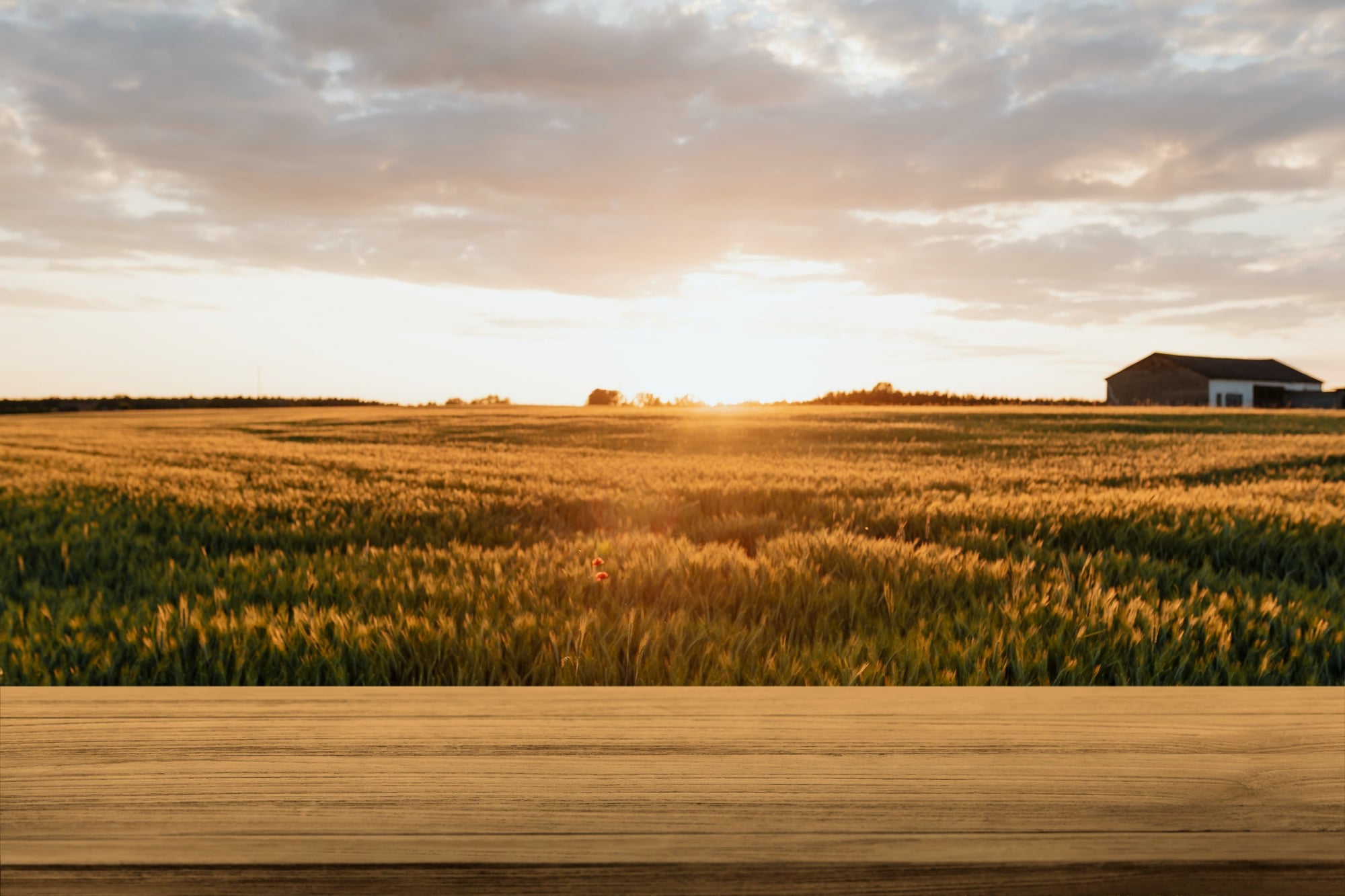
The Gate Russ Welded
Part One: Red Light
After my husband died, my daughter locked me out of my own three-hundred-acre cattle ranch in Wyoming.
She told me through the gate speaker that I could come home once I gave her husband power of attorney.
So I pulled my truck off the road, ate my ham sandwich, and called the man my husband had made me promise to call.
That morning, I’d driven to the Safeway in Sheridan.
Thirty-five miles north on Interstate 90. I go every other Tuesday. Milk and eggs and coffee and a rotisserie chicken, and a ham sandwich from the deli counter that I eat in the truck on the way home because it reminds me of the years Russ and I drove to the Sheridan sale barn together.
By the time I got home, it was a little past one. The eggs were warming on the passenger seat. I was already thinking about what I’d make for supper.
I turned off the county road onto our lane.
It runs a quarter mile between two barbed-wire fences to the main gate. A heavy pipe gate, painted green once and gone gray with forty years of Wyoming weather. Electric now. Russ put the motor and the keypad on it in 2006, after his first knee surgery, when he got tired of climbing out of the truck to open it.
I leaned out of my Ford and entered the code.
The code Russ and I had used for forty years.
It was our wedding date. 0-6-1-4-7-2. June 14, 1972.
The light flashed red.
I entered it again. Slower. Pressing each button with my finger.
Red.
Then the speaker crackled.
“I changed it, Mom,” Kristy said.
Part Two: The Speaker
My daughter’s voice came out of that little gray box like she was calling from the other side of the world.
“We’ve talked about this,” she said. “You’re seventy-nine. You shouldn’t be out here by yourself.”
I sat in my truck with the window down and the cold October wind coming in. I looked at the keypad.
“Open the gate, honey,” I said.
“Brett and I spoke to a lawyer,” Kristy said. “In Billings. Once you sign the power of attorney, you can come home.”
There was a pause.
“He’ll take care of the ranch,” she said. “And the cattle sale.”
I thought I’d misheard her.
“What cattle sale?” I said.
“He already has a buyer,” Kristy said. “A feedlot in Nebraska. They’re sending trucks Thursday.”
Her voice softened. Like she was talking to a child.
“You’ll have an allowance, Mom,” she said. “A good one.”
Part Three: Dolores
My name is Dolores Kincaid.
I was born in 1946 in a two-room house outside Kaycee, Wyoming. My father ran sheep. My mother taught at a one-room school. I rode a horse four miles to that school every morning until I was twelve.
I met Russell Kincaid at a dance at the Buffalo Elks Lodge in 1971. He was twenty-six and just home from Vietnam. He had a crooked nose and big hands and he couldn’t dance a lick.
He stepped on my feet all night. I married him anyway.
In 1974, Russ and I bought this ranch outside Buffalo.
Three hundred and twelve acres. Bottom ground along Clear Creek and grass up into the foothills of the Bighorns. A little log house with a tin roof. A barn that leaned east. A set of corrals that needed rebuilding.
We bought it with money borrowed from his uncle Walt and a handshake at the First National Bank of Buffalo. The banker was a man named Harold Story. He’d known Russ’s daddy. He loaned us forty thousand dollars on a handshake and a promise.
We paid back every dime in twenty-two years.
We raised two daughters on that ranch.
Kristy came in 1975. Sarah in 1978.
We raised three hundred head of Black Angus. Good cattle. Russ was particular about bloodlines. He’d drive to Montana to buy a bull if he had to.
And we raised enough orphan calves in the kitchen that I stopped buying rugs for it.
Every spring, a heifer would lose her calf, or a calf would lose his mother, or one would come out in a blizzard too weak to stand. Russ would carry it into the house in his arms. We’d put it on a feed sack by the stove and feed it from a bottle every three hours.
The girls named them all. Peanut and Buttons and Mr. Wiggles and a big black bull calf named Elvis who grew up to sire half our herd.
Part Four: The Gate
Russ welded the gate himself in 1981.
I remember the day. A hot Saturday in August. He’d bought the pipe from the salvage yard in Gillette. He spent the whole day in the yard with his welding rig and his mask and his leather gloves, sparks flying.
The girls sat on the porch steps watching. Kristy was six. Sarah was three.
When he was done, he hung it on the posts and swung it open and shut, open and shut, grinning like a kid with a new bicycle.
“That’ll outlast us both,” he said.
There’s a little bump on the top rail.
About a foot from the latch side. Where he went back over a weld that didn’t take the first time. A little knot of metal, rough and round, like a knuckle.
He always meant to grind it smooth. He never did.
I could see it from my truck.
Part Five: Russ
Russ died in March.
After three years of dialysis.
His kidneys started failing in 2021. Diabetes, the doctor said. Fifty years of cowboy coffee and fried steak and not going to the doctor.
He needed dialysis twice a week. Tuesdays and Fridays.
The closest dialysis center was in Casper. Ninety miles south on Interstate 25.
Twice a week, I drove him ninety miles each way.
Three years. Three hundred and twelve round trips. I counted. Fifty-six thousand miles in my Ford.
We’d leave the ranch at five in the morning. I’d drive. He’d sleep against the window with his hat over his eyes.
Four hours in the chair at the clinic. I’d sit in the waiting room with a book and a thermos of coffee. The nurses knew me by name. They brought me cookies at Christmas.
Then I’d drive him home. He’d be gray and exhausted and cold. I’d put him to bed with the electric blanket and go out and do the chores.
In between, I ran the ranch.
Three hundred head of cattle. Calving in February. Branding in May. Haying in July. Shipping in October.
We had a hired man, Tom Yellowtail, who came three days a week. The rest, I did myself.
I was seventy-six when Russ started dialysis. I was seventy-nine when he died.
Part Six: Kristy and Brett
Kristy and Brett came for the funeral.
Kristy is forty-nine. She lives in Billings, Montana, three hours north. She works in human resources at a hospital.
She left the ranch when she was eighteen. She went to college in Laramie and never came back to stay. She always said ranching was too hard. Too lonely. Too far from everything.
She came home for Christmas. Sometimes Easter. She called on Sundays.
She didn’t come to see her father once during the three years of dialysis.
She said she was too busy.
Brett is her husband. Fifty-two. They’ve been married twenty years.
He sells farm equipment. Or he did. He had a dealership in Billings. Hartwell Implement. John Deere and Kubota and New Holland.
He’s a big, broad, red-faced man with a booming laugh and a firm handshake and a lot of opinions about how other people should run their operations.
Russ never liked him.
He never said so. Russ didn’t say things like that. But I could tell.
They came for the funeral and stayed two weeks.
Brett sold farm equipment up in Billings. So it seemed natural enough, I suppose, when he started walking the property with a clipboard and a tape measure.
He measured the barn. He measured the machine shed. He looked at the tractors and the hay equipment and the stock trailer. He wrote things down.
He walked the fence lines. He walked the creek bottom. He counted cattle.
I’d thanked him for taking an interest.
I thought he was trying to help. I thought he was looking at the equipment to see what needed fixing. I thought maybe he wanted to come down in the summers and help with the haying.
I made him pot roast. I made him pie.
I thanked him.
Part Seven: Brett’s Voice
Then Brett’s voice came through the speaker.
“Dolores,” he said.
That big booming salesman’s voice. Coming out of the little gray box on the gatepost.
“Russ left debts you don’t know about,” Brett said.
I sat very still in my truck.
“The equipment needs replacing,” Brett said. “The tractor’s thirty years old. The baler’s held together with baling wire. The stock trailer’s rusted through.”
He paused.
“If I don’t sell the herd now,” he said, “you’ll lose everything by spring.”
“Sign the paper,” Brett said. “And let the adults handle it.”
Let the adults handle it.
I’d helped calve heifers in a blizzard the previous February.
Seventy-eight years old. Two in the morning. Twenty below with the wind. A first-calf heifer in trouble in the calving barn, the calf coming backward.
Tom Yellowtail was snowed in at his place on the Crow reservation. Russ was asleep, exhausted from dialysis. There was nobody else.
So I put on Russ’s coveralls and my headlamp and went out to the barn.
I pulled that calf with a chain and a calf jack. By myself. It took an hour. My arms were shaking so hard afterward I couldn’t hold a coffee cup.
The calf lived. A heifer. Black, with a white star on her face.
The girls would have named her Blizzard.
I could have told Brett that.
I could have told him about the three hundred and twelve trips to Casper. About the fifty-six thousand miles. About running three hundred head of cattle by myself at seventy-eight.
But I was tired of talking into a box.
Part Eight: The Cottonwood
I backed away from the gate.
Slowly. Down the lane about fifty yards. To the big cottonwood tree beside the road.
It’s an old tree. A hundred years at least. Its trunk is as big around as a stock tank. Its roots reach all the way down to Clear Creek.
Russ used to park the stock trailer under it. In the summer, for the shade. In the winter, out of the wind.
I parked my Ford under the cottonwood.
I turned off the engine.
The leaves were turning. October gold. Every time the wind blew, a few more came down and landed on my windshield.
I unwrapped my ham sandwich.
I poured coffee from my thermos. The old green Stanley thermos. Russ’s. He carried it every day for fifty years.
I sat there in the truck, eating my sandwich and drinking my coffee, looking at the gate.
At the keypad, with its red light.
At the little bump on the top rail where Russ went back over a weld.
Part Nine: Kaycee
That was when I remembered.
A drive home from dialysis the previous November.
It was a Friday. Late afternoon. We’d left the clinic in Casper at two. I was driving north on I-25. Russ was in the passenger seat.
He’d been quiet for almost an hour.
Not asleep. Just quiet. Looking out the window at the high plains going by. Sagebrush and antelope and nothing else for fifty miles.
We were outside Kaycee.
Where I was born. Where I rode a horse four miles to school.
The sun was dropping behind the Bighorns. The whole western sky was orange and pink and purple. The mountains were black against it.
Russ turned his head.
He looked at me.
“Dolores,” he said. “I need you to make me a promise.”
I kept my eyes on the road.
“What kind of promise?” I said.
He was quiet for a long time.
“If anybody ever locks you out of the ranch,” Russ said, “I want you to call Amos Redcloud.”
I looked over at him.
“Locks me out?” I said. “Russ, who would lock me out of my own ranch?”
He didn’t answer.
He just looked back out the window at the mountains.
“Promise me,” he said.
“Russ—”
“Promise me, Dolores,” he said.
I promised.
He reached over and patted my knee.
Then he put his hat over his eyes and went to sleep.
He never mentioned it again.
Part Ten: Amos Redcloud
Amos Redcloud is seventy-seven years old.
He’s Apsáalooke. Crow. He grew up in Lodge Grass, Montana, on the Crow reservation, sixty miles north of our ranch.
He and Russ met in Vietnam in 1969.
They were both nineteen. In the same company. First Cavalry Division. Somewhere in the central highlands.
Russ never talked about the war. Not to me. Not to the girls. Not to anybody.
But once, a long time ago, after a funeral, after too much whiskey, he told me one thing.
“Amos carried me two miles,” Russ said. “Through the jungle. With my leg all torn up. While they were shooting at us.”
He looked at the floor.
“He never once set me down,” Russ said.
They came home in 1970. Both of them.
Amos went back to Lodge Grass. Russ came back to Buffalo.
They stayed friends for fifty-five years.
Amos became a brand inspector.
For the Wyoming Livestock Board. In Johnson County. For thirty-four years.
If you’re not from cattle country, you might not know what a brand inspector does.
In Wyoming, every cow that’s sold, every cow that leaves the county, every cow that goes to a sale barn or a feedlot or a packing plant, has to be inspected first.
The brand inspector looks at every animal. Checks the brand. Checks it against the state registry. Makes sure the person selling the cattle actually owns them.
No inspection, no sale. No inspection, no trucks leave the county.
It’s the law. Since 1909.
It’s how Wyoming stopped cattle rustling.
Amos retired in 2015.
But he still knows every rancher in Johnson County. Every brand. Every bloodline.
And he trained the man who has his job now.
Russ trusted Amos Redcloud more than anybody.
More than his own brother. More than his banker. More than his lawyer.
Maybe more than me.
Part Eleven: The Call
I finished my sandwich.
I folded the wax paper. I put it in the paper sack.
I took my phone out of my purse.
I found the number. Amos. Russ had programmed it into my phone years ago. I’d never called it. Not once.
I pressed it.
It rang twice.
“Dolores,” Amos said.
His voice was low and slow and deep. Like water running over rocks.
He didn’t say hello. He didn’t ask how I was.
“Dolores,” he said again. “Are you at the gate?”
I stared at the phone.
“How did you know?” I said.
He was quiet for a moment.
“Russ told me,” Amos said. “He said if you ever called me, it would be because somebody had locked you out.”
He paused.
“He said it would probably be Brett,” Amos said.
I didn’t say anything.
I couldn’t.
“Stay where you are,” Amos said. “Under the cottonwood. I’m in Sheridan. I’ll be there in forty minutes.”
“How do you know I’m under the cottonwood?” I asked.
Amos almost laughed.
“Because that’s where Russ always parked,” he said.
Part Twelve: Waiting
I waited forty minutes under the cottonwood.
I drank my coffee. I watched the cattle in the north pasture. Our cattle. Three hundred head of Black Angus, grazing in the October sun on the grass Russ planted in 1976.
I watched the gate.
At one point, Brett came out of the house.
I could see him from the truck. Way up the lane, past the gate. A big man in a red jacket, standing on my front porch with his arms folded. Looking down the lane at me.
He didn’t come down.
Then Kristy came out.
She stood next to him on the porch. In one of my old coats. My barn coat. The tan Carhartt with the torn pocket.
She looked down the lane at me too.
She didn’t come down either.
I sat in the truck under the cottonwood.
I thought about Kristy at six years old, sitting on the porch steps watching her daddy weld the gate. Sparks flying. Her eyes wide.
I thought about her at nine, bottle-feeding an orphan calf by the kitchen stove. Peanut. Brown and white, with one floppy ear.
I thought about her at eighteen, driving away to Laramie in her little Honda Civic. Not looking back.
I thought about her on the phone, every Sunday, for three years.
How’s Dad?
Tired.
Tell him I said hi. I’ll try to come down next month.
She never came.
Part Thirteen: Amos
At two-fifteen, a pickup came down the county road.
An old blue Chevy. Dented. Dusty. With a Montana plate and a Vietnam veteran sticker in the back window.
It slowed down at our lane. It turned in.
It pulled up beside me under the cottonwood.
Amos Redcloud climbed out.
He’s tall. Six-foot-two, even at seventy-seven. Thin as a fence post. His hair is long and gray, in a single braid down his back. He wears a black felt cowboy hat with an eagle feather in the band.
He was wearing a canvas ranch coat and old jeans and boots so worn the leather was white at the toes.
He was carrying a manila envelope.
Thick. Old. Yellowed at the edges.
He walked over to my truck.
He took off his hat.
“Dolores,” he said.
“Amos,” I said.
He looked at the gate. At the red light on the keypad.
He looked up the lane. At Brett and Kristy on the porch.
Then he looked at me.
“Russ was right,” he said quietly.
Part Fourteen: The Envelope
He opened the passenger door of my Ford.
He moved the eggs off the seat. He set them carefully on the floor.
He climbed in beside me.
He held the manila envelope in his lap.
On the front, in Russ’s handwriting. Big, blocky capital letters. The way he wrote on feed sacks and calving charts.
FOR AMOS. IF THEY LOCK HER OUT.
I stared at it.
“When did he give you that?” I asked.
“Last December,” Amos said. “A week after that drive home from Casper. When he made you promise.”
He turned the envelope over in his hands.
“He drove up to Lodge Grass,” Amos said. “By himself. In the middle of dialysis. Three hours each way.”
He looked at me.
“You were in Sheridan,” he said. “Getting groceries. He told you he was going to the vet in Buffalo.”
I remembered.
A Tuesday in December. Russ said he had to pick up some vaccines from the vet. He was gone all day. He came home after dark, gray and exhausted. He went straight to bed.
I thought the vet was busy.
“He sat at my kitchen table,” Amos said, “and gave me this.”
He held up the envelope.
“He said, Amos, I’m not going to make it through spring. And when I’m gone, Brett’s going to try something.”
Part Fifteen: What Russ Knew
Amos opened the envelope.
He took out a stack of papers. He set them on the dashboard of my truck.
“Brett came to Russ two years ago,” Amos said. “In the summer of 2023. Asked him for a loan.”
I stared at him.
“A loan?” I said. “Russ never told me.”
“He didn’t want to worry you,” Amos said. “You were driving him to Casper twice a week. He said you had enough.”
“How much?” I asked.
“Two hundred thousand dollars,” Amos said.
I couldn’t breathe.
“Brett’s dealership was going under,” Amos said. “He’d overextended. Bought too much inventory when prices were high. Then the bottom fell out of the equipment market.”
He took out a piece of paper. A photocopy of a letter from a bank in Billings.
Notice of Default. Hartwell Implement LLC.
“He was a year behind on his floor plan loan,” Amos said. “The bank was going to take the dealership.”
“Russ said no,” Amos said.
He took out another piece of paper. A letter. In Russ’s handwriting.
“Russ wrote him back,” Amos said. “I’ve got a copy.”
He handed it to me.
Brett —
I can’t loan you that kind of money. The ranch is all Dolores and I have. It’s not mine to risk on somebody else’s business.
If you need help, sell some inventory. Cut your overhead. Talk to your banker. Be honest with Kristy.
I’m sorry. I know that’s not what you wanted to hear.
— Russ
“Brett didn’t take it well,” Amos said quietly.
“He came back six months later,” Amos said. “Christmas 2023. When you all were in the house opening presents, he cornered Russ in the barn.”
He looked out the windshield at the barn. Way up the lane.
“He told Russ that when Russ died, the ranch would go to Kristy anyway,” Amos said. “Eventually. So why not just give him the money now. Early. An advance on her inheritance.”
“Russ told him to get out of his barn,” Amos said.
Part Sixteen: The Debts
“Brett said Russ left debts,” I said. “Debts I don’t know about.”
Amos looked at me.
Then he reached into the envelope one more time.
He took out a single sheet of paper. Letterhead from the First National Bank of Buffalo.
Statement of Account. Russell and Dolores Kincaid.
Mortgage balance: $0.00. Paid in full, 1996.
Operating loan balance: $0.00.
Equipment loans: $0.00.
Line of credit: $0.00.
At the bottom, a handwritten note. From the bank president.
Russ — As requested. You and Dolores don’t owe us a dime. Haven’t since 1996. Proud to have known you. — Harold Story Jr.
“Russ got this in January,” Amos said. “From Harold Story’s son. Who runs the bank now.”
He tapped the paper.
“There are no debts, Dolores,” he said. “There never were. Russ never borrowed a dime after 1996.”
I held the paper in my hands.
“Brett’s lying,” I said.
“Brett’s lying,” Amos said.
Part Seventeen: The Trust
Then Amos took out the last thing in the envelope.
It was a legal document. Several pages. Stapled. With a gold seal on the front.
The Russell and Dolores Kincaid Family Ranch Trust.
“Russ set this up in January,” Amos said. “With a lawyer in Sheridan. A woman named Margaret Two Bulls.”
He handed it to me.
“The ranch isn’t his to leave anymore,” Amos said. “And it isn’t Kristy’s to inherit. Or Brett’s to sell.”
He pointed to a paragraph near the top.
“It belongs to the trust,” he said. “And the trustee is you.”
I read it.
Trustee: Dolores M. Kincaid. For her lifetime.
Successor Trustee: Amos J. Redcloud.
“Me?” I said. “You?”
“If something happens to you,” Amos said, “or if you can’t do it anymore, I manage it until it passes to the girls.”
He looked at me.
“Both of them,” he said. “Kristy and Sarah. Equal shares. When you’re gone.”
He turned the page.
There was one more paragraph. Underlined in pen.
The ranch shall not be sold, subdivided, or leased for development. The cattle operation shall continue as long as any family member wishes to operate it. No power of attorney granted by Dolores M. Kincaid shall extend to the sale of trust property without the written approval of the Successor Trustee.
I looked up at Amos.
“So even if I’d signed Brett’s paper,” I said slowly.
“It wouldn’t matter,” Amos said. “He couldn’t sell a single cow. Not without my signature.”
He almost smiled.
“Russ made sure,” he said.
Part Eighteen: The Brand
“There’s one more thing,” Amos said.
He reached into the inside pocket of his canvas coat.
He took out his phone. An old flip phone. He opened it.
“Brett’s got trucks coming Thursday,” he said. “From a feedlot in Nebraska. Kristy said so. Through the speaker.”
He dialed a number.
“Every one of those cows has to be brand inspected before it leaves Johnson County,” Amos said. “That’s the law.”
He put the phone to his ear.
“The brand inspector for Johnson County,” he said, “is a young man named Clayton Fourstar. I trained him. Twelve years ago.”
Someone answered on the other end.
“Clayton,” Amos said. “It’s Amos.”
He listened for a moment.
“I’m doing fine,” he said. “Listen. Has anybody called you about an inspection on the Kincaid place? Outside Buffalo? Thursday?”
He listened.
His face didn’t change.
“A man named Brett Hartwell,” Amos said. “Scheduled an inspection for three hundred head. Lazy K Bar brand.”
He nodded.
“Clayton,” Amos said. “The Lazy K Bar is registered to Russell and Dolores Kincaid. Russ passed in March.”
He looked at me.
“Mrs. Kincaid is sitting right here,” he said. “In her truck. Outside her own gate. Because her son-in-law changed the code.”
He listened for a long time.
“I appreciate that, Clayton,” he said. “I’ll tell her.”
He closed the phone.
“Clayton says he won’t inspect a single animal,” Amos said, “without your signature on the paperwork. In person. With ID.”
He put the phone back in his coat.
“And he says if any trucks show up Thursday without that,” Amos said, “he’ll call the sheriff.”
Part Nineteen: The Key
I sat in my truck under the cottonwood with the papers in my lap.
The trust. The bank statement. Russ’s letter to Brett.
I looked up the lane at the gate. At the red light.
“Amos,” I said. “I still can’t get in.”
Amos looked at the gate for a long moment.
Then he reached into the envelope one more time.
He took out something small.
A key.
An old brass padlock key. Worn smooth. On a loop of baling wire.
“Russ gave me this too,” Amos said.
He held it up.
“He said when he put the electric motor on the gate in 2006, he left a manual override,” Amos said. “In case the power went out. A padlock on the gear box. Behind the post. Where nobody can see it.”
He handed me the key.
“He said Brett never asked how the gate worked,” Amos said. “He only asked how much the ranch was worth.”
I held the key in my palm.
It was warm from Amos’s coat.
Part Twenty: The Gate
We got out of the truck.
Both of us. Amos in his black hat with the eagle feather. Me in my barn jacket.
We walked up the lane to the gate.
Brett and Kristy were still standing on the porch. A quarter mile up. Watching.
I saw Brett unfold his arms. I saw him say something to Kristy.
I saw him start down the porch steps.
I walked around the back of the left gatepost.
There, behind the post, low to the ground, was a gray metal box. The gear box for the electric motor. Covered in forty years of dust and spider webs.
And on the side of it, a small brass padlock.
I put the key in.
I turned it.
The padlock opened.
Behind it was a lever. Rusted. Stiff.
Amos helped me pull it. Both of us, our hands together on the lever. It squealed. Then it gave.
The gear disengaged.
The gate swung free.
I put my hand on the top rail. On the little bump where Russ went back over a weld.
I pushed.
The gate swung open. Slowly. Silently. On hinges Russ greased every spring for forty years.
Part Twenty-One: Brett
Brett was coming down the lane.
Fast. In his red jacket. His face red.
He was halfway to the gate when he saw it swing open.
He stopped.
He saw Amos.
“Who the hell are you?” Brett said.
Amos didn’t answer right away.
He put his black hat back on. He adjusted the eagle feather.
“Amos Redcloud,” he said. “Russ’s friend.”
He looked at Brett.
“Successor trustee of the Kincaid Family Ranch Trust,” Amos said.
Brett’s face went from red to white.
“The what?” he said.
Amos held up the trust document.
“Russ put the ranch in a trust,” Amos said. “In January. Dolores is the trustee. For as long as she lives. I’m the successor.”
He looked at Brett.
“Nobody can sell a cow off this place without my signature,” he said. “Or a blade of grass.”
“That’s not—” Brett started. “Kristy said—”
“And the brand inspector won’t be here Thursday,” Amos said. “I just talked to him. He knows.”
Brett stood there in the middle of the lane.
He looked at the trust document. He looked at the open gate.
He looked at me.
“Dolores,” he said. His voice was different now. Softer. Wheedling. “You don’t understand. The ranch is in trouble. Russ left debts—”
I held up the bank statement.
The one from Harold Story Jr.
Mortgage balance: $0.00.
“Russ didn’t leave any debts, Brett,” I said. “Not one dime.”
I looked at him.
“But you did,” I said. “Didn’t you?”
Brett’s face went gray.
“Two hundred thousand dollars,” I said. “That’s what you asked Russ for. Two years ago. When your dealership was going under.”
I held up Russ’s letter.
“He said no,” I said. “So you waited until he died.”
Part Twenty-Two: Kristy
Kristy had come down the porch steps.
She was walking down the lane toward us. In my old barn coat. Slowly.
She stopped beside Brett.
“Mom,” she said. “What’s going on?”
I looked at my daughter.
Forty-nine years old. In my coat.
“Did you know?” I asked. “About the loan? About the two hundred thousand?”
Kristy looked at Brett.
Brett looked at the ground.
“What loan?” Kristy said.
Nobody said anything.
“Brett,” Kristy said. “What loan?”
Brett didn’t answer.
So Amos handed her the papers.
The letter from the bank in Billings. Notice of Default. Hartwell Implement LLC.
Russ’s letter. I can’t loan you that kind of money. Be honest with Kristy.
Kristy read them standing in the lane.
I watched her face change.
From confused. To shocked. To something worse.
“You told me the dealership was fine,” she said quietly.
Brett didn’t say anything.
“You told me,” Kristy said. “Two years. Every month. Business is good, babe. Don’t worry about it.”
Her voice was shaking.
“You told me Mom was getting confused,” she said. “You told me she couldn’t run the ranch anymore. You told me Dad left debts.”
She held up the bank statement.
“Paid in full, 1996,” she read.
She looked at Brett.
“You lied to me,” she said. “About all of it.”
Part Twenty-Three: What Brett Said
Brett finally looked up.
“I didn’t have a choice,” he said. “The bank was going to take everything. The dealership. The house. Everything.”
He looked at me.
“Russ had three hundred head of cattle sitting out there,” Brett said. “Worth half a million dollars. And a ranch worth two million. And he wouldn’t loan me two hundred thousand.”
He shook his head.
“He was going to die anyway,” Brett said. “And it was all going to Kristy. Eventually. I just needed it sooner.”
Kristy stared at him.
“He was going to die anyway,” she repeated.
Brett realized what he’d said.
“That’s not what I meant,” he said.
“That’s exactly what you meant,” Kristy said.
She took off my barn coat.
She held it out to me.
“Mom,” she said. “I’m sorry.”
Part Twenty-Four: Kristy’s Truth
I took the coat.
I didn’t put it on. I just held it.
“Why didn’t you come?” I asked her.
Kristy looked at me.
“To Casper,” I said. “Three years. Twice a week. Why didn’t you ever come?”
Kristy’s face crumpled.
“Because I couldn’t stand it,” she said. “Seeing him like that. In the chair. With the tubes.”
She wiped her eyes.
“Dad was always the strongest person I knew,” she said. “He could pick up a calf with one arm. He welded that gate in one day. And then he was sitting in a chair in Casper, gray, with a machine doing what his body couldn’t.”
She shook her head.
“I was a coward,” she said. “I told myself I was too busy. Really, I just couldn’t watch.”
“And then he died,” Kristy said. “And I hadn’t come. Not once. And I felt so guilty I couldn’t breathe.”
She looked at Brett.
“And Brett said, Your mom’s struggling. She’s seventy-nine. She can’t run that place alone. We need to step in. For her own good.”
She looked back at me.
“And I wanted to believe him,” Kristy said. “Because it meant I could finally do something. After three years of not doing anything.”
“So I changed the gate code,” Kristy said. “Because he said it was for your own good.”
She put her hand over her mouth.
“I locked my own mother out of the house she raised me in,” she said.
Part Twenty-Five: The Sheriff
Brett and Kristy left that night.
Separately.
Kristy drove back to Billings in her car.
Brett drove back to Billings in his.
Before he left, Amos walked Brett to his truck.
I don’t know what Amos said to him. I didn’t hear it.
But Brett’s face was gray when he got in his truck. And he didn’t look back.
Two weeks later, the bank in Billings took Hartwell Implement.
A month after that, Kristy filed for divorce.
Part Twenty-Six: The Code
That night, after they were gone, Amos and I sat at my kitchen table.
I made coffee in Russ’s old percolator. I heated up a pot roast I’d had in the freezer.
We ate supper together. Not saying much.
After supper, Amos looked at me.
“The gate code,” he said. “You’ll need a new one.”
I nodded.
“Kristy changed it,” I said. “I don’t even know what she changed it to.”
Amos pulled something out of his coat pocket. A folded piece of paper.
“Russ wrote this too,” he said. “It was the last thing in the envelope. I didn’t show you at the gate.”
He handed it to me.
It was a small piece of paper. Torn from one of Russ’s calving notebooks. In his blocky capital letters.
DOLORES —
If you’re reading this, Amos got you back in. I knew he would.
Change the gate code. Something Brett will never guess.
Use the day you pulled that heifer calf in the blizzard. February 9, 2024. 0-2-0-9-2-4.
You thought I was asleep. I wasn’t. I watched you from the bedroom window with my coffee. Seventy-eight years old, in my coveralls, with a headlamp, walking out to that calving barn at two in the morning in twenty below.
I’ve never been prouder of anybody in my life.
That’s the code, Dolores. So every time you come home, you remember who you are.
You don’t need anybody to handle anything.
You never did.
— Russ
I sat at my kitchen table and cried.
Amos sat across from me and didn’t say anything. He just poured me more coffee.
Part Twenty-Seven: Blizzard
The next morning, I went out to the gate.
I opened the keypad cover with a screwdriver. I found the reset button. I entered the master code the installer left in the manual, which I found in the drawer of Russ’s workbench.
Then I entered the new code.
0-2-0-9-2-4.
The light flashed green.
I drove through the gate.
I parked my Ford in the yard. I walked out to the calving pasture behind the barn.
She was there.
The heifer calf I pulled in the blizzard.
She’s twenty months old now. Black, with a white star on her face. Big and healthy. Grazing with the other heifers in the October sun.
I’d never named her.
Russ always let the girls name the calves. After the girls left, he named them himself. Silly names. Elvis and Peanut and Mr. Wiggles.
I never named any of them. That was his job.
I stood at the fence and looked at her for a long time.
“Blizzard,” I said.
She looked up at me.
Part Twenty-Eight: Sarah
My younger daughter, Sarah, came home in November.
She’s forty-six. She’s a nurse in Anchorage, Alaska. She’s been there twenty years. She married a fisherman named Leif and they have three boys.
She’d been at the funeral in March. She’d gone back to Alaska after a week. She hadn’t been able to get away since.
Kristy called her. After everything.
Kristy told her the whole story.
Sarah was on a plane to Billings two days later.
She stood in my kitchen with her suitcase. She looked around at the log walls. At Russ’s chair by the window. At the old green Stanley thermos on the counter.
“Mom,” she said. “Why didn’t you call me?”
“I didn’t want to worry you,” I said.
Sarah shook her head.
“That’s what Dad always said,” she said.
She stayed a month.
She helped me ship the calves. She helped me move the cows to the winter pasture. She helped me haul hay to the stack yard.
She’d forgotten how much she loved it.
Kristy came down on weekends.
The first time, she sat in her car outside the gate for twenty minutes before she pressed the buzzer.
I didn’t make her wait. I came out on the porch and waved.
“It’s open, honey,” I called. “The code’s 0-2-0-9-2-4.”
She stood at the keypad and entered it.
The light flashed green.
The gate swung open.
She drove through. She parked in the yard. She got out of the car.
She walked to me on the porch and put her arms around me.
“What’s the code?” she asked. “What does it mean?”
“It’s the day I pulled a calf in a blizzard,” I said. “By myself. At seventy-eight.”
Kristy looked at me.
“Your father watched me from the window,” I said. “He told me he’d never been prouder of anybody in his life.”
Kristy started to cry.
“I didn’t know you did that,” she said.
“I know,” I said.
Part Twenty-Nine: Amos
Amos comes down every other Sunday now.
He drives his old blue Chevy from Lodge Grass. Three hours. He brings fry bread his granddaughter makes. I make pot roast.
We sit at the kitchen table and talk about Russ.
He told me about Vietnam.
The things Russ never told me. The jungle. The fear. The friends they lost. The two miles Amos carried Russ on his back while the bullets cracked through the leaves above them.
“He never once complained,” Amos said. “Not the whole two miles. Just kept saying, Don’t you drop me, Amos. I got a girl waiting in Buffalo.”
I looked at him.
“In 1969?” I said. “Russ didn’t meet me until 1971.”
Amos smiled.
“He didn’t know who she was yet,” he said. “He just knew she was out there.”
Part Thirty: Kristy’s Spring
Kristy moved home in April.
After the divorce. After she quit her job at the hospital in Billings.
She moved into her old bedroom upstairs. The one with the faded rodeo posters still on the walls.
“I want to learn,” she said. The first night. At the kitchen table. “The ranch. All of it. What you and Dad did.”
She looked at me.
“I don’t want to handle it,” she said. “I want to learn it.”
So I taught her.
I taught her to check the cows in the calving pasture at two in the morning. I taught her to tell when a heifer was in trouble. I taught her to pull a calf with a chain and a calf jack.
I taught her to bottle-feed an orphan in the kitchen. On a feed sack by the stove.
In May, during branding, she roped her first calf in thirty years.
Badly. She missed six times. Tom Yellowtail laughed so hard he fell off his horse.
On the seventh try, she caught it.
That night, she sat on the porch steps where she sat at six years old, watching her father weld the gate.
She looked down the lane at it. At the little bump on the top rail.
“Mom,” she said. “Why didn’t Dad ever grind that weld smooth?”
I sat down next to her.
“I asked him that once,” I said. “Twenty years ago.”
“What did he say?”
“He said it was the only spot on the whole gate where he’d made a mistake,” I said. “And went back and fixed it.”
I looked at the gate.
“He said he wanted to leave it there,” I said. “So he’d remember you can always go back over a bad weld.”
Kristy didn’t say anything for a long time.
Then she laid her head on my shoulder.
“I made a bad weld, Mom,” she said.
“I know, honey,” I said.
I put my arm around her.
“You went back over it,” I said.
Part Thirty-One: The Code
It’s October again now.
One year since I sat under the cottonwood with my ham sandwich.
I still drive to the Safeway in Sheridan every other Tuesday. Milk and eggs and coffee and a rotisserie chicken. A ham sandwich from the deli counter that I eat in the truck on the way home.
This afternoon, I turned off the county road onto our lane.
I drove a quarter mile between the barbed-wire fences.
I stopped at the gate.
I leaned out of my Ford.
I entered the code.
0-2-0-9-2-4.
The light flashed green.
The gate swung open on hinges Russ greased every spring for forty years. Hinges Kristy greased this spring. For the first time.
I drove through.
I looked in my rearview mirror as the gate swung shut behind me.
At the little bump on the top rail.
In the yard, Kristy was standing by the corrals in Russ’s old coveralls. Talking to Tom Yellowtail about the fall shipping.
In the calving pasture behind the barn, a big black heifer with a white star on her face was grazing in the October sun.
She’s due to calve in February.
Under the cottonwood, an old blue Chevy with a Montana plate was parked in the shade. Where Russ used to leave the stock trailer.
Amos was sitting on the porch with a cup of coffee from Russ’s old Stanley thermos.
He raised it to me as I pulled up.
I got out of the truck.
I picked up the grocery sack. The eggs were still cold.
I walked up the porch steps to my own front door.
In my own barn coat.
On my own ranch.
I didn’t need anybody to handle anything.
I never did.

Laura Bennett writes about complicated family dynamics, difficult conversations, and the quiet moments that change everything. Her stories focus on real-life tensions — inheritance disputes, strained marriages, loyalty tests — and the strength people find when they finally speak up. She believes the smallest decisions often carry the biggest consequences.