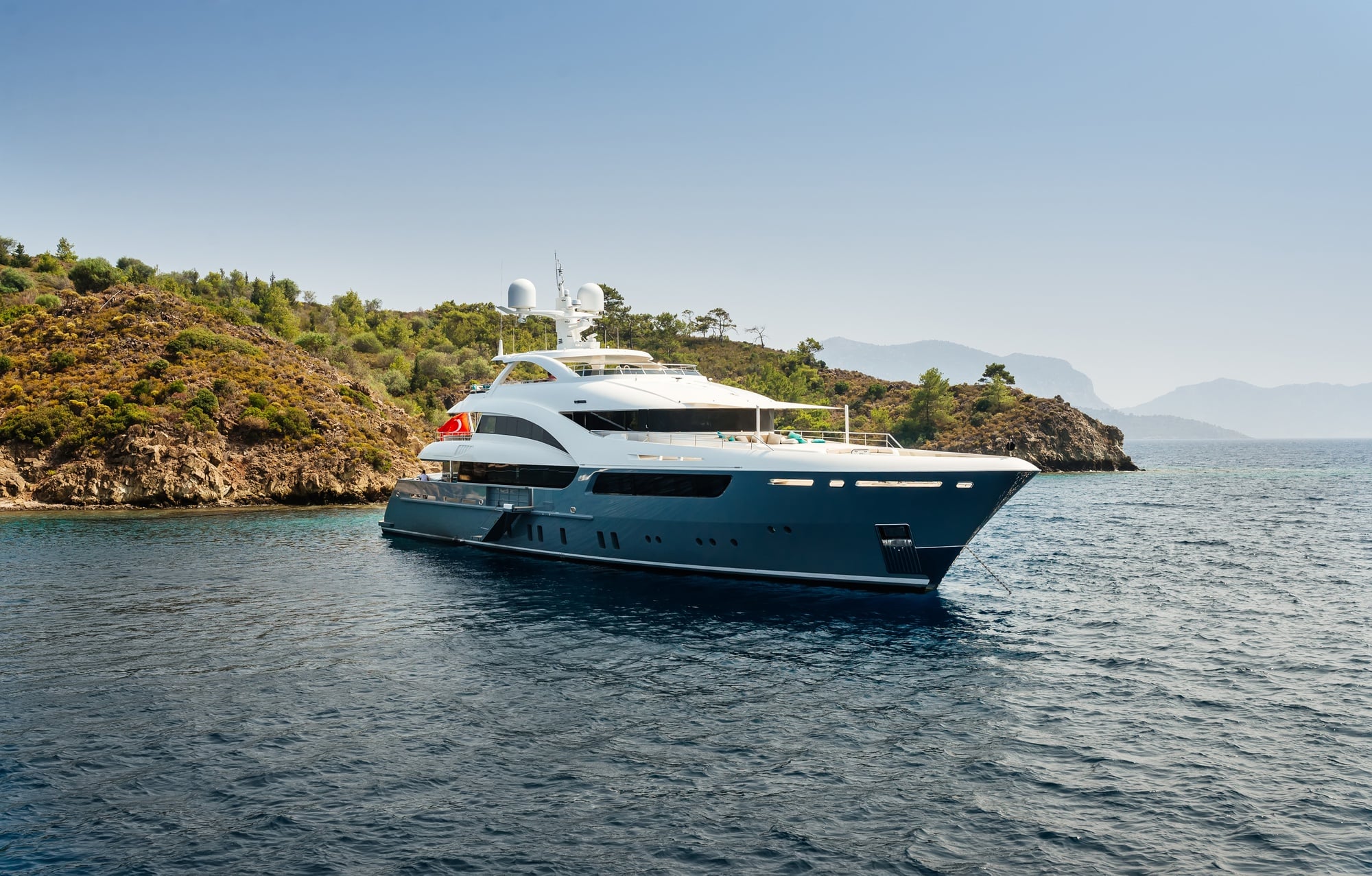
The Green Lights
Part One: The Boy in the Kitchen
When I was seven years old, I built my first machine out of a broken toaster, two flashlight batteries, and a spool of my mother’s sewing thread.
It was supposed to open the kitchen door by itself. It didn’t. It caught fire and scorched a black ring into the countertop of our house in Connecticut.
My mother saw the ring three days later. She screamed for twenty minutes. Not because I could have burned the house down. Because the countertop was Italian marble, and it would cost eleven thousand dollars to replace.
Rosa was the one who put the fire out.
Rosa Delgado was our housekeeper. She’d come from Guatemala when she was nineteen and worked for my parents for twenty-two years. She cooked our meals and washed our clothes and drove me to school and sat with me when I had nightmares.
She was the one who found me in the kitchen that night, with smoke pouring out of the toaster and my eyes wide. She threw a wet dish towel over it. Then she knelt down and checked my hands for burns.
When she was sure I was okay, she looked at the scorched machine for a long time.
“Elias,” she said. “What were you trying to build?”
“A door that opens by itself,” I said. “So you don’t have to carry the groceries and open it at the same time.”
Rosa didn’t say anything for a moment.
Then she picked up the blackened toaster and turned it over in her hands.
“Next time,” she said, “use a battery that doesn’t overheat. And ask me first. I’ll help you.”
Nobody else ever asked what I was trying to build.
Part Two: The Family
My name is Elias Whitmore. I’m thirty-two years old.
I built my fortune developing algorithms and technology that eventually made me one of the wealthiest men in my industry. Pattern recognition, mostly. Machine learning systems that predict how things move. Ocean currents. Shipping routes. Weather. Markets.
My company is called Axiom Systems. I started it in a two-bedroom apartment in Cambridge, Massachusetts, when I was twenty-three. I sold my first product when I was twenty-five. By thirty, we were worth more than five billion dollars.
My family never seemed particularly interested in how I built it.
They were much more interested in what would happen to the money when I was gone.
My father is Richard Whitmore.
He was born into money. Old money. His grandfather made a fortune in railroads in the 1920s. His father turned it into a bigger fortune in real estate in the 1960s.
Richard spent most of it by the time he was fifty.
He’s squandered three inherited fortunes.
The first one went into a chain of luxury car dealerships in the nineties that collapsed during the 2001 recession. The second went into a hedge fund run by a college friend who turned out to be running a Ponzi scheme. The third went into a vineyard in Napa that never produced a single bottle of drinkable wine.
By the time I was twenty, my father was broke. Living on credit cards and the last of my grandmother’s trust.
He never once admitted it was his fault.
My mother is Eleanor Whitmore.
She was a debutante from Greenwich. She married my father for his name and his money. When the money ran out, she kept the name and found other ways.
She has mastered the art of making financial demands sound like expressions of maternal concern.
Darling, I worry about you living in that small apartment. Wouldn’t you be happier somewhere with a view? Meaning: buy a bigger house, and let us live in it.
Your father’s been so stressed lately, Elias. The bank is being terribly unfair. Meaning: pay off his loans.
We just want to be close to you. Meaning: put us on the payroll.
My sister is Chloe.
She’s thirty-five. Three years older than me. Beautiful, sharp, and charming when she wants to be. She went to Brown. She dropped out after a year. She’s been an influencer, a jewelry designer, a wellness coach, and a real estate agent.
None of it lasted.
Chloe spent years treating my success as something that belonged to her.
When I sold my first company, she told her friends she’d helped me. When I bought my house in Boston, she moved into the guest wing for eight months without asking. When I launched Axiom, she called it our family business on Instagram.
She posted pictures of herself on my private jet. In my house. At my company holiday parties.
She never once mentioned me in the captions.
Part Three: Trying to Buy It
I want to be honest about something.
For years, I thought I could fix it.
I thought if I just made enough money, if I just became successful enough, my parents would finally look at me the way other parents look at their children. With pride. With love.
With something other than calculation.
So I paid.
I paid off my father’s credit cards. Twice. I paid off the mortgage on their house in Connecticut. I bought them a house in Palm Beach for the winters.
I paid Chloe’s rent. Her car payments. Her business loans for four failed businesses. Her rehab bill in 2019, which nobody else in the family knew about.
Every time, I hoped it would be enough.
It never was.
Every achievement seemed to give them another reason to expect something from me. Every check I wrote became the new baseline. Every gift became an obligation.
Rosa told me once, when I was twenty-six.
She’d retired by then. My parents had let her go in 2014, when the money got tight. No pension. No severance. After twenty-two years.
I found out a year later. I bought her a small house in Cambridge, near my office. I paid her a salary as my “household manager,” even though I barely had a household.
She came to my apartment every Sunday and made me dinner.
“Mijo,” she said one Sunday. We were sitting at my kitchen table. She’d made pepián, the Guatemalan stew she used to make for me when I was little.
“You keep trying to buy something that isn’t for sale,” she said.
I looked at her.
“Their love,” she said gently. “You can’t buy it, Elias. If it’s there, it’s free. If it’s not, all the money in the world won’t put it there.”
I didn’t listen.
Not then.
Part Four: Patterns
For years, I’ve studied patterns for a living.
My companies depend on recognizing behavior. Anticipating decisions. Preparing for outcomes that other people consider unlikely.
Unfortunately, I had begun applying those same skills to my family.
It started small.
Last spring, my mother started asking about my estate plan. Gently. Over dinner.
Darling, at your age, with your wealth, you really should have everything in order. Just in case.
Then my father started asking about my health.
You work too hard, son. Have you had your heart checked? Your grandfather had a heart attack at forty.
My grandfather had a heart attack at seventy-eight. I checked.
Then Chloe started asking about my life insurance.
She asked at Thanksgiving. In front of everyone. Joking.
So if you get hit by a bus, Eli, who gets the jet?
Everybody laughed.
I didn’t.
Their questions about my estate had become more direct. Their interest in my business had grown more aggressive. And whenever they thought I wasn’t listening, their conversations changed.
In June, I heard something.
I was at my parents’ house in Palm Beach. The one I bought them. I’d come down for my father’s birthday. I was supposed to be asleep in the guest room.
I couldn’t sleep. I went to the kitchen for water at two in the morning.
I heard voices on the back terrace. Chloe and my mother. Low. Urgent.
“He’s thirty-two,” Chloe said. “He could live to ninety. We’ll be dead before we see a dime.”
“Lower your voice,” my mother said.
“Nobody’s awake,” Chloe said. “Mom. I’m serious. I owe Marco two hundred thousand dollars. He’s not going to wait.”
I didn’t know who Marco was. I found out later.
“Your brother will help you,” my mother said. “He always does.”
“I’m sick of asking,” Chloe said. “I’m sick of begging him. Every time. Like a dog.”
There was a pause.
“Accidents happen,” Chloe said quietly. “To rich people. All the time. Boats. Planes. Skiing.”
My mother didn’t say anything.
She didn’t say Chloe, don’t be ridiculous.
She didn’t say That’s your brother.
She didn’t say anything at all.
I stood in the dark kitchen with a glass of water in my hand.
Then I went back to bed.
I didn’t sleep.
Part Five: Mara
The next morning, I flew back to Boston. And I called Mara Tellez.
Mara is the head of security for Axiom Systems. She’s forty-four. She spent twelve years in the Navy as a rescue swimmer and another eight with the Coast Guard’s investigative service. She has a scar on her chin from a helicopter rescue off Alaska and absolutely no sense of humor about my family.
I told her what I’d heard.
She listened without interrupting.
When I was done, she was quiet for a long time.
“Elias,” she said. “Do you want me to look into this?”
“Yes.”
“You might not like what I find.”
“I know,” I said.
She found Marco in two weeks.
Marco Bellini. A loan shark in Miami with ties to an online gambling operation. Chloe had been betting on sports and online poker for three years. She owed him two hundred and forty thousand dollars.
She found the life insurance.
Not mine. I’d never taken out life insurance. I didn’t need it.
But my father had.
On me.
In 2019, when I signed a contract with a European shipping company, my father had a business manager. A man who helped him with “family investments.” That man had arranged a key-person insurance policy on me, through a shell company my father owned, claiming I was a consultant.
Fifteen million dollars.
The beneficiary was my father’s company.
I’d signed a medical release for it. Buried in a stack of papers my father gave me to sign at Christmas, years ago. I’d signed without reading. Because he was my father.
And she found Chloe’s search history.
Mara didn’t tell me how she got it. I didn’t ask.
Can a person survive falling off a yacht at night.
How long until body found Mediterranean.
International waters jurisdiction death.
Inheritance if sibling dies no will.
The last search was dated three days after I invited my family on a Mediterranean cruise.
Part Six: The Invitation
I’d invited them in July.
Before Mara found any of it.
I’d done it because I was lonely. Because the Axiom was finally finished after two years of construction in a shipyard in the Netherlands. Because I wanted my family to see something I’d built.
Because some part of me still hoped.
The Axiom is a sixty-meter superyacht. A hundred and fifty million dollars. I designed the navigation systems myself. It can cross the Atlantic with a crew of twelve. It has a helipad and a pool and a submersible dock in the stern.
I named it after my company.
I wanted to show my parents. I wanted to stand on the deck with them at sunset and have my father put his hand on my shoulder and say, You built this, son. I’m proud of you.
After Mara’s report, I almost canceled.
I sat in my office in Boston for a whole night, looking at Chloe’s search history on my laptop.
Can a person survive falling off a yacht at night.
At four in the morning, I called Mara.
“I’m not canceling,” I said.
She was quiet for a long time.
“Elias,” she said. “Why?”
“Because I need to know,” I said.
“Know what?”
“Whether she’d really do it,” I said. “Whether they’d let her.”
I took a breath.
“I’ve spent my whole life hoping my family loves me,” I said. “I need to know, once and for all. Or I’ll keep hoping forever.”
Mara didn’t say anything for a long time.
Then she said, “Okay. Then we do it my way.”
Part Seven: Preparation
We spent six weeks preparing.
The Axiom has forty-two cameras. Mara added eighteen more. Tiny ones. Hidden in the lights, the railings, the planters. Every inch of the open deck was covered. With audio.
Everything streamed in real time to a secure server in Zurich. And to a laptop in Mara’s cabin on a second boat.
The second boat was called the Petrel.
A sixty-foot support vessel. Fast. Quiet. Dark gray. It would follow the Axiom three miles behind, with its running lights off, carrying Mara and four former Navy rescue swimmers.
The captain of the Axiom was a woman named Ingrid Halvorsen. Norwegian. Fifty-one. She’d captained ships through the North Sea in January. She’d seen everything.
I told her everything.
She listened. Then she said, “If anybody touches you, Mr. Whitmore, I’ll lock the bridge and turn this ship toward Malta. And I won’t stop until the police are standing on the dock.”
The crew were all mine. Every one of them. I’d hired them myself. I’d told them all what might happen.
Not one of them quit.
And then there was the jacket.
My engineers built it for me. A navy-blue linen blazer. Beautifully tailored. It looked like any other jacket a rich man might wear on a yacht at sunset.
Sewn into the lining was a self-inflating flotation collar. The same kind military pilots wear. It would inflate automatically the moment it hit salt water.
And a GPS beacon. And a strobe light.
And a tiny emergency transponder, tuned to a single frequency.
The frequency belonged to the Nereid.
Part Eight: The Nereid
The Nereid is an autonomous underwater vehicle.
My company built it. Axiom Systems’ marine robotics division. It’s four meters long. It looks like a sleek gray torpedo with fins. It’s designed for ocean rescue. Finding people lost at sea. Divers. Sailors. Migrants whose boats capsize in the dark.
It can dive to a thousand meters. It can swim at twelve knots. It has sonar and thermal cameras and a flotation cradle that can hold a person above the water until help arrives.
And on its nose, it has two enormous green search lights.
We’d been testing the Nereid in the Mediterranean for a year. With the Italian coast guard. It had already found thirty-one people.
I’d never been one of them.
The Nereid traveled in a dock in the stern of the Petrel. When my transponder activated, it would launch automatically. It would find me in the dark.
Within minutes.
“You understand,” Mara said, the night before the cruise, “that this is insane.”
“I understand,” I said.
“You understand that if she pushes you, you could hit the hull. You could break your neck. You could drown before the Nereid gets to you.”
“I understand.”
She looked at me for a long time.
“I’ll be three miles behind you,” she said. “The whole way. I won’t sleep.”
She put her hand on my shoulder.
“And Elias,” she said. “I hope she doesn’t do it. I really do.”
“So do I,” I said.
Part Nine: The Will
There was one more thing I did before the cruise.
I rewrote my will.
I flew to my lawyer’s office in Boston. A sixty-year-old woman named Helen Abernathy, who’d been my attorney since my first company.
I told her what I wanted.
She looked at me for a long time over her reading glasses.
“Elias,” she said. “Are you sure?”
“I’m sure,” I said.
The new will was simple.
My entire estate, every share of Axiom Systems, every property, every account, the Axiom itself, went to a foundation.
The Delgado Foundation.
Named after Rosa.
It would fund engineering scholarships for the children of immigrant domestic workers. Housekeepers and nannies and cooks and gardeners. The kids who grow up in other people’s kitchens, building machines out of broken toasters.
Rosa would be the chairwoman. For as long as she lived.
My parents got nothing.
My sister got nothing.
And I added one clause.
Helen wrote it exactly the way I said it.
Any beneficiary or heir who is found by a court to have caused or contributed to my death shall be permanently disinherited from any claim on my estate, including any insurance policy held on my life.
And the yacht.
The Axiom’s registration had been transferred to the Delgado Foundation two weeks before the cruise. I was technically just a passenger. The yacht belonged to Rosa.
My family didn’t know any of it.
Part Ten: The Last Evening
That evening, we were aboard the Axiom.
Sailing through international waters in the Mediterranean, between Sicily and Malta. Four days into the cruise.
The sunset reflected across the polished teak deck. Waiters circulated with champagne. My father admired the expensive surroundings.
My mother sat nearby in a cashmere shawl.
My sister stood beside the glass railing, watching me.
I had invited all three of them aboard.
For once, I wanted to see what they would say when there was nobody else around.
“So, Elias,” Chloe began. She approached me with a carefully practiced smile. “With your new neural-network venture launching next quarter, you must be exhausted.”
I nodded without answering.
“Have you finally updated your estate planning?” she asked. “You know. Just in case something happens?”
My father chuckled into his cognac.
My mother stood. She walked over and touched my cheek. Her emerald ring brushed against my jaw. The ring I bought her for her sixtieth birthday.
“We’re only concerned about your health, darling,” she said. “You work terribly hard. We worry about your longevity.”
I looked from one face to another.
They were discussing my death as casually as another family might discuss vacation plans.
None of them asked whether I was happy.
None asked what I wanted from the future.
Chloe’s gaze kept returning to the watch on my wrist. My father had spent the evening examining the yacht’s amenities. My mother had been asking about my private holdings.
“Don’t worry, Mother,” I said quietly. “My legacy is completely secured. Every asset is accounted for.”
Chloe’s expression brightened.
“When the time comes,” I continued, “everything will go exactly where it belongs.”
She exchanged a quick glance with my father.
They heard a promise.
I had made no such promise.
Part Eleven: The Railing
The conversation drifted toward other subjects. But the atmosphere never relaxed.
My father kept talking about perspective. About family responsibility. About what a son owes his parents.
My mother watched me with the patient expression she used whenever she expected me to agree to something expensive.
Chloe grew increasingly restless.
I knew that expression. I’d seen it my whole life. Whenever she believed an opportunity was slipping away.
I moved toward the aft railing with my glass of sparkling water.
Below us, the Mediterranean stretched into darkness. The yacht was miles from the nearest coastline. The engines produced a steady vibration beneath my shoes.
There were crew members elsewhere aboard. But my family and I were alone in that section of the deck.
I’d made sure of that.
I rested my hand on the polished rail.
I touched the lapel of my jacket. Under my fingers, I could feel the thin seam where the flotation collar was hidden.
In my ear, so small no one could see it, was an earpiece.
“I see you, Elias,” Mara’s voice said. Quiet. Steady. “Petrel’s three miles back. Nereid’s ready. Cameras rolling.”
She paused.
“You can still walk away,” she said. “Go below. Lock your cabin. We’ll end this tonight without a single splash.”
I looked out at the dark sea.
I thought about Rosa at my kitchen table. You keep trying to buy something that isn’t for sale.
I thought about the boy in the kitchen with the burning toaster. The one nobody ever asked what he was trying to build.
“Not yet,” I whispered.
Part Twelve: The Fall
“The view really is extraordinary,” my father called from behind me.
I watched the last orange light disappear beneath the horizon.
“It really is,” I murmured. “A beautiful drop.”
For a moment, nobody answered.
Then I heard footsteps.
They were quick. Deliberate. Approaching from directly behind me.
I recognized the sound of Chloe’s shoes against the teak.
In my ear, Mara’s voice. Sharp.
“Elias. Behind you. She’s coming.”
I didn’t turn around.
I’d decided. Weeks ago. In my office in Boston at four in the morning.
If she came, I wouldn’t stop her.
I had to know.
Before I could turn, two hands struck the center of my back.
The force drove me forward.
My glass slipped from my fingers and shattered against the deck. My body passed over the low glass railing.
Suddenly there was nothing beneath my feet.
I twisted in the air, looking back toward the yacht.
Chloe was leaning over the railing.
She was laughing.
“Give the sharks my regards, billionaire!” she shouted.
Then I saw my parents.
Richard had wrapped an arm around Eleanor’s waist. They stood together beside Chloe. Looking down at me.
Neither reached forward.
Neither called for help.
My mother’s face held a small, satisfied smile.
That was the moment I understood.
This wasn’t simply Chloe acting alone.
My parents were watching their son fall into the sea.
And they looked relieved.
The water rushed toward me.
Part Thirteen: Beneath
I struck the water.
It wasn’t freezing, the way people imagine. It was September. The Mediterranean was warm. But it was dark. So dark. And the impact knocked the breath out of me.
I went under.
Above me, the enormous hull of the Axiom moved away. I could hear the engines through the water, a low throbbing growl, fading.
My clothes pulled at me. My shoes were heavy. I was sinking.
The flotation collar should have inflated.
It didn’t.
I found out later. The automatic trigger had a salt-dissolving pellet. It takes five to ten seconds to activate. Under stress, in the dark, five seconds feels like an hour.
I couldn’t see anything. I didn’t know which way was up.
My chest was burning.
And in that darkness, sinking, with my lungs screaming, I thought about one thing.
Not the money. Not the company. Not the yacht.
I thought about my mother’s face.
That small, satisfied smile.
I’d been waiting thirty-two years for my mother to look at me like she was proud.
And the last thing I saw on her face was relief.
Then, somewhere far below, something began vibrating through the water.
It wasn’t the yacht. The yacht was gone.
It was coming toward me.
I opened my eyes. The salt stung.
And I saw two enormous green lights appear in the darkness.
Part Fourteen: The Nereid
The flotation collar inflated at the same moment.
A sharp hiss. A jolt around my neck and shoulders. And I was rising. Fast. Toward the surface.
I broke through into the night air, gasping, coughing, choking on seawater.
The strobe on my collar started flashing. White. Every two seconds.
And beneath me, rising out of the black water like something from a dream, came the Nereid.
Four meters of sleek gray machine. Its fins trimming. Its two green search lights blazing up through the water and turning the whole sea around me into glowing emerald glass.
It surfaced beside me. Gently. It had been programmed to approach a swimmer slowly. Never to hit them.
A cradle extended from its side. A padded flotation arm, like a lifeguard’s rescue tube.
I grabbed it.
I held on to the machine my company built. In the middle of the Mediterranean Sea. At night. With my family’s yacht disappearing into the dark.
And I started to cry.
In my ear, through the waterproof earpiece, Mara’s voice came back.
“Elias. Elias. Talk to me.”
“I’m here,” I gasped. “I’m okay. The Nereid’s got me.”
I heard her let out a breath. A long, ragged breath.
“Petrel’s two minutes out,” she said. “Hold on. Just hold on.”
Part Fifteen: Captain Halvorsen
On the Axiom, they started celebrating.
I watched it later. On the footage. Eighteen hidden cameras. Every angle. Perfect audio.
Chloe turned around from the railing. She was laughing. Breathless. Almost hysterical.
“I did it,” she said. “Mom. Dad. I actually did it.”
My father poured himself another cognac. His hand was shaking.
“Keep your voice down,” he said.
My mother walked to the railing. She looked down at the dark water.
She didn’t say anything for a long moment.
Then she said, “We’ll need to tell the captain. In an hour or so. Say he went to the railing alone. Say he’d been drinking.”
“He was drinking sparkling water,” Chloe said.
“Then say he was depressed,” my mother said. “Say he’d been talking about the pressure of work. That’s what we’ll tell the police.”
She adjusted her cashmere shawl.
“Fifteen million from the insurance,” she said quietly. “And the will. He said everything would go where it belongs.”
She smiled.
“He meant us,” she said.
That’s when the engines changed.
The Axiom shuddered. Then turned. Hard to port. The deck tilted.
My father grabbed the railing. Chloe stumbled.
On the bridge, Captain Ingrid Halvorsen had locked the doors.
She’d watched the whole thing on the monitors. She’d heard every word.
She keyed the ship’s intercom.
Her voice came over every speaker on the yacht. Calm. Cold. Norwegian.
“Mr. and Mrs. Whitmore. Miss Whitmore.”
My family froze on the deck.
“This is Captain Halvorsen,” she said. “I’m informing you that this vessel has changed course. We are now proceeding at full speed to Valletta, Malta.”
She paused.
“The Maltese police have been notified,” she said. “So has Interpol. They’ll be waiting on the dock.”
Chloe’s face went white.
“Every moment of the last four days,” the captain said, “has been recorded. Video and audio. On sixty cameras.”
She paused again.
“Including the last three minutes,” she said.
My father dropped his cognac glass.
It shattered on the teak. Right next to mine.
“For your safety,” Captain Halvorsen said, “you’ll remain on the aft deck until we arrive. My crew will bring you blankets and water.”
She paused one last time.
“Mr. Whitmore asked me to tell you something,” she said.
My family stood frozen on the aft deck.
“He said,” Captain Halvorsen said, “Everything will go exactly where it belongs.”
Part Sixteen: The Petrel
The Petrel reached me four minutes after I hit the water.
It came out of the darkness with no lights, a dark gray shape against the stars. Then its spotlight came on, blinding white, sweeping across the water. It found the green glow of the Nereid. It found my flashing strobe.
Two rescue swimmers went into the water. Former Navy. They had me out of the sea and on the deck in ninety seconds.
Mara was standing on the deck.
She was soaking wet. She’d been about to jump in herself.
She wrapped a thermal blanket around me. She held my face in both her hands. She checked my eyes. My pupils. My neck.
Then she pulled me into a hug.
She’d never hugged me before. Not once in six years.
“You stupid man,” she said into my shoulder. “You stupid, stubborn man.”
“I had to know,” I said.
“I know you did,” she said.
She pulled back. She looked at me.
“Do you know now?” she asked quietly.
I looked out across the dark water. At the lights of the Axiom, far away, turning toward Malta.
I thought about my mother’s face.
That small, satisfied smile.
“Yes,” I said.
Part Seventeen: Valletta
The Axiom docked in the Grand Harbour of Valletta at 4:12 in the morning.
The Maltese police were waiting on the dock. Six patrol cars. Blue lights flashing against the ancient limestone walls of the city. Two officers from Interpol. A prosecutor from the Malta Police Force’s major crimes unit.
The Petrel docked twenty minutes later. Right beside the Axiom.
I was standing on its deck in dry clothes and the thermal blanket when my family came down the gangway.
In handcuffs.
Chloe saw me first.
She stopped at the bottom of the gangway. She stared at me across the dock.
Her face went from white to gray.
“No,” she said. “No. You’re dead. I saw you go under.”
“I went under,” I said. “And I came back up.”
My mother came down behind her.
She saw me.
I’ll never forget her face.
For one second, there was something there. Something real. Shock. Maybe relief. Maybe even something like love.
Then it was gone.
And she did something I’ll never understand.
She smiled at me.
That patient smile. The one she used whenever she expected me to agree to something expensive.
“Elias, darling,” she said. “Thank God you’re alright. This is all a terrible misunderstanding. Chloe was drunk. It was an accident. Tell them, darling.”
I looked at her for a long time.
At her cashmere shawl. At the emerald ring I bought her.
At her hands. The hands that never reached for me as I fell.
“There were sixty cameras, Mother,” I said quietly.
Her smile didn’t move.
But her eyes did.
My father came down last.
He didn’t look at me. He looked at his shoes. At the dock. At the police officers holding his arms.
He didn’t say anything at all.
Part Eighteen: The Footage
The prosecutor showed them the footage in an interrogation room in the police headquarters in Floriana.
I wasn’t there. Mara was. She told me about it.
Chloe broke in eleven minutes.
She confessed to everything. The gambling. Marco Bellini. The two hundred and forty thousand dollars. The searches. The plan.
She said it was her idea. Hers alone. She said my parents didn’t know.
Then the prosecutor played the footage from the Palm Beach terrace.
Mara had found it in July. A security camera at the house in Palm Beach. One I’d installed myself two years earlier, after a break-in. My parents had forgotten it existed.
Accidents happen. To rich people. All the time. Boats. Planes. Skiing.
My mother’s silence.
Then he played the footage from the aft deck of the Axiom.
My father’s arm around my mother’s waist.
My mother’s small, satisfied smile.
Fifteen million from the insurance. And the will. He meant us.
My father broke after that.
He confessed to the insurance policy. To the shell company. To the business manager in Miami. To three conversations with Chloe in August about “what would happen if Elias had an accident at sea.”
He said he never thought she’d really do it.
He said he never tried to stop her either.
My mother never confessed.
She sat in the interrogation room with her hands folded in her lap and her emerald ring on her finger. She said nothing. For six hours.
At the end, she asked for her lawyer and a glass of water.
Part Nineteen: Rosa
I flew home to Boston three days later.
Mara flew with me. She sat across from me on the plane and didn’t say much. She read a mystery novel. Every hour or so, she looked up to make sure I was still there.
Rosa was waiting at the private terminal at Logan Airport.
She was seventy-three. Small and round, with gray hair pinned up and reading glasses on a chain around her neck. She was wearing her church coat.
She’d made me a casserole dish of pepián. She was holding it in both hands.
When she saw me come down the steps of the plane, she set the casserole dish on the tarmac.
She ran.
Seventy-three years old. She ran across the tarmac and threw her arms around me.
“Mijo,” she said. Crying. Holding my face. “Mijo, mijo, mijo.”
“I’m okay, Rosa,” I said. “I’m okay.”
“You’re not okay,” she said. “Look at you.”
I’d lost weight. I hadn’t slept in three days. There were bruises on my back where Chloe’s hands had struck me.
Rosa held my face for a long time.
“They told me,” she said. “The lawyer. Mrs. Abernathy. She told me about the will. The foundation. My name.”
She shook her head.
“Elias,” she said. “Why?”
I looked at her.
At the woman who put out a toaster fire when I was seven. Who checked my hands for burns. Who asked me what I was trying to build.
“Because you’re my family,” I said. “You always were.”
Rosa started crying harder.
She held on to me in the middle of the tarmac at Logan Airport. With the jet engines roaring around us and the casserole dish of pepián cooling on the ground.
Part Twenty: Court
The trial was in Malta, eleven months later.
The Axiom had been in international waters when I was pushed. But it was registered in Malta, under the foundation’s name. Maltese law applied.
Chloe pleaded guilty.
Attempted murder. She was sentenced to fourteen years in prison. In Corradino Correctional Facility, outside Valletta.
At sentencing, she read a statement. She said she was sorry. She said she’d been desperate. She said the gambling had taken over her life.
She never looked at me.
My father pleaded guilty too.
Conspiracy to commit murder. Insurance fraud. Six years.
At sentencing, he looked at me for the first time since the dock.
“I’m sorry, son,” he said.
His voice was hollow.
“I don’t know how I let it get this far,” he said.
I didn’t answer him.
I didn’t know how either.
My mother went to trial.
She sat in the courtroom every day for three weeks in her cashmere shawls and her emerald ring. She smiled at the jury. She cried on the witness stand. She said she’d been terrified of her daughter. She said she’d been in shock. She said she would have called for help if she’d been able to think.
Then the prosecutor played the footage.
We’ll need to tell the captain. In an hour or so. Say he went to the railing alone.
Say he was depressed.
He meant us.
The jury convicted her in four hours.
Conspiracy to commit murder. Eight years.
As the bailiff led her out of the courtroom, she turned and looked at me.
For the second time in my life, I saw something real in her face.
Not love.
Rage.
“You did this,” she hissed. “You set us up. You planned this. You let her push you.”
The courtroom went silent.
I stood up.
I looked at my mother. Eleanor Whitmore. The debutante from Greenwich who married for a name and kept it when the money ran out.
The woman who screamed about an eleven-thousand-dollar countertop and never once asked what I was trying to build.
“I didn’t set you up, Mother,” I said. “I gave you a choice.”
I took a breath.
“Sixty cameras,” I said. “Four days. Every chance to reach for me.”
I looked at her hands. At the emerald ring.
“You chose not to,” I said.
She didn’t say anything.
The bailiff led her out.
Part Twenty-One: The Insurance
The insurance company canceled the fifteen-million-dollar policy.
Fraud. The shell company was dissolved. My father’s business manager in Miami was indicted in federal court.
Marco Bellini, the loan shark, was arrested in Florida six weeks after the trial. The FBI had been watching him for years. Chloe’s testimony gave them what they needed.
The Nereid was in the news for a month.
Billionaire rescued by his own robot after sister pushes him off yacht. It was on CNN and the BBC and the front page of the Times of Malta.
The Italian coast guard ordered six more.
So did the Greek coast guard. And the Spanish. And a refugee rescue nonprofit in Lampedusa.
I donated all of them.
Through the Delgado Foundation.
Part Twenty-Two: The Foundation
The Delgado Foundation opened its first school two years after the trial.
In a renovated brick warehouse in East Boston. Three floors. Machine shops. Computer labs. A robotics lab with a full-sized replica of the Nereid hanging from the ceiling.
It’s free. For the children of domestic workers. Housekeepers and nannies and cooks and gardeners.
The kids who grow up in other people’s kitchens.
Rosa is the chairwoman.
She comes every Monday. She walks through the labs in her church coat and her reading glasses. She stops at every workbench. She looks at what every kid is building.
She always asks the same question.
“What are you trying to build?”
The kids tell her.
A solar-powered water filter. A robotic arm for a grandmother with arthritis. A drone that delivers medicine to villages in the mountains of Guatemala.
A door that opens by itself.
So your mom doesn’t have to carry the groceries and open it at the same time.
Rosa cried when she saw that one.
Part Twenty-Three: What I Learned
People ask me sometimes why I did it.
Why I didn’t cancel the cruise. Why I let Chloe push me. Why I risked my life when I already knew what she was planning.
The honest answer is this.
For thirty-two years, I believed that if I was successful enough, rich enough, generous enough, my family would love me.
Every check I wrote was a question.
Is it enough now?
Do you love me now?
And every time, the answer was the same.
Not yet. Not quite. Just one more.
I could have canceled the cruise. I could have confronted them. I could have shown them Chloe’s search history and Mara’s report and the insurance policy.
They would have denied it.
My mother would have cried. My father would have blustered. Chloe would have called me paranoid.
And some part of me would have believed them.
Some part of me would have kept hoping.
I needed to stop hoping.
I needed to see it with my own eyes. My mother’s face, as I fell. My father’s arm around her waist. My sister, laughing.
I needed to know.
And now I do.
It doesn’t hurt the way I thought it would.
It’s more like setting down something very heavy that I’ve been carrying for so long I forgot it wasn’t part of me.
Part Twenty-Four: Sunday
It’s Sunday now.
I’m sitting in Rosa’s kitchen in Cambridge. The little house I bought her twelve years ago. Yellow walls. A picture of the Virgin of Guadalupe over the stove. Geraniums on the windowsill.
She’s making pepián.
Mara is here. She comes most Sundays now. She sits at the end of the kitchen table and reads her mystery novels and argues with Rosa about whether the stew needs more chili.
It always needs more chili, according to Mara.
It never does, according to Rosa.
Rosa’s grandson is here too. Mateo. Fourteen. He’s a student at the Delgado school. He’s building a robot that can fold laundry.
It doesn’t work yet. It mostly throws socks across the room.
But he’s getting there.
I’m sitting at the table watching them.
Rosa at the stove. Mara reading. Mateo with a screwdriver and a pile of wires and a sock stuck to his robot’s arm.
Nobody here wants anything from me.
Nobody’s asking about my estate. Nobody’s worried about my longevity. Nobody’s looking at my watch.
Rosa turns around from the stove.
She looks at me.
“Mijo,” she says. “Are you happy?”
I think about it.
The question nobody in my family ever asked.
“Yes,” I say.
She smiles.
She goes back to the stove.
Last week, I got a letter from Chloe.
From Corradino prison in Malta. Handwritten. On lined paper.
I haven’t opened it yet.
Maybe someday. Maybe not.
But I did open something else last week.
A small package. From the Maltese police. Evidence they were returning after the trial.
It was my sparkling water glass.
The one that shattered on the teak when Chloe pushed me. The police had collected every piece for the trial.
I don’t know why they sent it back. Some bureaucratic thing. A checkbox on a form.
I gave the pieces to Mateo.
He’s going to melt them down in the school’s glass lab. He wants to make something with them.
“What are you going to build?” I asked him.
He thought about it.
“A light,” he said. “A green one. Like the robot that saved you.”
He looked at me.
“So you can put it in your window,” he said. “And remember you came back up.”
I didn’t say anything for a long time.
Rosa was watching from the stove. Mara had put down her book.
“That,” I said finally, “is the best thing anybody’s ever built for me.”
Rosa smiled.
She brought the pot of pepián to the table. She ladled it into four bowls.
She didn’t ask anyone if they wanted more chili.
She just sat down. With her family.
And we ate.

Specialty: Quiet Comebacks & Personal Justice
David Reynolds focuses on stories where underestimated individuals regain control of their lives. His writing centers on measured decisions rather than dramatic outbursts — emphasizing preparation, patience, and the long game. His characters don’t shout; they act.