Nine Hundred Dollars
Nine hundred-dollar bills came across the top board of the steer pen.
It was the third Saturday in June. Six-thirty in the evening. The sun was low over the cornfield west of the barn, and the light came in sideways through the gaps in the boards, gold and full of dust.
My brother-in-law stood on the outside of the pen with his forearms on the top board. He was holding the money out in one hand. Folded once down the middle. Fanned a little, so you could see it was hundreds.
He held them out like he was paying for seed corn.
“Nine hundred,” Mike said. “Cash.”
He wasn’t looking at me. He was looking at Cooper.
My son was standing in the middle of the pen with a full bucket of feed in his hand. Five gallons. Rolled corn and pellets and a scoop of the supplement Brent always added. He’d mixed it himself, from the notebook, the way he’d done every evening for six weeks.
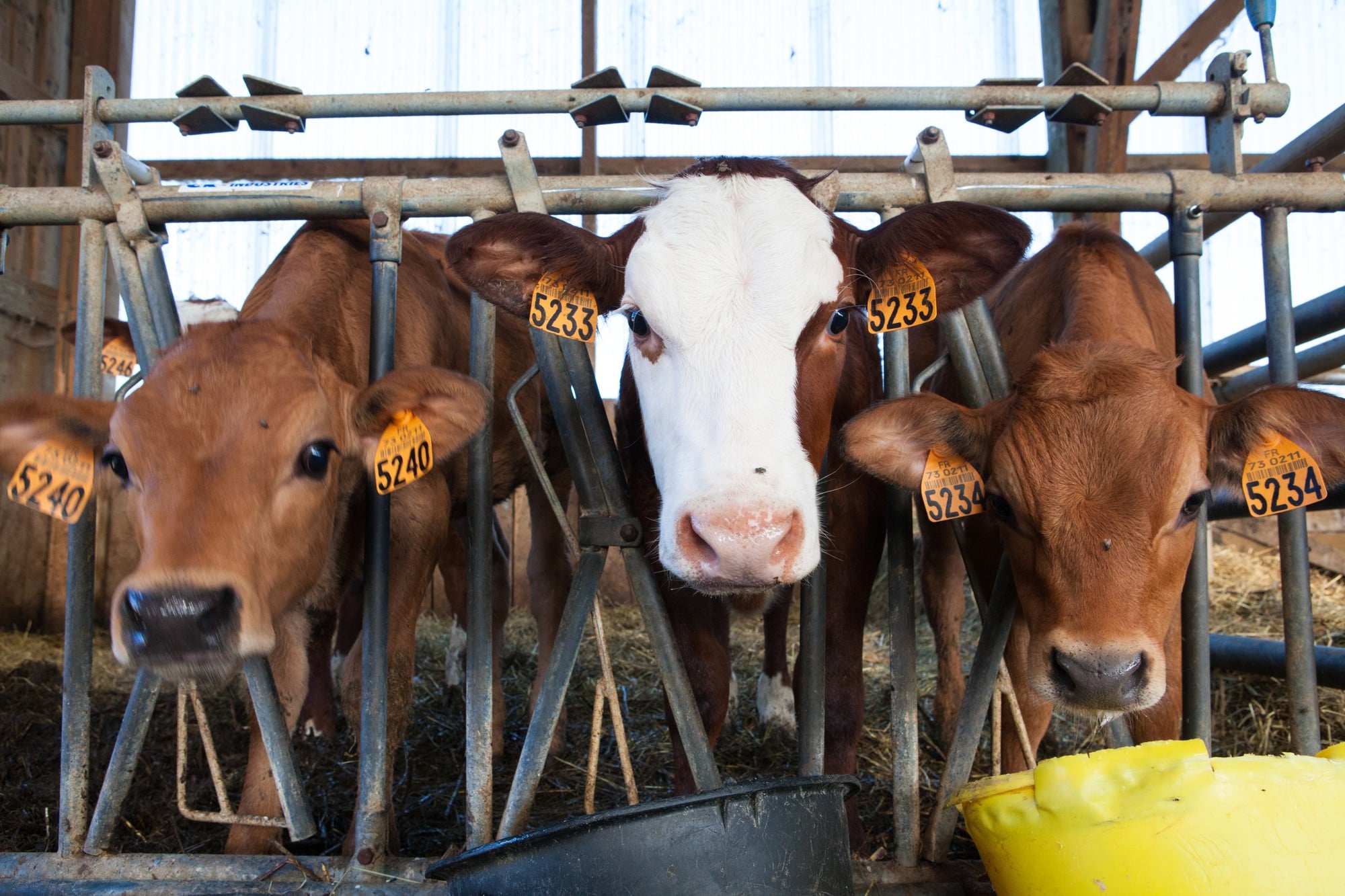
Moose was standing at the bunk, waiting. Twelve hundred pounds of red-and-white Hereford, with his white face turned toward the bucket and his ears forward.
“Logan can finish him out,” Mike said. “Take him over to our place this week. Feed him with ours. Show him at the county fair in his name.”
He glanced at me. Finally.
“No man was left to feed it right, Jamie,” he said.
Cooper was standing right there with a full bucket.
He didn’t say a word.
He just set the bucket down. Slow and careful. On the packed dirt by the bunk. Like it was full of eggs.
Then he stood there with his hands at his sides. Thirteen years old. In a feed-store cap that used to be his dad’s, too big, the brim pushed down over his eyes.
Moose put his nose in the bucket and started eating. Loud. Nobody else moved.
Mike is Cooper’s only uncle.
He’s Brent’s older brother. Forty-four. He farms the other half of the Olson ground, four miles north, with his wife, Deb, and their two boys. Logan is fifteen. Tyler is twelve.
Mike taught Cooper to drive a four-wheeler. Mike took him fishing at Johnson Lake every Fourth of July. Mike stood in the cemetery in May with his hand on Cooper’s shoulder while they lowered his brother into the ground.
That boy had already lost enough men for one year.
I wasn’t going to make him lose another one in a steer pen over nine hundred dollars.
I said no to the money and let the show ring answer for me.
“We’re keeping him,” I said. “Cooper’s showing him.”
Mike looked at me for a long time. Then at Cooper. Then at the money in his hand.
He folded the bills back up. He put them in the chest pocket of his work shirt. He snapped it shut.
He took his forearms off the top board. And he walked off. Back to his pickup in the yard. He didn’t say goodbye.
Cooper watched him go.
He stood in the pen with his hands at his sides until Mike’s pickup was all the way down the lane and out onto the county road. Until the dust settled.
Then he picked up Brent’s notebook off the fence post where he’d set it. A green spiral notebook from the Dollar General, with feed amounts and weights and dates written in Brent’s square handwriting.
He opened it to the evening’s page. He wrote down how much Moose ate. In his own handwriting, under his dad’s.
He didn’t say anything about his uncle. Not that night. Not for a long time.
Chapter Two: Moose
Brent and Cooper had picked that calf out at weaning, the October before.
We run about sixty cows on our half of the Olson place, outside Cedar Bend, Nebraska. Commercial cattle, mostly black. But Brent kept eight registered Hereford cows because his dad did, and his granddad did, and because he liked the way they looked standing in a green pasture.
Every October, when the calves came off the cows, Brent and Cooper would walk the weaning pen together. Looking for the one.
Last October, they found him.
A red-and-white bull calf, with a white face and a white blaze running up between his eyes. Big-boned. Long through the middle. Calm. Brent said he had the best disposition of any calf he’d ever raised.
“Look at him, Coop,” Brent said. They were leaning on the pen together, the two of them, same lean, same boots on the bottom board. “He’s not scared of anything. He’s just standing there taking it all in. Like a big old moose.”
Cooper laughed. “Moose.”
That was his name.
They fed him and walked him all winter.
Every morning at five-thirty, before Brent went out to do chores and before Cooper caught the school bus. Every evening at six, after supper. They’d mix his feed in the barn from Brent’s notebook. They’d brush him. They’d halter him and walk him up and down the lane in the dark with a flashlight.
In January it was eighteen below. They walked him anyway.
“Steer doesn’t know it’s cold,” Brent said. “He just knows if you show up.”
Brent kept everything in that green notebook.
The ration was on a co-op receipt, stapled to the inside cover. Pounds of corn, pounds of pellets, pounds of supplement. How much to feed at what weight. When to step up.
And every week, Moose’s weight. Brent ran him across the livestock scale at the co-op in town every Saturday morning. He wrote it down.
In April, at the bottom of the page, Brent wrote: Guess for fair: 1,340. Then he underlined it twice.
Then Brent’s heart quit at forty-one, in the middle of planting.
May the ninth. A Thursday. He was planting corn on the south quarter. Mike was supposed to be there, helping. Running the tender truck, keeping the planter full of seed.
He wasn’t. He’d gone to the sale barn in Kearney that morning to look at a pen of feeder calves.
Brent planted alone.
Mike was the one who found him.
He came back from Kearney at two in the afternoon. He drove out to the south quarter to check on the planting. The tractor was sitting in the middle of the field, idling, with the planter down.
Brent was slumped over the steering wheel.
Mike pulled him out of the cab. He did CPR in the dirt between the rows for twenty-two minutes until the ambulance came out from Cedar Bend. The paramedics told me he never stopped. They told me they had to pull him off.
It didn’t matter. The coroner said Brent was gone before he hit the steering wheel. An arrhythmia. A heart defect nobody ever knew he had.
Forty-one years old.
The planter was still half full of seed when they hauled the tractor home. Nobody finished that field for nine days.
Then the neighbors came. Twelve of them, with their own tractors and their own seed. They planted the south quarter and the north quarter and everything else in one Saturday, while I sat in my kitchen with a casserole dish somebody brought and didn’t eat it.
Mike ran the tender truck. All day. He didn’t stop for lunch. He didn’t come in the house.
Chapter Three: Every Single Day
I am a school cook.
I’m the head cook at Cedar Bend Public Schools. Kindergarten through twelfth grade, all in one building. Three hundred and eleven kids. I’ve been doing it for fourteen years.
I can feed three hundred kids a hot lunch by eleven. Chicken and noodles. Taco salad. Sloppy joes and tater tots. I know how much flour makes how many rolls. I know which kids need seconds and which kids take food home in their pockets on Fridays.
I did not know how to feed a steer to finish.
I grew up in Lincoln. My dad was a mail carrier. My mom was a bank teller. We had a cat.
I met Brent at the state fair when I was twenty-two. He was showing a heifer. I was eating a corn dog. He walked his heifer past me and she sneezed on my corn dog, and he was so embarrassed he bought me another one, and that was that.
I learned a lot about cattle in fourteen years of marriage. I can pull a calf. I can doctor pinkeye. I can read a feed tag.
But feeding a show steer is something else. It’s a science and an art and a religion. Brent knew it. His dad knew it. I’d always just watched.
Cooper did.
That’s what I found out. Two weeks after the funeral. When I came out to the barn at five-thirty in the morning, because I couldn’t sleep, and found my son already there.
In the dark, with the shop light on. Mixing feed. From the notebook. Weighing every scoop on the old hanging scale.
He had his dad’s notebook open on the fence post and the ration on the co-op receipt.
He looked up when I came in.
“I can do it, Mom,” he said. Before I could say anything. “I know the ration. Dad showed me all winter. I know when to step him up. I know how to weigh it.”
He poured the feed into the bunk. Moose came over and started eating.
“I can do it,” Cooper said again. Then his voice cracked. “I just can’t rinse him and hold him at the same time.”
So I learned.
That’s all. I just learned. The way I learned to make chicken and noodles for three hundred, the way I learned to pull a calf. One day at a time.
Cooper taught me. Thirteen years old, standing in the barn in his dad’s cap, telling me what to do.
Feed at five-thirty and ten.
Five-thirty in the morning, before I left for the school kitchen. Ten at night, after I got home and made supper and checked homework. Weighed out on the hanging scale. Every scoop.
Rinse at noon, three and six.
You rinse a show steer to keep him cool and to train his hair. Cold water from the hose, all over, every inch. In the summer you do it three times a day. Noon, when it gets hot. Three, when it’s hottest. Six, when it starts to cool.
I drove home from the school at noon on my lunch break, every day, all summer, to rinse that steer. Twelve minutes each way. I ate a sandwich in the truck.
Brush the hair up, blow it dry, walk him down the lane.
That’s the evening. After the six o’clock rinse. You brush the hair against the grain with a stiff brush, so it stands up. Then you blow it dry with a big blower that sounds like a jet engine. So the hair trains to grow up and out, so he looks fuller.
Then you put the halter on and walk him. Down the lane to the mailbox and back. Twice. To keep his legs strong. To teach him to walk slow and set his feet square when you stop.
Cooper led. I walked behind with the show stick, the way he showed me.
An old neighbor told me one thing that summer.
Elmer Pruss. Eighty-four. He farmed the quarter across the road from us for sixty years. He showed steers at the Platte Valley County Fair from 1952 to 1958. He still had his purple ribbons in a frame in his living room.
He came over in June, in his old Ford pickup, and leaned on the steer pen and watched me rinse Moose. He didn’t say anything for twenty minutes.
Then he said, “You’re doing it right.”
“I don’t know what I’m doing, Elmer.”
He spit tobacco juice in the dirt.
“Feeding cattle isn’t a man’s job or a woman’s job,” he said. “It’s an every-single-day job.”
He got back in his pickup and drove home.
I wrote it on a piece of masking tape and stuck it to the inside of the barn door.
Chapter Four: The Boots
Brent’s work boots sat on the back step after the funeral.
Brown leather. Red Wing. The pair he wore every day for six years. Creased across the toes and worn down at the heels. Scuffed white on the right toe where he always kicked the tractor tire.
He’d left them there on the morning of May ninth. He’d put on his other boots, the rubber ones, because it rained the night before and the field was muddy. These were sitting right where he left them, on the back step, side by side.
Nobody moved them. Not for weeks.
Size twelve. I wear a nine.
I’d walk past them every morning, going out to the barn. Every night, coming back in. Sitting there on the step. Waiting.
People from church kept asking if I wanted help going through his things. His clothes. His tools. Mike’s wife, Deb, offered twice.
I said not yet.
One day I put them on and stuffed the toes so they’d stay on.
It was the second week of June. Raining. My own boots were soaked through from the noon rinse. I came back in the house to change my socks, and I walked past his boots on the step.
I don’t know why I did it. I just did.
I sat down on the step and pulled them on. They were huge. My feet swam in them. I stood up and they nearly fell off.
So I went in the house and got two of his old wool socks out of his drawer. And I balled them up and stuffed them in the toes. And I put the boots back on.
They stayed.
Cooper came out of the barn. He looked at my feet.
He didn’t laugh.
He looked at those boots for a long time. Brown leather. Scuffed white on the right toe.
“Dad would think that was funny,” he said.
I wore them every day after that.
To the barn. To the pen. To the rinse rack. Down the lane with Moose. Every single day.
I’d clomp across the yard in them like a little kid in her daddy’s shoes. I tripped a few times. Once I fell flat on my face in the mud by the water tank.
Cooper helped me up. He was laughing so hard he couldn’t breathe. The first time I’d heard him laugh since May.
“Mom,” he gasped. “You look like a clown.”
“Your dad would think so too,” I said.
“He’d take a picture,” Cooper said. “And put it on Facebook.”
Then we both stopped laughing, at the same time. And stood there in the mud.
Mike saw me in them once.
He drove in on a Tuesday in late June to drop off a part for the swather. I was in the pen, rinsing Moose. In my school cook clothes, black pants and a white polo, and Brent’s brown boots.
He stopped at the edge of the yard. He looked at the boots.
His face did something. I couldn’t read it.
He set the part on the porch and drove away without saying a word.
Chapter Five: The Fan
One day in July, the fan quit and Moose wouldn’t eat.
We keep a big box fan hanging in the corner of his pen. Show steers get hot. Their hair is long and thick and they’re carrying a lot of weight. When it’s ninety-five degrees in Nebraska in July, they need air moving or they quit eating.
I came out for the ten o’clock feeding on a Wednesday night. Ninety-one degrees at ten at night. The air was like a wet blanket.
The fan wasn’t running. The motor had burned out. I could smell it.
Moose was standing in the corner of the pen with his head down. Breathing hard. The bunk was still half full from the afternoon. He hadn’t touched it.
I didn’t know what to do.
I called Cooper’s name. He didn’t come. He was asleep. He’d been up since five.
I stood in that pen in Brent’s boots and stared at that steer. Breathing hard. Not eating. Two weeks before the county fair.
If he went off feed now, he’d lose weight. Maybe fifty pounds. Maybe more. All the work. All summer. Every rinse.
I sat on the water tank and told my husband I didn’t know what I was doing.
Out loud. In the dark. With the barn light buzzing over my head and the bugs going crazy around it.
“Brent,” I said. “I don’t know what I’m doing.”
Nobody answered. Of course nobody answered.
“I don’t know how to fix a fan,” I said. “I don’t know what to do when he won’t eat. I don’t know if he’s sick. I don’t know if I’m feeding him wrong. I don’t know anything.”
I started crying.
“You were supposed to be here,” I said. “You were supposed to do this part. I was supposed to bring lemonade to the fair and sit in the bleachers and clap.”
I sat there on the edge of that water tank in Brent’s boots and cried. Really cried. The way I hadn’t let myself cry at the funeral, because Cooper was watching.
Then something wet pushed into my shoulder.
That steer pushed his wet nose into my shoulder.
Moose. Twelve hundred pounds of him. He’d come over from the corner of the pen without me hearing. He stood there next to the water tank and pushed his big white face into my shoulder.
Not hard. Gentle. The way he used to push Brent when Brent was scratching his neck.
I put my arm around his face. I held on.
He stood there and let me.
Then he walked to the bunk and cleaned it up.
Every bite. All the afternoon feed and the night feed together. He ate it all. Standing in the hot pen with no fan, at ten-thirty at night.
I sat on the water tank and watched him. Wiping my face on my sleeve.
When he was done, he licked the bottom of the bunk. Then he walked back over to the corner and lay down.
The next morning, before I went to work, a new fan was hanging in the corner of the pen.
A big one. A sixty-inch barn fan, the kind they use in dairy barns. Running. Blowing cool air across the whole pen.
I didn’t buy it. Cooper didn’t buy it. We didn’t have the money.
There was a receipt from the Cedar Bend Co-op stuck to the fence post with a piece of baling wire.
Sold to: Mike Olson. 60-inch barn fan. $389.00. PAID.
Chapter Six: The Weigh-In
He weighed in at the county fair at 1,342 pounds.
The Platte Valley County Fair. The last week of July. At the fairgrounds on the east edge of Cedar Bend, with the big white livestock barn and the show arena with the pipe rails and the grandstand where they have the tractor pull on Saturday night.
We hauled Moose in on Wednesday morning. In Brent’s stock trailer, behind my pickup. Cooper rode in the back with him, so he wouldn’t be scared.
Weigh-in was at nine. A long line of kids and steers waiting to cross the big scale at the end of the barn.
Cooper led him on. Moose stood perfectly still.
The man at the scale, a retired banker named Herb, looked at the readout.
“Thirteen forty-two,” he said.
Cooper turned around and looked at me.
I had Brent’s green notebook in my back pocket. I took it out. I opened it to the page from April. Brent’s handwriting at the bottom.
Guess for fair: 1,340.
Brent had guessed 1,340 in April.
Two pounds.
Cooper looked at the notebook. Then at me. Then at the scale.
“Two pounds,” he said. “He was off by two pounds.”
“Your dad was good at guessing,” I said.
Cooper took the notebook out of my hand. He took a pen out of his pocket. And under his dad’s guess, he wrote:
Actual: 1,342. You were right, Dad.
The steer show was Friday afternoon.
Three o’clock. In the big arena. Nine steers in the market steer class. Then the champions from each class would come back for the Grand Champion drive.
Cooper was up early. Five a.m. In the barn, at the fairgrounds, with Moose. Rinsing. Brushing. Blowing. Fitting. Trimming the hair on his legs with Brent’s clippers.
I helped. In Brent’s boots. Holding the halter while he worked.
Mike was in the barn too.
His son Logan had a steer in the same class. A black crossbred named Tank. Logan’s pen was three down from ours.
Mike and Logan were fitting Tank. Mike was working on the legs with his own clippers. He didn’t look over at us. Not once all morning.
But I saw him look at Moose. When he thought nobody was watching. Standing in the aisle, holding a can of adhesive spray, just looking.
Parents don’t walk into a 4-H class.
Everybody knows that. It’s a rule. Not written down anywhere, but everybody knows it. The kids show. The parents stand at the rail. You can help in the barn. You can fit the steer and wash him and clip him and blow him out. But when it’s time for the ring, the kid goes in alone.
That’s the point. That’s what 4-H is. Head, heart, hands, health. The kid does it.
So I knew I’d be standing at the rail. In the bleachers. Clapping.
That’s what I’d always thought I’d be doing.
Chapter Seven: One Lap
At two-forty-five, the steer show was about to start.
The arena was full. The bleachers on both sides. People standing three deep along the pipe rail. Farm families. Town families. Old men in seed caps. Kids in FFA jackets.
The nine steers in Cooper’s class were lined up in the warm-up area behind the big gate. Nine kids in white show shirts and jeans and boots. Holding their show sticks. Their steers groomed and fitted and gleaming.
I was standing at the gate. Just outside it. Where parents stand, to wish their kid luck before he goes in.
The superintendent stood in the middle of the ring with a microphone.
Dean Schmeckpeper. Sixty-two. He’s run the beef show at the Platte Valley County Fair for twenty-six years. He’s a big man with a white mustache and a voice like a combine starting.
“Good afternoon, folks,” he said. “Welcome to the market steer show.”
The crowd clapped.
“Before we get started,” Dean said, “I’d like to ask everybody to take a moment.”
The arena went quiet.
“Most of you knew Brent Olson,” Dean said. “Brent showed steers in this ring for eight years, when he was a kid. He won Grand Champion in 1998. He came back every year after that to help with the show. He hung the banners. He ran the scale. He stood right over there at the gate and told every nervous kid to breathe.”
He pointed at the gate. Where I was standing.
“We lost Brent in May,” he said. “He was forty-one.”
The whole arena was silent. Not a sound. Not a kid. Not a cow.
“He’d want us to have a good show,” Dean said. “So let’s have one. For Brent.”
Then he looked at me at the gate.
He didn’t say anything for a second. He looked at me. He looked down at my feet. At Brent’s brown Red Wings, three sizes too big, with the white scuff on the right toe.
He lowered the microphone. He walked across the ring to the gate. He stopped in front of me.
“Jamie,” he said quietly. “One lap. Then the rail.”
I didn’t understand.
“Dean, parents don’t go in.”
“I know the rule,” Dean said. “I wrote half the rules for this show.” He looked at my boots again. “One lap, Jamie. With your boy. For Brent. Then you go to the rail.”
He held the gate open.
Cooper looked at me. He was standing right behind me with Moose on the halter.
“Mom,” he said. “Come on.”
I walked into that ring in Brent’s brown boots, three sizes too big.
Hot July afternoon. Ninety-three degrees. The sun coming through the big open doors at the end of the arena.
Soft wood shavings underfoot. My boots sank into them. The wool socks in the toes squished.
A white barn behind the pipe rail. With the 4-H clover painted on the side. And a big banner hanging over the door: PLATTE VALLEY COUNTY FAIR, SINCE 1911.
Cooper led Moose in his white show shirt, his dad’s show stick in his hand.
Brent’s show stick. A long aluminum stick with a curved hook at the end, for scratching the steer’s belly to keep him calm. Brent got it when he was ten. He used it for eight years. He kept it in the barn on two nails over the door.
Cooper took it down the morning of the fair. He didn’t ask. He just took it.
I walked beside them. On the left side of Moose. Where I always walked down the lane at home.
We went around the ring. Slowly. The way Cooper taught me. Steer’s head up. Steer’s feet moving. Nice and easy.
The crowd didn’t make a sound.
I could hear the fans in the barn. I could hear the shavings under Moose’s hooves. I could hear my own breathing.
I could hear somebody in the bleachers crying.
I looked at the rail once.
Halfway around. On the far side of the ring. By the gate where the steers come out.
Mike was leaning on the pipe in his seed cap and tan work shirt.
Logan was beside him with Tank, waiting to go in. But Mike wasn’t looking at Logan. He was looking at me.
Not smiling. Not frowning.
Just watching.
He watched me walk his brother’s steer around that ring in his brother’s boots. His face didn’t move. His hands were on the pipe rail. His knuckles were white.
I looked away.
I finished my lap and stepped out.
Dean held the gate. I walked through it. I went to the rail. I stood there.
I didn’t trust my legs. I held on to the pipe.
Chapter Eight: The Judge
Nine steers in the class.
The judge was a man from Iowa. Tom Riggins. A cattle feeder from Atlantic, with a big operation and a reputation for being fair and blunt. He’d judged the Iowa State Fair twice. He wore a straw cowboy hat and jeans and a pressed blue shirt.
He stood in the middle of the ring and watched the nine steers walk around him. He didn’t say anything. He just watched.
Then he had them line up. Nine steers in a row, side by side, facing the bleachers.
The judge put his hand on every one.
He walked down the line. He stopped at each steer. He put his hand on its back and ran it down the spine. He grabbed a handful of hide over the ribs and felt it. He squeezed the tailhead. He looked at each steer from the front and the back and the side.
He talked to every kid. Asked them questions. How much does he weigh? What are you feeding him? How long have you had him?
When he got to Cooper, he stopped longer.
He put his hand on Moose’s back. He ran it down slowly. He grabbed the hide over the ribs. He pinched it. He moved his hand to the brisket. To the flank. He felt the hair.
“How much does he weigh?” he asked Cooper.
“Thirteen forty-two, sir.”
“What’s he eating?”
Cooper told him. The ration. Every number. Out of his head, without looking at the notebook.
The judge looked at him for a long moment. Then he moved on.
Cooper set Moose up square, just like the lane.
That’s what you do when the judge is looking. You set the steer’s feet. All four of them. Square under his body, like a table. You use the show stick to tap his feet into place. You keep his head up.
Cooper did it perfectly. The way he’d done it every night all summer, at the end of the lane, by the mailbox. With me standing behind him in Brent’s boots.
Moose stood there like a statue. Head up. Ears forward. Not moving a muscle.
The judge walked to the end of the line. He stood back. He looked at all nine for a long time.
Then he walked to Logan’s steer. Tank. The big black crossbred. The biggest steer in the class. Thirteen ninety.
He tapped Logan on the shoulder. He pointed to the head of the ring.
The judge pulled a big steer to the top.
The crowd murmured. Logan led Tank to the head of the ring, where the class winner stands. Mike was at the rail. I saw his face.
He didn’t look happy. He looked at Logan. Then at Cooper, still in the line, holding Moose.
The judge walked back down the line. Slowly. Looking at each steer again.
Then he stopped in front of Moose.
He stood there for a long time. With his hands on his hips. Looking.
He handled him one more time.
He walked up to Moose and put his hand on his back again. Ran it all the way down. Felt the ribs. The hide. The hair. He walked around to the other side and did it again.
He stepped back.
He pointed at my son and waved him past all eight.
Past Logan and Tank. To the very head of the ring. To the top.
Cooper didn’t move. He just stood there. Holding the halter. Like he didn’t understand.
The judge waved him again. Harder. Come on.
Cooper led Moose forward. Past the line. Past the other seven steers. Past Logan, who stepped Tank back to make room.
To the head of the ring. In front of the bleachers. In front of everybody.
The crowd went crazy.
I couldn’t hear anything. Just noise. People standing up in the bleachers. Clapping. Yelling. Somebody whistling.
I was holding the pipe rail so hard my hands hurt.
Then the ringman handed the judge the microphone.
The judge took it. He held it for a second, looking down at it.
He looked down the line at Cooper and started to talk.
Chapter Nine: What the Judge Said
“I’ve been judging steers for thirty-one years,” Tom Riggins said.
His voice came out of the big speakers on the barn. Deep and slow. Iowa slow.
“Most of the time, I can tell you about a steer in about ten seconds. How big he is. How he’s built. What he’s going to grade on the rail.”
He looked at Moose.
“And most of the time,” he said, “I can tell you about the people who fed him in about thirty.”
The arena got quiet again.
“This big black steer,” the judge said, pointing at Tank, “is a good steer. Big. Powerful. He’s got more muscle than anything else in this ring. Somebody’s going to want him on their feedlot.” He nodded at Logan. “Good job, son.”
Logan nodded back. Mike, at the rail, didn’t move.
“But this red steer,” the judge said.
He walked over and put his hand on Moose’s back.
“This red steer,” he said, “was fed every single day.”
I stopped breathing.
“I can feel it,” he said. “In his hide. In his hair. A steer that gets fed on time, every time, at the same hour, with the same ration, carries his flesh different. Even. Smooth. All the way down.” He ran his hand along Moose’s side. “No soft spots. No hard spots. Nothing missed.”
He moved his hand to the hair.
“And this hair,” he said. “This steer’s been rinsed three times a day. All summer. I’d bet my truck on it. You can’t fake this hair. You can’t buy it. You can only earn it, one bucket of cold water at a time.”
He turned to Cooper.
“Son,” he said. Into the microphone. “Who fed this steer?”
Cooper looked up at him. At the judge. At the microphone.
Then he turned around. He looked out over the whole arena. At the bleachers. At the rail.
He found me.
“My dad picked him out,” Cooper said. His voice was very clear. “In October. And we fed him together till May.”
The judge waited.
“My dad died in May,” Cooper said. “In the field. He was forty-one.”
The arena was dead silent.
“And then my mom fed him,” Cooper said. “Every day. At five-thirty in the morning and ten at night. She came home from the school on her lunch break to rinse him. She’d never fed a steer before. I taught her.” His voice cracked. “She wore my dad’s boots. Every day. Because they were his.”
The judge looked at Cooper for a long time.
Then he looked out at the rail. Where I was standing. In Brent’s boots.
“Ma’am,” he said into the microphone. “Are you this boy’s mother?”
I couldn’t speak. I nodded.
“Come back in this ring,” the judge said.
Dean opened the gate.
I walked back in. In the shavings. In the boots. Every step squished. I walked across that ring to my son and stood beside him, next to Moose.
The judge looked at me. At my face. At my school cook polo shirt. At Brent’s boots, three sizes too big, with the white scuff on the right toe.
“An old feeder told me something when I was younger than your boy,” he said. Not into the microphone now. Just to me. Quiet. “He said, feeding cattle isn’t a man’s job or a woman’s job.”
My breath caught.
“It’s an every-single-day job,” I finished.
He looked at me in surprise. Then he smiled. A slow, crooked Iowa smile.
“Somebody’s been telling you the truth, ma’am,” he said.
He raised the microphone again.
“This is my class winner,” he said. “And he’s going to be hard to beat in the champion drive.” He handed the microphone back to the ringman. Then he turned back to Cooper and me and held out his hand.
He shook Cooper’s hand. Then mine.
“Your husband,” he said quietly, “would have been proud of both of you.”
Moose won Grand Champion Market Steer at the Platte Valley County Fair.
Forty minutes later, in the champion drive. Against the winners of all six classes. The judge walked down the line of champions three times. Then he walked straight to Cooper and slapped Moose on the hip so hard it echoed.
The crowd was already standing before he did it.
Chapter Ten: The Sale
The 4-H livestock sale is Saturday afternoon. In the same arena. The kids lead their animals in one at a time, and local businesses and families bid on them.
It’s not really a market sale. It’s a premium sale. The buyers pay way over market price, as a way of supporting the kids. The money goes to the kid. Most of them use it for college. Or to buy next year’s calf.
The Grand Champion steer sells last. It’s the big one. Everybody waits for it.
The arena was packed. Every seat in the bleachers. People standing along the rail.
The auctioneer was Bud Kaminski, who’s auctioneered the county fair sale for thirty years. He stood on a hay wagon at one end of the ring with a microphone.
The buyers sat in a section of folding chairs right by the ring. The co-op. The bank. The implement dealer. The insurance agency. The feed store. Local farm families.
I sat in the bleachers with Elmer Pruss. In Brent’s boots.
Cooper led Moose in at four-fifteen. The last animal of the sale.
He was wearing his white show shirt again. Clean. With a purple Grand Champion rosette pinned to the pocket. He held Brent’s show stick.
Bud Kaminski started the bidding.
“Grand Champion Market Steer,” he said. “Shown by Cooper Olson. Thirteen hundred and forty-two pounds. Who’ll give me five dollars a pound?”
Five dollars a pound. That’s what a Grand Champion goes for at the Platte Valley County Fair, usually. Five, six, maybe seven dollars a pound. Six thousand, seven thousand, eight thousand dollars.
The co-op raised their card. Five dollars.
The bank raised theirs. Five-fifty.
The implement dealer. Six.
The co-op. Six-fifty. The bank. Seven.
It went fast. Bud’s chant rolled across the arena. Seven. Seven-fifty. Eight.
At eight dollars a pound, the co-op dropped out. At eight-fifty, the implement dealer dropped out.
The bank at nine dollars a pound. Twelve thousand, seventy-eight dollars.
“Nine dollars,” Bud said. “Do I hear nine-fifty? Nine-fifty for this Grand Champion? Going once.”
Then a card went up in the back of the buyers’ section.
A white card with a number on it. Held high.
Bud squinted. “Nine-fifty! From the back. Thank you, sir.”
I looked. I couldn’t see who it was. There were too many people standing in front of me.
The bank went to ten.
The card in the back went to ten-fifty.
The bank went to eleven.
The card in the back went to twelve.
The bank’s loan officer, a woman named Carol Hughes, turned around in her folding chair to see who was bidding against her.
She looked for a long time. Then she put her card down in her lap.
“Twelve dollars a pound,” Bud Kaminski said. “Twelve dollars. Going once. Going twice.”
He banged his gavel on the hay wagon.
“Sold! Twelve dollars a pound! Sixteen thousand, one hundred and four dollars! A new county fair record!”
The arena exploded. People standing up. Cheering. Whistling.
Then Bud leaned into his microphone.
“And who’s the buyer, sir?” he asked. “Let’s hear it for our buyer!”
The man in the back stood up.
He was wearing a seed cap and a tan work shirt.
My brother-in-law.
Chapter Eleven: Mike
The arena went quiet.
Not right away. It took a few seconds. People turning around. Craning their necks. Seeing who it was.
Then everybody knew. Everybody in Cedar Bend knew Mike Olson. Everybody knew he was Brent’s brother. Everybody had heard about the nine hundred dollars across the top board of the pen.
Small towns. Everybody knows everything.
Mike stood there in the back of the buyers’ section. He didn’t sit back down. He looked at the ring. At Cooper, standing in the middle of it with Moose.
Then he walked down the aisle between the folding chairs. To the gate. Dean opened it for him.
He walked into the ring.
He stopped in front of Cooper.
The whole arena watched. Not a sound.
Mike looked at his nephew. Thirteen years old. In a white show shirt, with a purple rosette pinned to the pocket and his dead father’s show stick in his hand.
Mike reached into the chest pocket of his work shirt. He took out something folded.
Nine hundred-dollar bills.
The same ones. I’d know them anywhere. Folded once down the middle.
“These were yours,” Mike said. Not into a microphone. Just to Cooper. But the arena was so quiet that everybody heard. “I tried to give them to you for the wrong reason.”
He held them out.
Cooper didn’t take them.
“In June,” Mike said, “I told your mom no man was left to feed this steer right.” His voice cracked. “I was wrong, Coop. There was. You.”
He looked over at the bleachers. At me. In Brent’s boots.
“And a woman,” he said, “who was stronger than any man I ever knew. Including your dad. Including me.”
Cooper looked at the money. Then at his uncle.
“Why’d you want to buy him?” he asked. “In June? Why’d you want Logan to have him?”
Mike didn’t answer for a long time.
When he finally did, it came out very quietly. So quietly I almost didn’t hear it from the bleachers.
“Because I wasn’t there,” he said.
Cooper stared at him.
“May ninth,” Mike said. “I was supposed to be running the tender truck. On the south quarter. With your dad. I promised him.” He swallowed hard. “And I went to Kearney instead. To look at calves. Because I wanted to see a pen of black baldies a guy had. I told your dad I’d be back by noon.”
He looked down at the shavings.
“I got back at two,” he said. “And your dad had been planting by himself for six hours. Filling the planter by himself. Lifting fifty-pound bags of seed by himself. In the heat.” His voice broke. “If I’d been there. If I’d been doing the lifting. Maybe his heart…”
He couldn’t finish.
“So I tried to take everything,” Mike said. “Your dad’s half of the ground. I called a lawyer in Kearney in June about buying your mom out of the partnership. At book value. I told myself I was helping her. That she couldn’t run it alone.” He shook his head. “And the steer. I told myself Logan could finish him out. That you’d be better off. That I’d be taking the load off you.”
He looked up at Cooper.
“I wasn’t taking the load off you,” he said. “I was trying to put my brother back together with my own two hands. Because I couldn’t stand that I wasn’t there to hold him up.”
Cooper stood there in the middle of the ring.
Then he reached out. Not for the money.
He held out his dad’s show stick.
“Dad always let you scratch Moose’s belly,” Cooper said. “When you came over. He said you were the only other one who knew where Moose liked it.”
Mike stared at the show stick.
“Go ahead,” Cooper said.
Mike took it. His hands were shaking.
He stepped up beside Moose. He reached the curved end of the show stick under the big steer’s belly. Right in the middle. Right where Brent always did.
He scratched.
Moose’s eyes closed. His head came down. He leaned into it.
The whole arena watched a grown man scratch a steer’s belly with his dead brother’s show stick, crying, in the middle of a show ring.
Nobody said a word.
Chapter Twelve: Three Pairs
The check came three weeks later. From Mike. Made out to Cooper Olson. Sixteen thousand, one hundred and four dollars.
Cooper wanted to give it back. Mike wouldn’t take it. Cooper wanted to put it in the bank. I made him put it in a 529 college savings plan, with the State of Nebraska. NEST, they call it. The money grows tax-free.
All except nine hundred dollars.
Mike made him keep the nine hundred in cash. Separate.
“For next year’s calf,” Mike said. “Pick him out yourself. At weaning. In October.”
Mike called the lawyer in Kearney back. He tore up the buyout papers. Then he called a different lawyer. A woman in Holdrege who does farm estate law.
She drew up a new partnership agreement. Olson Brothers Farm became Olson Family Farm. Mike and Deb on one side. Me on the other. With Brent’s half of the ground held in trust for Cooper, until he’s twenty-five. Me as trustee.
Mike runs most of the machinery work. I run the cows, with Cooper. We split everything. In writing. On paper. Signed by everybody. The way Brent always said we should, and never got around to.
In October, Mike and Cooper walked the weaning pen together.
I watched them from the house. Through the kitchen window. Two of them, leaning on the pen. Same lean. Same boots on the bottom board.
Mike pointed at a calf. Cooper shook his head. Cooper pointed at another one. Mike tilted his head, like he was thinking. Then nodded.
A red-and-white Hereford. A heifer this time. With a white face and a white star on her forehead.
Cooper named her Elmer. After old Elmer Pruss. Elmer laughed so hard when he heard it that he had to sit down on his porch.
“She’s a girl,” he said, wheezing.
“So?” Cooper said. “Feeding cattle isn’t a boy’s job or a girl’s job. It’s an every-single-day job.”
Mike comes by every Saturday morning now. To help weigh Elmer on the co-op scale. He brings Logan and Tyler. They write the weights in a new notebook. A green spiral one from the Dollar General.
Cooper’s handwriting first. Then Mike’s.
In November, I bought myself a pair of boots.
Red Wing. Brown leather. Size nine. From the Cedar Bend Co-op, where Brent bought his. The man behind the counter, Arnie, has sold boots to Olsons for forty years. He fitted them himself.
“About time you got your own,” he said.
I wore them home. I put them on the back step.
Next to Brent’s.
I thought I’d put Brent’s away then. In the closet. Or give them to the church clothing drive, like Deb kept offering.
I couldn’t.
They sat on the back step next to mine all winter. Two pairs. His, size twelve, scuffed white on the right toe. Mine, size nine, new and stiff.
Then in March, one morning, I came out at five-thirty to feed and there were three pairs.
Brent’s. Mine. And a pair of muddy rubber boots, size eleven. Cooper’s.
He’d grown. Three sizes since last summer. I hadn’t even noticed until I saw them sitting there in a row.
Size nine. Size eleven. Size twelve.
I stood on the back step in the dark for a long time looking at them.
Then Cooper came out behind me. In his pajama pants and a hoodie. Yawning. With his dad’s cap on.
He looked down at the boots. All three pairs.
“Mom,” he said. “Can I try them? Dad’s?”
I looked at him.
“They’re still too big,” I said.
“I know,” he said. “Just to see.”
He sat down on the step. He pulled off his rubber boots. He pulled on Brent’s brown Red Wings.
They were still big on him. But not by much. A size, maybe. He could keep them on without stuffing the toes.
He stood up. He walked across the yard in them. Toward the barn, where Elmer was bawling for breakfast.
He walked just like his father. The same long stride. The same slight hitch in the left step, from a knee Brent hurt playing football in 1998.
I don’t know how he learned that. He was ten when Brent hurt it the second time. He must have watched.
He stopped at the barn door. He turned around and looked back at me, standing on the step in my own boots.
“Mom,” he said. “I’ll grow into them. By next fair. You’ll see.”
“I know you will,” I said.
He went into the barn. The shop light came on. I heard him start mixing feed. Weighing every scoop on the hanging scale.
I stood there on the back step for a long time.
The sun was just starting to come up over Elmer Pruss’s cornfield across the road. Red and gold. The air smelled like frost and cattle and coffee.
On the inside of the barn door, I could see the piece of masking tape I stuck there last June. Faded now. The ink running a little from a winter of damp.
Feeding cattle isn’t a man’s job or a woman’s job. It’s an every-single-day job.
Then I heard a pickup on the county road.
Coming from the north. Slowing down at the end of our lane. Turning in.
Mike’s truck. Six o’clock on a Thursday. He wasn’t supposed to come till Saturday.
He pulled up by the barn and got out. He was carrying a coffee thermos and two cups.
He saw me on the step. He held up the thermos.
“Figured you could use some help,” he said. “It’s an every-single-day job.”
I came down off the step in my own boots. And I walked across the yard to the barn, where my son and my brother-in-law were already arguing about how much corn a heifer should get in March.
Brent would have thought it was funny. All of it.
He’d have taken a picture.

Laura Bennett writes about complicated family dynamics, difficult conversations, and the quiet moments that change everything. Her stories focus on real-life tensions — inheritance disputes, strained marriages, loyalty tests — and the strength people find when they finally speak up. She believes the smallest decisions often carry the biggest consequences.