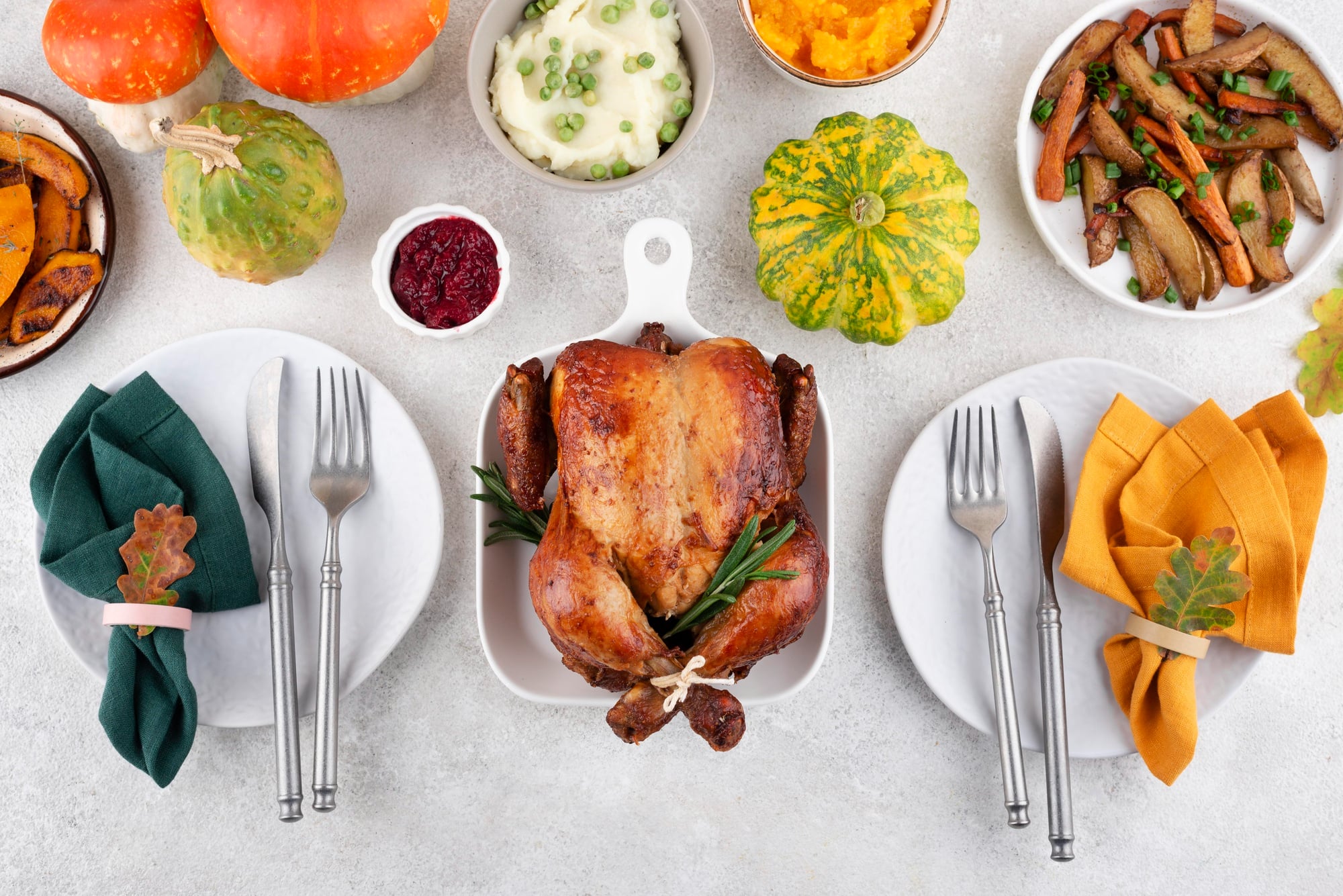
Kids Eat Last
I was pulling the second pan of rolls from the oven when I heard her.
“Kids eat last in this family, sweetheart.”
The kitchen was so hot the window over the sink had fogged up. Fourteen people in a three-bedroom ranch house in Dubois County, Indiana, on Thanksgiving Day, with the oven going since five that morning and the furnace kicking on anyway because Neil’s uncle keeps leaving the back door open to smoke.
I set the rolls on the stovetop. Golden on top. Brushed with butter. My grandmother’s recipe.
Then I turned around.
Bernadine stood at my kitchen counter.
Four plastic containers in front of her, lids stacked to the side.
The good kind. The heavy-duty ones from the Gordon Food Service in Evansville, with the snap lids. She brings them to every holiday in a canvas tote bag. Everybody in the family knows about the tote bag.
She was filling them.
White meat, sliced thick. Off the breast of the turkey Neil had carved twenty minutes earlier. The best of it. The slices from right along the bone, where it’s juiciest.
The crusty corners of the dressing. Out of the big pan. Every corner. Four corners, and she’d taken all four, plus a strip along the edge where it gets brown and crispy against the glass.
Two slices of pecan pie and a square of persimmon pudding.
The persimmon pudding was mine. I’d made it Tuesday night, from persimmons Jonah and I picked off the tree behind the Huntingburg library. It’s a southern Indiana thing. If you’re not from here, you don’t know. It’s dark and spicy and dense, almost like a cake, and you eat it with whipped cream.
She’d cut the corner piece. Jonah’s favorite. The one he’d been asking about all week.
The turkey Neil had carved was down to wings and the back.
I looked at the platter. Twenty minutes ago it had been piled high. Now there were two wings, the back with the ribs still on it, a drumstick somebody had picked half clean, and a pile of skin and scraps.
The roast hen on the counter sat whole, waiting on him to carve it. A second bird. I’d done a hen too, because fourteen people is a lot of people and one turkey isn’t enough.
But Neil was in the garage. Nobody had carved the hen.
And holding up an empty plate in his green shirt was my son, Jonah.
He was standing at the end of the counter. In his good green button-up shirt, the one he wears to church, with the collar sticking up on one side because he did it himself. Holding a plate with nothing on it. Waiting.
He’s nine. He’d been up since six helping me peel potatoes.
Ten pounds of Yukon Golds. He peeled every one. At the kitchen table in his pajamas, with the peeler that’s too big for his hand, while I made the dressing. He was so proud. He kept counting them. “That’s forty-one, Mom. Forty-two.”
Bernadine smiled at him. That sweet smile. The one she uses at church.
“You can have whatever’s left, honey,” she said.
She nodded at the platter. At the wings and the back.
He said, “Okay, Grandma.”
He didn’t argue. He didn’t whine. He didn’t look at me.
He just believed her.
He stood there with his plate and looked at the turkey platter, at the wings and the back and the scraps, like he was trying to figure out which part of a picked-over bird was his.
That was the part that went through me like cold water.
Not her taking the food. Not the containers. Not the pie or the pudding or the corners of the dressing.
Him believing her. Him standing there in his church shirt with an empty plate, thinking that’s how it works. That’s how families are. The grown-ups take the good parts, and you get what’s left.
I’d never once in his life taught him that. And he’d learned it in three seconds at my kitchen counter.
Chapter Two: Fourteen
It was my table, my groceries and my boy, and there was nothing to call anybody about. You just feed the child.
I want to explain that, because people have asked me since. Why I didn’t say something to Neil first. Why I didn’t take her aside. Why I didn’t make a scene.
You don’t make a scene. There’s nothing to make a scene about. It’s Thanksgiving. It’s his grandmother. Nobody’s breaking any law.
There’s just a hungry boy with an empty plate. And there’s a fix for that.
My name is Molly Schnell. I’m thirty-seven. I work at the Jasper branch of German American Bank, behind the member services desk. I open accounts and close accounts and help people figure out their statements. I’ve been there eleven years.
Neil works at Kimball. The furniture plant. He’s a supervisor on the line. His dad worked there thirty-four years before him. Half of Dubois County works at Kimball or Jasper Seating or Masterbrand, or used to.
We live outside Ferdinand, on two acres, in the house Neil grew up in. His folks sold it to us when they moved into town. That was eight years ago.
I’d spent three hundred and ten dollars at the Kroger in Jasper.
I keep the receipt. I keep every receipt. That’s the bank in me.
A twenty-two-pound Butterball. A five-pound roasting hen. Ten pounds of potatoes. Two boxes of Stove Top I didn’t use, because I make the dressing from scratch, but I always buy two just in case. Celery, onions, sage. Three pounds of butter. Heavy cream. Green beans. French’s onions. Cranberries. Pie crust, because I’m not crazy. Pecans, which cost more than the turkey.
Three hundred and ten dollars and forty-two cents.
Two days cooking for fourteen people.
Tuesday night, the persimmon pudding and the pies. Wednesday, the dressing and the cranberries and the rolls, which have to rise twice. Thursday, the turkey in at six, the hen at ten, the potatoes and green beans and gravy and everything else in the last frantic hour.
Fourteen people. Neil and me and Jonah. Neil’s mother, Bernadine. His sister, Renee, and her husband, Doug, and their three kids. His uncle Gary and Aunt Pat. His cousin Lisa and her boyfriend and her little girl.
Fourteen. I counted the chairs three times.
Neil was out in the garage digging out the card table for the kids.
That’s how we always did it. The grown-ups at the big dining room table, with the leaf in. The kids at the card table in the kitchen. Renee’s three. Lisa’s little one. Jonah.
Except the card table was buried in the back of the garage under the Christmas decorations and Neil’s deer stand. He’d gone out to find it ten minutes before.
Everybody else was already seated at the big table.
I could see them through the doorway from the kitchen. Gary at the end, already reaching for the rolls. Pat beside him with her reading glasses on her head. Renee and Doug. Lisa and her boyfriend, whose name I couldn’t remember. The kids hovering behind the chairs.
Bernadine’s chair at the head of the table was empty. She’d come into the kitchen to “help.”
Bernadine is sixty-six. She’s lived in Dubois County her whole life. She was born in Ireland, Indiana, a little German Catholic town ten miles north, the ninth of eleven children.
She buried Neil’s dad three years ago.
Clifford Schnell. Cliff. A big, quiet man with hands like baseball mitts and a laugh that shook the windows. Thirty-four years at Kimball, then retired, then gone. A heart attack. In his recliner. On Thanksgiving Day, 2022.
Before supper. While the turkey was resting.
I knew she ate most suppers alone.
She lives by herself now in a little brick ranch on Jackson Street in Jasper, a block from St. Joseph’s. She goes to the eight o’clock Mass every morning. She plays euchre with the ladies from church on Tuesdays. She volunteers at the Dubois County Museum on Saturdays.
The rest of the time, she’s alone.
I didn’t know about her freezer yet.
Chapter Three: Not at My Table
I set the rolls down.
I took off my oven mitts. The red ones, with the burn marks. I laid them on the counter next to the stove.
Nobody in the dining room had noticed anything yet. Gary was telling a story about a buck he saw on the road to Birdseye. Renee was cutting up her youngest’s food. The football game was on in the living room with the sound down.
I walked to the counter.
Bernadine was fitting the lid on the container with the pie. She looked up at me. She smiled.
“I’m just getting a little to take home, Molly,” she said. “Since there’s so much. You don’t mind.”
It wasn’t a question.
I picked up the first container.
The one with the turkey. The white meat, sliced thick. I held it in my hand. It was warm.
Then I picked up the first lid and held it out to her.
She looked at it. Confused. Then she took it.
She took it. People do. When you hold something out to somebody, they take it. It’s instinct. You don’t even think.
Then the second lid.
I took it off the stack. I held it out. She took it.
The third.
She took it.
The fourth.
She took it.
She was standing there by my kitchen counter holding four plastic lids against her navy cardigan. All four of them, stacked. She didn’t know what to do with her hands.
I turned to Jonah.
“Hold your plate up, bud.”
He held it up. He didn’t understand either. He looked at me with his big brown eyes, Neil’s eyes, and held up his empty plate.
I took the fork out of the container. Bernadine’s fork. And I put two good slices of turkey on his plate. The thick ones, from right along the bone.
Then the dressing he loves best. The crusty corner. The one with the brown edges on two sides.
Then a scoop of mashed potatoes from the pot on the stove. His potatoes. The ones he peeled. With a puddle of gravy in the middle.
Green beans. Cranberry sauce. A roll, warm out of the oven, with butter.
And a square of pudding on the edge, because I knew he’d eat that first.
“Go sit down and eat while it’s hot,” I said.
He looked at his plate. Then up at me. Then at his grandmother.
“At the big table?” he asked.
“At the big table,” I said. “In Grandma’s chair. She’s busy.”
He walked out of the kitchen into the dining room with his plate. Very carefully. Holding it with both hands so nothing would slide off.
He sat down at the head of the table. In Bernadine’s chair. He picked up his fork.
He ate the persimmon pudding first.
I looked up, and the whole room had gone quiet.
I hadn’t noticed it happening. But somewhere between the second lid and the third, the talking at the dining room table had stopped. Gary had stopped his deer story. Renee had stopped cutting. Lisa’s boyfriend was holding a roll halfway to his mouth.
Everybody was looking through the kitchen doorway.
Bernadine stood by the counter in her navy cardigan, holding four lids.
Her mouth was open.
Everybody at that table was looking at her.
I didn’t feel proud.
I want to be honest about that. People think I must have felt triumphant. Like I won something. Like I put her in her place.
I didn’t. I felt sick. My hands were shaking.
She’s sixty-six. She buried her husband three years ago, on this exact day, in a recliner, before supper. She eats most suppers alone in a brick house on Jackson Street.
And I’d just stood in my kitchen and handed her four lids in front of her whole family.
She closed her mouth. She looked down at the lids in her hands. Then up at me.
“When I was a girl, the kids ate last,” she said. Her voice was quiet. A little shaky. “Eleven of us. We turned out just fine.”
I looked at her.
“Not at my table,” I said quietly. “Not today. He eats.”
Then I kept fixing plates.
I went to the hen on the counter, the one nobody had carved. I picked up Neil’s carving knife. I’ve watched him do it a hundred times. I carved it. Badly. But I carved it.
I fixed a plate for Renee’s youngest, Emma, who’s five. Turkey and potatoes and a roll, cut up small. I handed it to her. She ran it to the table.
I fixed a plate for Lisa’s little girl, Harper, who’s three. Just potatoes and a roll and some green beans she wouldn’t eat. I handed it to Lisa.
Renee’s oldest got up first and stood behind Jonah’s spot with his plate.
Tucker. He’s fourteen. Tall and gangly, with a buzz cut and braces. Nobody told him to. He got up from the dining room table where he’d been sitting with the grown-ups, because he’s fourteen and thinks he’s too old for the kids’ table. He walked into the kitchen with his own empty plate. And he stood there.
Not in front of me. Behind Jonah’s chair. In the doorway. Waiting.
Nobody told him to.
I fixed his plate. Turkey from the hen. Potatoes. Dressing. A roll.
He took it. He looked at his grandmother, still standing by the counter with her four lids. Then he looked at me.
“Thanks, Aunt Molly,” he said quietly.
He went and sat down next to Jonah. At the big table. In the chair next to the head.
Then Renee’s middle one, Cody, who’s eleven, got up and came into the kitchen with his plate.
Chapter Four: What Neil Said
I was handing the littlest one her plate when the garage door banged.
The door from the kitchen to the garage. It sticks. You have to hit it with your shoulder. Neil hit it.
He came in with the card table under his arm. A folding card table from the 1970s, brown vinyl top, with the legs that never quite lock. It was his parents’. He had cobwebs in his hair from the garage.
He stopped in the doorway.
He looked at his mother.
Standing at the counter in her navy cardigan. Holding four plastic lids against her chest.
He looked at the lids.
He looked at the four containers on the counter. Open. One with the turkey half gone. One with the corner of dressing missing. One with the pie. One with the persimmon pudding, a corner cut out.
He looked at Jonah, eating at the end of the big table.
In his grandmother’s chair. At the head of the table. With his plate full. Eating his mashed potatoes with a big spoon, the way he does when he thinks nobody’s looking.
Tucker next to him. Cody next to Tucker.
He set the card table down against the wall, slow.
He leaned it carefully against the refrigerator. He didn’t let it bang.
The whole house was silent. Even the football game in the living room seemed quieter.
His sister started to say something.
Renee. From the dining room. She half stood up. “Neil, it’s not what it looks like, Mom was just…”
He held up one hand.
Just one hand. Palm out. Not angry. The way you’d hold up your hand at the plant to stop the line.
Renee sat back down.
Bernadine’s chin came up.
She looked at her son. Her only son. She’d had two children. Renee first, then Neil, four years later.
“Neil,” she said. “Tell your wife how we always did it.”
He walked over and took the lids out of her hands, one at a time.
He didn’t grab them. He didn’t snatch them. He reached out and took the top one. Then the next one. Then the next. Then the last. His big hands. His father’s hands.
He set them on the counter.
Next to the containers. Stacked neatly.
Then he put his hand on his mother’s shoulder.
On her navy cardigan. Gently. The way you’d put your hand on the shoulder of somebody at a funeral.
He leaned down a little. She’s five foot two. He’s six foot three.
He didn’t say it loud.
He didn’t have to.
All fourteen of us heard what he told her.
“Mom,” he said. “You were the kid who ate last.”
Bernadine went very still.
“Eleven of you,” Neil said quietly. “You told me. Wings and backs. Every Sunday. Every Christmas. Every Thanksgiving. You told me about it when I was little, and you laughed about it like it was funny.” He took a breath. “It wasn’t funny, Mom. And you’ve been hungry ever since.”
Nobody moved.
Bernadine looked up at her son. Her chin was shaking.
“Dad knew,” Neil said. “Didn’t he?”
She didn’t answer.
“Every holiday,” Neil said. “Every single one. Dad would fix our plates first. Mine and Renee’s. Before he fixed his own. Before he fixed yours. He’d go to the stove and fill our plates and hand them to us and tell us to go eat while it’s hot.” Neil’s voice cracked. “I never knew why. I thought it was just Dad. But it was for you, wasn’t it? So we’d never eat last. So we’d never stand there with an empty plate the way you did.”
Bernadine made a sound.
Small. Like something breaking.
“And Dad’s not here anymore,” Neil said. “He hasn’t been here for three Thanksgivings. So somebody’s got to fix the kids’ plates first.” He looked over at me. Standing by the stove with the carving knife still in my hand. “Molly did it today. That’s all, Mom. She just did what Dad would’ve done.”
Chapter Five: After
Bernadine didn’t say anything.
She looked at her son for a long time. Then at me. Then through the doorway at Jonah, sitting in her chair at the head of the table, with gravy on his chin, holding his fork very still. He’d stopped eating. He was watching his grandmother.
She picked up her purse off the counter. The canvas tote bag. Empty.
She walked through the dining room past everybody, past the table, past Jonah in her chair.
She stopped beside him.
She put her hand on top of his head. Just for a second. On his hair.
Then she went to the front closet, got her coat, and walked out the front door.
She left the containers on the counter.
All four of them. With the turkey and the dressing and the pie and the pudding. She didn’t take one.
She left her euchre-club casserole dish, the green bean one she brought. She left her good serving spoon.
I heard her car start in the driveway. Her old silver Buick. I heard it back out onto the county road.
Nobody said anything for a long time.
Then Gary cleared his throat. “Well,” he said. “Somebody pass the rolls.”
Pat elbowed him. Hard.
We ate. All of us. The kids at the big table, in a row, Jonah at the head. The grown-ups squeezed in around the sides. Neil put the card table up in the kitchen and sat at it himself, with Doug and Lisa’s boyfriend, so there’d be room.
Nobody talked about it during dinner. That’s how families are out here. You eat. You pass the gravy. You talk about the Colts and the deer season and whether it’s going to snow.
But everybody kept looking at the empty chair. Not Bernadine’s chair. Jonah was in Bernadine’s chair.
The one she would have sat in, if she’d sat down.
Renee found me in the kitchen afterward, while I was scraping plates.
She’s forty-one. A nurse at Memorial Hospital in Jasper. She has her mother’s chin and her father’s height. She’s always been a little scared of me, I think. Because I’m not from here. I grew up in Indianapolis. I’m the city girl who married her brother.
She picked up a dish towel and started drying.
“You didn’t have to do that,” she said. “In front of everybody.”
I stopped scraping.
“Renee,” I said. “He’s nine. He had an empty plate.”
She was quiet for a long time. She dried a plate. Then another one.
“She used to do it to us too,” she said finally. “When we were little. Before Dad caught on.”
I turned and looked at her.
“I remember one Christmas,” Renee said. “At Grandma Wehr’s. In Ireland. I was maybe six. All the cousins. Forty people. And the grown-ups went first, and by the time it got to the kids there was nothing but the wings and the potatoes from the bottom of the pot.” She dried a fork. “And Mom stood there and said, Kids eat last in this family. And she laughed.”
“What happened?”
“Dad happened,” Renee said. “He took my plate. He went out to the kitchen. And he came back with a drumstick and a pile of dressing. And he gave it to me and said, Eat while it’s hot.” She smiled a little. “Mom never said anything about it. But after that, at every holiday, Dad fixed our plates first.”
She set down the dish towel.
“I never thought about why,” she said. “Neil’s right. It was for her. So we’d never be her.”
She was crying. Quietly. She wiped her face with the back of her hand.
“Molly,” she said. “She’s been taking food home from every family thing since Dad died. Every Easter. Every birthday. Every Christmas. Four containers. Five. Sometimes six.” She shook her head. “We all just let her. We thought she was being cheap. We made jokes about the tote bag.”
“I know.”
“What does she do with it all?” Renee asked. “She lives alone. She can’t eat that much.”
I didn’t have an answer.
That night, after everybody left, Jonah came into the kitchen in his pajamas.
I was wrapping up the leftovers. The four containers were still on the counter where Bernadine left them.
He stood in the doorway for a while. Then he said, “Mom? Did I do something wrong?”
I put down the plastic wrap. I knelt down in front of him on the kitchen floor.
“No, baby,” I said. “You didn’t do anything wrong. Not one thing.”
“Grandma looked sad,” he said. “When she left. She touched my hair.”
“I know she did.”
“Is she mad at me? For sitting in her chair?”
I didn’t know how to answer that. I didn’t know what she was.
“I think,” I said slowly, “that Grandma’s sad about something that happened a long time ago. Before you were born. Before your daddy was born, even.”
He thought about that.
“Can I take her some pudding?” he asked. “Tomorrow? The corner piece. She likes it too. I saw her cut it.”
Chapter Six: Jackson Street
We didn’t go tomorrow. Bernadine didn’t answer her phone Friday. Or Saturday.
Neil called four times. Renee called six. Bernadine didn’t pick up for any of them.
On Saturday afternoon, Renee drove by her house. Her car was in the driveway. The curtains were closed. Renee knocked. Nobody came to the door.
“She’s in there,” Renee told me on the phone. “I saw the kitchen light. She just won’t answer.”
On Sunday, after Mass at St. Ferdinand, I packed up the four containers.
The ones Bernadine left on my counter. Turkey and dressing and pecan pie and persimmon pudding. Plus one more I filled myself. Mashed potatoes and gravy and green beans and a roll. Plus Jonah’s corner of pudding, wrapped separately in plastic wrap, with a sticky note on it he drew himself. A turkey. A smiley face. FOR GRAMMA.
I put them all in a grocery bag.
“I’m going to take these over,” I told Neil.
He looked at me. He didn’t say anything for a while.
“You want me to come?”
“No,” I said. “I think it should be me.”
Jackson Street in Jasper is a quiet block of little brick ranches built in the fifties, with neat lawns and statues of the Virgin Mary in the flower beds. Bernadine’s is the white one with the green shutters, a block from the big twin spires of St. Joseph Church.
Her Buick was in the driveway. The curtains were closed.
I knocked. Nothing.
I knocked again. Nothing.
I have a key. Neil’s had a key to his parents’ house since he was sixteen. When we got married, Bernadine gave me one too. For emergencies, she said.
I stood on the porch for a long time with the grocery bag in one hand and the key in the other.
Then I knocked one more time. And called through the door.
“Bernadine? It’s Molly. I brought your food. I’m going to come in and put it in the fridge, okay?”
Nothing.
I unlocked the door.
The house was quiet. Dim, with the curtains drawn. It smelled like coffee and Lemon Pledge and something else. Something old and cold.
“Bernadine?” I called.
No answer. Her purse wasn’t on the hook by the door. Her good coat was gone. She must have walked to the noon Mass at St. Joe’s. Her car was home, but she walks when the weather’s nice.
I went into the kitchen.
It was spotless. Bernadine keeps a clean kitchen. The counters wiped. The dish towel folded over the oven handle. A crucifix over the doorway. A calendar from Fleig’s Market on the wall, with every Tuesday marked EUCHRE.
I opened the refrigerator to put the food in.
It was almost empty. A carton of eggs. A half-gallon of milk. A tub of margarine. A jar of pickles. Three yogurts. That was it.
No leftovers. Not one container.
I stood there with the refrigerator door open.
Where did the food go? Every holiday for three years. Four containers, five, six. Easter and Mother’s Day and the Fourth of July and Christmas.
Then I heard it. A low hum. From the laundry room off the kitchen.
A freezer.
There was a chest freezer in the laundry room. A big white Frigidaire, the kind every farm family in southern Indiana has for deer meat and garden vegetables.
I set the grocery bag on the dryer.
I lifted the lid.
The cold came up into my face.
It was full. All the way to the top. Packed so tight the lid barely closed.
Plastic containers. The heavy-duty kind from Gordon Food Service. With snap lids. Stacked in rows. Dozens of them. Maybe a hundred. Maybe more.
Every one of them had a strip of masking tape on the lid. With writing on it. In Bernadine’s neat, slanted Catholic-school handwriting. In black marker.
I picked up the one on top.
EASTER 2025. RENEE’S. HAM.
I picked up the one under it.
MOTHER’S DAY 2025. NEIL’S. POTATO SALAD.
Under that.
JONAH’S BIRTHDAY. AUG 2025. CAKE.
I started taking them out. One by one. I couldn’t stop.
CHRISTMAS 2024. NEIL’S. TURKEY.
FOURTH OF JULY 2024. RENEE’S. BURGERS. BEANS.
THANKSGIVING 2024. NEIL’S. DRESSING (CORNER).
CHRISTMAS 2023. RENEE’S. PRIME RIB.
Three years of family dinners. Every single one. Frozen solid. Stacked in that freezer like bricks.
Not one of them had been opened.
I was on my knees on the laundry room floor with containers all around me when I got to the bottom.
There was one container at the very bottom of the freezer. In the corner. Pushed all the way back. Under everything else.
It was different from the others. Older. The plastic was cloudy. The masking tape was yellow and peeling.
I pulled it out.
The writing on the tape was different too. Shakier. Like it had been written by somebody whose hands were trembling.
THANKSGIVING 2022.
CLIFF’S PLATE.
Chapter Seven: Cliff’s Plate
I sat on the laundry room floor holding that container.
Through the cloudy plastic I could see it. Frozen solid. Three years old. Turkey, white and dark. A scoop of mashed potatoes with a hollow in the middle where the gravy used to be. Green beans. A roll. Cranberry sauce, the jellied kind from the can, still with the ridges on it.
And a corner of dressing. Brown on two edges.
A full plate. Fixed for a grown man. Never eaten.
I heard the front door open.
I heard footsteps. Slow. A woman’s shoes on the hardwood. Then they stopped.
“Molly?”
Bernadine. In the kitchen doorway. In her good coat and her church shoes, with her purse on her arm and her rosary still wound around her fingers.
She looked at me. On her laundry room floor. Surrounded by a hundred plastic containers. Holding the one from the bottom.
Her face went white.
“Put that back,” she said.
Very quietly.
“Bernadine…”
“Put it back,” she said. “Please. Put it back where it was.”
I didn’t move. I couldn’t.
She came across the kitchen. Slowly. She stopped in the laundry room doorway. She looked down at the container in my hands.
Her chin was shaking.
“I fixed it at four o’clock,” she said. “Thanksgiving. Three years ago. In this kitchen.” She swallowed. “He was in his recliner. Watching the Lions. I fixed his plate first, before the kids came, because he liked the corner of the dressing and Neil always takes it.”
She stopped.
“I carried it in to him,” she said. “And he was gone.”
She sat down. Right there on the laundry room floor, in her church coat. Next to me. Her knees cracked.
“The ambulance came,” she said. “And the priest. And Renee and Neil. And everybody was crying and the house was full of people. And when it was all over, at two in the morning, I came back in the kitchen and his plate was sitting on the counter.”
She looked at the container in my hands.
“I couldn’t throw it away,” she said. “I couldn’t eat it. So I put it in the freezer.”
“And the rest of them?” I asked quietly. “All of these?”
She looked at the containers piled around us on the floor. A hundred little masking-tape labels. Easter. Christmas. Fourth of July. Birthdays.
“I take them home,” she said. “From every family dinner. And I put them in the freezer.” She almost laughed. “And then I come home and I make myself a can of soup. Or a piece of toast. And I sit at the table by myself.”
“Why don’t you eat them?”
She was quiet for a long time.
“Because then they’d be gone,” she said.
I didn’t understand at first.
She saw that. She reached over and picked up a container. CHRISTMAS 2024. NEIL’S. TURKEY.
“I grew up in a house with eleven kids,” she said. “In Ireland. My father worked at the Jasper Desk Company for forty-one years. My mother took in washing. We never had enough. Never.” She turned the container over in her hands. “Every Sunday, every holiday, the grown-ups ate first. Then the boys. Then the girls. I was the ninth. A girl. By the time it got to me, there was nothing but the wings and the backs.”
She set it down.
“I was hungry my whole childhood,” she said. “Every day. I’d lie in bed at night with my stomach growling and listen to my brothers snore. And I’d think, someday I’ll have enough. Someday there’ll be enough food that I never have to be hungry again.”
“And then I married Cliff,” she said. “And he worked at Kimball and we had money. Not a lot. Enough. And I never went hungry again.” She looked at the bottom container. Cliff’s plate. “And he used to fix the kids’ plates first. Every holiday. Did you know that? He’d go to the stove before anybody and fix Neil and Renee’s plates and send them to the table.”
“Neil told me.”
“I never asked him to,” she said. “He just did it. The first Thanksgiving after Renee was born. He saw me watching the kids at my mother’s house, waiting with their plates. And he went in that kitchen and fixed their plates first. In front of my whole family. My father was so mad.” She laughed, a broken sound. “And Cliff just said, Kids are hungry, Al. Feed them.”
She was crying now. On the laundry room floor. In her church coat.
“Then he died,” she said. “On Thanksgiving. In his chair. Before he could eat. And I didn’t know how to be in a family without him. I didn’t know how to sit at the table. I didn’t know who I was supposed to be.”
She picked up the tote bag from her purse. The canvas one. Empty.
“So I started taking food home,” she said. “Every holiday. Four containers. Five. Because I thought, if I take some home, I’ll have it. I’ll have enough. I’ll never be hungry.”
“But you never ate it.”
“I couldn’t,” she said. “It was the only thing I had left of those dinners. Of everybody being together. If I ate it, it’d be gone. And I’d be alone again.” She looked at the freezer, still open, cold rolling out of it. “So I just kept it. All of it. Every one. And then I’d come home and eat toast.”
I sat there beside my mother-in-law on her laundry room floor with a hundred frozen dinners around us.
“And on Thursday,” I said. “With Jonah.”
She closed her eyes.
“I was filling my containers,” she said. “And I looked over and there he was. With his plate. In his green shirt. Waiting. Just like I used to wait.” She shook her head. “And I heard my mother’s voice come out of my mouth. Kids eat last in this family. And he said, Okay, Grandma.”
She put her face in her hands.
“He said okay,” she whispered. “He believed me. Just like I believed her.”
Chapter Eight: The Mail
I put Cliff’s plate back.
At the bottom of the freezer. In the corner. Where it was. She watched me do it.
Then I started putting the others back on top. One at a time. Easter. Christmas. Birthdays.
“Molly,” she said. “Leave them out.”
I stopped.
“Leave them out,” she said again. “I don’t want to put them back. I want…” She stopped. “I don’t know what I want.”
I made coffee in her kitchen. In her old Mr. Coffee. We sat at her table. The one Cliff bought at the Kimball employee store in 1981.
There was a basket on the corner of the table. A wicker one, piled high with mail. Unopened. Envelopes from Social Security. From the Kimball retiree benefits office. From German American Bank, where I work. From an insurance company I didn’t recognize.
“Bernadine,” I said. “What’s all this?”
She looked at the basket.
“Cliff did the money,” she said. “Fifty years. I never wrote a check. I never looked at a statement. When he died, they kept sending things. I didn’t know what they were.” She shook her head. “I was afraid to open them. I thought they’d say I was broke.”
“Do you think you’re broke?”
“I don’t know,” she said. “I don’t know what I have. I live on what comes into the checking account every month. I don’t spend anything. I buy soup and bread. I turn the heat down to sixty-two.” She looked at me. “I’ve been so scared, Molly. Every month. That it’ll run out.”
I work behind the member services desk at a bank. I open statements for a living. I explain them to scared people every single day.
“Can I look?” I asked.
She hesitated. Then she pushed the basket across the table to me.
It took me two hours.
I opened every envelope. I sorted them into piles on her kitchen table. Social Security. Pension. Bank. Insurance. Taxes. Junk.
I added it all up on the back of a church bulletin with a ballpoint pen.
Then I turned the bulletin around and showed her.
“Your Social Security survivor’s benefit,” I said. “It’s eighteen hundred and ninety a month. That’s Cliff’s full benefit. You get it now instead of your own, because his was bigger.”
She nodded slowly.
“Cliff’s Kimball pension,” I said. “He took the joint and survivor option when he retired. That means you get it for life. Eleven hundred and forty a month.”
She stared at me.
“Your house is paid off,” I said. “Your property taxes are paid out of escrow at the bank. Your car’s paid off. You’ve got eighty-six thousand dollars in savings at German American. Cliff’s IRA rolled over to you. It’s sitting there earning interest.”
Bernadine didn’t say anything for a long time.
“I’m not broke,” she said finally.
“You’re not broke, Bernadine,” I said. “Not even close. You can afford to buy groceries. You can afford to turn the heat up. You can afford to go out to eat with the euchre ladies.”
She put her hand over her mouth.
“There’s one more thing,” I said.
I picked up an envelope from the bottom of the basket. From an insurance company in Des Moines. It had been opened once and stuffed back in. Dated eighteen months ago.
“This is from a group life insurance policy,” I said. “Through Cliff’s union at Kimball. The Carpenters’ union. It says they’re trying to reach the beneficiary.” I looked up at her. “That’s you. There’s a twenty-five-thousand-dollar death benefit. You never claimed it.”
Bernadine stared at the envelope.
“I thought it was a bill,” she said.
“It’s not a bill,” I said. “It’s twenty-five thousand dollars. Cliff left it for you.”
She started laughing. Then crying. Then laughing again. She put her face in her hands at her own kitchen table and shook.
“Three years,” she said. “Three years I’ve been eating toast. Three years I’ve been taking food home from my children’s tables because I thought I’d go hungry.”
“I know.”
“And it was here,” she said. “All of it. In a basket. On my table.”
She looked up at me.
“Cliff always said I’d never have to worry about money,” she said. “He said, Bernie, I’ve got it all set up. You’ll never be hungry again. I promise.” Her voice broke. “And I didn’t believe him. I didn’t believe him for one second. Because I’d been hungry for fifty years and I didn’t know how to stop.”
Chapter Nine: Neil
Neil came over that evening.
I called him from Bernadine’s kitchen and told him to come. I didn’t tell him why. I just said, “Your mother needs you.”
He was there in twenty minutes. He came in the front door in his Kimball jacket. He found us in the laundry room.
He stopped in the doorway.
He looked at the containers. Stacked on the dryer. On the washer. On the floor. A hundred little masking-tape labels.
He looked at the freezer, open, almost empty.
He looked at his mother.
“Mom,” he said. “What is all this?”
She told him. All of it. Standing in the laundry room in her church dress with her coat off. Her childhood. The wings and the backs. Cliff fixing the kids’ plates. The day he died. The containers.
Neil didn’t say anything. He just listened.
When she got to Cliff’s plate, she walked over to the freezer and reached down to the very bottom and brought it up.
She held it out to him.
Neil looked at it for a long time.
THANKSGIVING 2022. CLIFF’S PLATE.
He took it from her. He held it in both hands. His father’s hands.
“You saved it,” he said.
“I couldn’t throw it away,” she whispered.
He looked down at it. Through the cloudy plastic. At the corner of dressing. Brown on two edges.
“He always took the corner,” Neil said. “When I was little. Every holiday. He’d fix our plates and then he’d fix his and he’d always take the corner. And I’d get mad.” He almost smiled. “And then when I was about Jonah’s age, he started giving me the corner. Every year. He’d fix my plate first and put the corner on it and he wouldn’t say anything.”
He looked at his mother.
“I never knew,” he said, “that he was giving it up for me.”
Bernadine reached out. She put her hand on his arm.
“He’d give up anything for you kids,” she said. “Anything. He used to say, Bernie, I’ll eat last forever, if it means they never have to.”
Neil put the container down on the dryer. Very carefully. He turned around. He put his arms around his mother.
She held on to him. Five foot two and six foot three. In the laundry room. Surrounded by three years of frozen dinners.
“I’m sorry, Mom,” Neil said into her hair. “For what I said. At Thanksgiving. In front of everybody.”
“You were right,” she said into his chest.
“I know,” Neil said. “But I’m still sorry.”
We cleaned out the freezer that night. All three of us.
Most of it had to go. Three years is too long, even frozen. Freezer burn on the turkey. Ice crystals in the potatoes. Renee would know, she’s a nurse. Neil called her. She came over at seven with garbage bags and her reading glasses.
She took one look at the laundry room and sat down on the floor and cried.
Then she got up and helped.
We sorted them. The ones from this year that still looked good, we stacked on the counter. Bernadine would eat them this week. She promised.
The rest went in garbage bags. One container at a time. Bernadine read each label out loud before it went in the bag.
“Easter 2023. Renee’s. Ham.”
“Fourth of July 2023. Neil’s. Corn.”
“Jonah’s birthday. 2024. Cake.”
Like she was saying goodbye to each one.
When we got to the bottom, there was only one left.
Cliff’s plate.
Bernadine picked it up. She held it for a long time.
“I don’t know what to do with this one,” she said.
Nobody said anything.
Then Neil said, “Mom. Do you want to take it to him?”
So on Monday morning, we did.
St. Joseph Cemetery. On the hill above Jasper, behind the church. Cliff’s grave is in the newer section, by an oak tree. A gray granite headstone with a carpenter’s square carved on it, for his union.
CLIFFORD J. SCHNELL. 1955 to 2022. BELOVED HUSBAND AND FATHER.
Bernadine stood in front of it in her good coat, holding the container.
Neil and Renee and I stood behind her. And Jonah. Jonah came too. He insisted.
She didn’t open it. She didn’t bury it. She just knelt down on the cold grass in front of his headstone and set it there. At the base. Next to the little pot of mums Renee brought for Halloween.
“I fixed your plate, Cliff,” she said. Very quietly. “Like I always do. You’ve just got to eat it now. I can’t hold onto it anymore.”
She stayed there on her knees for a long time.
Then she stood up. She picked the container back up. She held it against her chest.
She walked to the trash can by the cemetery gate, and she set it inside. Gently. The way you’d lay something down in a casket.
Then she turned around and walked back to us.
Chapter Ten: Christmas
She came to Christmas.
At our house. Outside Ferdinand. Fourteen people again. Same chairs. Same table with the leaf in. Same card table, which Neil dug out of the garage two days early this time.
She came at noon. She brought her canvas tote bag.
My stomach dropped when I saw it.
She set it on the kitchen counter. She didn’t open it.
She took off her coat and hung it on the hook. She came into the kitchen. I was basting the ham. She stood beside me at the stove.
“What can I do?” she asked.
I looked at her. In her red Christmas sweater with the reindeer on it. She’d gotten her hair done. She’d gained a little weight. Her cheeks had color.
“You could mash the potatoes,” I said. “Jonah peeled them.”
“Forty-six of them,” Jonah announced from the kitchen table. “I counted.”
She mashed the potatoes. With my old hand masher, standing at the stove. She put in too much butter. Way too much. Neil’s family puts in too much butter. It’s a Schnell thing.
When everything was ready, at two o’clock, I set it all out on the counter. The ham. The potatoes. The green bean casserole. The dressing. The rolls. Pie and cookies and my persimmon pudding.
Everybody was seated at the big table. The kids hovering behind their chairs.
I reached for the first plate.
Bernadine put her hand on mine.
“Let me,” she said.
I looked at her.
She took the plate out of my hand. She turned to the doorway. To the dining room.
“Jonah,” she said. “Come here, honey.”
He came. In his red Christmas sweater, which matched hers. He stood beside her at the counter.
“Hold your plate up,” she said.
He held it up.
She took the carving fork and put two good slices of ham on it. From the center. The best part.
Then mashed potatoes, his potatoes, with a puddle of gravy.
Green beans. A roll, with butter.
Then she went to the dressing. And she cut the corner. The crusty corner, brown on two edges.
She put it on his plate.
“That’s my corner, Grandma,” Jonah said, delighted.
“I know,” Bernadine said. “Your grandpa used to give it to your daddy. Now I’m giving it to you.”
She put a square of persimmon pudding on the edge of his plate. The corner piece. Because she knew he’d eat that first.
“Go sit down and eat while it’s hot,” she said.
He went. At the big table. In her chair at the head. He ate the pudding first.
Then she fixed Emma’s plate. And Harper’s. And Cody’s. And Tucker’s. Every kid. One at a time. She called each one to the counter and fixed their plate and sent them to the table.
The grown-ups sat at the big table and watched her.
Nobody said a word.
When the last kid was seated, Bernadine set down the carving fork. She looked at the table. At all the kids eating. At Jonah at the head, with gravy on his chin.
Then she turned to the grown-ups.
“All right,” she said. “Now the rest of you. Line up.”
At the end of the night, when everybody was getting their coats, Bernadine went to the counter and opened her canvas tote bag.
My stomach dropped again.
She took out containers. The heavy-duty kind. Eight of them.
She filled them. Ham. Potatoes. Green beans. Dressing. Pie.
Then she turned around and handed them out. One to Renee. One to Lisa. One to Gary and Pat. One to Doug. One to Lisa’s boyfriend, whose name I still can’t remember.
“For your lunches this week,” she said. “Take it. There’s plenty.”
She handed one to me.
I looked at it. Ham and dressing and a slice of pecan pie.
Then she reached into the tote bag one more time. She took out a stack of plastic lids.
She held out the first one to me.
I took it. People do.
Then the second. The third. The fourth.
I stood in my kitchen holding four lids.
Bernadine looked at me. And for the first time in the eleven years I’d known her, she laughed. Really laughed. With her whole face.
“Turnabout’s fair play, Molly,” she said.
Chapter Eleven: The Freezer
In February, Bernadine called me at the bank.
“I want to fill it,” she said.
“Fill what?”
“The freezer,” she said. “It’s empty. It’s been empty since November. Just humming in there with nothing in it. I hate it.”
“Okay,” I said slowly. “With what?”
“Food,” she said. “Real food. Not leftovers. Not other people’s plates.” She paused. “I want to cook.”
So she cooked.
She went to Fleig’s Market on Third Avenue with a list and a checkbook. Her own checkbook, which she’d learned to write. I taught her at her kitchen table one Saturday in January. How to balance it. How to read the statement. How to log into online banking on her iPad, which Renee gave her for Christmas.
She bought a whole chicken. Ground beef. A pork roast. Potatoes. Onions. Noodles. Cans of tomatoes. Bags of frozen corn.
And she spent a week cooking. Chicken and noodles. Beef stew. Pork roast with sauerkraut, the German way, the way her mother made it. Chili. A big pan of lasagna.
She portioned it all into her heavy-duty containers. She labeled every one with masking tape and a black marker.
But the labels were different now.
I saw them when I came over to help her carry the containers out to the freezer. On a Saturday afternoon in February, with snow coming down outside.
CHICKEN & NOODLES. FEB 2026. FOR WHOEVER NEEDS IT.
BEEF STEW. FEB 2026. FOR WHOEVER NEEDS IT.
LASAGNA. FEB 2026. FOR WHOEVER NEEDS IT.
“Who’s whoever?” I asked.
She shrugged. She was stacking containers in the freezer. Neat rows.
“Whoever,” she said. “Lois Kemper at church, her husband just had his hip done. The Hoffmann girl, she’s got twins and her husband works nights at Masterbrand. That young priest at St. Joe’s, Father Tom, he can’t boil water.” She closed the lid. “Whoever needs supper and doesn’t have anybody to fix it.”
She looked at me.
“Cliff fed the kids first,” she said. “I figured I could feed whoever’s hungriest. Same thing.”
She’s done it ever since. Every two weeks. She cooks a big batch, fills her containers, labels them, puts them in the freezer.
And then she drives them around Jasper in her old Buick. To people’s porches. To the rectory. To the Hoffmann girl with the twins.
She told me once she’s never been less hungry in her life.
She also claimed the life insurance. Twenty-five thousand dollars. It came in March. A check from the insurance company in Des Moines.
She brought it to me at the bank. She sat across my desk from me, at member services, and slid it across.
“Put it in savings,” she said. “Most of it.”
“Most of it?”
“Five thousand,” she said. “In a separate account. For the Thanksgiving fund.”
“What’s the Thanksgiving fund?”
She smiled.
“Next Thanksgiving,” she said, “is at my house. And I’m buying the groceries. All of them. Every year from now on. Nobody else pays for Thanksgiving in this family ever again.”
Chapter Twelve: The Corner
Thanksgiving this year was at Bernadine’s house on Jackson Street.
Fourteen people. Squeezed into a little brick ranch a block from the twin spires of St. Joseph’s. Neil set up the card table in the living room. Gary and Pat brought folding chairs from the Knights of Columbus hall.
Bernadine bought everything. Every single thing. Four hundred and sixty dollars at Fleig’s Market. She showed me the receipt. She keeps them now.
She cooked for three days. I helped. So did Renee. Jonah peeled the potatoes.
Fifty-one. He counted.
At two o’clock, everything was ready.
The turkey on the platter. Neil carved it. The hen beside it. He carved that too. Potatoes. Green beans. Dressing in the big glass pan. Rolls. Pies. Persimmon pudding.
Everybody was seated. The grown-ups at Cliff’s old table from Kimball, with every leaf in. The kids at the card table in the living room.
Bernadine stood at her kitchen counter.
She reached for the first plate.
“Jonah,” she called. “Come here, honey.”
He came. He’s ten now. Taller. In a brown sweater this year, with a turkey on it, because Emma dared him.
He stood next to his grandmother at the counter.
“Hold your plate up,” she said.
He held it up.
She fixed it. Two good slices of turkey, from right along the bone. Potatoes, his potatoes, with a puddle of gravy. Green beans. A roll.
The corner of the dressing. Brown on two edges.
A square of persimmon pudding on the edge.
“Go sit down and eat while it’s hot,” she said.
He didn’t go.
He stood there with his plate. He looked at it. Then at his grandmother.
“Grandma,” he said. “Can I do something?”
“What, honey?”
He set his plate down on the counter. He picked up an empty plate off the stack.
He went to the turkey platter. He put two good slices on it. White meat. From along the bone.
He went to the potatoes. He scooped a big pile. Gravy in the middle.
Green beans. A roll.
He went to the dressing. There were three corners left. He took one.
He went to the persimmon pudding and cut a square from the edge.
Then he turned around and held the plate out to his grandmother.
“You eat first this year,” he said. “Before everybody. Before the kids. Before anybody.”
Bernadine stared at him.
“Daddy told me,” Jonah said. “About when you were little. About the wings and the backs.” He held the plate out a little higher. “So you eat first. While it’s hot.”
The whole house was silent.
Fourteen people. Every one of them watching from the dining room and the living room. Gary with a roll halfway to his mouth. Renee with her hand over her heart. Neil in the doorway, with the carving knife still in his hand.
Bernadine looked at the plate. Then at her grandson.
Her chin was shaking.
She took the plate.
She didn’t sit down at the table. She didn’t go to the head, to her chair.
She sat right there. On the step stool in the corner of her kitchen. The one she uses to reach the top cupboards. She sat down on it with the plate in her lap.
And she ate.
She ate the persimmon pudding first.
Jonah stood beside her and watched her eat. He didn’t fix his own plate. He just stood there.
She ate the turkey. She ate the potatoes. She ate the green beans and the roll. She ate the corner of the dressing last. Slowly. Every crumb.
Nobody moved. Nobody said anything. The football game was on in the living room with the sound down. Snow was starting outside the kitchen window.
When she was done, she set the empty plate on her lap. She looked at it for a long time.
Then she looked up at her grandson.
“That’s the first time,” she said quietly, “anybody ever fixed my plate first.”
She stood up off the step stool. She set her plate in the sink.
She turned around to the counter. To the stack of plates. To the turkey and the potatoes and the dressing with two corners left.
“All right,” she said. Her voice was shaking. But she was smiling. “Now. Who’s next? Jonah. Hold your plate up.”
He held it up.
And she fixed it. Two slices. Potatoes. Gravy. Green beans. A roll.
The corner of the dressing. Brown on two edges.
A square of pudding on the edge.
I stood in the doorway of my mother-in-law’s kitchen and watched her fix my son’s plate. My husband stood beside me. He put his arm around my shoulders.
On the counter by the sink, in a neat stack, were her heavy-duty containers. A whole tote bag of them. With the lids beside them.
Nobody would take them home this year until everybody had eaten. That’s the new rule. Bernadine made it herself. She wrote it on an index card and stuck it on her refrigerator with a magnet shaped like a turkey.
It says:
EVERYBODY EATS. THE KIDS FIRST. THEN WHOEVER’S HUNGRIEST.
GRANDMA LAST.
And underneath, in a ten-year-old’s handwriting, added in pencil, with an arrow:
EXCEPT THANKSGIVING. THEN GRANDMA FIRST.

Specialty: Quiet Comebacks & Personal Justice
David Reynolds focuses on stories where underestimated individuals regain control of their lives. His writing centers on measured decisions rather than dramatic outbursts — emphasizing preparation, patience, and the long game. His characters don’t shout; they act.