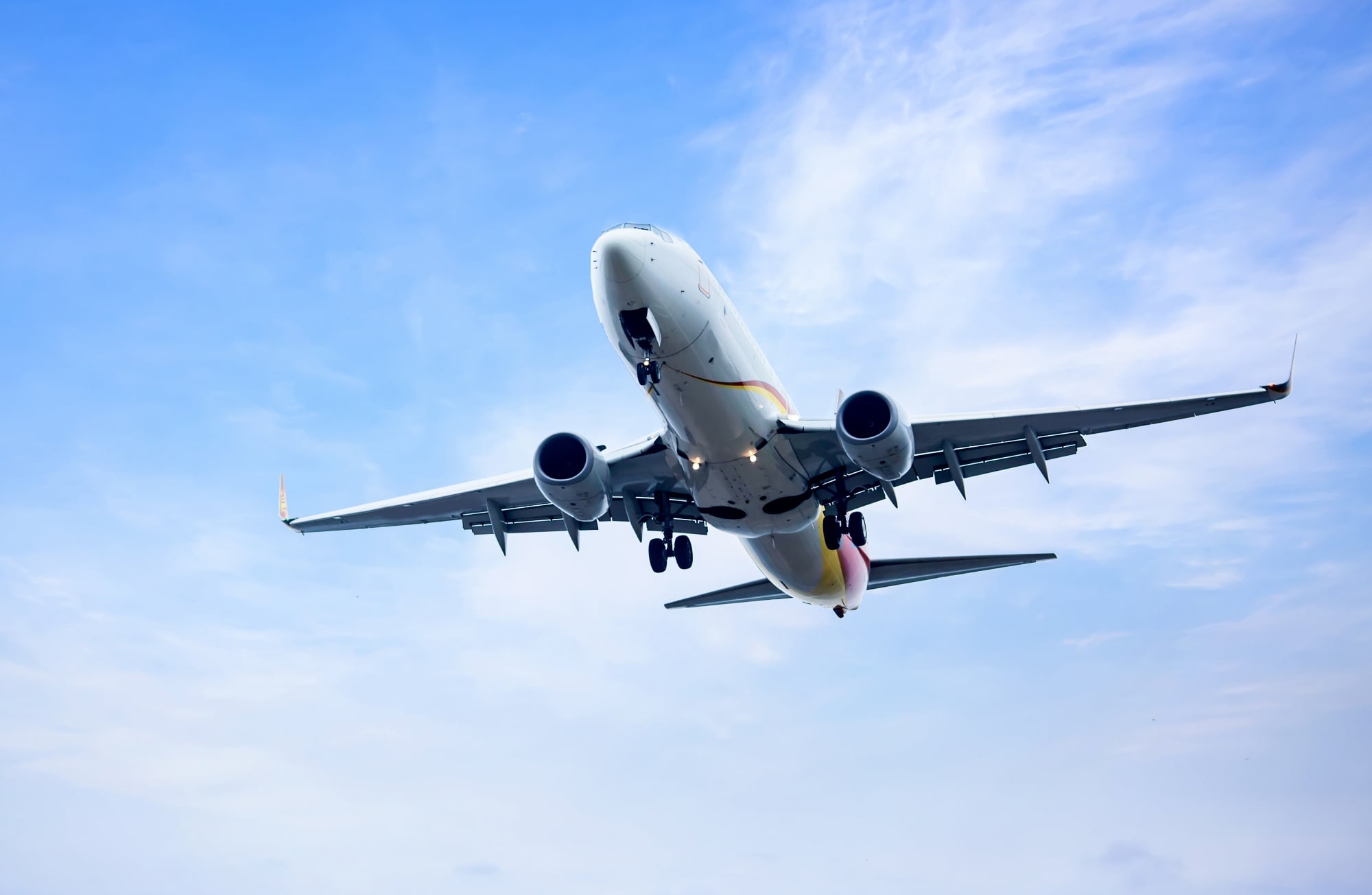
All the Way Back
The seat came back so fast it hit my belly.
We were maybe four minutes off the ground. The wheels had just thumped up into the plane. The seatbelt sign was still on. The woman in 26E pressed the button on her armrest and threw her whole body back against her seat like she was diving into a swimming pool.
The top of her seatback stopped two inches from my chest.
The middle of it pressed right into the top of my stomach. Into my son.
He kicked. Hard. Right where the seat was pushing. Like he was trying to push back.
I put both hands on my belly. I tried to pull myself back into my own seat. There wasn’t anywhere to go. I was already against the back of 27E as far as I could get. My knees were jammed against her seat pocket. My feet were trapped under the seat in front of me, on top of my backpack, because there was no room anywhere else.
I couldn’t open my tray table. I couldn’t reach the bottle of water in the seat pocket. I couldn’t move my legs.
I could barely breathe.
I was thirty-four weeks and five days pregnant.
I was in a middle seat, row twenty-seven, on a five-hour flight from Phoenix to Raleigh. The last seat on the earliest flight I could get.
And six weeks before that, I’d buried my husband.
I sat there for a minute. Breathing shallow. Trying to find some way to shift that didn’t press my son harder into the seat.
The man on my left, in the window seat, was asleep already. A big guy in a Diamondbacks hoodie with his head against the window and his earbuds in. The man on my right, in the aisle seat, was older, with reading glasses on, doing a crossword in the in-flight magazine. He glanced at the seat in front of me. Then at my belly. Then he looked back at his crossword and didn’t say anything.
I don’t blame him. People don’t want trouble.
I leaned forward the half-inch I could manage. I reached between the seats and tapped her gently on the shoulder.
She had short silver hair, cut in a sharp bob. A cream-colored cashmere cardigan. Big gold earrings. Expensive perfume I could smell from my seat. Something heavy and floral.
“Excuse me, ma’am,” I said. “Would you mind raising your seatback a little? I’m really uncomfortable, and it’s hard for me to even move.”
She turned her head. Not her body. Just her head. She looked at me through the gap between the seats.
She looked me up and down. At my face. At my belly pressed against her seatback.
“So?” she said.
I blinked.
“Excuse me?”
She snapped back irritably. “I paid for this seat, and I want to be comfortable. So I’m going to use it.”
She turned back around.
Chapter Two: Jake
At thirty weeks pregnant, I buried my husband.
His name was Jake Moreno. He was thirty-four. He taught chemistry at Sahuaro High School in Tucson, Arizona, and he coached the track team, and he was the funniest person I’ve ever known.
He could make anybody laugh. Students who hated chemistry. Parents who came in to complain about a grade. The lady at the DMV who’d been at the counter for thirty years and had never once smiled. He made her laugh so hard she gave him his license renewal without making him take the eye test.
He died on a Tuesday in February. At a track meet. In the stands at Catalina Foothills, cheering for his hurdlers. A brain aneurysm.
He stood up to yell at the official about a false start. Then he sat back down. Then he put his hand on the side of his head and said, “Huh.”
And then he was gone.
I was at work when they called me. I’m a dental hygienist. I had a patient in the chair with her mouth open and my scaler in my hand.
The front desk girl came to the doorway. Her face was white.
“Tessa,” she said. “There’s a phone call. It’s the hospital.”
I don’t remember much of the next week.
I remember the hospital. Banner University Medical Center. A small room with a box of tissues on every table. A doctor with kind eyes saying words like subarachnoid hemorrhage and nothing we could do.
I remember signing papers. A lot of papers. Organ donation. The release of remains. The death certificate request.
I remember the baby kicking the whole time, like he knew.
I remember the funeral. At St. Augustine’s, downtown. Packed. Every pew. Students in their track jerseys. Teachers. Parents. The DMV lady.
Jake’s track team sat in the front two rows behind me. When the priest asked if anybody wanted to say a few words, a skinny sixteen-year-old sprinter named Luis got up and walked to the microphone and said, “Mr. Moreno told us that if he ever died, we should tell a joke at his funeral. So here goes.”
He told a joke about a neutron walking into a bar. The whole church laughed. Then the whole church cried.
Jake wanted to be cremated. He’d told me that a hundred times. Usually as a joke.
“Just put me in a coffee can,” he’d say. “Take me everywhere. Take me to Disneyland. Buckle me in on Space Mountain.”
So I did. Not the coffee can. A simple urn. Brushed bronze. About the size of a big thermos. With a little brass plate on the front.
JACOB ANTHONY MORENO. 1991 to 2026. HE MADE US LAUGH.
I was doing so badly after the funeral.
I couldn’t sleep in our bed. I slept on the couch with the TV on. I couldn’t eat. I lost four pounds in two weeks, which you’re not supposed to do at thirty-two weeks pregnant. My OB was worried. She put me on a schedule of non-stress tests twice a week.
I went back to work for three days and had to stop. I kept crying in the middle of cleanings.
My mom called every night. From Raleigh, North Carolina. Where she’s lived since my dad died eight years ago.
“Come home, Tessie,” she said, the fourth week. “Please. You shouldn’t be alone. Let me be there for the birth. Let me help you when the baby comes.”
“I can’t fly, Mom. I’m almost thirty-five weeks.”
“You can,” she said. “I called your doctor’s office. I talked to the nurse. Most airlines let you fly up to thirty-six weeks with a doctor’s note. You’ve got time. Barely.”
So I bought the last available ticket on the earliest flight I could find.
Phoenix Sky Harbor to Raleigh-Durham. Nonstop. Seven-ten in the morning on a Thursday in April. Six hundred and eighty-four dollars. A middle seat in row twenty-seven, the very back of the main cabin. It was the only seat left.
I got a note from Dr. Abernathy, my OB, on her letterhead. Fit to fly. Estimated due date May twenty-eighth. Single gestation. Uncomplicated pregnancy.
Uncomplicated. I laughed out loud when I read that.
I packed one suitcase and a backpack.
In the backpack, I put my wallet and my phone charger and my prenatal vitamins and a sleeve of saltine crackers and the doctor’s note. And Jake.
You’re allowed to carry cremated remains on a plane. I looked it up. The TSA website says the container has to be something their X-ray can see through. No metal. So I bought a second urn, a plain wooden one, from the funeral home in Tucson. Seventy-nine dollars. And I had them transfer him into it.
The bronze one is still on our mantel. Empty.
I wasn’t going to leave him behind. Not in an empty house in Tucson. Not while I had his son.
At the airport in Phoenix, I put the backpack on the conveyor belt at security. The TSA officer on the X-ray machine stopped the belt. She looked at her screen for a long time.
Then she got up and came around and pulled my backpack out of the line.
“Ma’am,” she said. “Is this cremated remains?”
“Yes,” I said. “My husband.”
She looked at me. At my belly. At my face, which I’m sure looked like I hadn’t slept in six weeks. Because I hadn’t.
She didn’t open the bag. She didn’t swab it. She just handed it back to me very gently, with both hands.
“Have a safe flight, ma’am,” she said. “Both of you. All three of you.”
Chapter Three: Not My Problem
The woman acted like the whole world owed her something.
That’s what I thought, sitting there pinned behind her seat. That’s the kind of woman she was. Expensive cardigan. Big earrings. Heavy perfume. A designer handbag tucked under the seat in front of her. She probably flew first class usually and was furious about being back here in row twenty-six.
Still, I tried to stay calm.
I’d been raised to be polite. My mother would’ve died if I’d been rude to somebody on an airplane.
I tapped her shoulder again. Gently.
“Ma’am. I’m sorry. I’m not asking you to sit completely upright,” I said. “Just raise it a little, please. I’m eight months pregnant. You’re practically pressing the seat into my belly.”
She turned her head again. Slower this time.
She rolled her eyes.
“Well,” she said, “your pregnancy isn’t my problem.”
I couldn’t believe what I’d just heard.
The man in the aisle seat looked up from his crossword. He looked at the back of her head. Then at me. His eyebrows went up over his reading glasses.
But he didn’t say anything. He went back to his crossword.
And I didn’t want to start an argument. Not on a five-hour flight. Not with my mother waiting for me in Raleigh and my blood pressure already up and Dr. Abernathy’s voice in my head saying, Keep your stress down, Tessa. For the baby.
So I just sat there.
I sat there silently, with my knees pressed against the back of her seat. I tried to find a comfortable position.
There wasn’t one.
If I leaned left, the armrest dug into my side. If I leaned right, I bumped the man with the crossword. If I tried to sit up straight, her seatback pressed harder into my stomach. If I slid down, my knees pushed into her seat pocket, which pushed into her back.
Every time I moved, she made an annoyed sound.
A little huff. A tsk. A sigh through her nose.
At one point, around the second hour, she even turned around in her seat. Fully, this time.
“Can you stop moving around so much?” she snapped. “I’m trying to sleep, and you’re bothering me!”
People around us looked over. A couple across the aisle. A teenage girl two rows up.
I didn’t say anything. My face was burning.
I couldn’t even eat or drink.
The flight attendant came by with the cart. A tall Black woman in her fifties with a beautiful smile and a name tag that said KEISHA. She asked what I wanted.
“Just water,” I said. “Please.”
She handed me a little plastic cup. I couldn’t put my tray table down. I had to hold the cup in my hand. When the seat in front of me shifted, I spilled half of it down the front of my maternity shirt.
Keisha saw. She looked at the seat in 26E. She looked at me.
She didn’t say anything either. But I saw her face tighten.
Every movement felt like some kind of torture.
My legs were already swollen. My ankles had been swollen for three weeks. Dr. Abernathy said it was normal, but to watch it. To keep my feet up when I could. To walk around every hour on a long flight, to prevent blood clots.
I couldn’t keep my feet up. I couldn’t walk around. I couldn’t even shift my weight.
My back hurt so bad I wanted to cry. A deep ache, low, on both sides of my spine.
And something else. Something I didn’t want to think about. A tightening. Across the bottom of my belly. It came and went. Every twenty minutes or so.
Braxton Hicks, I told myself. Practice contractions. Everybody gets them. Dr. Abernathy said so.
Chapter Four: Standing
Eventually, I decided to just stand for a while.
It was the third hour. Somewhere over Texas. I had to get out of that seat or I was going to scream.
I could barely even get out of my seat.
I had to wake up the man in the aisle seat. He’d fallen asleep over his crossword. I tapped him on the arm.
“I’m so sorry,” I said. “I need to get up.”
He blinked. He looked at me. He looked at the seat in front of me, still reclined all the way back, pressed into my stomach.
“Oh, honey,” he said quietly. “Of course.”
He got up and stood in the aisle so I could get out.
It took me almost a minute. I had to twist sideways and push myself up with both hands on the armrests and squeeze out past the reclined seat. My belly brushed the top of her seatback as I went. She made a sound. A loud, annoyed sound.
Then I was in the aisle. Standing.
The moment I got out of my seat and took a full breath, I realized I couldn’t keep flying like that.
I stood in the aisle and breathed. All the way in. All the way down. The first full breath I’d taken in three hours.
My son kicked. Not angry kicks this time. Stretching kicks. Like he was breathing too.
I walked to the back of the plane. To the galley, where Keisha was putting away the beverage cart.
She looked up at me.
“You doing okay, baby?” she asked.
I didn’t say anything. I just stood there. Then my eyes filled up.
She put her hand on my arm. She pulled a jump seat down from the wall. “Sit,” she said. “Right here. Put your feet up on that cart. Nobody’s going to bother you.”
I sat. I put my feet up on the beverage cart. My ankles were the size of grapefruits.
Keisha got me a bottle of water. A real one. And a little bag of pretzels. And a pillow from the overhead bin.
“How far along are you?” she asked.
“Thirty-four weeks. And five days.”
She whistled. “And you’re flying by yourself?”
I looked at her.
“My husband died,” I said. “Six weeks ago. I’m going home to my mom. In Raleigh.”
Keisha didn’t say anything for a long moment.
Then she knelt down. Right there on the floor of the galley. So she was eye level with me.
“I’m so sorry,” she said.
“Thank you.”
“And that woman,” Keisha said, very quietly. “In 26E. I’ve been watching her. I’m going to talk to her.”
“No,” I said. “Please. I don’t want a scene.”
“Baby, she’s pressing her seat into a pregnant woman for three hours.”
“I know,” I said. “I just. I can’t. I can’t fight with anybody. I don’t have it in me.”
Keisha looked at me for a long time.
“Okay,” she said finally. “But if you change your mind, you come get me.”
I sat in that jump seat for fifteen minutes. With my feet up. Drinking water.
Then Keisha had to go do something in the front of the plane. And another flight attendant needed the galley. A young guy with a crew cut, who looked at me sitting in his jump seat like I was a raccoon in his kitchen.
So I got up. And I walked slowly back up the aisle to row twenty-seven.
Then the woman finally got up to use the restroom.
I saw her stand up as I was walking back. She stretched. She smoothed her cream-colored cardigan. She picked up a little cosmetics bag out of her designer purse.
She walked right past me in the aisle. She didn’t look at me. She went into the lavatory at the back. The little OCCUPIED sign lit up.
Of course, she left her seat fully reclined.
I stood in the aisle next to row twenty-six. Looking at her empty seat. All the way back. Pressed into my seat behind it. The gap where I was supposed to fit was maybe eight inches.
The man in the aisle seat of my row looked up at me. He looked at her empty seat.
“She’s going to be in there a while,” he said quietly. “She took her makeup bag.”
And suddenly, an idea came to me.
Chapter Five: The Surprise
I want to be honest about what I was thinking.
I wasn’t thinking about revenge. Not really. I wasn’t thinking about how to humiliate her, or how to get back at her, or how to make her pay.
I was thinking about Jake.
I was thinking about the time a man cut in front of us in line at the Costco in Tucson. Shoved his cart right in front of ours like we weren’t there. And Jake didn’t say anything. He just reached into our cart and took out a giant inflatable pool flamingo we’d bought for his nephew. And he blew it up, right there in line. All six feet of it. And set it in the man’s cart.
The man turned around and saw a six-foot pink flamingo sitting in his cart, staring at him. He jumped about a foot.
The whole line laughed. The man went red. Then he laughed too. And he let us go in front of him.
“You don’t fight people, Tess,” Jake told me in the parking lot. “You make them see you. That’s all. Most people aren’t bad. They just aren’t looking.”
So I was thinking about that.
And I was thinking about how tired I was. Thirty-four weeks and five days. Six weeks without him. Three hours with a seat in my belly. I wasn’t thinking straight. I know that now.
And I was thinking, She doesn’t see me. She doesn’t see either of us.
I reached into my carry-on.
My backpack was still on the floor of row twenty-seven. Under the seat in front of mine. I knelt down in the aisle, which hurt, and pulled it out.
I unzipped it.
I took Jake out.
The wooden urn. Plain maple. Seventy-nine dollars. About the size of a big thermos. With a little brass plate I’d had the funeral home engrave, the same words as the bronze one.
JACOB ANTHONY MORENO. 1991 to 2026. HE MADE US LAUGH.
I held him for a second. Against my belly. Where his son was kicking.
I placed it on her seat.
Right in the middle. On the cushion. Upright.
Then I reached over and pulled her seatbelt across it and buckled it. Snug. The way Jake used to buckle me in when I was pregnant and couldn’t reach.
Then I took a sticky note out of the front pocket of my backpack. I always carry them. Hygienists write a lot of notes.
I wrote one line on it. I stuck it to the front of the urn.
Jake would have raised it.
I stood in the aisle and looked at it.
My husband. Buckled into a reclined seat on an airplane. With a sticky note on his chest.
He’d have thought it was the funniest thing in the world.
I almost laughed. I almost cried. I wasn’t sure which.
The man in the aisle seat of my row was staring at the urn. His mouth was open.
“Is that,” he said slowly. “Is that what I think it is?”
“My husband,” I said.
He looked at it for a long time. Then he looked at me.
Then he started laughing. Quietly. Shaking. With his hand over his mouth.
“Oh, honey,” he said. “Oh, that’s good.”
Let’s just call it a “special” surprise.
I squeezed back into my seat. Slowly. Into the eight-inch gap. The empty, reclined seat in front of me pressing into my belly, with my husband sitting in it.
I waited.
Chapter Six: The Scream
She came out of the lavatory four minutes later.
Fresh lipstick. Her silver bob smoothed. Her cosmetics bag in her hand. She walked back up the aisle toward row twenty-six.
I watched her come. I couldn’t breathe.
She got to her row. She turned to sit down.
She stopped.
She stared at what was lying on her seat.
A wooden urn. Buckled in. With a sticky note.
For a second, she didn’t do anything. She just stood there in the aisle, holding her makeup bag, looking down at it. Her face went blank. Then confused.
Then she leaned closer. She read the brass plate.
JACOB ANTHONY MORENO. 1991 to 2026. HE MADE US LAUGH.
And then she screamed.
Not a little scream. Not a gasp. A real scream. High and loud and long. So loud that the whole back half of the plane turned around in their seats. The teenage girl two rows up dropped her phone. The sleeping man in the Diamondbacks hoodie next to me jerked awake and hit his head on the window.
People in the front of the plane stood up to see.
A flight attendant came rushing over. Keisha. Fast, from the front galley, down the aisle, with her hand on the backs of the seats.
“Ma’am! Ma’am, what’s wrong? Are you hurt?”
The woman was backing away from her own seat. Into the aisle. Pressed against the seats across from her, where the couple was sitting. She had her makeup bag clutched against her chest with both hands.
Then the woman shouted nervously once again.
“Oh my God, look what she did to me!”
She pointed at me.
Every head in the back half of that plane swiveled to look at me.
A pregnant woman in a middle seat. In row twenty-seven. In a maternity T-shirt with half a cup of water spilled down the front. Pinned behind a fully reclined seat with a funeral urn buckled into it.
I didn’t say anything. I couldn’t.
Keisha looked at the seat. At the urn. At the sticky note.
Jake would have raised it.
She read it twice. I saw her lips move.
Then she looked at me. And her face did something. Something I’ll never forget. It went soft and sad and furious all at once.
She turned around and looked at the woman in the aisle.
“Ma’am,” Keisha said. Her voice was very calm. Very quiet. “That’s her husband.”
The woman stared at her.
“What?”
“Those are her husband’s ashes,” Keisha said. “He died six weeks ago. She’s thirty-four weeks pregnant. She’s flying home to her mother.” She paused. “And you’ve had your seat pressed into her belly for three hours.”
The whole back of the plane went silent.
Dead silent. I could hear the engines. I could hear the air coming out of the little vents overhead.
The woman stood there in the aisle. She looked at Keisha. Then at the urn. Then at me.
Her face changed.
I watched it happen. Something went out of it. All the anger. All the sharpness. It drained out like water out of a sink.
What was left looked older. Much older. And very, very tired.
She looked down at the urn for a long time.
Then she put her hand over her mouth. And she sat down in the aisle seat across from her own. Right on the lap of the man who was sitting there. She didn’t even seem to notice. He didn’t seem to mind. He just held still.
She sat there on a stranger’s lap in the aisle of a Boeing 737 somewhere over Arkansas, staring at my husband’s urn. And she started to cry.
Chapter Seven: Margot
Keisha moved fast after that.
She helped the woman up off the stranger’s lap. She apologized to the stranger, who said it was fine, no problem, honestly. She guided the woman to the back of the plane, to the galley, to the same jump seat I’d sat in.
Then she came back for me.
“Come on, baby,” she said. “Bring him.”
I unbuckled Jake from the seat. I held him against my chest. I squeezed out of row twenty-seven, past the man with the crossword, who reached out and squeezed my arm as I went.
“You did good,” he whispered. “He’d have been proud.”
Keisha took me to the back galley. The woman was sitting in the jump seat with her face in her hands. Her shoulders shaking.
Keisha pulled down the other jump seat for me. Across from her. Knee to knee in the tiny galley.
“I’m going to give you two a minute,” Keisha said. “I’ll be right out there. You need anything, you holler.”
She pulled the curtain closed behind her.
We sat there. The woman in her cashmere cardigan and me in my wet maternity shirt. With Jake in my lap.
Neither of us said anything for a long time.
Then she took her hands away from her face. Her mascara was running down both cheeks. Her fresh lipstick was smeared.
“My name is Margot,” she said. “Margot Kessler.”
“Tessa,” I said. “Tessa Moreno.”
She looked at the urn in my lap.
“Jake,” she said.
“Jake.”
“How did he die?”
“A brain aneurysm,” I said. “At a track meet. He was a high school chemistry teacher. He coached track. He stood up to yell at the official about a false start, and he sat back down and said ‘huh’ and he was gone.”
Margot closed her eyes.
“Thirty-four,” she said. “It says on the plate. Thirty-four years old.”
“Yes.”
She was quiet for a long time.
Then she said, very quietly, “My husband died on Sunday.”
I stared at her.
“Four days ago,” she said. “Harold. In Raleigh. He was visiting our son. A heart attack. In our son’s backyard. He was mowing the lawn.” She laughed. A broken little sound. “He never mowed our lawn in forty-one years. Not once. We had a service for that. And he went to visit Michael and decided he wanted to help.”
“I’m so sorry,” I said.
“I was home,” Margot said. “In Scottsdale. I didn’t go on the trip. I had a book club thing. A book club thing.” She shook her head. “I was sitting in my living room with eight women drinking pinot grigio and talking about some novel nobody had finished when Michael called.”
She looked down at her hands. At her wedding ring.
“I haven’t slept since Sunday,” she said. “Not one hour. I’ve been on the phone with the funeral home in Raleigh and the insurance company and the bank and Harold’s company in Phoenix, the pension people, every single minute. I booked this flight at three in the morning. The only thing left was 26E.”
She looked at me.
“I usually fly first class,” she said. “Harold always booked us first class. I’ve never in my life sat in row twenty-six.”
“I put my seat back the second we took off,” Margot said. “And I closed my eyes. And for the first time since Sunday, I thought, maybe I can sleep. Just for an hour. Just for twenty minutes.”
Her chin was shaking.
“And then you tapped me on the shoulder,” she said. “And I didn’t even look at you. I didn’t see you. I just heard a voice asking me for something. And everybody’s been asking me for something for four days. Sign this. Choose that. Which casket. Which hymns. What do you want to put on the stone.” She put her hand over her mouth. “And I thought, I can’t give one more thing to anybody. Not one more inch.”
I didn’t say anything.
I sat there in that galley with my husband’s ashes in my lap and listened to this woman tell me the worst week of her life.
“Your pregnancy isn’t my problem,” she said. Quoting herself. “That’s what I said to you. Your pregnancy isn’t my problem.” She shook her head. “I worked in labor and delivery for thirty-one years, Tessa. At Scottsdale Osborn. I was a charge nurse. I caught over two thousand babies.”
She looked at me. Her eyes were very wet.
“And I told a pregnant woman her pregnancy wasn’t my problem,” she said. “Because my husband died on Sunday and I wanted to sleep.”
Chapter Eight: Two Widows
We sat in that galley for a long time.
Keisha brought us two cups of hot tea. Chamomile. She didn’t say anything. She just handed them through the curtain and closed it again.
Margot held her cup in both hands. She didn’t drink it.
“I’m sorry,” she said. “For what I said. For what I did. For three hours.”
“I’m sorry I put my dead husband on your seat,” I said.
She looked at me.
Then she laughed. Really laughed. A big, surprised sound, through her tears.
“It was a good one,” she said. “I’ll give you that. I’ve never been so scared in my life. I thought it was a bomb at first. Then I read the plate and I thought, she put a dead man in my seat.”
“He would have loved it,” I said. “Jake. He’d have laughed for a week.”
“Harold would have too,” Margot said. She wiped her eyes. “He had a terrible sense of humor. He used to put a whoopee cushion on my chair at our anniversary dinners. Every year. Forty-one years.”
She reached over. Slowly. She put her hand on the top of the wooden urn in my lap.
“Hello, Jake,” she said. “I’m sorry I was so rude to your wife.”
She held her hand there for a moment. Then she took it back.
“What’s his name?” she asked. Nodding at my belly.
“I don’t know yet,” I said. “We had a list. Jake wanted to name him something ridiculous. Like Neutron. Or Hercules. I kept saying no.” I looked down. “I haven’t been able to decide. Since he died. Every name feels wrong.”
Margot nodded slowly.
“How far along did you say? Thirty-four and five?”
“Yes.”
She looked at me differently then. Like a nurse looks at a patient. Up and down. Her eyes went to my ankles, propped on the edge of the beverage cart. To my hands, which were swollen too. To my face.
“Tessa,” she said. “Have you been having any tightening? Across the bottom of your belly?”
I didn’t answer right away.
“A little,” I said finally. “Braxton Hicks. They started a couple hours ago. Every twenty minutes or so.”
Margot set down her tea.
“Are they still every twenty minutes?”
I thought about it. When was the last one? In my seat. Before I got up. And then one in the aisle, when I knelt down to get my backpack. And then one while I was waiting for her to come out of the bathroom.
“Maybe every ten,” I said. “Twelve.”
Margot’s face went very still. The nurse face.
“Have you had any fluid?” she asked. “Any leaking? Any pressure? Down low?”
“I don’t think so,” I said. “Some pressure. My back’s been killing me.”
Then it happened.
Right there. In the galley. The tightening came across the bottom of my belly like a fist closing. Harder than before. Much harder. It wrapped all the way around to my back. I grabbed the edge of the jump seat. I couldn’t breathe.
It lasted a long time.
When it let go, I looked up. Margot was looking at her watch. A thin gold Cartier on her wrist.
“Forty-five seconds,” she said quietly. “That wasn’t Braxton Hicks, honey.”
Chapter Nine: Thirty-Four Weeks and Five Days
Margot Kessler, retired labor and delivery charge nurse, took over.
I watched it happen. The woman who’d pressed her seat into my belly for three hours, who’d told me my pregnancy wasn’t her problem, who’d sat on a stranger’s lap and sobbed in the aisle of a 737.
She stood up. She straightened her cardigan. She wiped the mascara off her cheeks with the back of her hand. And she became somebody else.
“Keisha,” she called through the curtain. Calm. Clear. Like she was calling a nurse to a delivery room. “I need you, please.”
Keisha came through the curtain fast.
“What’s wrong?”
“This young lady’s in preterm labor,” Margot said. “Thirty-four and five. Contractions every ten to twelve minutes, forty-five seconds, getting stronger. Back pain for three hours. No rupture yet.” She looked at Keisha. “I’m a retired L and D nurse. Thirty-one years. I need to know how far out we are from Raleigh. And I need you to tell the captain.”
Keisha didn’t even blink. “We’re about an hour and ten out,” she said. “I’ll tell him right now.”
The captain came on the PA two minutes later.
“Ladies and gentlemen, this is the captain. We have a medical situation in the rear of the aircraft. If there is a doctor, nurse, or paramedic on board, please identify yourself to a flight attendant.”
A woman in the front of the plane raised her hand. She turned out to be a pediatric nurse from Durham. She came to the back. A man in row eleven raised his hand. A paramedic from Phoenix Fire, on his way to visit his sister.
So that was the team. A retired L and D charge nurse, a pediatric nurse, and a Phoenix firefighter. In a galley the size of a closet. With me in the middle of it.
They talked to the captain on the interphone. Margot did most of the talking.
They decided not to divert. The nearest big airports were Memphis and Nashville, and by the time we landed and got to a hospital, we’d almost be in Raleigh anyway. And Raleigh had WakeMed, which has a level three NICU.
“Thirty-four weeks is a good baby,” Margot told me. Holding my hand. “Lungs are mostly there. He’ll probably need a little help. Maybe a few days in the NICU. But he’s going to be fine, honey. You hear me? He’s going to be fine.”
They moved me to first class.
Two passengers in the front row gave up their seats without being asked. A young couple on their honeymoon. They walked all the way to row twenty-seven and sat in my seat and Margot’s seat, which was still reclined. The man in the Diamondbacks hoodie, who’d finally woken up, helped the husband fold himself into the space.
The first class seat reclined almost flat. Keisha put pillows under my knees and behind my back. She put a blanket over me.
The paramedic took my blood pressure. One forty-two over ninety-four. He didn’t like it. He wrote it down on the back of a napkin.
The contractions kept coming. Every nine minutes. Then every eight. Then every seven.
Margot sat on the floor of first class next to my seat, on her knees, in her cashmere cardigan. Holding my hand. Timing every one on her gold watch.
“Breathe, honey,” she said. “In through the nose. Out through the mouth. Low and slow. Like you’re fogging a mirror.”
I breathed.
“Good,” she said. “That’s good. You’re doing so good.”
Between contractions, she talked to me. To keep my mind off it.
About Harold. How they met at a hospital Christmas party in 1983. He was an engineer at Motorola. She spilled eggnog on his tie. He kept the tie for forty-one years.
About her son Michael, who’s a software developer in Raleigh. Married. Two little girls. Five and three.
About her two thousand babies. The ones she remembered. Twins born in an elevator. A baby born in the hospital parking lot in the back of a Honda Civic. A mother who delivered nine pounds, four ounces with no epidural and then asked for a cheeseburger.
I laughed. Between contractions. In first class, on a Boeing 737, over Tennessee.
Then, around forty minutes out from Raleigh, I felt something warm.
“Margot,” I said.
She knew. She looked at my face and she knew.
“Your water broke,” she said. Calm. “That’s okay. That’s okay, Tessa. That just means he’s ready to meet you.”
“He can’t be ready,” I said. “He’s not supposed to come for six weeks.”
“Babies don’t read calendars, honey,” Margot said. “Two thousand of them, and not one read a calendar.”
Chapter Ten: Raleigh
We landed at Raleigh-Durham at three-forty in the afternoon, Eastern time.
The captain told everybody to stay seated. Nobody moved. Not one person stood up to get their bags out of the overhead bin, which is the only time I’ve ever seen that happen on an airplane.
An ambulance was waiting on the tarmac. Right next to the plane. With its lights going.
Two paramedics came up the jet bridge with a stretcher. They came into first class. They looked at me. Then at Margot, still on her knees beside my seat.
“Ma’am, are you family?” one of them asked her.
Margot looked at me.
I looked back at her.
“Yes,” I said. “She’s family. She’s coming with me.”
They lifted me onto the stretcher. They wheeled me up the aisle.
Margot walked beside me. Holding my hand. Holding my backpack in her other hand. With Jake inside it.
As we went out the door of the plane, the whole cabin started clapping.
All of them. A hundred and sixty people, clapping in their seats. The man with the crossword. The teenage girl. The honeymoon couple, way in the back, in our old seats. The guy in the Diamondbacks hoodie.
Keisha stood in the door of the plane as they wheeled me out. She was crying.
“You go have that baby,” she said. “And you come back and fly with me someday. You hear? With him.”
My mother was at the hospital before we were.
The airline called her. Keisha must have given them my emergency contact. By the time the ambulance pulled into the emergency bay at WakeMed, my mother was standing outside the doors in her church clothes, with her purse, crying.
She ran to the back of the ambulance.
“Tessie! Tessie, oh my God.”
“Mom,” I said.
Then she saw Margot. Climbing down out of the ambulance in her cashmere cardigan, with my backpack over her shoulder.
My mother looked at her. Then at me.
“Who,” she said. “Who is this?”
I didn’t know how to answer that.
Margot did.
She held out her hand to my mother. Calm. Polite.
“Margot Kessler,” she said. “I sat in front of your daughter on the plane.” She paused. “I was the worst person she’s ever met. And then I wasn’t.”
My mother stared at her.
“Now,” Margot said, “let’s go have a baby.”
Chapter Eleven: Born
My son was born at 6:47 p.m. on Thursday, April 16th.
Thirty-four weeks and five days. Four pounds, eleven ounces. Seventeen and a half inches long.
He came out screaming. That’s the first thing I remember. The sound. Furious and loud and perfect.
“That’s good,” the doctor said. “That’s what we want. Big lungs.”
They put him on my chest for thirty seconds. Just thirty seconds. He was so small. Red and wrinkled and furious. With a full head of dark hair like Jake’s.
And Jake’s ears. Sticking out a little on the sides. The same ears.
Then the NICU team took him. To check his breathing. To put him in an incubator. They said he’d probably need a little oxygen. A few days. Maybe a week or two.
My mother went with him. I made her.
Margot stayed with me.
She’d been there the whole time. In the delivery room. In her cardigan, which was covered in stains by then. Holding my left hand while my mother held my right.
The labor nurses at WakeMed figured out who she was in about ten minutes. One of them had trained at Scottsdale Osborn. She recognized Margot’s name.
“You’re Margot Kessler?” the nurse said. “The Margot Kessler? From Osborn? You trained my preceptor.”
“Small world,” Margot said.
After they took the baby to the NICU, the room got quiet.
I lay there in the hospital bed. Exhausted. Empty. Shaking.
Margot pulled a chair up next to the bed. She sat down. She took my hand again.
My backpack was on the counter by the window. She’d set it there when we came in. Very carefully.
She got up. She went and got it. She brought it back to the bed. She unzipped it.
She took out Jake.
She set him on the little rolling table next to my bed. Where I could see him.
“There,” she said. “He should be here.”
I started crying. Really crying. For the first time since the funeral. The way I hadn’t let myself cry in six weeks.
Margot sat there and held my hand and let me.
“He would have been here,” I said. “He was supposed to be here. He was going to cut the cord. He practiced on a sausage. He was going to make a joke when the baby came out. He’d been working on it for months.”
“What was the joke?” Margot asked.
I laughed through my tears.
“He wouldn’t tell me,” I said. “He said it was a surprise.”
Margot didn’t say anything for a long time.
Then she looked at the urn on the rolling table.
“Harold never told me his anniversary jokes ahead of time either,” she said. “He’d just do them.” She shook her head. “I’m going to miss those stupid whoopee cushions for the rest of my life.”
She squeezed my hand.
“You know what I learned, in thirty-one years in that delivery room?” she said. “Every family’s missing somebody. Every single one. A grandma who didn’t live to see it. A father who walked out. A husband who died. There’s always an empty chair in that room.” She paused. “But the baby comes anyway. Every time. Doesn’t care who’s missing. Just shows up screaming.”
At eleven o’clock that night, the NICU nurse came to my room in a wheelchair to take me to see him.
I asked Margot to come.
She pushed the wheelchair herself. Down the long hallway. Into the NICU. Past the rows of little plastic incubators with their lights and their beeping monitors.
He was in the third one on the left. Under a blue light. With a little tube in his nose for oxygen. And a tiny knit hat. And a card on the front of the incubator.
BABY BOY MORENO.
I put my hand through the round hole in the side of the incubator. I touched his foot. So small. Smaller than my thumb.
He kicked.
The same kick. The same one he did on the plane, when Margot’s seat pressed into him.
“He’s still kicking,” I said. “He kicked her seat the whole way. Pushing back.”
Margot laughed. Behind me. She put her hand on my shoulder.
“He’s his father’s son,” she said.
Chapter Twelve: All the Way Back
I named him on the fourth day.
He was off the oxygen by then. Breathing on his own. Eating from a bottle. Gaining weight. Four pounds, fourteen ounces.
The nurse came in with the birth certificate form. She needed a name.
I’d been thinking about it for four days. Every name I’d ever liked. Every name on our list. Every ridiculous name Jake wanted.
“Harold,” I said.
Margot was sitting in the chair by the window. She’d come every day. After the funeral home and the lawyers and the insurance people. She’d come in at four o’clock every afternoon and sit with me and the baby until nine.
She looked up when I said it.
“Jacob Harold Moreno,” I said. “Jake. After his father. And Harold. After the man who kept the eggnog tie for forty-one years.”
Margot put her hand over her mouth.
She didn’t say anything. She couldn’t.
She got up out of the chair. She came over to the hospital bed, where I was holding him. She looked down at him for a long time.
“He’d have hated that,” she said finally, through her tears. “Harold. He’d have said it was the worst name in the world. He hated his own name. He wanted to be called Hal.”
“Should I change it?”
“Don’t you dare,” Margot said.
Harold Kessler’s funeral was the next Tuesday. At a Presbyterian church in Cary, near their son’s house.
I went. My mother drove me. Six days postpartum, with my stitches and my swollen ankles and a breast pump in my bag. Baby Jake stayed in the NICU with the nurses.
I sat in the back. In a borrowed black dress of my mother’s.
Margot gave the eulogy. In a navy dress. No cardigan. No big gold earrings.
She told them about the eggnog. And the whoopee cushions. And the lawn he never mowed in forty-one years.
Then she told them about a pregnant woman in row twenty-seven. And a wooden urn buckled into seat 26E. And a sticky note.
Jake would have raised it.
“Harold would have raised it too,” she said. Her voice broke. “If I’d been the one in the back. He’d have given that girl his seat and sat on the floor. That’s who he was. I forgot that, for three hours. I forgot who I married.” She looked at the back of the church. Right at me. “And a twenty-nine-year-old widow with a funeral urn reminded me.”
Baby Jake came home from the NICU on May fourth. Eighteen days old. Five pounds, six ounces. I took him to my mother’s house in Raleigh. We’re still here.
I’m not going back to Tucson. Not to live. I put the house on the market in June. It sold in eleven days.
Jake’s life insurance through the school district came through in May. A hundred and fifty thousand dollars. I put most of it in a 529 college savings account for the baby, and a trust, the way Margot’s lawyer in Raleigh told me to. Social Security started paying survivor’s benefits for the baby too. Eleven hundred and twenty a month, until he’s eighteen.
I’m going to be okay. Money-wise. I’m going to be okay.
Margot didn’t go back to Scottsdale either.
She sold the house there in August. She bought a little condo in Cary, ten minutes from her son and her granddaughters. And twenty minutes from us.
She comes over every Wednesday. She holds the baby while I sleep. She brings Chick-fil-A. She tells me stories about her two thousand babies.
The baby calls her Gigi. Or he will, when he can talk. That’s what her granddaughters call her.
In September, we flew back to Phoenix. Margot and me and the baby. To scatter Jake’s ashes.
He always said he wanted to be scattered on the top of Mount Lemmon, outside Tucson. Where he proposed to me. At sunset, in October, in the pine trees, with the whole city lit up below us.
We flew out of Raleigh on a Thursday morning. Same airline. Same route, backwards.
Keisha was working our flight.
I didn’t plan it. I don’t think she did either. But there she was, at the door of the plane, in her uniform, greeting passengers.
She saw me coming down the jet bridge with the baby in a carrier on my chest and Margot behind me carrying the diaper bag.
She stopped. She put her hand over her mouth.
“Oh my God,” she said. “Oh my God, is that him?”
“This is Jake,” I said.
She cried. Right there at the door of the plane. She held him for thirty seconds while the line backed up behind us. Nobody complained.
She’d upgraded us. All three of us. First class, row two. Two seats and a lap infant.
Margot took the window. I took the aisle. The baby slept on my chest the whole way.
And the urn rode in the seat between us. On Margot’s lap, at first. Then, when she got tired, buckled into its own spot. Keisha brought a seatbelt extender.
“He gets a seat this time,” Keisha said. “Paid in full.”
We scattered him on Mount Lemmon at sunset. On the second Saturday in October. In the pine trees, at the overlook where he proposed.
My mother came. And Margot. And Luis, the sprinter who told the neutron joke at the funeral, and six other kids from the track team. And Jake’s parents, from Nogales.
Margot held the baby while I opened the urn.
The wind took him. All at once. Out over the edge, out over the pine trees, out toward the city lights coming on below us in the dusk.
I watched him go. I didn’t cry. I’d done my crying.
Afterward, we sat at the overlook in folding camp chairs and watched the stars come out.
Luis brought a cooler with sodas. Jake’s mother brought tamales. My mother brought a blanket for the baby.
Margot sat in the camp chair next to mine. With the baby asleep in her arms.
She reached down for the lever on the side of the chair. The one that makes it recline.
Then she stopped. She looked over at me. With her hand on the lever.
“Is this okay?” she asked. “If I put it back?”
I looked at her. In the starlight. On top of Mount Lemmon. With my son asleep on her chest and my husband somewhere in the pine trees below us.
The woman who told me my pregnancy wasn’t her problem. The woman who caught my son on the floor of first class, in a manner of speaking, before he ever came. The woman who reminded me that everybody’s carrying something you can’t see. And who learned it, herself, from a dead man buckled into a seat.
“Margot,” I said. “Put it all the way back.”
She smiled. She pulled the lever.
And she leaned back in her chair, under the stars, holding my son. And for the first time since her husband mowed a lawn in Raleigh, she fell asleep.

Sophia Rivers is an experienced News Content Editor with a sharp eye for detail and a passion for delivering accurate and engaging news stories. At TheArchivists, she specializes in curating, editing, and presenting news content that informs and resonates with a global audience.
Sophia holds a degree in Journalism from the University of Toronto, where she developed her skills in news reporting, media ethics, and digital journalism. Her expertise lies in identifying key stories, crafting compelling narratives, and ensuring journalistic integrity in every piece she edits.
Known for her precision and dedication to the truth, Sophia thrives in the fast-paced world of news editing. At TheArchivists, she focuses on producing high-quality news content that keeps readers informed while maintaining a balanced and insightful perspective.
With a commitment to delivering impactful journalism, Sophia is passionate about bringing clarity to complex issues and amplifying voices that matter. Her work reflects her belief in the power of news to shape conversations and inspire change.