Sale Day
The sale barn cafe was full by six thirty.
It always is on sale day. Every Tuesday in Cimarron Wells, Texas, from September to May. The ranchers come in from forty miles around with their trailers hitched and their calves loaded, and before the auction starts at nine, they eat.
The cafe sits at the front of the Cimarron Wells Livestock Auction, a long metal building on the edge of town with pens out back as far as you can see. You can smell the cattle from the parking lot. Inside, you smell coffee and bacon grease and the sweet, sharp smell of the pens drifting in every time somebody opens the back door.
Don Hollister sat where he has sat for thirty years, at the near end of the long table.
Everybody in Hartley County knows that table. It’s a long Formica table by the front window, with mismatched chairs and a sugar shaker in the middle that’s been there since the Reagan administration. The big ranchers sit there. The ones with the land and the cattle and the names on the barn walls.
Don’s seat is the one at the end closest to the door. Where he can see everybody come in.
Felt hat. Tan canvas jacket. White mustache over his coffee cup.
He’s seventy-one. He runs about nine hundred mother cows on twenty-two thousand acres south of the Canadian River. The Hollister place. His granddaddy started it in 1919.
A row of cattlemen in hats sat with him over plates of eggs, talking calf prices.
Six of them. Seven. Dale Pruett, who runs the ranch north of Hollister’s. Bobby Ray Tillman, who owns the feedlot in Dalhart. The Kessler brothers, who farm wheat and run stockers. A man I didn’t know from Oklahoma.
They were laughing about something. Coffee cups going up and down. Forks scraping plates.
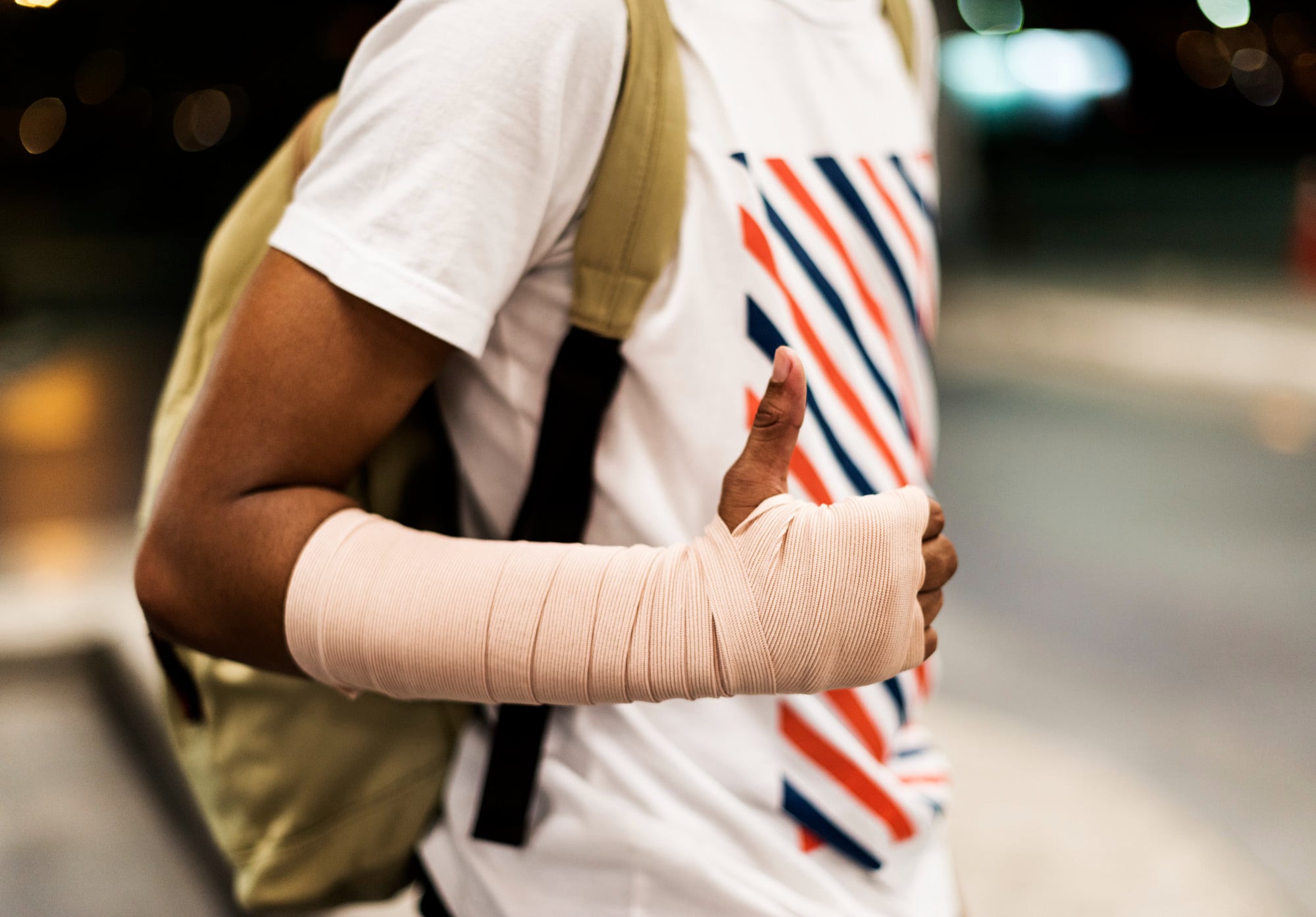
My husband Travis stood beside me in his straw hat, his right arm in a white cast and a sling.
The cast went from his knuckles to above his elbow. The sling was the blue hospital kind, with a strap that went around his neck. He’d tried to cover it with his jacket that morning, but he couldn’t get his arm through the sleeve. So he wore the jacket over his left shoulder only, the right side hanging empty.
He stood very straight. He always does. Thirty-six years old, six foot two, with sun lines around his eyes from fifteen years outside.
He wasn’t wearing his work boots. He couldn’t pull them on one-handed. He was wearing his church boots.
Travis worked for Don eleven years.
Since he was twenty-five. Since before we were married. He started as a day hand, working cattle for twelve dollars an hour. By the fourth year, Don made him foreman. He ran the whole cow-calf operation. Hiring. Doctoring. Moving cattle. Fixing fence. Working the chute.
Four thousand dollars a month. Plus the house on the ranch. A little stone house by the windmill, built in 1937, that we’ve lived in for nine years.
He was good at it. Everybody said so. Don said so. At the Christmas party every year, Don would stand up and raise his glass and say, “To Travis. Best hand I ever had.”
Chapter Two: Halloween
He broke that arm on Halloween.
A Thursday. We were weaning calves. You separate the calves from their mothers in the fall and ship them, and before you do, you run every single one through the chute. Vaccinate them. Tag them. Check them.
Then you run the cows through too. Pregnancy check. Vaccinate. Pour them for lice.
Nine hundred cows. Three days. Travis and two day hands and Don’s nephew, who’s twenty and mostly stands around.
It happened at three in the afternoon.
Travis was at the head gate of the squeeze chute. That’s the end where the cow’s head comes through, and you close a gate on her neck to hold her while the vet works.
A big black baldy cow came through. Mean. Wild-eyed. One of the old ones from the north pasture that hadn’t seen a person since spring.
She hit the head gate going full speed. Before it was latched.
The gate swung back on its hinge. Hard. Fifteen hundred pounds of cow behind it.
Travis’s right arm was between the gate and the pipe frame of the chute. Reaching for the latch.
It pinned his forearm against the steel pipe.
I wasn’t there. I was at the school in town, in the cafeteria, where I work. But the day hand told me later what it sounded like.
He said it sounded like somebody snapping a broom handle over their knee.
Two bones. The radius and the ulna. Both of them. Clean through.
The vet who was there doing preg checks splinted it with two boards and a roll of vet wrap. Then the nephew drove him to the hospital in Dalhart. Forty minutes on Highway 87, with Travis holding his arm in his lap.
Dalhart took one look at the X-ray and sent him on to Amarillo. Northwest Texas Hospital. Another hour.
A plate and six screws in Amarillo.
Surgery at nine that night. An orthopedic surgeon named Dr. Patel put a titanium plate along the radius and screwed it in with six screws. She said the ulna would heal on its own if he kept it immobilized.
Six weeks in a cast, at least. Then physical therapy. No heavy lifting for three months. No roping. No working cattle. No chute.
I got there at eleven. He was in a room on the fourth floor, groggy, with his arm propped up on pillows.
He looked up at me.
“I finished the black baldies,” he said. “Before it happened. All but that one.”
I sat on the edge of his bed and cried.
The bill came three weeks later.
Thirty-eight thousand, four hundred and twelve dollars. The ambulance. The ER in Dalhart. The transfer. The surgery. The plate. The screws. The anesthesiologist. Two nights in the hospital.
We have a marketplace insurance plan. Bronze. The cheapest one. It’s all we can afford, because Don doesn’t offer insurance. Our deductible is seventy-five hundred dollars per person. Our out-of-pocket max is ninety-four hundred.
So we owed ninety-four hundred dollars. Before physical therapy. Before the follow-ups.
And there was no workers’ comp.
I didn’t know that until the hospital billing office asked. Texas is the only state in the country where an employer doesn’t have to carry workers’ compensation insurance. They call it being a nonsubscriber. And a lot of ranches don’t carry it. Ranch work is exempt from a lot of things anyway.
Don didn’t carry it. Never had. His daddy never had.
Eleven years. Travis never asked. Neither did I.
Chapter Three: The Check
When the November check came, it was eight hundred dollars.
It comes on the fifth of every month. Don writes it himself. In his slanting handwriting, on checks from the Hartley County State Bank, with HOLLISTER CATTLE COMPANY printed across the top.
I opened the envelope at the kitchen table. The check slid out.
Eight hundred dollars and no cents. Memo line: October.
It should have been four thousand.
Four thousand a month. Every month. For eleven years, minus the first three when it was less. It was always four thousand. On the fifth. Like clockwork.
I stared at it. I turned it over. I looked in the envelope to see if there was another one. A second check. A note. Anything.
There wasn’t.
Don kept thirty-two hundred dollars of October. Wages Travis had already worked for.
Travis worked every single day of October. Thirty-one days. Including Sundays, because it was weaning season. Fourteen-hour days. He worked October thirty-first until three in the afternoon, when the black baldy hit the gate.
He’d earned every dollar of that check before he ever broke his arm.
“To cover the days he’ll miss,” Don said on the phone.
Travis called him that night. From the kitchen, standing at the counter with the phone pressed against his left ear. I stood in the doorway and listened.
“Don,” Travis said. “The check’s short. I think there’s a mistake.”
I couldn’t hear Don’s side. Just a low rumble through the phone.
Travis’s face changed.
“The days I’ll miss,” he repeated. “Don, I worked October. All of it. That’s for October.”
The rumble again.
“Okay,” Travis said. “Okay. I understand.”
He hung up.
He stood there at the kitchen counter for a long time with his back to me.
“He said he’s holding it back,” Travis said finally. “To cover the days I’ll be out. He said he’s got to hire another man to get through shipping, and somebody’s got to pay him. He said he’d make it right when I’m back.”
“Travis. That’s your October. That’s money you already earned.”
“I know,” Travis said.
“He can’t do that.”
“I know, Case.”
Travis asked him twice to make it right.
Once on the phone. That first night.
Once at the pens. A week later. Travis drove out to the shipping pens on the Hollister place with his arm in the sling. Don was there, loading calves on a pot trailer to go to the feedlot in Dalhart. Travis stood at the fence and waited until the trailer pulled out.
Then he walked up to Don.
He told me about it that night.
“I said, Don, I need my October pay. I’ve got a mortgage. I’ve got a hospital bill. I’ve got a little girl.”
“What did he say?”
Travis looked at his cast.
“He said, We’ll settle up when you’re back.”
Both times, Don said, “We’ll settle up when you’re back.”
As if Travis had asked for a favor. As if it was a loan. As if it was something Don was doing for us.
When you’re back. Like Travis was on vacation. Like he’d chosen to stand at that head gate when a fifteen-hundred-pound cow came through it.
Chapter Four: The State
I called the state that week.
I sat at the kitchen table on a Wednesday afternoon when I got home from the school cafeteria, and I looked it up on my phone. The Texas Workforce Commission. They handle wage claims. If your employer doesn’t pay you what you earned, you can file one.
I called the number. I sat on hold for an hour and ten minutes. Emma did her spelling homework across from me while I listened to the hold music.
The woman who finally answered was kind. Her name was Rosalinda. She’d been doing this for nineteen years.
She listened to the whole thing. Halloween. The chute. Eight hundred dollars instead of four thousand.
“He can’t do that,” she said. “In Texas, you have to be paid what you earned. He can’t just hold back wages for days your husband hasn’t worked yet. That’s a wage claim. A clear one.”
“So what do I do?”
“You file,” she said. “Online. You’ve got a hundred and eighty days from when the wages were due.”
“How long does it take?” I asked.
Rosalinda was quiet for a second.
“It varies, ma’am,” she said. “We investigate. We contact the employer. We make a determination. Then the employer can appeal. Then there’s a hearing.” She paused. “I’m going to be honest with you. On average, it’s eight to twelve weeks before you see a determination. Sometimes longer. And then if he doesn’t pay, we have to go after collection.”
A wage claim would take weeks. Maybe months.
And our mortgage was due Friday.
We have a mortgage. Not on the ranch house. On a little house in town. On Third Street, two blocks from the school. We bought it four years ago, when Emma was three. As a rental, at first. We rent it out to a teacher. Someday, Travis said, when he got too old for cattle, we’d move into it.
Nine hundred and twelve dollars a month. The rent from the teacher covers six hundred. We cover the rest.
And the electric bill. And the propane. And the truck payment. And groceries. And Emma.
And now ninety-four hundred dollars to the hospital in Amarillo.
I make fourteen dollars an hour in the school cafeteria. Twenty-eight hours a week, during the school year. That doesn’t cover a mortgage.
Travis’s eight hundred dollars was gone the day we deposited it.
I had two hundred and eleven dollars in our checking account at the Hartley County State Bank. The same bank Don banks at.
So I asked Travis if I could ask Don myself. In front of the men he eats with.
That’s how I said it. At the kitchen table on Wednesday night, after Emma was asleep.
“Not in private,” I said. “You already tried in private. Twice. He said we’ll settle up when you’re back. Like it’s a favor.”
Travis looked at me.
“Sale day,” I said. “Tuesday. At the cafe. In front of the long table. In front of Dale and Bobby Ray and Hank and all of them. I won’t yell. I won’t make a scene. I’ll just ask.”
Travis thought about it a whole evening.
He didn’t say yes. He didn’t say no. He sat at the kitchen table with his cast on the table in front of him and looked at it.
He went out on the porch. He stood there in the dark by the windmill for an hour.
He came back in. He sat down again.
I knew what he was thinking. Eleven years. Don Hollister gave him his first real job. Made him a foreman. Stood up at every Christmas party and raised his glass.
You don’t shame a man like that in front of his friends. Not in Hartley County. Not in front of the long table.
Then he said, “I’ll stand right there with you.”
Our daughter Emma is seven.
She’s in second grade at Cimarron Wells Elementary, where I work in the cafeteria. She has her daddy’s brown eyes and my hair, and she has never once in her life missed anything that happens in our house.
That Saturday, she set her piggy bank on the kitchen table.
It’s a pink ceramic pig with a slot on top and a cork in the bottom. Her grandma gave it to her when she was born. She’s been putting her tooth fairy money in it. And the dollars her grandpa gives her for good report cards.
She pulled out the cork. She dumped it all out on the table. She counted it. Out loud.
Fourteen dollars and some pennies.
She pushed the pile across the table to me.
“For the house,” she said.
I looked at her.
“Emma,” I said. “Where did you hear about the house?”
“You and Daddy,” she said. “In the kitchen. You thought I was asleep.” She looked at her daddy’s cast. “You said we might lose the house in town.”
She pushed the money a little closer to me.
“So that’s for the house,” she said. “Fourteen dollars and thirty-two cents.”
That is why I was standing in that cafe.
Chapter Five: The Long Table
Every hat at the table turned when we came in.
I’ll never forget it. The bell over the door jingled. And seven heads in seven hats turned at once. Like a row of cattle in a pen turning toward a gate.
They saw Travis first. The cast. The sling. The jacket hanging off one shoulder.
Then they saw me.
Forks stopped halfway up.
The whole cafe got quieter. Not silent. But quieter. The men at the other tables noticed the long table had gone still, and they looked over too. Wanda, who runs the cafe, stopped with a pot of coffee in her hand.
Everybody in Hartley County knew Travis broke his arm. It’s a small county. Six thousand people. News travels faster than a pickup.
And everybody knew he worked for Don.
I walked up to the near end of the table and stood facing Don.
Travis came with me. He stood beside me. Right beside me. Close enough that his good shoulder touched mine.
Don looked up from his coffee.
“Morning, Mr. Hollister,” I said.
“Casey,” Don said. “Travis.” He nodded at the cast. “How’s the arm?”
“Healing,” Travis said.
I kept my voice low.
The room had gone quiet enough without me raising it. I could hear the grill sizzling in the kitchen. I could hear a calf bawling out in the pens.
“Mr. Hollister,” I said. “Travis worked every day of October.”
Don didn’t say anything.
“He worked the day he broke his arm,” I said. “Until three in the afternoon. At your chute. Working your cows.”
I took a breath.
“You kept thirty-two hundred dollars of it,” I said. “I’m asking for it now, please.”
Don’s face went red under the hat.
It started at his neck, above the collar of his canvas jacket. It went up into his cheeks. All the way up to the brim of his hat.
“This isn’t the place, Casey,” he said. Low. Tight.
“I know, sir,” I said. “I’m sorry for that.”
I meant it. I was sorry. My hands were shaking. I kept them at my sides so nobody would see.
“But he asked you twice in private,” I said.
The man beside Don set his fork down.
Dale Pruett. Sixty-eight. Runs the ranch north of Hollister’s. He’d known Travis since Travis was a kid. He set his fork down on his plate very quietly.
Then the man beside him did too.
Bobby Ray Tillman. From the feedlot. He set down his fork. He looked at Don.
Then the Kessler brothers. Then the man from Oklahoma, who didn’t even know us. One by one, all the way down the long table.
Nobody at that long table was eating anymore.
Seven forks lying on seven plates. Seven men in hats. All looking at Don.
Don looked at Travis.
“You put her up to this?” he said.
He said it like an accusation. Like Travis had sent his wife to do his dirty work.
“No, sir,” Travis said. “She’s speaking for both of us.”
He didn’t raise his voice either. He just said it. Steady. The way he talks to a scared horse.
Then he said, “Eleven years, Don. I never missed a day you needed me.”
Down at the end, old Hank Riggs turned his chair to face us.
Hank has called the sale in that barn for forty years. He’s eighty-one. The best auctioneer in the Texas Panhandle. Everybody says so. He’s got a voice like gravel in a coffee can, and he can sell a pen of calves in thirty seconds flat.
He sits at the far end of the long table every sale day. He eats his eggs and drinks his coffee and doesn’t say much, until nine o’clock, when he climbs up in the auction box and talks for six hours straight.
He turned his chair around. Slowly. So it scraped on the linoleum. So he was facing Don down the whole length of the table.
He did not say a word.
He just watched Don.
Chapter Six: The Pocket
Don looked down at his coffee a long time.
The cafe was dead quiet now. Even the men at the other tables had stopped eating. Wanda was standing by the pie case with her coffee pot, not moving.
I could hear the clock on the wall. The calves bawling out back. My own heartbeat.
“You know how this year’s been,” he said quietly.
“I know, sir.”
I did know. Everybody at that table knew. It had been the driest year in the Panhandle since 2011. No rain from April to August. The grass burned up. Ranchers sold cows they’d raised for fifteen years because they couldn’t feed them. Hay was three hundred dollars a ton, when you could get it.
And calf prices went down in September. Fifteen percent. Just when everybody needed them to go up.
“It’s been hard on everybody,” Don said.
He looked down the table as he said it. At Dale. At Bobby Ray. At the Kesslers. They’d all had the same year. They all knew.
I didn’t argue. I didn’t say anything for a second.
“But it wasn’t Travis’s arm that made it hard,” I said.
Don set his coffee cup down.
Not hard. Not slamming it. Just setting it down on the Formica, the way you’d set down something you were finished with.
He looked down the row of hats, one man at a time.
Dale. Bobby Ray. The Kessler brothers. The man from Oklahoma. All of them looking back at him. Nobody saying a word.
And at the far end, Hank Riggs. In his chair turned backward. Watching.
Then he reached into the pocket of his tan canvas jacket.
The inside pocket. On the left side. Where a man keeps his wallet. Or his checkbook.
His hand stayed in there for a long time.
When it came out, it was holding an envelope.
A white envelope. From the Hartley County State Bank. The kind they give you when you withdraw cash at the counter. It was creased down the middle, like it had been folded and unfolded a lot of times. One corner was soft and worn.
He held it in his hand. He looked at it.
He didn’t hand it to me.
“I went to the bank Friday,” Don said.
His voice was very quiet. So quiet that the men at the far end of the table leaned forward.
“Friday afternoon,” he said. “Thirty-two hundred dollars. In cash.” He turned the envelope over in his hand. “I drove out to your place on Saturday. To the stone house. I sat in my pickup by the windmill for forty-five minutes.”
Travis went very still beside me.
“And I couldn’t make myself get out of the truck,” Don said.
Nobody said anything.
“I drove out there Sunday, too,” Don said. “Same thing. Sat there. Saw your girl playing on the swing set.” He shook his head. “Drove home.”
He looked up at Travis. For the first time since we walked in. Really looked at him.
“I’ve been carrying this envelope in my jacket since Friday,” he said. “Four days. I’ve taken it out of my pocket fifty times.”
“Why didn’t you just give it to us?” I asked.
Don didn’t answer for a long time.
Then he said something I didn’t expect.
“Because then I’d have had to say it,” he said. “Out loud. That I was wrong. That I panicked. That I took a man’s wages after he broke his arm in my chute, because I was scared.” He looked at his coffee. “And I’ve never said that to anybody in my life. Not once in seventy-one years.”
Chapter Seven: What Don Said
“Ellen died in March,” Don said.
Everybody at the table knew that. Ellen Hollister. His wife of forty-six years. Breast cancer. They had the funeral at the First Baptist Church in Dalhart, and the line went out the door and down the block.
“Ellen did the books,” Don said. “Forty-six years. The ranch. The payroll. The bank. The insurance. All of it. I never once wrote a check she didn’t tell me to write.”
He set the envelope down on the table. Next to his coffee cup.
“And then she was gone,” he said. “And the drought came. And I sat down at her desk in June and opened the books for the first time in my life.”
He shook his head.
“I didn’t understand half of it,” he said. “Bank notes. Operating line. Land payments. Insurance premiums. I didn’t know what we owed. I didn’t know what we had. I didn’t know anything.”
He looked down the table at Dale Pruett.
“You know what it’s like, Dale,” he said. “You sold half your cows in July.”
Dale nodded slowly.
“I sold three hundred,” Don said. “Three hundred of Ellen’s cows. The ones she raised. And I still couldn’t make the note at the bank in September. I had to go in there and ask for an extension. Like a kid asking his daddy for a quarter.”
“And then Travis broke his arm,” Don said.
He looked at Travis.
“And I panicked,” he said. “I thought, I’ve got to hire a man to get through shipping. Twenty dollars an hour. Somebody who doesn’t know the place. And I thought, I can’t pay two men. I can’t pay Travis to sit at home and pay another man to do his job.” He swallowed. “So I just didn’t.”
“That was my October,” Travis said quietly. “Not my November. My October.”
“I know it was,” Don said. “I knew it when I wrote the check. I knew it when I put it in the envelope. I knew it every single day.” He looked at his hands. “And I told you we’d settle up when you’re back. Because I was too proud to say I was broke.”
The whole cafe was silent.
Then Don picked up the envelope. He held it out across the table. To me. Not to Travis. To me.
“Casey,” he said. “Here’s your thirty-two hundred dollars.”
I took it.
My hands were shaking so badly I almost dropped it. I held it against my chest. I didn’t open it. I didn’t count it.
“Thank you, Mr. Hollister,” I said.
“Don’t thank me,” Don said. “It was never mine.”
Then he turned to Travis.
“There’s something else,” he said. “I didn’t know until Saturday. I was sitting in my truck out by your windmill, and I started thinking. About the hospital. About Amarillo.” He looked at the cast. “How much was it, son?”
Travis didn’t answer.
“Thirty-eight thousand,” I said. “Our share is ninety-four hundred.”
Don closed his eyes.
“I don’t carry workers’ comp,” he said. Out loud. In front of everybody. “Never have. My daddy never did. I always figured, ranch work, it’s just the way it is. A man gets hurt, he gets hurt.”
“Don,” Dale Pruett said. Quietly.
“I know, Dale,” Don said. “I know. You carry it. Bobby Ray carries it. Half this table carries it.” He shook his head. “I didn’t. And Travis got hurt in my chute, working my cows, and his family’s paying for it.”
He reached into his jacket pocket again. The other side.
He took out a checkbook. HOLLISTER CATTLE COMPANY. The Hartley County State Bank.
He opened it on the table. He took a pen out of his shirt pocket.
He wrote a check. Slowly. In his slanting handwriting. I watched him do it.
He tore it out. He held it out to Travis.
Travis looked at it. He didn’t take it.
“Ninety-four hundred dollars,” Don said. “For the hospital. For your share.”
“Don, you just told everybody you can’t make the note at the bank.”
“I can’t,” Don said. “Not this month. But I can make this.” He held it out further. “I’ll sell another forty head on Tuesday. Right here. In this barn. I’ve got some old cows I’ve been meaning to cull anyway.”
Travis still didn’t take it.
“Please, son,” Don said. His voice cracked. “Ellen would’ve had my hide. She’d have written this check the night you broke your arm. Before you even got to Amarillo.”
Chapter Eight: Hank
Travis took the check.
He held it in his left hand. His good hand. He looked at it for a long time.
Then he folded it once and put it in his shirt pocket. And he held out his left hand to Don.
Don stood up. He shook it.
That should have been the end of it. I thought it was.
Then Hank Riggs stood up.
At the far end of the long table. Eighty-one years old. He pushed himself up out of his chair with both hands on the table. He stood there for a second, getting his balance.
Then he spoke. In that gravel voice that’s called every sale in that barn for forty years.
“Don,” he said. “Sit down.”
Don sat down.
Hank looked down the long table. At every man in every hat.
“Forty years I’ve been calling this sale,” he said. “Forty years I’ve been sitting at this table, eating Wanda’s eggs and listening to you boys complain about the weather and the cattle prices and the government.”
Somebody laughed. Nervously. Hank kept going.
“And in forty years,” he said, “I’ve seen this barn do something nine times. Nine.” He held up his hand. “When a man gets hurt. Or his barn burns. Or his wife gets sick.”
He looked at Travis.
“I think it’s time for ten,” Hank said.
Nobody said anything. Then Dale Pruett nodded slowly.
“A benefit calf,” Dale said.
“A benefit calf,” Hank said.
I didn’t know what that meant. I’d lived in Hartley County for fourteen years. I’d never seen one.
Travis knew. I saw his face change.
“Hank,” he said. “No. You don’t have to…”
“Son,” Hank said. “Sit down and eat some eggs. You look like you’re about to fall over.”
Here’s what a benefit calf is. Travis explained it to me later.
Somebody donates a calf. Just one. And it goes through the sale ring at the auction. And somebody buys it. But instead of taking it home, the buyer donates it back. And it goes through the ring again. And somebody else buys it. And donates it back.
Over and over. As many times as people will bid. And every dollar goes to the family that needs it.
The last time the Cimarron Wells barn did one was in 2019. For a rancher named Earl Tibbs whose house burned down in a grass fire. One steer calf. It sold fourteen times. Sixty-one thousand dollars.
“I’ll donate the calf,” Don said.
Everybody looked at him.
“Don,” Hank said. “You just told this whole table you can’t make your note.”
“I know what I said,” Don said. He stood back up. “I’ve got a red heifer calf out in pen forty-two. Ellen’s line. Out of the old cow she called Peaches. Best heifer I’ve got this year.” He looked at Travis. “I’m donating her. For Travis.”
Travis put his good hand over his face.
“Well, then,” Hank said. He picked up his hat from the table. He put it on. “That settles it.”
He looked at his watch.
“Sale starts at nine,” he said. “That’s forty minutes. Wanda, get these boys some more coffee. They’re going to need it.”
He walked out of the cafe toward the auction box. Slowly. With his hand on the backs of chairs.
At the door, he stopped. He turned around.
“Casey,” he said.
“Yes, sir?”
“Go get your little girl,” Hank said. “She ought to see this.”
Chapter Nine: The Sale
I called my mother. She lives in town, four blocks from the school. She’d been watching Emma that morning.
“Bring her to the sale barn,” I said. “Right now. Please. And bring her piggy bank.”
“Her piggy bank?” my mother said.
“She’ll know,” I said.
They got there at eight-fifty. Emma came running into the cafe in her pink coat and her cowboy boots, carrying the pink ceramic pig against her chest with both arms. My mother came behind her, out of breath.
“Mama,” Emma said. “Grandma said something’s happening for Daddy.”
“Yes, baby,” I said. “Come sit with us.”
The auction arena at the Cimarron Wells barn is a big round room with bleachers that go up on three sides. Wooden bleachers, worn smooth from fifty years of jeans. The sale ring is in the middle. A little dirt pen with a gate on each side, where the cattle come in one door and go out the other.
The auction box is up above it. Hank sits in there with a microphone. Next to him, a woman runs the computer that keeps track of every sale.
Every seat in those bleachers was full that morning. More people than I’d ever seen in that barn. Word travels fast in Hartley County. By eight-thirty, half the county knew what happened in the cafe.
We sat in the front row. Travis. Me. Emma between us with her piggy bank. My mother on the end.
Don sat in his usual spot. Right behind the auction box. Front row, center.
The sale started at nine. Regular sale. Pen after pen of calves. Steers and heifers. Hank’s voice going, rolling, fast.
Then, at ten-fifteen, he stopped.
“Folks,” Hank said. Into the microphone. His voice filled the whole barn. “Before we go on, we’re going to do something special.”
The bleachers went quiet.
“Most of you know Travis Wade,” Hank said. “He’s worked for the Hollister place for eleven years. He broke his arm on Halloween working Don’s chute. Two bones. A plate and six screws.”
Every head turned to look at Travis in the front row. In his sling.
“This morning,” Hank said, “Don Hollister donated a heifer calf. Out of his late wife Ellen’s best line. Every dime it brings goes to Travis and Casey and their little girl Emma.”
He paused.
“And we’re going to sell her,” he said, “till nobody bids.”
The gate on the right side of the ring opened.
A red heifer calf came in. Trotting. Head up. A pretty little thing. Bright red, with a white face and a white stripe down her back. Maybe five hundred and fifty pounds. Her ear tag said 42.
She stopped in the middle of the ring and looked up at the bleachers.
Emma grabbed my arm.
“Mama,” she whispered. “She’s so pretty.”
“What am I bid?” Hank said. “Who’ll start her? Who’ll give me a thousand dollars?”
A hand went up immediately. Dale Pruett.
“A thousand! Now fifteen hundred! Fifteen hundred! Who’ll give me fifteen?”
Bobby Ray Tillman. Fifteen hundred.
“Two thousand! Two thousand!”
Dale again.
“Twenty-five! Twenty-five hundred! Three thousand!”
It went fast. Hank’s chant rolling across the barn like thunder.
“Thirty-five hundred to Bobby Ray! Do I hear four? Four thousand? Going once. Going twice.”
“Sold!” Hank said. “Thirty-five hundred dollars to Bobby Ray Tillman!”
Then he looked at Bobby Ray.
“Bobby Ray,” he said. “What do you want to do with her?”
Bobby Ray stood up in the bleachers.
“Sell her again, Hank,” he said.
The barn exploded.
She sold twenty-three times.
I counted. Twenty-three times, that red heifer calf went around the ring. Twenty-three times, somebody bought her and gave her back.
Dale Pruett bought her three times. Bobby Ray bought her twice. The Kessler brothers bought her together. The man from Oklahoma, who didn’t even know us, bought her for two thousand dollars and stood up in the bleachers and said, “My granddaddy lost his arm in a hay baler in 1962. Sell her again.”
The feed store bought her. The bank bought her. The vet bought her. The Methodist church bought her, with a collection somebody took up in a feed sack during the sale.
Wanda from the cafe came out of the kitchen in her apron and bought her for five hundred dollars and went back to the kitchen.
Don Hollister bought her four times.
Every time she came around, he’d raise his hand. His face was wet. He didn’t wipe it.
The fourth time, Hank stopped the sale.
“Don,” he said into the microphone. “You’ve bought that heifer four times. You told the whole cafe you can’t make your note.”
“I know,” Don said. From the front row. Loud enough for everybody to hear. “Sell her again, Hank.”
Chapter Ten: Fourteen Dollars
By eleven-thirty, the barn was tired.
People had been bidding for an hour and fifteen minutes. The total was up on the board above the auction box. The woman at the computer kept updating it.
Fifty-eight thousand, four hundred dollars.
I couldn’t look at it. I kept my eyes on the calf.
The heifer came around the ring again. The twenty-fourth time.
“What am I bid?” Hank said. His voice was getting hoarse. “Who’ll give me a thousand?”
Nobody raised a hand.
“Five hundred?”
The bleachers were quiet. People were tapped out. They’d given everything they had.
“Two hundred? Folks? Anybody?”
Then Emma stood up.
Right there in the front row. In her pink coat and her cowboy boots. Holding the pink ceramic pig against her chest.
She raised her hand. As high as it would go.
Hank looked down at her from the auction box.
The whole barn turned to look. Two hundred people. Every head.
“Well, now,” Hank said into the microphone. His gravel voice went soft. “Who do we have here?”
“Emma Wade,” Emma said. Loud. Clear. “Travis is my daddy.”
“Emma Wade,” Hank said. “What’s your bid, young lady?”
Emma held up the piggy bank.
“Fourteen dollars and thirty-two cents,” she said.
Nobody in that barn said anything for a second.
Then Hank Riggs did something I’ll remember for the rest of my life.
He leaned into the microphone. He looked out at all two hundred people in those bleachers.
“I have fourteen dollars and thirty-two cents,” he said. “From Miss Emma Wade. Do I hear fourteen thirty-three?”
He waited.
Nobody moved. Nobody raised a hand. Two hundred ranchers and farmers and feedlot men and church ladies sat in those bleachers with their hands in their laps.
“Fourteen thirty-two, going once,” Hank said.
Silence.
“Going twice.”
Silence.
“Sold!” Hank said. He banged his gavel so hard it echoed off the metal roof. “To Miss Emma Wade, for fourteen dollars and thirty-two cents!”
The barn exploded.
Everybody on their feet. Cheering. Clapping. Stomping on the wooden bleachers so hard the whole building shook. Dale Pruett whistled through his fingers. The Kessler brothers threw their hats in the air.
Emma stood in the front row holding her piggy bank, not understanding.
“Mama,” she said. “Did I win?”
“You won, baby,” I said. I was crying so hard I could barely see her. “You won.”
Hank leaned into the microphone one more time.
“Miss Emma,” he said. “What do you want to do with her? You want to sell her again? Or you want to take her home?”
Emma looked at the red heifer in the ring. Then at her daddy, in his sling. Then at me.
“Can I keep her?” she whispered to me.
I looked at Travis. Travis looked at Don, in the front row behind the auction box.
Don stood up.
“She’s yours, Emma,” he said. Loud enough for the whole barn. “Ellen would’ve wanted it that way. Her best line. To a little girl who’d give everything in her piggy bank.”
Chapter Eleven: The Kitchen Table
The benefit calf brought sixty-one thousand, two hundred and fourteen dollars and thirty-two cents.
Twenty-four sales. Twenty-three people gave her back. One little girl took her home.
The sale barn wrote us a check that afternoon. The office manager, a woman named Pat, brought it out to the parking lot herself. She handed it to me. She hugged me. She hugged Travis, carefully, around the sling.
“Ten,” she said. “That’s ten benefit calves in this barn. In forty years. Hank’s going to be talking about this one till he dies.”
We sat at the kitchen table in the stone house that night. Travis and me. With Emma asleep in her room and the heifer calf bawling in the corral by the windmill, where Don’s nephew had hauled her that afternoon.
We laid it all out on the table. The way we do with bills.
Don’s envelope. Thirty-two hundred dollars. October.
Don’s check. Ninety-four hundred dollars. The hospital.
The sale barn check. Sixty-one thousand, two hundred and fourteen dollars and thirty-two cents.
Travis looked at it all for a long time.
“I don’t know what to do with this, Case,” he said finally. “It’s too much. It’s more money than we’ve ever had.”
“I know.”
“People gave this,” he said. “Dale. Bobby Ray. The Kesslers. Wanda. People who had the worst year they’ve ever had. They gave it to us.”
He picked up the sale barn check.
“I can’t keep all of it,” he said.
So we didn’t.
We paid off the hospital in Amarillo with Don’s check. Ninety-four hundred dollars. Every penny.
We paid the mortgage on the house on Third Street. Six months ahead.
We paid off the truck. Eleven thousand dollars.
We put twenty thousand dollars in a savings account at the Hartley County State Bank. For emergencies. For the next time a cow hits a chute gate.
We put ten thousand in an education savings account for Emma.
And the rest, about eleven thousand dollars, we gave back.
To Hank Riggs. For the next benefit calf.
Travis drove it out to the sale barn the next Tuesday and handed it to Hank in the cafe, at the long table, in front of everybody.
“For eleven,” Travis said. “Whoever needs it next.”
Hank looked at the check for a long time.
“Son,” he said. “Forty years. Nobody’s ever done that.”
“Somebody has to start,” Travis said.
Don came to the stone house that Sunday.
He drove up in his pickup and parked by the windmill. Right where he’d parked twice before, the weekend he couldn’t get out of the truck.
This time he got out.
He walked up to the porch. He knocked on the door. I let him in.
He sat at our kitchen table. He took off his felt hat. He set it upside down on the table, crown down, the way cowboys do.
He had a manila folder with him. He opened it.
“I went to see an insurance man in Amarillo,” he said. “On Friday. About workers’ comp.”
He slid a paper across the table to Travis.
“I bought a policy,” he said. “For the ranch. Every hand. Starting the first of December.” He looked at Travis. “Should’ve done it twenty years ago. Ellen told me to. I told her it was a waste of money.”
Then he slid another paper across.
It was a letter. Typed. On HOLLISTER CATTLE COMPANY letterhead.
An employment agreement. For Travis. In writing. For the first time in eleven years.
Foreman. Four thousand, four hundred a month. A raise. Health insurance for the family, through the Texas Farm Bureau group plan. The stone house. Paid sick leave. Workers’ comp. And, in a paragraph near the bottom, a line I read three times:
Wages earned will be paid in full on the fifth of each month, regardless of injury, illness, or any other circumstance. No exceptions.
“I had a lawyer write it,” Don said. “In Dalhart. A young woman. Very smart. She made me read every word.” He looked at the paper. “Ellen would have done this years ago. She was always after me to put things in writing.”
He looked up at Travis.
“I’m asking you to come back,” he said. “When the arm’s healed. I’m not telling you. I’m asking.”
Chapter Twelve: Peaches
Travis went back to work in February.
The cast came off in December. Dr. Patel in Amarillo said the bones healed perfectly. The plate and the six screws will stay in for good. He’ll set off the metal detector at the airport for the rest of his life.
He did physical therapy at the clinic in Dalhart three times a week for eight weeks. Squeezing rubber balls. Lifting little weights. Picking up marbles with his fingers.
The first day back, he walked out to the working pens on the Hollister place. Don was already there. Standing by the squeeze chute.
They’d fixed the head gate.
That was the first thing Travis noticed. The latch on the head gate of the chute, the one that wasn’t latched when the black baldy hit it. Don had replaced the whole thing. A new self-catching head gate, the kind that latches automatically when a cow puts her head through. Nineteen hundred dollars, from a company in Nebraska.
“Should have done that years ago too,” Don said.
Travis looked at it for a long time.
Then he put his right hand on it. His healed arm. On the cold steel of the new head gate.
“Don,” he said. “Thank you.”
Don shook his head.
“Don’t thank me, son,” he said. “You don’t thank a man for paying what he owes.”
The red heifer calf lives in the corral by our windmill.
Emma named her Peaches. After Ellen’s old cow. Don told her the name. He comes by on Sundays to check on her, and he and Emma stand by the corral fence together, side by side, with their arms on the top rail.
He showed Emma how to brush her. How to halter her. How to lead her around the corral.
“She’s going to be a good cow someday,” Don told her. “Out of a good line. You take care of her, she’ll take care of you.”
In the fall, Emma’s going to show Peaches at the Hartley County Junior Livestock Show. In the breeding heifer class. She’s been practicing every day after school.
Travis built her a show stick out of a piece of aluminum pipe. Don gave her a halter. A good leather one, with brass fittings. It was Ellen’s.
Last Tuesday was sale day.
The first one of the fall season. September. The cafe was full by six-thirty. It always is.
Travis and I walked in with Emma between us. The bell over the door jingled.
Every hat at the long table turned.
Don Hollister was at the near end. Where he’s sat for thirty years.
Felt hat. Tan canvas jacket. White mustache over his coffee cup.
He looked up. He saw us. He stood up.
“Travis,” he said. “Casey.” He looked down at Emma. “Miss Emma Wade.”
Emma grinned.
Then Don pulled out the chair next to him. At the near end of the long table. The chair where Dale Pruett usually sits.
Dale was already standing up. Moving down one.
“Sit down, Travis,” Don said. “There’s room.”
Travis looked at the chair.
Eleven years he’d worked for Don Hollister. Eleven years he’d eaten breakfast in this cafe on sale day. At the little table by the kitchen door, with the day hands and the truck drivers.
He’d never once sat at the long table.
He looked at me.
I nodded.
He sat down.
Emma squeezed in between her daddy and Don. Wanda brought her a short stack of pancakes and a chocolate milk without being asked.
Down at the far end of the table, Hank Riggs looked up from his eggs. Eighty-two now. He looked at Travis sitting at the long table. At Emma, with chocolate milk on her lip.
He didn’t say a word. He just nodded once. And went back to his eggs.
I stood by the counter and watched them.
My husband at the long table, in his straw hat, with his healed arm on the Formica. Talking calf prices with Dale and Bobby Ray. Like he’d always been there.
My daughter between him and Don, telling Don about Peaches. How she ate two flakes of hay yesterday. How she likes her ears scratched. How she’s going to win a ribbon in October.
And Don Hollister, seventy-two, listening to every word. Nodding. With his coffee cup in his hand.
At ten minutes to nine, Hank stood up.
He picked up his hat. He put it on. He started toward the door, toward the auction box, with his hand on the backs of chairs.
He stopped beside Emma’s chair.
He reached into his jacket pocket. He took out a quarter. He set it on the table next to her plate.
“Miss Emma,” he said. “For your piggy bank. For next time.”
Emma looked at the quarter. Then up at him.
“Next time what?” she asked.
Hank smiled. A slow, gravelly, eighty-two-year-old smile.
“Next time somebody needs it,” he said. “That’s how it works, honey. It always comes around again.”
Then he walked out of the cafe toward the barn. And at nine o’clock sharp, I heard his voice come over the loudspeaker, rolling and rumbling, starting the sale.
Emma picked up the quarter. She looked at it for a long time.
Then she put it in her coat pocket. And kept her hand there, on top of it, the whole rest of the morning.

Adrian Hawthorne is a celebrated author and dedicated archivist who finds inspiration in the hidden stories of the past. Educated at Oxford, he now works at the National Archives, where preserving history fuels his evocative writing. Balancing archival precision with creative storytelling, Adrian founded the Hawthorne Institute of Literary Arts to mentor emerging writers and honor the timeless art of narrative.