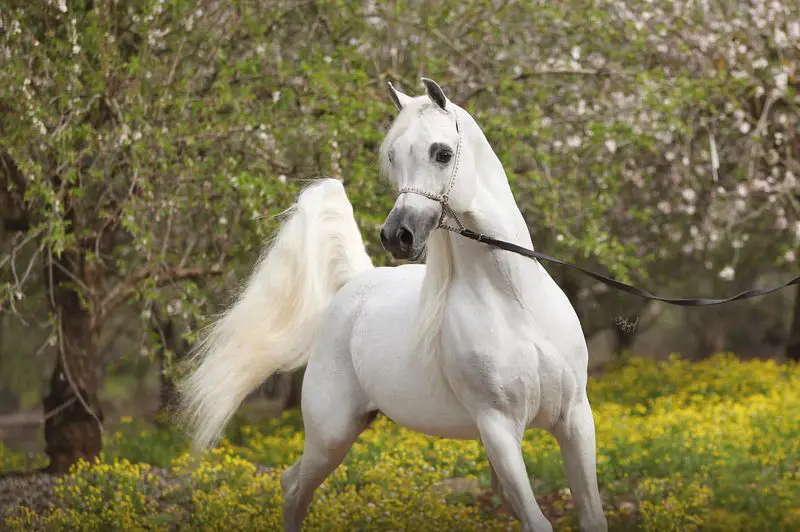
The White Devil and the Marine: A Story of Redemption in the Desert
How a Broken Horse and a Wounded Soldier Found Healing Together
The Auction in Red Willow
The morning air in Red Willow was already warm, dry as ash, and heavy with the smell of rust and coffee that had been boiling too long. The auction yard looked the same as it always did: dust blowing in lazy spirals, red dirt caked on boots and fence rails, the sun glaring hard enough to bleach the color out of everything it touched. Out past the town limits, the flat land ran on for miles—the kind of high desert you could find in West Texas or eastern New Mexico, where highway signs were few and pickup trucks outnumbered people.
Men leaned on rails, their hats pulled low, shirts damp with sweat. They spoke of dry seasons and stubborn wells, of hay prices climbing higher than reason, and of a creature no one wanted to talk about too long.
“That white one’s back,” a man muttered, spitting into the dust.
“You mean the albino? Thought they shot that bastard last year.”
“No, someone brought him in again. Lot fourteen, I think. You’ll hear it soon enough.”
Their laughter was low, uneasy. The smell of oiled leather mingled with that faint metallic taste that came before trouble.
When auctioneer Clint Harrove called lot fourteen, the crowd already knew what was coming. His voice took on a note that wasn’t in the others—a little thinner, a little sharper.
“Shy stallion, seven years old. Albino. Three previous owners, two incidents.”
A murmur rolled through the crowd like wind through dead grass. The latch slid open with a scream of metal, and out stepped a ghost.
The Woman Who Saw Beyond Fear
The bidding started at one thousand dollars and plummeted from there. No one wanted the White Devil, as they called him. His reputation for violence preceded him—two men hospitalized, three owners who couldn’t handle him, a creature that seemed to embody fury itself.
“Give you a hundred if you’ll haul him straight to the kill lot,” someone called from the back.
Laughter broke, sharp and mean. The horse flinched at the noise, muscles rippling under that ghost-white hide. He slammed a hoof into the ground, sending up sparks.
Then, cutting clean through the heat and the noise, a woman’s voice said, “One-fifty.”
Heads turned toward her—a woman in a faded Marine jacket, dark glasses hiding her eyes, a faint scar crossing the hollow of her throat. She didn’t look like a rancher. She looked like someone who had seen combat and carried its weight.
“Lady,” one of the men said, “you know what you’re buying, right? That horse’ll kill you before you get him home.”
“He’ll send you to the ER faster than a bad bull,” another added.
She turned her head toward the pen where the horse stood trembling with trapped fury.
“I know what I’m buying,” she said quietly. “I know what fear looks like when it’s trapped.”
What the crowd didn’t understand about the “White Devil”:
• Previous owners used force and fear-based training
• Partial blindness from repeated beatings
• Chronic pain from untreated injuries
• PTSD-like symptoms in horses: hypervigilance, startle responses
• Estimated rehabilitation cost: $5,000-15,000
Some wounds can’t be seen, but they shape every reaction
Silver Hollow: A Place for Broken Things
Silver Hollow lay quiet when they arrived that night. The old gate sagged open, hinges screaming in protest. The sign above hung crooked, letters barely legible. Where grass once grew green, there was only dirt and thornbrush, an old well gone dry, and a barn that looked one storm away from collapse.
Meera Dalton stepped out of the truck, her boots crunching in the dust. The smell of rust, dry hay, and old wood greeted her like memory. This place, like the horse she’d just bought, had seen better days. Both were broken. Both needed someone who understood that broken didn’t mean worthless.
When she opened the trailer gate, the stallion didn’t bolt immediately. He stood there, caught between fight and fear, the whites of his eyes catching what little starlight filtered through the darkness. Then, with a grunt that sounded like thunder breaking free, he leaped out.
The earth shook under his weight. Dust exploded around him. He galloped across the yard, circling, testing every inch of fence, slamming his chest into the rails. Wood splintered, nails popped. His eyes glowed faint pink under the dim light, reflecting fire that wasn’t there.
Meera didn’t move. She stood in the open, hands loose at her sides, letting the wind carry her voice when she finally spoke.
“No one’s going to hurt you anymore,” she said. “But you’ll have to learn to stay.”
He slowed, snorted, pawed at the ground. For a long while, there was nothing but sound: the horse breathing, the wind sighing through broken boards, the quiet pulse of the land itself, remembering what it used to be.
Two Soldiers Learning to Heal
Dr. Laya Serrano arrived the next morning—Meera’s friend from their military days, when both wore the same uniform and believed in saving things that didn’t always want to be saved. Now a veterinarian specializing in trauma cases, Laya understood the language of wounded creatures.
She examined the horse from a distance, professional eyes cataloging the damage.
“Partial blindness, almost certainly,” she said, watching him flinch from bright sunlight. “Corneal clouding from trauma. You see that milky film? Could’ve been from infection or repeated blows with metal objects.”
Meera’s jaw tightened. “You mean someone hit him.”
“More than once, probably. Notice how he flinches every time something clinks? That’s learned behavior. Defense posture, same as soldiers with old wounds. He’s expecting pain even when it’s not coming.”
Laya’s assessment was clinical but compassionate: “Don’t try to fix him yet. Just be near him. Your voice matters more than any rope or training right now. He needs to learn that not every human hand brings pain.”
Over the following days, Meera established gentle routines. She strung a tarp across the corral to soften the harsh desert light that hurt his damaged eyes. She spoke in low, steady tones as she filled his water and laid out hay. No sudden movements, no demands, just presence.
The Night the Thunder Came
The storm arrived without warning, as they often do in the desert. Meera felt the change first—the way the air thickened and turned metallic, carrying the electric scent of rain that hadn’t yet fallen. Silver Hollow held its breath as dark clouds crawled over the western ridge.
When the first flash of lightning split the sky, both horse and woman froze. The thunder that followed was brutal, shattering, the kind that felt too close, too human. For Meera, it triggered memories she’d spent years trying to suppress—the flash of artillery, the concussion of mortars, the whistle before impact.
In the corral, the stallion was beyond reason. He charged the fence, wheeled, ran again—a cyclone of muscle and panic. Each strike against the rails sang sharp and metallic, clawing through Meera’s nerves and tearing at the thin barriers that years of silence had built.
Her knees hit the mud as the sky burst open. Rain poured down, heavy and relentless. Thunder rolled again, and this time it didn’t sound like weather—it sounded like memory. Her hands trembled violently as the world narrowed to noise and color: white lightning, red behind her eyelids, the pounding of hooves matching her own racing heartbeat.
Through her panic, she heard herself shouting at the horse: “I’m scared too! I know what it’s like when it’s too loud to think, when your body just—” The words broke into sobs.
Something shifted in that moment of shared terror. The horse stopped running and stood in the center of the corral, chest heaving, sides glistening with rain and sweat. Steam rose from his body like a ghost in the cold air.
“You hate thunder,” Meera said quietly, voice trembling but steadying with each word. “I hate memories. Same thing, really.”
In a single uncertain step, he moved toward her—not close enough to touch, but close enough that she could see the water dripping from his lashes, the way his breath fogged white against the cold.
For the first time, the thunder passed without either of them running.
The Gift of a True Name
Morning came like forgiveness after the storm. Meera stepped outside barefoot, steam rising from the scrubbed earth. The world looked unfamiliar, gentled. The sun climbing through pale clouds carried warmth that didn’t sting—for either of them.
The stallion stood by the fence, coat darkened by rain and sweat, no longer pacing or trembling. Just breathing, just alive. When Meera approached slowly, he didn’t retreat. For the first time since she’d brought him home, the space between them didn’t feel like a battleground.
She stopped several feet away, hands open, palms facing down—a gesture that said “I mean no harm” in a language older than words. The horse moved first, stepping forward cautiously until the space between them thinned to less than fear.
Then the warmth reached her—a gentle exhale against her open palm. Damp, warm, real. The first shared contact between two wounded souls learning to trust again.
“You’re not a devil,” she whispered. “You just haven’t been called by your right name.”
The horse’s ears flicked forward, catching the tone if not the words. Above them, clouds thinned just enough for sunlight to slip through, washing over his back until it caught in a faint shimmer around him—a glowing band of warmth.
“From now on,” she said, “your name is Halo.”
Transforming a “dangerous” horse requires significant investment:
• Specialized veterinary care: $2,000-5,000
• Modified facilities for safety: $3,000-8,000
• Extended rehabilitation time: 6-18 months
• Professional training consultation: $1,500-4,000
• But the value of a healed horse: Priceless
Some transformations can’t be measured in dollars
The Fire That Tested Everything
By mid-August, Silver Hollow was turning to dust under the relentless desert heat. When lightning struck the hill behind the ranch, smoke began to climb from the ridge, thin at first, then thickening into a dark, living column. The wind rose, pulling the flames downhill with terrifying speed.
Meera ran toward the corral as sparks rained down like fireflies from hell. Halo was throwing himself against the fence, his coat shining red in the reflection of the flames, terror overriding months of patient healing. The gate latch had jammed from the heat.
“Come on, damn it!” she shouted, fighting with the burning metal. “I’m here, Halo. I’m right here!”
As she finally freed the latch, a burning beam crashed down, pinning her leg. Pain exploded through her body. Through the smoke and agony, she saw Halo rearing, framed in flame, torn between flight and something else.
“Go!” she screamed. “Get out! Don’t come back!”
For a moment that lasted forever, the horse hesitated. Then he made his choice.
Instead of fleeing to safety, Halo charged straight back into the smoke and flames. He struck the fallen beam with the full weight of his chest, shattering the wood that trapped Meera’s leg. Before she could cry out, he hooked his neck against her shoulder and pushed, his strength forcing her back through the mud and smoke to safety.
They collapsed together outside the gate as rain began to fall, both gasping, both alive. Ash streaked his white coat in gray lines, but his eyes were steady, calm.
From Infamy to Legend
By sunrise, the story had traveled faster than the smoke. “Crazy horse saves woman” became the headline that no one quite believed until they heard it from multiple sources. Jack Hensley, the feed truck driver, had witnessed the aftermath and couldn’t stop talking about it.
“I saw it. I swear I saw it. That horse ran back into the flames and dragged her out. I don’t care what anyone says. That’s what happened.”
The whispers spread through Red Willow like wildfire of their own. At the café, the gas station, the diner—every conversation started with “They say…” By noon, no one called him the White Devil anymore. They called him the Angel of Silver Hollow.
Clint Harrove, the auctioneer who had watched Meera buy the “dangerous” horse for $150, drove out to see for himself. Roy Kellerman, one of Halo’s former owners, came too—the man who had once called the horse a monster.
Standing in the ash-covered yard, watching the peaceful animal who had just performed an act of pure heroism, Roy’s voice cracked with emotion.
“I called him a monster,” he whispered. “Said he’d kill someone one day. I see now… I was the one blind.”
Meera’s response was simple: “He just needed someone to look at him instead of running from him.”
Building Something Beautiful from the Ashes
A year later, Silver Hollow had transformed into something the county had never seen before. The charred remains were gone, replaced by clean lines and purposeful spaces. A new sign hung at the gate, burned into cedar with careful letters:
SILVER HOLLOW SANCTUARY
FOR THOSE LEARNING CALM AGAIN
People began to come—veterans with invisible wounds, children who flinched at loud noises, anyone who needed to remember that healing was possible. Meera had created something unprecedented: a sanctuary where broken horses and broken people could find peace together.
The program had no rigid structure, only gentle rhythms. Saturday mornings brought circles in the grass where children learned to approach without fear. Wednesday evenings offered quiet hours for those who needed silence. Every day brought opportunities to practice the most fundamental skills: how to be present without pushing, how to offer comfort without overwhelming, how to heal without rushing.
Halo stood at the center of it all—not as a performing animal, but as a teacher whose very presence demonstrated that transformation was possible. The horse who once terrorized men now let children rest their small hands against his neck, teaching them that gentleness could be stronger than force.
The Lesson in the Light
On quiet afternoons, when the sanctuary held its breath between visitors, Meera would ride Halo across the desert valley. No bridle, just a gentle suggestion of direction through weight and breath. They moved together like a prayer made visible, horse and rider united in understanding that some bonds transcend training.
The sunlight would catch in his white coat, creating moments when he seemed to wear his name like a crown—not the harsh glare that once made him flinch, but warmth that he had learned to accept. Children watching from the fence would wave silently, understanding without being told that they were witnessing something sacred.
Dr. Laya Serrano continued her weekly visits, documenting the remarkable transformation in her careful notes: “When silence returns, wounds recall how to close.” But her clinical observations couldn’t capture the full miracle of what had happened at Silver Hollow.
Clint Harrove came by occasionally, still amazed by the creature he’d once tried to auction for meat prices. “You saw something in him that no one else did,” he told Meera.
“I didn’t see anything,” she replied. “I just listened.”
Roy Kellerman visited less frequently but stayed longer, learning a different kind of courage—to be seen by something you’ve hurt without demanding forgiveness. He would stand by the fence and talk to Halo about weather and seasons, offering respect instead of dominance.
The Ripple Effect of Redemption
The transformation at Silver Hollow created ripples that spread far beyond the ranch boundaries. Other sanctuaries began adopting similar approaches, recognizing that trauma-informed care worked for animals as well as humans. Veterinary schools started incorporating Meera’s methods into their curricula.
News outlets picked up the story, but they struggled to capture its essence. How do you explain that healing happens not through dramatic intervention but through countless small acts of patience? How do you measure the value of teaching a frightened child to breathe slowly while standing near a once-dangerous horse?
The sanctuary’s guest book filled with testimonies from families whose lives had been changed by their visits. A veteran who hadn’t slept peacefully in years found rest after learning Halo’s breathing techniques. A child with severe anxiety discovered that her racing heart could slow to match the steady rhythm of hooves on soft earth.
But perhaps the most profound changes were the ones that couldn’t be documented—the internal shifts that happened when broken things found their way back to wholeness through patience, understanding, and the radical act of seeing beauty in what others had deemed worthless.
Silver Hollow Sanctuary’s impact extended far beyond financial metrics:
• Lives changed: Hundreds of visitors annually
• Trauma healing: Immeasurable psychological value
• Community education: Priceless shifts in understanding
• Replication: Model adopted by facilities nationwide
• Hope restored: The most valuable currency of all
Some investments pay dividends in human dignity and healing
The Light That No Longer Hurts
In the golden hour when day surrenders to evening, Silver Hollow becomes a cathedral of light and shadow. Meera stands by the fence with Halo’s warm breath on her wrist, watching the sun fold itself along the ridge without hurry, without threat.
Children approach in quiet clusters, no longer afraid of the horse who once inspired such terror. They’ve learned the sanctuary’s most important lesson: that staying can be braver than running, that healing requires patience, that broken things can become more beautiful for having been shattered and carefully reassembled.
A boy tugs Meera’s sleeve and asks if it’s true that Halo once ran into fire.
“It’s true,” she tells him, kneeling to meet his eyes. “But that’s not the lesson.”
“What is, then?”
“That he stayed. And that staying can be braver than running.”
The shadows grow long and gentle as evening settles over the valley. Halo shifts his weight and finds stillness again, like returning to a favorite stall. The day ends not with trumpets but with competency—the way a well-made gate closes snug, final, ready to open again.
At the far edge of the pasture, the light makes one last attempt to stay before failing beautifully, breaking into seed-sized sparks that slip into the horse’s white coat and vanish there—accepted, not endured.
Anyone watching would see what Meera discovered that first day at the auction: that a creature once branded by fear could hold daylight without flinching, and that there are places where the sun, properly invited, no longer hurts.
The story of the White Devil ends where it began—with a choice. But this time, instead of fear choosing violence, love chose patience. Instead of abandonment, there was presence. Instead of a devil, there was an angel whose wings were made of trust.
In a world that measures worth in dollars and efficiency, Meera Dalton and Halo created something immeasurable: a place where healing happens at the speed of trust, where miracles unfold one gentle breath at a time, and where the light no longer hurts because someone finally learned how to hold it properly.
The white horse grazes in peace now, his name spoken with reverence rather than fear. And in that transformation lies perhaps the most important lesson of all: that what we call someone matters less than how we choose to see them, and that love, properly applied, can turn even devils into angels.

Lila Hart is a dedicated Digital Archivist and Research Specialist with a keen eye for preserving and curating meaningful content. At TheArchivists, she specializes in organizing and managing digital archives, ensuring that valuable stories and historical moments are accessible for generations to come.
Lila earned her degree in History and Archival Studies from the University of Edinburgh, where she cultivated her passion for documenting the past and preserving cultural heritage. Her expertise lies in combining traditional archival techniques with modern digital tools, allowing her to create comprehensive and engaging collections that resonate with audiences worldwide.
At TheArchivists, Lila is known for her meticulous attention to detail and her ability to uncover hidden gems within extensive archives. Her work is praised for its depth, authenticity, and contribution to the preservation of knowledge in the digital age.
Driven by a commitment to preserving stories that matter, Lila is passionate about exploring the intersection of history and technology. Her goal is to ensure that every piece of content she handles reflects the richness of human experiences and remains a source of inspiration for years to come.