The city has a way of making invisible the things we see every day. Suzanna Clarke had learned this truth during her first week of walking to the subway after the divorce, after the move to the small fourth-floor apartment she could barely afford, after starting the job at Morrison & Associates that paid just enough to keep her afloat but not enough to stop the constant calculation of whether she could afford both groceries and electricity in the same week.
Every morning at seven-fifteen, she walked the same route from her building on Halstead Street to the Riverside subway station, a journey of exactly twelve minutes if she kept her pace brisk and her eyes forward. The route took her past the shuttered bakery that still smelled faintly of yeast and sugar, past the corner store with newspapers stacked outside in wire racks, past the small pharmacy booth where cigarettes were sold through a window no bigger than a shoebox.
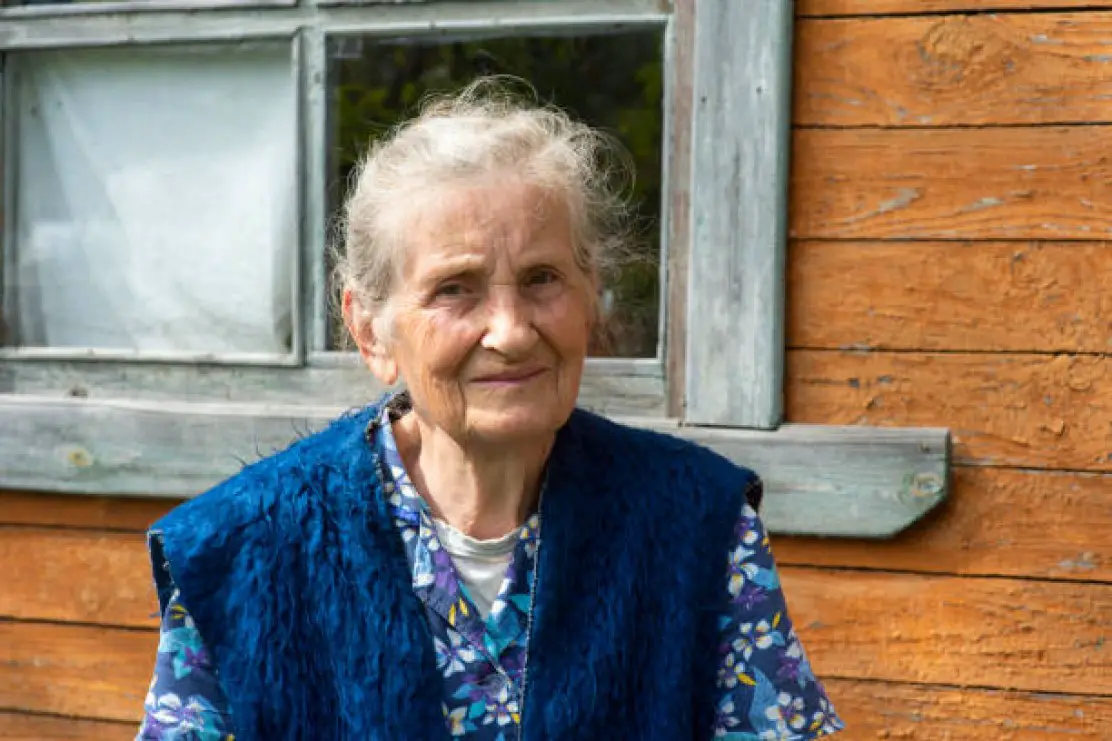
And every morning, sitting on a flattened cardboard mat beside that pharmacy booth, was the old woman.
Suzanna had noticed her the very first day, though she’d walked past without stopping—still too raw from everything that had happened with Derek, still too focused on not being late to the job she desperately needed, still too fragile to take on anyone else’s problems when her own felt overwhelming. But on the second day, she’d paused. On the third day, she’d dropped a handful of coins into the dented tin cup that sat beside the woman’s bony knees. And by the end of that first week, it had become ritual.
The old woman never spoke. She simply nodded, a small dip of her chin that acknowledged the gift without demanding conversation or gratitude that felt performative. There was dignity in her silence, and Suzanna respected it. She didn’t know the woman’s name. She didn’t know her story. She knew only that the woman was there every morning—rain or shine, cold or warm—in the same torn gray coat that had seen better decades, with the same quiet acceptance of whatever the day brought.
Two months passed this way. October bled into November, and the morning air grew sharp enough to sting Suzanna’s lungs when she breathed too deeply. The divorce was finalized. Derek had taken most of what they’d accumulated in eight years of marriage—the house, the car, the furniture, the life they’d built—and left her with an apartment that echoed with emptiness and a future that felt like staring into fog.
But she had her job. She had her small routines. And she had this one tiny act of kindness that made her feel, in some small way, like she was still the person she’d been before everything fell apart.
On the morning of November fourteenth, Suzanna left her apartment building at exactly seven-fifteen, as she did every weekday. The sky was heavy with clouds the color of steel wool, and a light drizzle had started to fall—the kind of rain that doesn’t announce itself with drama but simply exists, making everything damp and cold without quite becoming a proper storm. She pulled her coat tighter and walked with her head down, watching her feet avoid puddles that had formed in the cracked sidewalk.
The street was crowded with the usual morning rush—people clutching coffee cups, checking phones, moving with the determined anonymity of city dwellers who had learned long ago not to make eye contact. Suzanna was one of them, invisible in the crowd, just another woman in a dark coat heading to a job that paid her bills but didn’t particularly need her.
As she approached the pharmacy booth, she automatically reached into her coat pocket and felt the reassuring weight of change—a habit so ingrained now that she did it without thinking. The old woman was in her usual spot, though today she seemed somehow smaller, more hunched against the cold. Suzanna slowed, pulling out a ten-dollar bill along with the coins. It was more than she usually gave, but she’d gotten paid the day before, and the approaching holidays made her feel both generous and melancholy.
She bent down, extending the money toward the cup.
And then the old woman’s hand shot out and grabbed her wrist.
The grip was shocking—not because it hurt, though the fingers were surprisingly strong, but because it broke the unspoken rule of their relationship. They didn’t touch. They barely looked at each other. The old woman sat, Suzanna gave, they acknowledged each other with nods, and life continued. This sudden physical contact felt like a violation of something sacred, something that had kept them both safe in their careful distance.
Suzanna’s eyes snapped up to the old woman’s face, and what she saw there made her breath catch in her throat. The woman’s eyes—which she’d always assumed were gray or perhaps a faded blue—were dark and intense and filled with something that looked like terror.
“Daughter.” The word came out in a hoarse whisper, barely audible over the sound of traffic and footsteps and the city’s constant hum. “Listen to me carefully.”
The old woman’s fingers tightened on Suzanna’s wrist, and despite the thinness of her frame, despite the fragility suggested by her weathered skin and bent posture, her grip was iron.
“You’ve helped me so many times. Every morning, you stop. You give. You see me when everyone else looks through me like I’m made of air.” The words came quickly now, urgent and desperate. “So now I have to help you. I have to tell you something, and you have to believe me.”
Suzanna was frozen in her crouch, acutely aware of people flowing past them, none of them stopping, none of them noticing this strange tableau of two women locked in what must have looked like either a confrontation or an embrace.
“Don’t go home today.” The old woman’s voice dropped even lower, and Suzanna had to lean closer to hear her over the noise of the street. “No matter what happens. No matter how tired you are. Don’t return to your apartment tonight. Sleep at a friend’s house. Go to a hotel. Stay in the subway station if you have to. But do not go home. Promise me.”
“I don’t understand,” Suzanna managed, her voice shaking. “What are you talking about? Why would I—”
“Promise me.” The old woman’s grip tightened even more, and her eyes bored into Suzanna’s with an intensity that was almost painful to meet. “You don’t know me. You don’t owe me anything. But I know things. I see things. I hear things. People talk around me like I’m furniture, like I’m not really here. And I heard something that means you’re not safe at home tonight. So promise me you won’t go back there. Promise me, daughter.”
For a long moment, they stayed locked like that—an old woman in rags gripping the wrist of a younger woman in a threadbare coat that tried and failed to look professional. Around them, the city continued its indifferent morning routine. Someone’s phone rang. A car honked. The drizzle intensified slightly, making the pavement shine like glass.
And then, as suddenly as she’d grabbed her, the old woman released Suzanna’s wrist. She looked away, down at her tin cup, her posture collapsing back into the hunched submission of someone who had learned to make themselves small in a world that preferred not to see them.
Suzanna straightened slowly, her legs stiff from crouching, her wrist tingling where the old woman’s fingers had pressed. She opened her mouth to say something—to ask what she meant, to demand an explanation, to laugh it off as the paranoid delusion of someone whose mind had been worn down by too many nights sleeping rough.
But the words wouldn’t come. Because there had been something in those dark eyes, something that felt like truth even if Suzanna couldn’t understand what that truth meant.
She dropped the money into the cup, straightened, and walked toward the subway on legs that felt disconnected from her body.
The day that followed was one of the longest of Suzanna’s life. She sat at her desk on the third floor of Morrison & Associates, staring at spreadsheets that refused to come into focus, attending meetings where she nodded at appropriate times but couldn’t recall a single word that was said. Her coworkers noticed something was off—Rebecca from accounting asked if she was feeling okay, and Marcus from legal made a joke about someone looking like they’d seen a ghost—but Suzanna just smiled tightly and blamed a headache.
The old woman’s words circled in her mind like birds looking for a place to land. “Don’t go home today.” It was absurd. It was paranoid. It was probably the rambling of someone whose grip on reality had been loosened by years of hardship and exposure to the elements.
But.
But there had been something in those eyes. Something that felt too specific to be mere delusion. The old woman hadn’t said “be careful” or “watch out” or any of the vague warnings that might come from general concern. She’d said “don’t go home today.” Today. Specific. Certain.
Around three in the afternoon, Suzanna found herself googling “how to know if someone is following you” on her work computer, then quickly closing the browser when she realized how paranoid that looked. She went to the bathroom and stared at her reflection in the harsh fluorescent light—a thirty-five-year-old woman with dark circles under her eyes, hair that needed cutting, a face that had aged noticeably in the year since Derek had told her he was leaving.
“You’re being ridiculous,” she told her reflection. “You’re going to go home, make dinner, watch television, and go to bed like a normal person. This is crazy.”
But by five-thirty, when she was packing up her desk and preparing to leave, the anxiety had grown from a whisper to a shout. Her hands shook as she shut down her computer. Her heart was racing for no reason she could articulate. And when she stepped out of the building into the early November dusk, where the drizzle had turned to fog and the streetlights created halos in the heavy air, she found herself pulling out her phone.
She didn’t have friends—not real ones, not anymore. The divorce had divided their social circle like property in a settlement, and Suzanna had gotten the smaller share. She could call her sister in Minneapolis, but that would mean explaining, and she had no explanation that wouldn’t sound insane.
Instead, she found herself opening a hotel booking app, her thumb hovering over the screen while people streamed past her on the sidewalk, heading home to their normal lives where old women didn’t grab their wrists and issue cryptic warnings.
“This is stupid,” she muttered aloud. A man in a business suit gave her a wide berth, assuming she was one of the many people who talked to themselves in the city. “You’re wasting money you don’t have.”
But her thumb moved almost without her conscious decision, selecting the cheapest option within walking distance—a hostel near the university district that offered a bed in a shared room for twenty-nine dollars. The confirmation came through immediately.
Suzanna stood there for another moment, staring at the confirmation email, giving herself one last chance to be sensible. Then she turned left instead of right, walking away from the subway station that would take her home, heading instead toward a neighborhood she’d never been to, to sleep in a room full of strangers because an old woman she didn’t know had told her not to go home.
The hostel was exactly as depressing as she’d imagined—a converted warehouse with bunk beds lined up in rows, the smell of institutional cleaning supplies barely masking older, less pleasant odors. The night clerk was a bored-looking young man with multiple piercings who took her credit card information without making eye contact. Suzanna climbed into a top bunk in a room where three other beds were already occupied by sleeping lumps, and lay there in the dark, listening to the sounds of strangers breathing.
She didn’t sleep. She lay there for hours, staring at the ceiling that was too close to her face, replaying the morning’s encounter over and over. The old woman’s grip on her wrist. Those intense, frightened eyes. The absolute certainty in her voice.
Around three in the morning, Suzanna’s phone buzzed. She grabbed it, her heart suddenly pounding, and saw a notification from her building’s resident app—the one that sent alerts about package deliveries and maintenance schedules. This notification was different.
“Emergency Alert: Fire reported in building. All residents evacuate immediately. Emergency services en route.”
Suzanna sat up so quickly she nearly hit her head on the ceiling. Her hands shook as she opened the app and scrolled through the flood of messages from neighbors. Apartment 4C—her apartment—was completely engulfed. The fire department had arrived but the damage was already extensive. No casualties reported.
Her apartment. Her home. The place she had not returned to tonight.
She climbed down from the bunk on legs that barely held her, grabbed her coat, and ran.
The scene on Halstead Street looked like something from a nightmare. Fire trucks blocked the road, their lights painting everything in alternating red and white. Neighbors stood in clusters on the sidewalk in their bathrobes and coats thrown over pajamas, many of them crying, all of them staring up at the building where smoke still poured from a fourth-floor window. Her window.
Suzanna pushed through the crowd until a firefighter stopped her with a gentle hand on her shoulder.
“You need to stay back, ma’am.”
“That’s my apartment. Four-C. That’s mine.” The words came out mechanical, disconnected from any real feeling.
The firefighter’s expression shifted to something more serious. “You’re the tenant of Four-C?”
“Yes. I wasn’t home. I stayed somewhere else tonight.”
“You’re very lucky. Can you come with me, please? The police are going to want to talk to you.”
The next hours passed in a blur of questions and forms and statements. Suzanna told them about staying at the hostel, about leaving work and just feeling like she didn’t want to go home. She didn’t mention the old woman—she didn’t know why, except that it felt too strange, too impossible to explain. They asked if she had any enemies. They asked about her ex-husband. They asked if she’d noticed anything suspicious recently.
And then one of the detectives—a tired-looking woman in her fifties named Martinez—pulled her aside and spoke in a low voice that made Suzanna’s blood run cold.
“Ms. Clarke, I need you to be completely honest with me. The fire started in multiple locations in your apartment. The door lock was damaged—someone forced entry. This wasn’t an accident. This was arson. And based on the accelerant pattern, whoever set this fire intended to make sure you couldn’t escape.”
The world tilted. Suzanna grabbed the detective’s arm to keep from falling. “Someone tried to kill me?”
“We don’t have proof yet, but that’s what it looks like. Is there anyone who might want to hurt you? Anyone who’s threatened you?”
Derek. The name rose in her mind immediately, but she pushed it away. He’d been cruel during the divorce, but murder? That seemed impossible. Didn’t it?
“My ex-husband,” she heard herself say. “Derek Clarke. But we’ve been divorced for months. He got everything he wanted in the settlement. I don’t understand why he would—”
“We’ll look into it,” Detective Martinez said. “In the meantime, you’re not safe. Do you have somewhere you can stay?”
The next morning, despite having slept maybe an hour in a chair at the police station, Suzanna walked to the pharmacy booth. The old woman was there, in her usual spot, but when she saw Suzanna approaching, her weathered face transformed. Relief flooded her features, and tears—actual tears—began tracking down her hollow cheeks.
“You listened,” the old woman whispered as Suzanna crouched down beside her. “Thank God. Thank God you listened.”
“You knew.” Suzanna’s voice was hoarse from crying and smoke and exhaustion. “You knew someone was going to try to kill me. How did you know?”
The old woman wiped her eyes with the back of her hand. “Two nights ago. Late, after dark. I was here—I sleep here sometimes when the shelter’s full. Two men walked past, talking. They didn’t see me, or if they did, they didn’t care. Old woman in rags, invisible as air.”
She paused, her breath shaky. “They were talking about you. I’d seen them before—seen them watching you leave your building, following you at a distance. One of them said your name. Said ‘tonight’s the night, after she’s asleep.’ Said something about making it look like an accident, about finally getting that apartment without having to pay her off.”
“What did they look like?” Suzanna asked, though part of her already knew.
“One was tall, dark hair, nice clothes. The other was shorter, heavier, rough-looking. They walked like they owned the street.”
Derek and his friend Marcus. It had to be. Derek’s best friend from college, the one who’d been there through the whole divorce, who’d helped Derek move his things out, who’d glared at Suzanna with unconcealed hatred when she’d insisted on keeping even her small share of their assets.
“Why didn’t you call the police?” Suzanna asked.
The old woman’s laugh was bitter. “And tell them what? That I overheard something? Me, a homeless woman? They’d never believe me. They’d tell me to move along, stop wasting their time. But you—you’d helped me. Every morning, you stopped. You saw me. So I waited until morning, when I could warn you directly.”
“You saved my life,” Suzanna said, and started crying again—deep, wracking sobs that made her shoulders shake. The old woman reached out and pulled her close, and Suzanna let herself be held by this stranger who had proven to be the only person in her life who’d truly protected her.
The investigation that followed was swift and damning. Security cameras near Suzanna’s building had captured Derek and Marcus entering at midnight, leaving twenty minutes later. Detective Martinez found evidence that Derek had been furious about the divorce settlement, had been telling friends that Suzanna had “stolen” from him, that she didn’t deserve anything. The apartment had been in both their names, and he’d wanted her gone so he could sell it without splitting the proceeds.
Marcus’s phone records showed searches for “how to start a fire that looks accidental” and “accelerants that burn hot.” Derek’s bank records showed a cash withdrawal of five thousand dollars the day before the fire—payment, it turned out, for Marcus’s help.
They were arrested three days after the fire. The evidence was overwhelming.
Suzanna stood in the police station, watching through one-way glass as Derek was brought in for questioning. He looked smaller than she remembered, diminished somehow. When he realized what they had on him, when he understood that Suzanna was alive and he was going to prison, he actually cried.
“I just wanted what was mine,” he kept saying. “She took everything from me.”
Detective Martinez stood beside Suzanna, arms crossed. “He took everything from you, then tried to take your life when you wouldn’t give him more. And he would have succeeded if not for…” She paused. “In your statement, you said you decided to stay at a hostel because you ‘just had a feeling.’ Is that really all there was to it?”
Suzanna looked at the detective for a long moment. Then she said, “There’s someone I need you to meet.”
They found the old woman at her usual spot, though it was late afternoon and the street was quieter than the morning rush. Detective Martinez approached cautiously, and Suzanna made the introductions.
“This is Detective Martinez. She’s handling my case. I told her about what you heard, what you warned me about.”
The old woman looked frightened, shrinking back against the pharmacy booth. “I don’t want trouble. I just did what was right.”
“You’re not in trouble,” Martinez said gently, crouching down so she was at eye level. “You’re a hero. You saved this woman’s life. And your testimony is going to help us make sure the men who tried to hurt her go to prison for a very long time.”
The old woman’s testimony was indeed crucial. She identified Derek and Marcus from photo lineups. She repeated what she’d overheard, and her account matched perfectly with the evidence investigators had gathered. The district attorney called her “the prosecution’s most compelling witness.”
The trial was short. Derek and Marcus both pleaded guilty to attempted murder and arson when faced with the overwhelming evidence. Derek got twenty years. Marcus got fifteen.
But the story didn’t end there.
Three weeks after the verdict, Suzanna appeared at the pharmacy booth with two police officers and a social worker. The old woman looked terrified until Suzanna crouched down and took her hands.
“Your name is Ruth Castellanos,” Suzanna said softly. “You’re sixty-eight years old. You’ve been on the streets for six years, ever since your daughter died and you lost your home. You have diabetes that’s not being treated. You have arthritis that makes it hard to walk. And you saved my life.”
Ruth Castellanos stared at her, confused. “How do you know all that?”
“Because I hired an investigator. Because I wanted to help you the way you helped me.” Suzanna squeezed her hands. “The police officers are here because there’s a warrant out for your arrest.”
Ruth’s face went white. “What? No, I didn’t—”
“For failure to appear for a traffic violation from eight years ago. A fifty-dollar ticket you couldn’t pay. But that warrant is going to be dismissed today because I paid it. The social worker is here because she’s found you a spot in a housing program for seniors. You’ll have your own apartment, access to medical care, help getting back on your feet.”
Tears were streaming down Ruth’s weathered face. “I don’t understand. Why would you do this?”
“Because you saw me,” Suzanna said simply. “Every morning, you saw me. And when it mattered, you protected me even though you had no reason to trust that I’d believe you. You risked everything—your safety, your spot here—to warn a stranger. How could I not help you?”
The insurance payout from the fire, combined with the restitution ordered by the court, meant Suzanna actually had more money than she’d had in years. She found a new apartment in a better neighborhood. She started therapy to process the trauma. And every Sunday, she visited Ruth in her small but clean apartment in a building for low-income seniors.
They had tea together. They talked about Ruth’s life before the streets, about Suzanna’s plans for the future. They became friends—real friends, the kind that are built not on convenience but on having seen each other at their most vulnerable and choosing to care anyway.
Six months after the fire, Suzanna was promoted at work. She’d stopped being invisible there, had found her voice in meetings, had started building the kind of life she’d always wanted but had been too afraid to reach for.
And every morning on her way to work, she walked a different route—one that took her past Ruth’s building, where the older woman would sometimes be sitting on a bench outside, wrapped in a warm coat Suzanna had given her. They’d wave to each other, and sometimes Suzanna would stop for a few minutes to chat.
But she never walked past without acknowledging her. Because she’d learned something crucial that cold November morning when Ruth had grabbed her wrist: invisibility is a choice we make about each other, and sometimes the people we ignore are the ones who see us most clearly.
Ruth Castellanos, who society had rendered invisible, who’d been overlooked and dismissed and treated like part of the landscape, had seen what no one else had: a woman in danger. And she’d acted, even though she had every reason not to care, even though she risked her own safety, even though she had no guarantee she’d be believed.
She’d seen Suzanna. And in doing so, she’d saved not just her life, but taught her how to live it—with eyes open to the people around her, with courage to act when action was needed, with recognition that kindness is never wasted even when it feels small.
Two years later, Suzanna stood at the front of a community center, telling this story to a room full of people who’d come to hear about her non-profit organization: SafeWatch, which helped homeless individuals who witnessed crimes report what they saw without fear of retaliation. Ruth sat in the front row, beaming with pride.
“We ignore people at our own peril,” Suzanna told the audience. “The woman who saved my life was invisible to almost everyone. But she saw everything. She heard everything. And she cared enough to act. How many crimes could be prevented if we treated every person on the street like they mattered? How many lives could be saved if we just paid attention?”
After the presentation, a young woman approached Suzanna hesitantly. “I walk past the same homeless man every day on my way to work,” she said. “I’ve never stopped. After hearing your story, I feel terrible.”
Suzanna smiled. “You can start tomorrow. See him. Acknowledge him. You might be surprised what happens when we choose to notice each other.”
That night, Suzanna and Ruth had dinner together at a small Italian restaurant—Ruth’s first time eating in a real restaurant in seven years. Over pasta and wine, they laughed about something funny Ruth had seen at her building that day, and made plans to go to a museum the following weekend.
And Suzanna thought about how strange life was, how a divorce that had felt like the end of her world had actually been the beginning of something better. How an attempt on her life had led her to her truest friend. How the worst moments can crack us open to let in the light.
“Thank you,” she said suddenly, reaching across the table to take Ruth’s hand. “Thank you for seeing me when I needed to be seen.”
Ruth squeezed her hand. “Thank you for listening when I needed to be heard.”
They sat there for a moment, two women who’d saved each other, in a city that kept moving around them—full of people who were invisible to each other, waiting to be seen.

Adrian Hawthorne is a celebrated author and dedicated archivist who finds inspiration in the hidden stories of the past. Educated at Oxford, he now works at the National Archives, where preserving history fuels his evocative writing. Balancing archival precision with creative storytelling, Adrian founded the Hawthorne Institute of Literary Arts to mentor emerging writers and honor the timeless art of narrative.