“You’re just so jealous of your sister.” My father’s voice cut through the suffocating air of my parents’ living room like a blade, each word delivered with that particular brand of disappointment I’d been hearing my entire life. “That’s what this is really about, isn’t it, Erica?”
I stood there gripping my phone so hard my knuckles had gone bone-white, staring at these two people who were supposed to love me unconditionally. My mother sat perched on the edge of their leather couch—the expensive one they’d bought last year after Brooke convinced them they needed to upgrade—and she laughed. Not a small, uncomfortable chuckle, but a sharp, cutting sound that sliced through whatever fragile hope I’d been carrying into this conversation.
“I’m not going to the wedding,” I said again, forcing my voice to remain steady even as my heart hammered against my ribs. “I have my reasons.”
My father crossed his arms across his chest, his face already turning that familiar shade of red I’d witnessed countless times throughout my childhood whenever I failed to meet his expectations. The vein in his temple had started pulsing visibly.
“Your reasons?” He scoffed, taking a step closer. “What reasons could you possibly have that justify missing your own sister’s wedding? Family shows up for each other, Erica. That’s what family does. That’s what actually matters in this world.”
The irony of those words was so profound, so utterly devastating in its lack of self-awareness, that I almost laughed out loud. Almost. Instead, I swallowed the bitter response fighting to escape along with the tears threatening to spill down my face.
My name is Erica Morrison. I’m twenty-eight years old, and I work as a senior event coordinator for BrightFen Wealth, a mid-sized financial planning company here in Louisville, Kentucky. I’ve spent the past six years building a career I’m genuinely proud of—organizing corporate conferences, planning celebration dinners, coordinating retirement parties and milestone events that bring people together during life’s most significant moments. I understand better than most what it means to show up for someone. I know exactly what it costs when the people who matter most choose not to show up for you.
My sister Brooke is twenty-five, works part-time at an upscale boutique downtown where she mostly posts Instagram stories about new arrivals, and has been the undisputed golden child of our family for as long as I can remember. Everything she touches transforms into magic in my parents’ eyes. Every minor accomplishment receives standing ovations. Every setback is cushioned with endless support and reassurance and emergency funding. When she announced her engagement to Tyler three months ago—a man she’d been dating for less than a year—my parents reacted like she’d been selected for sainthood.
They threw her an elaborate engagement party at their country club, complete with ice sculptures and a live band. They helped her book the Ashford Estate, the most expensive wedding venue in Louisville, without a second thought. They paid for her custom Vera Wang dress—the one that cost more than my first car—and posted about every detail on Facebook, Instagram, and even LinkedIn for reasons I still don’t understand. Every single day brought a new photo, a new update, a new celebration of Brooke’s perfect fairy-tale romance and her perfect upcoming wedding and her perfect, enviable life.
I smiled through all of it. I liked the posts. I left encouraging comments. I did everything a supportive older sister was supposed to do, even though each notification felt like swallowing ground glass.
But eight months ago, I got married too.
My wedding was smaller than Brooke’s would be—more intimate, more personal—but it meant everything to me. I married Owen, a thoughtful and steady man who works as an architect at Sterling & Associates downtown. We’d been together for four years, building something real and lasting and true. When he proposed on a quiet evening in Cherokee Park, kneeling on the walking path where we’d had our first date, I felt like the luckiest woman alive.
I sent wedding invitations to my family six weeks in advance—beautiful cream-colored cards with gold embossing that I’d agonized over for days. I called my parents personally to confirm they’d received them, to make sure they had the date circled, to answer any questions they might have. I even offered to help coordinate transportation or accommodation if they needed it, though they lived only thirty minutes away from the venue I’d chosen in the Historic Highlands neighborhood.
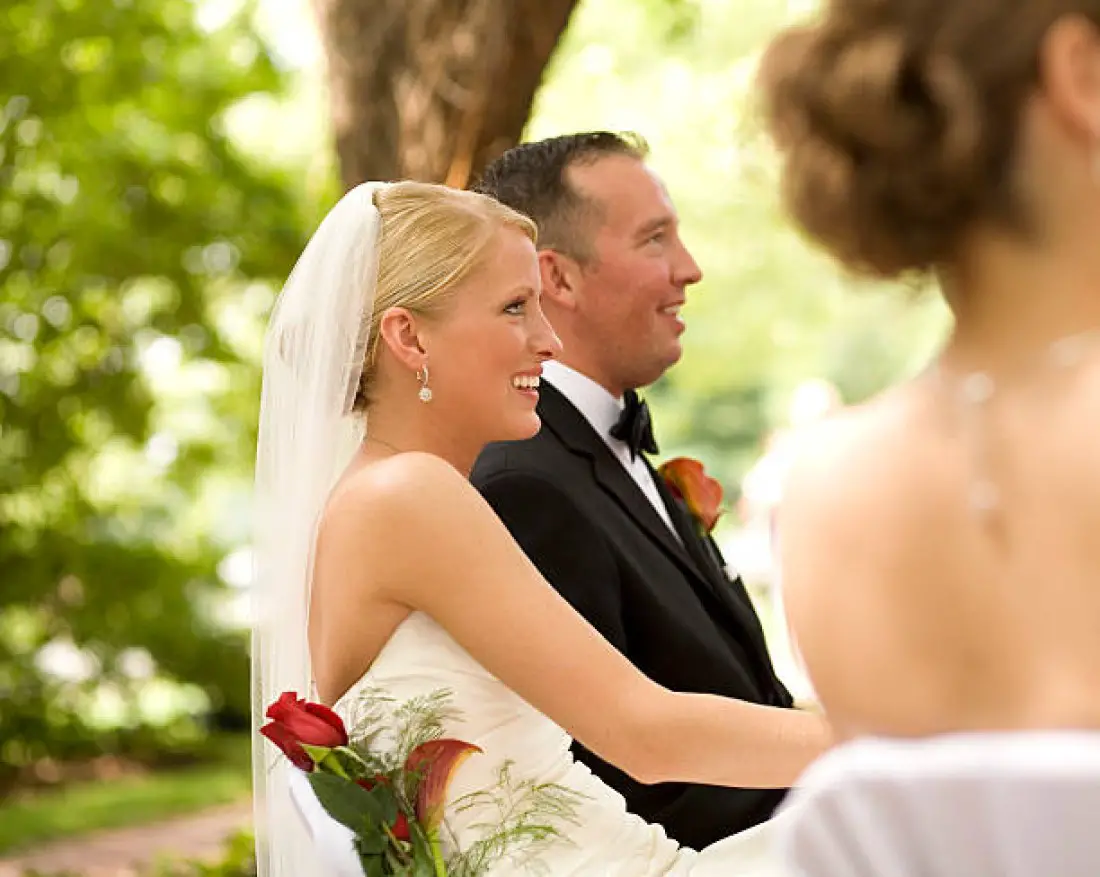
The day of my wedding arrived wrapped in perfect October sunshine. The venue—a restored Victorian mansion with gardens that seemed to glow in the autumn light—looked exactly as I’d imagined. Owen stood at the altar in his charcoal suit, his eyes bright with unshed tears as I walked down the aisle. The ceremony was beautiful. The readings were perfect. The moment we exchanged vows felt sacred and real and more meaningful than anything I’d ever experienced.
But when I looked out at the guests during our ceremony, when I saw the seats reserved for my family, my heart shattered into pieces I’m not sure have fully mended even now.
Nobody came.
Not my parents. Not my sister. Not my aunt or uncle or cousins. Not a single person from my side of the family bothered to show up.
Owen’s family filled every seat on his side—his parents beaming with joy, his siblings and their children dressed in their finest, his grandmother wiping happy tears from her eyes. On my side, there was only Kelsey, my best friend since college, sitting alone in the front row. She’d tried to make it look less devastating by spreading out her purse and jacket, by moving to different seats between photos, by standing near the aisle during the ceremony to create the illusion of company. But nothing could disguise the truth captured in every single photograph: I got married surrounded by strangers and empty chairs where my family should have been.
I smiled through the entire day. I danced with Owen. I laughed with his relatives who welcomed me with open arms. I cut the cake and tossed the bouquet and acted like everything was perfect. But inside, something fundamental had broken. Every time I glanced at those empty chairs, every time someone from Owen’s side gently asked where my family was, every time the photographer tactfully avoided taking “bride’s family” shots, another piece of me crumbled away.
In the days and weeks that followed, my family acted like absolutely nothing had happened.
My mother called me a week later to ask how I was doing, her voice as light and casual as if she were asking about the weather. When I finally gathered the courage to bring up the wedding—carefully, gently, because I’d been trained my entire life not to rock the boat—she sighed like I was being needlessly difficult and explained that she’d had an unavoidable work project. Something about quarterly reports that absolutely couldn’t be delayed, she’d said, as if my wedding was as flexible as a lunch date.
My father claimed he’d had a critical presentation scheduled months in advance that simply couldn’t be rescheduled, even though I’d given them six weeks’ notice and he’d never mentioned any conflict when I’d called to confirm. Brooke never acknowledged my wedding had existed at all. She just continued posting her daily selfies and shopping hauls and brunch photos as if I hadn’t gotten married, as if that day had simply never occurred.
I tried desperately to let it go. I told myself that people make mistakes, that perhaps they genuinely didn’t understand how deeply they’d hurt me, that maybe there were legitimate reasons I wasn’t seeing clearly. But the pain festered like an infected wound, spreading through every interaction we had. Every Sunday dinner felt like performance art. Every holiday gathering required me to smile while dying inside. Every time Brooke mentioned her upcoming wedding—which was constantly—I had to physically bite my tongue until I tasted blood.
And now, standing in their living room as they called me jealous and selfish, I realized something that made my stomach turn: They genuinely believed they’d done nothing wrong.
In their carefully constructed reality, Brooke’s wedding was a sacred, unmissable event that required my attendance and enthusiasm. But mine had been optional. Disposable. Something they could skip without consequence or guilt.
My mother stood up and walked toward me with slow, measured steps, her expression shifting into that false concern I’d learned to recognize in childhood. She reached out to touch my arm, but I stepped back before contact was made.
“Erica, sweetie, I know you’re upset about something,” she said in that patronizing tone that made me feel six years old. “But you really need to put whatever this is aside. This is Brooke’s special day. She’s your sister. You can’t let some grudge ruin this for her.”
Grudge. The word landed like a slap.
“I’m not trying to ruin anything,” I said, my voice quieter than I intended. “I’m just not going. That’s all.”
My father’s face deepened to an alarming shade of crimson. “You’re being incredibly selfish, Erica. What are we supposed to tell people when they ask where you are? How do we explain that you couldn’t be bothered to show up for your own sister?”
“Tell them the truth,” I said, surprised by the steadiness in my voice. “Tell them I had other plans I couldn’t change.”
My mother’s expression hardened into something cold and ugly. “You’re making this entire situation about yourself, just like you always do. Everything has to be about Erica and her feelings. You can’t just be happy for your sister for once.”
The accusation was so profoundly wrong, so completely inverted from reality, that I felt dizzy. I wanted to scream. I wanted to list every time I’d shown up for them without question—every birthday party, every school play, every family dinner where I’d smiled through their casual dismissal of my life. I wanted to remind them that I’d been there for every single milestone that mattered to them.
But I didn’t say any of that. I just looked at these people who were supposed to love me and felt a terrible, aching sadness settle in my chest.
“I’m not going,” I said one final time.
Then I turned and walked out, my spine straight and my head high, even though my hands were shaking.
The drive home felt endless. Their words echoed in my head like a curse: Jealous. Selfish. Grudge. Making it about yourself.
When I finally pulled into our driveway and walked through the front door, Owen was in the kitchen making dinner. The smell of garlic and rosemary filled our small house, and he was humming along to music playing from his phone. When he looked up and saw my face, his expression immediately softened with concern.
“How bad was it?” he asked gently.
I shook my head, unable to find words at first. “Exactly as bad as I expected.”
He set down his wooden spoon and pulled me into a hug. I let myself melt into him, grateful for this man who had never once made me feel like my pain was unreasonable.
“They don’t get it,” I whispered against his chest. “They really, truly don’t understand.”
“I know,” he said softly, his hand rubbing gentle circles on my back.
I pulled back to look at him. “They called me jealous of Brooke. They said I’m trying to ruin her day. My mom said I always make everything about myself.”
His jaw tightened. “They actually said that?”
I nodded miserably.
“You’re the least jealous person I know,” he said firmly. “You’ve been nothing but supportive through this entire engagement, even after they—” He stopped, his anger visible in the tension of his shoulders.
He was right. I had been supportive. I’d liked every engagement photo. I’d sent a congratulatory text. I’d listened to my mother’s endless descriptions of Brooke’s dress and flowers and perfect plans, nodding and smiling even though each word felt like swallowing glass.
That night, I lay in bed staring at the ceiling, unable to sleep. My mind kept circling back to my wedding day eight months ago—those empty chairs that haunted me still. I thought about how hard I’d tried to make everything perfect, how much hope I’d carried that my family would finally show up for me the way families are supposed to. I’d chosen my colors carefully, selected flowers I thought my mother would love, picked menu items that included my father’s favorites.
And they had chosen not to come.
I thought about Brooke three weeks before my wedding. I’d sent her invitation in a beautiful envelope with gold calligraphy, including a handwritten note telling her how much it would mean to have her there. I’d imagined her standing beside me as my maid of honor, the way sisters should support each other.
But I knew what had really happened to that invitation. I knew because I’d seen it with my own eyes.
Not in person—but on the security footage from my parents’ house.
They’d installed cameras last year after break-ins in their neighborhood made them nervous, and I still had access from when I’d helped set up the system. I’d checked the footage weeks after my wedding, driven by a desperate need to understand. Maybe the invitations had gotten lost. Maybe there’d been some terrible miscommunication.
What I found on that footage changed everything.
There was Brooke in my parents’ kitchen, holding my invitation. She opened it, read it with a slight frown, and then she laughed. Not a polite chuckle—a genuine, delighted laugh. Then she crumpled it up and threw it in the trash like worthless garbage.
She pulled out her phone and called someone, her voice clear on the audio: “Yeah, Erica’s getting married. Can you believe it? She doesn’t deserve a real wedding anyway. Who does she think she is?”
I’d saved that footage immediately, downloading it to multiple drives. At the time, I didn’t know why. Maybe I needed proof that my pain was real. Maybe I sensed I’d need evidence eventually.
Now, lying in the darkness, I realized exactly what I was going to do with it.
The next morning, my phone buzzed with a text from my mother.
We need to talk about your attitude. Your father and I are disappointed. Please reconsider attending. Brooke deserves better than this. Don’t throw away your family over nothing.
Over nothing.
That’s what my wedding was to them. Nothing.
I stared at that message for a long time before typing a reply: I’m not coming to the wedding, but I’ll send something special for the reception.
My mother’s response was immediate: What does that mean?
I didn’t answer. Instead, I opened my laptop and pulled up that saved footage.
I watched it once more—Brooke’s cruel laughter, the casual way she destroyed my invitation, her mocking words. Then I opened my video editing software.
I didn’t need anything fancy. Just a simple, clear clip showing exactly what happened. I trimmed it to start when Brooke picked up my invitation and end after her phone call. Less than two minutes, but devastating in its clarity.
I added a title screen in white text on black: To my family, with love.
Then I exported the file and saved it as: wedding_message.mp4
My heart pounded as I attached it to an email to my parents with the subject line: For the reception.
I won’t be attending Brooke’s wedding, but I wanted to send this video message to be played during the reception. Please make sure it gets shown. It’s important to me that the truth finally comes out.
I hit send before I could second-guess myself.
The days before the wedding were strange. My phone stayed quiet—unusual for my normally overbearing family. I told myself they were respecting my decision, but I knew the truth: they were furious and shutting me out, just like they always did when I didn’t fall in line.
Owen found me sitting on our couch one evening, staring blankly at the television.
“You can still change your mind,” he said gently. “We can go together if you want.”
I shook my head. “I don’t want to go. I just wish they could see what they did.”
He squeezed my hand. “Do you think they’ll actually play the video?”
I hesitated. “I don’t know. But if they do, it’s going to change everything.”
“That’s what you want, isn’t it?”
“That’s what terrifies me.”
Three days before the wedding, my mother finally called.
“We need to talk about this video,” she said, her voice tight with barely controlled anger.
My stomach dropped. “You watched it?”
“We wanted to make sure it was appropriate before showing it to two hundred guests. And frankly, Erica, this is completely unacceptable. You’re trying to embarrass your sister. We’re not playing it.”
My heart sank. Of course they’d previewed it. Of course they’d found a way to protect Brooke.
“It’s not about embarrassing her,” I said, my voice shaking. “It’s about showing the truth. She threw away my invitation. She laughed at me. She said I didn’t deserve a real wedding. And then none of you came.”
My mother sighed heavily. “That was months ago. Why can’t you let it go? Why are you dragging this up now?”
“Because you never acknowledged what you did!” I snapped. “You never apologized. You pretended nothing happened.”
“We had our reasons—”
“It felt pretty personal to me, Mom. It felt personal when I stood at that altar looking at empty chairs. It felt personal when I had to explain to the photographer why there were no family photos from my side.”
Silence.
Then: “If you don’t want to come, fine. But we’re not playing this video. It’s cruel and vindictive. This is not who we raised you to be.”
“What Brooke did was cruel,” I said. “I’m just showing people what happened.”
“This conversation is over. Stay home if you want, but that video will not be shown.”
She hung up.
I sat there trembling, replaying the conversation. They weren’t going to play it. After everything, they were still protecting Brooke.
Owen found me crying at the kitchen table minutes later. When I told him what happened, his jaw tightened.
“They can’t just bury this,” he said. “What if you sent it to someone else? The venue? The DJ?”
I looked up at him. “That feels like crossing a line.”
“They crossed the line first,” he said firmly. “You have every right to defend yourself. They ruined your wedding. They don’t get to pretend they didn’t.”
I thought about it for a long time. If I did this, my family might never forgive me. But had they ever really loved me?
“Okay,” I said finally. “Let’s do it.”
The next day, I called the Ashford Estate. I knew the events coordinator, Jenna—we’d worked together on corporate events.
“Hey, Jenna, it’s Erica,” I said, keeping my voice light.
“Erica! I heard your sister’s getting married here this weekend. Small world!”
“Actually, that’s why I’m calling. I wanted to send over a special video message for the reception. A surprise for the family.”
“Oh, that’s so sweet! Of course. Just send it over and I’ll make sure our AV team has it ready.”
“Perfect. Could you play it during the toasts? Maybe right after the maid of honor speaks?”
“Absolutely. I love a good surprise.”
“And Jenna? My parents don’t know about it. If they ask, just say it’s a surprise video message from me. Don’t tell them what’s in it.”
“Got it. This is so thoughtful of you.”
I sent the video that afternoon with a carefully worded email emphasizing it was a surprise personal message.
Jenna confirmed receipt within an hour, completely unaware of what she’d just agreed to play.
That night, I couldn’t sleep. I kept imagining the moment it would play—the screen lighting up with footage of Brooke throwing away my invitation, my parents’ faces draining of color, the confused murmurs through the crowd.
Part of me felt guilty. Part of me felt terrified.
But a bigger part felt powerful in a way I hadn’t in eight months.
Owen found me sitting on the edge of our bed at 2 AM, staring at the wall.
“Can’t sleep?”
I shook my head. “I keep thinking about what’s going to happen.”
“Having second thoughts?”
I considered it. I could call Jenna in the morning, ask her to delete the video, show up at the wedding and pretend everything was fine.
But then I thought about my wedding day. About those empty chairs. About Brooke’s laughter. About my parents’ complete dismissal of my pain.
“No,” I said. “I need to do this.”
He squeezed my hand. “Then we’ll get through it together. No matter what happens, I’m here.”
The morning of the wedding, I felt strangely calm. I made breakfast, went for a run, spent the afternoon reading on the porch.
Around four, when I knew the ceremony was starting, I thought about Brooke walking down the aisle. I wondered if my parents were thinking about me at all.
By six, the reception would have started. Cocktails, photos, dinner. The toasts typically happened around 7:30.
That’s when my video would play.
At 6:15, my phone buzzed with a text from Kelsey, who I’d begged to attend as my spy.
Oh my God, Erica. Your video just played. Everyone is losing it. Your parents look like they’ve seen a ghost. Brooke is crying. This is insane.
My hands shook as I stared at the screen.
It had worked. The truth was finally out.
My phone exploded with notifications. Texts, calls, voicemails—all coming rapid-fire. I didn’t answer any of them.
Owen looked at the screen. “Your whole family’s calling.”
“I know.”
“Are you going to answer?”
“Not yet. Let them sit with it.”
Around eight, there was loud pounding on our door. Owen checked the peephole.
“It’s your dad.”
I took a deep breath. “Let him in.”
My father burst through the door, his face purple with rage.
“What the hell were you thinking?” he shouted. “Do you have any idea what you just did?”
I crossed my arms. “I told the truth.”
“You humiliated your sister! You ruined her wedding!”
“No,” I said firmly. “Brooke ruined my wedding. I just made sure everyone knew.”
His hands clenched into fists. “That video was eight months old!”
“I wasn’t trying to hurt her. I was trying to show you what she did to me.”
“We didn’t do anything to you. So we missed your wedding—”
“Get out,” I said quietly.
He blinked. “What?”
“Get out of my house. If you can’t see why what you did was wrong, I don’t want you here.”
His face turned even redder. “You’re going to regret this. You’re going to lose your whole family.”
“Maybe,” I said steadily. “But at least I’ll have my dignity.”
He stared at me, then stormed out, slamming the door.
I stood there trembling as Owen wrapped his arms around me.
“You okay?”
I nodded. “For the first time in a long time, I think I am.”
Over the next days and weeks, the fallout continued. My mother sent angry emails. Brooke left tearful voicemails. But some family members reached out privately—my cousin Fiona said she understood, that she hadn’t known what happened at my wedding.
The people at the reception who’d watched the video reached out too. Some apologized for missing my wedding. Others said they’d lost respect for my parents.
Two weeks later, Brooke texted: Can we talk?
We met at a coffee shop the next morning. She looked smaller somehow, her eyes red.
“Why did you do it?” she asked.
“Because you never apologized. You threw away my invitation and mocked me.”
Tears filled her eyes. “I know. I was jealous.”
“Jealous of what?”
“Of you. You always had your life together. When you got engaged, it felt like you were leaving me behind.”
Part of me wanted to feel sympathy. But I was still angry.
“That doesn’t excuse what you did.”
“I know. I’m not making excuses. I just wanted you to know I’m sorry.”
I looked at her and felt something shift. Not forgiveness—not yet. But understanding.
“Thank you,” I said. “I appreciate that.”
We sat in silence, sipping coffee.
“I hope one day we can be close again,” she said finally.
“Maybe,” I said honestly. “But it’s going to take time.”
My parents never apologized. They doubled down, insisting I’d overreacted. They stopped inviting me to gatherings. It hurt, but not as much as I’d expected.
I had Owen. I had Kelsey. I had a life I was proud of.
Brooke’s marriage didn’t last. They separated less than a year later. I heard the video had caused a rift Tyler couldn’t get past.
As for me, I threw myself into work, earning a promotion. Owen and I started talking about buying a house, maybe having kids. Life moved forward.
About a year later, I got a letter from my mom apologizing vaguely for not handling things well. It wasn’t the apology I’d wanted, but it was something.
Two years after the video, I finally responded to that letter. I explained I couldn’t have a relationship with them if they continued dismissing my pain.
My mom called two weeks later. “You’re right. We need to take responsibility. We’ve been in therapy.”
We talked for an hour. She asked about my life, told me about therapy, how hard it had been to confront their favoritism.
“I was so angry about that video,” she admitted. “But I realized you did it because we weren’t listening.”
Over the following months, we slowly rebuilt. My dad apologized too, in his gruff way.
Brooke and I remained distant. We exchanged occasional texts. Maybe someday we’d reconcile fully.
Now, five years later, I stand in our backyard watching Owen play with our dog. We’ve been talking about kids.
“What if I’m not a good mother?” I’d asked earlier.
“You won’t repeat their mistakes,” Owen had said. “You know what their mistakes look like.”
As I watch him, I think about everything that happened. The pain of being overlooked. The courage it took to send that video. The years of fallout and slow healing.
My parents lost years with me. Brooke’s marriage ended partly because of her cruelty. They all paid a price.
But more importantly, I think about my own journey—how I went from desperately seeking approval to knowing my worth. How I built a life filled with genuine love.
The revenge hadn’t been about destroying my family. It had been about forcing them to see the truth. And in doing that, I’d freed myself from needing their validation.
If I had to do it again, I would still send that video. Because some truths need telling, even when they’re ugly. Because sometimes you have to burn down the old story to build something better. Because choosing yourself, even when it means losing others, is the most important choice you’ll ever make.
As I stand in my backyard, in the life I’ve built, I feel something I hadn’t in years: real peace. Not the brittle peace of keeping quiet to keep others comfortable, but genuine peace—from living authentically, from being surrounded by people who truly love me, from knowing I have the strength to stand up for myself.
And that, I realize, is the best revenge of all.

Sophia Rivers is an experienced News Content Editor with a sharp eye for detail and a passion for delivering accurate and engaging news stories. At TheArchivists, she specializes in curating, editing, and presenting news content that informs and resonates with a global audience.
Sophia holds a degree in Journalism from the University of Toronto, where she developed her skills in news reporting, media ethics, and digital journalism. Her expertise lies in identifying key stories, crafting compelling narratives, and ensuring journalistic integrity in every piece she edits.
Known for her precision and dedication to the truth, Sophia thrives in the fast-paced world of news editing. At TheArchivists, she focuses on producing high-quality news content that keeps readers informed while maintaining a balanced and insightful perspective.
With a commitment to delivering impactful journalism, Sophia is passionate about bringing clarity to complex issues and amplifying voices that matter. Her work reflects her belief in the power of news to shape conversations and inspire change.