The morning sun filtered through the thin curtains of my small bedroom, casting pale golden light across the faded green dress hanging on the back of my closet door. I’d been staring at it for twenty minutes, my hands wrapped around a cup of coffee that had long since gone cold, trying to summon the courage to accept what my heart already knew: this was the only dress I would wear to my son’s wedding.
My name is Teresa. I’m fifty-eight years old, though some days I feel a decade older and others I feel ageless, suspended in that strange space mothers occupy where time moves differently. For thirty-two years, I’ve been a market vendor in our small city, selling vegetables and fruits from a wooden stall that my late husband built with his own hands before cancer took him when Marco was just six months old. My hands are rough and calloused, permanently stained with the earth no matter how much I scrub them. My back aches on rainy days from years of lifting crates and standing on concrete. But these hands fed my son. This back carried him through childhood, through university, through every milestone that brought us to this moment.
Marco—my beautiful, brilliant boy—was getting married in three months to a woman named Lara. She came from a different world than ours, a world of marble floors and leather-bound books, of university degrees framed in gold and summer homes by the coast. Her parents were doctors. Her brother was a lawyer. Her friends drove cars whose names I couldn’t pronounce and wore clothes I’d seen only in the windows of shops I’d never dared to enter.
When Marco first brought her home two years ago, I’d been terrified. I’d scrubbed the house until my knuckles bled, borrowed my neighbor’s good plates, and cooked for two days straight. But Lara had walked into our modest home with its cracked tile floor and secondhand furniture, had wrapped her arms around me, and said, “Thank you for raising such a wonderful man. I can see his heart comes from you.”
I’d cried that night after they left, partly from relief and partly from a grief I couldn’t name—the grief of knowing my son was moving into a world where I might not quite fit.
The wedding invitation had arrived six months ago, embossed and elegant, the kind of card that felt expensive just to touch. As the weeks passed and the date drew closer, I found myself lying awake at night, my mind circling the same anxious thoughts like water swirling down a drain. What would I wear? How would I present myself? Would the other guests look at me and immediately know I didn’t belong?
I had saved a little money, tucked away in an envelope hidden in my dresser drawer. It wasn’t much—maybe enough for a new dress from one of the department stores downtown, something off the rack but respectable. I’d gone shopping three times, wandering through aisles of clothes that felt foreign on my body, nothing fitting quite right. The dresses that looked acceptable cost more than I’d saved. The ones within my budget made me look like I was trying too hard or not trying at all.
Each time, I came home empty-handed, feeling more defeated than before.
The green dress had been hanging in my closet for thirty-two years. I’d bought it secondhand from a church sale when I was twenty-six, six months pregnant with Marco and trying to find something that would fit my changing body for my husband’s company dinner. It was a simple A-line gown, modest in cut, with delicate embroidery at the chest—flowers and vines picked out in darker green thread. The fabric was good quality, which was why it had lasted so long, but time had faded it to a softer shade, and the hem had been repaired twice where it had torn.
I wore it the day Marco was born, laboring for eighteen hours in a public hospital where the walls were painted institutional green that almost matched my dress. I’d put it on again when Marco graduated from university, standing in a sea of proud parents wearing their Sunday best, watching my son cross that stage with tears streaming down my face because we’d done it—we’d made it through poverty and sacrifice and endless nights when I’d wondered if it would be enough.
The dress was a witness to every important moment of my motherhood. It knew my joy and my pain. It had absorbed my tears and my sweat. It was, in a way, a second skin.
But it was old. It was dated. It spoke of a life of scarcity rather than abundance. And I was terrified that when people saw me in it, they would judge not just me but Marco—would think he hadn’t taken care of his mother, hadn’t provided for her, hadn’t honored her properly.
Three weeks before the wedding, Marco came to visit. He did that every Sunday, arriving with groceries and spending the afternoon helping me with repairs around the house or just sitting at my small kitchen table drinking coffee and telling me about his week. That particular Sunday, he found me in my bedroom staring at the dress again, and something in my posture must have given me away.
“Mama,” he said softly, using the name he’d called me since he first learned to speak, “what’s wrong?”
“Nothing, mijo,” I said, turning away quickly. “Just thinking about the wedding.”
He stepped into the room, and I felt his presence behind me—this man who had once fit in the curve of my arm and now stood a head taller than me, solid and strong. “Are you worried about something?”
The question opened a floodgate I’d been trying to keep sealed. “I don’t know what to wear,” I admitted, my voice breaking slightly. “I want to look right. I want to make you proud. But I can’t—I don’t have the money for something new, and this dress, it’s so old, Marco. People will look at me and think—”
“Stop.” His hands landed gently on my shoulders, turning me to face him. His eyes—his father’s eyes—were bright with emotion. “Mama, do you know what I think when I see that dress?”
I shook my head, not trusting my voice.
“I think about the day I was born. You’ve told me that story a hundred times—how you wore this dress to the hospital because you wanted to feel pretty even though you were in labor, how you held me for the first time wearing it. I think about my graduation, how you stood in the crowd and you were the most beautiful person there because you were smiling even though I know you were exhausted from working double shifts to pay for my books.” His voice cracked. “That dress is everything you are, Mama. It’s sacrifice and love and strength. Anyone who looks at you and sees anything less than that isn’t worth worrying about.”
I pulled him into a hug, this son who had somehow become wiser than me, and I felt his arms tighten around me the way they had when he was small and afraid of thunderstorms.
“Wear the green dress,” he whispered. “Please. It’s the most beautiful thing you own because you’re the one wearing it.”
So I decided. I would wear the green dress to my son’s wedding, and I would hold my head high, and I would try—God, I would try—not to feel ashamed.
The morning of the wedding arrived bright and clear, the kind of October day where the light turns everything golden and the air smells like possibility. I woke early, my stomach knotted with nerves, and began my preparations with the same care I’d once taken getting Marco ready for his first day of school.
I washed my hair with the expensive shampoo I’d been saving, letting it dry naturally into the silver-streaked waves that framed my face. I did my makeup carefully—not too much, just enough to even out my weathered skin and bring some color to my cheeks. I put on the pearl earrings Marco had given me for my fiftieth birthday, my only piece of real jewelry. And then I stepped into the green dress.
It slid over my body like memory, familiar and comfortable. I’d lost weight in recent months—anxiety tends to suppress my appetite—so it hung a bit looser than it once had, but not badly. I turned slowly in front of my small mirror, examining myself from all angles. The embroidery at the chest caught the light. The color, faded as it was, still complemented my skin tone. I looked like myself, just elevated slightly, like the best version of my everyday self.
My neighbor Rosa knocked on my door at ten o’clock to drive me to the church. She’d offered weeks ago, knowing I didn’t own a car and wanting to spare me the indignity of arriving by bus. When I opened the door, she smiled warmly. “Teresa, you look lovely. That green is perfect on you.”
“You’re kind,” I said, though I appreciated the reassurance more than she could know.
The church was in the wealthy part of the city, a historic stone building with soaring ceilings and stained glass windows that cast rainbow light across the polished wooden pews. Rosa dropped me off at the entrance, squeezing my hand before she drove away to find parking. I stood for a moment on the steps, watching other guests arrive in their finery—women in cocktail dresses with designer handbags, men in perfectly tailored suits, everyone moving with the easy confidence of people who belonged in spaces like this.
I took a deep breath, gripped my small purse, and walked inside.
The interior of the church was breathtaking. White flowers cascaded from every surface—roses and lilies and blooms I couldn’t name, their fragrance almost overwhelming. Candles flickered in gold holders. A string quartet played soft classical music from the corner. Every guest seemed to shimmer with wealth and sophistication, their clothes immaculate, their jewelry catching the candlelight.
And then there was me in my faded green dress with the repaired hem.
I found a seat toward the back, hoping to be inconspicuous, but I could feel eyes on me. I heard the whispers—not loud enough to distinguish words, but the tone was unmistakable. Curiosity. Judgment. The kind of whispers that make your skin prickle with shame.
A woman in the pew ahead of me turned to her companion and said, just loud enough for me to hear, “Is that the groom’s mother? Poor thing. She should have dressed better for her son’s wedding.”
Heat flooded my face. I stared down at my rough hands folded in my lap, at the calluses and the faint green stains that never quite washed out, and I wondered if I’d made a terrible mistake. Should I have borrowed money? Should I have swallowed my pride and asked Marco for help buying something new? Was my sentimentality about this old dress selfish, making his wedding day about my feelings rather than his happiness?
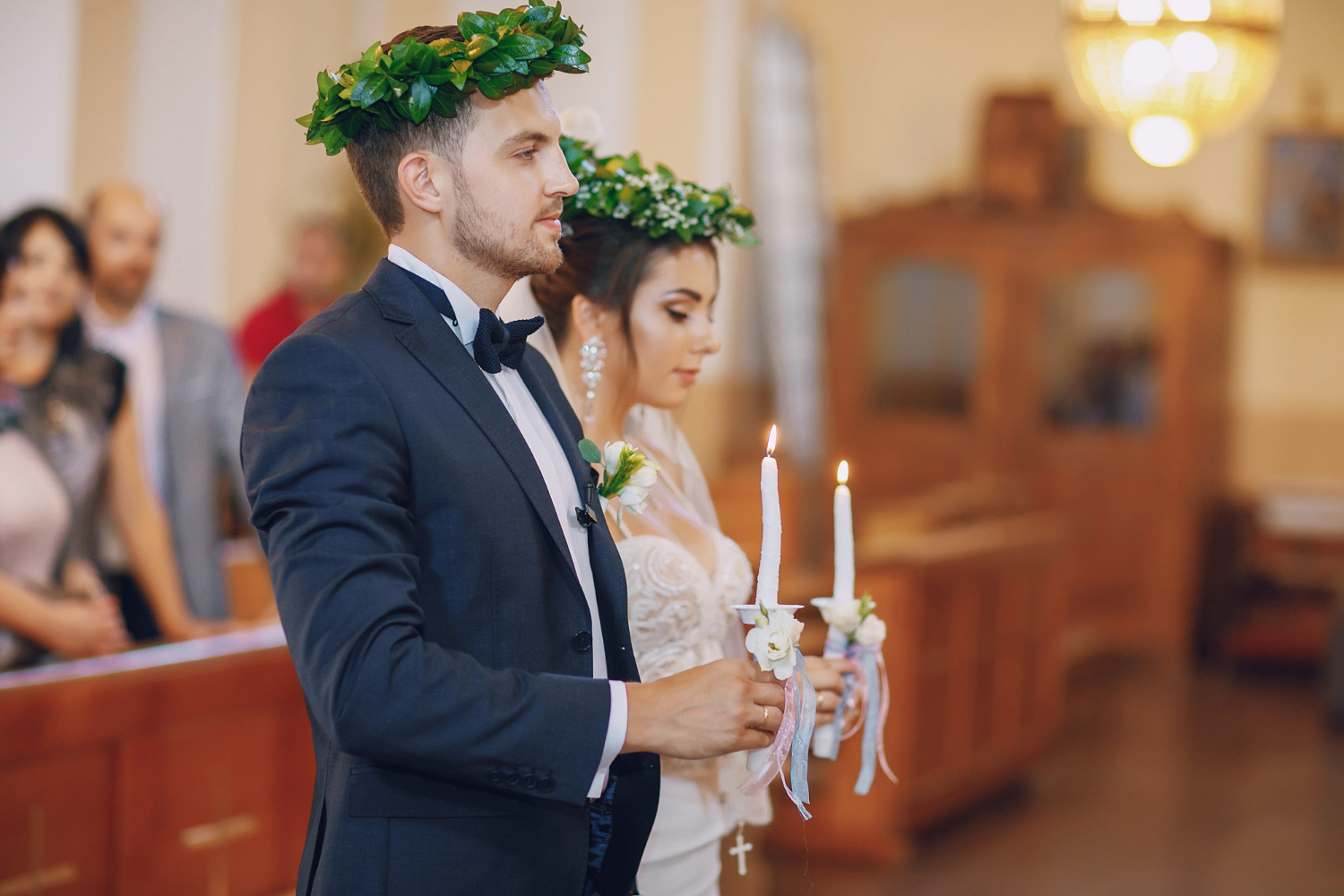
The music changed, signaling the start of the ceremony. Everyone stood and turned toward the back of the church where Lara would make her entrance. I stood too, craning my neck to catch a glimpse of my son at the altar. He looked so handsome in his black tuxedo, his hair neatly combed, his face radiant with joy and anticipation. My heart swelled with a love so fierce it was almost painful.
Then Lara appeared at the entrance, and the entire church seemed to gasp. She was a vision—her white gown was elegant and sophisticated, hugging her curves before flowing into a dramatic train, her veil floating behind her like a cloud. She carried a bouquet of white roses, and her face glowed with happiness. She was, in that moment, the most beautiful thing I’d ever seen.
But she wasn’t walking down the aisle. She’d stopped just inside the doorway, her eyes scanning the crowd. She was looking for someone.
She was looking for me.
When our eyes met across the church, I saw her face transform. Her professional photographer’s smile—the one she’d probably been practicing for weeks—melted into something raw and genuine. Tears welled in her eyes, and she handed her bouquet to her maid of honor, then hiked up her elaborate dress and walked quickly down the side aisle directly toward me.
The church fell silent except for the confused murmur of guests trying to understand what was happening. Even the string quartet trailed off into uncertainty.
Lara reached my pew, and without a word, she took both of my hands in hers. Her hands were soft and smooth, manicured and perfumed, everything mine weren’t. But she held them like they were precious, like they were exactly what she needed to hold.
“Mom,” she said, and the word made my breath catch because it was the first time she’d called me that without Marco present, “is that the dress you wore when Marco was born?”
I blinked, stunned. “How—how did you know about that?”
“Marco told me,” she said, her voice thick with emotion, tears now running freely down her carefully made-up face. “He told me the whole story. How you bought this dress secondhand when you were pregnant with him. How you wore it to the hospital when you went into labor because you wanted to feel beautiful even in pain. How you held him for the first time in this dress and promised him you’d give him the best life you could.”
Her voice broke, and she paused, composing herself while the entire church watched in rapt silence.
“He told me that whenever he wants to remember your love—really remember it, feel it the way he felt it as a child—he thinks of you in this dress. He said this dress has been there for every important moment of his life. It’s not just a dress to him. It’s the symbol of everything you sacrificed, everything you gave, everything you are.”
I couldn’t speak. Tears were streaming down my face, ruining the careful makeup I’d applied that morning, but I didn’t care.
Lara continued, her voice stronger now, projecting so everyone in the church could hear. “When Marco first told me that story, I cried. Because I realized that the reason I love him—the reason he’s kind and generous and thinks about others before himself—is because of you. Because of the love you showed him every single day, even when you were exhausted, even when you had nothing.”
She squeezed my hands tighter. “I want you to know something. I don’t want you to change anything about yourself. I don’t want you to feel for even one second like you need to be someone different. That dress—that beautiful, perfect green dress—represents everything I hope to become as a wife and, someday, as a mother. It’s every sacrifice, every sleepless night, every moment you chose Marco’s needs over your own. Nothing could be more beautiful than that. Nothing.”
Then she pulled me into a hug, this elegant young woman in her thousand-dollar wedding gown embracing me in my thirty-two-year-old secondhand dress, and I felt the walls I’d built around my shame come crashing down.
Over her shoulder, I saw Marco moving toward us from the altar, his face contorted with emotion, tears running down his cheeks. When Lara released me, he stepped in and wrapped his arms around both of us, and we stood there—bride, groom, and mother—crying together while three hundred guests watched in stunned silence.
“Thank you, Mama,” Marco whispered against my hair. “Thank you for the green dress. Thank you for every sacrifice it represents. I see you. I’ve always seen you. And there’s no color more beautiful than the love you’ve given me.”
The church erupted in applause—not the polite, obligatory applause of a formal ceremony, but genuine, thunderous appreciation. People were wiping their eyes, pulling out tissues, turning to each other with tears streaming down their faces.
The woman who had whispered about my dress earlier was openly weeping, her hand pressed to her mouth. She caught my eye and mouthed, “I’m sorry. I’m so sorry.”
I nodded at her, a small gesture of forgiveness, because I understood. We all make assumptions. We all judge based on surfaces. Sometimes it takes a moment like this to remind us what actually matters.
The ceremony proceeded, though the planned order of events had been beautifully disrupted. Lara walked down the aisle properly this time, her father beaming with pride, but now there was a different energy in the church—something warmer, more human, more real. When the priest asked if anyone objected to the union, there was a ripple of laughter, the kind that comes from shared emotion rather than shared joke.
Marco and Lara exchanged vows they’d written themselves, both speaking about love as action rather than feeling, about sacrifice and partnership and building a life on the foundation of what truly matters. And when they kissed and turned to face their guests as husband and wife, Lara looked directly at me and smiled, a smile of such pure gratitude that I felt it like a physical touch.
The reception was held in an elegant ballroom adjacent to the church, all crystal chandeliers and floor-to-ceiling windows overlooking a manicured garden. Guests who had ignored me earlier now approached to introduce themselves, to compliment my dress, to tell me how moved they’d been by Lara’s words. The whispers had transformed from judgment to celebration.
“You look absolutely stunning, Mrs. Teresa,” a woman in an expensive designer gown said, touching my arm gently. “And that green—it’s the color of life itself, isn’t it? How appropriate.”
“I was wrong to judge,” another woman admitted, her eyes red from crying. “I’m so sorry. Your dress is the most meaningful thing anyone is wearing here.”
My neighbor Rosa found me during the cocktail hour, her own eyes still damp. “Teresa, I’ve never seen anything like that in my life. The way Lara honored you—the way she saw what really matters—that’s the kind of daughter-in-law every mother dreams of.”
“I’m blessed,” I said simply, because there were no other words adequate to capture what I felt.
Dinner was served—multiple courses of food so elegant I barely recognized what I was eating—and then came the speeches. Marco’s best man spoke about their friendship. Lara’s father welcomed Marco into their family with words both generous and genuine. Then Lara stood, taking the microphone with the confidence of someone used to public speaking, and the room fell silent.
“I had a speech prepared,” she began, “something appropriate and gracious about love and partnership and gratitude. But after what happened in the church today, those words feel inadequate. So I’m going to speak from my heart instead.”
She turned to look directly at me, sitting at a table with Rosa and a few of Marco’s relatives.
“Today, I want to honor a woman who has redefined my understanding of what it means to be a mother, what it means to love, what it means to sacrifice. Teresa—Mom—you may not wear designer clothes or carry luxury handbags. You may not have gone to university or traveled the world. But you are the reason the man I married is who he is. You are the foundation on which his character was built. And if there’s anyone whose example I should follow as I begin my life as Marco’s wife, it’s you.”
The room was absolutely silent except for the sound of people trying to muffle their tears.
“That green dress you’re wearing,” Lara continued, her own voice breaking, “represents more beauty than anything money could buy. It represents a life lived with purpose, with devotion, with love that never quits even when the road is hard. It represents the kind of motherhood I hope to give my own children someday—the kind that shows up every single day, that works until your hands are worn and your back aches, that chooses your child’s future over your own comfort again and again and again.”
She paused, wiping her eyes, and I saw Marco reach over and squeeze her hand.
“So to everyone here: the most valuable thing at this wedding isn’t the flowers or the venue or the dress I’m wearing. It’s the woman in the green dress who raised a man worth loving. And I will spend the rest of my life trying to make him as happy as she’s made him whole.”
She raised her glass. “To Teresa. To mothers everywhere who love without conditions and give without keeping score. To the green dress that reminds us what beauty really means.”
“To Teresa!” the room echoed, three hundred voices rising in unison, three hundred glasses lifted in my honor.
I stood on shaking legs, overwhelmed and humbled, and I raised my own glass in acknowledgment. When I sat back down, Rosa grabbed my hand and squeezed it tight, and I saw that even the servers standing along the walls were wiping their eyes.
The rest of the evening passed in a blur of joy. I danced with Marco, my son towering over me now, guiding me across the floor with the same gentleness he’d shown since he was a child. “Thank you for coming,” he whispered. “Thank you for being exactly who you are. I love you, Mama.”
“I love you too, mijo,” I whispered back. “More than there are words to say.”
I danced with Lara’s father, who told me sincerely that he was honored to be connected to me through marriage. I danced with the best man, with Marco’s cousins, with people I’d just met that day who treated me not with pity but with genuine respect.
Late in the evening, when the party was winding down and most guests had already left, Lara found me sitting at a table with my shoes off, my feet aching but my heart full. She sat down beside me, her elaborate updo now slightly disheveled, her makeup worn off, looking more like the girl who’d first walked into my small house two years ago.
“Thank you,” she said quietly. “For raising him. For making him into someone I can build a life with. For showing me what love really looks like.”
“Thank you,” I replied, “for seeing him the way I see him. For loving him well. And for today—for what you said—I’ll never forget it.”
“I meant every word,” she said. “And I want you to know something else. Marco and I have been talking, and we don’t want you to work anymore. The market, the standing all day, the heavy lifting—we want you to retire. Let us take care of you now the way you took care of him.”
I started to protest, but she held up her hand.
“It’s not charity. It’s honor. It’s the least we can do. You’ve earned rest. You’ve earned ease. Please let us give that to you.”
I looked at her earnest face, this young woman who had waltzed into our lives and somehow understood us so completely, and I nodded through new tears. “Okay,” I whispered. “Okay.”
She hugged me tightly, and I felt the weight of decades of worry begin to lift from my shoulders.
I went home that night exhausted but transformed. Rosa drove me back to my small house, and when I hung the green dress back on the closet door, I saw it differently than I had that morning. It wasn’t old or shabby or embarrassing. It was sacred. It was a relic of a life well-lived, of love given without reservation, of sacrifices made gladly.
It was, as Lara had said, the most beautiful thing I owned.
In the weeks and months that followed, my life changed in ways I’d never anticipated. Marco and Lara helped me close my market stall—not immediately, but gradually, allowing me to say proper goodbyes to customers I’d known for decades. They set up a small monthly allowance that meant I didn’t have to worry about rent or groceries or the constant anxiety that had hummed in the background of my life for thirty-two years.
But more than the financial security, what they gave me was time. Time to tend the small garden in my yard. Time to volunteer at the church. Time to have coffee with Rosa in the afternoons without watching the clock. Time to simply exist without the weight of constant work.
And through it all, the green dress hung in my closet, a reminder of a day that changed everything. I wore it again when Lara announced she was pregnant eighteen months after the wedding. I wore it when Marco received a promotion at work. I wore it to their baby shower and, eventually, to the hospital when my first grandchild was born—a beautiful girl with her father’s eyes and her mother’s determination.
Lara asked me to be in the delivery room, said she wanted her daughter’s first moments to include the woman in the green dress, the woman who’d shown her what motherhood could be. So I stood there, holding Lara’s hand through her labor, wearing the same dress I’d worn through my own, and when they placed that tiny baby in my arms, I felt the circle of life complete itself in the most perfect way.
They named her Teresa.
“After the strongest woman I know,” Lara said, exhausted and radiant. “The woman who taught me that real beauty isn’t about appearances—it’s about love that never gives up.”
Now, at sixty-two, I sit in my small house that no longer feels quite so small, and I think about that wedding day four years ago when I almost didn’t wear the green dress. I think about how close I came to letting shame and fear dictate my choices, to pretending to be someone I wasn’t in order to fit into a world that felt foreign.
And I’m grateful—so deeply grateful—that I chose differently. That I chose authenticity over appearance, memory over newness, meaning over fashion.
Because the truth that Lara recognized and spoke aloud that day is the truth I want every mother to understand: You are enough. Exactly as you are. With your worn hands and your tired back and your old clothes that carry the weight of years spent loving someone more than yourself.
The world will tell you to be shinier, wealthier, more polished. It will whisper that you’re not dressed well enough, not sophisticated enough, not deserving of a seat at the table.
Don’t listen.
Listen instead to the people who know your heart. Listen to the children you raised, to the love you gave, to the sacrifices that shaped you into who you are. Those things are more valuable than any designer label, more beautiful than any expensive gown.
True beauty isn’t measured by price tags or trends. It’s woven into the threads of a life lived with devotion and purpose. It’s in the worn fabric of a dress that witnessed your greatest joys and your deepest struggles. It’s in the hands that worked without complaint and the heart that loved without conditions.
Mothers, no matter what you wear, you are radiant. Your worth isn’t determined by external appearances but by the immeasurable value of the love you pour into the world.
And if love had a color—if we could see it the way we see fabric and thread—I believe it wouldn’t be red like passion or white like purity. It would be green. The color of life that keeps growing. The color of trees that bend in storms but don’t break. The color of spring after a hard winter. The color of a dress that outlasted trends and fashion because it was built on something more permanent than style.
It would be the color of a mother’s love—persistent, life-giving, enduring.
It would be the color of the green dress.

Ethan Blake is a skilled Creative Content Specialist with a talent for crafting engaging and thought-provoking narratives. With a strong background in storytelling and digital content creation, Ethan brings a unique perspective to his role at TheArchivists, where he curates and produces captivating content for a global audience.
Ethan holds a degree in Communications from Zurich University, where he developed his expertise in storytelling, media strategy, and audience engagement. Known for his ability to blend creativity with analytical precision, he excels at creating content that not only entertains but also connects deeply with readers.
At TheArchivists, Ethan specializes in uncovering compelling stories that reflect a wide range of human experiences. His work is celebrated for its authenticity, creativity, and ability to spark meaningful conversations, earning him recognition among peers and readers alike.
Passionate about the art of storytelling, Ethan enjoys exploring themes of culture, history, and personal growth, aiming to inspire and inform with every piece he creates. Dedicated to making a lasting impact, Ethan continues to push boundaries in the ever-evolving world of digital content.