“Economy. Don’t Complain—This Is All You Can Handle,” He Smirked. Then the Staff Was Stunned When…
How a Secret Army Colonel’s Cover Was Blown at LAX When Her Tech Billionaire Brother Pushed Too Far
The Black Sheep
My name is Rachel Roach. I am forty-two years old, and for the last nineteen years, my family has believed I’m nothing more than a low-level paper pusher with a government paycheck. But I never imagined I would be publicly humiliated like this, right in the middle of Los Angeles International Airport.
My brother Garrett stood there in his polished Armani suit, waving an economy-class ticket in front of my face as if he were tossing a coin to someone beneath him. He laughed loud enough for the entire line to hear.
“Here you go, Ra. Middle seat, right near the lavatory. You’re used to discomfort, right? First class isn’t for people living paycheck to paycheck.”
My mother turned her face away, embarrassed for me. But what none of them knew was that inside the pocket of my cheap Walmart jacket was a priority military ID tied to a code-red deployment—and a C-37B Gulfstream military jet waiting on the tarmac with engines running just for me.
They thought I was the black sheep of the family. They had no idea a storm was about to make landfall the moment the gate agent’s scanner saw my badge.
Thanksgiving Hierarchy
Of course, there was no room for me. Garrett’s brand-new pearl-white Tesla Model X was parked diagonally across the driveway, taking up enough space for two cars. It sat there like a spaceship that had landed in the middle of an ordinary American neighborhood, gleaming under the autumn sun.
I sighed, shifted my truck into reverse, and parked halfway onto the damp grass of the front lawn.
“Jesus, Ra!” Garrett shouted from the porch, not bothering to come down the steps. “Do you have to park that heap on the lawn? You’re bringing down the property value of the whole neighborhood.”
Inside, the house smelled of roasted sage and suffocating expectation. The Detroit Lions game blared from the massive eighty-five-inch flat-screen TV—another gift from Garrett, naturally. My father sat in his recliner, eyes glued to the screen.
“Hi, Dad,” I said, leaning in to kiss his cheek. He didn’t look away from the game.
“Hey, kid. You’re late. Garrett’s been here since noon. He helped your mom set up the smart home system.”
“I was working, Dad. Shift ran long.”
“Working?” He finally glanced at my wrinkled flannel shirt and scoffed. “Stamping forms at the DMV must be exhausting.”
I bit my tongue. The taste of copper was familiar. If only you knew, Dad. If only you knew that the “forms” I handled last night prevented a naval blockade.
The Turkey Carving
We moved to the dining room. The table was a masterpiece of Norman Rockwell Americana—golden turkey, mounds of stuffing, cranberry sauce, and crystal wine glasses. This was the moment I dreaded most: the carving of the turkey. It was a ritual that always established the hierarchy of the Roach family.
Mom picked up the serving fork and knife. She skillfully sliced off a massive, juicy drumstick, the dark meat dripping with flavor and fat. She placed it reverently onto Garrett’s plate.
“For my genius,” she cooed. “You need the protein, Garrett. Running a company in Silicon Valley takes so much brain power.”
Then Mom turned to me. She sliced a small piece of the breast meat. It was white, dry, and already looked like chalk. She dropped it onto my plate without gravy.
“And for you, Rachel. White meat is better—less fat, you know. Since your job is mostly sitting down, you don’t want to gain any more weight, especially at your age.”
I looked at the dry meat. I had eaten MREs in the deserts of Kandahar that had more moisture than this.
Garrett’s gift to parents: 2025 Lexus hybrid SUV ($65,000)
• Heated seats, driver-assist technology
• Full warranty and insurance coverage
• “You guys sacrificed for me. It’s only right.”
Garrett’s gift to Rachel: Expired Walmart coupons
• Bundle found in office break room trash
• “Bulk rice, canned beans, stuff like that”
• “Don’t be proud, Ra. Pride is expensive. You can’t afford it.”
The contrast revealing everything about family dynamics
Garrett announced, clapping his hands together, “big news. Huge news.” He reached into his pocket and pulled out a small box wrapped in gold foil. Inside was a key fob. A Lexus key fob.
“Happy early anniversary,” Garrett beamed. “It’s parked down the street. The 2025 hybrid SUV. Heated seats. Driver-assist, the works.”
Mom burst into tears. Dad stood up and shook Garrett’s hand, patting him on the back so hard I thought he’d dislocate a shoulder.
“Oh, wait, Rachel,” he added, snapping his fingers. “I almost forgot. I have something for you too.”
He pulled a crumpled envelope out of his back pocket and tossed it across the table. It landed near my water glass.
“I saw these in the break room at the office. One of the interns was throwing them out. It’s a bundle of coupons for Costco and Walmart. Bulk rice, canned beans, stuff like that. I think some expired last week, but usually if you push a little, the cashiers will still honor them.”
I stared at the coupons. Fifty cents off canned tuna.
“Don’t be proud, Ra,” Garrett smirked. “Pride is expensive. You can’t afford it.”
The Secret Life
The drive back to Washington, D.C., took forty-five minutes, but it felt like traveling between two different planets. I left the suffocating air of my parents’ house and drove straight into the sterile, cold precision of my real life.
My apartment is located in the Navy Yard district, in a high-rise filled with government contractors and people who work in places no one is allowed to talk about. The rent there is more than my father thinks I make in three months at the “DMV.”
No keys here. I leaned forward, letting the retinal scanner read my eye. The lock clicked open with the heavy thud of reinforced steel. Inside, the apartment was dark, silent, and impeccably clean. It didn’t look like a home. It looked like a safe house.
I walked into the bedroom and stripped off the flannel shirt and baggy cargo pants. Standing in front of the full-length mirror, the illusion of “Rachel the clerk” finally dissolved. My body wasn’t soft or sedentary. It was hardened by nineteen years of obstacle courses, desert hikes, and hand-to-hand combat drills.
I ran my fingers over the raised, jagged keloid scar on my left shoulder—a twisting knot of purple and white tissue. My mind drifted back to the Korengal Valley in Afghanistan ten years ago. We were ambushed during what was supposed to be a routine patrol. I didn’t cry out. I dragged my radio operator to cover while returning fire with my M4. I directed air support while my shoulder burned under my tactical vest. I saved three lives that day.
I remembered calling my mother from the field hospital in Germany a week later. I was on pain medication, desperate to hear a friendly voice.
“Mom,” I rasped. “I got hurt. My shoulder.”
“Oh, Rachel,” she sighed. I could hear a game show blaring in the background. “What did you do now? Did you fall off your bicycle again? Honestly, you need to be more careful.”
This was who I really was—a ghost, a warrior, a commander. But to my family, I was just a way to save money.
I opened the bottom drawer of my nightstand and pulled out a simple wooden box. My memory box. Inside were nineteen years of letters. Letters I had written by the light of a headlamp in a dusty tent in Iraq. Letters where I tried to tell them in careful, coded ways that I loved them, that I was scared, that I missed home.
I had mailed them all. And over the years, when I visited home, I would find them—sometimes in the kitchen junk drawer, sometimes in the recycling bin, still sealed. They had never even opened them.
Right next to the unopened letters were the stubs of the cashier’s checks I had sent. Every single check had been cashed immediately. They cashed the money to pay off their mortgage, to help Garrett with his first failed startup, to buy that new patio set. But they couldn’t spare two minutes to read the words of their daughter who was sleeping with a rifle beside her.
The Crisis
The air inside the Sensitive Compartmented Information Facility—the SCIF—deep within the Pentagon always tasted the same: recycled oxygen, a hint of ozone from overheating server racks, and the bitter tang of stale coffee. I hadn’t slept in seventy-two hours.
“Colonel Roach, we have a situation developing,” a young lieutenant said, his voice tight. “The malware signature matches the blackout group. They aren’t just pinging the firewalls anymore. They’re inside the Hawaiian power grid control systems.”
I stared at the massive wall of monitors. Maps of the Hawaiian Islands were lit up in ominous shades of red and amber.
“Status of the fail-safes?” I asked.
“Compromised,” the lieutenant replied. “If they execute the code, the entire island of Oahu goes dark. Hospitals, air traffic control, military bases—everything. We’re looking at a total infrastructure collapse within forty-eight hours.”
Then my pocket vibrated. It wasn’t my secure satellite phone. It was my personal burner phone—the cheap flip phone I kept solely for family communication.
It was a text message from Blanca, my sister-in-law: “Hey, Ra. Quick reminder for packing. Make sure you bring your own sunscreen. I’m packing my La Mer and Supergoop. My skin is super sensitive, so I can’t share. Just grab some Banana Boat or whatever basic brand you use from Walmart.”
I was orchestrating a counter-cyber warfare operation to prevent the people of Hawaii from being plunged into chaos. I was authorizing the deployment of digital countermeasures that cost more than Garrett’s entire company. And my sister-in-law was worried I would “borrow” her face cream.
Then Garrett called. “I’ve been trying to reach you all morning. Did you put in for the PTO yet?”
“The what?” I rubbed my eyes.
“Paid time off, Rachel. For the Hawaii trip. It’s next week. I need to know if you cleared your schedule. I don’t want you backing out at the last minute because your manager needs you to sort mail or whatever it is you do.”
The General’s Support
I walked down the E-ring corridor of the Pentagon toward Major General Mike “Iron” Miller’s office. This is where the power lives, where decisions are made that can shift borders or topple regimes.
I knocked twice on the mahogany door.
“Enter.”
Major General Miller sat behind a desk that looked carved from a single redwood tree. He was in his sixties, with a buzz cut that was more salt than pepper and eyes that could cut through steel plating.
“At ease, Rachel. Sit down. You look like you’ve been through a war.”
“Thank you, sir. It’s been a long seventy-two hours.”
He flipped open my mission file, scanning the logistics. Then his finger stopped. He turned the file around, pointing at a printout of an airline ticket. United Airlines. Economy class. Seat 34B.
“You are the commander of a U.S. special operations cyber unit. You are spearheading a top-priority national security mission. And you are flying coach in a middle seat?”
“My brother Garrett booked the tickets. He insisted. If I book my own travel or fly on military transport, it blows my cover.”
Miller slowly closed the file and took a long drag of his cigar.
“Rachel, how long have you worked for me?”
“Twelve years, sir. Since I was a captain.”
“So tell me, why does your family treat you like a servant?”
“Because they’re my family,” I whispered. “And maybe because part of me still believes them. Maybe I am just the clumsy little sister.”
Miller slammed his hand on the desk. The sound made me jump. He stood up and walked to the window, looking out over the Potomac River.
He pulled out a new ID card. It was black with a red holographic strip.
“When you get to the gate,” Miller said, sliding the card to me, “you use this. It triggers a priority-one protocol. It authorizes immediate extraction from civilian lines for key personnel.”
I stood to leave, clutching the card.
“Rachel,” he said, stopping me at the door. The general placed both hands on my shoulders and squeezed firmly.
“I know your father. Not him personally, but the type. He looks at bank accounts to measure a person’s worth. He’s blind, Rachel. He’s looking right at a diamond and calling it a piece of glass.”
“You have saved more lives in nineteen years than that brother of yours will save in ten lifetimes. You don’t need their permission to be great. America is proud of you, Colonel. And I am proud of you. Now stand tall. That’s an order.”
The Airport Humiliation
The black Cadillac Escalade idled in my parents’ driveway like a hearse waiting for a procession. I stood by the trunk, staring at the mountain of luggage—four massive Louis Vuitton steamer trunks with monogram patterns that screamed expensive privilege.
“Careful with that one, Rachel!” Blanca called from the front porch. “The leather scuffs easily. Lift with your knees, not your back.”
I gritted my teeth and hoisted the first trunk. It weighed at least fifty pounds. Garrett stood by the driver’s side door, chatting with the chauffeur about his success in the Valley, not helping with the bags.
The seating arrangement was a master class in humiliation. Garrett and Blanca took the middle captain’s chairs, plush leather recliners with individual climate control. Mom and Dad took the rear bench. That left me squeezed into the cargo area between the stacked Louis Vuitton trunks and the rear window, my knees pressed against my chest.
During the drive, Leo and Sophie threw Skittles at me from their iPads. When Garrett distributed Starbucks drinks to everyone, he “forgot” to order anything for me, leaving me with a warm, half-empty water bottle from a previous passenger.
“Well, I honestly assumed you ate breakfast at home,” he said, shrugging. “And besides, those fancy drinks are full of sugar. You’re better off without them.”
Garrett’s family tickets:
• First class seats 2A, 2B, 3A, 3B, 3C (parents, Garrett, Blanca, kids)
• Glossy cardstock boarding passes
• Zone 1 priority boarding
• Champagne service, lie-flat seats
Rachel’s “generous” ticket:
• Seat 42E – middle seat, back row, next to lavatory
• Flimsy thermal receipt paper
• Zone 5 boarding (last)
• “Economy. Don’t complain—this is all you can handle”
The contrast designed for maximum public humiliation
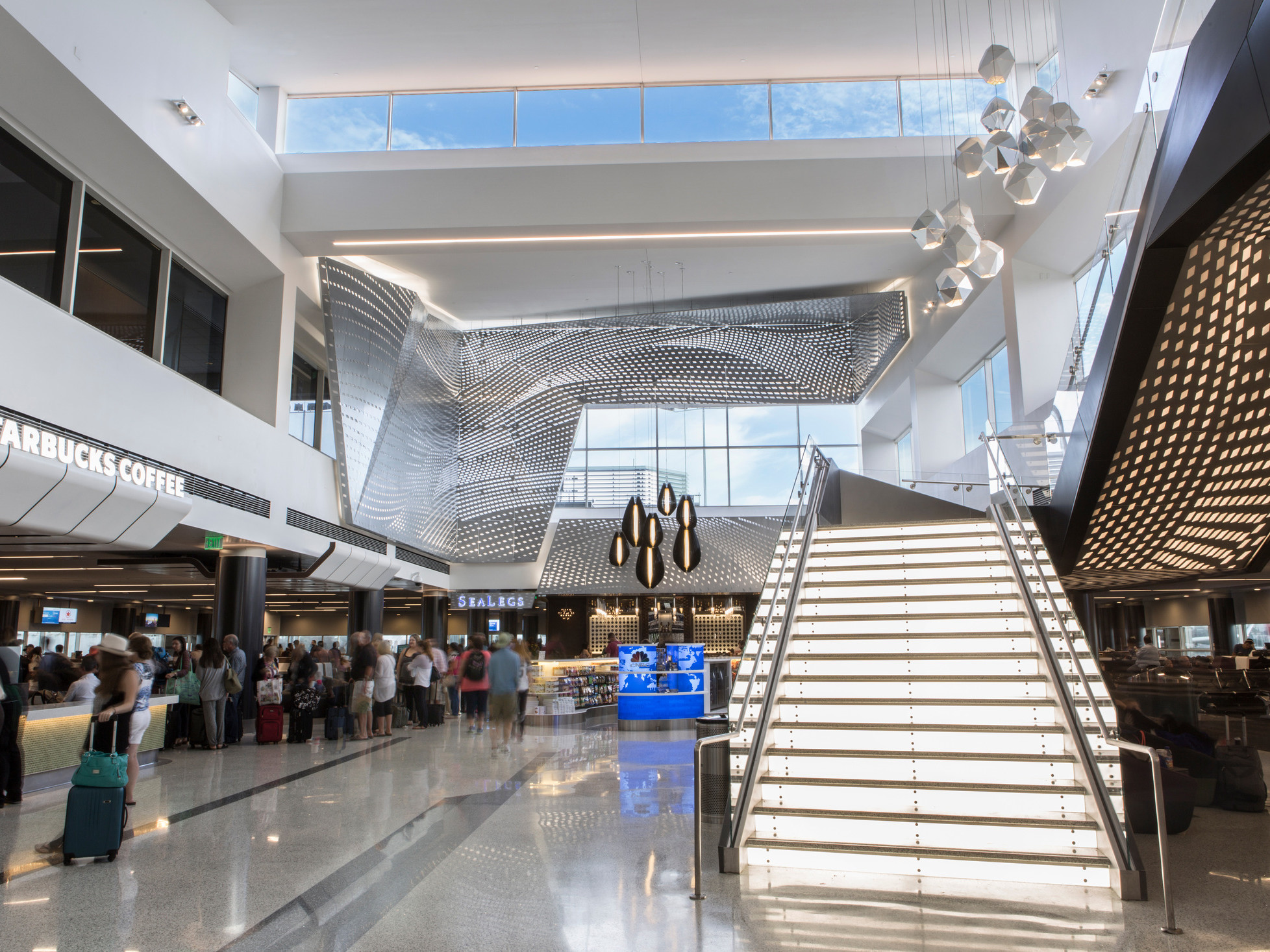
At Tom Bradley International Terminal, I wrestled the luggage cart with a wobbling wheel while Garrett marched straight toward the United Airlines counter, bypassing the long line and walking up to the red carpet marked PREMIER ACCESS.
“Garrett Roach,” he announced loudly, slapping his passport and American Express Platinum card onto the counter. “Party of seven. I’m a Premier Platinum member, and I have four overweight bags, but you’re going to waive the fees because, well—look at the status.”
I finally caught up, breathless, pushing the cart up to the scale. Garrett didn’t offer to help lift the bags. He just tapped his foot impatiently.
“Faster, Rachel,” he hissed. “You’re holding up the line.”
The agent printed boarding passes and Garrett picked them up, fanning them out like a winning poker hand. He distributed the glossy first-class tickets to everyone, leaving one flimsy piece of thermal paper.
“And for you, Ra,” he said, his voice booming for the crowd to hear. He waved the ticket in the air like a white flag of condescension.
“I tried my best,” he grinned. “But you know, holiday pricing is wild. So, here you go. Seat 42E. That’s the middle seat in the back row right next to the lavatory. You know, where the line forms.”
Blanca giggled behind her manicured hand.
“Hey, I’m doing her a favor. She’s used to roughing it, right? First class isn’t for people living paycheck to paycheck, Ra. You’d feel out of place. You wouldn’t know which fork to use.”
The Revelation
The world seemed to slow down. I could hear the whirr and click of the luggage belt. I could feel the eyes of strangers around us—some pitying, some embarrassed. My mother turned away, pretending to be fascinated by a duty-free advertisement. My father stared at his shoes, ashamed—not of Garrett’s behavior, but of me.
Something inside me shifted. It wasn’t a loud snap. It was the quiet, metallic click of a safety being disengaged. The anger that had been boiling in my gut for nineteen years suddenly cooled into something solid, something controlled.
“I don’t want your ticket, Garrett,” I said. My voice was low, but it cut through the noise of the terminal like a blade.
“Excuse me? Don’t be ungrateful. That’s a six-hundred-dollar seat.”
“I don’t need it,” I repeated.
I reached into the inner pocket of my cheap jacket. My fingers brushed against the cold, hard plastic of the ID card General Miller had given me.
“What are you doing?” Garrett asked. “Stop making a scene. People are watching.”
“Yes,” I said, my eyes locking onto his. “They are watching. And you wanted a show, didn’t you?”
I pulled the card out. It was black with a holographic red strip that caught the fluorescent lights. I turned to Brenda, the ticket agent.
“Ma’am,” I said, my voice shifting to the one that briefed generals. “I am authorizing a priority-one override.”
I placed the card on the scanner.
Garrett laughed nervously. “Rachel, what is that—a library card? You’re embarrassing yourself.”
But then the machine beeped. It wasn’t the normal cheerful beep. It was a harsh, urgent double tone that echoed from the terminal computer.
The screen behind the counter turned a solid, flashing crimson.
The Military Response
The sound that erupted wasn’t a polite alert—it was a piercing electronic shriek that cut through the hum of the terminal. Conversations stopped mid-sentence. Heads turned. The computer screen pulsed, bathing Brenda’s face in red light.
CRITICAL ALERT. CODE RED. IDENTITY CONFIRMED.
COLONEL RACHEL L. ROACH, USA – COMMANDER.
TIER ONE ASSET. DO NOT DETAIN. SECURE PERIMETER.
“Oh my goodness,” Brenda whispered, her hands trembling as she reached for the phone.
Garrett stumbled backward. “Rachel, what did you do? Is that a stolen card?”
“I didn’t do anything, Garrett,” I said calmly. “I just checked in.”
The ground started to shake. From the far end of the terminal, a commotion erupted—the sound of thunder rolling indoors.
“Make a path! Move, move, move!”
A squad of six military police officers, flanked by four tactical operators in full gear—plate carriers, helmets, M4 carbines—burst through the crowd. They moved with terrifying, synchronized precision, running in formation.
Garrett yelped and ducked behind his luggage cart. “It’s her!” he pointed a shaking finger at me. “She’s the one with the card.”
The soldiers ignored him completely. They charged straight toward the check-in counter, reached me, and spun around, facing outward toward the crowd. Within seconds, they had formed a perfect, impenetrable defensive perimeter around me. I stood in the center of the circle—the eye of the storm.
I slowly stood taller, rolling my shoulders back. I wasn’t Rachel the clerk anymore. I was the commander. I returned the salute, my hand cutting the air with practiced precision.
“Major,” I said.
“Ma’am,” the major replied. “General Miller sent the extraction team. We’ve secured the terminal. The C-37B is fueled and engines are running on the tarmac. We’re ready for immediate departure to Hickam Air Force Base.”
Out of the corner of my eye, I saw Garrett. He was standing up slowly from behind his luggage, his mouth hanging open. His brain was trying to process the impossible data and failing.
“Colonel,” he whispered. The word sounded foreign in his mouth. “What? Who…?”
My father took a step forward, his face gray. “Rachel, what is going on? Why are they saluting you?”
“Stay back, sir,” one of the MPs called, stepping in front of my father. “Maintain a ten-foot distance from the VIP.”
“VIP?” my mother squeaked. “But she works at the post office.”
The major turned his head slightly, giving my parents a look that could have peeled paint. “The colonel is one of the highest-ranking officers in U.S. Army Special Operations Command. You will show her the proper respect.”
Garrett looked at his hand. He was still clutching the thin thermal paper ticket for seat 42E. His fingers went limp. The ticket fluttered down and landed softly on the airport floor.
Walking Away
Around us, the crowd had gone from terrified to mesmerized. Hundreds of smartphones were held high.
“Is she a spy?” someone whispered.
“That salute—chills,” someone else murmured.
I looked at Garrett one last time. He looked small. So incredibly small. He was wearing a three-thousand-dollar suit, but in that moment, he looked like a kid trying on his father’s clothes.
“Major,” I said, turning my back on my family, “grab my bag.”
“Yes, ma’am.”
One of the operators stepped forward and gently picked up my battered duffel bag as if it were something precious.
“Right this way, Colonel,” the major said, gesturing toward a secure side door that TSA agents had opened.
I started walking. The soldiers moved with me, a mobile wall of steel and Kevlar.
“Rachel!” Garrett shouted, finally finding his voice. “Rachel, wait. The flight, the bags—”
I didn’t stop. I didn’t turn around. I walked through the corridor of soldiers, leaving the noise, the judgment, and the economy ticket on the floor behind me.
For the first time in nineteen years, I wasn’t following them. I was walking away.
The Gulfstream
The pressurized door of the Gulfstream C-37B sealed shut with a deep, satisfying click, instantly cutting off the chaos of LAX. The cabin wasn’t just a plane—it was a sanctuary. The seats were oversized cream-colored leather armchairs that swiveled and reclined fully flat. The walls were lined with polished wood paneling.
“Welcome aboard, Colonel,” the flight steward said. “We have a flight time of five hours and twenty minutes to Hickam Air Force Base. Can I get you anything before we taxi?”
“A drink,” I said. “Bourbon, neat. Blanton’s if you have it.”
I sank into the leather chair by the window. It accepted my tired body like a warm embrace. I stretched my legs out fully—no cramped middle seat, no bag wedged against my ribs.
As the jet roared down the runway and lifted into the sky, banking out over the Pacific, I finally exhaled. I watched the sprawling grid of Los Angeles shrink below me until the cars looked like slow-moving dots.
I reached into my pocket and pulled out my personal phone, turning it on at forty thousand feet. The device almost buzzed out of my hand. Notifications cascaded down the screen.
Twitter was trending: AIRPORT CLIP. COLONEL ROACH. A video shot by a bystander was already at four million views, showing the entire interaction: Garrett waving the ticket, his smug face, my calm refusal, the red alarm, the soldiers forming that steel wall around me.
The comments were unfiltered:
“Did you see his face when the MPs showed up? Priceless.”
“Imagine trying to flex a platinum card on a special ops commander.”
“Who treats their sister like that?”
Viral Impact:
• Video views: 4 million in first hour, climbing to 20 million
• Garrett’s company stock: Down 12% immediately
• Board of directors: Emergency meeting called
• Headlines: “ROACHTECH CEO UNDER FIRE AFTER VIRAL VIDEO”
Family Communications:
• Mom’s texts: “We had no idea… We are so proud… Please pick up”
• Garrett’s panic: “My investors are calling… You need to release a statement”
• Desperate offers: “I’ll pay you. Name your price.”
The cost of nineteen years of disrespect calculated in real time
I switched to a finance app. Garrett’s company—RoachTech—was publicly traded. The stock graph was bleeding red, down twelve percent in the last hour. In America, the markets will tolerate a lot of things. But a viral clip showing someone mocking a service member? That travels fast.
I opened my text messages. Twenty unread messages from Mom:
“Rachel, honey, are you there? We had no idea. A colonel. Why didn’t you tell us? We are so proud of you. Can you turn the plane around? We love you.”
For nineteen years, I had waited for those words. “We are so proud of you.” I had bled for those words. Now, here they were. But they felt thin. They felt like a transaction. They weren’t proud of me—they were proud of the rank, the proximity to power. And mostly, they were scared of losing me.
Garrett’s texts were even more frantic:
“Rachel, pick up the phone. This isn’t funny anymore. My investors are calling. Do you have any idea how much I lost? You need to release a statement. I’ll pay you. Name your price. Rachel, I’m begging you. I’m your brother. You owe me this.”
I realized I wasn’t angry. Anger requires energy, implies you still care about the outcome. I felt something else—a quiet, hollow relief. The kind you feel when you finally put down a heavy backpack you’ve been carrying for miles.
I didn’t owe him anything. I didn’t owe them my silence, my labor, or my protection. Not anymore.
The Final Confrontation
Forty-eight hours later, the mission to secure the Oahu power grid was complete. The cyberattack had been thwarted, the malware isolated, the blackout group’s operatives in custody. The island was safe, though the tourists had no idea how close they’d come to disaster.
I stood in the open-air lobby of the Royal Hawaiian Hotel—the Pink Palace of the Pacific—wearing my Army service uniform. The dark jacket was tailored perfectly, the gold stripe sharp enough to cut glass. On my chest, my ribbons caught the light: the Silver Star, the Purple Heart, the Legion of Merit.
Across the lobby sat the Roach family. They looked smaller than I remembered. Garrett didn’t look like a master of the universe anymore. He wore a wrinkled linen shirt, hadn’t shaved in two days, his eyes bloodshot from stress.
When he saw me approaching, he stood up so fast he knocked over a coffee cup.
“Rachel,” he breathed, taking in the uniform, the ribbons, the polished shoes. “Thank you for coming. I didn’t think you would.”
“I have a flight back to D.C. in three hours,” I replied. “I wanted to say goodbye to Mom and Dad properly.”
Garrett pulled out his phone with shaking hands. “The video has twenty million views. The board is calling for a vote of no confidence tomorrow. They’re going to remove me, Rachel. They’re going to take my company. I’m going to lose everything.”
“What do you want me to do, Garrett?”
“Make a video with me,” he pleaded. “Just a short clip. We stand here in front of the sunset. You wear the uniform. We smile. We say it was all a misunderstanding. A skit. A viral marketing campaign for a veterans’ charity.”
He let out a strained laugh. “You save my reputation. I donate a hundred grand to a nonprofit and everyone wins. Please, Rachel. You’re my sister. You can’t let this destroy me.”
My parents hovered behind him, my mother’s eyes pleading. “Rachel, please. Your brother worked so hard for that company. Don’t let a silly argument ruin his life.”
“No,” I said. The word hung in the humid air like a thunderclap.
“I’m not going to lie for you. And I will not use this uniform—a uniform people have laid down their lives in—as a prop to patch your image or save your stock portfolio.”
“But I’m your family!” Garrett shouted.
“I did have your back,” I said softly. “When we were kids, I stood up for you. When you started your company, I sent you money from my deployment pay. I had your back for forty years. But you never had mine.”
“I know, Garrett,” I said. “I forgive you.”
His head snapped up, hope flooding his eyes. “You do? So you’ll help me?”
“No.” I shook my head with a sad smile. “You’re confusing forgiveness with fixing. I forgive you. I release the anger. But I’m not going to fix this for you. You broke it. You’re the one who has to learn from it.”
“Then you’ll face the consequences,” I said simply. “And maybe, when you have nothing left but yourself, you’ll finally become the man you were meant to be before the money got in the way.”
I turned to my parents. My father was crying silently. He stood up and tried to salute me—clumsy and awkward, his hand shaking.
“I’m sorry, Colonel,” he whispered. “I’m so, so sorry.”
“Goodbye, Dad,” I said gently. “Take care of Mom.”
I turned on my heel, executing a perfect about-face. The heels of my dress shoes clicked sharply on the marble floor.
“Rachel,” Garrett called one last time, his voice already fading. “Where are you going?”
Freedom
I walked out of the lobby, past the valet stand, toward the sidewalk near the beach. The sun was setting over the Pacific, painting the sky in shades of violet and burning orange. To my right, in the distance, lay Pearl Harbor. The USS Arizona Memorial sat silent beneath the waves, a resting place for men who never got to say a proper goodbye.
I walked down to the water’s edge, letting the ocean breeze ruffle the small American flag patch on my shoulder. I thought about loneliness. For years, I thought I was alone because I was the black sheep. I thought I had to buy my way back into the family with silence and compliance.
But as I watched the waves crash against the shore—steady and unstoppable—I realized I wasn’t alone at all. I had General Miller. I had the soldiers who formed a wall around me at the airport. I had the men and women I served with who knew the real me—the scars, the grit, the loyalty. And most importantly, I had myself.
I reached into my pocket and pulled out the return ticket Garrett had bought. Seat 42E. I looked at it one last time, then tore it in half. Then in half again. I tossed the pieces into a trash can near the boardwalk.
My phone buzzed. A secure message from General Miller: “Bird is fueled. Wheels up in 60. Good work, Rachel.”
I typed back: “On my way, sir.”
I adjusted my cover, straightened my jacket, and began walking away from the sunset, away from the hotel, and toward the airfield. I walked with the long, confident strides of a woman who finally knew exactly who she was and exactly where she belonged.
The black sheep had become the shepherd. And the wolves were no longer my concern.
It took me nineteen years to realize that DNA doesn’t make a family. Respect does. I walked away to find my peace, and I hope my story gives you the courage to do the same.
You don’t have to set yourself on fire just to keep other people warm. Sometimes the most powerful thing you can do is simply walk away—with your head held high, your integrity intact, and your future in your own hands.

Lila Hart is a dedicated Digital Archivist and Research Specialist with a keen eye for preserving and curating meaningful content. At TheArchivists, she specializes in organizing and managing digital archives, ensuring that valuable stories and historical moments are accessible for generations to come.
Lila earned her degree in History and Archival Studies from the University of Edinburgh, where she cultivated her passion for documenting the past and preserving cultural heritage. Her expertise lies in combining traditional archival techniques with modern digital tools, allowing her to create comprehensive and engaging collections that resonate with audiences worldwide.
At TheArchivists, Lila is known for her meticulous attention to detail and her ability to uncover hidden gems within extensive archives. Her work is praised for its depth, authenticity, and contribution to the preservation of knowledge in the digital age.
Driven by a commitment to preserving stories that matter, Lila is passionate about exploring the intersection of history and technology. Her goal is to ensure that every piece of content she handles reflects the richness of human experiences and remains a source of inspiration for years to come.