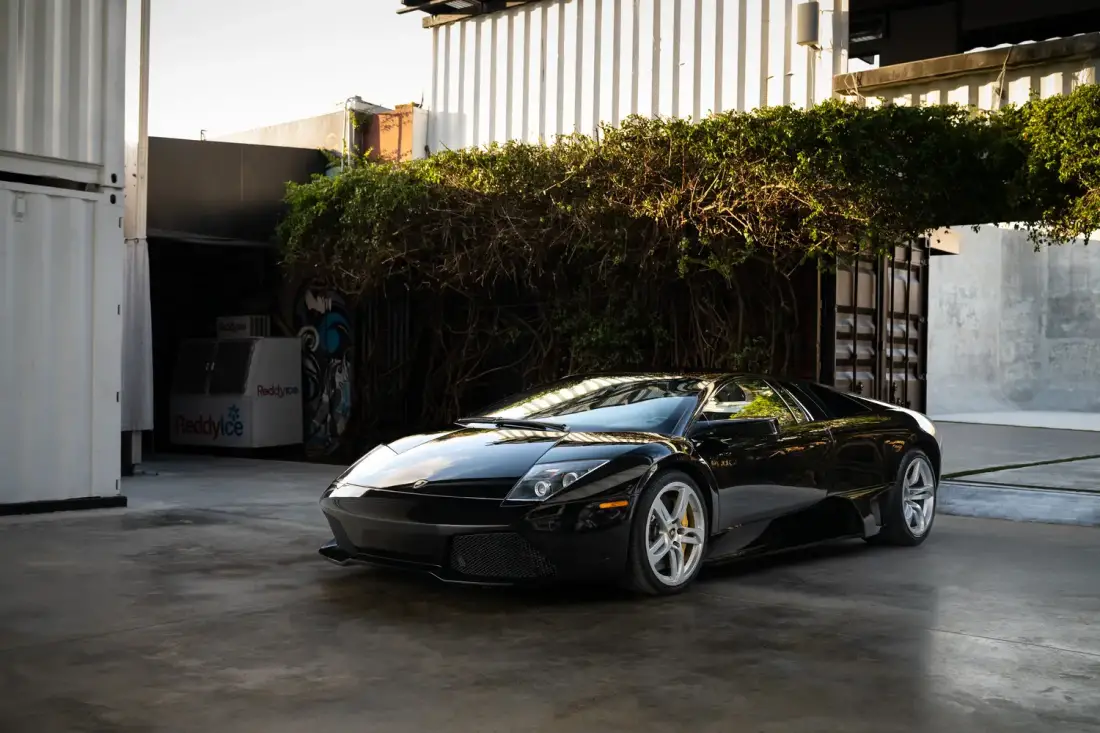
The Sledgehammer and the Lamborghini
The scent of wax and gasoline always reminded me of two things—peace and control. Peace, because the garage was my sanctuary, the only place in suburbia where the world made sense. Control, because working on my midnight blue Lamborghini Huracán was therapy for a mind that had seen too much chaos in too many deserts, under too many burning suns.
But that morning, when I lifted the garage door and the early light spilled in like a slow curtain, peace evaporated. Control snapped like a brittle stick.
My car—my reward for surviving twenty years of sandstorms, mortars, dust-choked firefights, and the invisible shrapnel of memories—looked like it had gone twelve rounds with a machine built only for destruction.
The windshield was fractured into a thousand lines, a webbing of broken glass that caught the sunlight in a cruel, glittering mosaic. The hood was cratered, beaten inward as if someone had swung a hammer with the full weight of their hatred behind every blow. The side mirrors hung from frayed wires, dangling like broken limbs. Deep gouges ran along the door panels, irregular and angry, like someone had carved their frustration into the paint with deliberate cruelty.
For several long seconds, I didn’t move. Didn’t breathe. Didn’t even blink.
All I heard was the faint tick… tick… tick… of cooling metal, the sound cars make after a drive—but this one hadn’t driven anywhere.
Then I saw it. A shard of glass near the rear tire. And stuck to it, barely clinging to the edge, was a fleck of pink.
Pink nail polish. Bright, garish, unmistakable.
And suddenly the garage felt colder.
Because I knew someone in this neighborhood—someone with pink nails, someone who always hovered too close, someone who believed rules existed for everyone but her—had crossed a line she could never uncross.
The Tyrant of Maple Ridge
Karen Whitmore. HOA secretary. Neighborhood tyrant. A woman who patrolled Maple Ridge Estates with the zeal of an over-caffeinated drill sergeant and the entitlement of a monarch surveying her domain.
She once timed how long I left my garage door open—stood there with a literal stopwatch. She once accused my German Shepherd, Duke, of “looking aggressive.” She once measured the length of my trash-can placement with a ruler. She once told me, to my face, that “military men tend to be unstable.”
But this… this was different.
I reached for my phone, hand steady in a way that only years of battlefield discipline can teach. I opened my security feed. I fast-forwarded past midnight. Past one. Past two.
And there she was.
2:07 a.m.
Karen—pink nails, stiff curls, cardigan buttoned to her throat—standing in my driveway holding a sledgehammer like she’d been chosen by the universe to carry out suburban judgment.
She didn’t rush. She didn’t hide. She didn’t hesitate.
She lifted the hammer, adjusted her stance the way a golfer adjusts before a swing, and brought it down on the hood of the Lamborghini with a force that rattled the camera.
Then again. And again. And again.
Her face twisted—not in fear, not in desperation—but in satisfaction. As if destroying someone else’s dream gave her the power she’d always wanted. As if my car represented something unspoken that she couldn’t stand to look at anymore.
When she finally walked away, she left calmly. Almost peacefully. As if she had just finished arranging roses in her living room.
I replayed the clip twice. Three times.
Not because I doubted what I saw—no, veterans learn early that denial is a luxury other people can afford.
I replayed it because a strange thing happened as I watched: my breathing, instead of quickening, slowed. My pulse steadied. My thoughts crystallized into razor-edge focus.
The same shift that used to happen right before an ambush. Right before kicking down a door. Right before stepping into a situation where hesitation meant death.
Except this time, the battlefield was my garage. The enemy wasn’t a man in a mountain hideout. The weapon wasn’t a rifle but the truth in the footage.
And the mission wasn’t survival. It was justice.
The War Before the War
When I first moved into Maple Ridge Estates, it was everything a soldier dreams of after 20 years of sand, sweat, and noise. Quiet, predictable, a cul-de-sac lined with oaks, the kind of place where sprinklers hiss at sunrise and kids ride scooters until dinner.
For 15 years, it was peace. Then somebody decided we needed an HOA.
At first, I didn’t mind. The board sent friendly newsletters about community pride and maintaining standards. They trimmed the shrubs around the entrance sign, repainted the mailboxes, threw a barbecue to celebrate. It all sounded neighborly.
Until I met Karen Whitmore.
Mid-50s, always dressed like she was attending a board meeting even to fetch the mail. Blonde curls stiff as a helmet, sunglasses big enough to hide behind. The kind of person who measured her power in laminated rule books and passive-aggressive smiles.
The first time we spoke, I was walking Duke. She stopped me in the middle of the street and asked, “Do you have an approved leash length?”
I thought she was joking. She wasn’t.
She handed me a printout about standard leash dimensions and reminded me that “some homeowners prefer shorter leads for aesthetic harmony.”
I remember staring at her, half expecting a hidden camera crew to jump out. Nobody came. I laughed it off. You meet plenty of control freaks in the military, but they usually wear rank on their collars, not pearls.
Still, there was something in Karen’s tone, something brittle, like glass about to crack. I didn’t know it yet, but she wasn’t just enforcing rules. She was looking for enemies.
The rest of the board was fine. Tom Harris, retired high school teacher, served as president—a calm, reasonable guy who once helped me with a fence permit. Sarah Lopez, a realtor, kept things organized and practical. Bob Carter, a gruff Vietnam vet, handled maintenance but mostly preferred to fish.
They all tried to keep the HOA balanced. But Karen, she wanted an empire.
Her power trips started small. She issued citations for trash cans left out five minutes past pickup. She measured grass height with a ruler. When the Burgers across the street hung a patriotic banner for Memorial Day, Karen declared it “unauthorized signage.”
I overheard her once at a meeting, whispering to Tom that “people here need guidance.”
Tom smiled politely, but I saw the weariness in his eyes.
The Lamborghini
Then came the turning point—the day my Lamborghini rolled into the neighborhood.
I’d just bought it after years of saving: deployment bonuses, disability compensation, and a lucky stock investment. Midnight blue Huracán Evo, 5.2L V10, naturally aspirated. Pure engineering poetry.
To me, it wasn’t a flex. It was a reward for surviving things most people couldn’t imagine.
When I parked it in my driveway that first weekend, sunlight glinting off the paint, I felt like I’d finally closed the chapter between war and peace.
The neighbors loved it. Kids gawked. Adults asked questions. Tom gave me a thumbs up from across the street.
Everyone except Karen.
She appeared that afternoon like a storm cloud, clipboard in hand.
“Beautiful car,” she said flatly, eyes scanning it like a customs officer searching for contraband. “Though I’m not sure a commercial-grade vehicle aligns with HOA guidelines.”
“Commercial grade?” I asked. “It’s a car, not a bulldozer.”
“Well,” she sniffed, “some of us find that such displays can affect property values.”
I smiled the way you smile when your rifle jams in training. Tight, forced, impatient. “Good thing I’m not selling property then.”
Her jaw twitched. She scribbled something on her clipboard and walked away without another word.
That was our first skirmish.
Over the next few weeks, Karen’s patrols became routine. I’d catch her walking slowly past my house, pretending to check mailboxes while her eyes scanned my garage. Once I saw her crouch near my lawn, taking pictures of a patch of clover.
The next day, a letter arrived: Notice of weed infestation. Corrective action required within 48 hours.
I almost laughed. The VA landscaping crew mowed that yard twice a week. But Karen wasn’t after the grass. She was testing me.
When I called Tom, he groaned. “Ignore it, John. Clover’s not even classified as a weed here. Karen’s overenthusiastic.”
“Overenthusiastic?” I repeated. “That’s one word for it.”
“Look,” he said, lowering his voice, “between you and me, she’s been issuing violations without board approval. We’ve warned her twice. If she keeps it up, we’ll vote her out.”
I appreciated his calm, but I knew bullies like Karen. Warnings don’t stop them. Consequences do.
By early summer, her obsession escalated. She called the police on the Burger kids for riding their bikes too loudly. She argued with Bob about the “unauthorized color” of his garden hose. When the Johnsons installed solar panels, she claimed they violated the “neighborhood aesthetic.”
Every week brought new drama, and every meeting ended with her lecturing about standards and order.
The Escalation
One Saturday, I was in my garage detailing the Lambo. The door was open, music playing low, Duke lying nearby. I had just started waxing the hood when a shadow blocked the sunlight.
Karen.
“Excuse me,” she snapped, arms crossed. “You can’t operate a commercial garage here.”
I blinked. “I’m just cleaning my car.”
“You have equipment, chemicals, noise. You’re obviously running a detailing business.”
“Karen, the only client here is me.”
She raised her phone and started filming. “I’m documenting this violation.”
I straightened slowly, my military calm kicking in. “You’re trespassing, ma’am. Please leave.”
“This is public enforcement,” she declared. “As HOA secretary, I have authority to ensure compliance.”
“Then comply with my request to leave my property,” I said evenly.
Her lips tightened. “You’ll regret this.”
She left, and by Monday, I had three violation letters: excessive noise, commercial activity, failure to maintain closed garage policy.
There was no such policy. Tom confirmed it later, sounding exhausted.
“She’s out of control, John. We’re calling an emergency board meeting next week.”
“Do that,” I said. “But I’ll handle myself in the meantime.”
I wasn’t angry yet, just alert. In the army, we called it “yellow level”—calm but ready.
I could tell this wasn’t over. Karen’s need for control wasn’t about the rules. It was about power. And when people like that lose power, they look for something—or someone—to destroy.
Every day after that, I noticed her presence. The glint of her phone lens through her blinds. The slow, deliberate pace of her car as she circled the block. Once I caught her writing notes while staring at my garage door, timer app on her phone. She was literally clocking how long it stayed open.
Most nights, I sat on the porch, beer in hand, Duke at my feet, watching the sunset. Peace had a different flavor now, bitter at the edges.
I’d seen men unravel in combat zones. I could see the same madness creeping behind her polite smile.
Then one evening, Tom stopped by.
“We’re trying to vote her off the board,” he said quietly. “But she’s threatening to sue the HOA for discrimination.”
“On what grounds?”
“Apparently, we’re targeting her because she’s a single woman.”
I chuckled darkly. “Tell her I’ll write a character reference. ‘Enemy combatant. High persistence.'”
Tom smirked, but his eyes were worried. “Just keep your head down, John. You know how litigious people get.”
I nodded. But inside I was already running mental scenarios—how to protect myself legally, physically, financially.
Old habits die hard.
The next morning, I installed new security cameras around the house. High-definition, motion-activated, cloud-synced.
Years of deployment taught me one thing: the worst threats aren’t the loudest. They’re the ones who smile before they strike.
And Karen had been smiling a lot lately.
The Breaking Point
By early July, I’d started counting how many times a day Karen’s shadow crossed my driveway. Three times before lunch, twice in the evening. Sometimes she’d stop right in front of my mailbox, pretending to tie her shoe, while her phone camera conveniently pointed toward my garage.
The breaking point came one humid afternoon when I stepped outside to grab a package and found a bright orange warning taped to my garage door.
FINAL NOTICE: Non-compliance with HOA operation standards. Cease activities immediately.
It looked official, complete with her signature at the bottom and a CC line to the county zoning department. Except I knew the county had nothing to do with HOA enforcement. It was pure theater.
I crumpled the letter and tossed it into the bin.
That evening, I caught her outside with a flashlight, shining it at my driveway like she was searching for evidence of a crime.
I stepped out. “Lose something?”
She jumped, clutching her clipboard. “I’m conducting an inspection for potential oil leakage. That car of yours,” she pointed toward the closed garage, “is not suitable for residential use.”
“It’s a car, Karen, not a tank.”
“Same difference. It disturbs the harmony of the neighborhood.”
I stared at her for a beat. “Harmony? You’ve harassed half the people on this street.”
Her lips tightened. “You don’t belong here, John. You think your military record gives you special treatment? This isn’t a base. This is a community.”
That last word—community—dripped from her mouth like poison disguised as honey.
I didn’t say anything. Just turned, opened my door, and went inside.
Behind me, I heard the faint click of her phone camera.
Over the next week, she escalated from paperwork warfare to something darker. Monday, two violation letters. Wednesday, she called animal control claiming Duke was a dangerous breed. Friday, she left a note on my windshield that read: “Garages are for parking, not for flaunting.”
Even Duke could sense the tension. He’d growl whenever she passed the fence, tail stiff, body rigid.
One morning, Tom showed up with coffee and a weary sigh.
“She’s been filing complaints against half the neighborhood now,” he said. “The Burgers, the Johnsons, even me.”
“You too?”
“Apparently, my welcome gnome violates the ‘uniform front yard ornament policy.’ I didn’t even know we had one.”
We sat on my porch, watching the sun burn through the trees.
“You ever wonder,” Tom said quietly, “why some people need to be in charge so badly?”
“Control,” I replied. “The illusion of power fills the hole where real purpose used to be.”
He nodded, staring into his cup. “You sound like you’ve seen that before.”
“Yeah,” I said. “In war zones, it’s easier to fight an enemy in uniform. Karen hides behind bylaws.”
He laughed softly. “That’s poetic and terrifying at the same time.”
A week later, I found a folded piece of paper tucked under my garage handle: Reminder: Residents must close garage doors immediately after use. Failure to do so will result in disciplinary action.
The funny part—she didn’t even have the authority to issue “disciplinary” anything.
But the note wasn’t what got me. It was what came next.
That night, I caught her walking past again, flashlight in hand, stopping at my driveway. I stayed hidden behind the curtains. She knelt, scribbling in her notebook, muttering under her breath.
Then, as she stood up, I saw her glance straight at one of my cameras and smile.
That’s when I realized: she wanted me to react. She wanted confrontation. Bullies feed on control, and the moment you lose your temper, they win.
So I didn’t give her that satisfaction. Not yet.
Instead, I went full soldier mode: gather intel, fortify, wait.
The Discovery
Saturday morning, I washed the Lamborghini again. The sun was bright, the kind that makes the paint sparkle like liquid sapphire. Music low, Duke lounging nearby. For 20 minutes, peace returned.
Then came the crunch of heels on gravel.
“Again with the garage open,” Karen’s voice cut the air like a dull knife.
“Good morning to you too.”
“You’re violating the noise policy.”
“It’s 9:30 on a Saturday, Karen.”
“And you’re operating what looks to be professional-grade equipment.”
“A bucket and sponge?”
“You’re not above the rules just because you used to wear camouflage.”
I turned slowly, meeting her glare. “I served 20 years so people like you could feel safe enough to harass veterans in their driveways.”
Her jaw dropped. “That’s not harassment. That’s enforcement.”
She raised her phone again, recording.
I stepped closer, not menacing, just enough to fill her frame. “Go ahead, film it. Just make sure you spell my name right in the complaint.”
For a split second, she faltered. Then her lips curled into a thin smile.
“We’ll see how long that fancy car of yours lasts when the HOA finds out what kind of neighbor you really are.”
She stormed off.
I stood there, water dripping off the sponge, feeling something colder than anger settle in my chest: foreboding.
That evening, Tom called again.
“We held a meeting. Unanimous vote to suspend Karen’s issuing privileges until further notice.”
“About time.”
“Don’t relax yet. She’s furious. Said something about ‘proving a point.'”
Proving a point. Those words echoed like a threat wrapped in civility.
The next few days, she went quiet. No letters, no photos, no patrols.
You’d think that would have calmed me down, but silence can be more dangerous than shouting.
One night, I took Duke for a walk and noticed Karen’s blinds twitch as I passed. Her house lights flicked off instantly. Duke growled low.
I felt the hair on my arms rise. She was watching again.
When I got home, I opened my security feed. Cameras clear. No movement. But around midnight, the motion sensor pinged once. A silhouette passing near the fence line. Too far for identification. Too deliberate to be random.
The next morning—the morning I discovered my car destroyed—I understood what that silhouette had been doing.
She’d been planning.
The Evidence
Standing in my ruined garage that Sunday morning, staring at $80,000 in damage, I forced myself to act methodically.
Step one: record everything. I pulled out my phone, snapped hundreds of photos from every angle, cataloged the damage.
Step two: review the footage.
I opened my security system app. My cameras were motion-triggered. Two covered the driveway. One faced the garage.
The footage loaded instantly.
I scrubbed through Saturday night: empty street, nothing unusual.
Until 2:07 a.m.
There she was.
Karen. Marching up my driveway in her pink cardigan, hair tied tight, carrying a sledgehammer like a trophy.
The infrared caught her perfectly. She paused at the garage door, glanced around, then crouched to force it open—something she must have learned from her obsessive inspections.
Once inside, the feed showed 20 straight minutes of chaos. Metal striking metal, glass shattering. Each hit punctuated by her face twisting with hatred.
And when she walked out, she didn’t even rush. She took one long look back at the car—my car—and smiled.
I exhaled through my teeth. Got you.
I called 911.
“Sir, please confirm no one’s injured,” the dispatcher said calmly.
“Just the Lamborghini.”
That earned a small chuckle, quickly stifled. “Understood. Officers are on their way. Do not confront the suspect.”
“Oh, I won’t,” I said. “She already buried herself.”
While waiting, I called my insurance provider, USAA—a godsend for veterans. They assured me an adjuster would arrive first thing Monday morning.
“We’ve handled worse,” the agent said. “Just make sure you get that police report number for the claim.”
When the patrol car pulled up 20 minutes later, red and blue lights flickering against the ruined metal, the scene looked surreal.
Officer Willow stepped out—a tall, calm man in his thirties. The kind of cop who doesn’t talk much but notices everything.
He circled the car once, let out a low whistle. “You’re sure this wasn’t a break-in attempt?”
“Nothing else was touched,” I said. “Tools, bikes—everything else is still here.”
He crouched by the tire marks. “This is personal. Someone wanted to hurt you, not rob you.”
“I already know who,” I said, handing him my phone. “Security footage.”
He watched in silence. When the hammer came down for the fifth time, his expression hardened.
“That’s about as clear-cut as it gets.” He looked at me. “You want to press charges?”
“Absolutely.”
He nodded. “Let’s make it official. But first, mind if we have a little fun?”
I raised an eyebrow.
“Sometimes people dig their own graves faster when they don’t know who’s listening,” he said, holding up his recorder. “Let’s call her together.”
The Confession
I dialed Karen’s number, hit speaker. It rang twice before her voice answered, clipped and defensive.
“What do you want, John?”
“Someone destroyed my car this weekend while I was out of town,” I said evenly. “Do you know anything about it?”
Pause. Static.
“Why would I know anything about your stupid car?”
“You’ve been complaining about it for weeks,” I said. “And I’ve got security footage of someone who looks exactly like you.”
Her tone snapped. “Good. I’m glad someone finally did something about that ridiculous showoff machine. You think you’re special, don’t you? Flashing your money around while the rest of us work honest jobs. You’re just a broken-down soldier living off pity checks.”
Willow mouthed: Keep her talking.
I took a slow breath. “Karen, are you saying you destroyed my car?”
“Damn right I did!” she shouted. “Every night I had to look at that thing and remember you—some washed-up vet acting like he’s better than everyone else. I earned what I have. You—”
Willow cut in smoothly. “Ma’am, this is Officer Willow with the city police. You just confessed to felony vandalism. We’ll be at your residence shortly.”
There was a sharp gasp, a clatter, and the line went dead.
He looked at me. “You mind if we stop by together?”
“Lead the way.”
The Arrest
Twenty minutes later, the cul-de-sac glowed red and blue again.
Karen was standing on her porch, pale and trembling, phone in one hand, sledgehammer leaning against the railing like a bad prop.
When the officers cuffed her, she screamed about injustice, about veterans being “violent freeloaders,” about how “it’s not fair that he gets a luxury car while I work a real job.”
I just stood there, arms crossed, watching her melt down.
Neighbors peeked from behind curtains. Tom came out, his face grave. Sarah whispered, “Oh my God.”
Karen caught sight of me and shrieked, “You ruined my life!”
I didn’t answer. I didn’t need to.
As the patrol car pulled away, her voice echoed down the street: “This isn’t over!”
Willow turned to me. “She’s not getting out of this one. Felony property damage. Open and shut case. Sleep easy tonight.”
I tried. I really did.
But sleep didn’t come, because deep down I knew she wasn’t done.
The Second Attack
The next morning, the adjuster arrived—a young guy in a suit who looked like he’d stepped out of a car commercial. His jaw practically dropped when he saw the damage.
“Wow, this is targeted,” he said softly. “You sure you don’t live next to an ex-wife?”
“Worse,” I muttered. “An HOA Karen.”
He laughed nervously, then got to work photographing every dent.
“We’ll handle everything, sir. Your policy covers full repair. Six to eight weeks tops.”
“Good,” I said. But my mind wasn’t on the car anymore. It was on Karen’s last words: This isn’t over.
By Monday morning, the neighborhood buzzed like a hornet’s nest. Word spread fast when someone in a quiet HOA gets arrested for felony vandalism.
I got a call from Sarah, the realtor on the board. “John, I just wanted to apologize for all of this,” she said quietly. “We should have acted sooner.”
“You don’t need to apologize for her,” I said. “She made her own choices.”
“Still,” she sighed. “She’s been calling everyone she knows since she got out on bail. She says you framed her, that the video was fake.”
“That’s rich,” I muttered. “Let me guess—she’s playing the victim?”
“Exactly. She’s claiming PTSD discrimination, says you threatened her with violence. She even filed a complaint with the county mediation office.”
I almost laughed. “She smashed my car with a sledgehammer. What’s she going to argue? Temporary blindness from jealousy?”
Sarah chuckled softly but then lowered her voice. “Be careful, John. You humiliated her. That kind of person doesn’t forgive—they retaliate.”
I looked out across the street. Karen’s house sat dark and still, curtains drawn, driveway empty.
But I knew she was inside, stewing.
“I’m always careful,” I said, hanging up.
For a brief moment, the week felt normal again. The insurance adjuster came back for follow-up photos, and Tom from the HOA dropped by with a formal letter of apology signed by the entire board.
“We’re removing Karen from her position,” Tom said, looking tired but relieved. “We’ve had enough of her tyranny. The residents voted last night.”
“Good,” I said. “You’ll sleep better without her measuring your grass.”
He chuckled. “Understatement of the year.”
That night, I sat in my living room reviewing footage from my cameras. I noticed something strange. At exactly 6:42 p.m., the motion sensor at the side gate triggered, but the camera showed nothing. Just a brief flicker, then static. A second later, it resumed like nothing happened.
Power surge, maybe. Or maybe someone testing blind spots.
I marked the timestamp and moved one of the cameras closer to the garage door, angling it toward the street. Then I called it a night, leaving Duke inside the house this time instead of the backyard.
My instincts were humming again.
The next day, while I was at my workbench repairing one of the dented mirrors for the insurance claim, a familiar voice pierced the quiet.
“John Davis!”
I turned. Karen stood at the edge of my driveway, arms crossed, eyes red-rimmed but burning with that same venomous intensity.
“You’ve destroyed me,” she shouted. “Do you know that? I lost my job because of you!”
I put down the wrench. “You lost your job because you committed a felony.”
“You set me up! You faked that footage!”
“There’s a police officer who would love to hear you say that again. Want me to call him?”
Her nostrils flared. “You think you’re some kind of hero because you wore a uniform, but all I see is a bully who hides behind it.”
I took a step closer, voice steady. “The difference between us, Karen, is that I earned my scars doing something useful. You earned yours fighting over lawn height.”
Her face twisted, trembling between rage and humiliation.
“I’ll make you pay for this,” she hissed before storming off.
I didn’t respond. The camera on my porch had caught every second.
That evening, I reviewed the footage again, because with people like Karen, confrontation was always a prelude to escalation.
The video showed her marching toward my house, screaming, then storming away. But at the very end of the clip, just before the timestamp rolled to black, I noticed something chilling.
She’d dropped something.
Zooming in, I saw it glinting faintly under the streetlight: a key.
I retrieved it later using gloves. It was a simple metal key with a sticker labeled GARAGE.
My stomach sank.
Karen had a copy of my garage key. The HOA had required me to provide a spare for emergency access last year when they standardized security codes. I’d given it to the board in good faith—probably through Karen.
I locked every entry point in my house and called Willow again.
“You’re telling me she might still have access to your property?” he said, tone sharp.
“She had a key in her hand yesterday. Dropped it during another confrontation.”
“Jesus. Okay, keep your doors locked. We’ll send a patrol through the neighborhood tonight just to be safe.”
I thanked him, but I already knew the truth. A patrol car might deter criminals, but it wouldn’t stop someone fueled by obsession.
The Final Confrontation
At 11:43 p.m., Duke started barking. Low, urgent, protective.
I muted the TV, heart pounding. My phone buzzed—a notification from the garage camera.
Motion detected.
The live feed flickered on. The view was grainy under the security light, but clear enough to see Karen standing in the middle of my driveway, holding the same damn sledgehammer.
She wasn’t looking at the car this time. She was looking at my house.
I called 911 instantly.
“This is John Davis. The woman who vandalized my car is back. She’s armed. She’s trying to break in.”
While I stayed on the line, she lifted the hammer and started shouting into the night.
“You ruined my life, you bastard! I’ll finish what I started!”
The dispatcher’s voice remained calm. “Units are en route. Stay inside. Do not engage.”
But she was already charging.
The hammer slammed into my front door with a deafening crack. Duke barked like a thunderstorm.
The second swing never landed.
I opened the door halfway, just enough to meet her momentum. Years of combat training took over. I sidestepped, grabbed her wrist, twisted, and used her own strength to pull her forward.
The hammer flew from her hands, clattering against the concrete.
She screamed, clawing at my face, nails raking the air. I could smell alcohol on her breath mixed with desperation.
“Stand down!” I barked.
She didn’t, so I did what training demanded: a single controlled strike to her jaw. Enough to stop, not to maim.
She collapsed. Out cold.
I stepped back, breathing hard as Duke growled beside me. The hammer lay on the ground between us, a silent testament to how far she’d fallen.
Minutes later, flashing lights painted the street red again.
Officer Willow jumped out first, eyes wide. “You’ve got to be kidding me,” he muttered, seeing Karen on the ground. “Didn’t she just make bail?”
“She did,” I said flatly. “And she brought her weapon of choice.”
Paramedics checked her pulse. She was fine—bruised pride, broken ego, but still alive.
When she came to, she started screaming again about conspiracies, fake footage, and how I’d attacked an unarmed woman.
Willow just shook his head. “Ma’am, you broke into a home with a deadly weapon while on bail. You’re done.”
They cuffed her again, and as they dragged her toward the patrol car, I caught her glare—pure hatred, cold and trembling.
“Enjoy prison, Karen,” I said quietly. “At least there’ll be someone else who finally tells you what to do.”
Justice Served
Karen’s trial came six weeks later. I didn’t want to go, but Willow insisted my testimony would make the case airtight.
When I entered the courtroom, she was already there—smaller somehow. Hair cut shorter, shoulders hunched, no trace of the power-hungry enforcer she used to be.
She didn’t look at me, not once.
The prosecutor played the footage: Karen with the sledgehammer, Karen confessing over the phone, Karen charging across my lawn again.
The jurors’ faces said everything. Some shook their heads. Others just looked sad.
When the defense tried to argue temporary mental breakdown, Willow leaned over and whispered, “If destroying someone’s car is a breakdown, half the country would be in therapy.”
The judge handed down the sentence: five years in state prison with mandatory psychiatric evaluation.
Karen broke down sobbing. The sound didn’t move me. It just echoed like static.
Rebuilding
Afterward, outside the courthouse, Tom and Sarah were waiting.
“You okay?” Tom asked.
“Yeah,” I said. “Finally.”
Sarah exhaled. “The board voted to dedicate next month’s meeting to revising the HOA charter. No single person will ever hold unchecked authority again.”
“Good,” I said. “You’re learning from her mistakes.”
Life after Karen was strangely boring. And boring, for once, felt wonderful.
The HOA replaced her with a young couple—reasonable, calm, too busy raising twins to care about lawn color. Neighbors started greeting each other again. The Burger kids went back to riding their bikes in the cul-de-sac.
I spent my mornings fixing things: fences, garden lights, the old deck out back. The routine felt like therapy.
Some afternoons, people would stop by and ask about the car.
“That’s the famous Lamborghini, right? The one from the HOA story?”
I’d nod, laugh, and tell them to keep their distance if they saw a woman with a clipboard.
It became a running joke: “Karen-proofing” the neighborhood.
One evening, as the sun dipped low and painted everything gold, I found myself sitting on the porch, beer in hand, Duke curled at my feet. The air was soft and heavy with summer.
I thought about all that had happened—the smashed glass, the courtrooms, the screaming, the silence that followed.
And I realized something I hadn’t allowed myself to before: I wasn’t angry anymore.
She’d taken so much—time, peace, security—but she’d given me something in return: perspective.
You can fight wars in deserts, lose friends, face death, and still believe the world is black and white, good guys and bad guys, order and chaos.
But then someone like Karen walks into your peaceful life and proves that evil doesn’t always carry a gun. Sometimes it carries a rule book and a sense of entitlement.
A few weeks after the verdict, Willow dropped by one last time, leaning against his cruiser as I was washing the car.
“Looks brand new,” he said.
“Feels brand new too,” I replied. “Even the insurance adjuster called it a miracle job.”
He nodded. “You know, we found out something interesting during the sentencing hearing. Karen used to work at a luxury dealership years ago. Got fired for stealing a client’s keys and joyriding.”
I blinked. “You’re kidding.”
“Nope. Guess old habits die hard.” He chuckled. “At least this time, the only joy ride she’s taking is on a prison bus.”
We both laughed, the sound light and easy.
Over time, Karen’s name faded from conversation. Her house eventually sold to a young family who painted the shutters navy and filled the porch with hanging plants. They never asked about the past, and no one volunteered the story.
The cul-de-sac finally had peace again.
The Road Ahead
One afternoon, about six months later, I drove the Lamborghini down the highway, top down, engine singing that perfect mechanical symphony only Italian engineering can produce. The wind whipped past, the horizon stretched endless ahead, and for the first time in a long time, I felt genuinely free.
At a red light, a kid in the next lane rolled down his window.
“Hey, mister! Cool car!”
I grinned. “Thanks, kid.”
He pointed. “Is that the one from the news?”
I chuckled. “Yeah, but it’s not about the car. It’s about what you do when someone tries to take your peace away.”
He blinked, confused but smiling, as the light turned green.
I hit the gas.
That night, as I parked back in the garage, the soft echo of the door closing felt like punctuation. Duke wagged his tail, and I sat there for a while, engine ticking as it cooled.
People think revenge stories are about destruction, but this wasn’t that. This was about survival, about standing your ground when someone tries to strip you of dignity—and doing it without becoming what they are.
Because real victory isn’t watching your enemy fall. It’s looking at yourself afterward and realizing you never stooped to their level.
Karen destroyed a car, but she didn’t destroy me. If anything, she reminded me that strength isn’t built on anger or violence. It’s built on discipline, patience, and knowing when to let justice do the work for you.
In the end, this story wasn’t about a Lamborghini or an HOA gone rogue. It was about control, pride, and the price of envy.
Karen thought power came from enforcing rules and tearing others down. But true power lies in restraint—choosing to rise above chaos instead of feeding it.
I learned that peace is fragile, but it’s also worth defending. Whether you’re on a battlefield or a suburban street, there will always be people who mistake kindness for weakness and order for submission.
The secret is to stay calm, stay prepared, and never let them dictate your story.
If life puts a Karen in your path, don’t let her drag you into her storm. Stand firm, protect your peace, and let her drown in her own thunder.
Because at the end of the day, justice doesn’t need to be loud.
It just needs to be patient.

Lila Hart is a dedicated Digital Archivist and Research Specialist with a keen eye for preserving and curating meaningful content. At TheArchivists, she specializes in organizing and managing digital archives, ensuring that valuable stories and historical moments are accessible for generations to come.
Lila earned her degree in History and Archival Studies from the University of Edinburgh, where she cultivated her passion for documenting the past and preserving cultural heritage. Her expertise lies in combining traditional archival techniques with modern digital tools, allowing her to create comprehensive and engaging collections that resonate with audiences worldwide.
At TheArchivists, Lila is known for her meticulous attention to detail and her ability to uncover hidden gems within extensive archives. Her work is praised for its depth, authenticity, and contribution to the preservation of knowledge in the digital age.
Driven by a commitment to preserving stories that matter, Lila is passionate about exploring the intersection of history and technology. Her goal is to ensure that every piece of content she handles reflects the richness of human experiences and remains a source of inspiration for years to come.