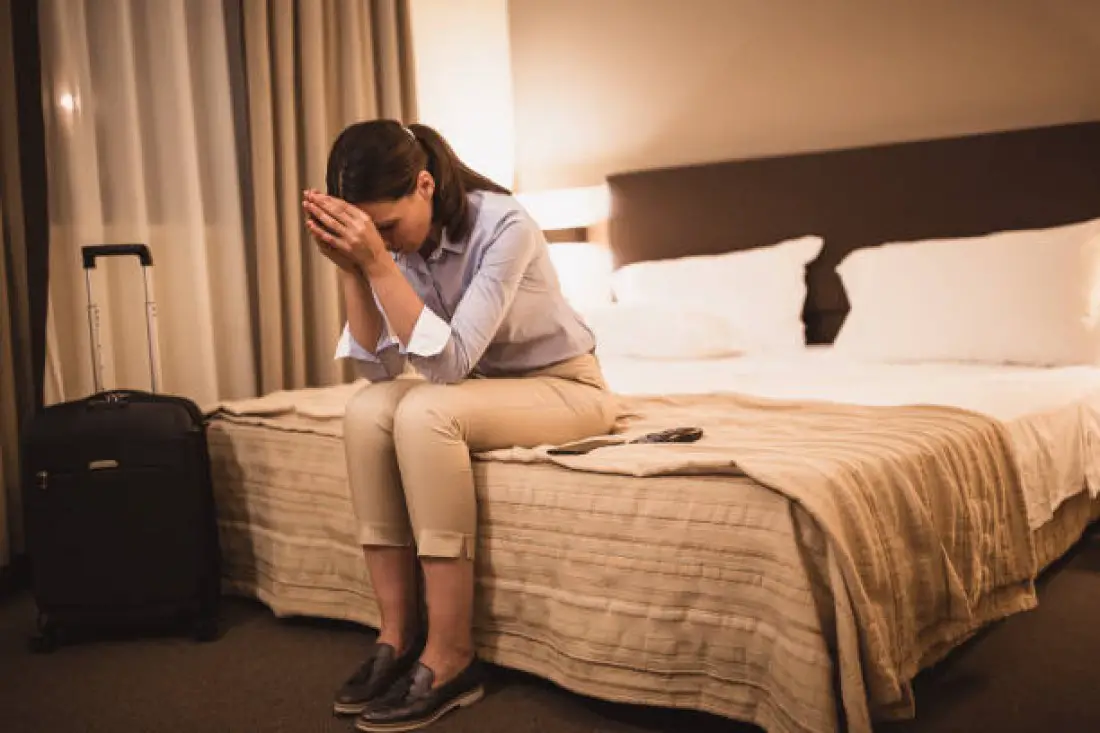
The funeral reception had ended two hours ago, but our house still smelled like the casseroles and sympathy flowers that well-meaning neighbors had brought in endless rotation over the past four days. The lilies in particular made my stomach turn—their sickly-sweet fragrance forever tainted now, inextricably linked to the memory of my fifteen-year-old daughter’s closed casket at the front of the church, surrounded by photographs from a life cut impossibly short.
I stood at the kitchen sink, mechanically washing the same plate for the third time, staring out the window at the November dusk settling over our suburban backyard. The tire swing David had hung from the oak tree when Emma was seven still hung there, motionless in the still air, a relic from a time when our greatest worry was whether she’d scrape her knee climbing too high.
“Claire.” My husband’s voice behind me was flat, emotionless in that way it had been since the accident. Four days of shock had hollowed him out, leaving behind a man who looked like David but spoke with the mechanical precision of someone trying very hard not to feel anything at all. “We need to talk about Emma’s room.”
I set down the plate, gripping the edge of the sink until my knuckles went white. “Not yet.”
“It’s been four days. The longer we wait, the harder it will be.” He moved to stand beside me, but he didn’t touch me, didn’t offer the comfort we both desperately needed and were both too broken to provide. “I think we should pack up her things this weekend. Donate what we can. It’s not healthy to leave everything exactly as it was, like we’re waiting for her to come home.”
The words hit me like a physical blow. “She died four days ago, David. Four days. I haven’t even—I can’t even—” My voice cracked, the tears I’d been holding back since the funeral threatening to spill over again.
“Which is exactly why we need to do this now, while we can still function. Before the grief becomes so overwhelming that we can’t move forward at all.” His voice remained steady, controlled, but I heard the tremor underneath. “I can’t walk past her room every day and see her things exactly as she left them. I can’t do it, Claire. It’s killing me.”
“So we just erase her? Pack everything away like she never existed?” The anger surged up from somewhere deep, hot and bitter.
“That’s not what I’m saying.” For the first time, emotion cracked through his composure—frustration, pain, desperation. “I’m saying we can’t live in a shrine. We can’t spend the rest of our lives frozen in this moment, surrounded by reminders of what we’ve lost. We need to move forward, even if it’s just one small step at a time.”
“I’m not ready.” The words came out as a whisper.
“You’ll never be ready. Neither will I. But we have to do it anyway.” He turned to leave, then paused in the doorway. “I’m going to my brother’s for a few days. Give us both some space. When I come back on Sunday, I’m going to pack up her room. I need you to understand that I’m not trying to hurt you. I’m trying to survive.”
The front door closed quietly behind him fifteen minutes later. I heard his car start, heard the crunch of gravel as he backed down the driveway, and then the house fell into a silence so complete it felt like being underwater.
I stood there in the kitchen as darkness gathered outside, unable to move, unable to think, unable to do anything except breathe and remember and hurt with an intensity that seemed impossible to survive.
Eventually, I found myself climbing the stairs to the second floor. My feet carried me down the hallway past the bathroom Emma had complained was too small, past the linen closet where we’d measured her height with pencil marks every birthday, stopping at the door with the purple beaded curtain she’d hung when she was twelve because “doors are for people with no imagination, Mom.”
The beads clicked softly as I pushed through them into Emma’s room.
David was right—everything was exactly as she’d left it last Wednesday morning before school. Unmade bed with the galaxy-print comforter bunched at the foot. Desk covered with notebooks, sketch pads, colored pencils scattered like pick-up sticks. Bulletin board dense with photos, ticket stubs, postcards, fortune cookie fortunes pinned in overlapping layers. Bookshelves sagging under the weight of fantasy novels and poetry collections and field guides to birds and plants. The closet door hanging open, revealing the organized chaos of her wardrobe—vintage band t-shirts, thrifted dresses, the black combat boots she’d saved three months of allowance to buy.
This room was so completely, utterly Emma that standing in it felt like being stabbed repeatedly in the chest.
I sank down onto her bed, pulling her pillow to my face and breathing in the scent of her shampoo, her laundry detergent, the essential oil blend she’d made herself because she’d read that lavender and chamomile helped with anxiety. The pillow was damp with tears before I even realized I was crying again.
I don’t know how long I sat there, drowning in the absence of my daughter. Long enough for the room to fall into darkness, illuminated only by the string of fairy lights she’d draped along her bookshelf. Long enough for my tears to dry into exhausted numbness. Long enough for the initial sharp edge of grief to dull into something more like a vast, empty ache.
Eventually, I became aware of my surroundings again. The fairy lights cast soft shadows across the walls covered with Emma’s artwork—watercolor paintings of imaginary landscapes, charcoal sketches of trees and buildings, a series of portraits of our family done in her evolving style over the years. Looking at them now, I could trace her growth as an artist, see how her confidence had developed, how her eye for detail had sharpened.
There was so much of her here. So much life and personality and creativity. How could David ask me to pack this all away, to reduce fifteen years of existence to boxes stored in the garage?
But as I looked around the room, really looked at it for the first time since the accident, I realized I didn’t really know this space anymore. Emma had been intensely private in recent months, protective of her room in a way she hadn’t been as a younger child. There had been a time when she’d dragged me in here daily to show me drawings or read me poems or model thrift store finds. But over the past year, the door—and the beaded curtain—had gradually closed.
I’d told myself it was normal teenage development, the natural pulling away that happened as children became adolescents. I’d given her space, respected her privacy, trusted that she’d come to me if she needed to talk.
Now I wondered what I’d missed. What had been happening in this room, in the interior world of my daughter’s mind, that I’d been too respectful—or too afraid—to ask about?
I stood up, moving slowly through the room as if seeing it for the first time. The books on her shelf revealed interests I’d only vaguely been aware of—astronomy, mythology, poetry by authors I’d never heard of. Her desk drawers held journals I’d never known she kept, filled with entries in her distinctive handwriting, a mix of cursive and print that she’d developed into something uniquely her own.
I picked up one of the journals, dated from two years ago, and flipped it open to a random page:
“Everyone at school thinks they know me, but they only see the surface. They see the quiet girl who likes to draw, who doesn’t talk much in class, who eats lunch in the art room. They don’t see the worlds I create in my head, the stories I tell myself, the person I am when nobody’s watching. Sometimes I wonder if even Mom and Dad really know me, or if they just know the version of Emma that I show them because it’s easier than explaining all the complicated, contradictory things I actually feel.”
The words hit me with unexpected force. I’d thought I knew my daughter—thought I understood her quiet nature, her artistic temperament, her preference for solitude. But reading these words, I realized there had been entire universes inside her that she’d never shared, perhaps because she hadn’t known how, or perhaps because I’d never asked the right questions.
I set the journal down carefully, guilt and grief tangling together in my chest. How many other things had I missed? How many signals had I failed to see?
As I stood there, wrestling with these questions, my eye caught on something I’d never noticed before—a small piece of paper sticking out from under Emma’s bed, just barely visible in the glow of the fairy lights. I knelt down, pulling it out carefully.
It was a note, written on lined notebook paper in Emma’s handwriting:
“Mom—if you’re reading this, then something has happened to me. I don’t know what, and I’m not being dramatic or suicidal or anything like that. I just have this weird feeling that I should write some things down, that I should leave something behind that explains… me, I guess. Everything important is in the shoebox under my bed. Please don’t let Dad throw it away without looking at it first. Please try to understand. I love you. —Emma”
My hands were shaking as I read and re-read the note. The handwriting was definitely hers—I’d seen it on homework and birthday cards and grocery lists for years. But when had she written this? And why? The paper wasn’t yellowed or worn; it looked recent, maybe written within the past few months.
I set the note aside and reached under the bed, my fingers finding the smooth cardboard of a shoebox pushed far back against the wall. I pulled it out, dust motes dancing in the fairy lights, and stared at it for a long moment before finding the courage to lift the lid.
Inside was a carefully curated collection of items, each placed with obvious intention. A small stack of sealed envelopes, each labeled with a name—one for me, one for David, one for her best friend Morgan, and several others I didn’t immediately recognize. A delicate silver bracelet with small charms—a book, a paintbrush, a tiny crescent moon. The family photo from our vacation to the Grand Canyon two years ago, the last real vacation we’d taken together. And a small digital voice recorder, the kind students used for lectures, with a sticky note attached: “Press play.”
I picked up the envelope with my name first, my fingers trembling as I broke the seal. The letter inside was dated three weeks ago.
“Dear Mom,
I’m writing this at 2 a.m. because I can’t sleep and I’ve been thinking about all the things I’ve never said to you. Not because I don’t want to, but because I don’t know how. You’ve always been so strong, so put-together, so capable of handling everything that life throws at you. And I’ve always felt like I should be more like that, like I should have it all figured out the way you seem to.
But the truth is, I don’t have anything figured out. I’m fifteen and I’m confused and scared most of the time. Scared that I’m not smart enough, not talented enough, not normal enough. Scared that I’m disappointing you and Dad even though you never say it. Scared that the person I am inside doesn’t match the person everyone expects me to be.
I know you see me as your quiet, artistic daughter who likes to read and draw and spend time alone. And that’s true, but it’s not all of who I am. There’s so much more going on inside my head that I don’t know how to explain. Sometimes I feel things so intensely it’s like my skin can’t contain them all. Sometimes I look at other kids my age and feel like I’m from a completely different planet. Sometimes I wake up and don’t know how to be a person, how to navigate all the expectations and social rules and unspoken requirements of being a teenage girl.
I’m not telling you this to make you feel bad or to make you worry. I’m telling you because I want you to know me—the real me, not just the version I show the world. And if something ever happens to me, I want you to understand that it’s not your fault. You’ve been an amazing mom. You’ve given me everything I could ever need. But some struggles happen inside, in places even the best parents can’t reach.
I love you so much, Mom. More than I know how to say out loud. Thank you for being patient with me, for giving me space to figure out who I am, for loving me even when I’m difficult or distant or confusing.
Your complicated, messy, grateful daughter, Emma”
I couldn’t see the words anymore through my tears. They came in great, wracking sobs that seemed to tear out of my chest, echoing in the quiet room. This letter—written just three weeks before the accident that took her life—was a gift and a knife wound simultaneously. A chance to understand my daughter better, delivered too late to do anything with that understanding.
But she’d left other letters. Other pieces of herself.
With shaking hands, I opened the one addressed to David. It was shorter, but no less powerful:
“Dad, I know you love me, but I also know I’m not the daughter you imagined having. I’m not good at sports, I don’t care about grades the way you want me to, I’d rather draw than do anything practical or productive. I see the disappointment in your eyes sometimes, even though you try to hide it. I’m sorry I’m not the achiever you hoped for. I’m sorry I’m weird and quiet and prefer books to people. But I’m also not sorry for being who I am. I hope someday you can understand that different doesn’t mean wrong, and that success doesn’t have to look the way you think it should. I love you, even when it feels like we speak different languages. —Emma”
My heart broke all over again, this time for David and the conversation he’d never get to have with his daughter. For the chance at understanding that had been stolen from both of them.
There were three more letters—one to Morgan that I set aside to deliver later, and two to people I didn’t know, names I didn’t recognize: Alex and Jordan. Friends from online, perhaps, or people she’d met in contexts I wasn’t aware of. Each sealed envelope represented a relationship, a connection, a piece of Emma’s world that she’d kept private.
I picked up the bracelet next, examining the small charms more closely. The book, the paintbrush—those made sense, representing her love of reading and art. But the crescent moon seemed more symbolic, perhaps representing her fascination with astronomy, with the night sky she’d spent hours photographing with the camera she’d bought from birthday money.
Attached to the bracelet was a small note: “From Morgan, 8th grade. She said the moon was for dreams and the magic of possibility. This bracelet got me through some really dark times. I wore it every day when things were hard, when I felt alone, when I needed to remember that I wasn’t the only weird, creative soul in the world. —E”
The family photo from the Grand Canyon was worn around the edges from handling, and when I looked closer, I saw that Emma had used a metallic silver pen to draw small hearts around each of our faces. My heart. David’s heart. Her own. Three hearts, a family, captured in a moment of genuine happiness before everything got so complicated.
On the back, she’d written: “Best day ever. Before I started pretending to be who I thought you wanted me to be. I miss being this version of Emma—the one who wasn’t afraid to just be herself. —Age 13”
Age thirteen. Two years ago. When had she started feeling like she had to pretend? And why hadn’t I noticed?
Finally, I picked up the digital recorder. The sticky note on it said simply “Press play,” and after a moment of hesitation, I did.
Emma’s voice filled the room—soft, familiar, heartbreakingly alive. I closed my eyes, and for a moment, I could almost believe she was still here, just in another room, just temporarily out of sight.
“Hi, Mom. And probably Dad too, if you’re both listening to this together. God, this is weird. I’m literally recording my own voice to talk to you from… beyond the grave? That sounds so dramatic. But I don’t know how else to say all the things I want to say when I can’t seem to say them out loud.
I guess I should start by explaining why I’m doing this. A few months ago, I read this book about a girl who died suddenly, and her family discovered all these things about her after she was gone—secrets and dreams and struggles they never knew about. And it made me think about my own life, about all the things I keep inside, about what you’d find if something ever happened to me.
And I realized I don’t want you to just find random stuff and have to piece together who I was. I want to tell you myself. I want you to understand.
So here’s the truth: I’m not doing as well as you probably think I am. I mean, I’m not in crisis or anything—I’m not going to hurt myself, and this isn’t some dramatic suicide note or cry for help. But I struggle. A lot. With anxiety mostly, and sometimes depression, and definitely with feeling like I don’t fit anywhere.
School is hard. Not the academic part—I’m doing fine in my classes even though Dad doesn’t think so because I get Bs instead of As. But the social part is exhausting. Everyone seems to have figured out who they are and where they belong, and I’m just… lost. I tried being part of different groups—the art kids, the theater crowd, even tried sitting with the popular girls for a while—but I never felt like I belonged anywhere. I always felt like I was performing, like I was wearing a costume of who I thought people wanted me to be.
The only place I feel like myself is alone in my room, drawing or writing or just sitting with my thoughts. Which I know sounds depressing, but it’s not, really. I like my own company. I like the worlds I create in my head. I like being able to think without having to immediately translate those thoughts into words that other people can understand.
But I know it worries you, Mom. I see the concern in your eyes when I choose to stay home instead of going out with friends. I hear it in your voice when you ask if everything’s okay at school. And I’m sorry for making you worry, but I also need you to understand that being alone doesn’t mean I’m lonely. Being quiet doesn’t mean I’m sad. Sometimes it just means I’m being myself.
The hardest part is feeling like I’m disappointing both of you by not being the daughter you imagined. Dad wanted an athlete, a straight-A student, someone ambitious and driven. Mom, you’ve never said it out loud, but I can tell you wish I was more social, more involved, more… normal. And I’m sorry I’m not those things. I’m sorry I’d rather paint than play soccer. I’m sorry I read philosophy books instead of studying for chemistry tests. I’m sorry my idea of a perfect Friday night is staying home with my sketchbook instead of going to football games.
But here’s what I need you to know: Even though I’m not the daughter you expected, I’m happy being me. Or at least, I’m learning to be. It’s a process. Some days I wake up and feel like I’ve finally figured out who I am, and other days I feel like a stranger in my own skin. But I’m working on accepting myself, on being okay with being different, with being complicated.
And I need you to be okay with it too. I need you to understand that my worth isn’t measured by my grades or my social life or how well I fit into your expectations. I’m valuable because I’m a person with thoughts and feelings and dreams that matter, even if they’re different from what you imagined.
I love you both so much. More than I know how to express in person, which is why I’m saying it here, in the safety of a recording I might never even let you hear. You’ve given me everything—a safe home, food, education, opportunities. You’ve loved me the best way you know how. And I’m grateful for all of it, even when I don’t show it.
I just hope that if you’re hearing this, if something’s happened to me and you’ve found this box, that you’ll use these things to understand me better. Read the letters. Look at the bracelet that got me through dark times. See the photo from when things were simpler. And know that despite all my struggles and complications and weirdness, I was loved and I loved you back.
Don’t blame yourselves for not knowing everything. Some things we have to carry alone. Some struggles are internal, invisible, impossible to see even when you’re looking right at them. You couldn’t have fixed me because I wasn’t broken. I was just trying to figure out how to be a complicated, contradictory, creative person in a world that likes things simple and clear and easy to understand.
I hope… I hope you remember me as someone who tried to be authentic, who valued creativity and kindness, who found beauty in small things. I hope you keep some of my art, maybe frame some of the paintings I’m proudest of. I hope you give my books to kids who will love them the way I did. I hope you remember that I was happy, in my own quiet way, even when it didn’t look like the kind of happiness you expected.
And please, please don’t spend the rest of your lives frozen in grief. Don’t make my room a shrine or my memory a prison. Live your lives. Find joy. Remember me, but don’t let remembering me prevent you from moving forward.
I love you. I love you. I love you.
—Emma”
The recording ended with a soft click, leaving silence that felt vast and heavy. I sat there on my daughter’s bed, surrounded by her things, holding pieces of her interior world in my hands, and I understood with devastating clarity how much I’d missed, how much I’d failed to see.
But I also understood something else: This wasn’t meant to make me feel guilty. Emma had been clear about that. She hadn’t left these things as an accusation or a punishment. She’d left them as a gift—a way of being known, of being understood, even after she was gone.
The accident hadn’t been suicide. The police had been clear about that—black ice, another driver losing control, pure tragic chance. These recordings and letters weren’t a goodbye note or a cry for help we’d missed. They were something else entirely: a testament to a thoughtful, introspective young woman who’d understood that life was uncertain and had wanted to leave something meaningful behind, just in case.
I pulled out my phone and texted David: “Come home. Whenever you can. I found something. Something important.”
His reply came ten minutes later: “On my way.”
While I waited, I carefully reread the letters, listened to the recording again, examined each item in the box as if it might hold more secrets, more understanding. And slowly, through my grief, a different feeling emerged: gratitude.
Gratitude that Emma had left this for us. Gratitude that she’d found a way to communicate things she couldn’t say out loud. Gratitude for the opportunity to know my daughter better, even though the knowing came too late to change anything.
When I heard David’s car in the driveway two hours later, I was still sitting in Emma’s room, the shoebox open on my lap, the letters spread around me like sacred texts. He appeared in the doorway, looking exhausted and heartbroken and resigned to whatever new pain he thought I was about to deliver.
“Listen,” I said simply, and pressed play on the recorder.
We sat together on Emma’s bed as our daughter’s voice filled the room, telling us things she’d never been able to say in life. I watched David’s face as he listened—watched him cry, watched understanding and regret and love and grief move across his features like weather systems.
When it ended, he picked up the letter she’d written to him and read it silently, tears streaming down his face. “I didn’t know,” he whispered when he finished. “I didn’t know she felt like she was disappointing me. God, Claire, I was so proud of her. I am so proud of her. I just didn’t know how to tell her that being herself was enough, that she didn’t have to achieve or compete or be anything other than exactly who she was.”
“She knows now,” I said, though I wasn’t sure if I believed in an afterlife where such knowledge mattered. But I wanted to believe it. I needed to believe it.
We sat there for hours, reading and rereading the letters, listening to the recording, talking about Emma in ways we hadn’t since she was a small child. We remembered specific moments, recontextualizing them with this new understanding. We talked about what we’d missed, what we wished we’d done differently, what we would tell her now if we had the chance.
And slowly, painfully, something shifted between us. The wall of grief that had separated us began to crack, letting through small slivers of shared sorrow, shared memory, shared love for the complicated, creative, beautiful daughter we’d lost.
“I still think we should pack up her room,” David said eventually, as dawn light began to creep through Emma’s windows. “But not to erase her. To honor her. To keep what matters and let go of what doesn’t. She said not to make this a shrine, not to let remembering her prevent us from moving forward.”
“I know,” I said. “But not yet. Not today.”
“Not today,” he agreed. “But soon. Together.”
I nodded, understanding that this was how we’d survive this: together, with honesty, with grace for our failures and gratitude for the gifts we’d been given—including this final gift from Emma, this window into her interior world.
We spent the next week moving through our grief with new purpose. We read Emma’s letter to Morgan together, then invited her over to deliver it in person, along with several of Emma’s favorite books and art supplies. We contacted the people named Alex and Jordan through Emma’s email—they turned out to be members of an online writing community she’d been part of, young people from across the country who’d bonded over their love of poetry and their struggles with feeling different. We sent them their letters and shared some of Emma’s writing with them, learning about yet another facet of our daughter’s life.
We framed some of Emma’s artwork, just as she’d hoped we would. We donated her books to the library’s teen section, each one inscribed with a bookplate: “From the collection of Emma Richardson, who loved stories and the people who tell them.” We packed up her clothes carefully, keeping a few favorite items and donating the rest to a youth shelter.
And we kept the shoebox. We kept the letters and the recording and the bracelet and the photo, not as shrines but as connections, as reminders of the real Emma—not the idealized version we’d imagined, but the complicated, creative, struggling, beautiful person she actually was.
Six months later, on what would have been Emma’s sixteenth birthday, David and I sat in her room—now converted into a combination art studio and reading room, filled with her things but no longer frozen in time. We listened to the recording together, as we’d done on the first of every month since we’d found it, and we talked about our daughter with honesty and love and acceptance.
“Do you think she knew?” David asked. “How much we loved her?”
“I think she hoped,” I said, looking at the family photo with its silver hearts. “I think she wanted to believe it, even when she couldn’t quite feel it. Just like we wanted to believe we understood her, even when we were missing so much.”
“I wish I’d told her more often,” he said. “I wish I’d said that she didn’t have to be anything other than herself to make me proud.”
“I wish I’d asked more questions,” I added. “I wish I’d pushed past her privacy to really understand what she was going through.”
“But we can’t change that now,” David said, and there was acceptance in his voice rather than bitterness. “We can only honor who she was and try to live the way she wanted us to—without being frozen in grief, without making her memory a prison.”
I nodded, looking around the room that had transformed from a teenage bedroom into something else: a memorial that lived and breathed and evolved, that served a purpose rather than simply preserving a moment in time.
“She gave us a gift,” I said. “Even in leaving, she gave us a way to understand her better. Not everyone gets that chance.”
“No,” David agreed. “They don’t.”
We sat in comfortable silence, surrounded by Emma’s art and books and the lingering sense of her presence—not as a ghost or a shrine, but as a memory integrated into our lives, informing our present without imprisoning us in the past.
The shoebox sat on a shelf nearby, always accessible, never forgotten. Inside were the letters and the recording and the bracelet and the photo—pieces of our daughter’s interior world, carefully preserved, deeply cherished, regularly revisited.
They weren’t torturous reminders of what we’d lost. They were bridges to understanding, pathways to healing, proof that love could transcend death and that understanding could come even after the chance to act on that understanding had passed.
Emma had worried about disappointing us, about not being enough, about being too complicated and contradictory to be understood. But in leaving these pieces of herself behind, she’d shown us exactly who she was: thoughtful, creative, brave enough to be vulnerable even in death, generous enough to give us the gift of knowing her truly.
And we’d learned to accept that gift with gratitude rather than guilt, with love rather than regret, with a commitment to honoring her memory by living fully rather than by freezing in grief.
She had asked us not to make her room a shrine. We hadn’t. We’d made it something better: a living memorial that evolved and breathed and served the living while honoring the dead.
And in doing so, we’d learned to carry her with us—not as a weight that held us back, but as a light that guided us forward, into a future she would never see but had helped us learn to navigate with grace, honesty, and love.
The things she left behind—the letters, the recording, the carefully curated items in a shoebox—had become our most precious possessions. Not because they brought her back, but because they allowed us to know her better in death than we’d managed to in life.
And in that knowing, we found not just grief, but also healing. Not just loss, but also love. Not just an ending, but a beginning—of understanding, of acceptance, of learning to live with the beautiful, complicated truth of who our daughter had really been.
Emma Richardson. Artist. Writer. Dreamer. Beloved daughter. Forever fifteen. Finally, completely understood.

Adrian Hawthorne is a celebrated author and dedicated archivist who finds inspiration in the hidden stories of the past. Educated at Oxford, he now works at the National Archives, where preserving history fuels his evocative writing. Balancing archival precision with creative storytelling, Adrian founded the Hawthorne Institute of Literary Arts to mentor emerging writers and honor the timeless art of narrative.