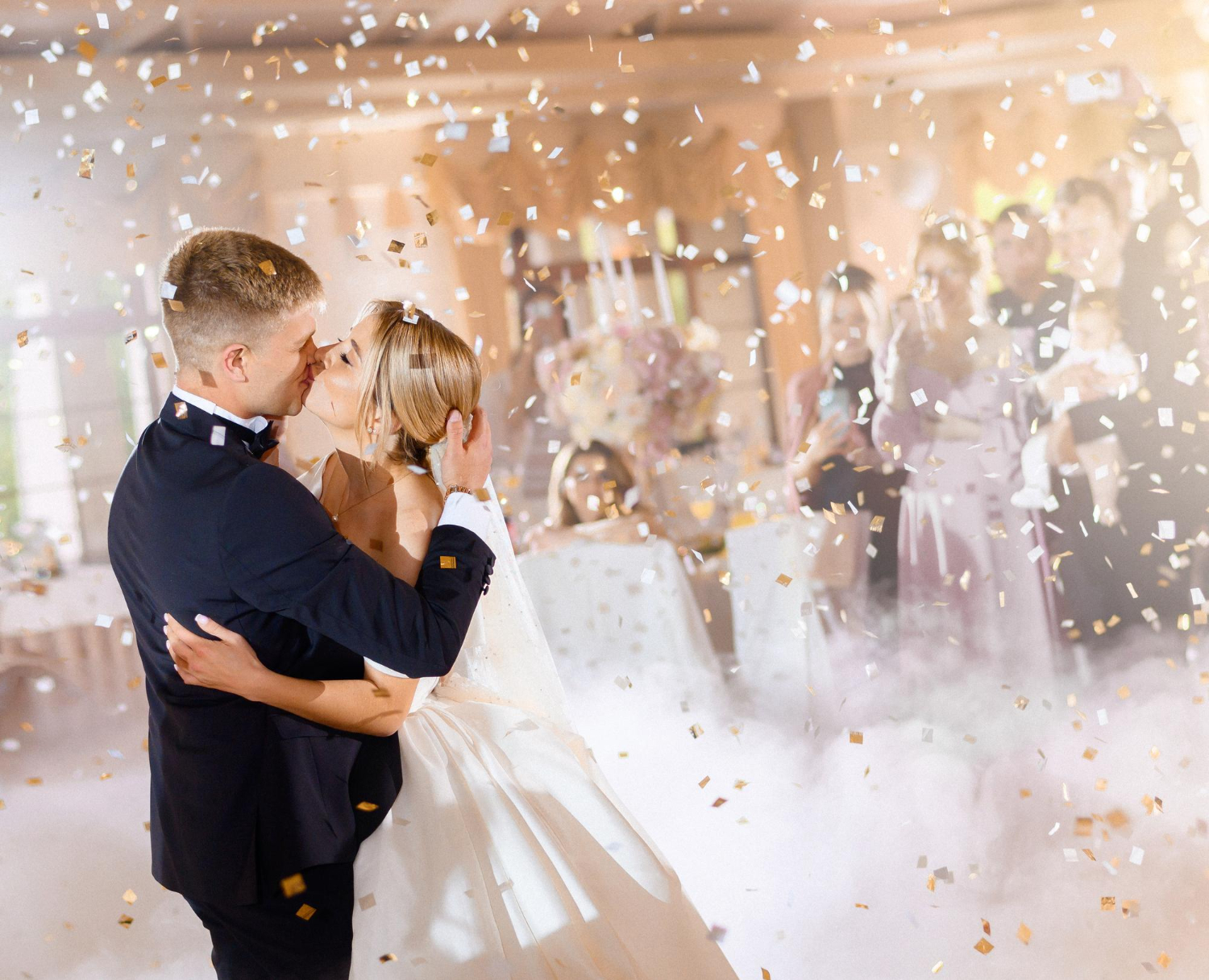
The morning of my daughter’s wedding, I woke not to an alarm but to silence—the dense, expectant quiet that settles over a battlefield before the first shot is fired. I lay in bed staring at the water-stained ceiling of our bedroom in the brick apartment building where Earl and I had lived for thirty years, mentally reviewing the checklist I’d been perfecting for six months. This wasn’t just a wedding. It was a coronation, and I’d spent forty years of my life earning the right to give my daughter this throne.
The pheasants would arrive at six AM sharp from a private farm in rural Virginia. I’d personally inspected each bird two weeks ago, pressing my thumbs into their breasts to ensure they were perfect. The tablecloths were vintage cream linen with French hand-embroidery, pulled from climate-controlled storage at an antique dealer who owed me favors from three decades of referrals. The flowers weren’t roses—Camille had been clear about that, her voice sharp with the kind of disdain people develop when they’re trying to distance themselves from where they came from. Instead, I’d arranged for wild meadow flowers paired with rare orchids, exactly as she’d demanded, from a florist in Connecticut who’d started his career as my prep cook.
Everything had been measured to the millimeter, timed to the second, funded to the last dollar in our savings account. I’d given forty years to the restaurant business—forty years of feeding senators and celebrities, tech billionaires and foreign dignitaries. Always the woman in the severe black suit fading into the wallpaper, ensuring the wine was perfectly chilled and the crystal sang when toasted. I’d built a reputation on being invisible and indispensable, the kind of professional who made impossible things happen without ever taking credit.
I’d denied myself everything for this day. The winter coat I wore was ten years old, threadbare at the cuffs. We hadn’t fixed the leaking faucet in the bathroom for two years because every spare dollar went into Camille’s wedding fund. Our twelve-year-old Buick LeSabre made embarrassing noises when it started, but a new car could wait. My daughter’s transformation from the child of a caterer into Mrs. Julian Vance could not.
Earl was already awake, sitting at our small kitchen table in his charcoal suit—the same one he’d worn to his mother’s funeral a decade ago, pressed so meticulously the creases could cut glass. His hands trembled slightly as he lifted his teacup, and I recognized the tremor. It was fear, the same fear I’d been pushing down for months.
“Vivien,” he said, his voice rough with sleep and anxiety, “are you sure we belong there?”
I walked over and placed my hand on his shoulder, feeling the tension coiled in his muscles like steel cables. “Earl, stop. We don’t just belong—we’re the parents of the bride. We paid for the reception. Every fork, every napkin, every bottle of wine represents our sweat and sacrifice. The Vances are giving her a name, but we gave her life. That counts for something.”
I said it with more confidence than I felt. The truth was, I’d been asking myself the same question for months, ever since Camille had started referring to me as “the coordinator” instead of “mom” when discussing wedding details with her future in-laws. Ever since she’d asked me—actually asked me—not to mention that I’d worked in restaurants because “it might give the wrong impression.”
I put on my dress, a structured dark chocolate sheath that fell modestly below the knee. I’d chosen it carefully—elegant but not showy, expensive but not ostentatious. I pinned a simple gold brooch to the lapel, my mother’s, the only piece of jewelry I owned that had any history. We weren’t trying to compete with old money. We were trying to prove that dignity could be its own kind of wealth.
The drive from our Brooklyn apartment to the Hudson Valley estate took an hour and fifteen minutes. Earl drove with both hands on the wheel, navigating potholes and highway traffic as if he were transporting nitroglycerin. We barely spoke. I was lost in memories of the negotiations that had made this day possible—calling in every favor I’d accumulated over four decades, leveraging relationships I’d built one perfectly timed entrée at a time.
The mansion belonged to Frank Delgado, an old friend who’d started as a dishwasher in a restaurant where I’d been sous chef thirty years ago. I’d taught him English during slow afternoons, helped him get his green card, given him a loan when he’d wanted to buy his first property. He’d built an empire from that start, and when I’d called asking about his estate for Camille’s wedding, he’d waved off his usual fifty-thousand-dollar venue fee. “For you, Vivien? I’d pull the moon from the sky. Take the hall. We’ll settle later.”
Camille had told Julian’s family that the mansion was a “family estate,” that she’d “charmed the owner into giving us a deal.” I hadn’t corrected her. I’d wanted her to have that pride, that confidence. I’d wanted her to walk into her new life without the weight of knowing how much her parents had bent and scraped to put her there.
Now, as the wrought-iron gates of the estate emerged from the morning mist like something from a fairy tale, my heart hammered against my ribs. I expected open gates, garlands of flowers, smiling valets in white jackets directing us to the family parking area.
Instead, the gates were closed.
Earl slowed the car, confusion creasing his forehead. “Vivien? Why are they shut? Are we early?”
I checked my watch. Seven-thirty AM. We were exactly on time for the family breakfast I’d personally arranged. “No, we’re right on schedule. Drive closer.”
Two security guards stood behind the iron bars, and my stomach dropped when I realized I didn’t recognize them. I knew Frank’s regular staff by name—I’d fed them lunch during yesterday’s setup. These men were strangers, wearing black tactical uniforms more appropriate for a prison than a wedding. They stood with legs spread wide, arms crossed, faces blank and hostile.
Earl pulled the Buick to a stop fifteen feet from the gate. The engine ticked as it cooled. Neither of us moved.
Then I saw it.
Taped across the elegant central scrollwork of the gate with gray duct tape—crude, ugly duct tape that scarred the beautiful ironwork—was a large laminated poster. Even from inside the car, I could see what it was.
A photograph. Of us.
The image was one I’d sent to Camille just last week via text message. Earl and I sitting on our apartment building’s front stoop after weeding the community garden, wearing stained T-shirts, holding mugs of iced tea, laughing at some joke I could no longer remember. It was intimate. Vulnerable. The kind of photo you share with someone you trust.
Now it was a wanted poster.
Across our smiling faces, someone had stamped in angry red letters: “THESE INDIVIDUALS NOT PERMITTED. SECURITY THREAT. ENTRY PROHIBITED.”
The air left my lungs as if I’d been struck in the chest with a hammer. I couldn’t breathe, couldn’t think, couldn’t process what I was seeing. This wasn’t just rejection. This was public humiliation, a declaration that we were trash to be kept away from the fine china and polite society.
“Vivien.” Earl’s voice came from very far away, strangled and wet. “What is this? Is this someone’s idea of a joke?”
I couldn’t answer. I was staring at the red X stamped over my face, over Earl’s face, and trying to understand how the daughter I’d carried for nine months, whose fevers I’d broken with cool cloths at three in the morning, whose college tuition I’d paid by working double shifts for four years straight—how that daughter could reduce us to this.
One of the guards approached the car. He didn’t bend down to speak to us. He simply rapped his baton against the hood of our Buick—thud, thud, thud—and made a circular “turn around” gesture with his finger, like we were homeless people loitering outside a country club.
My gaze traveled upward, past the guards, past the gate, to the second-floor balcony of the mansion visible through the linden trees. And there she was.
Camille.
She was wearing the dress—the one that cost more than our car, more than three months of our rent. French lace from a boutique in Manhattan, hand-sewn with a thousand tiny pearls that caught the morning light like stars. She looked magnificent, transformed, everything I’d dreamed she could be.
Beside her stood Alberta Vance, the groom’s mother, wearing a hat so wide it could have provided shade for a small family. And next to Alberta, I could see Julian—tall, handsome, perfectly groomed, the kind of man who’d never worked a day in his life and wore it as a badge of honor.
I waited for Camille to see us. I waited for her to scream, to run down the marble stairs, to tear that obscene sign off the gate herself. I waited for the daughter I’d raised to show even a flicker of the values I’d tried to teach her.
Instead, Camille smiled. She pointed at our car. She said something to Alberta, and the older woman threw her head back and laughed, the sound carrying across the manicured lawn like breaking glass. Then my daughter—my only child, the girl whose first word had been “mama,” who used to climb into our bed during thunderstorms—raised a champagne flute.
She toasted us. She toasted our humiliation, our exclusion, her successful escape from the embarrassment of her origins. She took a long sip, threw her head back in laughter, turned her back on us, and walked into the party I had paid for.
I didn’t cry. Tears are for people who still have hope, who still believe in the possibility of redemption. In that moment, watching my daughter toast our destruction, my hope didn’t die—it crystallized into something harder and sharper, like coal compressed into diamond.
I placed my hand on Earl’s arm. He was shaking, his whole body vibrating with a frequency I could feel through my palm. “Earl,” I said, and my voice was steady as a metronome, “turn the car around.”
“But Vivien, maybe we should call, maybe there’s been a mistake, maybe—”
“There’s been no mistake. Turn around, Earl.”
He inhaled a jagged breath that sounded like drowning, shifted the Buick into reverse, and we executed a slow, careful three-point turn in the gravel driveway. The guards didn’t even watch us leave. We were garbage that had been successfully disposed of, beneath their notice.
But they didn’t know who was driving away. They didn’t know that the conductor had just decided to stop the music.
The drive back to Brooklyn passed in a blur of gray highway and green trees that looked artificial, like painted backdrops in a cheap theater production. Earl gripped the steering wheel until his knuckles turned white, his breath coming in short, controlled bursts like he was trying not to vomit.
“Why, Viv?” he finally choked out, his voice breaking. “We gave her everything. Everything we had.”
“Don’t.” I cut him off sharply. “Don’t pity us. Pity is dangerous. It makes you soft when you need to be sharp.”
I opened my handbag and pulled out the item I kept at the bottom, beneath tissues and lip balm and the reading glasses I refused to admit I needed. My Little Black Book. It was bound in cracked faux leather, swollen with business cards, sticky notes, and scraps of paper covered in phone numbers. It was the bible of my career, accumulated over forty years of making the impossible happen. It contained the personal numbers of every chef, florist, sommelier, and venue manager in the tri-state area.
More importantly, it contained favors. Debts. Secrets.
I flipped to the P section and found what I needed. Paul.
Paul Martinez had been my head server for fifteen years before I’d helped him transition to event management. Twelve years ago, I’d found him washing dishes in a basement kitchen in Queens, illegal and terrified and gifted with an instinct for hospitality that couldn’t be taught. I’d taught him how to pour wine without spilling a drop, how to read a room and anticipate needs before they were spoken. When immigration had come asking questions, I’d hired a lawyer and paid the retainer myself. He called me “Mama Vivien” and meant it.
Today, Paul was the head maître d’ for Camille’s wedding. I’d recommended him myself, telling Camille he was the best in the business. She’d agreed without knowing why he was the best, without understanding that his loyalty was to me, not to her.
I dialed his number. He answered on the second ring, his voice breathless over the background noise of string quartets and clinking crystal.
“Vivien Carmichael! Thank God. Are you close? Alberta Vance is having an absolute meltdown about the place card calligraphy, but I handled it. We’re all waiting for the mother of the bride to make her entrance.”
“Paul,” I said, and my voice came out in the tone I used when a sous chef burned a béarnaise sauce—cold, final, devoid of emotion. “Listen to me very carefully. We are not coming.”
Silence on the other end, just the background chatter of wealthy people expecting to be served. “What? Did the car break down? I’ll send a driver right now, just tell me where—”
“No. The sponsor has withdrawn from the project.”
“Sponsor? I don’t understand. What project?”
“I mean me, Paul. I am the client. I am the bank. And I am revoking my presence and my financial obligations, effective immediately.”
I could hear him breathing, could picture him stepping away from the crowd into a quiet corner, his face going pale as he processed what I was saying. “Vivien, what happened? Did something—”
“Do you remember Section 4.2 of our standard service contract, Paul? The clause about client presence?”
His voice dropped to a whisper. “Client absence triggers conversion to commercial billing.”
“Exactly. As of this moment, this wedding transitions from a private family event to a commercial transaction. The open bar is closed. The kitchen stops serving complimentary food. The pheasants I personally selected—they stay in the freezer. The wine cellar, the special reserve bottles I brought from my personal collection yesterday—that door gets locked and the key goes in your pocket. Do you understand?”
“Vivien, there are two hundred people here. There’s eight thousand dollars of wine already opened and poured. The first course is plated and ready to go out.”
“Then charge them for it, Paul. Cash and carry. Every glass, every canapé, every minute of service. If they want it, they pay market rate. Immediately.”
“They’ll destroy me. Alberta Vance will—”
“No, she won’t. You’re just the messenger, and you have a signed contract that clearly states the terms. The account is frozen. You’re simply enforcing the agreement.”
I could hear him breathing hard, torn between loyalty and fear. “Mama Vivien, are you sure?”
“I have never been more certain of anything in my life. Make the announcement, Paul. And then call Frank and tell him what happened at the gate. He’ll know what to do.”
I ended the call before he could respond, before the part of me that had spent forty years people-pleasing and accommodating could second-guess the decision. I snapped the phone shut.
Earl glanced at me, terror and awe fighting for dominance on his face. “Vivien, what did you just do?”
“I stopped being a mother, Earl. I became a service provider. And service providers don’t work for free.”
I wasn’t there to witness what happened next, but I knew the choreography of a banquet disaster better than I knew my own heartbeat. I’d prevented enough of them over the years to understand exactly how one unfolded.
At the mansion, the guests were seated beneath an enormous white tent on the south lawn, the air perfumed with expensive cologne and entitled expectations. Camille was holding court at the head table, radiant in her pearl-encrusted dress, Julian beside her looking like a catalog model for inherited wealth. Alberta Vance was tapping her fork against crystal, preparing to give a speech about how two families were becoming one.
And then the machine stopped.
Paul, pale but professional, walked onto the floor and tapped his earpiece. On his signal, thirty servers froze mid-motion. Trays of bacon-wrapped scallops were lowered. Champagne bottles were pulled back from reaching hands. The quartet stopped mid-bar.
The silence was immediate and absolute.
“Excuse me, sir,” a server said to Julian’s uncle, gently removing a wine bottle from the man’s hand. “Technical pause.”
Confusion rippled through the crowd. Camille snapped her fingers—a gesture I’d never taught her, something she’d learned from her new family. “Paul! What’s going on? Why did the music stop? Where’s the wine service?”
Paul approached the head table. He didn’t bow, didn’t defer. He simply stood there with the posture I’d taught him—straight spine, shoulders back, eyes level—and spoke in a voice that carried across the sudden quiet.
“Madam, we’ve encountered a payment authorization issue. The account holder has withdrawn financial approval for this event.”
Alberta Vance shot to her feet, her massive hat bobbing. “What account holder? What are you talking about? My daughter-in-law’s mother paid for this wedding!”
“The account holder is not present on the premises,” Paul said, producing a clipboard. “Therefore, under the force majeure clause of our service contract, billing responsibility transfers to the event organizers present. That would be you.”
He handed Alberta a slip of paper. She snatched it, her face going from pink to crimson as she read.
“This says four thousand dollars! For one hour of venue rental and aperitifs!”
“That’s correct. The contract specifies immediate payment upon client absence. Card or cash?”
The silence that followed was so complete I imagine you could have heard a napkin drop. Somewhere a bird chirped, the sound obscenely cheerful.
“This is insane!” Camille screamed, her carefully cultivated poise cracking like cheap porcelain. “My mother paid! She paid for everything! Call her!”
“I would suggest you call her yourself,” Paul said calmly. “Until this invoice is settled, service is suspended.”
On his signal, every server in the tent turned in perfect unison and marched toward the exit. They left two hundred wealthy people alone with empty plates, locked wine cellars, and the dawning realization that their dignity was about to cost them money.
At that exact moment, Earl and I were pulling into our apartment building’s parking lot. I turned off my cell phone and placed it in my purse. Then I walked inside, climbed three flights of stairs to our apartment, and picked up our landline—the old rotary phone we’d kept because the landlord never upgraded.
I dialed Frank Delgado’s personal number.
“Frank,” I said when he answered, “it’s Vivien.”
“Viv! Paul just called me. Jesus Christ, what happened? He said you weren’t at the wedding, that Camille—”
“Listen to me, Frank. There’s something you need to know. Camille told the Vances that the mansion belongs to our family. She told them it’s her inheritance, that she owns it.”
The silence on the other end was dangerous. When Frank finally spoke, his voice was tight with controlled rage. “She said what?”
“She told them she owns your property. They think they’re hosting a wedding on their own estate.”
“That lying little—” Frank stopped, breathing hard. “That’s fraud, Vivien. That’s criminal misrepresentation. Insurance liability. I could lose my license if something happens and they think they’re the property owners.”
“I know.”
“I’m coming down there. Right now. And Vivien? I’m bringing the dogs.”
Twenty minutes later, back at the mansion, the power went out. The main breaker was thrown. The fairy lights died. The fountain stopped gurgling. Two hundred people sat in sudden darkness, their expensive outfits turning into shadows.
Then came the barking.
Frank Delgado emerged from the tree line wearing camouflage and work boots, holding two Doberman pinschers on thick leather leads. He carried a high-powered flashlight that he shone directly into Julian Vance’s face.
“Who’s in charge here?” Frank’s voice boomed across the lawn.
Alberta struggled to her feet, her hat askew. “This is my daughter-in-law’s estate! You’re trespassing! Get off our property immediately!”
Frank swung the flashlight to Camille’s face. She was huddled in her chair, the thousand-pearl dress suddenly looking like a costume. “Tell them, sweetheart,” Frank said, his voice soft and dangerous. “Tell them whose property this is.”
“It’s… it’s a rental,” Camille whispered.
“LOUDER! Tell these people the truth!”
“IT’S A RENTAL!” Camille screamed, her voice cracking. “We don’t own anything! My parents rented it! We’re not rich! They’re just caterers!”
The word hung in the air like a grenade. The bubble burst. The illusion shattered. The Vances turned on her as one.
Julian grabbed Camille’s arm hard enough to bruise, his handsome face twisting into something ugly. “You lied? You told us your family had money! You said your parents were connected, that they owned property in the Hudson Valley! We married you for the dowry!”
“What dowry?” Camille sobbed.
“The fifty thousand dollars your mother promised! We needed it! We’re bankrupt, you stupid girl! I have gambling debts, my mother has liens on her apartment—we thought we were marrying into money!”
The truth spilled out like poison, ugly and undeniable. Alberta looked at Camille with pure hatred. “Useless. Absolutely useless. We can’t even sell you back to your parents now.”
The guests fled, stumbling over each other in the darkness, desperate to escape the spectacular collapse of what they’d thought was a society wedding. Within minutes, Camille was alone on the lawn in her ruined dress, mascara streaking her face, her husband and new mother-in-law already in their car heading back to the city.
Three hours after we’d left the gate, Earl and I sat in our small kitchen drinking tea. The apartment was quiet except for the tick of the wall clock and the distant sounds of traffic from the street below.
“She’ll come here,” Earl said quietly. “When she realizes what happened, she’ll come here.”
“I know.”
The doorbell rang at exactly 6:47 PM. It was a long, desperate peal followed by frantic pounding.
I walked to the door, leaving the security chain engaged, and opened it three inches.
Camille looked like a refugee. Her dress was torn and dirty, her hair was a bird’s nest, mascara streaked her face in black rivers. Behind her stood Julian and Alberta, both looking wild-eyed and desperate.
“Mom! Open up!” Camille shoved her shoulder against the door. “Frank’s dogs chased us off the property! Julian left me in the parking lot! They’re poor, Mom! The Vances are bankrupt!”
“I know,” I said calmly.
“You knew?” she shrieked. “And you let me marry him anyway?”
“I didn’t ruin your life, Camille. I simply stopped funding your fantasy.”
The elevator dinged. More of the Vances poured into the hallway—Julian’s brothers, his aunt, all of them panting and furious.
“There they are!” Alberta screamed, pointing at our door. “The frauds! The con artists! Open this door! We want our money! We want the dowry you promised!”
“There is no dowry,” I said. “There never was.”
“You’re lying!” Camille was crying now, ugly sobs that shook her whole body. “Mom, please! I’m pregnant! You can’t kick out your grandson! You can’t abandon your own grandchild!”
I heard Earl gasp behind me. “Pregnant?”
“Yes!” Camille nodded frantically. “Tell them, Julian!”
Julian slicked back his hair, his greed returning now that he saw an opportunity. “That’s right. The heir. Your grandson. You owe him a future. Now open this door and give us the money.”
I looked at my daughter—this stranger wearing my daughter’s face—and felt nothing but a vast, cold emptiness where my love used to live.
“Wait here,” I said.
I walked to my desk and retrieved an envelope that had arrived in our mail three days ago. Camille had been too busy with wedding preparations to collect her own mail, so I’d opened it. I’d read it. I’d known.
I returned to the door and slid the envelope through the crack.
“Read it,” I said.
Camille tore it open with shaking hands. Alberta snatched it away and read aloud: “Reminder of follow-up appointment for contraceptive implant. Effective period: three years. Installed: six weeks ago.”
Alberta looked at Camille with disgust. “An implant? You lied about being pregnant?”
“It’s a mistake!” Camille stammered. “The clinic made an error, I can explain—”
“No mistake,” I said. “You just wanted leverage. Something to make us give you money. Goodbye, Camille.”
I started to close the door. Julian kicked it, the impact shuddering through the frame. “You owe us fifty thousand dollars! The dowry! We know you have it! We have a signed agreement!”
“You have a forged document,” I said. “I never signed anything. But even if I had, you’re too late.”
I opened the door wider and stepped into the hallway. Earl followed me, standing at my shoulder.
“You want the money my husband and I saved for forty years?” I asked softly. “The money from selling my mother’s condominium when she died? Our burial fund?”
“Yes!” Julian shouted. “Transfer it right now or we’ll sue you for everything you have!”
“I can’t transfer what’s already gone.”
I held up a receipt, printed on official letterhead: “HOSPICE CARE FOUNDATION OF NEW YORK. DONATION AMOUNT: $50,000. STATUS: PROCESSED AND CONFIRMED. NON-REFUNDABLE.”
Julian snatched the paper from my hand, his face going gray as he read. “You… you donated it? You gave away fifty thousand dollars to charity?”
“Anonymous donation. Irrevocable. It’s gone. We are now exactly as poor as we’ve always been. And so are you.”
“You insane bitch!” Julian lunged forward. Earl stepped in front of me, and I saw something in my husband’s eyes I’d never seen before—a willingness to fight, to protect, to finally stop being invisible.
Sirens wailed from the street below. The neighbors, bless them, had called the police.
Two officers stepped out of the elevator, taking in the scene: a hysterical woman in a destroyed wedding dress, a well-dressed young man who reeked of desperation, an older woman in a ridiculous hat, and two calm elderly people standing in their doorway.
“Evening, folks,” the sergeant said. “We got a call about a disturbance?”
“These people are trespassing and attempting extortion,” I said calmly. “I’d like them removed from the building.”
“Arrest them!” Alberta shrieked, pointing at us. “They stole our future! They promised us money and then gave it away!”
“Ma’am, you need to calm down,” the sergeant said, taking Alberta’s arm. “Let’s go downstairs and sort this out.”
“You’ll die alone!” Alberta hissed at me as the elevator doors began to close. “Both of you! You’ll die alone and unmourned!”
I looked at her—this woman who’d raised a son to marry for money, who’d built her life on appearances and debts—and I smiled.
“I’d rather die of thirst,” I said, “than drink from hands that despise me.”
The elevator doors closed.
Earl and I went back inside our apartment and locked the door. We stood there for a moment in the quiet, listening to our own breathing.
“So,” Earl said finally, sinking into his chair at the kitchen table. “We have no money. No daughter. No burial fund. What do we do now?”
I pulled a glossy brochure from the drawer where I’d hidden it two weeks ago. “THE DREAMLINER: COAST TO COAST LUXURY SLEEPER SERVICE. SAN FRANCISCO TO NEW YORK AND RETURN.”
Earl looked at the brochure, confused. “Viv, what is this?”
“I didn’t tell anyone everything,” I said, smiling as I poured us each a shot of the good vodka. “Remember that brick garage we owned in Red Hook? The one we rented out for storage?”
“Yes?”
“I sold it last week.”
Earl’s eyes widened. “You sold the garage?”
“For exactly the price of two first-class round-trip tickets to San Francisco with full board and private sleeping compartments. The train departs tomorrow at eight AM.”
Earl stared at me, tears filling his eyes. “But what about Camille? What if she needs us?”
“Camille is an adult. She made her choices. Now she can live with them. We’re done, Earl. We’ve served our sentence. Now we’re free.”
We packed that night, taking only what we needed. I left the chocolate dress hanging in the closet—it belonged to a woman who no longer existed, a woman who’d believed that sacrifice would be rewarded with love.
At five AM, we left our keys with the building superintendent and took a taxi to Grand Central Terminal. The station was magnificent in the early morning light, all art deco beauty and marble grandeur. Our train waited on Track 34, a silver arrow pointed toward the future.
The sleeping compartment was mahogany and velvet, with windows that framed the city as we pulled out of the station. As New York slid past—the grey tenements, the bridge spans, the river catching the first light of dawn—I took out my phone one last time.
I opened my contacts and scrolled to three names: Camille. Julian Vance. Alberta Vance.
Block. Block. Block.
Then I removed the SIM card and dropped it into the waste bin.
Earl sat across from me, watching the Hudson River flash past the window as we picked up speed. “You know what I regret, Viv?”
“What’s that?”
“That it took us forty years to see that sign on the gate for what it really was—not a rejection, but a revelation.”
I laughed, feeling lighter than I had in decades. The weight I’d been carrying—the weight of being acceptable, of being enough, of earning a love that should have been freely given—fell away like old clothes.
“Better late than never, old man,” I said, reaching across the small table to take his hand. “Pour the coffee. San Francisco is three days away, and I hear the Pacific Ocean is beautiful this time of year.”
The train sped west, carrying us away from the wreckage of our daughter’s wedding and toward something we’d denied ourselves for too long: a life lived for us, chosen by us, belonging entirely to us.
Behind us, in a Brooklyn apartment, a phone rang and rang in an empty room. In a hotel somewhere in Manhattan, a young woman in a ruined wedding dress stared at a blocked number and finally understood what she’d lost.
But ahead of us, the country stretched out in endless possibility—mountains and plains and finally the ocean, where the only sign on any gate would read the one word we’d been waiting forty years to see: Welcome.

Lila Hart is a dedicated Digital Archivist and Research Specialist with a keen eye for preserving and curating meaningful content. At TheArchivists, she specializes in organizing and managing digital archives, ensuring that valuable stories and historical moments are accessible for generations to come.
Lila earned her degree in History and Archival Studies from the University of Edinburgh, where she cultivated her passion for documenting the past and preserving cultural heritage. Her expertise lies in combining traditional archival techniques with modern digital tools, allowing her to create comprehensive and engaging collections that resonate with audiences worldwide.
At TheArchivists, Lila is known for her meticulous attention to detail and her ability to uncover hidden gems within extensive archives. Her work is praised for its depth, authenticity, and contribution to the preservation of knowledge in the digital age.
Driven by a commitment to preserving stories that matter, Lila is passionate about exploring the intersection of history and technology. Her goal is to ensure that every piece of content she handles reflects the richness of human experiences and remains a source of inspiration for years to come.