The first thing I noticed when I walked into my parents’ kitchen wasn’t the smell of cinnamon or the twinkle of the Christmas tree in the den. It was my fourteen-year-old daughter, Emma, stirring hot cocoa at the stove in jeans that hit inches above her ankles and a faded hoodie I recognized from two years ago. My parents fussed around us, talking about the flight, the weather, the traffic. Bing Crosby hummed from the old speaker on the counter. Outside, the neighbors’ porches glowed red, white, and green against the cold Wisconsin evening.
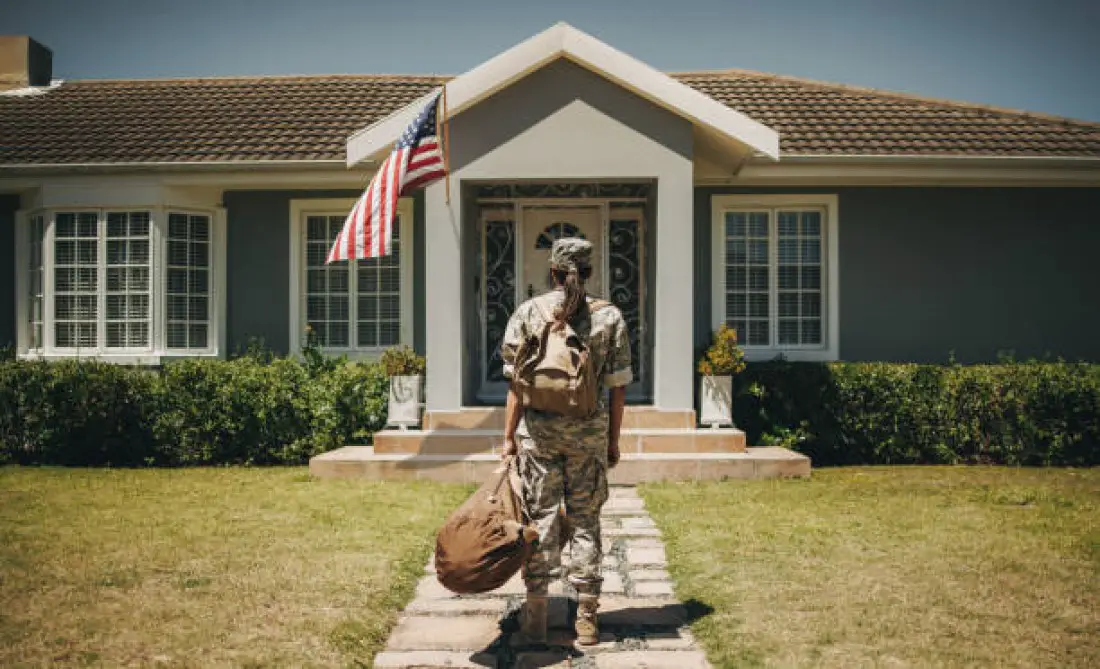
I set my duffel by the back door and tried to swallow the lump in my throat. Nine months overseas as a combat medic, and this was the moment I’d replayed in my head: me, home in one piece, my daughter safe, my parents keeping their word.
So I asked the question that had been my comfort on sleepless nights in a dusty field hospital.
“Hey, Em,” I said lightly, reaching for a mug. “Was the two thousand dollars I sent every month enough? For your stuff? School, clothes, everything?”
She looked up, confused, spoon paused mid-stir. “What money?”
The words landed like a punch. Behind her, my mother went the color of unbaked dough. My father’s hand tightened around his coffee mug. My younger sister, Amanda, straightened and let out a too-bright laugh.
“Who wants more cookies?” she chirped, but no one moved.
In that tiny, suspended moment, I realized that the eighteen thousand dollars I’d bled and sweated for might as well have vanished into thin air. I didn’t yell. I didn’t flip the table or storm out into the snow. Instead, I took a slow breath and did something much more deliberate.
My name is Cassandra Miller. I’m thirty-two years old, a combat medic in the United States Army, and a widow. Five years earlier, my husband Daniel died when a semi truck lost control on black ice. There was no folded flag on our mantel, no honor guard—just a crushed sedan on the news and a small life insurance payout that evaporated faster than grief.
A few months after the funeral, I remember standing in our tiny kitchen while Emma worked on a school project at the table. She wore a little silver locket Daniel had given her for her ninth birthday, with a tiny picture of the three of us inside.
“Mom? Are we going to be okay?” she’d asked.
I’d sat beside her and made a promise. “Yes. We’re going to be okay. I promise. I’ll figure it out.”
That’s when I enlisted as a combat medic. The training was brutal but focused, and the structure wrapped around Emma and me like a cast around a broken bone. For three years, we lived near Fort McCoy. I’d work long shifts at the clinic, then race to Emma’s soccer games. We had our rituals—Friday night pizza, Saturday morning hikes, endless movie marathons. Slowly, her laughter came back. Mine did, too.
Then the deployment orders came. Nine months in a conflict zone. High casualty expectations. Unknown return date.
Emma was thirteen then—long legs, braces, and a fierce, emerging independence. Exactly the age when a girl needs her mother the most. My parents lived two hours away in Maple Ridge, Wisconsin. They’d retired early after my dad sold his construction business, and they adored Emma in a grandparent-at-a-distance kind of way. When I told them about my deployment, they agreed immediately to take her in.
“Of course, honey. She’s our granddaughter. We’ll take good care of her,” my mom said, eyes shiny.
We sat at their oak dining table and went over everything—Emma’s school schedule, her soccer practices, her anxiety on stormy nights, the fact that she still sometimes woke up crying for Daniel.
Then we talked about money.
“The Army will keep paying me while I’m gone,” I said, sliding my notebook across the table. “After my own basic expenses and savings, I can comfortably send two thousand dollars every month to you, specifically and explicitly for Emma’s care.”
“Two thousand?” My mom’s eyes widened. “Cassandra, that’s too much.”
“It’s almost half my deployment pay,” I said, “but it’s for Emma. Food, clothes, school supplies, field trips, sports fees, anything she needs. And if there’s leftover? Great. Put it in savings for her. College, a car someday, whatever.”
My dad frowned at the sheet, then gave a slow nod. “If you’re sure you can afford it…”
“I’m sure.” I looked him straight in the eye. “I will send two thousand dollars on the first of every month. It’s Emma’s money. Not for charities, not for home improvements, not for anything else.”
My mom patted my hand. “Of course. We would never touch a penny that was meant for her.”
I set up the automatic transfers at my military bank. The first payment would hit the day after Emma moved in, and then on the first of each month: nine payments, eighteen thousand dollars total.
The week before I deployed, Emma climbed into my bed like she had when Daniel first died. “Are you going to be safe, Mom?” she whispered in the dark.
“I can’t promise nothing will ever happen,” I said quietly, “but I can promise I’ll be careful, that I’ll think of you with every decision I make, and that I’ll do everything in my power to come home to you.”
She held the silver locket between her fingers. “I’ll wear this every day until you get back,” she said. “So it’ll feel like you’re with me.”
The next morning, leaving her at my parents’ front door nearly broke me. As the taxi pulled away, she ran after it down the driveway, arms outstretched, that silver locket flashing against her coat. My dad had to grab her shoulders to keep her from chasing us into the street.
Deployment was a strange mix of monotony and terror. For nine months, my world shrank to sand, camouflage, and the constant hum of generators. We patched up shrapnel wounds, reset broken bones, and held hands that would never hold anything else again. Every two weeks, I’d get a fifteen-minute video call with Emma when the Wi-Fi cooperated.
“How are things with Grandma and Grandpa?” I’d ask casually.
“Good,” she’d say. “They say money’s tight, but we’re okay.”
Every month, like clockwork, my banking app pinged with confirmation: two thousand dollars transferred. I’d take a screenshot sometimes, like a talisman. On especially hard nights, when the air in the tent felt thick and my hands wouldn’t stop trembling after a mass casualty event, I’d close my eyes and picture Emma at my parents’ house, a fridge full of food and a warm bed waiting for her. That mental picture was how I got through.
I didn’t know, then, how far reality had drifted from that image.
When I finally came home three days before Christmas, Amanda picked me up at the airport in her shiny SUV, a new diamond tennis bracelet flashing on her wrist. On the drive to my parents’ house, she kept the conversation vague whenever I asked about Emma.
“She’s grown so much. You’re going to be shocked,” she said. “Teenagers, right?”
When we pulled into my parents’ driveway, the house was lit up like a catalog. White icicle lights dripped from the roofline. A new slate walkway curved up to the front door. There was a late-model SUV I didn’t recognize parked beside my dad’s old pickup.
Inside, the house looked transformed. A towering tree glittered with glass ornaments I’d never seen before. The worn couch had been replaced with a sleek leather sectional. The kitchen boasted new granite counters and a fancy stainless-steel fridge.
And there was Emma, piping frosting onto cookies, wearing those too-short jeans and that faded hoodie. When she saw me, she launched herself into my arms with so much force I staggered back. She was taller, her face more angular, a young woman where a child had been.
“You’re really here,” she kept saying.
My parents hovered behind her, my mother dabbing at her eyes, my dad giving me a stiff hug. We sat down to the kind of spread I’d dreamed about overseas, and Emma wedged herself into the chair next to mine, her thigh pressed against me like she was afraid I’d disappear.
She barely ate, too busy talking. When she mentioned struggling to finish a science project because “we couldn’t afford all the materials,” a little alarm bell chimed in the back of my mind. My mom cut in quickly: “She’s exaggerating. You know teenagers.”
That night, Emma fell asleep with her head on my shoulder, and I slid my phone from the nightstand to check my banking app. Every single transfer—nine payments of two thousand dollars—had gone through exactly as scheduled. Eighteen thousand dollars total, all bearing my parents’ account number.
The math should have been simple. But when the math doesn’t add up, someone gets hurt.
The next morning, I started noticing things I couldn’t unsee. Emma’s winter boots sat by the back door, the soles held together by strips of gray duct tape. Her backpack was literally splitting at the seams. Her phone was spider-webbed with cracks. At lunch, she mentioned saving up to buy a graphing calculator for math class and that she was “working more shifts at the café.”
“Café?” I repeated.
My mother swooped in to ask if I wanted more potato salad.
While helping Emma fold clothes that afternoon—T-shirts that clearly hadn’t been new in years—I decided to stop treading lightly.
“I hope the two thousand dollars I sent every month was enough for everything you needed,” I said casually.
Emma stopped and turned. “What money?”
“The two thousand dollars I sent,” I said carefully. “Every month. For you.”
Her eyebrows shot up. “You sent money?”
“Yes. To Grandma and Grandpa. For your food. Clothes. School stuff. Activities.”
She stared at me, confusion sliding into anger. “Grandpa said you couldn’t send anything. He said deployment was expensive and you were trying to pay off debt. They always said they were ‘covering everything’ for me.”
Behind her, in the hallway, I heard a soft intake of breath. My parents stood there, my mother chalk-white, my father staring at the carpet. Amanda walked past with a laundry basket, calling too loudly about hot chocolate.
I closed the bedroom door and leaned against it, letting the anger flare and then bank. Impulse gets people hurt in my line of work. So does denial.
That night, once Emma was in the shower, I went hunting for the truth. In my parents’ office, I found a glossy brochure for a Caribbean cruise scheduled for February—price tag north of five thousand dollars. In a manila folder labeled “Receipts,” I found itemized slips for jewelry, electronics, and clothing that easily tallied into the thousands. Kitchen renovation invoices. A down payment on the SUV in the driveway.
On Emma’s nightstand, I found her journal. I hesitated, then picked it up. The first page I opened was dated three months into my deployment: Called Mom today but couldn’t tell her about the field trip money. She looked so tired on the screen. Grandma said Mom is struggling to pay for her own food over there. I’ll just say I’m “sick” that day.
Another entry: Worked double shift at Café Luna. My feet hurt so bad but at least I can finally buy the calculator. Sold my old books and headphones too. Grandma says those things are “luxuries.”
A later page: Soccer coach asked why I quit. Didn’t tell him it was because we couldn’t pay for new uniforms. I miss playing.
My vision blurred. The word “burden” came up more than once. So did “expensive.”
I set the journal down gently. Eighteen thousand dollars. And my daughter was patching boots with duct tape and selling her father’s locket so she could buy a calculator.
The next morning, I drove to a coffee shop and downloaded every bank statement from the past nine months. I printed everything—nine transfers of two thousand dollars each, accompanied by confirmation numbers that could speak louder than any accusation. Then I called my unit’s legal assistance office.
“Ma’am, based on what you’re describing, this could fall under financial exploitation of a minor,” the attorney said. “Especially if the funds were explicitly designated for your daughter’s care.”
He emailed me templates for documentation and a summary of relevant state law. “We can talk about mediation versus formal charges. You don’t have to decide anything today.”
I thanked him and sat in the car for a minute, watching my parents’ front door. Christmas wreath, plaid bow, a wooden sign that said “Family Is Everything.” Their SUV gleamed in the winter sun.
When someone hurts your child, you don’t look away. You make a plan.
That afternoon, I took Emma to the park. We sat on a cold metal bench, our breath puffing white, and I explained everything. The automatic transfers. The two thousand dollars every month. That it was never “maybe” money—it was real, deposited right into their account, meant for her.
She listened silently. As I spoke, her expression shifted from confusion to dawning understanding to humiliation.
“So when they said you couldn’t send anything…” she began slowly.
“That wasn’t true,” I said. “I sent more than enough to cover everything you needed.”
Her jaw tightened. “The car. Amanda’s bracelet. All the new stuff in the house.”
“Probably paid for with your money,” I said quietly.
She pressed her hands together until her knuckles turned white. “I worked every weekend making coffee while they were buying themselves things with money you sent for me.” Her voice broke. “They told me you were struggling. That asking for money would stress you out. So I sold my iPad. My headphones. I sold…” Her fingers went unconsciously to her throat. “I sold Dad’s locket. Fifty bucks at the pawn shop. To buy that stupid calculator.”
My breath caught. That locket had been her most treasured possession.
“You sold it because you thought we couldn’t afford a calculator?” I asked, voice rough.
She nodded miserably. “I didn’t want to be the reason everyone was struggling. I thought we were all sacrificing.”
I pulled her against me, arms tight around her shoulders. “You were doing what you thought was right. You should never have had to make those choices.”
We sat like that for a long time. When she pulled back, she asked, “What happens now?”
“Now I make sure this gets handled the right way,” I said. “I’ve talked to legal. I’m gathering evidence. Christmas Eve dinner, the whole family will be there. I’m going to lay everything out.”
She took a deep breath. “I want to be there when you talk to them. I don’t want people speaking for me anymore.”
“Then that’s what we’ll do,” I said.
Christmas Eve arrived bright and brittle. By seven o’clock, the house was full of extended family—aunts, uncles, cousins tumbling through the door. I made sure Emma and I sat at the main table, directly across from my parents. My dad’s older sister, Aunt Susan, sat on my right.
When everyone had loaded their plates and the conversation dipped into a soft lull, I lifted my water glass and tapped it gently with my fork. Heads turned.
“I just want to say something quickly,” I began. “First, thank you all for being here. Being home after nine months deployed is a gift I don’t take for granted.” Murmurs of agreement. “Before I left, I made arrangements to make sure Emma would be well cared for. Part of that was sending two thousand dollars home every month to my parents. Specifically and explicitly for Emma’s care.”
I saw my parents realize where this was going. My mother’s hand tightened around her wine stem.
“That adds up to eighteen thousand dollars,” I said. “In nine months.”
A hush settled over the table.
“Yesterday, I found out that Emma was never told about that money. In fact, she was told I couldn’t afford to send anything. She worked weekends at a café to pay for her own school supplies. She sold her belongings. Even the silver locket her father gave her, so she could afford a calculator.” I paused. “All while eighteen thousand dollars I sent for her care went toward home renovations, a new vehicle, luxury items, and a Caribbean cruise booked for February.”
Around us, utensils clinked softly as people shifted.
I reached under my chair and pulled out folders, placing one in front of my parents, one in front of Aunt Susan. “In those folders, you’ll find documentation. Bank statements showing the transfers. Work records from Café Luna. Notes from Emma’s teachers about her coming to class exhausted.”
Amanda cleared her throat. “Raising a teenager is expensive, Cass. Maybe this isn’t the time—”
“There’s no misunderstanding,” I cut in calmly. “Emma maintained a 3.2 GPA while working weekend shifts. She received no allowance. She quit soccer because she couldn’t pay for new uniforms. She sold her father’s locket for fifty dollars.”
Several relatives gasped. Aunt Susan’s expression cooled into stone.
My dad spoke, defensive. “Do you have any idea what it costs to raise a child these days?”
“I do,” I said evenly. “Because I’ve been raising her alone for five years. Two thousand dollars a month here was more than enough to cover her needs. We didn’t agree to an itemized accounting. We did agree that the money was for Emma.”
“We provided a home!” my mother snapped. “Supervision. Love. We took her in when you chose to run off to a war zone.”
“Love doesn’t send a fourteen-year-old to work at five-thirty in the morning while her guardians sleep in,” I replied. “Love doesn’t force a child to sell her last memory of her father to buy a calculator while you redo your kitchen.”
Emma spoke suddenly, her voice soft but cutting. “Grandma told me you couldn’t send money. She said you were struggling and that I needed to be ‘grateful.’ When I needed sixty-five dollars for the science museum trip, she said they couldn’t spare it. So I sold my iPad. I thought we were all sacrificing together. I worked every weekend so I wouldn’t be a burden.”
Tears slipped down her face, but her chin stayed high. The room was dead quiet.
My mother’s face crumpled. My father dropped his gaze.
“We always intended to pay it back,” my mom whispered. “We had unexpected expenses—”
“A Caribbean cruise is an ‘unexpected expense’?” Aunt Susan asked sharply, flipping through the folder. “New car. Jewelry. Granite countertops. While your granddaughter patched her boots with duct tape?”
Amanda found her voice. “You’re seriously going to drag them like this at Christmas? You always have to be the hero, don’t you?”
I turned to her. “Amanda, did you know I was sending money?”
She flushed, clutching the bracelet on her wrist. “Mom and Dad said you sent some ’emergency money’ now and then. Nothing like this.”
“That bracelet was paid for with what?” I asked. “Because their retirement income didn’t suddenly double. But eighteen thousand dollars did show up.”
She removed the bracelet, setting it dully on the table.
My mother’s voice was small. “What do you want from us?”
“This is what’s going to happen,” I said. “First, a full accounting and repayment of the eighteen thousand dollars. Second, a direct apology to Emma, acknowledging not just the money but the way you made her feel. Third, a written agreement about any future arrangements.”
My dad bristled. “Or what?”
“Or I file formal charges for financial exploitation of a dependent minor,” I said quietly. “My legal counsel has already outlined the process. I’d prefer not to go that route. But I will if you leave me no choice.”
Right then, the doorbell rang. My dad returned holding a certified envelope from the legal assistance office. I opened it calmly. “These are templates for restitution agreements. They’ll make it easier to put everything in writing.”
The message was loud enough.
The next day, an attorney from base came to the house. For three hours, we went step by step through the mess. My parents tried to minimize at first, then finally admitted the truth.
“By the third month, we were treating it as extra income,” my dad said. “We stopped thinking of it as ‘Emma’s money.'”
My mother whispered, “We convinced ourselves we deserved it. For taking her in. For the stress.” She looked at Emma. “But we never should have told you your mother wasn’t sending money. That was cruel.”
The resolution plan came together. My parents agreed to cancel the cruise, sell the SUV, return jewelry purchases. For the remaining balance, they committed to monthly payments of one thousand dollars into an account I’d set up with Emma.
“This agreement will be legally binding,” the attorney said. “If payments stop, you’ll have clear grounds to pursue formal action.”
My parents signed, hands shaking.
Before the attorney left, my dad asked quietly, “Could she really have pressed criminal charges?”
“Yes,” the attorney said without hesitation. “Financial exploitation of a dependent is taken very seriously. Given the paper trail, you could have been facing charges and civil liability.”
In the weeks that followed, my parents kept their word. They sold the SUV quickly and transferred a large chunk of money. My mom returned unworn clothes and jewelry. My dad picked up consulting work to keep the repayment schedule on track.
I took Emma shopping with our own money. We replaced her boots, her jeans, her backpack. We bought her a new phone. Then we went to the pawn shop.
“About six months ago, a teenage girl brought in a silver locket,” I said to the man behind the counter. “You gave her fifty dollars for it.”
He pulled out a velvet tray. There, nestled among rings and chains, was the locket.
“How much to get it back?” I asked.
“Fifty,” he said simply.
I pulled out two hundred-dollar bills. “Take one. Put the other in whatever fund you use when kids walk in here desperate.”
His eyes softened. “You got it, Sergeant.”
Outside, I pressed the locket into Emma’s palm. “You never should’ve had to let this go. That’s not a choice you’ll ever have to make again.”
She opened it, thumb brushing over Daniel’s tiny face. “I’m sorry,” she whispered.
“You don’t owe me an apology,” I said. “The apologies belong to the adults who put you there.”
In January, we returned to base. I moved us into a small rental house with a flagpole out front. Emma started therapy with a counselor who specialized in teenagers dealing with family betrayal. By March, without weekend shifts at Café Luna, her grades were climbing. She joined the soccer team at her new school. At the first home game, I sat in the bleachers watching her sprint down the field in a jersey that fit and cleats that didn’t squeak.
My parents kept their word. Every month, like clockwork, a thousand dollars hit Emma’s account. When they asked to visit, they did so respectfully, accepting “not yet” as an answer.
Amanda called in February. “I should’ve asked more questions. I saw the new stuff. I heard them complain about money. I let myself believe whatever made my life easier.” Our relationship wasn’t magically healed, but it wasn’t broken beyond repair either.
By August, Emma’s therapist suggested slowly reintroducing my parents under controlled conditions. We arranged a day trip to a neutral park halfway between base and Maple Ridge. My dad brought a small wooden box he’d made to hold Emma’s locket. My mom brought a scrapbook of childhood photos.
“We should’ve remembered these when we forgot what really mattered,” she said, voice shaking.
Emma sat between them, locket at her throat, fingers tracing the jewelry box. It wasn’t perfect. There were still fractures. But it was something.
By Thanksgiving, when Emma asked if they could come over for dinner—”Not to stay, Mom, just dinner”—I knew we’d crossed some invisible line from pure triage into actual healing.
That fourth Thursday in November, my parents drove up with a store-bought pie and cautious smiles. We ate turkey at my second-hand table while the flag outside moved gently in the cold Wisconsin wind. At one point, Emma caught my eye and offered a small, private smile.
Because here’s what they don’t tell you about betrayal: trust, once shattered, never goes back to how it was. You can’t unsee the cracks. But that doesn’t mean nothing good can grow in its place. What you build afterward can be stronger—a structure held together with truth, accountability, and boundaries you no longer apologize for.
If you’ve ever discovered that money meant for your child vanished into someone else’s lifestyle, I want you to know: you’re not crazy for feeling angry. You’re not selfish for drawing a line. You’re not cruel for insisting that eighteen thousand dollars means more than granite countertops and cruise brochures. Setting boundaries isn’t vengeance. It’s medicine.
The first time I promised Emma we’d be okay, I was a terrified young widow with overdue bills. The second time, I was a combat medic home from a war zone, listening to my daughter ask if we’d ever be normal again. Both times, the path forward was harder than I wanted. But both times, we got there—not by pretending we weren’t hurt, but by telling the truth and insisting on something better.
The silver locket around Emma’s neck catches the light now when she laughs. Sometimes I see her thumb run over its surface, a little absent-minded habit. It’s a reminder of her father, yes. But it’s also a reminder of the moment we stopped letting other people decide what we deserved.
Eighteen thousand dollars is just a number on a bank statement. What we rebuilt after it vanished—that’s the part that can’t be measured in dollars or cents. And if our story has taught me anything, it’s this: even the deepest financial and emotional wounds can heal, if you’re willing to scar honestly, draw your lines clearly, and choose, every day, not to go back to the version of “family” that required you to disappear to keep everyone else comfortable.

Adrian Hawthorne is a celebrated author and dedicated archivist who finds inspiration in the hidden stories of the past. Educated at Oxford, he now works at the National Archives, where preserving history fuels his evocative writing. Balancing archival precision with creative storytelling, Adrian founded the Hawthorne Institute of Literary Arts to mentor emerging writers and honor the timeless art of narrative.