The Empty Well
I am Amelia, thirty-five years old, and today I buried my husband, James, in soil that wasn’t ours.
After thirty sleepless hours of transit, my body felt less like flesh and bone and more like a collection of aches held together by grief. The flight from Singapore had been a marathon of turbulence and suppressed sobbing, a journey that stretched across time zones and oceans, pulling me further away from the only person who made the world make sense.
As the wheels of the plane screeched against the tarmac of Portland International Airport, I turned on my phone. The screen glowed with the indifference of modern technology. I opened our family group chat, my fingers trembling not from the cold, but from a desperate, childlike need for comfort.
Flight lands at 5:00 p.m. Can someone pick me up?
I watched the three dots dance on the screen.
Troy, my brother: We’re swamped. Try Uber. Mom: Why didn’t you plan this better? You know how busy Tuesdays are.
I stared at the words until they blurred. Plan better. As if I had scheduled my husband’s brain aneurysm. As if his death were a calendar conflict I had failed to resolve.
With a heart that was silently collapsing into dust, I typed back: No worries.
I had no idea that within twenty-four hours, my family would be watching the consequences of those texts unfold on the evening news.
Before the Nightmare
Before the disaster, James and I lived a life that felt charmed. We met sophomore year of college when he spilled a venti latte onto my economics textbook. He insisted on buying me a new one and, with a crooked smile that would eventually become my favorite sight in the world, managed to turn a disaster into a dinner date. We built a life in Portland, a cozy two-story house with a garden where I grew tomatoes James swore could win ribbons at the State Fair.
Ten years. We had ten years of Thursday game nights, of saving for a future that seemed guaranteed, of talking about the nursery we would paint yellow.
Then came the contract. Six months in Singapore. It was the opportunity of a lifetime for a software engineer. We were ecstatic. I remember the night before he left—the candlelight flickering on his face, his hand covering mine. “Six months will fly by,” he promised. “Then, the next chapter begins.”
And then, the call. The headache. The collapse. The coma.
I flew to Singapore, but I was chasing a ghost. James never woke up. He was thirty-seven.
I navigated a foreign medical system alone. I navigated the funeral alone because my parents said the flights were too expensive on short notice, and Troy had “critical work obligations.” I stood in the humid heat of a foreign cemetery, surrounded by James’s coworkers, and watched my heart being lowered into the ground.
The Arrival
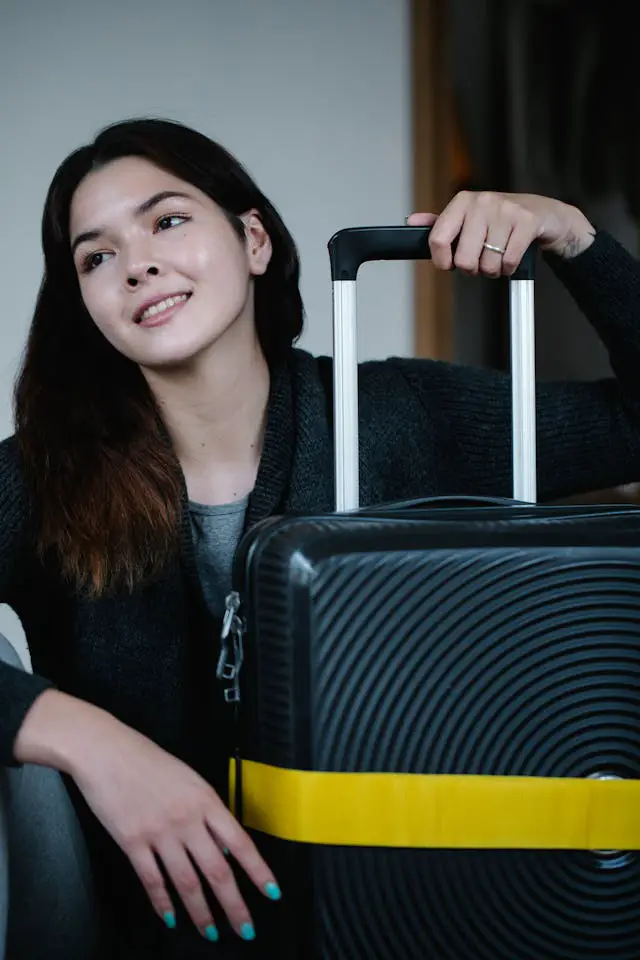
Now, standing at the baggage claim in Portland, I watched the carousel spin. My suitcases appeared—black monoliths containing everything I had left of him. His favorite blue sweater. The leather journal. The coffee mug he used every morning.
My phone buzzed again.
Troy: Seriously, Sis, we can’t rearrange schedules last minute. This is why planning exists. Mom: Your father and I have dinner with the Hendersons. We RSVP’d weeks ago. Dad: Forecast says rain later. Drive carefully when you get home.
I typed I understand, though I didn’t. How could a dinner reservation outweigh a daughter burying her husband?
I loaded the heavy bags onto a cart. The weight made me stagger. As I pushed toward the exit, a wheel stuck, sending the top suitcase crashing to the floor. It burst open. James’s clothes spilled across the polished linoleum—a tragic confetti of a life ended too soon.
I dropped to my knees, frantically gathering his ties, his socks, blinded by tears.
“Let me help you, ma’am.”
An airport employee named Gloria knelt beside me. She had kind eyes and strong hands. “Are you alright?”
The question broke me. “My husband died,” I whispered. “I just buried him.”
Gloria didn’t offer a platitude. She just helped me pack, walked me to the rideshare curb, and squeezed my hand. “Take care of yourself,” she said. It was more warmth in five minutes than my family had offered in five days.
I got into the car of a stranger named Paul. He drove me through the rainy streets of Portland, filling the silence with soft jazz. When he pulled into my driveway, the house looked like a stranger’s face—familiar features, but the soul was gone.
“Are you sure you’re okay, Miss?” Paul asked as he set my bags on the porch. “You look… fragile.”
“I’m fine,” I lied.
I unlocked the door and stepped inside.
The cold hit me first. A physical wall of frigid, stale air. I had asked my mother to adjust the thermostat yesterday. She had forgotten. The basket by the door overflowed with mail they promised to collect. The fridge contained only mold and expiration dates.
I dragged myself upstairs, too exhausted to cry anymore. I couldn’t sleep in our bed. Instead, I curled up in the armchair by the window, wearing my coat, shaking from a chill that wasn’t just about the temperature.
I closed my eyes, praying for sleep, unaware that the house around me was ticking like a time bomb.
The Rising Water
Morning didn’t break; it leaked into the room, gray and unforgiving.
I woke to a sound. Not the birds James loved to feed, but a strange, rhythmic gurgling coming from downstairs. My body was stiff, my neck cricked from the armchair, but the sound pulled me upright. It sounded like a river where a river shouldn’t be.
I walked to the landing and looked down.
“Oh god,” I breathed.
Water was cascading from a fissure in the kitchen ceiling, pouring down the walls like a grotesque waterfall. It pooled across the hardwood of the dining room, creeping toward the rugs. The house was freezing—so cold I could see my breath clouding in the hallway.
I ran down the stairs, splashing into three inches of ice-cold water. The shock of it against my ankles was agonizing. I scrambled toward the utility closet, my hands numb as I gripped the main shut-off valve. The metal burned with cold. I gritted my teeth and turned it, screaming in frustration until the flow finally sputtered and died.
Silence returned, but it was wetter, heavier. The damage was catastrophic. The drywall sagged like wet cardboard. The floorboards were already buckling.
A pipe had burst. The cold snap my father had warned me about in a text message had frozen the pipes because no one had turned on the heat.
I stood there, shivering violently, water soaking my socks. I pulled out my phone. My battery was at 12%.
I called the emergency plumber. “Tuesday,” the dispatcher said, apologetic but firm. “The storm has everyone calling. We’re backed up.”
Tuesday. It was Saturday.
I called Troy.
“Hey,” he answered, his voice distracted. “Can’t talk long. Getting ready for that dinner with the Wilsons. Big clients.”
“The house is flooded,” I said, my voice flat. “A pipe burst. There’s water everywhere, no heat, and the plumber can’t come until Tuesday.”
“That sucks,” he said, the annoyance audible. “Did you try Angie’s List?”
I gripped the phone until my knuckles turned white. “Troy, I just got back from burying James. I haven’t slept in two days. I can’t stay here. Can I stay in your guest room?”
The pause was deafening.
“Actually, tonight is really bad timing,” he said. “Lisa has her crafting stuff all over the guest room. And with the Wilsons coming… have you called Mom?”
I hung up. I called my parents.
“Oh, honey,” my mother said, her voice dripping with artificial sympathy. “Normally yes, but the Bridge Club is meeting here tomorrow. We’ve spent all day prepping. And your father’s back is acting up. We just can’t handle guests. Why don’t you get a hotel? Didn’t you buy travel insurance?”
I ended the call. The phone slipped from my numb fingers onto the wet counter.
I hadn’t eaten a real meal in twenty-four hours. The grief, the travel, the cold—it was shutting my body down. I found a box of stale crackers and ate them mechanically, standing in the dark, flooded kitchen.
I have to fix something, I thought. If I can’t fix my life, I have to fix the heat.
I remembered the electrical panel in the basement. Maybe a breaker had tripped. Maybe I could get the furnace fan running.
I opened the basement door. It was a black maw. I turned on my phone flashlight and descended. The stairs were slick. At the bottom, the water was deeper, reaching my shins. The air smelled of wet earth and copper.
I waded toward the gray panel box on the far wall. My legs felt heavy, uncooperative. As I reached for the metal latch of the breaker box, my right foot slipped on the slime-coated concrete.
I flailed, falling forward. My hand instinctively slapped against the metal box to catch myself.
CRACK.
A jolt of pure white agony shot through my arm, vibrating my teeth, throwing me backward like a ragdoll. I flew through the air, my head striking the edge of the wooden staircase with a sickening thud.
The world went black instantly.
The Descent
I don’t know how long I lay there. When I came to, I was shivering so hard my teeth clattered together. My arm throbbed with burning tingles, and something warm and sticky was trickling into my eye. Blood.
I crawled up the stairs. It took an eternity. Every movement was a negotiation with gravity.
I made it to the living room sofa and collapsed. The house was a tomb now. I couldn’t feel my toes. I couldn’t feel my fingers.
Then, through the haze, I heard it. A high-pitched, rhythmic beeping.
Beep. Beep. Beep.
The carbon monoxide detector. The furnace must have malfunctioned, or the water damaged the vents. The colorless, odorless killer was filling the room while I lay paralyzed by hypothermia and concussion.
My phone was on the coffee table, inches away. But my arm—the one that took the shock—wouldn’t move. My vision tunneled. The darkness creeping in at the edges wasn’t sleep; it was the end.
A strange calm settled over me. It’s okay, I thought, my eyes fluttering shut. I’ll see James soon.
The beeping grew faint. The cold stopped hurting.
Then, a thunderous crash echoed from the front door. Wood splintering. Voices shouting.
“Fire Department! Call it in!”
A beam of light sliced through my darkness, and then hands—rough, gloved, frantic—grabbed me. And for the second time that day, the world vanished.
The Awakening
I woke up to the smell of antiseptic and the beep of a cardiac monitor. Warmth. I was warm.
“She’s coming around,” a soft voice said.
I blinked open my eyes. A nurse with a messy bun and kind eyes was adjusting an IV. Her name tag read Sarah.
“Where…?” I croaked.
“Portland General,” Sarah said gently. “You’re safe, Amelia. You had a rough night. Hypothermia, carbon monoxide poisoning, concussion, and a nasty electrical burn.”
Memories flooded back. The water. The shock. The family who said no.
“My neighbor,” I whispered. “Diane.”
“She saved your life,” Sarah confirmed. “She saw water coming out the front door and heard the alarm. She called 911.”
Sarah hesitated, looking at a clipboard. “Amelia, when you were brought in, you were… delirious. You told us some things. About your husband. About the airport. About your family.”
I closed my eyes. “I remember.”
“A reporter, Michael Chen, was in the ER covering the storm,” Sarah said quietly. “He overheard the paramedics. He interviewed your neighbor.”
She turned on the small TV mounted on the wall. It was the local news replay. The headline read: WIDOW RETURNS TO DISASTER: NEIGHBORS SAVE WOMAN AFTER FAMILY REFUSES AID.
There was footage of my waterlogged house. There was Diane, looking shaken. “She just buried her husband yesterday,” Diane told the camera. “She came home alone. I can’t believe no one checked on her.”
And then, the anchor read the text messages. The paramedics had seen them on my phone. They were verified.
We are busy. Try Uber. Why didn’t you plan better?
My private humiliation was now public record.
“Your family is in the waiting room,” Sarah said, her voice tight. “They’ve been here for an hour. Do you want to see them?”
Before I could answer, the door burst open.
Troy rushed in, his face pale, phone clutched in his hand like a weapon. “Amelia! Thank God. We just saw the news.”
He didn’t hug me. He looked at the TV. “They are twisting everything. They make it sound like we abandoned you.”
My mother followed, wearing her pearls, looking more offended than relieved. “It’s a complete misrepresentation,” she told Nurse Sarah, ignoring me entirely. “We had no idea the house was in that condition. Amelia knows we would have helped if we understood the context.”
My father stood by the door, looking at his shoes.
“Are you okay?” Dad asked quietly. It was the first human thing any of them had said.
“She’s alive,” Mom snapped. “But this… this PR nightmare. Amelia, Aunt Susan called me screaming. Dad’s boss texted him. People are commenting on my Facebook page.”
“We need to get ahead of this,” Troy said, pacing. “We need a statement. We’ll say it was a miscommunication. We’ll say we were coordinating a surprise for you.”
I lay there, feeling the stitches in my forehead pull. They weren’t discussing my health. They weren’t asking about the funeral in Singapore. They were rewriting the script to save their reputations.
A hospital social worker, Ms. Patel, entered the room, holding a folder. She looked from my frantic mother to my pacing brother.
“Excuse me,” she said coolly. “I need to discuss Amelia’s discharge plan.”
“Oh, she’s coming home with us,” Mom said instantly, putting on her ‘concerned mother’ mask. “We have the guest room ready. Families stick together.”
Dr. Reynolds, a tall man with a no-nonsense demeanor, stepped in behind the social worker. “Mrs. Henderson needs 48 hours of monitoring. She cannot be stressed. She needs absolute support.”
“We are her support,” Troy insisted. “The media has this all wrong.”
Nurse Sarah looked at me. She moved to the side of the bed, creating a physical barrier between me and my family.
“Amelia,” Sarah said, her voice firm. “You have choices. You don’t have to go with them.”
“Don’t be ridiculous,” Mom laughed nervously. “Where else would she go? Strangers?”
“Actually,” Ms. Patel said, “The community response has been overwhelming. A hotel has donated a suite. A restoration company is fixing the house pro-bono. A meal service has volunteered.”
My family froze. The silence in the room was sharp enough to cut glass.
“Amelia,” Mom said, her voice dropping to a warning tone. “You are not going to a hotel. You are coming home so we can fix this mess.”
I looked at them. I looked at Troy, worrying about his clients. I looked at Mom, worrying about her bridge club reputation. I looked at Dad, silent and passive.
And then I looked at Sarah, a stranger who had brushed the hair off my forehead when I was vomiting earlier.
“I need to hear the alternatives,” I said. My voice was raspy, but it didn’t shake.
Troy stopped pacing. “What?”
“I want to hear about the hotel,” I said.
The room seemed to tilt.
The Breaking Point
“You can’t be serious,” Mom hissed. “After everything we’ve done for you?”
The dam inside me broke. It wasn’t a scream; it was a quiet, relentless flow of truth.
“What exactly have you done?” I asked.
“We…” Mom faltered.
“When James was dying, you were too busy,” I said, ticking off the points on my fingers. “When I buried him, the flights were too expensive. When I landed yesterday after thirty hours of hell, you told me to take an Uber. When I called about the flood, you chose your bridge club.”
“That is unfair,” Troy shouted. “We have lives, Amelia! We can’t drop everything!”
“Needing a ride after burying my husband is not ‘everything,'” I said. “Hoping my family would ensure my heat was working during a storm is not ‘everything.’ It is the bare minimum.”
“We didn’t know it was life or death!” Troy argued.
“You didn’t ask,” I said. “Not once. You didn’t ask how the funeral was. You didn’t ask how I was coping. You didn’t ask if I was safe.”
My father looked up. “Amelia, grief is making you irrational. Once you calm down…”
“I am the clearest I have been in my entire life,” I cut him off. “I see it now. I have spent thirty-five years accepting scraps and convincing myself it was a feast. I have made excuses for you my whole life. But James is gone. And I don’t have the energy to lie for you anymore.”
“So you’re choosing strangers over blood?” Mom demanded, clutching her purse. “Do you know how that looks?”
“I am choosing kindness over obligation,” I said. “I am choosing people who show up.”
I turned to Ms. Patel. “I’ll take the hotel. Please arrange it.”
“This is ridiculous,” Troy scoffed. “Fine. Go to the hotel. Play the victim. But don’t expect us to be waiting when you decide you need us.”
“That’s exactly the point, Troy,” I whispered. “I never could expect that. And now, I won’t.”
Mom looked at me with icy fury. “You are humiliating this family.”
“No, Mom,” I said, closing my eyes. “You did that to yourselves. The news just held up a mirror.”
They stormed out. Dad lingered for a second, his hand on the doorframe. I thought he might apologize. Instead, he just nodded once and followed them.
When the door clicked shut, the air in the room became breathable again.
Sarah squeezed my hand. “That took courage.”
“It felt like giving up,” I admitted, tears finally leaking out.
“No,” she said. “It felt like putting down a heavy bag you were never meant to carry.”
The Healing
By evening, I was in the Riverview Hotel. The suite was warm. There were flowers from the hospital staff. The restoration company sent photos of the work starting on my house. Strangers were saving me.
I sat by the window, watching the city lights of Portland. I was a widow. I was estranged from my family. I was alone in a hotel room.
But for the first time in months, I wasn’t waiting for a text that would never come. I wasn’t hoping for water from an empty well.
I whispered to the empty room, “I did it, James. I finally stood up.”
And in the silence, I felt him there. Not a ghost, but a memory of love that didn’t demand I shrink to fit it.
Three months passed.
My recovery was a slow, steady climb. The scar on my forehead faded to a thin silver line. The burn on my hand healed. But the internal reconstruction was the real work.
I joined a grief support group. I met people who understood the language of loss. I learned that grief is just love with nowhere to go.
My house was finished. The community had rallied in a way that still made me weep with gratitude. Diane, the neighbor who saved me, came over every Sunday for coffee. We didn’t talk about the weather; we talked about life. She became the mother figure I had always craved but never had.
My biological family maintained a cold distance. Mom sent a generic card. Troy called once to “clear up misconceptions” for his clients. I responded politely, but briefly. The drawbridge was up.
Six months after James died, I used his life insurance to start the James Henderson Memorial Scholarship. It was designed to help students studying abroad with emergency travel funds for their families. It was the safety net I hadn’t had.
On the day of the launch, I hosted a small gathering in my garden. My tomatoes—the ones James bragged about—were ripe.
My family wasn’t there. They had sent their “regrets.”
But the garden was full. Diane was there. Sarah, the nurse, was there. Gloria from the airport came by. Paul, the Uber driver, sent a card.
As I handed the first scholarship check to a young girl going to Japan, I looked around at the faces.
I realized then that family isn’t just DNA. It’s not just history. Family is a verb. Family is who answers the phone at 3:00 a.m. Family is who helps you pack the suitcase when it spills. Family is who notices the water leaking under the door.
A week later, a letter arrived. Handwritten. From my father.
Amelia, I have no excuses. Only a late acknowledgment. The man you married would be proud of the woman you have become. Perhaps someday, if you are willing, we might find a way forward. Not as we were, but as we could be. Dad.
I didn’t call him immediately. I waited until I was ready. When I finally met him for lunch, just the two of us, it was awkward. It was tentative. But it was real. We were building something new—slowly, with boundaries. Mom and Troy remained distant, and I had accepted that.
One Year Later
A year to the day after James died, I stood at the airport again. I was flying back to Singapore to visit his grave.
I watched the families hugging at the arrival gate. I saw the tears, the joy, the reunions.
I touched the scar on my temple. I wasn’t the same woman who had landed here a year ago, broken and begging for a ride. I was stronger. I was scar-tissued and resilient.
I took out my phone and opened the group chat with my new friends—my chosen family.
Heading to the gate now, I typed.
Immediate responses popped up. Safe travels! We love you, Amelia. Text us when you land. We’ll be tracking the flight.
I smiled, locked my phone, and walked toward the plane. I was going to visit James, to tell him about the life I was building. A life where I was finally, truly, supported.
If you have ever felt abandoned, if you have ever stood alone in the cold waiting for people who wouldn’t come, know this: You are not defined by who couldn’t love you. You are defined by the love you find in yourself, and the tribe you build from the ashes.
The well isn’t empty. You were just standing at the wrong one.

Sophia Rivers is an experienced News Content Editor with a sharp eye for detail and a passion for delivering accurate and engaging news stories. At TheArchivists, she specializes in curating, editing, and presenting news content that informs and resonates with a global audience.
Sophia holds a degree in Journalism from the University of Toronto, where she developed her skills in news reporting, media ethics, and digital journalism. Her expertise lies in identifying key stories, crafting compelling narratives, and ensuring journalistic integrity in every piece she edits.
Known for her precision and dedication to the truth, Sophia thrives in the fast-paced world of news editing. At TheArchivists, she focuses on producing high-quality news content that keeps readers informed while maintaining a balanced and insightful perspective.
With a commitment to delivering impactful journalism, Sophia is passionate about bringing clarity to complex issues and amplifying voices that matter. Her work reflects her belief in the power of news to shape conversations and inspire change.