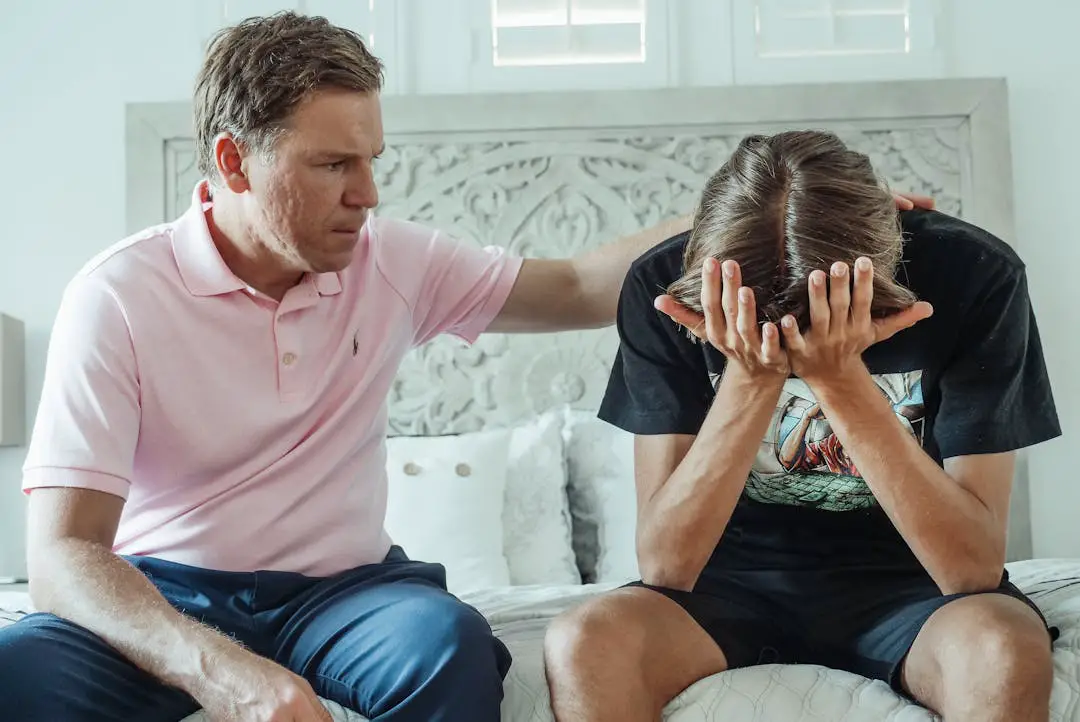
The Pills
When I came home from my business trip, I found my daughter acting strange. When I pressed her, she said, “Dad, I hate the pills Mom gives me. They make me feel so weird.”
Pills. What pills?
My wife had never mentioned any medication.
I searched the house and found an unlabeled bottle hidden in the kitchen cabinet. Just white tablets with “vitamins” written on masking tape in my wife’s handwriting.
The next morning, I took Sophie to the hospital for tests. When the doctor called me into her office and showed me the results, what she said made my blood run cold.
The Discovery
I pulled into the driveway at 6:30 PM. The October sky was already dark over Evanston. I was fifty-two years old, Harrison Cole, and every day felt a little heavier.
The house was too quiet.
“Sophie, I’m home, sweetheart!”
No answer.
I found her in the kitchen, sitting at the table with her math homework spread out in front of her, but she wasn’t working. She just sat there, hands flat on the paper, shoulders slumped.
“Hey, kiddo. How was school?”
“Fine,” she mumbled.
That was all I’d gotten for two weeks. My chatty, bright-eyed ten-year-old had turned into a ghost. Dark circles under her eyes, pale skin. She’d been falling asleep on the couch after school—sometimes for hours. When she woke up, she looked confused, like she didn’t know where she was.
I’d asked Audrey about it. She’d shrugged. “She’s growing, Harrison. Kids get tired.”
But this wasn’t normal.
I sat down next to her. “Sophie, talk to me. What’s going on?”
Her eyes filled with tears.
“Sweetheart, what is it?”
She bit her lip, her chin trembling. Then, so quietly I almost didn’t hear her, she whispered, “Dad… can I stop taking the pills Mom gives me?”
Everything stopped.
“What pills?”
“The vitamins.” She wiped her eyes. “Mom said they’re vitamins. She’s only given them to me a few times, but Dad, every time I take one, I get so sleepy, like I can’t keep my eyes open, and then I sleep for hours. When I wake up, my head feels fuzzy and weird.”
My heart pounded. Audrey had never mentioned vitamins. Never told me she was giving Sophie anything.
“When did this start?”
“Two weeks ago. Maybe. The first time was on a Saturday when you went to the office. Mom said it would help me focus better, but after I took it, I just crashed. I slept until dinner.”
A cold weight settled in my chest. “How many times has she given them to you?”
Sophie counted on her fingers. “Four, I think. Maybe five. Not every day. Just sometimes when she’s home and you’re not.”
“Sophie, can you show me the bottle?”
She disappeared upstairs and came back holding a small plastic bottle. She placed it in my hand carefully, like it might explode.
I stared at it. No label. No brand name. Just plain white plastic with a piece of masking tape stuck to the side, “vitamins” written in Audrey’s neat handwriting.
I opened it. Small white tablets, round and unmarked.
My throat went dry.
“Dad?” Sophie’s voice cracked. “Am I in trouble?”
“No.” I forced a smile even though my hands were shaking. “No, baby. You did exactly the right thing telling me.”
I pulled her into a hug, and she wrapped her arms around my neck, tight.
But inside, one thought kept screaming louder and louder: What the hell is Audrey doing to our daughter?
The Hospital
I didn’t sleep that night. At six AM, the moment Northwestern Memorial’s appointment line opened, I called.
“I need to bring my daughter in today. It’s urgent.”
“What’s the nature of the emergency?”
“I think she’s been given something. A drug. I need her tested.”
They fit us in at eight-thirty.
Audrey was in the shower when we left. I left a note on the counter: Taking Sophie to doctor’s appointment. Explain later.
Dr. Monica Foster met us in the pediatric wing. A woman in her forties with sharp eyes and gray hair pulled back, she shook my hand firmly.
“Mr. Cole, what’s going on?”
I explained as calmly as I could. Sophie had been exhausted for two weeks, sleeping for hours at a time. My wife had given her pills, supposedly vitamins, but they made Sophie extremely drowsy and strange.
Dr. Foster’s expression darkened. “How many times?”
“Four or five,” Sophie whispered. “Over two weeks.”
“Do you have the bottle?”
I handed it to her. She examined it, jaw tightening.
“This isn’t labeled. We need a toxicology screen immediately.”
They took Sophie to the lab. I watched through the window as a nurse drew blood from her small arm. Sophie was brave. She didn’t cry, just looked away.
Forty-five minutes felt like forty-five hours.
Finally, Dr. Foster emerged holding a printout. Her face was grim.
“Mr. Cole, your daughter has diphenhydramine in her system. High levels. It’s an antihistamine found in adult sleep aids. In children, especially at these doses, it causes severe drowsiness, confusion, and with repeated use…” She paused. “Cognitive damage. Possibly permanent.”
The room tilted.
“What?”
“Someone has been giving your daughter adult-strength sedatives.” Dr. Foster’s voice was controlled, careful. “Where did she get these pills?”
My throat was so dry I could barely speak. “From her mother.”
Dr. Foster went very still. “Mr. Cole,” she said quietly. “We need to talk about next steps.”
The Investigation
I drove home in silence, my mind racing. Sophie slept in the back seat, exhausted from the blood draw.
Cognitive damage, possibly permanent.
Dr. Foster’s words echoed relentlessly, and beneath them, one question clawed at me: Why?
Why would Audrey do this?
I needed answers, but more than that, I needed to protect Sophie. I pulled into a Best Buy parking lot.
Inside, a young employee named Tyler showed me a security camera disguised as a phone charger. “Popular model. Plugs into any outlet. Live streams to an app. Clear audio, 1080p video.”
“I’ll take it.”
Then I drove to Audrey’s mother’s house in Oak Park. Judith answered the door smiling.
“Harrison—and my sweet Sophie. What a lovely surprise.”
“Hi, Judith. I hate to ask last-minute, but Audrey and I are doing some repairs this weekend. Lots of dust and noise. Could Sophie stay with you a few days?”
Judith brightened. “Of course. We’ll bake cookies, watch movies.”
Sophie looked up, confused. “Why can’t I stay home, Dad?”
I knelt to meet her eyes. “I need to fix some things, honey. You’ll have more fun here with Grandma. Trust me.”
Back home, I installed the camera, replacing the lamp beside the sofa with the camera charger. It blended perfectly. I opened the app on my phone—the live stream showed everything.
Let’s see what you do when I’m not here, Audrey.
The Affair
Monday morning, 7:15 AM. I kissed Audrey goodbye at the door, my briefcase in hand.
She smiled up at me, still in her bathrobe. “Have a good day, honey.”
“You too. You’re working from home today?”
“Yeah, I’ve got that presentation to finish.”
I drove two blocks and turned into a coffee shop parking lot. I opened the camera app on my phone. The screen showed our empty living room.
I waited.
At 8:30, Audrey appeared on screen. She’d changed—dark jeans, fitted sweater, hair styled, makeup done. Not the clothes you wear to work alone at home.
The morning crawled by. At 11:45, the doorbell rang.
Audrey jumped up, checked her reflection, smoothed her hair, then opened the door.
A man stepped inside. Tall, mid-thirties, dark-haired, good-looking, wearing a leather jacket.
Gavin Pierce.
I remembered him now. Audrey had introduced us at her company holiday party six months ago. “This is Gavin, one of our new associates. He’s brilliant.” She’d been glowing when she said it.
Now I watched him step into my house. Watched Audrey close the door behind him. Watched her lean in and hug him—not a colleague hug, an intimate hug.
They moved to the couch. Audrey disappeared offscreen, came back with two glasses and a bottle of wine. Wine. At noon. On a Monday.
They laughed. Gavin put his hand on her knee, left it there.
Then Gavin leaned in and kissed her.
For a horrible, frozen second, I thought she’d push him away.
But she didn’t.
She kissed him back. Her hand came up to his face. His arms wrapped around her. They melted into each other like they’d done this a thousand times.
I couldn’t breathe.
Twelve years of marriage. Ten years raising Sophie together. All of it—all of it was a lie.
I tapped the screen. The feed went black. I couldn’t watch anymore.
I leaned my head against the steering wheel, gulping air like a drowning man.
The Evidence
The next three days were a blur. I went through the motions—work, home, sleep. Pretended everything was fine.
Inside, I was breaking apart.
I watched the camera feed every day. Gavin came back Wednesday. Then Friday. Same routine. Wine, laughter, touching.
I saved everything. Uploaded the videos to an encrypted USB drive. Backed them up to the cloud.
Evidence.
Thursday night, Audrey texted that she had a team dinner, wouldn’t be home until late.
I opened the filing cabinet in the study. Bank statements. Six months’ worth.
There it was. A pattern I’d been too trusting to see.
Cash withdrawals. Five hundred, seven hundred, a thousand. Week after week after week. Always on days Audrey said she was working late.
Over twenty thousand dollars in six months. Gone.
Hotel receipts. The Langham Chicago. Four hundred a night. Multiple stays.
Restaurant receipts. Alinea. Girl & the Goat. Places I’d always wanted to take Audrey for our anniversary, but she’d said they were too expensive.
Then I found it—a receipt from Tiffany. Two thousand five hundred dollars, sterling silver pendant necklace.
I’d never seen Audrey wear it. Because she hadn’t bought it for herself.
$2,500 of our money. Money that was supposed to go toward Sophie’s college fund.
She’d spent it on jewelry for her lover.
The Lawyer
That weekend, I called a divorce attorney.
Janet Pierce’s office was downtown. Monday afternoon, I rode the elevator up to the thirty-second floor.
She met me in a conference room—a woman in her fifties with short silver hair and sharp, intelligent eyes.
“Mr. Cole, tell me everything.”
So I did. The pills. Dr. Foster’s diagnosis. The affair. The money.
I showed her the videos, the bank statements, the receipts, the lab results.
Janet watched it all without expression. When I finished, she sat back.
“Mr. Cole, you have an airtight case. Full custody. Favorable asset division. Everything will lean in your favor.”
“What do I need to do?”
“Sign the petition. We’ll file immediately.”
She slid a stack of papers across the table. My hand shook as I picked up the pen.
“When do you want to serve her the papers?” Janet asked.
I looked out the window at the city below. “Not yet. I want her to see who she really is first. I want her mother to know what she’s done to Sophie.”
Janet nodded slowly. “A confrontation. Risky, but effective.”
“I need her to face it. All of it.”
I signed the papers and started planning.
The Confrontation
Wednesday afternoon, a week later, I called Judith.
“Hi, Judith. It’s Harrison. Sophie really misses you. She was asking about you this morning. Could you come over this afternoon around two?”
There was a pause. “Of course, I’d love to see her. Is everything all right?”
“Everything will be fine. I’ll explain later. I’ll pick you up at 1:30.”
That morning, I’d called Audrey. “Hey, honey. I have to meet an important client in Oak Park this afternoon. I’ll be back late.”
“Oh, okay,” she said, sounding pleased. “Take your time. I’m working from home today anyway.”
At 1:30, I picked up Judith. She was waiting on the porch, carrying a tin.
“I baked chocolate chip cookies for Sophie,” she said as she settled into the car.
We drove in silence. Judith kept glancing at me.
“Harrison, you’re worrying me. You seem tense. What’s going on? Where’s Sophie?”
“She’s at school. She’s safe. I’m sorry.”
“Sorry for what?”
I didn’t answer.
At 1:55, we pulled into my driveway. I cut the engine.
Judith stared at the house, puzzled. “Harrison, what—”
I turned to her, my voice low. “I need you to stay calm. What you’re about to see will be difficult, but I need you to witness it. I need you to see the truth.”
Her face drained of color. “The truth about what? You’re scaring me.”
“Come with me.”
We stepped out. My heart pounded so loudly it drowned everything else.
I unlocked the front door quietly. Judith whispered my name, but I signaled for silence.
We stepped inside.
There, on the gray sectional, Audrey was in Gavin’s arms, his lips on hers, her hands in his hair, their bodies pressed together. Wine glasses on the table. Her shoes on the floor. His jacket thrown over a chair.
Behind me, Judith gasped, her hand flying to her mouth.
“Audrey.”
Audrey’s head snapped toward the door. Her face went white. She shoved Gavin away, scrambling to pull her shirt straight.
“Harrison. Mom—”
Gavin stood, panic flooding his face. “Mr. Cole, this isn’t what it looks like—”
“Get out of my house.” My voice was ice. “Now.”
He grabbed his jacket and ran for the door. It slammed shut behind him.
Silence.
Behind me, Judith was shaking. Tears streamed down her face. She pressed her hand to her mouth, staring at her daughter.
“Audrey…” Her voice broke. “My daughter. How could you?”
“Mom, please,” Audrey’s voice cracked. “Let me explain—”
“Explain?” I cut her off. “Explain what, Audrey? That you’ve been having an affair? That you’ve been bringing him into our home?”
“How did you—” She stopped, realization dawning. “Have you been spying on me?”
I pulled out my phone and hit play on one of the saved videos. Audrey and Gavin on this same couch three days ago. Wine. Laughter. His hands on her.
Her face drained of all color.
“I know everything,” I said, my voice steady, controlled. “The sedatives. Gavin. The hotels. The money. All of it.”
“Harrison, I’ve been protecting our daughter,” she blurted.
I stepped closer. “You’ve been drugging Sophie.”
Judith gasped. “What? Sophie? You drugged my granddaughter?”
Audrey turned to her mother, tears spilling. “I… I just gave her some sleep aids so she could rest.”
“Rest?” I couldn’t keep the anger out of my voice now. “Or so she wouldn’t wake up while you were with him?”
“It was just a few times. I didn’t think—”
“Dr. Foster said those pills could cause permanent brain damage, Audrey. Permanent.”
She sank onto the couch, sobbing. “I didn’t know. I thought they were harmless. Harrison, please—”
Judith’s voice cut through like a knife. “Audrey, what did I teach you?” Her words trembled with pain and rage. “You put your own daughter at risk. For this?”
Audrey reached toward her mother. “Mom—”
Judith stepped back, shaking her head. “No. Don’t touch me.”
I straightened. “I filed for divorce, Audrey. My lawyer will be in touch. And I’m getting full custody of Sophie.”
Her eyes went wide with fear. “You can’t take her from me.”
“Watch me.” My voice was flat, final. “You drugged her. You endangered her health. No judge will let you near Sophie after they see this evidence.”
Audrey looked at her mother desperately. “Mom, please. Tell him—”
But Judith’s face had hardened. When she spoke, her voice was cold, distant.
“I’m ashamed of you, Audrey. I thought I raised a better person than this.”
Judith’s hands clenched into fists. “I’ll testify for Harrison in court. Sophie deserves better than you.”
The words landed like a physical blow. Audrey crumpled, burying her face in her hands.
I touched Judith’s elbow gently. “Let’s go.”
As we turned toward the door, Audrey’s voice rose behind us, desperate and broken. “Harrison, please. We can fix this. I’ll end it with Gavin. I’ll do anything.”
I stopped and turned back one last time.
She looked small sitting there, mascara running, hair disheveled. The woman I’d loved for twelve years, reduced to this.
“You made your choice, Audrey,” I said quietly. “Now live with it.”
I closed the door.
The Divorce
Two months later, Cook County Courthouse. Family Court Division. December morning, cold and gray outside.
I sat at the table with Janet Pierce. Audrey sat across the aisle with her attorney, a tired-looking man who barely spoke.
She looked different—thinner, hair down and unstyled, dark circles under her eyes. She wouldn’t look at me.
Judge William Hartley, sixties, silver hair, stern face, reviewed the case file.
“This is a dissolution of marriage hearing,” he said. “Mr. Cole is petitioning for full custody of the minor child, Sophie Cole, age ten.”
Janet stood and presented the evidence methodically—the videos, Dr. Foster’s lab results showing diphenhydramine in Sophie’s system, bank statements showing Audrey’s withdrawals and expenditures.
Then Judith took the stand. She looked older than she had two months ago, tired, but her voice was steady.
“My daughter endangered my granddaughter,” she said, looking straight at the judge. “I support Mr. Cole’s petition for full custody.”
Audrey’s attorney didn’t cross-examine. What could he say?
Audrey sat with her head down, crying silently.
Judge Hartley spoke without emotion.
“The marriage is dissolved. Mr. Cole is awarded full physical and legal custody of Sophie Cole. Ms. Audrey Cole may visit once monthly, supervised. Assets will be divided equally. Ms. Cole will compensate Mr. Cole seventeen thousand dollars for dissipation of marital funds.”
He banged the gavel.
It was over.
I signed the papers outside the courtroom. My hand didn’t shake this time.
Janet squeezed my shoulder. “You did the right thing, Harrison.”
I nodded. It didn’t feel like a celebration.
The Fresh Start
A week later, a realtor walked through the Evanston house. It sold in three days for $425,000.
I didn’t feel sad packing up. Just tired. Too many ghosts in those rooms.
I found a two-bedroom apartment in Lincoln Park. Eighth floor. Floor-to-ceiling windows overlooking Lake Michigan. Light flooded every room.
Twenty-two hundred a month. Manageable.
Sophie helped me paint her new bedroom pale blue. We hung her drawings on the walls, set up her desk by the window.
Moving day, I carried the last box inside and set it down.
Sophie stood in the living room, turning in a slow circle, taking it all in.
“Dad?” She looked up at me. “Is this our new home?”
I knelt beside her, eye level. “Yes, sweetheart. Our fresh start. Just you and me.”
She wrapped her arms around my neck, holding tight. “I like it here,” she whispered. “I feel safe.”
My chest tightened. I pulled her close, my eyes stinging. “You’ll always be safe with me, Sophie. Always.”
She didn’t let go for a long time. Neither did I.
Six Months Later
April in Chicago. Spring had finally arrived. The trees along our street in Lincoln Park were budding green, and the air had that soft warmth that made you forget winter had ever existed.
Sophie and I walked home from her school, her backpack bouncing on her shoulders. She was talking about her art project, something about watercolors and the skyline, and I listened, soaking in every word.
My daughter was eleven now, sixth grade. Her face had color again. Her eyes were bright. She laughed easily.
She was healing.
We’d been in the Lincoln Park apartment for six months, and it finally felt like home. Not the house in Evanston—that place was gone, sold, erased.
This was ours. Just the two of us. Small. Simple. Safe.
Sophie’s grades were strong. She’d joined the art club at school and made two new friends, Maya and Chloe, who came over sometimes to draw and giggle about things I didn’t understand.
I didn’t mind. I loved hearing her laugh.
Judith visited twice a week. She’d bring groceries, cook dinner, and sit with Sophie while I worked late. She’d apologized to me more times than I could count—for not seeing what Audrey had become, for not protecting Sophie sooner.
I told her it wasn’t her fault. She was here now. That was what mattered.
Audrey came once a month. Court-ordered supervised visits at a community center downtown.
Sophie went. She sat across from her mother for an hour, polite but distant. She answered questions. She didn’t smile.
When I picked her up afterward, she never wanted to talk about it. I didn’t push.
One Saturday afternoon in mid-April, Sophie and I went for a walk along the lakefront. The water was calm, the sun warm on our faces.
We sat on a bench near the pier, watching the boats drift by.
“Dad,” Sophie said quietly.
“Yeah, sweetheart?”
She hesitated. “Do you think it’s okay that I don’t miss her?”
I turned to look at her. Her face was serious, uncertain.
“Your mom?”
She nodded. “I know I’m supposed to, but I don’t. Is that bad?”
I took a slow breath, choosing my words carefully.
“Sophie, what your mom did was wrong. She hurt you. And it’s okay to feel however you feel about that. You don’t owe her forgiveness. Not yet. Maybe not ever. That’s your choice.”
“But she’s still my mom.”
“She is. And maybe someday you’ll feel differently. Maybe you won’t. Either way, I’ll be here. You don’t have to carry that weight alone.”
She leaned her head against my shoulder. We sat there for a long time, watching the water.
“I’m happy here, Dad,” she said softly. “With you and Grandma Judith. I feel safe.”
I wrapped my arm around her, my throat tight. “That’s all I ever wanted for you, kiddo. To feel safe.”
By the time we got home, the sun was setting. Judith had left a pot of soup on the stove and a note on the counter: Dinner’s ready. Love you both. —Grandma J
Sophie smiled when she read it. She set the table without me asking.
We ate together—the three of us, in our own way. Me, Sophie, and Judith’s soup.
The window was open, letting in the cool spring breeze. The city hummed outside, alive and moving, but inside it was quiet, peaceful.
Sophie did her homework at the kitchen table. I sat across from her, sketching designs for a new project. She looked up occasionally, catching my eye, smiling.
And I realized something. We’d made it through the darkness. Through the pain. Through everything.
We were okay.
Later that night, after Sophie had gone to bed, I stood by her doorway and watched her sleep. Her breathing was steady, her face relaxed. No nightmares. No fear. Just peace.
I thought about everything we’d been through—the lies, the betrayal, the fight to protect her, the long road to this moment.
And I thought about the future. The two of us building something new. Something real.
I closed her door gently and walked back to the living room. The city lights twinkled outside the window. Somewhere out there, life kept moving.
But here, in this apartment, in this moment, everything was exactly as it should be.
Sophie was safe. She was happy.
And so was I.
Epilogue
Looking back now, I realize how close I came to losing everything that mattered.
If I’d ignored Sophie’s words that night… if I’d convinced myself Audrey would never hurt our daughter… if I’d stayed silent out of fear or denial… I don’t know where we’d be today.
This story taught me something I’ll carry forever: Trust your instincts.
When something feels wrong, it probably is.
Don’t wait for perfect proof to protect the people you love. Act. Investigate. Fight for them, even when it’s terrifying.
I’ve been collecting stories from other fathers—men who wish they’d seen the signs sooner, who carry their own scars and regrets. I share mine so no one else has to learn the hard way like I almost did.
If any part of this echoes something in your own life, don’t ignore it. Don’t let loyalty blind you to danger.
Your child’s safety comes first. Always.

Lila Hart is a dedicated Digital Archivist and Research Specialist with a keen eye for preserving and curating meaningful content. At TheArchivists, she specializes in organizing and managing digital archives, ensuring that valuable stories and historical moments are accessible for generations to come.
Lila earned her degree in History and Archival Studies from the University of Edinburgh, where she cultivated her passion for documenting the past and preserving cultural heritage. Her expertise lies in combining traditional archival techniques with modern digital tools, allowing her to create comprehensive and engaging collections that resonate with audiences worldwide.
At TheArchivists, Lila is known for her meticulous attention to detail and her ability to uncover hidden gems within extensive archives. Her work is praised for its depth, authenticity, and contribution to the preservation of knowledge in the digital age.
Driven by a commitment to preserving stories that matter, Lila is passionate about exploring the intersection of history and technology. Her goal is to ensure that every piece of content she handles reflects the richness of human experiences and remains a source of inspiration for years to come.