The Envelope
My sister decided to drop her bombshell at my birthday dinner—and she thought it would shatter me. But when she stood up, I simply raised my glass. Because I was the only person at that table who already knew the truth, printed clearly on a clinic’s official letterhead.
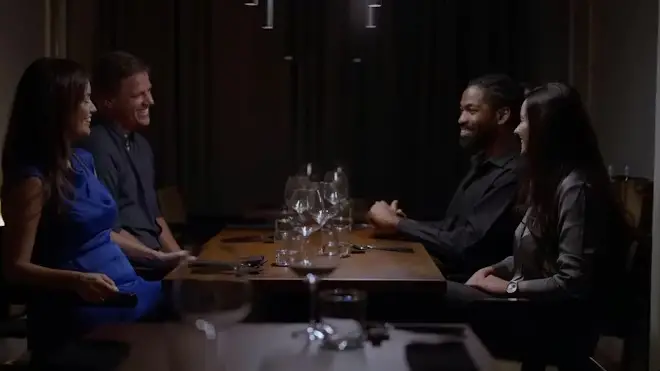
It was my thirtieth birthday, and the whole place glowed with that quiet luxury found only in high-rise restaurants: soft jazz humming above us, candles trembling in crystal holders, and floor-to-ceiling windows reflecting a skyline I once promised myself I’d earn. My name is Andrea—and this dinner was supposed to be a celebration. Instead, it was a stage.
Rene sat beside me looking like a man stuck in a photograph taken at the wrong moment. My mother kept adjusting forks and knives that no one had touched. My sister Rose spun the base of her champagne flute with the kind of slow confidence people have right before they do something cruel.
Then she stood—with a little theatrical inhale, the kind she uses when she wants everyone watching. Her hand drifted to her stomach, flat as ever, but meant to suggest otherwise. I saw my mother’s eyes widen with excitement even before Rose opened her mouth.
“I’m pregnant,” she said brightly, every syllable practiced. The table fell silent. Even the couple dining behind us stopped talking. Then, right on cue, she delivered her punchline: “And the father is Rene.”
The air dropped five degrees. A server passing by nearly fumbled his tray. I felt Rene’s hand land on my shoulder—not lovingly, but nervously, like someone sliding a deadbolt closed before a storm hits.
They thought I would collapse. Cry. Fall apart like I always used to. But this time, I wasn’t walking into their ambush blind. In my handbag rested a thick envelope from the clinic—the one I’d visited alone after noticing dates and details that didn’t line up. Six weeks of watching patterns, reading signs, and confirming everything my gut already knew.
Rose tilted her chin, waiting for the drama she thought she’d created. My mother wore that familiar “please don’t make a scene” face—the one she always used when she wanted me to swallow pain to keep our family’s image clean. Rene tried to lace his fingers with mine, but I moved my hand away before he could touch me.
Instead, I lifted my wine glass. “To family,” I said lightly, letting the words settle like ash. Then I smiled—small, calm, the smile of someone who already knows exactly how this night will end.
I set the sealed envelope on the white tablecloth. Under the candlelight, the embossed clinic stamp gleamed like a courtroom verdict. “Actually,” I said, tapping the envelope with one finger, “I have something I’d like to announce too.”
Rose’s smile faltered for just a fraction of a second. My mother’s hand froze mid-reach for her water glass. Rene went absolutely still beside me, and I felt his fear like static electricity in the air.
“Before we get too carried away with congratulations,” I continued, my voice steady and clear, “I think we should all be working with accurate information. Rose, when exactly did you say you got pregnant?”
Rose’s eyes narrowed slightly. She wasn’t used to me asking questions instead of dissolving into tears. “I’m about eight weeks along,” she said, that fake sweetness still coating her words. “It happened at the cabin. Remember, Andrea? When you sent Rene up there to check on me after my ‘breakup’?” She made air quotes around the word breakup, as if her entire romantic crisis had been a performance. Which, I’d learned, it had been.
My mother gasped softly, the pieces clicking together in her mind—or so she thought. “Oh, Andrea, sweetheart,” she began, reaching for my hand across the table. “I know this must be—”
“Eight weeks,” I interrupted, still looking at Rose. “The cabin trip. That’s interesting.” I picked up the envelope, turning it slowly in my hands. “Because I have something here that contradicts that timeline rather significantly.”
“What are you talking about?” Rose demanded, her voice losing its theatrical sweetness. Real anxiety crept in at the edges.
“I’m talking about the fact that three weeks ago, I started noticing some things. Little inconsistencies. Text messages on Rene’s phone that didn’t quite make sense. Charges on our shared credit card for a hotel in the city—on nights when you told me you were working late, Rene. Nights when Rose happened to be ‘staying with a friend.'”
Rene’s face had gone chalk white. “Andrea, I can explain—”
“No need,” I said calmly. “I’ve already done the explaining myself. I hired a private investigator. Nothing too dramatic—just someone to follow you both for a couple of weeks and document where you actually were when you said you were somewhere else. Turns out you two have been quite busy. Four different hotels over the past two months. That Italian restaurant you told me was ‘overrated,’ Rene? You took Rose there three times. The investigator got photos. Timestamps. Receipts.”
I pulled out several printed photographs from the envelope and laid them on the table like playing cards. Rose and Rene holding hands outside a boutique hotel. Rose and Rene kissing in his car. Rose and Rene entering her apartment building together at eleven PM on a Tuesday when Rene had told me he was at a client dinner.
My mother’s face cycled through shock, confusion, and a desperate attempt to find a way to excuse what she was seeing. “Andrea, there might be an explanation—”
“Oh, there’s an explanation,” I said. “They’ve been having an affair for at least three months. Probably longer, but that’s as far back as my investigator could definitively prove.”
Rose recovered first, her face hardening. “So what?” she snapped, dropping the sweet-sister act entirely. “You caught us. Congratulations. But it doesn’t change the fact that I’m pregnant with his baby. You’re going to lose him anyway. I just sped up the timeline.”
“Are you, though?” I asked softly. “Pregnant?”
Rose’s hand instinctively moved to her stomach again. “Of course I am. I have a positive test. I’ve been to the doctor.”
“Show me.”
“What?”
“Show me. The positive test. The doctor’s confirmation. Medical records. Anything.” I leaned back in my chair, completely calm. “Because here’s where things get really interesting, Rose. After I discovered the affair, I did some more digging. I called your gynecologist’s office—Dr. Sarah Chen, right? The same one you’ve been seeing since you were sixteen?”
Rose’s confidence flickered like a candle in a draft.
“I told them I was you—easy enough since we sound identical on the phone and I have all your personal information from when you lived with me last year. I said I needed to confirm some dates for my pregnancy. They were very helpful. Pulled up your file immediately.”
“That’s illegal,” Rose whispered.
“Probably,” I agreed. “But you know what? I don’t really care. Because according to your medical records, you’re not pregnant, Rose. In fact, you can’t be pregnant. You had a surgical procedure eighteen months ago—an elective one—that makes pregnancy impossible. You told me it was an appendectomy. But it wasn’t, was it?”
The silence that fell over the table was deafening. Even the ambient restaurant noise seemed to fade away. My mother looked between us, her face crumpling as understanding dawned.
“You had your tubes tied,” I continued. “You told the doctor you were absolutely certain you never wanted children. It’s right there in your file. ‘Patient adamant about permanent sterilization. Counseling completed. Procedure successful.'”
Rose’s face had gone from pale to grey. Rene turned to stare at her, his mouth opening and closing like a fish out of water.
“So no, Rose, you’re not pregnant. You’re lying. This whole thing—the announcement, the drama, the timing at my birthday dinner—it was all just another manipulation. Another one of your games.” I pulled out the final document from the envelope. “This is a copy of your medical records. I had them legally subpoenaed through my attorney once I had evidence of fraud.”
“Fraud?” My mother’s voice was barely a whisper.
“Oh yes,” I said, looking at Rene now. “Because it turns out Rose has been running a very profitable little side scheme. Rene, did you happen to give Rose any money recently? Maybe to ‘help with pregnancy expenses’?”
Rene’s silence was answer enough.
“He gave you fifteen thousand dollars, didn’t he?” I continued, having pulled Rene’s financial records during my investigation. As his fiancée, I had access to our joint accounts and statements. “Two weeks ago. A wire transfer. Rose told you it was for prenatal care, for setting up a nursery, for maternity clothes. She probably cried. She probably told you how scared she was. How she needed your support.”
Rose tried to stand, but I held up a hand. “Sit down, Rose. We’re not done.”
Something in my voice made her sink back into her chair. The old Andrea would have cried and run. The new Andrea—the one who’d spent six weeks systematically documenting betrayal—wasn’t going anywhere.
“The really interesting part,” I continued, “is that this isn’t even the first time you’ve done this. I did some calling around. Remember Jake? Your boyfriend from two years ago? The one who ‘broke your heart’? I tracked him down. Nice guy, actually. He was very interested to know you were trying the same scam again. Because you pulled this exact same scheme with him. Claimed you were pregnant with his baby. Got him to give you twelve thousand dollars for ‘medical expenses.’ Then mysteriously ‘miscarried’ six weeks later. He was too heartbroken and guilty to ask questions. He just walked away.”
My mother made a sound like a wounded animal. “Rose, tell me this isn’t true.”
But Rose’s face was answer enough. The mask had completely fallen away, replaced by cold calculation and trapped-animal fury.
“And before Jake,” I continued relentlessly, “there was Marcus. Remember him, Mom? Rose’s college boyfriend? The one she said abandoned her when she got pregnant? He didn’t abandon her. She scammed him for eight thousand dollars and then ghosted him when he started asking for proof.”
I pulled out printed email conversations, bank transfers, text messages—all of it compiled into a neat folder that I’d been building for weeks. “I found seven different men over the past six years, Rose. Seven. Some gave you a few thousand. Others gave you more. You’ve made almost ninety thousand dollars claiming to be pregnant with various men’s babies. It’s been your primary source of income since you dropped out of college.”
Rene looked like he might be sick. My mother was crying, but I felt nothing. No satisfaction. No anger. Just a cold, clear sense of finally, finally seeing everything in perfect focus.
“The pregnancy test you probably showed Rene? You can buy those positive online. I found your purchase history. The ‘doctor’s appointment’ you told him about? I called that clinic too. They’ve never heard of you. Everything has been a lie.”
Rose stood abruptly, her chair scraping against the floor. “You’re insane,” she hissed. “You’ve always been jealous of me. This is just you trying to turn everyone against me because you can’t handle that Rene chose me.”
“Rene didn’t choose you,” I said quietly. “You targeted him deliberately because you knew taking him from me would hurt the most. You’ve always needed to prove you’re better than me, prettier than me, more desirable than me. This was never about Rene. This was about beating me. And you were willing to commit fraud to do it.”
I turned to Rene, who looked smaller somehow, diminished. “You’re a cheating, lying coward, but at least you’re not a criminal. Rose is. She’s committed fraud. Multiple times. And this time, I have all the evidence I need to prove it.”
“You wouldn’t,” Rose breathed.
“Wouldn’t I?” I pulled out one more document—the final piece of my puzzle. “This is a complaint I’ve already filed with the district attorney’s office. Wire fraud. Identity theft—yes, Rose, you used fake names and fake documents with some of these men. Extortion. The DA’s office was very interested in your pattern of behavior. They’re opening an investigation.”
My mother finally found her voice, shrill and desperate. “Andrea, you can’t do this. She’s your sister. This will destroy her. Think about our family.”
“Our family?” I laughed, and it came out harsh and bitter. “Mom, where were you every time Rose ‘borrowed’ money from me and never paid it back? Where were you when she stole my clothes, my jewelry, my credit cards? Where were you when she deliberately sabotaged my college applications so she could be the only one to get into State? You’ve let her get away with everything her entire life because you thought she was fragile, because you thought she needed protecting. But she’s not fragile. She’s calculating. And I’m done protecting her from the consequences of her own actions.”
I stood, gathering my documents back into the envelope. “The DA will be in touch, Rose. I suggest you get a lawyer. A good one. You’re going to need it.”
“Andrea, please,” Rene grabbed my wrist. “Can we talk about this? About us? I made a mistake. I’m sorry. I thought I loved her, but I was confused. I love you. We can fix this.”
I looked at his hand on my wrist, then at his face. A year ago, I would have believed him. I would have wanted to believe him so badly that I would have ignored every red flag. But not anymore.
“Rene, I stopped loving you the moment I saw the hotel receipt. Maybe even before that. Maybe I never really loved you—maybe I just loved the idea of you, the life we were supposed to build. But that life was based on a lie. You’ve been lying to me for months. And you were stupid enough to fall for Rose’s con, which tells me everything I need to know about your judgment.”
I pulled my wrist free. “We’re done. I’ve already moved your things out of my apartment. They’re in storage. You have thirty days to collect them, and then I’m donating everything. My lawyer will send you the dissolution paperwork for our engagement. We’re not married, thank God, so this will be simple.”
“You can’t just—”
“I absolutely can.” I pulled off the engagement ring he’d given me eighteen months ago and set it on the table between us. It had cost him a fortune—or rather, it had cost his parents’ money a fortune, since Rene’s job in “tech consulting” mostly involved playing video games and occasionally going to meetings. “Consider it compensation for the year I wasted on you.”
I looked at all three of them—my sister, my ex-fiancé, my mother—and felt a strange sense of lightness, as if I’d been carrying their weight for so long I’d forgotten what it felt like to stand up straight.
“I’m leaving now,” I said. “I’m going to go enjoy what’s left of my birthday. Alone. And it’s going to be the best birthday I’ve ever had because I’m finally free of all of you.”
My mother started to cry harder. “Andrea, you don’t mean that. We’re family. Family forgives.”
“No, Mom. Family respects each other. Family doesn’t lie and cheat and steal. You taught Rose that bad behavior would always be excused, that she could get away with anything as long as she cried prettily afterward. But I’m not you. I don’t forgive this. I won’t forgive this.”
I picked up my handbag and looked at Rose one last time. “You know what the saddest part is? You could have been anything. You’re smart, you’re charismatic, you’re beautiful. But instead of using those gifts to build something real, you spent your life tearing other people down to make yourself feel tall. I actually pity you.”
Rose’s face twisted with rage. “I don’t need your pity. You’re just a boring, plain nobody who got lucky with a good job. I’m better than you in every way.”
“Then prove it,” I said calmly. “Build a life without scamming people. Get a real job. Make something of yourself. But I won’t be around to see it. As of tonight, you’re not my sister anymore. You’re just someone I used to know.”
I walked away from the table without looking back. Behind me, I heard my mother’s sobs, Rose’s angry hissing, Rene’s confused protests. I didn’t care. I walked through that beautiful restaurant with my head high, past the other diners who’d definitely been listening to our drama, past the maitre d’ who looked alarmed, straight out into the cool night air.
The moment the door closed behind me, I took the deepest breath I’d taken in months. Maybe years. The city stretched out before me, full of light and possibility and a future that was entirely mine to shape. I pulled out my phone and called my best friend, Maya.
“Hey, it’s me,” I said when she answered. “Are you busy?”
“Never too busy for you. How’s the birthday dinner?”
“Disaster. Complete disaster. And also the best thing that ever happened to me. Can you meet me at Rossi’s in twenty minutes? I need pizza, wine, and to tell you the most insane story of my life.”
Maya didn’t hesitate. “I’m already getting my shoes on. Andrea—are you okay?”
I thought about that question as a taxi pulled up in front of me. Was I okay? My sister had tried to destroy my life. My fiancé had cheated on me. My mother had chosen my sister’s side, as she always did. I’d just blown up my family at my own birthday dinner.
“Yeah,” I said, and realized I meant it. “I’m actually really okay. Better than okay. I’m free.”
“Then let’s celebrate your freedom,” Maya said firmly. “See you in twenty.”
I hung up and climbed into the taxi, giving the driver the address of my favorite neighborhood pizza place. As we pulled away from the restaurant, I looked back one time. Through the windows, I could see my table. Rose was standing now, gesturing wildly. My mother had her face in her hands. Rene sat slumped in his chair like a puppet with cut strings.
Part of me—a very small part—felt guilty for the destruction I’d just caused. But the rest of me knew I’d only exposed the destruction that was already there, hidden under lies and pretense and a desperate desire to keep up appearances. I hadn’t destroyed my family. They’d destroyed themselves.
I just refused to go down with them.
The next six weeks were a blur of legal proceedings, difficult conversations, and profound personal change. The district attorney’s office moved forward with their investigation into Rose. They found even more victims than I had—eleven in total, dating back to when Rose was nineteen. The total amount she’d scammed from various men was over $120,000.
Rose hired a lawyer, but the evidence was overwhelming. Her fake pregnancy test purchases, her medical records proving she couldn’t get pregnant, testimony from seven different men she’d conned—it all painted a damning picture. Three months after my birthday dinner, Rose pleaded guilty to wire fraud and extortion. She got eighteen months in prison and five years of probation, plus restitution payments to all her victims.
My mother stopped speaking to me after I refused to write a letter to the judge asking for leniency. She blamed me for Rose’s imprisonment, conveniently forgetting that Rose had committed actual crimes. She sent me one long, rambling email about how I’d destroyed our family, how I was cruel and vindictive, how I should be ashamed.
I blocked her email address and never responded.
Rene tried to reconcile repeatedly. He sent flowers, gifts, long apologetic texts. He showed up at my apartment building twice before I threatened to get a restraining order. Eventually, he gave up. I heard through mutual friends that he’d moved to Seattle for a new job. I hoped he’d learned something from the experience, but I doubted it. Men like Rene rarely did.
Maya helped me pack up the apartment I’d shared with Rene and move into a smaller, prettier place in a neighborhood I’d always loved. We painted the walls myself-chosen colors, hung art I actually liked, and filled it with furniture that made me happy instead of furniture that matched some imaginary “couple aesthetic.”
I threw myself into my work at the architectural firm where I’d been slowly climbing the ladder for five years. Without the constant drama of Rose’s crises and Rene’s neediness, I had energy I’d forgotten I possessed. I took on new projects, stayed late refining designs, collaborated with senior partners who started to see me as a peer rather than a junior associate.
Six months after my birthday dinner, I was promoted to senior architect. A year after that, I was offered a partnership track position. The skyline I’d promised myself I’d earn? I was designing it now, quite literally. My firm won the bid for a major downtown development, and I was the lead architect.
I dated a little, but cautiously. I learned to trust my instincts, to recognize red flags, to walk away at the first sign of dishonesty. I went to therapy and unpacked years of codependent patterns, of putting other people’s needs before my own, of believing I had to earn love through sacrifice and silence.
The hardest part was grieving the family I’d lost—or rather, grieving the family I’d thought I had. Because the truth was, that family had never really existed. It had been a performance, a fiction we’d all agreed to maintain. My mother’s love had always been conditional on my compliance. Rose had always been jealous and competitive. Our “closeness” had been one-sided, with me always giving and her always taking.
Letting go of that fiction hurt more than the actual betrayal.
But slowly, I built something better. Maya became the sister Rose had never been—supportive, honest, genuinely happy for my successes. I reconnected with cousins and aunts I’d drifted away from over the years. I built a chosen family of friends who showed up when I needed them and celebrated my victories without jealousy.
On my thirty-second birthday, I threw a party in my new apartment. Twenty people came—friends from work, from college, from my book club, from my running group. Maya made a toast: “To Andrea, who taught us all that sometimes the bravest thing you can do is walk away from people who don’t deserve you.”
Everyone cheered and clinked glasses, and I felt a warmth that had nothing to do with the wine. This was what family was supposed to feel like. Safe. Supportive. Real.
My phone buzzed with a text from an unknown number. Against my better judgment, I opened it. “Happy birthday, Andrea. I’m out on parole. I hope you’re happy with what you’ve done to this family. Mom won’t even speak to me because of you. – Rose”
I stared at the message for a long moment. A year ago, I would have felt guilty. I would have questioned my choices. I would have wondered if I’d been too harsh, too unforgiving, too cruel.
But not anymore.
I typed a response: “I didn’t do anything to our family except refuse to participate in your dysfunction. I hope you’ve learned from this experience and that you build a better life going forward. But that life won’t include me. Please don’t contact me again.”
I blocked the number, deleted the message, and put my phone away. Maya raised an eyebrow. “Rose?”
“Rose,” I confirmed.
“Are you okay?”
I looked around my apartment, at the life I’d built from the ashes of that birthday dinner two years ago. At the friends who were here because they genuinely cared about me, not because they wanted something from me. At the partnership offer letter framed on my wall—the one I’d worked so hard to earn. At the design renderings of buildings that would shape my city’s skyline for generations.
“I’m more than okay,” I said. “I’m exactly where I’m supposed to be.”
And for the first time in my life, I meant it completely.
Later that night, after everyone had left and I was cleaning up paper plates and empty wine glasses, I found myself standing at my apartment window looking out at the city lights. This view wasn’t as high or as expansive as the one from the restaurant where Rose had tried to humiliate me. But it was mine, earned with my own work and my own choices.
My phone rang. I didn’t recognize the number, but something made me answer it.
“Hello?”
“Andrea? This is… this is Marcus. Marcus Chen. I don’t know if you remember me, but I dated your sister about six years ago.”
I remembered. He was one of the men I’d contacted during my investigation. “I remember. Hi, Marcus.”
“I just… I wanted to thank you. For what you did. I know it probably wasn’t about me, but when that investigator contacted me and I realized Rose had done the same thing to other guys… it helped. I’d been carrying around so much guilt, thinking I was a terrible person for not being more supportive when she told me she’d miscarried. I thought I’d failed her. Finding out it was all a lie… it was awful, but it was also freeing.”
“I understand that feeling,” I said quietly.
“I testified at her sentencing, you know. I told the judge what she’d done to me. How it had affected my ability to trust people, to date. The judge said my testimony was part of why she gave Rose the sentence she did. I wanted you to know that. You didn’t just save yourself—you saved a lot of other people who would have been her next targets.”
A lump formed in my throat. I’d never thought about it that way. I’d been so focused on my own pain, my own need for truth, that I hadn’t considered the bigger picture. “Thank you for telling me that.”
“Are you doing okay? I mean, after everything?”
“Yeah,” I said, looking at my reflection in the dark window. I looked different than I had two years ago. Older, yes, but also stronger. More sure of myself. “I really am.”
We talked for a few more minutes before saying goodbye. After I hung up, I poured myself one last glass of wine and sat on my couch, thinking about everything that had changed.
That envelope—those documents I’d gathered so carefully, so methodically—had been the key to my freedom. Not just freedom from Rose and Rene, but freedom from a version of myself that accepted mistreatment as the price of belonging, that swallowed pain to keep the peace, that believed she deserved less than other people.
The old Andrea would have cried at that birthday dinner. She would have believed Rose’s lies. She would have blamed herself for Rene’s cheating. She would have apologized to her mother for making a scene. She would have sacrificed her own dignity and self-respect to keep a family together that was already broken.
But the new Andrea—the one who’d emerged from the ashes of that catastrophic dinner—she knew better. She knew that some relationships aren’t worth saving. She knew that blood doesn’t make family, behavior does. She knew that walking away from toxicity wasn’t cruelty—it was self-preservation.
She knew that she deserved better.
And she’d built better. Piece by piece, day by day, she’d constructed a life that actually felt like hers. Not a life designed to please other people or meet other people’s expectations. A life that made her genuinely happy.
Six months later, I was at a coffee shop near my office when someone sat down at my table uninvited. I looked up, irritated, and froze. It was my mother.
She’d aged since I’d last seen her. More grey in her hair, deeper lines around her eyes. She looked tired in a way that went beyond physical exhaustion.
“I know you don’t want to see me,” she said before I could speak. “I know I don’t have the right to be here. But I need to say something, and then I’ll leave and never bother you again if that’s what you want.”
I closed my laptop and waited.
“Rose got out of prison three months ago,” my mother said. “She’s living with me. She’s… she’s not doing well, Andrea. She can’t find work. Nobody trusts her. She’s depressed and angry, and I don’t know how to help her.”
“That’s not my problem,” I said flatly.
“I know.” My mother’s eyes filled with tears. “I know it’s not. I know I failed you. I know I always put Rose first, always made excuses for her, always expected you to be the strong one because you were so capable and she was so… fragile. Except she wasn’t fragile. She was manipulative. And I enabled it. I enabled all of it.”
I’d imagined this conversation a thousand times. In some versions, I yelled. In others, I cried. In still others, I walked away without a word. But now that it was actually happening, I felt nothing but a vast, empty distance between us.
“Why are you telling me this?” I asked.
“Because I was wrong,” my mother said simply. “About everything. About Rose. About you. About what family means. I thought keeping the peace was the same as keeping the family together. But all I did was teach Rose that she could get away with anything and teach you that your feelings didn’t matter. I destroyed both my daughters in different ways.”
She pulled a tissue from her purse and wiped her eyes. “I don’t expect you to forgive me. I just needed you to know that I see it now. I see what I did. And I’m so, so sorry.”
I took a sip of my coffee, letting the silence stretch. Part of me—the part that was still that little girl desperate for her mother’s approval—wanted to accept the apology, to rebuild the bridge, to try again. But the stronger part, the part that had learned hard lessons about boundaries and self-protection, knew better.
“Thank you for apologizing,” I said finally. “I mean that. It matters that you can see it now. But I can’t have you in my life, Mom. Not now. Maybe not ever. The damage is too deep. Every time I think about you, I remember every time you asked me to be smaller, quieter, more accommodating so Rose wouldn’t feel bad. I remember every time you dismissed my pain because dealing with Rose’s drama was more urgent. I remember that you chose her over me every single time. And I can’t forget that.”
My mother nodded, tears streaming down her face. “I understand.”
“I hope Rose gets help,” I continued. “Real help. Therapy. Whatever she needs to become a better person. But that’s not my responsibility. She made her choices. You made yours. And I made mine. We all have to live with the consequences.”
I stood up, gathering my things. My mother looked up at me with such profound sadness that I almost wavered. Almost.
“I hope you find peace, Mom,” I said. “I really do. But I found mine by walking away from you. And I’m not giving that up.”
I left her sitting there and walked back to my office. My hands were shaking, but I felt oddly calm. I’d said what needed to be said. I’d set the boundary that needed to be set. And I’d done it without cruelty, without satisfaction—just with clear-eyed honesty.
That night, I called Maya. “My mom showed up today.”
“Oh God. What happened?”
I told her everything. When I finished, Maya was quiet for a moment. “How do you feel?”
“Sad,” I admitted. “But also… sure. I’m sure I made the right choice. I don’t feel guilty anymore. I don’t feel like I owe her another chance. I just feel sad that this is how it had to end.”
“You gave her thirty years of chances,” Maya said gently. “You don’t owe her the rest of your life.”
She was right. I’d given enough. I’d sacrificed enough. I’d bent enough. Now it was time to build something new on my own foundation, according to my own design.
Three years after that birthday dinner, I stood on the observation deck of the building my firm had designed—the one I’d led the project for. It was opening day, and the mayor was giving a speech about architecture and vision and the future of our city. But I was barely listening. I was looking out at the skyline, at the other buildings I’d helped design, at the city that had become truly mine.
My phone buzzed. A text from an unknown number: “I saw the article about your building. It’s beautiful. I’m proud of you. – Dad”
My father. The man who’d left when I was ten and Rose was eight. The man I’d spent years trying to forget. I stared at the message, unsure how to feel. Anger? Curiosity? Indifference?
I typed back: “Thank you. How did you get this number?”
“Mutual friend. I know I don’t have the right to contact you. I just wanted you to know I’ve been following your career. You’ve become remarkable.”
I considered blocking the number like I’d blocked Rose’s. But something stopped me. Maybe it was that I was no longer desperate for male validation after finally releasing Rene. Maybe it was that enough time had passed that my father’s abandonment felt like ancient history. Or maybe I was just curious about the man I barely remembered.
“Coffee?” I typed. “No promises beyond that.”
“I’d like that very much.”
We met the following week at a neutral café. He’d aged into someone I wouldn’t have recognized on the street—grey hair, reading glasses, the comfortable clothes of a man who’d stopped trying to impress anyone. We talked for two hours about architecture, about his life, about mine. He didn’t make excuses for leaving. He didn’t ask for forgiveness. He just shared his story and listened to mine.
At the end, he said, “I don’t expect a relationship. I know I gave up that right decades ago. But if you ever want to talk, I’m here. No pressure. No expectations.”
It was the opposite of how my mother and Rose had operated—demanding, expecting, taking. He was offering without asking for anything in return. It was strange and uncomfortable and oddly healing.
“I’ll think about it,” I said.
And I did. Over the following months, we met occasionally for coffee. I kept him at arm’s length, but I stopped carrying around the anger I’d held for so long. His absence had hurt me, but it had also freed me from the dysfunction of my mother’s house. If he’d stayed, I might have had a different kind of damage.
I didn’t forgive him, exactly. But I stopped needing to. I stopped defining myself by the ways I’d been abandoned or betrayed. I started defining myself by what I’d built despite—or maybe because of—those experiences.
On my thirty-fifth birthday, I threw another party. Bigger this time, in the penthouse of a building I’d designed. Fifty people came—colleagues, friends, my book club, my running group, some cousins I’d reconnected with, and, surprisingly, my father. Maya gave a toast: “To Andrea, who burned down a toxic life and built something beautiful from the ashes.”
Everyone cheered. I looked around at faces full of genuine affection and felt something I’d never quite felt before: complete. Not because I had a partner or a traditional family. Not because I’d achieved some predetermined milestone. But because I’d learned to choose myself, and in choosing myself, I’d attracted people who could truly choose me back.
Later, standing on the balcony with the city lights spreading out below like a blanket of stars, Maya joined me. “You did it,” she said simply.
“Did what?”
“You earned that skyline you promised yourself.”
I looked at her, this woman who’d been more of a sister to me than Rose ever was, and smiled. “We earned it. I couldn’t have done any of this without you.”
“Sure you could have,” Maya said. “But I’m glad you didn’t have to.”
My phone buzzed. Another unknown number. For a moment, I tensed, expecting Rose or my mother. But it was neither.
“Hi Andrea, this is Dr. James Park. I heard you speak at the architecture conference last month. I’m leading a project in Tokyo and I think you’d be perfect as a consulting architect. Are you interested?”
Tokyo. A project that would push my skills, expand my horizons, take me somewhere I’d never been. Five years ago, I would have said no. I would have been too afraid, too tied to what I knew, too constrained by other people’s expectations.
But that Andrea was gone. This Andrea—the one who’d learned to trust herself, to believe in her worth, to walk away from what didn’t serve her—this Andrea was ready.
I typed back: “Very interested. Let’s set up a call.”
Then I put my phone away and went back to my party, to my people, to my life. The life I’d built document by document, decision by decision, boundary by boundary. The life that had started with an envelope and ended with freedom.
Rose had thought she was shattering me that night at dinner. But she’d actually freed me. She’d forced me to see clearly, to act decisively, to choose myself for the first time in my life. In trying to destroy me, she’d accidentally given me the greatest gift: the truth.
And the truth, as it turned out, had set me free.
I raised my glass to the city, to the future, to the woman I’d become. “To truth,” I said quietly.
Maya clinked her glass against mine. “To truth.”
And to the carefully documented, legally subpoenaed, undeniable truth that had saved my life.

Lila Hart is a dedicated Digital Archivist and Research Specialist with a keen eye for preserving and curating meaningful content. At TheArchivists, she specializes in organizing and managing digital archives, ensuring that valuable stories and historical moments are accessible for generations to come.
Lila earned her degree in History and Archival Studies from the University of Edinburgh, where she cultivated her passion for documenting the past and preserving cultural heritage. Her expertise lies in combining traditional archival techniques with modern digital tools, allowing her to create comprehensive and engaging collections that resonate with audiences worldwide.
At TheArchivists, Lila is known for her meticulous attention to detail and her ability to uncover hidden gems within extensive archives. Her work is praised for its depth, authenticity, and contribution to the preservation of knowledge in the digital age.
Driven by a commitment to preserving stories that matter, Lila is passionate about exploring the intersection of history and technology. Her goal is to ensure that every piece of content she handles reflects the richness of human experiences and remains a source of inspiration for years to come.