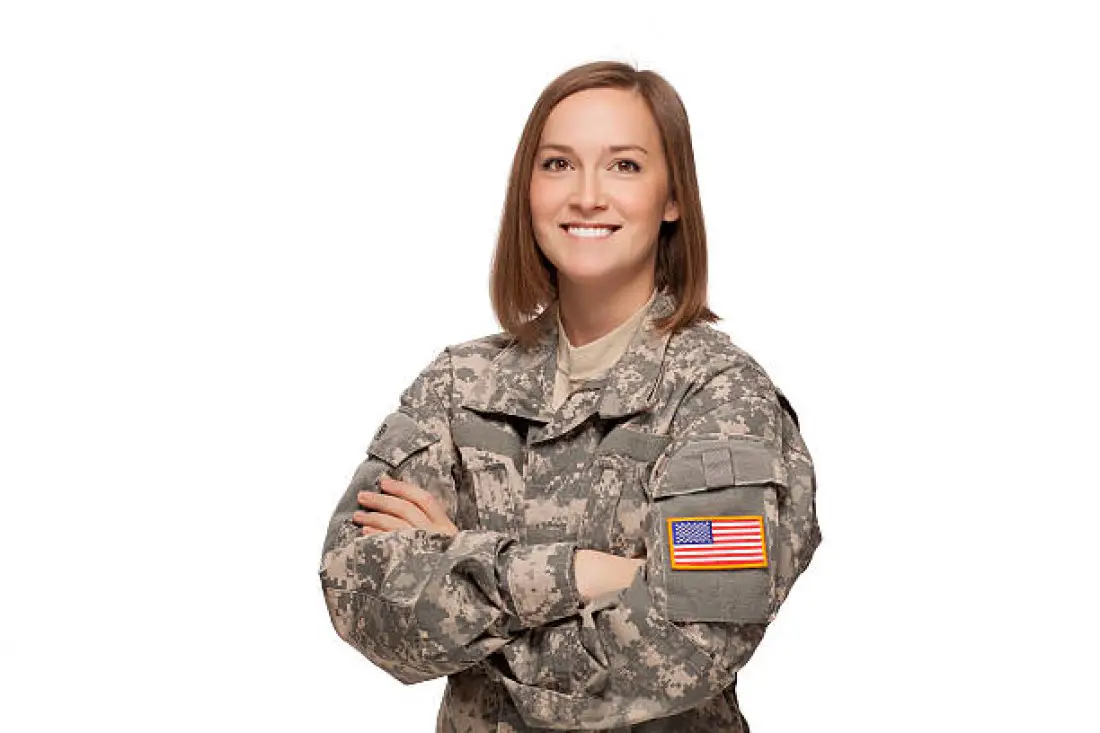
The Iron Widow: How a Secret Female Navy SEAL Destroyed the Admiral Who Tried to Break Her
The Admiral’s War Against Progress
The heat rising from the tarmac at the Naval Special Warfare Center in Coronado wasn’t just oppressive—it was weaponized. The air shimmered like liquid mercury, distorting the horizon and creating an atmosphere that felt more like a torture chamber than a training facility. But Lieutenant Commander Arwin Blackwood had endured far worse than California heat during her covert career.
She stood motionless at position twenty in the formation, the sole woman among nineteen elite male operators. Each of these men represented the pinnacle of military achievement—hardened veterans carved from granite and ego, SEALs and aspiring special operators who had earned their places through blood, sweat, and an almost inhuman tolerance for suffering.
But their collective disdain for her presence was nothing compared to the concentrated malice radiating from Admiral Victor Hargrove as he conducted his inspection with predatory precision.
At sixty-two, Hargrove moved with the calculated grace of a man who hadn’t merely survived three decades of warfare—he had orchestrated much of it from the shadows. His service record was a constellation of classified operations in locations that didn’t exist on civilian maps, and his chest bore three rows of ribbons that told stories of heroism and horror in equal measure.
He was also the man personally dedicated to ensuring Arwin’s complete and utter failure.
The sound of Hargrove’s boots on the gravel was methodical—crunch, crunch, stop. He paused in front of Lieutenant Orion Thade, the square-jawed poster boy whose arrogance was matched only by his undeniable competence. Thade represented everything Hargrove valued: masculine aggression, unquestioning loyalty, and the kind of swagger that looked good in recruitment videos.
A murmur of approval passed between them, the quiet exchange of men who understood their place in the military hierarchy and were comfortable with the exclusivity it provided.
Then the boots moved again, stopping directly in front of Arwin with the finality of a gavel hitting a judge’s bench.
“Lieutenant Commander Blackwood,” Hargrove’s voice carried the dry rasp of desert wind, projecting effortlessly across the silent formation. Each syllable was carefully weighted with contempt.
“Admiral,” she replied, her voice flat and devoid of the fear he desperately wanted to taste.
Hargrove leaned closer, invading her personal space with calculated intimidation. She could smell the starch of his uniform, the metallic scent of old coffee, and something else—the particular odor of a man who enjoyed wielding power over others.
“Your cover is precisely one centimeter off regulation alignment,” he announced, his whisper loud enough for the entire formation to hear. “You are a disgrace to that uniform and an embarrassment to the sailors standing beside you.”
The accusation was a fabrication. Arwin had measured her cover with mechanical precision before stepping onto the parade ground, using the same obsessive attention to detail that had kept her alive during seven years of covert operations. But this wasn’t about regulations—this was psychological warfare.
A smirk flickered across Thade’s face in her peripheral vision, the micro-expression conveying a message that needed no words: You don’t belong here, and we’re going to make sure you remember it.
Arwin’s pulse remained steady at fifty-five beats per minute. Her hands didn’t curl into fists. She simply absorbed the insult, filed it away in the cold storage of her tactical mind, and delivered the only response military protocol allowed.
“Yes, sir. I will correct it immediately, sir.”
Hargrove stared at her for several seconds longer, his steel-gray eyes hunting for cracks in her composure. He despised her refusal to break, hated that she wouldn’t give him the emotional reaction he could use to justify her removal from the program.
The Sabotage That Backfired
The equipment room buzzed with the controlled chaos of elite operators preparing for combat operations. Zippers rasped, Velcro tore, and weapons clicked as men who had spent years perfecting their craft moved through pre-mission rituals with mechanical precision.
Arwin approached her locker with the same economic movements that characterized everything she did—no wasted motion, no unnecessary exposure, every action calculated for maximum efficiency. When she lifted her tactical vest, however, something was wrong.
The weight distribution was incorrect. Not obviously so, but wrong enough that her years of experience detected the anomaly immediately. She didn’t look around or call for assistance. Instead, she ran her hands methodically over the vest’s ballistic plate pockets.
Hidden deep in the left panel was a lead dive weight—two pounds of metal that would create a dangerous imbalance during water operations. In a fifteen-mile ocean swim, this seemingly small sabotage could cause muscle fatigue, buoyancy problems, and potentially drowning.
Arwin faced a choice that would define her approach to this entire program. She could report the sabotage to Commander Coltrane, the fair-minded training officer who would undoubtedly take disciplinary action against Thade. But complaining would mark her as the woman who needed protection, the weak link who couldn’t handle the “roughhousing” that Hargrove would claim was standard team bonding.
Instead, she reached into her gear bag and retrieved a counterbalance weight from her personal equipment. Rather than removing Thade’s sabotage, she added matching weight to the right side of her vest.
She wasn’t going to eliminate the handicap. She was going to carry it and still outperform every man in the program.
“Lieutenant Commander,” a soft voice interrupted her preparations.
Captain Vesper Reeve stood nearby, her unmarked uniform indicating Naval Intelligence. Her presence at the training facility was officially advisory, but both women understood the real reason for her assignment.
“Captain,” Arwin acknowledged, shouldering her now eighty-pound vest without showing strain.
Reeve’s eyes flicked to the vest, then to Arwin’s face. She had detected the additional weight but said nothing about it directly. “Priority message. Eyes only.”
She handed Arwin a secure tablet, positioning her body to block observation from other operators. The authentication sequence required a complex code that Arwin’s fingers remembered better than they remembered childhood lullabies.
TEXT: PACKAGE INBOUND. T-MINUS 7 DAYS. SONG JUAN PROTOCOLS ACTIVE.
The words hit Arwin like a physical blow. Song Juan—a name that represented the worst and most classified failure in recent military history. Seven years ago, six Navy SEALs had been captured in North Korea and written off as dead by command. The rescue operation that followed had been erased from official records, but the scars remained.
“Is this confirmed intelligence?” Arwin asked, returning the tablet.
“Chatter analysis suggests high probability,” Reeve replied, her professional mask concealing deep concern. “If Admiral Hargrove succeeds in removing you from this program before the ceremony, we lose our only asset capable of handling Song Juan-level operations.”
“He won’t succeed,” Arwin said with quiet certainty.
“The water temperature today is fifty-two degrees, Arwin. That’s hypothermia territory even for elite swimmers.”
Arwin adjusted her gear straps, feeling the extra weight distribute across her shoulders. “Then I’ll swim faster.”
The Ocean That Became a Battlefield
The helicopter ride to the insertion point was a symphony of mechanical vibration and barely contained testosterone. Twenty operators packed into the aircraft like ammunition in a magazine, each man focused on the mission parameters that would determine who advanced and who was eliminated from the program.
Arwin sat across from Commander Coltrane, the training officer whose reputation for fairness made him an anomaly in Hargrove’s command structure. She noticed him studying her, watching the way she tracked their ascent by observing the changing angle of whitecaps on the ocean surface below.
Her eyes remained locked on the horizon, her head tilting slightly as she calculated wind vectors based on water patterns. It was an unconscious display of expertise that revealed training far beyond standard naval education—the kind of skills developed during years of insertion operations where miscalculating environmental factors meant death.
Coltrane’s eyes narrowed with professional interest. He recognized competence when he saw it, and Arwin’s casual mastery of battlefield mathematics suggested she was far more than the diversity placement Hargrove claimed.
“Fifteen miles out,” the pilot announced through their headsets. “Water temperature holding at fifty-two degrees. Surface swells running at four feet.”
Fifty-two degrees—cold enough to induce hypothermia in thirty minutes for an unprotected swimmer. They had wetsuits, but they also carried full combat loads and the weight of institutional expectations.
The announcement transformed the training evolution from cooperative exercise to blood sport. Collaboration died instantly, replaced by the kind of competitive aggression that could turn deadly in open water.
Arwin understood immediately that she had just become the primary target. In a direct competition, the woman carrying extra weight would be seen as the weakest competitor, the easy victim to eliminate first.
“Teams, hit the water!”
Thade’s team jumped first, their entry technique flawless and synchronized. Arwin waited for her assigned team—Lieutenant Kelwin, a fresh-faced graduate who looked impossibly young, and two solid but uninspired operators who were already looking to her for leadership despite her lack of official command authority.
“Follow my trace,” she said over their tactical communications. “Don’t fight the current. We’re going deep.”
She stepped out of the helicopter and dropped into the Pacific Ocean like a stone.
The impact with fifty-two-degree water was brutal—a thousand needles of cold stabbing through her wetsuit and shocking her nervous system. The extra weight in her vest dragged her down faster than she had anticipated, forcing her to kick hard with quadriceps that immediately began burning from the additional load.
Underwater, the world became a cathedral of green silence. Above them, Thade’s team churned the surface with aggressive swimming, following standard SEAL doctrine by maintaining high speed at shallow depths to conserve air and energy.
Arwin signaled her team with hand gestures. Down. Thirty feet.
Kelwin looked confused behind his mask. Standard protocol called for surface approach until they were within 500 yards of the target. Diving to thirty feet now seemed like tactical suicide.
Arwin shook her head firmly and pointed to her depth gauge, then gestured toward the distant shadow of the oil rig that served as their objective.
At thirty feet below the surface, the chaotic turbulence disappeared. Here, a cold current flowed directly toward the target structure—a riptide that surface swimmers would fight against but deep swimmers could use as an aquatic highway.
Her team fell into formation behind her as she led them through the murk with long, efficient strokes. The weights that Thade had placed in her vest were killing her shoulders, but she converted the pain into fuel, using it to maintain the kind of controlled aggression that had kept her alive during seven years of classified operations.
They reached the oil platform in twelve minutes. Thade’s team was likely still fighting surface swells and wondering why their target seemed to be getting farther away instead of closer.
The Masterclass in Tactical Innovation
The decommissioned oil platform loomed out of the underwater darkness like a mechanical reef. Rusted pylons extended into the depths, wrapped in abandoned fishing nets and encrusted with barnacles that had claimed the structure as their own. It was a monument to industrial ambition reclaimed by the ocean.
Arwin halted her team with a closed fist, the universal military signal for immediate stop. Lieutenant Kelwin floated beside her, his eyes wide behind his diving mask as he pointed toward the surface and tapped his wrist-mounted compass.
His message was clear: The entrance is topside. Ladder access. Why are we down here?
Arwin shook her head and withdrew a hydro-knife from her equipment sheath. She swam toward what appeared to be a maintenance hatch covered in decades of marine growth. To her team, it looked like a sealed portal that hadn’t been opened since the platform’s decommissioning.
It wasn’t sealed. It was a pressure release valve that, according to blueprints she wasn’t supposed to have access to, led directly into the flooding chamber of the structure’s lower deck.
She jammed the knife’s blade into the corroded seal, applied leverage with the systematic precision of someone who understood mechanical systems, and heaved with her entire body weight.
The hatch groaned—a sound that vibrated through the water like a whale song—and popped open with surprising ease.
Arwin gestured toward the dark opening. Inside. Now.
Kelwin hesitated, his training warring with his growing realization that his team leader operated according to rules that weren’t taught in any manual. This wasn’t just unorthodox—it bordered on insane.
Arwin didn’t wait for consensus. She slipped into the dark hole with the fluid grace of someone who treated confined spaces like a second home. One by one, her team members followed, trusting her expertise despite their mounting confusion.
They surfaced in the moon pool chamber, where the water was only waist-deep and they could switch from underwater breathing apparatus to atmospheric air. The space smelled of rust, salt, and industrial decay.
“Commander,” Kelwin gasped, wiping marine slime from his face mask. “That entrance route… how did you know it existed?”
“Structural analysis,” Arwin replied smoothly, the lie coming as naturally as breathing. “Now move. Thade will be breaching the upper deck in approximately three minutes.”
They navigated through the rusting intestines of the platform, moving past motion detectors and laser trip sensors that had been positioned by the training cadre to simulate hostile surveillance systems.
Arwin moved through the obstacle course like smoke given form. She didn’t walk—she flowed, reading the environment with senses that had been sharpened by years of operating in denied territory. When she detected a motion sensor hidden in shadow, she bypassed it by climbing overhead piping, hanging by her fingertips, and dropping silently behind the detection arc to disable it with a small electromagnetic pulse device.
Her team watched her navigate these challenges with the growing awareness that they were witnessing something far beyond standard military training. They were seeing artistry applied to warfare, the work of someone who treated combat zones like three-dimensional puzzles to be solved without disturbing the pieces.
They reached the objective—a weighted case positioned in the center of the platform’s control room—just as the sound of boots on metal announced the arrival of competition.
The Trap That Exposed Everything
The opposite door burst open with a crash of splintering wood and aggressive confidence. Lieutenant Thade and his team stormed into the control room, soaking wet, loud, and triumphant. They had sprinted across the platform’s upper deck using brute force tactics that announced their presence to anyone within a mile radius.
Thade saw Arwin positioned near the objective case and grinned with the wolfish satisfaction of someone who believed victory was assured. His chest heaved from the exertion of fighting ocean currents for fifteen miles while she appeared calm, dry, and completely in control.
“Too slow, Blackwood,” he panted, sweat mixing with seawater as it dripped from his face. “Maybe you should go back to the kitchen where you belong.”
He reached confidently for the case handle, his arrogance blinding him to the tactical situation he had just entered.
Click.
A loud buzzer echoed through the chamber. Red warning lights bathed the room in the color of emergency and failure.
“Booby trap activated,” the simulation system announced in mechanical tones. “Explosive device triggered. Team Alpha eliminated.”
Thade froze, his expression shifting from triumph to confusion to dawning horror. “What? There was no tripwire visible! I checked the approach!”
“The package wasn’t the primary objective, Lieutenant,” she said softly, her voice carrying the authority of someone who understood mission parameters at a level beyond basic instruction. “Securing the operational area was the actual test. You rushed in without clearing the perimeter or checking for secondary threats. In a real-world scenario, you’re not just eliminated—you’re dead.”
She walked past Thade’s stunned team, who stood frozen in the red light of their failure. With practiced efficiency, she picked up the objective case, having previously disabled the pressure plate beneath it using a magnetic field generator from her equipment kit.
“Let’s go home,” she told her team, her tone suggesting this outcome had been inevitable from the moment they entered the water.
As they walked past the “eliminated” operators, Arwin felt a familiar sensation settling into her bones. It wasn’t pride or satisfaction—it was the dangerous awareness that she had just performed too well, revealed too much competence, shown skills that belonged to a ghost operator rather than a diversity candidate.
Admiral Hargrove was monitoring the training feeds from the command vessel. She had just humiliated his chosen successor while demonstrating the kind of tactical innovation that couldn’t be taught in any official program.
Hargrove wouldn’t just be angry now. He would be curious. And a curious admiral with access to classified databases was a lethal threat to someone whose existence depended on remaining invisible.
The Admiral Who Dug Too Deep
The command vessel’s briefing room carried the tension of a courtroom where the verdict had already been decided. Admiral Hargrove stood before the assembled teams, his dress uniform perfectly creased, but his eyes burned with the fury of a man whose carefully orchestrated plan had been shattered by variables he hadn’t anticipated.
Arwin stood at attention, water still dripping from her wetsuit onto the polished deck. Her team flanked her—exhausted but victorious, confused but loyal. Across the room, Thade’s team looked like survivors of a natural disaster, their confidence eroded by the reality of complete tactical failure.
“Explain,” Hargrove said, the single word carrying the weight of an ultimatum. He pointed an accusatory finger at Arwin. “The unauthorized entry point. The communications blackout. The manipulation of training systems.”
“Tactical improvisation, Admiral,” Arwin replied, her voice maintaining the flat professionalism that had deflected his attacks for weeks.
“Improvisation?” Hargrove’s voice rose to a level that made junior officers flinch. “You circumvented established protocols! You utilized infrastructure that hasn’t been accessed in a decade! You engaged in psychological warfare against fellow candidates!”
“This isn’t denied territory! This is a controlled training environment!”
“Train as you fight, sir.”
The room fell into absolute silence. Even Thade stopped his sulking to stare at the exchange. Arwin had just challenged the admiral’s authority using his own doctrine against him, and everyone present understood they were witnessing something unprecedented.
Hargrove’s face cycled through several dangerous shades of red before settling on a color that suggested barely controlled violence. He approached Arwin until their faces were inches apart, close enough that she could smell the coffee on his breath and see the network of broken capillaries around his eyes.
“You think you’re clever, Blackwood? You think this is some kind of game where you can show off for the cameras?” His voice dropped to a whisper that was somehow more threatening than his earlier shouting. “I know you’re not just a diversity transfer. I’ve tried pulling your service record. It’s classified beyond my access level.”
He leaned even closer, his words intended for her ears alone but loud enough for the room to hear. “You’re intelligence community. CIA, DIA, or some other alphabet soup agency. And I’m going to expose you for the fraud you are.”
“I am a Naval Officer, sir,” Arwin replied, neither confirming nor denying his accusation.
“You are a deception. And I’m initiating a full security review effective immediately. You’re confined to quarters until I get answers from people with clearance levels that make my rank look like a suggestion.”
Captain Reeve stepped forward from her position near the bulkhead, her intelligence credentials giving her the authority to interrupt. “Admiral, with all due respect—”
“Silence!” Hargrove roared, his composure finally shattering completely. “She is grounded, investigated, and removed from active training pending resolution!”
The Night That Changed Everything
Arwin didn’t return to her quarters as ordered. Instead, she climbed to the observation deck of the training facility, where the night air carried the salt scent of the Pacific and the distant sound of waves against the shore. The base lights twinkled below like a constellation of human ambition and military precision.
Captain Reeve found her there twenty minutes later, emerging from the shadows with the silent grace that characterized intelligence operatives.
“He’s panicking,” Reeve said without preamble, lighting a cigarette she wouldn’t smoke. “He’s making secure calls. Multiple channels. He’s not just investigating you through official channels—he’s reaching out to private contractors.”
“Good,” Arwin said, her eyes fixed on the horizon where sea met sky in an invisible line. “Panic makes people careless.”
“There’s something else,” Reeve continued, her voice dropping to barely above a whisper. “We intercepted a transmission from his personal terminal. Not to Pentagon databases. To an encrypted server in Macau.”
Arwin’s hands tightened on the observation deck railing. Macau—a hub for black market intelligence trading where information was a commodity bought and sold by the highest bidder.
“He’s not trying to identify me through official channels,” she realized. “He’s auctioning my description to intelligence brokers.”
“If someone connects you to the Song Juan operation…” Reeve let the implication hang in the air like smoke.
“They won’t,” Arwin said with quiet confidence. “The Iron Widow doesn’t exist on paper. No photographs, no fingerprints, no DNA samples in any database.”
“He doesn’t need official records, Arwin. He just needs a name. And if the wrong people realize you were the operator at Song Juan, they’ll kill you before you can expose Hargrove’s role in that disaster.”
Arwin considered this as she watched the lights of a distant cargo ship moving across the dark water. Seven years ago, six Navy SEALs had been captured during a classified operation in North Korea. Command had declared them dead and abandoned them to their fate. But someone had sold their location to the enemy for thirty pieces of silver, and that someone was now wearing admiral’s stars.
“We need to accelerate the timeline,” she decided. “We can’t wait for the graduation ceremony to expose him. We need proof of that Macau transmission.”
“His office is a fortress. Biometric locks, armed guards, surveillance systems that would make the NSA jealous.”
“Every fortress has a foundation,” Arwin said, thinking of the drainage systems that had given her access to the oil platform. “And every foundation has cracks.”
Suddenly, the base sirens began their mechanical wailing, cutting through the night air like screams.
WHOOP. WHOOP. WHOOP.
“FIRE ALERT,” the public address system blared across the facility. “FIRE REPORTED IN SECTOR 2. ALL EMERGENCY PERSONNEL RESPOND IMMEDIATELY.”
Sector 2—the Close Quarters Battle training facility where the final evolution was scheduled for the following day.
“Or,” Arwin said, a cold realization washing over her as the pieces fell into place, “it’s the ultimate trap. He wants me to violate confinement orders by responding to an emergency. He’s creating the justification to remove me from the program.”
“What do we do?”
Arwin looked down at the chaos developing below as emergency vehicles raced toward the burning building and personnel ran to respond to what might be a carefully orchestrated crisis.
“We give him exactly what he wants,” she said, her voice carrying the dangerous calm of someone who had finally decided to stop playing defense. “If he wants to see the Iron Widow, he’s about to get a demonstration he’ll never forget.”
The Fire That Revealed the Truth
The Close Quarters Battle facility was a concrete fortress designed to withstand explosive breaches and live-fire exercises. But now black smoke poured from its ventilation systems like blood from a mortal wound, thick and toxic and wrong. This wasn’t the white, harmless smoke of training pyrotechnics—this was the stuff of real emergencies, burning insulation and melting electronics and human panic.
Arwin sprinted toward the control room with Captain Reeve matching her pace, both women moving with the practiced efficiency of operators who had responded to genuine crises in foreign countries where backup was a theoretical concept.
“Status report!” Arwin shouted as she burst through the control room door.
The duty officer was frantically attacking his console, sweat streaming down his face as he fought with systems that seemed to have developed a malicious intelligence of their own. “Complete system failure! Fire suppression protocols are offline! The blast doors sealed automatically when the emergency was detected, and now we can’t override them!”
“Who’s trapped inside?” Reeve demanded.
“Team Alpha. Lieutenant Thade and three others. They were running a night evolution when the systems locked down. The oxygen level is dropping fast, and the temperature is climbing toward lethal levels.”
Arwin looked at the monitor displays showing the interior of the training facility. Thermal imaging revealed four huddled shapes near the sealed exit, their body heat signatures showing the desperation of people who understood they were watching their own death countdown. They were pounding on blast doors designed to contain explosions, doors that wouldn’t budge without computer authorization.
Admiral Hargrove stood in the corner of the control room, his arms crossed and his expression cycling between concern and calculation. He looked genuinely worried, but there was something else in his eyes—the particular alertness of someone watching a plan unfold.
“Open the damn doors!” Hargrove barked at the technician, performing outrage for the audience while knowing the outcome was predetermined.
“I can’t, Admiral! The access codes are corrupted! It requires a complete system reset from the central mainframe, and that computer is inside the burning building!”
“Then they’re dead,” Hargrove said, allowing genuine fear to color his voice—not for the trapped men, but for his career prospects if four elite operators died during a training evolution under his command.
Arwin pushed the technician aside and sat at the primary console, her fingers flying across the keyboard with the kind of speed that suggested intimate familiarity with military computer systems.
“You’re confined to quarters, Blackwood!” Hargrove shouted, abandoning his performance of concern. “Get away from that console immediately!”
Arwin ignored him completely. The TITAN security grid controlling the facility was proprietary Naval technology, encrypted with protocols that standard operators weren’t supposed to understand. But she did understand it, because the encryption algorithms were based on sequences she had helped recover from a Chinese intelligence server during an operation that officially never happened.
“That’s Type-4 quantum encryption,” the technician stammered, staring at the cascading code on his screens. “You can’t break that without supercomputer processing power!”
“I’m not breaking it,” Arwin murmured, her eyes locked on the data streams flowing past like digital water. “I’m using the master key.”
She typed a command sequence that shouldn’t have existed: WIDOW_V7_OVERRIDE.
The screen flashed green. System barriers collapsed like dominoes.
FULL SYSTEM RESET COMPLETE.
“Medical teams, go!” Reeve shouted into her radio.
Arwin didn’t wait for applause or acknowledgment. She stood and turned to face Admiral Hargrove, who was staring at her like he was seeing a ghost. His face had gone pale, and his hands were trembling slightly as the implications of what he had just witnessed settled into his consciousness.
“How?” he whispered, his voice barely audible. “That override code… that’s classified beyond black. That’s…”
“Above your clearance level?” Arwin finished, stepping close enough to smell the fear on him. “You wanted to see what I’m capable of, Admiral. You just got a preview. Now, if you’ll excuse me, I need to check on your boys.”
She walked out into the night air, leaving him standing in the wreckage of his carefully planned sabotage, finally beginning to understand the true nature of the woman he had been trying to destroy.
The Graduation That Became a Reckoning
The auditorium buzzed with the controlled energy of military ceremony, filled with dress uniforms, polished brass, and the kind of anticipation that preceded life-changing announcements. This was the Culmination Ceremony—the end of the most grueling training program in the Naval Special Warfare community.
Admiral Hargrove stood at the podium, flanked by the American flag and the golden SEAL trident that symbolized the pinnacle of maritime special operations. He looked composed, having recovered from the previous night’s crisis and managed to spin the emergency as evidence of “robust safety protocols” rather than attempted murder.
Arwin sat in the front row, wearing her dress uniform with the chest bare of ribbons that would have told the story of her real service. According to her official record, she was nobody special—just another diversity candidate trying to prove she belonged among warriors.
Captain Reeve occupied a chair on the stage, her face displaying the professional neutrality that characterized intelligence operatives at public events.
“Tonight,” Hargrove intoned, his voice resonating through the auditorium, “we honor the warrior spirit that defines America’s maritime special operations community. We honor the men who hold the line between civilization and chaos.”
His emphasis on “men” was deliberate, a linguistic weapon aimed directly at the woman in the front row.
The ceremony proceeded with military precision. Thade received his operational call sign—”Beacon”—in recognition of his leadership potential. He accepted it with subdued dignity, but his eyes kept finding Arwin in the audience, trying to reconcile the woman who had saved his life with the candidate he had been taught to despise.
Finally, the room fell silent. Hargrove’s eyes found Arwin with the predatory focus of a hunter preparing for a kill shot.
“Lieutenant Commander Blackwood,” he called out, his voice carrying to the back of the auditorium.
Arwin stood with fluid grace, the sound of her dress shoes on polished floor the only noise in the suddenly quiet room. She walked to the stage, climbed the steps, and positioned herself before the admiral who had spent weeks trying to destroy her career and her spirit.
Hargrove held the ceremonial chalice of saltwater—a tradition representing the baptism of new operators into the brotherhood of maritime warriors. But he didn’t offer it to her immediately.
“You have completed the prescribed training curriculum,” he said, his words carefully chosen for maximum psychological impact. “However, operational call signs are earned through the respect of one’s peers and superiors. They are bestowed upon warriors who embody the brotherhood that binds this community together.”
He paused, allowing the silence to stretch and build tension, playing to an audience that included senior officers, distinguished guests, and media representatives.
Scattered laughter rippled through the back rows—the sycophants and uninformed who mistook cruelty for humor.
Arwin reached into her pocket and withdrew a small object. It was a pin, black metal shaped like a spider with a red hourglass marking on its abdomen. The insignia was unofficial, never mass-produced, known only to intelligence operatives and their targets.
She placed it on the podium with a metallic click that echoed through the now-silent auditorium.
“My call sign,” she said, her voice carrying to every corner of the room without amplification, “is Iron Widow.”
The reaction was instantaneous and electric. Hargrove’s face drained of all color. His hand, gripping the heavy glass chalice, began to convulse uncontrollably.
CRASH.
The ceremonial vessel hit the floor and exploded into a thousand glittering fragments. Saltwater spread across the stage like spilled blood, soaking into Hargrove’s pristine shoes.
“That’s impossible,” Hargrove stammered, stepping backward through the glass fragments. “You can’t be… she doesn’t exist…”
“Seven years ago,” Arwin continued, turning to face the audience as her voice filled the auditorium, “Operation Blind Justice. North Korea. Six Navy SEALs were captured and held at the Song Juan detention facility. They were tortured for three weeks while command declared them dead and prepared to abandon them permanently.”
She saw Commander Ror, a senior instructor in the audience, rise slowly from his seat. His eyes were wide with recognition and dawning understanding. He had been one of those six men.
“A single asset was deployed to attempt recovery,” Arwin said, her voice steady as granite. “An operator with no official designation, no national affiliation, and no backup support. That operator infiltrated a hardened facility, neutralized twelve guards without raising an alarm, and extracted the entire team through fifty miles of hostile territory.”
She turned back to Hargrove, who was now visibly shaking as the full scope of his situation became clear.
“The team leader suffered multiple injuries during captivity, including a broken leg that made evacuation impossible through conventional means. The operator carried him for three days through mountain terrain while evading pursuit teams.”
The gasp that went through the auditorium seemed to suck all the oxygen from the room.
“That team leader was you, Captain Victor Hargrove.”
The silence that followed was absolute, broken only by the sound of Hargrove’s labored breathing and the distant hum of air conditioning.
“I carried you,” Arwin said, stepping closer until she was inches from his face. “I dragged you through mud and snow while you begged me to leave you behind. I kept you alive when you wanted to surrender. And I made you a promise that night.”
Hargrove was shaking his head frantically, sweat beading on his forehead despite the cool air. “No… no… you can’t prove…”
“I promised I would find the leak,” Arwin said, her voice dropping to a whisper that somehow carried through the entire auditorium. “I promised I would identify the person who sold intelligence to the enemy, who betrayed his own team for money.”
She gestured to Captain Reeve, who rose from her chair and activated the room’s main display screen.
The Evidence That Destroyed a Career
The patriotic backdrop on the stage display vanished, replaced by grainy surveillance footage that looked like it had been shot through a telephoto lens in low-light conditions. The image showed a younger Victor Hargrove sitting in a cafe that could have been anywhere in Asia, sliding a flash drive across a table to a man in an expensive gray suit.
“This footage was captured in Macau seven years ago,” Captain Reeve announced, her voice cutting through the stunned silence like a blade. “Three days before the Song Juan operation commenced. The man receiving classified intelligence is Colonel Chen Wei, a Chinese intelligence operative specializing in military asset acquisition.”
The image quality was poor, but the face was unmistakably Hargrove’s, younger but clearly recognizable to anyone who had served under his command.
“We intercepted your transmission last night, Admiral,” Reeve continued, her tone carrying the clinical precision of someone presenting evidence in a capital case. “When you attempted to sell Lieutenant Commander Blackwood’s identity to the same intelligence network, you reactivated protocols we’ve been monitoring for seven years. The digital fingerprint confirmed your connection to the original betrayal.”
“It’s fabricated!” Hargrove screamed, his composure completely shattered. “It’s artificial intelligence! Deep fake technology! They’re framing me!”
“The metadata is authentic,” Reeve replied calmly. “Verified by three separate intelligence agencies. But more importantly, the financial records show wire transfers totaling 2.3 million dollars from Chinese accounts to your personal holdings in the Cayman Islands.”
As the MPs approached the stage, Hargrove’s eyes found Arwin one last time. His expression had moved beyond rage into something approaching desperate confusion.
“Why?” he whispered as handcuffs clicked around his wrists. “Why wait seven years to expose me? You could have destroyed me at any time.”
Arwin leaned close enough that only he could hear her response, her voice carrying the cold finality of a judgment long deferred.
“Because the Iron Widow doesn’t just eliminate targets,” she said softly. “She builds webs strong enough to hold them. And then she waits until the prey walks into the center of its own destruction.”
They led him away in shackles as the auditorium remained frozen in stunned silence. The legend of Admiral Victor Hargrove was disintegrating in real-time, replaced by the reality of a traitor whose greed had cost American lives.
The Salute That Changed Everything
The auditorium remained locked in surreal quiet as the echoes of Hargrove’s arrest faded. Two hundred of the most dangerous men in the American military sat in their chairs, processing the revelation that their commanding officer had been a traitor and the woman they had dismissed was a legend come to life.
Then, movement in the front row broke the spell.
Lieutenant Thade stood slowly, his face pale but his movements deliberate. He walked to the edge of the stage and looked up at Arwin, his eyes bright with unshed tears.
“Seven years ago,” he said, his voice thick with emotion that he no longer tried to hide, “I was the rookie on that extraction team. Nineteen years old, captured on my first real operation, convinced I was going to die in that cell.”
He reached up to his chest and unpinned the golden Trident from his dress uniform—the symbol of SEAL qualification that represented years of training and sacrifice.
“You carried extra water during the evacuation,” he continued, placing the Trident on the stage floor at Arwin’s feet. “You dehydrated yourself so the rest of us could survive the mountain crossing. We thought you were a ghost, a legend that command sent to collect our bodies.”
He stepped back and snapped to attention, delivering a slow, precise salute that acknowledged not just rank, but respect earned through blood and sacrifice.
“But you were the only real thing in that nightmare,” he said, his voice carrying to every corner of the silent auditorium.
Commander Ror rose from his seat in the audience, followed by Lieutenant Kelwin. Then the entire graduating class. Then the instructors, the senior officers, the distinguished guests.
Arwin stood among the shattered glass and broken traditions, feeling the weight of seven years of secrecy finally lifting from her shoulders. She wasn’t the Iron Widow anymore—she was Lieutenant Commander Arwin Blackwood, and for the first time in her adult life, she could exist in the light rather than the shadows.
The applause, when it finally came, was thunderous.
The New Standard
Six months later, Commander Blackwood stood on the observation deck of the renovated training facility, watching a new class of recruits prepare for their first evolution. The morning sun cast long shadows across the parade ground where she had once endured Admiral Hargrove’s attempts to break her spirit.
The composition of the formation below was different now. Women comprised nearly thirty percent of the candidates, and their presence was treated as normal rather than revolutionary. The program had been restructured around competence rather than gender, merit rather than tradition.
“Commander Blackwood?”
She turned to find Lieutenant Thade approaching, wearing the insignia of an instructor. His transformation from antagonist to ally had been complete, and he now served as her deputy in the Advanced Training Division.
“The Pentagon approved the new protocols,” he said, handing her a classified folder. “The Iron Widow methodology is now official curriculum. Enhanced psychological operations, asymmetric tactics, and environmental exploitation techniques.”
“Good,” Arwin said, accepting the folder without opening it. She already knew its contents—she had written most of them.
Thade leaned against the railing beside her, watching the recruits below with the experienced eye of someone who had learned to recognize potential in unexpected places.
“The new candidates are asking about you,” he said. “They want to know if the stories are true. Should I tell them about Song Juan?”
Arwin looked down at the spider pin on her collar, which now served as the official insignia of the Advanced Training Division. It caught the morning light, the red hourglass seeming to glow with internal fire.
She turned away from the observation deck, ready to begin another day of building the next generation of warriors. Behind her, Thade watched the new recruits with eyes that had learned to see strength in forms he had once dismissed.
The Iron Widow was retired, but her legacy was just beginning.
In the formation below, a young woman stood at position twenty, the only female among nineteen male candidates. But unlike Arwin’s experience, no one was questioning her right to be there. The standard had changed, and with it, the future of American special operations.
The web had been rebuilt, stronger than before, designed to catch those who would prey on the innocent and protect those brave enough to stand in the gap. And at its center sat a former ghost who had learned that the greatest victory wasn’t remaining invisible—it was building something that would endure long after the shadows had given up their secrets.

Lila Hart is a dedicated Digital Archivist and Research Specialist with a keen eye for preserving and curating meaningful content. At TheArchivists, she specializes in organizing and managing digital archives, ensuring that valuable stories and historical moments are accessible for generations to come.
Lila earned her degree in History and Archival Studies from the University of Edinburgh, where she cultivated her passion for documenting the past and preserving cultural heritage. Her expertise lies in combining traditional archival techniques with modern digital tools, allowing her to create comprehensive and engaging collections that resonate with audiences worldwide.
At TheArchivists, Lila is known for her meticulous attention to detail and her ability to uncover hidden gems within extensive archives. Her work is praised for its depth, authenticity, and contribution to the preservation of knowledge in the digital age.
Driven by a commitment to preserving stories that matter, Lila is passionate about exploring the intersection of history and technology. Her goal is to ensure that every piece of content she handles reflects the richness of human experiences and remains a source of inspiration for years to come.