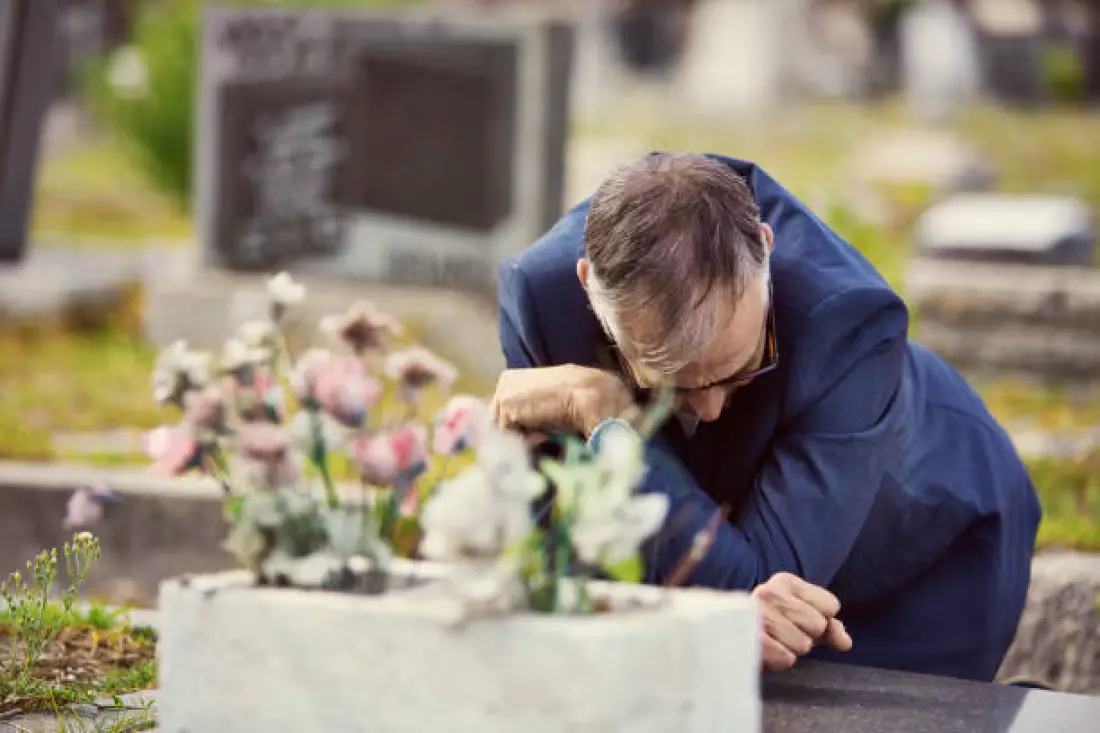
The glass tumbler hit the hardwood floor of my study and exploded into a constellation of glittering shards before I even realized my hand had opened. I stood there in the half-darkness, lit only by the brass desk lamp and a strip of moonlight leaking through the balcony doors, staring at the spreading pool of water and broken glass as if it belonged to someone else’s life entirely.
In one hand, I still clutched the small silver locket I had left on my daughter’s grave that afternoon before changing my mind and taking it back, unable to part with the last piece of her I had that still carried her scent. In the other hand—apparently—I had been holding water, though I couldn’t remember filling the glass or bringing it to the study or anything else about the past hour of my life.
My name is Marcus Ellington, and I’m forty-six years old, though lately I feel ancient in ways that have nothing to do with years. People in Burlington, Vermont said I was “drowning in grief,” that I was “not myself” since the fire three months ago. The house at the edge of town—the one where my fifteen-year-old daughter Chloe had been staying with friends for the weekend—had gone up in flames in the middle of the night with such ferocity that by the time the fire trucks arrived, there was nothing left but blackened beams and ash and smoke that hung over the neighborhood for two days.
They told me there were remains, though they couldn’t let me see them. They told me there was no doubt, though I asked them to check again and again until my brother Colby put his hand on my shoulder and said gently, “Marcus, you have to accept this. She’s gone.”
There had been a service at the Presbyterian church where three generations of Ellingtons had been baptized and married. A closed casket covered in white roses that Chloe would have hated—she always preferred wildflowers, the messier the better. A polished granite stone in the cemetery with her name and dates that shouldn’t have been so close together: Chloe Marie Ellington, 2009-2024.
Everyone told me I had to accept it, had to move forward, had to find a way to live with the unbearable. So I tried. I drank the herbal tea my wife Vanessa brought to my bedside each evening, its bitter-sweet taste coating my tongue and making my limbs feel heavy.
“For your nerves, Marcus,” she would murmur, her perfectly manicured hand lingering on my shoulder with what I thought was compassion. “You haven’t been sleeping. Dr. Harris says this blend will help calm your mind.”
I swallowed the small white pills my younger brother Colby pressed into my palm every morning when he stopped by the house before heading to the office—my office, though I could barely remember the last time I’d set foot in Ellington Dynamics, the commercial real estate development company my father had built and I had expanded into one of the most successful firms in New England.
“From Dr. Harris,” Colby would say, his voice warm with concern that I never thought to question. “Just to help your mind rest. You’re carrying too much, Marcus. Let me handle the business for a while. You need to focus on healing.”
Day by day, I felt heavier, slower, more confused. Appointments slipped through my mind like water through a sieve. I would find myself standing in rooms with no memory of walking there. Hours disappeared into gray fog. I stared at walls and couldn’t remember what I’d been thinking about. My heart would race for no reason, then drop into a slow, heavy rhythm that made it hard to catch my breath.
People said it was grief, the way it hollows you out and leaves you a shell of who you used to be. I believed them. Why wouldn’t I? I had lost my daughter. Of course I was shattered. Of course nothing made sense anymore.
Until that night, when everything I thought I knew began to unravel with a sound I will never forget—a thin, chattering noise like teeth hitting together in the cold.
I looked up from the broken glass at my feet, and there, huddled in the corner near the balcony doors where moonlight pooled on the floor like spilled milk, was a small figure wrapped in what looked like a dirty blanket.
For a moment—maybe longer, time had become unreliable—my mind did exactly what it had been trained to do for three months: it rejected what I was seeing.
“No,” I whispered, the word catching in my throat like a piece of glass I’d swallowed. “You’re not real. You can’t be here. You’re—”
I stopped myself before I could say the word I’d been saying for months, the word that had been carved into granite and repeated in sympathy cards and whispered in every room I entered.
Dead.
The figure flinched at my voice, drawing back against the glass door. A soft sound escaped from under the blanket—a whimper, small and animal-like. Then a single word that stopped my heart.
“Dad?”
My legs went weak. I grabbed the edge of the desk to keep from falling, my vision swimming, my breath coming in short, sharp gasps. This was it, I thought with a strange sense of calm. This was the moment I finally broke completely, the moment the grief everyone had been warning me about drove me into full delusion.
But I didn’t wake up. The room didn’t dissolve. And as I moved closer on legs that felt like they were made of lead, I saw details that my grief-broken mind couldn’t possibly have invented.
The blanket was filthy, the fabric torn and stained with mud and what might have been blood. Small, bare feet poked out from underneath, covered in cuts and scrapes, the toenails broken and rimmed with dirt. Thin ankles, scratched and bruised. Tangled dark hair matted with leaves and twigs clung to a face that was streaked with grime and dried tears and exhaustion so profound it seemed to have carved new hollows in cheeks that had always been round.
And the eyes. Those eyes looked up at me with an expression that shattered what was left of my carefully maintained denial.
I knew those eyes. I had seen them for the first time fifteen years ago in a hospital room when the nurse placed a squirming, red-faced infant in my arms and said, “Congratulations, Mr. Ellington, you have a daughter.” I had seen them light up on Christmas mornings, narrow with concentration when she was working on a painting, roll dramatically when I made terrible dad jokes, soften with love when she hugged me goodnight.
I would have recognized those eyes anywhere in the world, in any condition, in any life or death.
“Chloe?” The name came out as barely more than a breath, as if saying it too loud might make her vanish.
The girl—my daughter, my daughter who was supposed to be dead and buried—flinched and pressed herself harder against the glass door, her eyes darting to the hallway beyond the study.
“Please,” she whispered, her voice rough and thin like she’d been screaming. “Please don’t let them hear me. They’ll find me if they know I came back. They’ll take me again.”
My hands were shaking so badly I had to shove them in my pockets. “Who?” I managed to ask, forcing my voice to stay quiet even though every instinct was screaming at me to grab her, to hold her, to make sure she was real. “Chloe, who are you hiding from? What happened? Where have you been?”
Her eyes—those heartbreakingly familiar eyes—filled with tears that spilled over and left clean tracks through the dirt on her face. She glanced at the door again, listening for sounds I couldn’t hear, then looked back at me with an expression that made my blood run cold.
“Vanessa,” she said, the name barely audible, choked with fear I’d never heard from her before. “And Uncle Colby.”
The room tilted. I had to sit down on the floor right where I stood, my back against the desk, because my legs simply would not hold me anymore.
My wife. My brother. The two people who had been my anchors through the worst three months of my life. The ones who had arranged the memorial service, who had stood beside me at the funeral greeting every mourner with tears in their eyes, who had held me up when I couldn’t stand on my own. The ones who brought me tea and pills and gentle words about healing and letting go.
“That doesn’t make sense,” I said, shaking my head so hard it hurt. “They’ve been here every day. They’ve been taking care of me, of everything. They arranged the service, they handled all the details when I couldn’t, they—”
“They planned all of it, Dad.” Chloe’s voice was stronger now, sharp with something that sounded like anger breaking through the fear. “The fire, the story, the funeral. All of it. They needed everyone to believe I was dead.”
I stared at her, my mind refusing to process what she was saying. “The fire was an accident. An electrical fault, they said. The investigation concluded—”
“There was no accident.” She hugged her knees to her chest, making herself even smaller. “They paid men to take me. After school one day—remember I had that late art class? They grabbed me in the parking lot and put me in a van. They kept me in a cabin near the old lake place Uncle Colby goes to sometimes. I heard them talking, Dad. I heard them say your name over and over.”
Her voice broke, but she pushed on, the words tumbling out in a rush like she’d been rehearsing them for months.
“They said you were too stubborn, that you’d never step down from the company voluntarily, that you’d ‘drive it into the ground out of pride’ before you’d let anyone else take control. They talked about me like I was a problem to solve, not a person. Uncle Colby said—” She squeezed her eyes shut, fighting tears. “He said I was ‘leverage that had stopped being useful’ and it was ‘time to move to the permanent solution.'”
My hands clenched into fists so tight my nails bit into my palms. “The fire,” I said quietly, my voice eerily calm despite the rage building in my chest. “What about the fire?”
“They set it three days after they took me. They put something in that house—something that would burn hot enough and fast enough that there wouldn’t be much left to identify. They were very careful about it. I heard them talking about making sure it looked right, that it had to seem real.”
She swallowed hard, and I watched her thin throat work with the effort. “I escaped because the men they hired got careless. There were two of them—they never told me their names. One day, one of them left the door unlocked when he went outside to take a phone call. I just ran. I stayed in the woods for days, eating berries and drinking from streams, trying to figure out what to do.”
The image of my daughter alone and terrified in the woods, running for her life while I grieved over an empty coffin, made something break loose in my chest.
“I saw the smoke from the fire,” she continued, her voice dropping to a whisper. “I was miles away by then, but I saw it. I heard the sirens. Later, I snuck back into town and I heard people talking about it. About the girl who died. About you falling apart.” She looked up at me, desperation and guilt warring in her expression. “I wanted to run to you so badly, Dad. But they were always there, always watching you. I was afraid if I came to you, they’d take me again and hurt you too.”
“Today,” she said, and her voice cracked completely. “Today I followed you to the cemetery. I watched you put flowers on that stone with my name on it. I watched you cry. I wanted to scream, to run to you, but Vanessa and Uncle Colby were there too, standing back by the trees, watching you.”
My mind flashed back to the cemetery that afternoon, to the way I’d felt eyes on me as I knelt by that polished stone. I’d dismissed it as paranoia, as the feeling of being watched that grief brings.
“After you left, they drove out to the lake house,” Chloe continued. “I followed them, staying in the trees where they couldn’t see me. I got close enough to hear them talking on the deck. They were laughing, Dad. Laughing.”
The word hit me like a physical blow. “Laughing about what?”
“About how well it was going. About how the ‘first phase’ was complete and now they just had to ‘handle you.’ About how you were so lost in your grief that you’d believe anything they told you, take anything they gave you.” She looked at me with eyes far too old for fifteen. “Dad, what have they been giving you?”
The herbal tea. The small white pills. The fog that had been getting thicker and thicker around my mind for weeks.
“They said you were already fading,” Chloe whispered. “That you were ‘losing your grip’ and that all they had to do was keep you ‘just sick enough’ and everyone would accept it when they said you couldn’t run the company anymore. That if you got worse, people would believe it was because you couldn’t handle losing me.”
The pieces fell into place with horrifying clarity. The days that vanished into gray nothing. The way I stumbled sometimes when I stood up too fast. The morning I’d forgotten my own address and had to look at the mail on the counter to remember. The afternoon I’d signed papers Colby brought me without reading them, my hand shaking too much to hold the pen steady.
Everyone said it was grief. Even I had believed it was just what happened when you lost a child—that the world became unfocused and unsteady, that time stopped making sense, that your body felt like it was moving through water.
But what if it wasn’t just grief? What if someone had been helping it along?
“They’re poisoning you, Dad,” Chloe said, and the certainty in her voice made my skin go cold. “Slowly, so it looks like you’re just deteriorating from sadness. They’re making you weak so they can take everything from you. The company, the house, everything. And once they have it all, once everyone believes you’re too unstable to function—” She stopped, unable to finish the sentence.
But I could finish it for her. Once they had everything, I would become expendable. Another tragic ending to a grief-stricken man’s story. No one would question it. Everyone would say it was inevitable, that I’d never recovered from losing Chloe, that the sadness had simply been too much.
Except I hadn’t lost Chloe. She was right here in front of me, alive and terrified and counting on me to be strong enough to save both of us.
I looked at my daughter—really looked at her—and made a decision that felt like the first clear thought I’d had in months.
“We’re not going to run,” I said quietly. “We’re going to fight.”
The next morning, I played my part perfectly. When Vanessa brought me my tea, I accepted it with shaking hands and thanked her in a weak voice. When Colby stopped by with my pills, I put them in my mouth and pretended to swallow while he watched, then spit them into a tissue the moment he looked away.
That night, alone in my study, I poured the tea into a glass bottle I’d hidden in my desk drawer. I sealed it carefully and labeled it with the date. Over the next week, I did the same with every pill, every cup of tea, every drink that was handed to me with concern and false love.
Chloe stayed hidden in a space I’d had built years ago—a small reinforced room behind a panel in the back hallway, installed when an old friend had convinced me that “every person of means needs a secure space, just in case.” At the time, I’d thought it was paranoid. Now, it was the only place my daughter could sleep without fear of discovery.
I contacted Frank Monroe, the security specialist who had worked for my father and now ran the private security for Ellington Dynamics. Frank had been watching Vanessa and Colby with suspicion for months, but he’d never approached me directly. When he came to my study through the side entrance and I showed him Chloe, alive and hiding in my house, his face barely changed. He simply nodded and said, “What do you need, sir?”
We built our case carefully. Frank had the tea and pills analyzed by a private lab, no questions asked. The results came back showing a dangerous combination of sedatives, anti-anxiety medications, and herbal compounds that, taken together over weeks, would cause exactly the symptoms I’d been experiencing: confusion, memory loss, physical weakness, emotional instability.
Frank’s team tracked down the men who had been paid to kidnap Chloe and set the fire. Faced with serious prison time, they gave statements detailing everything—the planning meetings with Colby, the cash payments from accounts Vanessa controlled, the specific instructions about making the fire “look right.”
We found security footage I didn’t know existed from the old lake house, cameras my father had installed and I’d forgotten about. One recording showed Vanessa and Colby on the deck, champagne glasses raised, laughing as Colby said clearly, “Phase one complete. Now we just let Marcus crumble and take over when he’s too weak to stop us.”
The final piece was the hardest. I had to keep pretending I was falling apart while we gathered evidence. I had to let them think their plan was working.
Three days later, I staged my “collapse.” I walked out of my study, made it halfway down the hallway, and let my legs give out. The crash brought Vanessa running, her scream piercing and perfect. Colby arrived moments later, his face arranged in practiced concern.
“I can’t find a pulse,” he said loudly, his hand on my neck. But I could feel the slight tremor in his fingers—not grief, but excitement barely contained.
Frank’s people arrived dressed as paramedics. They loaded me onto a stretcher and took me away, Vanessa’s sobs following us out the door. Behind us, I heard Colby saying quietly to someone, “If the worst happens, we’ll need to handle things discreetly. He always said he wanted privacy.”
They didn’t take me to a hospital. They took me to a secure apartment my father had maintained for emergencies. Chloe was already there, and when we embraced this time, it wasn’t about relief—it was about resolve.
My lawyer, Richard Davenport, nearly had a heart attack when he saw Chloe alive. Once he recovered, he listened to everything, reviewed all our evidence, and said grimly, “They’ve already scheduled a reading of your will. They insisted it be soon. They said they wanted to ‘honor your wishes quickly.'”
“Perfect,” I said. “That’s exactly where we’ll end this.”
The library of Ellington House—the room where my father had built deals that shaped half of Vermont’s commercial real estate—was full when Richard began the reading of my will. Vanessa sat in the front row in an expensive black dress, a veil covering her face. Colby sat beside her, his expression carefully somber.
Richard began with formalities, then said, “Mr. Ellington requested that a message be played.”
The lights dimmed slightly as a screen lit up behind him. My face appeared, pale and drawn, filmed just days before in the secure apartment.
“Vanessa,” my recorded voice said quietly. “My dear wife. And Colby, my brother. If you’re seeing this, it means my grief finally finished what you helped along.”
Vanessa started to stand, her veneer cracking. “This is inappropriate. Marcus wasn’t thinking clearly—”
“Actually,” a new voice said, “I was thinking more clearly than I had in months.”
I stepped into the library from a side door.
The silence was absolute. Several people gasped. Someone’s glass slipped from their hand and shattered on the marble floor—an echo of my own broken glass weeks before.
Vanessa’s face went completely white. Colby stood so fast his chair toppled backward.
“This isn’t possible,” he whispered. “You’re dead. We saw—”
“What you saw,” I said calmly, “was exactly what you planned for everyone to see. A man too broken by grief to go on.”
I walked further into the room, and Frank opened the far doors.
Chloe walked in.
She was clean now, her hair brushed and pulled back, wearing a simple dress. She looked small in that grand library, but she held herself with a strength that made me proud beyond words.
The room erupted. Someone screamed. Others stood, staring. Vanessa collapsed back into her chair, her face slack with shock.
“You tried to erase me,” Chloe said, her voice steady and clear. “You tried to write a story where I was just gone. But I’m not. And he’s not broken. You just underestimated what we could survive.”
Two men in plain suits entered behind her—state detectives Frank had briefed with everything we’d gathered.
On the table, Richard laid out evidence in neat rows: sealed bottles of contaminated tea and pills, lab reports, bank statements showing suspicious transfers, printed transcripts of recorded conversations, security footage queued on a laptop.
The room saw it all. So did Vanessa and Colby.
“Colby Ellington, Vanessa Ellington,” one of the detectives said, stepping forward with handcuffs, “you’re under arrest for conspiracy to commit fraud, attempted murder, and kidnapping.”
The arrests were quiet. No dramatic speeches or struggles. Just the click of handcuffs and the rustle of expensive fabric and the stunned silence of people realizing they’d been watching the wrong story unfold.
As they were led away, Vanessa looked back at me one last time, not with guilt but with disbelief that her carefully constructed narrative had been torn apart.
For the first time in three months, I didn’t feel weak. I felt awake.
The trials were long. The media attention was intense. Words like “conspiracy” and “fraud” and “psychological manipulation” appeared in headlines that followed me for months. I attended when I needed to, testified when required, but I didn’t let the courtroom become the center of our lives.
The verdicts were guilty on all counts. The sentences were long.
Afterward, the house felt too large and full of shadows. Chloe and I both needed space that didn’t echo with betrayal.
We left Burlington six months later, driving north until the air smelled like pine and salt. We found a small cottage on the coast of Maine where the waves provided the only constant sound and neighbors were far enough away that we could heal without performing recovery for an audience.
One evening, as the sun melted into the ocean, turning it copper and gold, we walked to the end of a weathered dock. I held two things in my hand: the silver locket I’d been clutching the night Chloe appeared in my study, and a small box containing the pills and tea that had nearly destroyed me.
“Are you sure?” Chloe asked, watching me.
I nodded. “We spent months trapped in a story other people wrote for us. I think it’s time we write our own.”
Together, we opened our hands and let them fall. The locket flashed once in the fading light, then disappeared beneath the dark water. The box followed, sinking without a trace.
We stood there a long time without speaking, watching the sun complete its descent and the first stars appear in the darkening sky.
We are not the same people we were before—before the fire, before the lies, before the night a desperate girl whispered at my window. There are still mornings when I wake up gasping, my hands searching for something that isn’t there. There are days when Chloe goes quiet and stares at nothing, lost in memories of weeks spent terrified and alone.
But there is also laughter now—small and uncertain at first, then growing stronger. There are pancakes on Saturday mornings that burn because I get distracted telling stories. There are walks on the beach where we talk about everything and nothing. There are moments when we catch each other’s eye and smile at some small joy, and those moments feel like victories against the darkness that tried to take us both.
It isn’t a perfect ending. It isn’t even what most people would call a happy one.
But it’s ours. It’s real. And it’s built on truth instead of poison.
For the first time in a very long time, I’m not afraid of tomorrow.
Whatever comes next, we’ll face it together—not as a grieving father and a ghost, but as two people who walked through fire and came out holding on to each other, stronger than those who tried to break us could ever have imagined.

Adrian Hawthorne is a celebrated author and dedicated archivist who finds inspiration in the hidden stories of the past. Educated at Oxford, he now works at the National Archives, where preserving history fuels his evocative writing. Balancing archival precision with creative storytelling, Adrian founded the Hawthorne Institute of Literary Arts to mentor emerging writers and honor the timeless art of narrative.