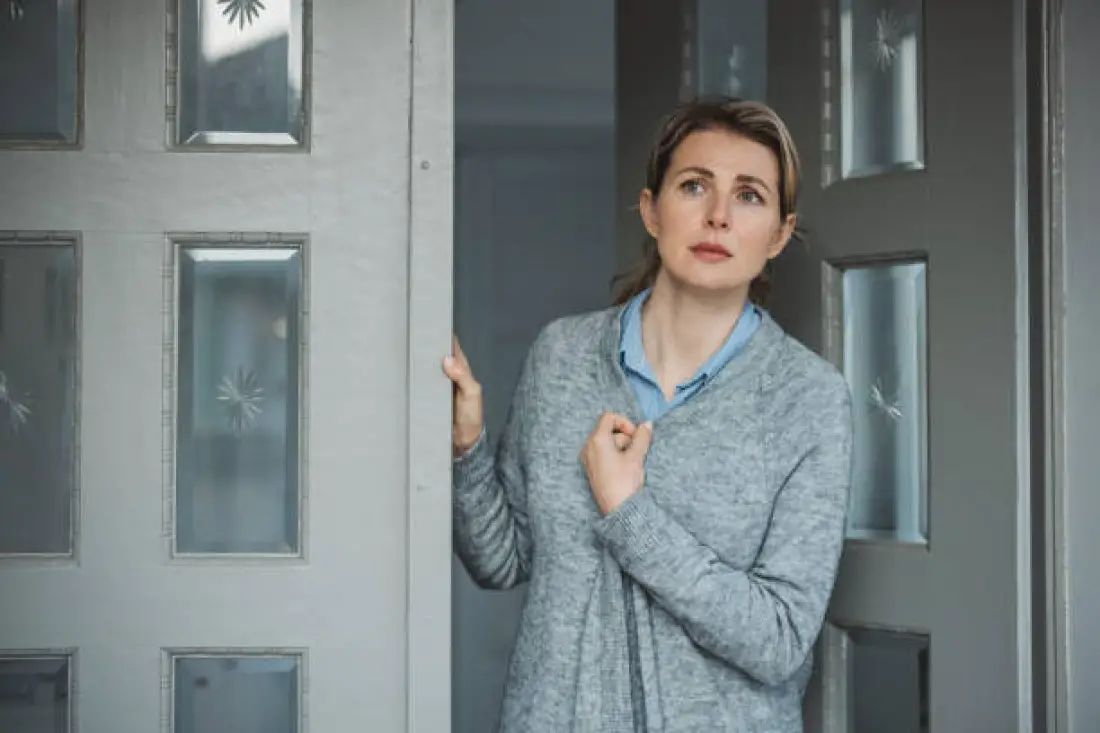
I jolted awake to furious pounding on my front door at exactly two in the morning, the sound reverberating through my quiet suburban home like thunder trapped inside walls. For a moment, suspended in that disorienting space between sleep and consciousness, I thought perhaps I’d dreamed it. But then it came again—harder, more insistent, accompanied by a voice I’d known for thirty-eight years.
“Mom! Open this door right now!”
My daughter. My only child, Jessica. But the voice didn’t sound like her—not the Jessica who used to call me every Sunday morning, not the Jessica who’d cried on my shoulder after her miscarriage, not the Jessica I’d raised to be kind and thoughtful. This voice was ragged, desperate, furious in a way that made my chest tighten with instinctive dread.
I live alone in a quiet Illinois suburb called Willow Creek, the kind of tree-lined street where American flags hang from front porches and neighbors still wave when they collect their mail. My house sits at the end of Maple Drive, a modest two-story colonial that my husband Thomas and I bought forty-two years ago when it was nothing but potential wrapped in peeling paint and broken shutters. We’d transformed it together, board by board, weekend by weekend, building not just a house but a life.
At two in the morning, Maple Drive is usually so still you can hear the freight train that runs through the valley five miles away, its distant whistle a lullaby I’ve fallen asleep to for decades. But the sound that had torn me from sleep wasn’t a train. It was pounding—hard, angry, relentless—and beneath it, voices twisted with emotion I’d never wanted to hear directed at me.
I reached for my glasses on the nightstand with trembling fingers, my heart hammering against my ribs like it was trying to escape. The digital clock glowed an accusing red: 2:00 AM. I’d been dreaming about Thomas, about the summer we’d spent rebuilding the back deck while Jessica played in a plastic pool, shrieking with laughter every time we turned the hose on her. The contrast between that memory and this moment felt like whiplash.
“We’re not leaving until you open this door!” Another voice now—male, harder, carrying an edge of threat that made my stomach drop. My son-in-law, Marcus. The man Jessica had married six years ago in a ceremony I’d paid for, in a dress I’d helped her choose, at a reception held in the very backyard they were now shouting at me from.
I shuffled to my bedroom window and pulled the curtain back just enough to see without being seen. There they were on my front porch, illuminated by the streetlight and the motion-sensor light I’d installed last month. Jessica looked wild—hair tangled, eyes bright with emotion I couldn’t read from this distance, one fist still raised to pound on the door. She wore leggings and an oversized sweatshirt, like she’d left the house in a hurry, and even from the second floor I could see her entire body vibrating with tension.
Marcus stood beside her, shoulders squared in that particular way men stand when they’re trying to look intimidating. In his right hand, catching the light with a dull metallic gleam, was something that made my blood turn to ice.
A hammer. Not a small household hammer, but a big carpenter’s hammer—the kind with a heavy steel head designed to drive sixteen-penny nails through thick wood. The kind that could break through my front door if someone swung it with enough determination.
“We’re coming in this time whether you like it or not!” Marcus shouted, and I watched with horror as he raised the hammer and gestured toward my door. “We’ve been patient long enough!”
My hands were shaking so violently I had to grip the windowsill to steady myself. What they didn’t know—what they couldn’t know because I’d done it quietly, carefully, without telling anyone except the locksmith—was that I’d changed the locks four days ago. Reinforced deadbolts, strike plates with three-inch screws that bit deep into the studs, the kind of security upgrades that cost me four hundred dollars I’d paid for in cash so there would be no credit card trail.
Because I’d heard things. Whispered things. Late-night conversations in my own kitchen that they thought I couldn’t hear from my bedroom upstairs.
“Mom, please,” Jessica’s voice cracked now, shifting in an instant from rage to something that sounded like desperation. “We just want to talk. We’re so worried about you. Open the door.”
I’d heard her “worry” before. Three weeks ago, standing in my kitchen at eleven at night while I pretended to be asleep upstairs. Her voice drifting up through the old heating vents, discussing me like I was a problem to be solved rather than a person to be loved.
“This house doesn’t make sense for someone her age anymore, Marcus. It’s too big. The stairs are dangerous. She fell last month getting out of the shower.”
“The smart thing would be to move her somewhere safe—one of those assisted living places with staff and activities. She’d probably be happier.”
“And we could finally use what’s left to get out of debt, buy that condo downtown we’ve been looking at. Start living instead of always scrambling.”
I’d stood at the top of the stairs in my nightgown, one hand pressed against the wall for support, and felt my entire world tilt sideways. This was my daughter. The baby I’d carried for nine months, the toddler whose hand I’d held through every first day of school, the teenager I’d waited up for on prom nights, the woman I’d supported through college and heartbreaks and every major life decision.
And she was talking about moving me “somewhere safe” so they could use “what’s left.”
What’s left. As if I were already gone. As if this house—this life Thomas and I had built with our own hands and forty years of mortgage payments—was just an asset waiting to be liquidated.
After that night, I’d started paying closer attention. I’d found the stack of papers in Marcus’s leather messenger bag, left carelessly on my kitchen table while he used my bathroom. Legal documents with words like “conservatorship” and “power of attorney” and “competency assessment.” Forms with signature lines that had been helpfully marked with neon tabs.
I didn’t understand every legal term, but I understood the essential truth: if I signed where Marcus wanted me to sign, I would lose control of everything. My house. My bank accounts. The life insurance payout from Thomas’s death. My ability to make my own decisions about where I lived and how I spent my final years.
Now I stood in my own living room—sixty-eight years old, wearing a faded blue bathrobe Thomas had given me a decade ago, my bare feet cold against the hardwood floors we’d refinished together—while my daughter and her husband pounded on my door with a hammer and demanded entry at two in the morning.
The hammer hit the door again, and I heard wood splinter. My new locks would hold, but the door itself was original to the house, old oak that had weathered decades but wasn’t designed to withstand this kind of assault.
“Mrs. Morrison,” a calm voice said behind me, and I nearly jumped out of my skin. “It’s alright. Let them knock. You don’t have to be afraid in your own house anymore.”
I spun around to find Amelia Hart standing in my darkened living room, her silver hair pulled back in a neat bun, wearing slacks and a cardigan despite the hour. Beside her stood a man in his forties with a leather briefcase, and near my back door, two other men in dark jackets who hadn’t been there when I went to bed.
Amelia had been my neighbor for thirty years, living three doors down in the brick ranch house with the rose garden. She’d watched Jessica grow up, bringing homemade cookies when Jessica had the chicken pox, attending her high school graduation, sending a beautiful crystal vase for the wedding. When Thomas had his first heart attack seven years ago, Amelia had driven me to the hospital at three in the morning and stayed until the doctors said he’d stabilized.
What most people on Maple Drive didn’t fully appreciate was that Amelia hadn’t just been a neighbor. For thirty-five years, she’d been a family law attorney at one of Chicago’s most prestigious firms, handling complex cases involving estates, elder abuse, and domestic disputes. She’d retired at sixty-five, but retirement hadn’t dimmed the sharp intelligence in her eyes or the commanding presence she carried like a second skin.
Two weeks ago, when I’d finally found the courage to knock on her door at seven in the evening, she’d taken one look at my face and said, “Come in. Tell me everything.”
I’d sat at her kitchen table and told her about the whispered conversations, the legal documents, the way Marcus had started asking pointed questions about my finances and my health. I’d told her about Jessica’s increasingly frequent comments about how I seemed “confused lately” and how I’d “forgotten” things—things I hadn’t actually forgotten but that she claimed I had. I’d told her about feeling watched in my own home, about the creeping sensation that I was being managed rather than cared for.
Amelia had listened without interruption, her expression growing progressively more grim. When I finished, she’d said three words that had changed everything: “This is abuse.”
Not potential abuse. Not heading-toward-abuse. Abuse. Present tense. Happening now.
“Financial exploitation of the elderly is one of the fastest-growing crimes in this country,” she’d explained. “And it’s almost always perpetrated by family members. Adult children who feel entitled to their parents’ assets, who view aging as an opportunity rather than a responsibility.”
She’d asked if I wanted her help. Not as a neighbor, but as an attorney. I’d said yes without hesitation, and we’d spent the next two weeks building a strategy.
We’d documented everything. Amelia had shown me how to use my smartphone to record conversations—legally, since Illinois is a one-party consent state and I was party to every conversation. We’d photographed the documents Marcus had left out. We’d changed my locks and installed security cameras disguised as ordinary porch decorations. We’d drafted a comprehensive estate plan that made my wishes crystal clear and appointed Amelia as my attorney-in-fact for healthcare and financial decisions if I ever became incapacitated.
And most importantly, we’d prepared for this moment. Because Amelia had predicted it would come.
“People who attempt financial exploitation follow predictable patterns,” she’d told me. “They start with manipulation and guilt. When that doesn’t work quickly enough, they escalate. They create urgency, pressure, often showing up at odd hours to disorient their victims. They want you tired, confused, and compliant.”
Now, watching my daughter and son-in-law try to break into my house at two in the morning with a hammer, I understood exactly how right Amelia had been.
“Are you ready?” Amelia asked quietly, her hand gentle on my shoulder.
I looked at the door, where the pounding had intensified. I heard Marcus yelling something about “final chances” and Jessica sobbing that they were “only trying to help.”
“No,” I admitted, my voice barely above a whisper. “I’m not ready. But I’m more tired of being scared than I am of them being angry.”
Amelia nodded. The man with the briefcase—Paul Chenoweth, a private investigator Amelia had hired to document everything—moved to the window and pulled out his phone, prepared to record. The two men by the back door shifted position, and I realized they were security professionals, there to ensure this confrontation didn’t escalate into violence.
“Remember,” Amelia said. “You’re not doing anything wrong. You’re protecting yourself. You have every right to set boundaries, even with family. Especially with family.”
I walked to the front door, each step feeling like I was wading through deep water. My hand closed around the new deadbolt, and I stood there for a moment, gathering courage I wasn’t sure I possessed.
On the other side of this door were two people I’d once trusted more than anyone in the world. The same two people who’d sat at my kitchen table a month ago talking about me like I was already dead, discussing how to “handle” me, debating the easiest way to get control of the house and money Thomas and I had spent forty years accumulating through hard work and careful sacrifice.
I remembered Thomas’s last words to me in the hospital, his hand weak in mine, his voice scratchy from the oxygen tube they’d removed just an hour before. “Take care of yourself, Eleanor. Don’t let anyone tell you you’re not strong enough. You’re the strongest person I’ve ever known.”
I turned the deadbolt. The lock clicked with a sound that seemed unnaturally loud. Then I turned the doorknob and pulled.
Cold November air rushed in, carrying the smell of frost and fallen leaves. Streetlight spilled across my entryway, illuminating my wrinkled hands, my old bathrobe, and the faces of the people standing behind me.
Jessica’s eyes went wide. Her mouth opened in a small “oh” of surprise. Marcus’s hand slipped, and the hammer fell from his grip, hitting the concrete porch with a sharp metallic clang that echoed down the quiet street.
“Good evening,” I said, keeping my voice steady through sheer force of will. “Since you came all this way in the middle of the night, we might as well talk about what you’ve been planning for me.”
They stood frozen on my porch like actors who’d forgotten their lines. Jessica’s gaze moved past me, taking in Amelia in her professional calm, Paul with his briefcase and recording phone, the security personnel who’d moved into view. I watched her face cycle through emotions—shock, fear, confusion, and finally, calculation.
“What is this?” Marcus demanded, trying to recover his commanding presence. He straightened his shoulders and lifted his chin, as if volume and posture could still control the narrative. “Who are these people? Mom, what have you done?”
“Guests,” I replied quietly. “Like you. Except they were invited.”
Amelia stepped forward, positioning herself partially between me and my daughter. Her expression was neutral, professional, the same face she’d worn in courtrooms for three decades. “Good evening. I’m Amelia Hart. I’m an attorney-at-law, and I represent Mrs. Morrison.”
Jessica’s breath caught audibly. “Attorney? Mom, this is ridiculous. We were worried about you. You’re not thinking clearly. You’re confused—”
“That’s enough,” Amelia said, and somehow those two words carried more authority than Marcus’s shouting had. “Your mother has been thinking very clearly. For weeks, actually.”
Paul set his briefcase on my entryway table and opened it with practiced efficiency. Documents emerged, organized in color-coded folders—evidence of financial exploitation attempts, recordings time-stamped and transcribed, photographs of the papers Marcus had left in my kitchen. My life reduced to files and folders, but for once, the documentation was working in my favor.
Marcus’s eyes darted to the briefcase, then back to me. I watched fear flicker across his face. “You called a lawyer instead of calling your own daughter? Instead of talking to us like family?”
“I tried being family,” I said, surprised by how steady my voice sounded. “I got whispers in my kitchen about moving me somewhere ‘safe.’ I got legal documents hidden in bags. I got plans made for my life without anyone asking what I wanted.”
Jessica took a step forward, tears now streaming freely down her face. In the harsh porch light, she looked younger somehow, like the little girl who used to climb into my lap after bad dreams. “Mom, please. You’re misunderstanding everything. We were just trying to help. This house is too big for one person. You fell last month getting out of the shower. What if something happens and no one’s here?”
“Something already happened,” I said quietly. “You showed up at two in the morning with a hammer.”
The hammer lay forgotten on the porch, mute testimony to their intentions. Neither of them moved to pick it up.
Amelia slid a document across my entryway table. “We have recordings,” she said in that calm, factual attorney voice. “Multiple conversations. Clear discussions about moving Mrs. Morrison against her wishes, about obtaining power of attorney under false pretenses, about what you planned to do with her assets once you gained control. That constitutes attempted undue influence under Illinois law.”
Paul added, “We also have video documentation of your vehicle circling this block multiple times earlier this evening. And of course, we have tonight’s attempted forced entry, captured on three separate security cameras.”
Marcus laughed—a single, harsh bark of sound that held no humor. “This is insane. You think you can scare us with paperwork? She’s my wife’s mother. We have every right to be concerned about her welfare.”
“Concern,” Amelia said, “doesn’t typically involve showing up at two in the morning with tools designed to break through doors. Concern doesn’t involve forging ahead with conservatorship paperwork before the person in question has been found incompetent by any medical professional. And concern certainly doesn’t involve discussing how you’ll spend someone’s money before they’re even gone.”
Jessica’s face crumpled, and for a moment I felt the old instinct rise up—the urge to comfort her, to make her feel better, to smooth everything over the way I’d always done. But then I remembered her voice through the heating vents: “She’s had her life. Now it’s our turn.”
“Mom,” Jessica whispered, reaching toward me with one shaking hand. “Please. I’m sorry. We just wanted to make sure you were taken care of. That you’d be safe.”
I stepped back, out of reach. “I am being taken care of,” I said. “By me. The way I’ve been taking care of myself for sixty-eight years.”
The silence that fell then was profound. I could hear my own heartbeat, the distant hum of someone’s air conditioning unit, the rustle of leaves in Mrs. Peterson’s oak tree across the street.
One of the security personnel—a man named David who’d introduced himself earlier with quiet professionalism—finally spoke. “Mrs. Morrison, do you feel unsafe with these individuals present?”
I didn’t have to think about my answer. “Yes.”
That single word changed everything. David nodded to his partner, who stepped forward with a formal, measured presence. “I’m going to have to ask you both to leave this property immediately. Any further contact with Mrs. Morrison regarding her finances, property, or living situation must go through her attorney. Do you understand?”
Marcus sputtered, “You can’t be serious. We’re family—”
“Family members can violate the law just like anyone else,” Amelia interjected. “In fact, the majority of elder abuse cases involve family members. You’re fortunate that Mrs. Morrison is choosing not to pursue criminal charges at this time.”
“At this time?” Jessica’s voice went high and thin. “Criminal charges? For what?”
Paul pulled another document from his briefcase. “Attempted financial exploitation of an elderly person. Trespassing. Destruction of property. We have documentation for all of it. Mrs. Morrison is being remarkably generous by giving you the opportunity to leave without police involvement.”
I watched my daughter process this information, saw the exact moment she understood that she’d miscalculated catastrophically. Her face went from flushed to pale, and she swayed slightly on her feet.
“Mrs. Morrison has prepared a formal statement,” Amelia continued, handing a document to Marcus. “This constitutes legal notice that you are not to return to this property without written consent. You are not to contact her regarding financial matters, property transfers, or living arrangements. All communication must go through me as her legal representative. Any violation will result in immediate legal action and police involvement.”
Marcus stared at the paper in his hands like it was written in a foreign language. “This is insane. You’re making her think we’re criminals. We’re not criminals—we’re family!”
“Then act like it,” I said, and my voice came out stronger than I’d expected. “Family doesn’t show up in the middle of the night with hammers. Family doesn’t talk about you like you’re already dead. Family doesn’t try to take away everything you’ve worked for your entire life.”
Jessica was sobbing openly now, her shoulders heaving. “Mom, please. I made mistakes. We made mistakes. But we love you. You can’t just cut us out of your life. I’m your daughter.”
“You’re right,” I said, and something inside my chest cracked open. “You are my daughter. And I raised you to be better than this.”
The weight of those words hung in the cold night air. I saw them land, saw Jessica flinch like I’d struck her.
“I raised you,” I continued, the words coming faster now, everything I’d been holding back pouring out. “I stayed up through fevers and nightmares and teenage heartbreaks. I worked double shifts at the hospital so you could have braces and college and the wedding you wanted. I held your father’s hand while he died and kept this house standing because it was the last thing he built, and I wasn’t going to let it fall apart just because he was gone.”
My voice cracked, but I pushed through. “I taught you to be honest and kind and to treat people with dignity. And somewhere along the way, you forgot all of that. Or maybe you just decided it didn’t apply when money was involved.”
Jessica opened her mouth, closed it, then whispered, “We just wanted to help.”
“No,” I said firmly. “You wanted control. And you thought my age meant I was too weak or confused to notice. But I’m neither weak nor confused. I’m just done pretending I don’t see what’s happening.”
David stepped forward again. “It’s time to leave. Now.”
What followed was a strange, solemn procession. Marcus picked up the hammer from where it had fallen, his movements mechanical and defeated. Jessica followed him down the porch steps, glancing back at me multiple times with an expression I couldn’t quite read—anger, regret, disbelief, maybe all three.
They reached their car—a BMW they’d bought six months ago and complained constantly about not being able to afford. Jessica paused with her hand on the passenger door.
“Mom,” she called across the lawn. “I thought I was doing the right thing. I thought I was taking care of you.”
I didn’t answer. I just watched as they got into the car and drove away, taillights disappearing around the corner of Maple Drive, leaving my quiet street quiet once more.
When I finally closed the door, my hands were shaking so badly I could barely turn the deadbolt. Amelia guided me to the couch, and I sat down hard, all the adrenaline that had been holding me upright suddenly draining away.
“You did beautifully,” Amelia said, sitting beside me and taking my hand. “I know that was impossibly hard.”
“Is it over?” I asked.
“For tonight, yes. Long-term?” She paused. “That depends on them. On whether they accept these boundaries or try to push again.”
“And if they push?”
“Then we escalate. Restraining orders. Criminal charges if necessary. But Eleanor, you need to understand something: you’re not responsible for fixing them. You’re only responsible for protecting yourself.”
The house felt different after that night. Quieter, yes, but not lonely. More like a storm had passed through and taken something toxic with it, leaving the air cleaner despite the destruction.
In the days that followed, Amelia helped me do what I should have done years earlier. We established an ironclad estate plan with explicit directives about my care, my property, and my wishes. We set up a revocable trust that would protect my assets while ensuring they’d eventually go to causes I cared about—a scholarship fund in Thomas’s name, donations to the hospital where I’d worked for thirty years, a bequest to animal rescue organizations.
We included provisions for Jessica, but they were conditional: she would receive a modest inheritance only after I was gone, and only if she hadn’t attempted further financial exploitation. If she had, those funds would instead go to elder abuse prevention organizations.
I learned a new language during those weeks—the language of legal protection, of boundaries enforced by law rather than guilt. It felt strange at first, foreign, like I was being harsh or unforgiving. But Amelia reminded me repeatedly: “Boundaries aren’t punishment. They’re self-preservation.”
Jessica tried calling. Dozens of times. When I didn’t answer, she sent text messages—first angry, then pleading, then manipulative. “You’re letting a stranger turn you against your own daughter.” “Dad would be ashamed of you.” “When you die alone, don’t blame me.”
Each message went unanswered. Amelia had advised me not to engage, and she screened everything, documenting it all but never letting Jessica’s words reach me directly.
Marcus tried a different approach. He sent a letter through an attorney, claiming I was being manipulated by Amelia and demanding I undergo a competency evaluation. Amelia responded with a letter of her own, along with documentation from my doctor confirming I was mentally sound, and a warning that any further harassment would result in legal action.
After that, silence.
Six weeks after that terrible night, I sat at my kitchen table in the afternoon sunshine, drinking tea from the china set my mother had given me forty years ago. The house was quiet, but it was a peaceful quiet now, not the tense silence of someone waiting for the next assault.
Amelia stopped by with fresh bread from the bakery we both loved. She set it on the counter and joined me at the table, and for a while, we didn’t talk. Just sat together in comfortable silence, two women who’d lived long enough to know that sometimes the most important thing you can do is simply exist in peace.
“How are you doing?” she finally asked.
“I thought losing them would break me,” I admitted. “I thought I’d grieve myself to death.”
“And instead?”
“Instead, I realized I didn’t lose them. I lost who I thought they were. Or maybe who I’d been pretending they were because the truth was too painful.”
Amelia nodded slowly. “That’s one of the hardest lessons we learn. That love doesn’t mean accepting abuse. That being family doesn’t grant unlimited access to hurt you.”
“Do you think they’ll ever understand what they did wrong?”
She considered this. “Maybe. Maybe not. But Eleanor, that’s not your responsibility. Your only responsibility is to live whatever life you have left on your own terms.”
That night, for the first time in months, I slept straight through until morning. No pounding on the door. No fear coiled in my stomach. No jumping at every sound, wondering if this would be the night they came back.
Just the distant sound of the freight train rolling through the valley, its whistle a lullaby I’d fallen asleep to for forty-two years, in the house that Thomas and I had built with our own hands, in the life that belonged to no one but me.
I woke up at dawn and made coffee, then walked through my home slowly, remembering. The living room where Jessica had taken her first steps. The kitchen where Thomas had taught her to make pancakes on Sunday mornings. The backyard where we’d planted the oak tree that now towered over the deck, where we’d held birthday parties and barbecues and quiet evenings watching the sun set.
This house held forty years of memories—the good and the bad, the joyful and the heartbreaking, the everyday and the extraordinary. It was mine. Bought with money Thomas and I had earned, maintained with our labor, filled with our lives.
And it would remain mine, for however many years I had left, protected by locks and legal documents and the fierce determination of a woman who’d finally learned that protecting yourself wasn’t selfish—it was survival.
Months later, I received an envelope in the mail. No return address, but I recognized Jessica’s handwriting. Inside was a single card: “I’m sorry. I don’t expect forgiveness. But I’m working on understanding what I did wrong. That’s all. Love, Jessica.”
I read it three times, then set it on the kitchen table. I didn’t respond. Not yet. Maybe not ever. Because sorry wasn’t enough to undo the violation, the betrayal, the night she’d stood on my porch with a hammer.
But for the first time since that terrible night, I felt something other than hurt when I thought of her. Not forgiveness, exactly. Maybe the beginning of something that could eventually become peace.
Amelia was right: I wasn’t responsible for fixing Jessica, for teaching her lessons she should have already learned, for accepting abuse simply because it came wrapped in the language of love and family.
I was only responsible for living my life—in my house, on my terms, with my dignity intact.
And as I sat at my kitchen table watching the morning sun paint golden squares across the floor Thomas had laid with his own hands, I realized that was enough.
More than enough.
It was everything.

Adrian Hawthorne is a celebrated author and dedicated archivist who finds inspiration in the hidden stories of the past. Educated at Oxford, he now works at the National Archives, where preserving history fuels his evocative writing. Balancing archival precision with creative storytelling, Adrian founded the Hawthorne Institute of Literary Arts to mentor emerging writers and honor the timeless art of narrative.