I arrived at Second Presbyterian Church wearing the dark suit my late wife Nadine bought me fifteen years ago, back when she still believed I looked distinguished in it. The parking lot was packed with Mercedes-Benzes and BMWs gleaming in the late morning sun, their paint jobs probably worth more than most people’s annual salaries. I tucked my Ford F-150 into a space near the back corner, between a silver Lexus and a white Range Rover, both spotless and expensive.
The contrast wasn’t lost on me—my working man’s truck surrounded by status symbols. But I’d earned the right to be here. This was my grandson’s baptism, and I’d written a check for thirty-five thousand dollars to make this day possible. Every cent of it. The venue, the catering, that eight-hundred-dollar christening gown made of imported Irish linen that Jillian had insisted was “absolutely necessary.”
I’m Hector Wallace, seventy-two years old, and I’ve spent the last four decades building Wallace Auto Repair from a single-bay garage in Indianapolis into five locations across the metropolitan area. I’m not wealthy—not by the standards of the people gathering inside this church—but I’m comfortable. Comfortable enough to write checks that would make most people’s eyes water. Comfortable enough to want the best for my only daughter and my first grandchild.
The church itself was impressive—all Gothic stone and stained glass, the kind of place where Indianapolis society held their important ceremonies. As I walked toward the entrance, I could see guests arriving in their designer clothes, air-kissing and laughing with the easy confidence of people who’d never worried about making rent or keeping the lights on.
I didn’t recognize a single face. Not one.
These weren’t family members or old friends. These were Colin’s people—my son-in-law’s business associates, his investors, whatever that meant. He called himself a “financial consultant,” though I’d never quite understood what he actually did besides wear expensive suits and talk about opportunities.
Through the tall oak doors, I could see the sanctuary filling up. Maybe two hundred people, all dressed like they were attending a society wedding rather than a religious ceremony. The flower arrangements alone probably cost more than my monthly mortgage payment.
That’s when I spotted Jillian near the entrance, and my heart lifted despite my discomfort with the surroundings. She wore a cream-colored dress that hugged her figure, her dark hair swept up in an elaborate style that must have taken hours. She looked beautiful—exactly like her mother used to look on Sunday mornings, back when Nadine was still alive and we were still a family that went to church together.
For just a moment, seeing my daughter’s face, I felt that old familiar warmth. Pride. Love. The bone-deep satisfaction of knowing I’d raised a good woman, even if I’d had to do most of it alone after Nadine passed when Jillian was just fourteen.
Then she saw me. Her smile vanished so completely it was like watching a light switch flip off. Her perfectly made-up face went rigid, and she cut through the crowd with quick, sharp steps, her heels clicking against the marble floor with military precision.
“Dad?” Her voice was low, controlled, the tone she used when she was trying very hard not to make a scene. She grabbed my elbow before I could take another step into the church, her manicured fingers digging into my suit jacket hard enough to hurt. “What are you doing here?”
The question was so absurd I actually laughed—a short, startled sound. “It’s Liam’s baptism,” I said, keeping my own voice gentle despite the growing unease in my chest. “I’m his grandfather, Jillian. Of course I’m here.”
“I know, but…” She glanced back toward the sanctuary, toward where I could see Colin standing with a group of men in expensive suits, all of them laughing at something he’d said. Colin didn’t look our way. Didn’t even seem aware I’d arrived. “There’s no room, Dad. We didn’t think you’d actually come.”
Didn’t think I’d come. The words hit me like a physical blow, stealing the air from my lungs. “Jillian, I paid for everything. The venue, the catering, Liam’s gown—I wrote the check two weeks ago. Of course I came.”
“And we appreciate that, Dad. We really do.” But she still wouldn’t meet my eyes, wouldn’t look at me directly. Instead, she kept glancing back at the sanctuary, at Colin’s crowd, clearly more worried about them than about me. “But you have to understand—Colin’s business partners are here. Important people. Influential people. We didn’t plan for you to attend. It would be… awkward.”
Awkward. That single word contained everything she was really saying. I would be awkward. I, with my working-class background and my calloused hands and my truck that didn’t cost six figures, would be an embarrassment to her husband’s carefully cultivated image.
“So where do I sit?” I asked, my voice coming out quieter than I intended. “Back row? Standing room only?”
She finally looked at me then, and what I saw in her eyes wasn’t embarrassment or guilt or even anger. It was calculation. The same look I’d seen her use when deciding whether to buy something on sale—weighing costs and benefits, determining if something was worth the trouble.
“Maybe it’s better if you just go home,” she said, each word clipped and precise. “We’ll send you photos later. Professional ones. The photographer is supposed to be excellent.”
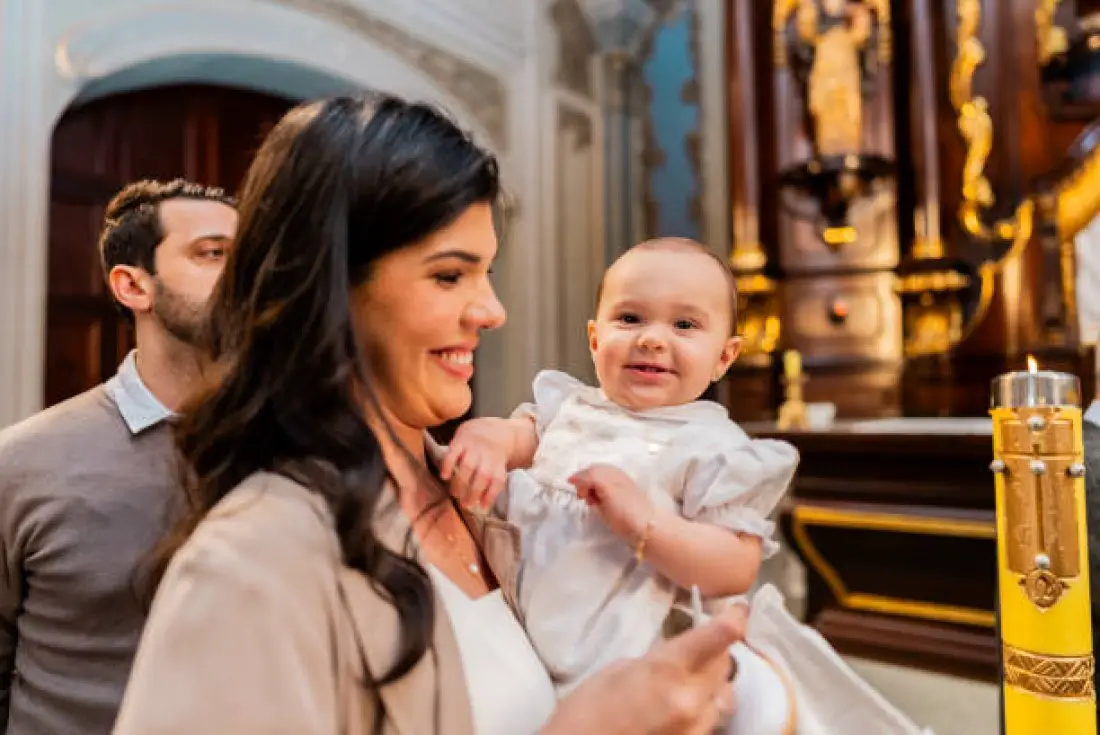
Through the sanctuary doors, I could see my grandson Liam for the first time that day. Six months old, dressed in that expensive gown I’d purchased, being held by some woman I’d never met. A stranger was holding my grandson at his baptism while I stood in the lobby being told I wasn’t welcome.
“Jillian,” I said, and I hated how my voice cracked slightly on her name. “I’m your father.”
“I know, Dad.” She touched my arm, but it was perfunctory, the kind of gesture you’d give to a persistent salesman you were trying to politely dismiss. “And thank you so much for the check. You’ve been incredibly generous, as always. But you understand—this is Colin’s world. These are his colleagues. You’d just be uncomfortable with them anyway. It’s better this way.”
The whispers started then. I could hear them spreading through the lobby like ripples in water—people noticing the interaction, the older man in the modest suit being turned away, the beautiful young woman with the tight smile and the rigid posture. Two hundred guests watching this play out like dinner theater.
I looked at my daughter—this woman I’d raised alone after Nadine died, working sixty-hour weeks at the garage so she could go to good schools and have nice clothes and never feel like she was missing out. This woman who used to sit on the shop floor handing me wrenches, telling everyone who’d listen that her dad owned Wallace Auto Repair and she was so proud of him.
“Thank you for the check, Dad,” she said again, softer this time but no less final. “You should go now.”
I could have argued. Could have pushed past her and walked into that sanctuary and taken a seat in the back row where I wouldn’t disturb Colin’s precious business associates. Could have made a scene, could have demanded my right as Liam’s grandfather to be present for this moment.
But you don’t do that in church. You don’t embarrass your family in front of two hundred witnesses, even when they’re embarrassing you. You don’t make yourself the center of attention at someone else’s ceremony.
So I did what I’d been trained to do my entire life—I swallowed my hurt, straightened my spine, and turned around.
I walked back through that marble lobby with my head up, past the whispers and the sideways glances, past the expensive flower arrangements and the professional photographer setting up his equipment. Past Colin, who’d finally noticed me leaving and gave me this little smirk—just a twitch of his lips, but enough to show he was pleased I was being sent away.
My truck looked exactly like what it was in that parking lot full of luxury vehicles—a working man’s vehicle, practical and dependable, surrounded by machines designed purely to impress. I climbed in, started the engine, and sat there for a moment with my hands on the steering wheel.
I didn’t cry. I’d learned to stop doing that much after Nadine died. Didn’t curse, though God knows I wanted to. Just sat there feeling the weight of thirty-five thousand dollars and seventy-two years settling on my shoulders like wet concrete.
Then I merged onto Interstate 65 and headed south, back toward my side of Indianapolis—the neighborhoods where people judged you by your character instead of your car, where working with your hands was something to be proud of instead of something to hide.
And somewhere on that highway, watching the downtown skyline disappear in my rearview mirror, I made a decision. If Jillian wanted to treat me like an ATM—like a checkbook with a pulse, like I existed only to fund her perfect life with her perfect husband and their perfect society friends—then fine.
This ATM was about to shut down permanently.
The twenty-minute drive home felt like twenty years, each mile giving me too much time to replay the scene at the church. Every red light brought back her face, that cold calculation when she’d decided I wasn’t worth the social awkwardness of letting me stay. By the time I pulled into my driveway in Southside Indianapolis, my hands had stopped shaking and my mind had gone perfectly clear.
My house is modest—a two-bedroom ranch-style home that Nadine and I bought when Jillian was three years old. After Nadine passed, I’d kept everything exactly as she’d left it. Her photos on every wall, her garden growing wild out back, her reading chair by the window that nobody else had ever sat in. Too much of her presence here to let go, even after fifteen years.
I sat in my truck for another minute, staring at the front door with its fading blue paint and the porch light that Nadine had picked out at Home Depot. Then I went inside, loosened my tie, draped the suit jacket over the couch, and stood in the living room looking at my wife’s picture on the mantle—our twenty-fifth anniversary, both of us sunburned and happy.
She would have been furious about today. Nadine had always made everyone feel welcome, always had room at the table for one more person. She would have been ashamed of what Jillian had become.
I walked to the home office—what used to be Nadine’s sewing room—and opened the filing cabinet where I kept all the important documents. The folder marked “Jillian Financial” was thick, and as I spread the contents across the old oak desk, I began to see the full picture of just how deeply my daughter had dug into my resources.
The deed to their house in Broad Ripple, one of Indianapolis’s trendiest neighborhoods—still in my name, purchased eight years ago as a wedding gift. I’d let them live there rent-free ever since.
The paperwork for Colin’s Lexus—six hundred and eighty dollars coming out of my account every month for the past three years.
The lease for his office space on Massachusetts Avenue, Indianapolis’s arts district—twelve hundred a month, also from my account, for the place where he conducted his mysterious “financial consulting” business.
Credit card statements showing charges I’d agreed to cover “temporarily” that had become permanent. Jillian’s gym membership, salon appointments, Colin’s golf club fees, restaurant bills, shopping sprees at stores I’d never heard of.
And now this: thirty-five thousand dollars for a baptism I hadn’t been allowed to attend. Eighteen thousand five hundred due today for the venue rental at Scottish Rite Cathedral. Fifteen thousand for catering for two hundred guests I’d never met. Eight hundred dollars for an Irish linen christening gown that Liam would wear for maybe thirty minutes.
I pulled out my phone and called Norman Ellis, my accountant for the past thirty years. He answered on the second ring.
“Hector, how was the baptism?”
“I need you to cancel a check, Norman.”
There was a pause. “Which one?”
“The big one. The venue payment. Scottish Rite Cathedral. Eighteen thousand five hundred dollars.”
The silence stretched longer this time. When Norman spoke again, his voice was careful, measured. “Hector, that’s the final payment. They’re probably starting to serve food right now. If that check bounces, they’ll stop service immediately. The bar will shut down. You’ll be leaving two hundred people with no food, no drinks, and a very angry venue manager.”
“That’s exactly what I want.”
“Hector—”
“I’m seventy-two years old, Norman. I built Wallace Auto Repair from nothing, working twelve-hour days, six days a week for forty years. I raised my daughter alone after her mother died. Put her through private school, paid for her college, bought her a house. And today she told me there was no room for me at my own grandson’s baptism because I don’t fit into her husband’s world.”
Norman was quiet for a moment. “Say the word and I’ll make the call.”
“Cancel it. And while you’re at it, freeze all of Jillian’s credit cards—the ones connected to my accounts.”
“Those are the only cards she has, Hector. You cut those off and she’ll have no access to money at all.”
“Good.”
Another pause. “You know what this means. This isn’t just sending a message. This is war.”
I looked at Nadine’s picture on the desk—young and smiling, holding baby Jillian at the hospital. “No, Norman. This is education. My daughter needs to learn that people aren’t ATMs. That respect matters more than money. That family means something beyond what you can extract from them.”
“All right. I’ll call the bank right now. Anything else?”
“Not yet. But I’ll be in touch Monday morning. We have some other things to discuss.”
I hung up and sat in that quiet house, imagining what was about to happen at Scottish Rite Cathedral. Colin and Jillian greeting guests, everything perfect and planned, everyone impressed by their apparent wealth and success. The champagne fountain flowing. The catered food being arranged on silver platters. The photographer capturing every moment for posterity.
And then the venue manager pulling Colin aside with very, very bad news.
For the first time all day, I smiled.
My phone started buzzing around six o’clock that evening. I was in the kitchen making a ham sandwich—nothing fancy, just honey ham on wheat bread with yellow mustard, the way I’d been making sandwiches since I was a kid. The phone vibrated against the counter with incoming call after incoming call.
I ignored it. Took my sandwich to the living room, turned on a Colts game I’d recorded from last Sunday, and ate while the phone continued its angry buzzing in the kitchen like a trapped hornet.
By nine o’clock, when I finally checked, there were twenty-two missed calls. Fifteen from Jillian, seven from Colin. I didn’t listen to the voicemails. Just turned the phone off completely, brushed my teeth, and went to bed.
I slept better than I had in months.
While I slept, the disaster I’d orchestrated was unfolding exactly as I’d imagined. According to what I learned later from Norman, who’d heard from his contact at the venue, two hundred guests had arrived at Scottish Rite Cathedral expecting an elegant celebration.
The grand ballroom looked spectacular—white flower arrangements on every table, a champagne fountain in the corner, candles creating ambient lighting that photographers dream about. Everything arranged exactly as Jillian had specified in her seventeen-page event plan.
Colin and Jillian stood near the entrance greeting guests, him in his expensive Italian suit, her in that cream dress, both of them glowing with the satisfaction of people who believed they’d successfully climbed another rung on the social ladder.
At 3:45, Kenneth Brady, the venue manager, pulled Colin aside. I can only imagine the conversation, but Norman’s contact said it went something like this:
“Mr. Rivers, we have a significant problem. Your final payment check was declined by the bank.”
Colin barely glanced at him, still watching his guests with that proud smile. “That’s impossible. My father-in-law is good for it. There must be some mistake.”
“I called the bank personally. The check was canceled this morning by the account holder. Mr. Wallace specifically instructed them to stop payment.”
Norman said Colin’s face went white as copy paper. He pulled out his wallet, handed over a credit card. “Run this. Whatever the amount is.”
Kenneth returned two minutes later. “Declined, sir.”
Colin tried another card. Declined. A third. Also declined.
“Mr. Rivers, I need to be clear. Without payment, we cannot serve food or alcohol. Those are the terms of our contract.”
Behind them, the catering staff had already received word and were stopping their setup. The bartender closed the bar and started packing bottles back into cases. Guests began noticing—not all at once, but gradually, the way water starts to seep through a crack before the dam breaks entirely.
Jillian appeared, still smiling, unaware of the catastrophe unfolding. “Colin, people are asking about dinner. When should we—”
“Your father canceled the check.”
“What? That’s impossible. He wouldn’t—” She pulled out her phone. Dialed my number. It went straight to voicemail. She tried again. Same result. “He’s not answering.”
By 4:15, whispers had become conversations. Guests checking their watches, making apologetic faces, gathering their coats. Some of them were trying not to laugh—Norman’s contact said you could see them turning away, shoulders shaking with suppressed amusement.
There’s something particularly delicious to wealthy people about watching someone else’s pretensions collapse. It confirms their own status, proves they really are as superior as they believe themselves to be.
Colin, desperate now, actually went from table to table asking guests if they could help with the payment. “Just a loan, I’ll pay you back Monday.” Like a man panhandling, except in a thousand-dollar suit.
Most made polite excuses and headed for the exits. A few gave him cash—fifty dollars here, a hundred there—nowhere near the eighteen thousand five hundred needed to resurrect the reception.
By five o’clock, the grand ballroom was empty except for Colin, Jillian, and Kenneth Brady, who stood by the door with his arms crossed and an expression that said he’d seen everything in his thirty years in the events business, but this was definitely in his top ten disasters.
“I’ll need you to vacate the premises,” Kenneth said quietly. “We have another event setting up at six.”
Jillian was crying—not elegant tears, but the ugly, gasping kind that ruins makeup. Colin was still on his phone, frantically calling banks and credit card companies, trying to understand why every account he had access to had suddenly frozen.
They left through the service entrance to avoid any remaining guests in the parking lot. Drove home in silence, I imagine. To the house I owned, in the car I paid for, with their son dressed in the gown I’d purchased, having just experienced the most humiliating day of their lives.
And I slept through the whole thing.
Sunday morning arrived cold and clear. I woke at six o’clock, made coffee in the old percolator Nadine had bought at a garage sale thirty years ago, and poured myself a bowl of oatmeal. Set my phone on the kitchen table and turned it back on.
The notifications came flooding in—twenty-two missed calls, eighteen voicemails, thirty-seven text messages. I took a sip of coffee, let it cool my throat, then hit play on the voicemails.
Colin’s voice came first, from Saturday around 6:30 PM: “You selfish old bastard. Do you have any idea what you just did? My investors were there. Important people. People I’ve been cultivating for months. You’ve destroyed everything we built. Everything! Call me back right now.”
I took another bite of oatmeal.
Next message. Jillian, her voice thick with tears: “Daddy, please pick up. People are laughing at us. Everyone saw. They watched us get kicked out. Please call back. We can fix this. We can explain to people. Please, Daddy.”
Colin again, angrier now: “This isn’t over. You can’t just humiliate us like this and think there won’t be consequences. You’re going to regret—”
Jillian again: “Daddy, I’m begging you. Colin’s business partners won’t return his calls. They think we’re broke. They think we lied to them. Please, we need your help.”
I listened to all twenty-two messages while finishing my oatmeal and moving on to my second cup of coffee. The messages progressed from angry to desperate to resigned. The last one was Jillian at midnight, just crying. No words, just sobs.
When they finished, I sat there for a moment looking out the kitchen window at Nadine’s rose garden, now overgrown but still producing blooms every summer. Then I deleted every single voicemail. Selected all, delete, confirm.
Gone.
I rinsed my bowl, poured a third cup of coffee, and went to sit on the back porch. It was Sunday morning. I had nowhere to be. Nothing to do except enjoy the quiet.
My phone rang around 10:30. I let it go to voicemail. It rang again at 11:15. Again at noon. I didn’t answer any of them. Just sat on that porch watching birds in Nadine’s garden, drinking coffee, feeling something close to peace for the first time since yesterday morning.
Around 1:00 PM, I heard a car pull into my driveway. Loud, angry doors slamming. Heavy footsteps on my walkway. Then pounding on my front door—not knocking, pounding, the kind that rattles the frame and announces fury before you even open it.
I set down my coffee, walked slowly through the house, and looked through the peephole. Colin and Jillian stood on my porch looking like they’d been through a war. Colin’s expensive suit was wrinkled, his shirt collar open and stained with what might have been wine. His hair stuck up in every direction. Jillian still wore that cream dress from yesterday, now with a visible tear in the hem. Her makeup was smeared down her face in black streaks.
I took my time unlocking the door. Let them wait an extra moment while I disengaged the deadbolt and turned the handle.
When I opened the door, Colin didn’t wait for an invitation. He pushed past me into my living room like he owned the place.
“What the hell were you thinking?” His voice came out raw and ragged, hoarse from either yelling or drinking or both. “Do you have any idea what you just did? Those were my investors! People I’ve spent months cultivating! And you made me look like a broke fraud in front of all of them!”
I closed the door carefully, turned to face him, and crossed my arms. “I know exactly what I did.”
“You humiliated us!” He was pacing now, hands in fists, his whole body radiating rage. “Kenneth Brady is going to sue us for the venue costs! My investors won’t return my calls! People are posting about it on social media—do you understand that? Videos of us getting kicked out! You’ve destroyed my reputation!”
“Your reputation,” I repeated slowly. “Not your character or your integrity. Just your reputation. The image you’d carefully built of being successful and wealthy.”
“What the hell is that supposed to mean?”
“It means you’ve been living off my money while pretending it’s yours. And yesterday your house of cards collapsed.”
Jillian stepped forward, tears flowing again. “Daddy, people were laughing at us. My friends—they watched it all happen. They’re never going to let me forget this.”
“Your friends,” I said, looking at her carefully. “Where were my friends yesterday, Jillian? Oh right, I don’t know. Because I was turned away at the door before I could see if anyone I knew was there.”
She flinched like I’d slapped her.
Colin got between us, his face inches from mine. “You need to fix this. Right now. Call the venue, pay them, send out an apology. We can still salvage—”
“I’m not fixing anything.”
“The hell you’re not!”
“Let me explain something to you, Colin.” I kept my voice level, calm, the way you’d explain basic math to a confused child. “That house you live in? The one in Broad Ripple with the nice porch and the two-car garage? That’s mine. Been mine for eight years. My name on the deed, not yours.”
Colin stopped pacing. “That was a wedding gift. You gave that to Jillian.”
“I let you live there rent-free. Past tense. You’ll be receiving an eviction notice Monday morning. Thirty days to vacate.”
“You can’t do that.”
“That Lexus you drive? Six hundred eighty dollars a month, every month, coming directly out of my account. Not anymore. Tomorrow I’m canceling that automatic payment. You can figure out how to pay for it yourself or they can come repo it. I honestly don’t care which.”
His face was changing colors—red to white to purple. “You’re insane.”
“That office space on Mass Ave where you meet your ‘investors’ and play financial consultant? I own that building. Your lease is terminated effective immediately. Locks will be changed Monday morning.”
Jillian grabbed my arm with both hands, her fingers digging in. “Dad, you can’t do this. We have Liam. We have a baby!”
I pulled my arm free, stepped back. “You want to treat me like I don’t exist? Like I’m just an ATM you tap when you need cash? Fine. Then my money doesn’t exist either. Not for you. Not anymore.”
Colin moved fast, grabbed the front of my shirt, pulled me close. For a second I thought he might actually hit me—saw it in his eyes, that calculation of whether violence was worth the risk.
“You can’t do this,” he said again, voice low and dangerous. “We’ll sue you. We’ll have you declared incompetent, senile. No sane person would destroy their own family like this. We’ll take everything—the garage, the properties, all of it. And we’ll win.”
I didn’t move, didn’t blink. Just stared at him until he let go and stepped back.
“Get out of my house.”
“We’ll destroy you,” Colin said. “I know people. Lawyers who’ll tie you up in court for years. By the time we’re done—”
“Get out.”
Jillian tried one more approach, softening her voice, making her eyes wide and pleading. “Dad, please. Think about Liam. He’s your grandson. What about him?”
That stopped me for just a moment. Long enough to feel the blade twist.
“Liam deserves better than parents who use people and discard them. Maybe losing everything will teach you two how to actually be decent human beings. But that’s not my job anymore. Now get out before I call the police.”
Colin grabbed Jillian’s arm, started pulling her toward the door. She was crying again, saying something I couldn’t make out through the sobs.
At the threshold, Colin turned back one more time. Got close enough that I could smell yesterday’s alcohol on his breath. His voice came out quiet, controlled, far more frightening than the yelling had been.
“You’re going to regret this, old man. That’s a promise.”
The way he said it made my blood run cold—not angry, not desperate, but calculated. Like he was already planning something, working through the angles.
They left. I watched their car peel out of my driveway, tires squealing, probably waking half the neighborhood.
I stood there for a minute after they were gone, then pulled out my phone and called Marvin Williams—my best friend for thirty years, a lawyer who’d helped me buy my first garage, who’d been Nadine’s friend too, who understood exactly what kind of man I was dealing with.
He answered on the second ring. “Hector, how’d it go?”
“Colin just threatened me. In my own house. Said he’s going to have me declared incompetent, take everything. Marvin, we need a plan. A real one. Fast.”
There was a pause while he processed this. “Meet me at Shapiro’s in an hour. We’ll figure this out.”
I hung up, looked around my quiet house—Nadine’s pictures, her furniture, the life we’d built together before cancer took her away. Then I grabbed my keys.
If Colin wanted war, I was going to make damn sure I won.
Marvin was already in our usual booth at Shapiro’s Delicatessen when I arrived, a massive pastrami sandwich in front of him and another waiting at my seat. We’ve been eating here for thirty years, ever since we were young men trying to figure out how to make something of ourselves in Indianapolis.
He looked up when I slid into the booth, took one look at my face, and said, “So what did the son of a bitch do?”
I told him everything. The threat, the way Colin had said it—cold and calculated, already planning his next move. The way Jillian had stood there letting him make threats against her own father.
Marvin didn’t look surprised. He took a bite of his sandwich, chewed thoughtfully, then said, “He’s going to play the incompetence card. Classic move when someone wants to take control of an elderly person’s assets. Get you declared mentally unfit, assign himself power of attorney, then drain everything you’ve got.”
“How do I stop him?”
“We beat him to the punch. Get you evaluated by a credible psychiatrist today—right now, if possible. Get official documentation that you’re of sound mind before he can shop around for a doctor willing to say you’re not.”
I pulled out my phone. Called Lawrence Bishop, my lawyer for twenty years. Left a message marked urgent. He called back before our sandwiches were half-finished.
“Hector, what’s the emergency?”
“My son-in-law is threatening to have me declared incompetent so he can take control of my assets. I need to get ahead of this.”
“Meet me at my office in an hour. I’ll make some calls.”
By 3:00 PM that Sunday afternoon, I was sitting in Lawrence’s office while he explained the strategy. “We need Dr. Barbara Sutton. She’s one of the most respected psychiatric evaluators in Indianapolis. If she says you’re competent, no judge in Marion County will question it.”
He called her personal line—they’d gone to law school together—and she agreed to see me first thing Monday morning. “This is serious, Hector. Bring documentation. Bank statements, business records, anything that shows you’ve been managing your affairs competently. We’re building a case before your son-in-law can build his.”
Monday morning at 9:30 AM, I sat in Dr. Sutton’s office answering questions. She was in her sixties, gray hair pulled back, sharp eyes that missed nothing. For two hours she put me through cognitive tests. Count backward from one hundred by sevens. Draw a clock showing 3:45. Name the last five presidents. Explain how you manage your finances. Describe your daily routine.
At the end, she signed a document and slid it across her desk. “Mr. Wallace, you’re sharper than most forty-year-olds I evaluate. Your cognitive function is excellent, your memory intact, your decision-making sound. Here’s your certificate of competency, dated, notarized, and on official letterhead. If anyone tries to claim otherwise, this will shut them down immediately.”
I folded it carefully and put it in my wallet.
While I was protecting myself, Colin’s day was getting progressively worse.
Norman Ellis had changed the locks on that Mass Avenue office at noon, exactly as I’d instructed. Colin showed up at 12:30 with two potential clients, stood there trying his key over and over while they watched. Finally called the building owner—got my voicemail. The clients made excuses and left. In business circles, word spreads fast.
At 1:00 PM, Jillian was at the grocery store with Liam, trying to buy diapers, formula, actual food for the first time in months—they’d been living on takeout charged to my credit cards. Her card declined at checkout. She tried another. Declined. A third. Declined.
People in line behind her were starting to stare. The cashier was trying to be sympathetic. “Do you have another form of payment, ma’am?”
Jillian left the cart there and walked out carrying Liam, who was starting to cry. She called me from the parking lot.
“Dad, my cards aren’t working. I need to buy diapers. Liam needs formula. Please.”
“You’ve got two choices, Jillian. Get a job, or ask Colin’s business partners for help. You know, the ones who were more important than your own father.”
“You’re a monster.”
“No, honey. I’m just not an ATM anymore.” I hung up.
The phone rang again at 3:30 PM. Unknown number. I almost didn’t answer, but something made me pick up.
“Mr. Wallace? This is Dr. Randall Cross.” The voice was smooth, professional, like honey poured over gravel. “I specialize in elderly care evaluations. Your family has expressed some concerns about your recent behavior and decision-making. I’d like to schedule a time to visit you this week and conduct a comprehensive assessment. Nothing to be worried about—this is purely precautionary, to ensure you’re getting any support you might need.”
I played the message three more times, listening to that smooth voice. Then I saved it and called Marvin.
“He’s already made his move,” I said. “Hired himself a doctor who specializes in declaring old people incompetent.”
“You got that certificate from Dr. Sutton?”
“In my wallet.”
“Good. Keep your doors locked, Hector. Keep your phone recording. If he shows up with this fake doctor, if he tries anything, you call 911 immediately. You hearing me?”
“Yeah.”
“I mean it. He’s desperate, and desperate men do stupid things.”
I hung up and looked at my front door. Thought about Colin’s face yesterday when he’d made his threat. That cold calculation in his eyes.
I went to the kitchen drawer, pulled out Nadine’s old baseball bat—she’d kept it by the bed after I worked late, said it made her feel safer. I set it by the front door where I could reach it easily.
Then I called Marvin back. “I need you to watch the house tomorrow. Park down the street. If you see anything strange—cars you don’t recognize, people approaching—you call the police. Don’t wait for me to do it.”
“Hector, you really think he’d try something that stupid?”
“Yeah,” I said, looking at that baseball bat. “I really do.”
Tuesday afternoon, 4:17 PM, my front door exploded inward with a crack like thunder. The wood around the lock splintered, the frame breaking in two places. I was in the kitchen making coffee when it happened, and for one frozen second I just stood there trying to process what was happening.
Colin came through first, his face twisted with rage and desperation. Behind him—three men I’d never seen before. One wore a white doctor’s coat with a stethoscope around his neck. Two wore scrubs, like orderlies from a hospital.
“He’s having an episode!” Colin shouted, pointing at me like I was a dangerous animal. “Paranoid delusions, erratic behavior! We need to sedate him before he hurts himself or someone else!”
My phone was on the counter. I grabbed it, hit record, held it up so the camera could see everything.
“This is breaking and entering! I’m calling the police! Get out of my house!”
The man in the white coat—Dr. Cross, I assumed—stepped forward with his hands raised in that placating gesture doctors use. His voice was smooth, professional, exactly like it had been on the phone. “Mr. Wallace, please try to calm down. I understand you’re confused. Your family is concerned about you. You’ve been acting very erratically lately—canceling important payments, making accusations, isolating yourself. We just want to help.”
“This is kidnapping! I’m of sound mind! Get out!”
“Grab him!” Colin’s voice cut through like a whip. “Before he hurts himself!”
The two men in scrubs moved fast, professional, clearly hired muscle who’d done this before. They got my arms pinned before I could react, strong hands clamping down like vises.
“Let go of me!” I was fighting now, seventy-two years old but still strong from four decades of mechanic work, twisting and kicking. “I’m being held against my will! This is kidnapping! I’m of sound mind and I’m being kidnapped!”
One of them got my phone, knocked it to the floor. But it was still recording, lens pointed up at the ceiling but microphone catching everything.
Dr. Cross pulled out a syringe from his coat pocket. Clear liquid inside, needle gleaming. “This will help calm you down, Mr. Wallace. Just a mild sedative. You’ll feel better shortly.”
“Don’t you dare!” I was thrashing now, real fear cutting through the anger. “Get that away from me!”
“Hold him still!” Colin was behind them all, directing the operation like a conductor.
The needle came closer to my arm. I could see the liquid inside, could imagine it flooding my veins, making me helpless while they did whatever they wanted—
“Indianapolis Police! Freeze! Drop the weapon! Hands where I can see them!”
The front door—what was left of it—filled with uniforms. Blue and badges and drawn guns. Four officers, maybe five, weapons pointed at the men holding me.
The two in scrubs let go immediately, hands shooting up. I caught myself against the counter, breathing hard.
“Drop the syringe! Now!”
Dr. Cross’s hands went up, the needle clattering to my linoleum floor.
“On the ground! All of you! Hands behind your heads!”
They went down—the fake doctor, his two orderlies. Colin tried to run, actually tried to push past the officers toward the back door. One of them tackled him, professional and efficient, face-first into my floor.
Handcuffs clicked. Four sets of them, the sound like the most beautiful music I’d ever heard.
“You have the right to remain silent…”
I was still leaning against the counter, trying to get my breathing under control. My hands were shaking now, adrenaline hitting hard. One of the officers—a woman in her forties with kind eyes—approached carefully.
“Sir, are you injured? Do you need medical attention?”
“No. I’m fine. I’m—” My voice was shaking too. “I have video. My phone. It recorded everything.”
She picked up my phone from the floor, careful not to damage it. “We’ll need this as evidence.”
Another officer was reading rights to Colin, who was screaming from the floor: “This is a misunderstanding! He’s my father-in-law! He’s senile! We were trying to help him!”
The officer ignored him completely. “Sir, I’m Detective Martinez. Can you explain what happened here?”
I pulled out my wallet with trembling fingers, extracted Dr. Sutton’s certificate. “They broke into my home. Attempted to forcibly sedate me against my will. This is a certificate of mental competency signed yesterday by Dr. Barbara Sutton. I’m of sound mind. This was an attempted kidnapping.”
Detective Martinez read the certificate carefully, then looked at the four men handcuffed on my floor. “Yeah. That’s what it looks like to me too.”
A car pulled up outside—Marvin’s truck. He came running in, saw the police, saw me, saw Colin on the floor.
“Hector! You okay?”
“Called the police from down the street when I saw them break in,” Marvin said to Martinez. “Been watching the house like we discussed.”
“Good call.” Martinez turned back to me. “Mr. Wallace, we’re going to need you to come to the station and give a formal statement. We’ll need that video too.”
They hauled Colin and his accomplices to their feet, started walking them out. Colin twisted around, trying to make eye contact with me. “You set me up! This is entrapment! You can’t—”
“Save it for your lawyer,” Martinez said, pushing him through the doorway.
I stood in my destroyed kitchen—door broken, glass on the floor, my home violated—and felt something that wasn’t quite relief but close to it.
They’d tried. They’d actually tried to kidnap me, to drug me, to take everything. And they’d failed.
I looked at Marvin. “Thank you. If you hadn’t been watching—”
“Don’t.” He put a hand on my shoulder. “Come on. Let’s go give that statement. Then we’re getting you somewhere safe for the night.”
As we walked out to his truck, I saw neighbors on their porches, watching. Saw the police cars, the flashing lights, Colin being loaded into a cruiser.
And somewhere in all of that chaos, I felt something I hadn’t felt in days.
Safe.
The police station smelled like bad coffee and industrial cleaner. I spent three hours in an interview room with Detective Martinez and Lawrence Bishop, my lawyer, going through everything. They watched the video from my phone twice, Martinez actually wincing when Dr. Cross pulled out that syringe.
“Mr. Wallace, this is serious. Attempted kidnapping, assault, conspiracy, breaking and entering. Your son-in-law is looking at serious prison time.”
“I want to press full charges. Against all of them.”
He nodded and made notes. By 9:00 PM, I was done giving my statement. Walking out through the station, I saw Jillian sitting in the waiting area with Liam asleep in her arms. She looked exhausted—dark circles under her eyes, hair unwashed, wearing the same clothes she’d had on Sunday.
She saw me and stood up. “Dad. Can we talk? Please?”
I stopped, looked at her, at my grandson sleeping peacefully against his mother’s shoulder. Then nodded. “Five minutes. That’s all.”
We moved to a corner of the waiting area, away from the other people waiting. Still public enough that she couldn’t make a scene.
“I didn’t know,” she said immediately, voice cracking. “I swear I didn’t know Colin was planning that. He told me he just wanted to talk to you, to work things out. When the police called and said he’d been arrested for attempted kidnapping—” Tears started flowing. “I’m so sorry, Dad.”
“Colin said. Colin wanted. Colin planned.” I kept my voice level. “What about you, Jillian? What did you want?”
She looked down at Liam. “I wanted him to be happy. Colin, I mean. He was under so much pressure.”
“What pressure?”
Her voice dropped to barely a whisper. “He owes money. To dangerous people. Eighty-seven thousand dollars from gambling. Online poker, sports betting. It started small and just kept growing. He thought if he could get control of your accounts, if he had power of attorney, he could pay them back before they—” She couldn’t finish.
I wasn’t surprised. “So you decided throwing your father away was acceptable if it saved your husband from his gambling debts?”
“No! I just… I thought if we seemed successful, if his business took off, he could fix everything himself. I didn’t know he’d go this far.”
“You threw me out of my own grandson’s baptism, Jillian. In front of two hundred people. That wasn’t Colin’s choice. That was yours.”
She had no answer for that. Just stood there crying while Liam slept on.
I pulled an envelope from my jacket—Lawrence had prepared it this afternoon. “This is my updated will.”
She opened it with shaking hands, read it, her face going pale. “A trust fund for Liam. But nothing for me?”
“The trust is controlled by independent trustees until Liam turns twenty-five. Then it’s his. You’re listed as his legal guardian, but you can’t touch that money except for his direct expenses—education, healthcare, basic needs. Everything documented and audited.”
“Dad, I’m your daughter.”
“You are. Which is why I’m giving you one chance. One.” I laid out the terms, each one precise and non-negotiable.
The house in Broad Ripple—thirty days to get current on what I decided would be $2,800 a month in rent, or she was out. Credit cards canceled permanently. No more money from me for anything.
But. A job offer at Wallace Auto Repair. Fifteen dollars an hour. Starting Wednesday morning at 5:45 AM sharp. Doing whatever Curtis, my shop manager, told her to do. Sweeping floors, emptying trash, whatever needed doing.
She looked horrified. “I can’t do manual labor. I have a baby.”
“Then figure something else out. Your husband’s going to prison for attempting to kidnap your father. Your society friends have stopped returning your calls—I know, Norman checked. You’ve got no money, no job, no skills worth anything in the real world. So you can take my offer, or you can leave. Your choice.”
I stood up. Started walking toward where Marvin was waiting.
“Where am I supposed to go tonight?” Her voice was desperate, breaking.
“That’s not my problem anymore. You made your choices. Now live with them.”
I walked out of that police station without looking back. Got in Marvin’s truck.
“Think she’ll show Wednesday?” he asked as we pulled out.
I shrugged. “Honestly? I don’t know. But I gave her a chance. That’s more than she gave me.”
Wednesday morning, 5:15 AM. I was at Wallace Auto Repair making coffee, standing by the window watching the empty parking lot. Curtis arrived at 5:30, raised an eyebrow.
“Your daughter coming?”
“We’ll see.”
5:42 AM. Headlights swept across the lot. An old Honda Civic—borrowed from Colin’s mother, I’d find out later. Jillian got out wearing designer jeans and a cashmere sweater, completely wrong clothes for a garage, but probably all she had. She was carrying Liam, who was asleep against her shoulder.
Curtis was waiting by the bay door when she walked up. Checked his watch. “You’re late.”
“It’s 5:42. You said 5:45.”
“Early is on time. On time is late. Late is unacceptable. Tomorrow, 5:30 sharp.” He looked at Liam. “Where’s the kid going?”
“I thought… I didn’t…” She looked panicked.
“Can’t have a baby in a garage. Dangerous. OSHA violations. Figure out childcare by tomorrow or don’t bother coming back.” He handed her a broom and a bucket with cleaning supplies. “Bay three. Floor’s disgusting. Bathroom needs cleaning. All trash out by seven.”
She stared at the broom like she’d never seen one before in her life.
“Problem?”
“No. No problem.”
I watched from the office window, drinking my coffee. Didn’t go out there. She needed to do this herself, without daddy rescuing her.
That first week, Jillian scrubbed floors on her hands and knees. That cashmere sweater got ruined by noon—grease stains that would never come out. She ate lunch in her car. Peanut butter sandwiches because she couldn’t afford anything else.
The other mechanics ignored her, treating her like the boss’s daughter slumming it, someone who’d quit by Friday.
She didn’t quit.
By the second month, Curtis started letting her assist with actual repairs. “Hand me that three-eighths socket. Red handle.” She started learning tool names, answering phones, scheduling oil changes.
By March, she could change oil herself. Curtis watched her do one solo, inspected her work. “Good. Real good. You didn’t screw it up.”
Mike, one of the younger mechanics, actually nodded at her. “Nice work, Jillian.”
First time they’d used her name instead of “the boss’s daughter.”
In April, I visited Colin in Marion County Jail. He sat across from me in an orange jumpsuit, looking twenty pounds heavier and ten years older.
“Please,” he said. “Drop the charges. I’ll disappear. Take a plea for the gambling debts, do my time for that. You’ll never see me again. Just let me go.”
I slid papers across the table. Divorce papers. Jillian had already signed.
“I’m sorry,” he said, and for the first time he actually looked it. “I was desperate. The people I owed, they threatened—”
“You tried to drug me and kidnap me. Desperate doesn’t make that acceptable.”
I walked out. He ended up taking a plea deal—four years for the kidnapping attempt, three more for fraud related to his gambling debts. Seven years total.
By summer, Jillian was assistant manager at the garage. Handling schedules, dealing with difficult customers, teaching new hires the basics. The mechanics joked with her now, respected her.
Curtis told me one afternoon, “Your daughter’s good at this. Real good. Didn’t think she had it in her.”
“Neither did I.”
In July, she called me one evening. “Hi, Dad.”
“Jillian.”
“I wanted to say thank you. For not giving up on me.”
I stood there looking out at the garage floor, at the life she’d built from absolutely nothing. “I’ll see you tomorrow.”
“See you tomorrow, Dad.”
That weekend, Marvin suggested throwing a first birthday party for Liam. At the garage. Keep it simple—burgers, hot dogs, paper plates. Real people instead of society phonies.
By 2:00 PM Saturday, forty people had showed up. Mechanics and their families. Regular customers. Neighbors. People who actually cared.
Jillian arrived with Liam and a homemade cake shaped like a car. The frosting was lopsided, clearly her first attempt at cake decorating, but she’d tried.
I took Liam from her arms. One year old now, grabbing my nose and laughing. We sang happy birthday. He smashed cake with both hands, getting it everywhere.
Then Jillian stood up, tapped her glass. “Can I say something?”
Her voice shook. “A year ago, I told my father there was no room for him at my son’s baptism. I was ashamed of him. Ashamed that he worked with his hands, that he didn’t fit into the fake world I’d built.”
Tears started. “Curtis taught me how to change oil. Marvin taught me bookkeeping. But Dad taught me how to fix the most broken thing—me. Thank you for not giving up when I’d already given up on myself. I love you.”
I walked over and hugged her. Really hugged her, both of us crying.
“I’m sorry, Daddy.”
“I know, sweetheart. I know.”
We pulled apart. Liam pushed away from Marvin, wobbled on his feet, took three shaky steps toward us. His first steps. Everyone cheered.
Marvin leaned over to me. “You did good, Hector. Real good.”
“We did good,” I corrected him. “All of us.”
As the sun set, Jillian was helping Curtis pack up, laughing at something Mike said. Real laughter. Liam slept on my chest, one hand holding a toy wrench I’d given him.
I thought about that baptism—two hundred strangers, turned away at the door, humiliated. Today—forty people who actually cared, burgers on a twenty-dollar grill, paper plates and genuine joy.
This was wealth. Not money or property or five garage locations. This moment. This family. Hard-won, built from ruins, worth every painful step.
A year ago, two hundred people watched my daughter reject me. Today, forty people watched her become someone I’m proud of.
And that made all the difference.

Ethan Blake is a skilled Creative Content Specialist with a talent for crafting engaging and thought-provoking narratives. With a strong background in storytelling and digital content creation, Ethan brings a unique perspective to his role at TheArchivists, where he curates and produces captivating content for a global audience.
Ethan holds a degree in Communications from Zurich University, where he developed his expertise in storytelling, media strategy, and audience engagement. Known for his ability to blend creativity with analytical precision, he excels at creating content that not only entertains but also connects deeply with readers.
At TheArchivists, Ethan specializes in uncovering compelling stories that reflect a wide range of human experiences. His work is celebrated for its authenticity, creativity, and ability to spark meaningful conversations, earning him recognition among peers and readers alike.
Passionate about the art of storytelling, Ethan enjoys exploring themes of culture, history, and personal growth, aiming to inspire and inform with every piece he creates. Dedicated to making a lasting impact, Ethan continues to push boundaries in the ever-evolving world of digital content.