My Parents Gave My Daughter Hand-Me-Downs for Christmas While Showering My Sister’s Son with Gifts—Then They Begged Me to Come Back
The Christmas Morning That Changed Everything
The snow fell softly outside my parents’ house as we arrived for Christmas morning, Emily’s small hand warm in mine as we walked up the familiar brick pathway. She wore the red velvet dress I’d splurged on for the occasion, her dark hair pinned back with tiny holly clips. At four years old, she still believed in the magic of Christmas, still trusted that family gatherings meant love and joy.
I should have protected that belief longer.
Inside, the living room sparkled with decorations that could have graced a magazine cover. My parents had spared no expense on the tree, the garlands, the elaborate centerpiece on the dining room table. Everything looked perfect, polished, designed to impress.
My sister Claire was already there with her husband David and their son Mason. At six years old, Mason commanded attention the way some children commanded armies—loudly, confidently, with the absolute certainty that the world revolved around him.
And in my parents’ eyes, it did.
“There’s our little princess!” my mother exclaimed, but her attention was already drifting toward Mason, who was examining his gifts with the practiced eye of someone accustomed to abundance.
My father barely looked up from his coffee. “Morning, Sarah. Emily.” His greeting was perfunctory, obligatory, the kind reserved for distant relatives you’re required to acknowledge.
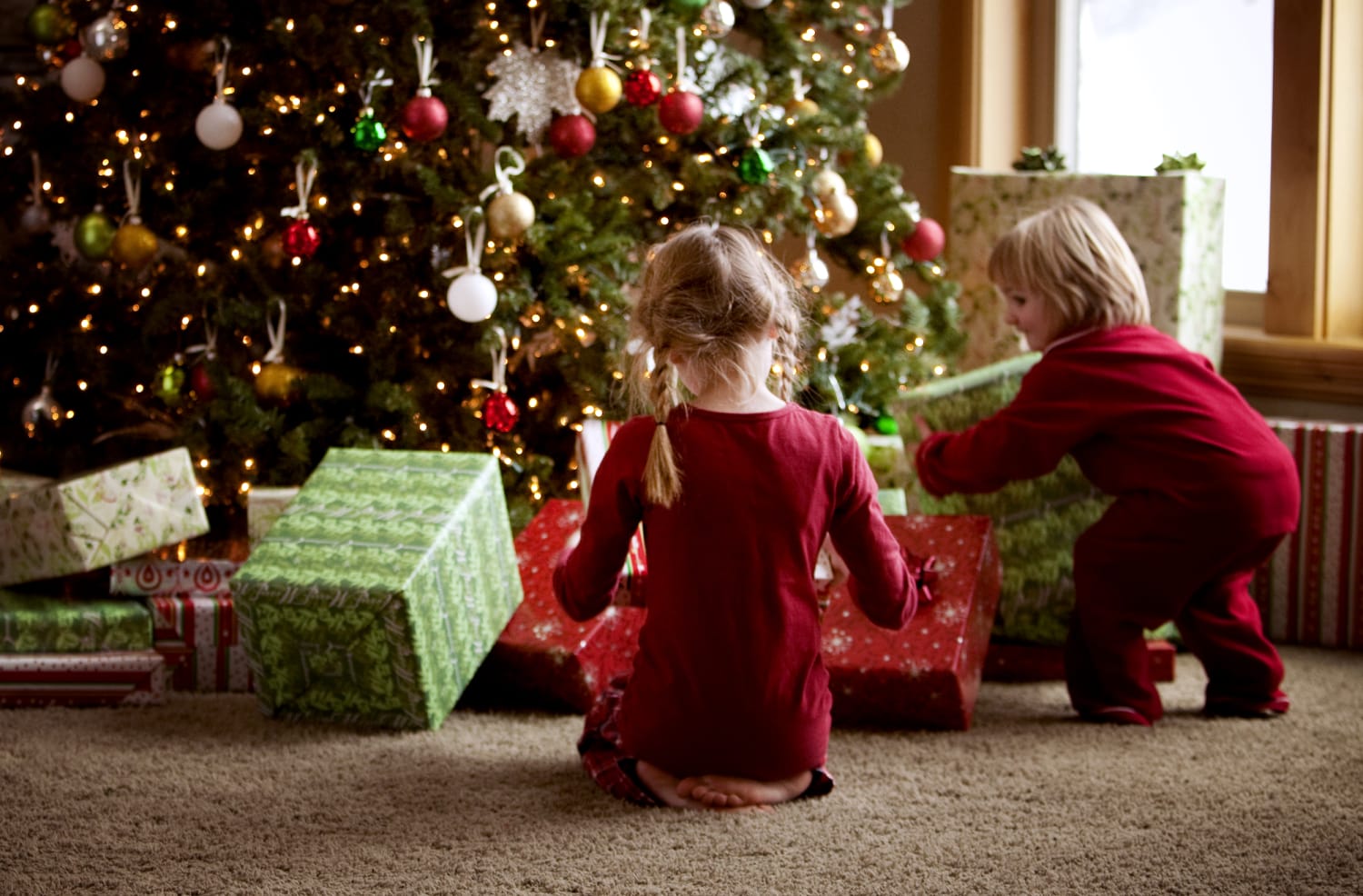
As we settled into the familiar routine of Christmas morning, the inequality became impossible to ignore. Mason ripped through present after present: a Nintendo Switch, designer sneakers, LEGO sets that cost more than my monthly grocery budget, remote-controlled cars, art supplies, books, clothes that still had department store tags attached.
With each gift, my parents oohed and ahhed, taking photos, praising Mason’s excitement, marveling at his reactions.
Emily watched quietly from her spot on the rug, waiting her turn with the patience that four-year-olds should never have to learn.
Finally, my mother turned to her with a smile that didn’t quite reach her eyes. “Emily’s turn! Go ahead, sweetheart, open your presents.”
The first box contained a coloring book and a small pack of crayons—clearly purchased as an afterthought from the grocery store checkout lane. The second held a stuffed animal that looked suspiciously like one I remembered from Claire’s childhood bedroom.
“Those are some of Mason’s old clothes,” my mother said brightly, as if this explained everything. “I thought Emily might like them. You know how expensive children’s clothes can be.”
Emily held up a shirt that was clearly too big, examining a stain on the front with the kind of focused attention children give to things they don’t understand. She didn’t complain. She didn’t cry. She just looked at the pile of worn fabric and then at Mason’s mountain of shiny new toys.
“What do you say, Emily?” Claire prompted, her voice sharp with expectation.
“Thank you,” Emily whispered, because that’s what good little girls are taught to say, even when their hearts are breaking.
The rest of the morning passed in a blur of forced cheerfulness. Mason showed off his new video game, my parents cooed over his every achievement, and Emily sat quietly in the corner, sorting through her bag of hand-me-downs with the solemnity of someone much older.
I watched my daughter’s face throughout the morning, seeing the exact moment when her Christmas joy dimmed, when she began to understand that she wasn’t valued the same way Mason was, when the seeds of self-doubt began to take root in her young mind.
The Question That Shattered My Heart
The drive home was painfully quiet. Emily sat in her car seat, clutching the garbage bag of clothes like it was something precious instead of something discarded. I kept glancing at her in the rearview mirror, my heart aching at the thoughtful expression on her small face.
When we pulled into our driveway, she finally spoke.
“Mommy?” Her voice was small, uncertain.
“Yes, sweetheart?”
“No,” I said immediately, my voice breaking as I turned to face her fully. “No, Emily. You didn’t do anything wrong. None of this is your fault. You are perfect exactly as you are.”
But I could see the damage was already done. At four years old, my daughter was learning to question her worth, to wonder why she wasn’t treated with the same love and excitement as her cousin.
That night, after I tucked Emily into bed with extra hugs and extra stories, I sat alone in our living room for nearly an hour, thinking through every holiday, every birthday, every family gathering where my parents had made Emily feel smaller, less worthy, less loved than Mason.
I thought about the subtle comments: “Mason is such a bright boy,” followed by silence about Emily’s accomplishments. “Claire is doing such a good job with Mason,” with no acknowledgment of my parenting. The way they lit up when Mason entered a room but barely noticed when Emily spoke.
I had tolerated it for the sake of peace. I had convinced myself that occasional favoritism was just “their way,” that Emily was too young to notice, that family harmony was worth the small slights.
But watching my child question her own worth—that was the line I would never let them cross again.
The Decision to Protect
The next morning, I made my decision.
I began sorting through documents, contact lists, and calendar commitments that involved my parents. I looked at the life I had built for Emily and myself—not perfect, not wealthy, but stable and full of love—and realized I didn’t need my parents’ approval or involvement for Emily to grow up feeling secure and valued.
What I needed was distance.
But the moment she picked up the phone, her first words told me everything I needed to know.
“Look, if you’re upset about the clothes, Mom didn’t mean anything by it. You know how sensitive Emily can be.”
Sensitive.
That one word revealed more than Claire probably intended. It wasn’t that our parents had been cruel or thoughtless. It wasn’t that a four-year-old deserved better than garbage bags full of stained clothes for Christmas. It was that Emily was too “sensitive” to handle normal family dynamics.
The blame was being placed on my daughter for having feelings about being treated poorly.
“Claire,” I said carefully, “Emily is four years old. She received used clothes while Mason got hundreds of dollars worth of new toys. How is it ‘sensitive’ for a child to notice that kind of difference?”
“You’re making a big deal out of nothing,” Claire replied, her voice carrying that familiar tone of dismissal I’d heard my entire life. “Kids don’t care about that stuff. Emily probably doesn’t even remember.”
“She asked me if she’d done something wrong.”
Silence.
Then: “You’re being dramatic.”
That phrase—the family catchall for dismissing any emotion they didn’t want to deal with—crystallized my decision.
“I won’t be bringing Emily around anymore,” I said quietly. “Not for holidays, not for birthdays, not for anything.”
Claire scoffed. “You’re seriously going to cut off the whole family because of some hand-me-downs? That’s ridiculous.”
“I’m protecting my daughter from people who make her feel worthless,” I corrected. “If that seems ridiculous to you, then you’re part of the problem.”
Before I hung up, I added softly, “If protecting my daughter makes me dramatic, then I’ll be dramatic for as long as I live.”
The Aftermath
For the next few days, my phone buzzed constantly with messages from the family group chat I had forgotten to leave. Each notification was another small assault on my resolve:
Mom: “Are you done sulking yet? We have New Year’s plans to discuss.”
Dad: “This ungrateful behavior is exactly what I’d expect. Call when you’re ready to apologize.”
Claire: “” (in response to Dad’s message)
The thumbs-up emoji hurt more than the words. It was casual cruelty, a public dismissal of my concerns, a way of mocking my pain without having to engage with it directly.
I muted the group chat and focused on Emily. We spent those days between Christmas and New Year’s building blanket forts, baking cookies, reading stories, and doing art projects. I watched her gradually return to her normal cheerful self, no longer carrying that confused sadness from Christmas morning.
But I knew this peace wouldn’t last. My parents weren’t the type to accept boundaries gracefully, and eventually there would be consequences for my defiance.
What I didn’t expect was how quickly those consequences would arrive, or what form they would take.
The Knock at the Door
Four days after Christmas, I was making lunch when a firm, urgent knock echoed through the house. It wasn’t the cheerful rhythm of friends stopping by, or the measured pace of a delivery. This was the kind of knocking that meant something serious had happened.
When I opened the door, my parents stood on the porch, bundled in heavy winter coats, their faces pale and drawn. Gone was the superiority from Christmas morning, the dismissive arrogance from their text messages. They looked small, shaken, older than I’d ever seen them.
My mother’s eyes darted past me into the house, searching for Emily with a desperation that was completely foreign to her usual demeanor. My father looked exhausted in a way that went bone-deep, as if he’d aged years in just four days.
“Can we come in?” my mother asked, her voice trembling. Not commanding, not judging—trembling.
I stepped aside, curiosity overriding my anger. Whatever had brought them here wasn’t about our Christmas argument. This was something else, something that had shattered their world enough to bring them to my doorstep looking for help.
They sat on my couch like strangers in their own skin, unsure how to occupy space where they weren’t automatically in control. Emily appeared in the hallway, clutching her stuffed rabbit, watching these familiar-yet-different people with cautious interest.
“He’s stable now,” my mother whispered, her voice breaking on every word. “The doctors pumped his stomach. But it was close, Sarah. Too close.”
I sank into the chair across from them, my mind reeling. “Is he going to be okay?”
“They think so,” my father said. “But he’ll be in the hospital for at least another few days for observation. Claire is… she’s not handling it well.”
My mother reached toward Emily, who had ventured closer but remained just out of arm’s reach. “We came to see you,” she said, her voice thick with tears. “To see Emily. We needed… we needed to hold something steady.”
The irony was almost unbearable. The granddaughter they had dismissed and belittled was now the child they desperately wanted comfort from. But there was something else in their faces, something they weren’t saying.
The Reckoning
For several minutes, we sat in uncomfortable silence. My parents kept looking at Emily, reaching toward her, trying to make eye contact, but she remained wary. Children have long memories for how they’re treated, and Emily clearly remembered Christmas morning.
Finally, my mother broke.
My father nodded, his eyes fixed on Emily. “What we did to her—to both of you—was wrong. We see that now.”
“You see it now?” I asked, my voice sharper than I intended. “What exactly do you see?”
My mother wiped her nose with a tissue that was already soggy from tears. “We see a little girl who deserved better than hand-me-downs for Christmas. We see a granddaughter we’ve been taking for granted while we spoiled Mason. We see…”
She broke down completely.
“We see that we’ve been terrible grandparents to Emily, and we drove away the daughter who was trying to protect her.”
Emily stepped forward hesitantly, drawn by the genuine emotion even if she didn’t fully understand it. My mother reached for her hand, but Emily took a half-step back—not out of fear, but out of instinct. She remembered. Children always remember how they’re made to feel.
“Sweetheart,” my mother whispered, her voice breaking. “We’re so sorry. We treated you badly, and that was wrong. You didn’t deserve that.”
Emily hugged her stuffed rabbit tighter and said in the softest voice, “I didn’t like the clothes… but I thought maybe you didn’t like me.”
The words hit my mother like a physical blow. She doubled over with the force of her sobs, finally understanding the damage her favoritism had caused.
I knelt beside Emily and wrapped my arms around her. “You are loved,” I told her firmly, speaking as much to my parents as to her. “You are worthy of good things. You are valuable exactly as you are.”
The Path Forward
When my parents finally composed themselves enough to speak, they asked the question I’d been dreading: was there a chance for us to heal as a family?
For the first time in my adult life, their faces showed humility rather than control, genuine remorse rather than performance.
“What would that look like?” my father asked.
“Equal treatment,” I said firmly. “Equal gifts, equal attention, equal celebration of their achievements. Emily needs to see that she matters just as much as Mason does.”
“And if we mess up again?” my mother asked.
“Then we’ll be done,” I replied. “I won’t put Emily through this emotional roller coaster indefinitely. She deserves grandparents who consistently show her love, not ones who remember she exists only when it’s convenient.”
They nodded, accepting the boundaries I set without argument. For once, they didn’t try to negotiate or explain away their behavior.
As they prepared to leave, my father turned and said, “Thank you for opening the door today. We know we don’t deserve it.”
After they left, I found Emily in her room, playing quietly with her toys.
“How are you feeling, sweetheart?” I asked, sitting beside her on the floor.
“Grandma was sad,” she observed with the matter-of-fact wisdom of childhood.
“Yes, she was. Sometimes grown-ups realize they’ve made mistakes, and that makes them sad.”
“Will she be nicer now?”
It was such a simple question, but it cut to the heart of everything. “I don’t know,” I said honestly. “But I’ll make sure you’re treated the way you deserve to be treated, no matter what.”
Six Months Later: The Test
Emily’s fifth birthday became the real test of my parents’ commitment to change. I watched carefully as they planned, shopped, and prepared for the celebration, looking for signs of the old favoritism creeping back in.
What I found surprised me.
They had clearly put genuine thought into Emily’s gifts—art supplies because they’d noticed her love of drawing, books because she was learning to read, a bicycle because she’d mentioned wanting to learn to ride. Nothing was an afterthought or a hand-me-down.
Mason was there too, of course, and my parents still enjoyed his company. But the desperate favoritism was gone, replaced by something more balanced and fair.
When Emily blew out her candles, surrounded by family who finally saw her clearly, I felt something I hadn’t experienced in years: hope.
“Make a wish, birthday girl,” my mother said, and the love in her voice was genuine, not performed.
Emily closed her eyes and wished for something only she knew, but when she opened them and smiled at her grandparents, I could see that whatever she’d wished for, it was already coming true.
The Ongoing Journey
Recovery from family dysfunction isn’t a straight line. There were still moments when my parents reverted to old patterns, still times when I had to enforce boundaries, still conversations about treating both grandchildren equally.
But the foundation had shifted. The crisis with Mason had forced them to confront not just their favoritism, but the coldness that had crept into their family relationships. They began making an effort not just with Emily, but with me as well.
Claire and I remained distant. She never apologized for dismissing my concerns or for the thumbs-up emoji that had hurt so much. Our relationship became cordial but surface-level, focused on logistics rather than intimacy.
Mason recovered fully from his hospital scare, and the experience seemed to humble the entire family. My parents were more careful with their praise, more aware of how their words affected both children.
One evening, as I tucked her into bed after a successful family dinner, Emily said something that made my heart sing.
“Mommy, I think Grandma and Grandpa like me now.”
“They always liked you, sweetheart,” I corrected gently. “They just forgot how to show it. But yes, they’re doing better now.”
“Good,” she said sleepily. “I like them too.”
That night, I sat in our living room and felt something I hadn’t felt in a long time—not complete forgiveness, not perfect closure, but the beginning of a new chapter.
Sometimes that’s enough. Sometimes that’s everything.
The most important gift we can give our children isn’t perfect families—it’s the knowledge that they’re worthy of love, respect, and protection, no matter what.
Emily is now seven years old and thriving in school. Her relationship with her grandparents continues to be healthy and balanced, built on consistent love rather than arbitrary favoritism. Sarah has maintained firm boundaries while allowing space for genuine healing. Mason fully recovered from his medical emergency and has learned to share attention in family settings. The family learned that crisis can be a catalyst for positive change, but only when people are willing to honestly examine their behavior and commit to doing better. Sometimes the best gift broken families can give each other is the courage to rebuild on a foundation of truth rather than tradition.

Lila Hart is a dedicated Digital Archivist and Research Specialist with a keen eye for preserving and curating meaningful content. At TheArchivists, she specializes in organizing and managing digital archives, ensuring that valuable stories and historical moments are accessible for generations to come.
Lila earned her degree in History and Archival Studies from the University of Edinburgh, where she cultivated her passion for documenting the past and preserving cultural heritage. Her expertise lies in combining traditional archival techniques with modern digital tools, allowing her to create comprehensive and engaging collections that resonate with audiences worldwide.
At TheArchivists, Lila is known for her meticulous attention to detail and her ability to uncover hidden gems within extensive archives. Her work is praised for its depth, authenticity, and contribution to the preservation of knowledge in the digital age.
Driven by a commitment to preserving stories that matter, Lila is passionate about exploring the intersection of history and technology. Her goal is to ensure that every piece of content she handles reflects the richness of human experiences and remains a source of inspiration for years to come.