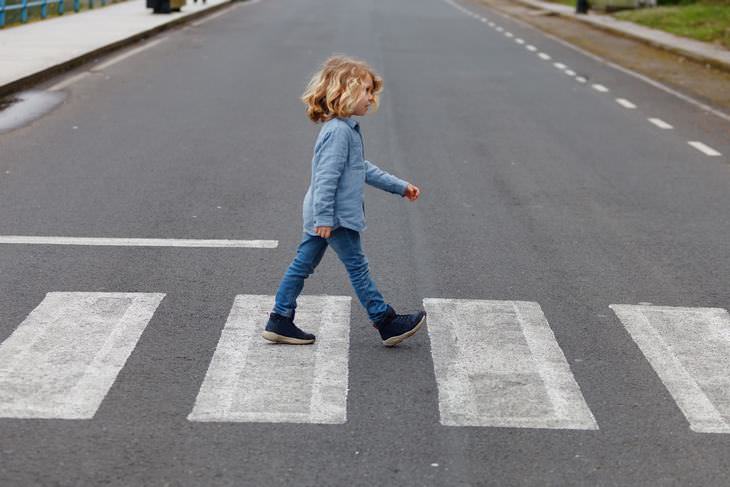
My Family Left My 6-Year-Old Daughter Alone at a Park While Taking My Nephew Home—I Documented Everything and Set Legal Boundaries
The Discovery
The afternoon sun cast long shadows across Riverside Park as Olivia pulled into the parking lot, checking her watch. She was ten minutes early to pick up Emily from what was supposed to be a fun family outing with her parents and sister Grace, along with Grace’s son Lucas.
The plan had been simple: Olivia would drop Emily off at 1 PM for a few hours at the park while she handled some errands, then return by 4 PM. It was supposed to give Emily time with her grandparents and cousin while giving Olivia a rare afternoon to herself.
But something felt wrong the moment she stepped out of her car.
The park was nearly empty. A few scattered families occupied distant picnic tables, but she didn’t see her family’s familiar cluster of chairs near the playground. She walked toward their usual spot, scanning the area, her pace quickening with each step.
“Emily!” Olivia called out, running toward her daughter.
Emily’s head shot up, relief flooding her face as she spotted her mother. She launched herself off the bench and into Olivia’s arms with the desperation of someone who’d been drowning and finally found shore.
“Mommy!” she sobbed, clinging to Olivia’s neck. “You came back! I thought… I thought maybe you forgot me too.”
The words hit Olivia like a physical blow. “What do you mean, sweetheart? Where is everyone?”
Through her tears, Emily explained what had happened. They had been playing at the playground when Lucas said he was hungry. Grandma and Grandpa started packing up the picnic supplies. Aunt Grace helped Lucas gather his toys. Emily had gone to use the restroom, and when she came back, they were gone.
“I looked everywhere,” Emily whispered against Olivia’s shoulder. “I called for them, but they didn’t come back. I waited here because you said to meet at this bench if we ever got separated.”
Olivia held her daughter tighter, rage and terror warring in her chest. Her six-year-old had been alone in a public park for nearly an hour, scared and confused, while her family simply… left.
“How long have you been sitting here?” Olivia asked gently.
“A really long time,” Emily said, her voice small. “The sun was up high when they left, and now it’s getting lower. I counted to one hundred lots of times.”
The Frantic Search
Olivia’s hands shook as she pulled out her phone, scrolling through missed calls and messages. Nothing. Not a single text or voicemail from her parents or Grace explaining where they’d gone or asking about Emily’s whereabouts.
She called her mother first. The phone rang four times before her mother answered with a casual, “Oh, hi Olivia. You’re a bit early, aren’t you?”
“Where’s Emily?” Olivia demanded, her voice sharp with panic and fury.
“Emily? Isn’t she with you? We thought you picked her up already.”
“She didn’t wander off,” Olivia said, her voice dangerously quiet. “She went to the bathroom and came back to find you’d all left without her. A six-year-old doesn’t just disappear. You abandoned her.”
“Now, Olivia, don’t be dramatic. These things happen. She’s fine, isn’t she?”
Dramatic. The word they always used to dismiss her concerns, her feelings, her very valid reactions to their behavior.
“We’re coming over,” Olivia said. “Right now.”
“Oh, there’s no need for that. Why don’t you just—”
Olivia hung up and gathered Emily close. “We’re going to see Grandma and Grandpa, okay? I need to talk to them.”
Emily nodded, but Olivia could feel the tension in her small body. Even at six, Emily understood that something serious was happening.
The Confrontation
The fifteen-minute drive to Grace’s house felt like an eternity. Olivia’s mind raced through years of accumulated slights, dismissals, and favoritism that she’d tried to ignore for the sake of family harmony. Her parents had always treated Lucas like the golden grandchild while treating Emily as an afterthought. Grace constantly undermined Olivia’s parenting, criticized her financial struggles, and made pointed comments about single mothers.
But this crossed every line she’d ever drawn.
When they arrived at Grace’s suburban house, Olivia could see her family through the living room window. They looked relaxed, comfortable, completely unbothered by what had just happened. Lucas was playing with toys on the carpet while the adults sat around with coffee cups, chatting casually.
Normal. As if they hadn’t just abandoned a six-year-old child.
Olivia knocked firmly on the front door, Emily’s hand tight in hers.
Grace opened it with a smile that didn’t reach her eyes. “Well, look who’s here! Come in, come in. Want some coffee?”
“She’s not fine,” Olivia snapped, her voice carrying more authority than she’d ever used with her family. “She was terrified. She thought you’d forgotten her on purpose.”
Grace scoffed. “Don’t be ridiculous. We would never do that intentionally. Emily’s just… sensitive. She probably got scared when she couldn’t find us immediately.”
“She was in the bathroom for three minutes,” Olivia said, her voice rising. “Three minutes. And in that time, you packed up everything, loaded Lucas in the car, and drove away. How does that happen accidentally?”
Her father finally spoke up. “Look, we made a mistake. But she’s safe now. There’s no need to make a federal case out of it.”
“A mistake?” Olivia repeated incredulously. “A mistake is forgetting to pack sunscreen. A mistake is bringing the wrong snacks. This was negligence. This was abandonment.”
The room went quiet except for the sound of Lucas playing with his toys, oblivious to the tension surrounding him.
Then Grace laughed. Actually laughed.
“Oh, Olivia, you’re being so overdramatic. Kids are tougher than you think. A little independence never hurt anyone.”
That laugh—dismissive, cruel, completely devoid of empathy for Emily’s fear—was the moment Olivia realized she was done trying to make this family relationship work.
The Decision
That night, after Emily had fallen asleep in her own bed, Olivia sat at her kitchen table with a cup of coffee growing cold between her hands. Every instinct in her body screamed that what happened wasn’t an accident. It wasn’t a harmless mistake. It was the natural progression of years of treating Emily as less important than Lucas.
Her parents had always favored her nephew. Grace had always belittled Olivia for being a single mother, for struggling financially, for being “too sensitive.” They treated Emily like an accessory rather than a person, an obligation rather than a beloved grandchild.
But leaving her behind? Abandoning her? Laughing about it afterward?
No. This time, Olivia wasn’t going to swallow it.
By noon, she had a plan.
She picked up her phone, opened the family group chat, and typed: “We need to talk. Today. At my place. 3 PM.”
Her father replied with a thumbs-up emoji.
Grace wrote: “Still overreacting? Can’t wait.”
Her mother sent a laughing emoji.
Olivia exhaled slowly. Perfect, she thought. Let them come unprepared and dismissive. It would make what she had to say even more powerful.
The Family Meeting
When her family arrived that afternoon, they walked into Olivia’s modest living room with the casual confidence of people who expected to quickly dismiss another one of her “emotional outbursts.” Grace carried herself with particular smugness, clearly ready to deliver cutting remarks about Olivia’s parenting anxiety.
But Olivia didn’t offer tea. She didn’t invite them to sit. She didn’t engage in small talk or try to ease the tension.
Instead, she placed her phone on the coffee table—recording—and a manila folder beside it.
“I want you to explain to me,” she said, her voice calm but carrying an edge they’d never heard before, “why you thought it was acceptable to leave my daughter alone in a public park.”
Her mother immediately went on the defensive. “We’ve told you multiple times—she wandered off while we were packing. We came back looking for her. She’s completely safe. You’re acting like she was kidnapped or something.”
Grace crossed her arms, her expression dripping with condescension. “Seriously, Olivia. Stop guilt-tripping everyone. Kids need to learn independence. They need to toughen up instead of being coddled all the time.”
But she already had.
“I’m informing you of several things,” Olivia said, sliding the printed documents from the manila folder across the table.
The first page outlined new boundaries: they were no longer allowed to take Emily anywhere unsupervised. No overnight visits. All interactions would be monitored by Olivia.
The second page detailed the legal definitions of child neglect and abandonment in their state.
The third was a letter from a family law attorney confirming that Olivia had every right to restrict access to her minor child when safety concerns arose.
Grace laughed in disbelief, but the sound died quickly when she saw Olivia’s expression and actually read the documents. Her mother opened her mouth to argue but found nothing to say. Her father stared silently at the papers, his face pale.
“And for the record,” Olivia continued, “I’ve already spoken with a child advocate about yesterday’s incident. I have documented everything—the timeline, the phone calls, Emily’s emotional state, all of your responses. Everything.”
Her family froze.
“You’re serious?” her father finally asked, his voice smaller than she’d ever heard it.
“I’ve never been more serious about anything in my life,” Olivia answered.
For the first time in her adult relationship with her family, no one laughed at her concerns. No one rolled their eyes. No one dismissed her as dramatic or oversensitive.
The New Reality
Olivia ended the meeting with a final warning that would define their relationship going forward:
“Emily’s safety and emotional well-being come first. Always. If any of you treat her like she doesn’t matter again, if you show favoritism that makes her feel less valuable than Lucas, if you ever put her in danger through negligence or carelessness, you won’t be part of her life. Or mine.”
Her parents left quietly, subdued and clearly shaken by the legal implications of their actions. Grace stormed out, muttering about “ridiculous overreactions,” but even she seemed rattled by the documentation Olivia had prepared.
Over the following weeks, the atmosphere in Olivia’s extended family shifted dramatically. Her mother attempted several times to manipulate the situation, sending long text messages about “family unity” and “misunderstandings.” Grace posted passive-aggressive quotes on social media about “drama queens who exaggerate everything.” Her father kept his distance, responding only with short, neutral texts when absolutely necessary.
But Olivia did not bend. She refused every invitation that involved Emily being alone with them. She supervised every visit, every interaction, every moment her daughter spent with the family. And for once, they realized she meant every single word she’d said.
The most surprising change, however, was in Emily herself.
Emily’s Recovery
Instead of becoming more fearful after the park incident, Emily gradually grew stronger and more confident. With Olivia’s encouragement, she began talking openly about what had happened—how scared she had been, how small and forgotten she felt waiting on that bench, how ashamed she was that her grandmother and aunt had laughed about her fear.
Olivia listened to every word, sometimes crying alongside her daughter, sometimes holding her in long, wordless embraces. But with each conversation, Emily seemed a little lighter, as if she was finally understanding that none of what happened had been her fault.
“But will they be different now?” Emily whispered, her voice heavy with the wisdom that comes from experiencing adult cruelty too young.
Olivia thought about her mother’s hollow apologies, Grace’s bitter defensiveness, her father’s uncomfortable avoidance of responsibility.
“I don’t know if they’ll change,” she admitted gently. “But I know we will be okay no matter what. I will always protect you. And I won’t ever let anyone treat you like you don’t matter.”
Emily leaned into her mother’s embrace, and Olivia held her until the tension in her small shoulders faded completely.
The Long-Term Changes
As weeks turned into two months, something remarkable happened in Olivia’s life. For the first time since Emily’s birth, she found herself standing taller, speaking more firmly, and trusting her instincts without second-guessing herself. Setting and maintaining boundaries with her family had awakened a strength she hadn’t known she possessed.
Her family didn’t visit as often anymore, but the visits they did make were fundamentally different. Quieter. More careful. More respectful.
Her mother no longer made jokes about Emily’s sensitivity or emotional needs. Grace avoided the confrontational remarks that had once been her specialty. Even Lucas, perhaps picking up on the changed dynamic, began treating Emily more kindly during family gatherings.
Six months later, when Emily’s seventh birthday approached, the family dynamic was tested again. Olivia watched carefully as her parents planned their gifts and participation, looking for signs of the old favoritism creeping back in.
What she found was a genuine effort to treat Emily with the same attention and care they’d always shown Lucas. The gifts were thoughtful, the celebration was genuine, and for the first time in Emily’s life, she was truly the center of attention at her own birthday party.
But more importantly, when Lucas had a minor meltdown during the party, no one expected Emily to accommodate his behavior or minimize her own celebration. The adults handled Lucas’s emotions without making Emily responsible for managing them.
It was a small moment, but it represented a seismic shift in how the family operated.
The Ongoing Journey
Recovery from family dysfunction isn’t linear. There were still moments when old patterns tried to reassert themselves, still times when Olivia had to remind her family of the boundaries she’d established, still conversations about treating both children with equal respect and consideration.
Grace remained the most resistant to change, occasionally making comments that required immediate correction. But even she seemed to understand that her relationship with Olivia and Emily depended on her ability to modify her behavior.
The most meaningful change was in how Emily carried herself. She no longer shrank back when family members spoke to her. She expressed her opinions freely. She asked for what she needed without apologizing for having needs.
That night, Olivia sat in her living room and reflected on the journey they’d traveled. The scared, abandoned little girl sitting on that park bench had grown into a confident child who knew her worth. The overwhelmed single mother who’d once accepted crumbs of respect had become a fierce protector who demanded nothing less than what her daughter deserved.
Not everyone would call it a happy ending. The family relationships were forever changed, built now on boundaries and consequences rather than unconditional acceptance. Some bridges had been burned in service of building stronger ones.
But Emily felt safe, valued, and protected. And sometimes, that’s not just enough—that’s everything.
The greatest gift we can give our children isn’t perfect families, but the knowledge that they matter enough to fight for, protect, and prioritize above all else.
Emily is now eight years old and thriving in school and at home. Her relationship with her extended family continues to be healthy and respectful, built on clear boundaries rather than enabling dysfunction. Olivia has maintained her firm stance while allowing space for genuine growth and change. The family learned that love without respect is meaningless, and that children deserve protection even when it costs adults their comfort. Sometimes the most loving thing you can do is refuse to accept behavior that damages the people you’re meant to protect.

Lila Hart is a dedicated Digital Archivist and Research Specialist with a keen eye for preserving and curating meaningful content. At TheArchivists, she specializes in organizing and managing digital archives, ensuring that valuable stories and historical moments are accessible for generations to come.
Lila earned her degree in History and Archival Studies from the University of Edinburgh, where she cultivated her passion for documenting the past and preserving cultural heritage. Her expertise lies in combining traditional archival techniques with modern digital tools, allowing her to create comprehensive and engaging collections that resonate with audiences worldwide.
At TheArchivists, Lila is known for her meticulous attention to detail and her ability to uncover hidden gems within extensive archives. Her work is praised for its depth, authenticity, and contribution to the preservation of knowledge in the digital age.
Driven by a commitment to preserving stories that matter, Lila is passionate about exploring the intersection of history and technology. Her goal is to ensure that every piece of content she handles reflects the richness of human experiences and remains a source of inspiration for years to come.