While I Was On A Business Trip Overseas
The email arrived while I was sitting in a hotel room halfway around the world. Subject line: “Important family matter.” I should have known then that nothing good would follow.
My phone buzzed incessantly as the notification appeared on the screen. The Wi-Fi connection in the Singapore hotel was spotty, causing the email to load in fragments. When the full message finally materialized before my eyes, I had to read it three times before the words sank in.
I stared at the screen, my hands beginning to tremble. The fluorescent lights of the hotel room suddenly felt too bright, the air conditioning too cold. Outside my window, the city sprawled in glittering lights, oblivious to the fact that my world had just tilted on its axis.
Without responding, I opened a new browser tab and searched for the local police department’s contact information.
But there was something they didn’t know yet.
Something that would change everything.
I am Margaret Moore, and this is the story of how my family tried to steal the life I had built.
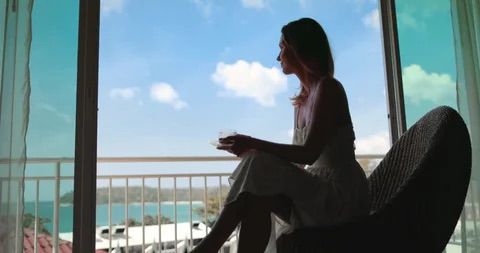
Standing on the veranda of my seaside villa three days later, I gripped my phone tightly as it rang. The screen flashed with the word “Dad.” The ocean stretched endlessly before me, peaceful and indifferent, while anger swirled deep within my chest like a gathering storm.
I took a deep breath and answered.
“You went ahead and did whatever you wanted, didn’t you?” I said, my voice trembling despite my efforts to sound calm.
On the other end of the line, I could hear the breathing of my father, Daniel. There was a pause, a hesitation that told me he knew exactly why I was calling.
“Margaret, I thought you’d understand,” he finally said, his tone carrying that familiar mixture of defensiveness and entitlement. “Diana needs money. If we don’t pay off the debt, well…” He hesitated, searching for words that would justify the unjustifiable. “It’s only natural for family to help each other.”
At his words, I let out a bitter smile that he couldn’t see. The usual family card, played with the same tired confidence, as if those words were a magic spell that could erase any wrongdoing.
“Natural for family to help each other,” I repeated slowly, tasting the irony of those words. “Is that what you call forging documents and selling property that doesn’t belong to you?”
“Margaret, please—”
“No.” My grip tightened on the phone. “Not this time.”
To understand how we arrived at this moment, I need to take you back. Back to a childhood where the word “family” meant something very different in our household than it does in most.
The Red Bicycle
My earliest memory was of my fifth birthday. It’s strange how certain moments crystallize in your mind with perfect clarity while years of your life blur together. I remember the morning sun streaming through the kitchen window, the smell of pancakes, and the overwhelming joy I felt when my parents led me to the garage.
There it was: a shining red bicycle with white handlebars and a basket decorated with plastic flowers. It was exactly what I had been dreaming about for months, circling it in every toy catalog, pointing it out in every store window.
“It’s yours, sweetie,” my mother said, though her smile seemed somehow distant even then.
I was overjoyed. For three glorious days, that bicycle was mine. I rode it around the driveway, up and down the sidewalk, learning to balance, falling and getting back up again. I even named it Cherry.
But that happiness didn’t last long.
Diana, my two-years-younger sister, took an interest in the bike. She was three years old then, too young to even ride it properly, but that didn’t matter. She wanted it, and in our household, Diana’s wants quickly transformed into Diana’s rights.
“Diana wants it, doesn’t she?” my mother said on the fourth day, her tone leaving no room for argument. “You’re the big sister, so let her have it.”
I remember standing in the garage, watching as my father adjusted the training wheels for Diana’s smaller size. The bike that had been mine was being reconfigured for someone else, as if my three days of ownership had been merely a trial period.
“But it was my birthday present,” I had protested weakly, my voice barely above a whisper.
My small protest fell on deaf ears. My father continued working on the bike without even looking up at me, and my mother had already returned to the kitchen where Diana’s favorite snacks were being prepared.
In the end, Cherry became Diana’s bicycle. I never rode it again.
That red bicycle was the first in a long line of lessons about my place in this family. I just didn’t know it yet.
Growing Up in Diana’s Shadow
When I entered elementary school, the same pattern continued with predictable consistency. The pencil case I received as a gift for starting school—a beautiful wooden box with compartments for different colored pencils and erasers—caught Diana’s eye during her visit to my room. It had a painted sunrise on the lid, and I had been so proud of it.
Eventually, after days of Diana’s tears and tantrums, I was made to switch to a cheap plastic one covered in generic cartoon characters.
“Diana is still young, so she wants what you have,” my mother explained, always giving in to Diana’s demands with the same justification. “You’re old enough to understand.”
But I didn’t understand. How was it fair that being older meant I deserved less? That my achievements and milestones were always overshadowed by Diana’s moods and desires?
Extracurricular activities were also entirely about Diana. When I was seven and expressed my desire to take swimming lessons—I had always loved the water, felt drawn to it in a way I couldn’t quite explain—my parents immediately shut it down.
“We’re spending money on Diana’s piano lessons,” my father said, not even looking up from his newspaper. “Besides, Diana would feel lonely on her own.”
The logic was baffling. Diana wouldn’t be alone—she had her piano teacher. But somehow, my absence from the house during her lesson time would constitute abandonment.
For Diana’s activities—piano, ballet, painting, and later tennis—money was no object. The house filled with her certificates, her paintings hung on every wall, her piano recital programs collected in albums. Meanwhile, I wasn’t allowed to pursue anything outside of school clubs, which cost nothing and required no parental involvement.
Whenever I finished my homework and wanted to go out to play with neighborhood children, I was told: “Help Diana with her studies.”
This was particularly galling because Diana rarely actually studied. I would sit beside her for hours, trying to help her with basic math or reading, while she doodled in her notebooks or stared out the window. If I dared to suggest she focus, she would burst into tears, and my mother would come rushing in.
“What did you do to upset her?” The accusation was always immediate, always directed at me.
Both of our parents attended Diana’s school events—every single one. Her kindergarten graduation, her first-grade play where she had a single line, her fourth-grade science fair where her volcano project (that our father had essentially built) won third place.
But when it came to mine, they always said: “We’re too busy at work.”
I ran track in middle school and became quite good at it. During Sports Day in sixth grade, I came in first in the 800-meter race. I could see the finish line approaching, could feel my legs burning with effort, could hear the cheers of my classmates. I searched the crowd for my parents’ faces, certain that this time—surely this time—they would be there to see me win.
But no one noticed my victory because Diana had fallen during the parent-child relay race and was crying. By the time I received my ribbon, both my parents were crouched beside Diana, checking her scraped knee while she milked the attention for all it was worth.
During an open school day when I was elected class president, I gave a speech in front of the entire grade about student council initiatives. I had practiced for weeks, written and rewritten my note cards, stayed up late perfecting my delivery. But my parents skipped it to attend Diana’s event—a casual art show where her mediocre watercolor hung among dozens of others.
When I came home that day, my mother asked, “How was school?”
“I gave my speech,” I said.
“That’s nice, dear. Diana got an honorable mention for her painting.”
And that was that.
By the time I was in sixth grade and elected as a class representative for the second year in a row, I didn’t even bother telling my parents. I knew the conversation would just circle back to Diana, who was struggling with basic fractions and needed extra tutoring sessions that somehow only I could provide.
The Breaking Point
What stands out most in my memory, though, was my third year of high school. I had worked tirelessly for three years, maintaining a 4.0 GPA, participating in student government, volunteering at the local library, and preparing meticulously for college entrance exams. When the acceptance letter arrived from Stanford University—my first-choice school, a place I had dreamed about since freshman year—I ran into the kitchen with the envelope clutched in my trembling hands.
“Mom! Dad! I got in!”
My mother was preparing vegetables at the counter. She glanced at the letter, nodded once, and returned to her chopping.
“Oh, that’s nice,” she said indifferently, her knife moving in steady rhythms against the cutting board. “I’m more interested in Diana’s mock test results. They should arrive today.”
The knife sounds—thwack, thwack, thwack—became the soundtrack to my deflating joy.
That evening at dinner, my mother made all of Diana’s favorite dishes: honey-glazed salmon, roasted potatoes with rosemary, and chocolate mousse for dessert. It was supposed to be a celebration of my achievement—the achievement that would change my entire future—but every topic revolved around Diana.
Diana’s mock tests (which were mediocre at best). Diana’s new interest in photography (which would last all of three weeks). Diana’s plans to maybe possibly potentially consider going to community college (plans that never materialized).
No one asked about my acceptance letter after that initial dismissive acknowledgment. No one shared in my efforts or joy. My Stanford envelope sat on the counter for three days before I finally took it to my room, where I pinned it to my bulletin board and looked at it alone, feeling both proud and desperately lonely.
For Christmas that year, Diana received a professional camera setup worth over two thousand dollars. I received a package of practical items: notebooks, pens, a planner for college, and a single sweater.
“You’ll need these for school,” my mother said, as if utility were a gift in itself.
Diana’s camera gathered dust within a month. My notebooks carried me through four years of rigorous university coursework, but they were never seen as representing my parents’ support—just their pragmatism.
Even the travel expenses for my club competitions were denied because “the money was needed for Diana’s piano lessons”—lessons she frequently skipped or attended with obvious reluctance.
“Diana is sensitive. Diana is delicate. Diana needs more attention.”
These phrases became the refrain of my childhood, adolescence, and teenage years. They were the explanation for everything, the justification that required no further examination.
By the time I entered university, I had completely given up on my relationship with my family. I had accepted my role as the responsible, invisible older daughter whose job was to support Diana’s emotional needs while receiving nothing in return. I had learned not to expect recognition, celebration, or even basic acknowledgment.
I had learned to be alone.
Finding My Place
It was during this emotionally barren period of my life that I met Ken in the windsurfing club at Stanford.
I was a freshman and a total beginner, constantly at the mercy of the waves. I had joined the club on a whim, drawn by memories of that childhood desire to swim, to be in the water, that had been denied to me all those years ago.
Ken, on the other hand, was a senior and the captain of the club. He had the kind of natural athleticism and water sense that made everything look effortless, though I would learn later that he had worked incredibly hard to develop those skills.
On the first day of practice, I was thrown into the sea countless times. I swallowed saltwater until my stomach churned, my eyes stung unbearably from the salt, my arms ached from pulling myself back onto the board over and over again. Just as I was about to give up—to swim back to shore and quit the club before I’d really started—Ken extended his hand to me.
“Everyone starts like this,” he said, water dripping from his hair into his warm brown eyes. “I fell all day long when I was a freshman too. Couldn’t stand up once during my first week.”
I cannot adequately describe how much those words saved me at that moment. They were simple, matter-of-fact, without pity or condescension. He wasn’t telling me I was talented or special—he was telling me that failure was normal, that persistence mattered, that everyone walked the same difficult path.
Up until then, I had rarely experienced kindness in the face of failure. Failure at home meant I wasn’t trying hard enough to help Diana. Failure at school meant I was taking time and resources away from more important things—namely, Diana’s needs.
But Ken saw failure as simply part of learning. What a revelation that was.
One particularly memorable moment happened on the final day of our training camp that semester. It was dusk, the sun painting the sky in shades of orange and purple, and I was alone on the water, battling the waves. I hadn’t managed to stand up and ride properly even once that entire day, and this was my last chance before we packed up and headed back to campus.
My arms were exhausted. My legs shook with fatigue. I had swallowed so much seawater that I tasted nothing but salt. I was ready to give up.
“Margaret, the wind is shifting!” Ken shouted from the shore, his hands cupped around his mouth to carry his voice across the water.
The moment I heard his voice, something clicked. Suddenly, I could feel everything with crystal clarity: the direction of the wind, the movement of the waves, the exact angle of the board beneath my feet. My body understood what my mind had been struggling to grasp for weeks.
Before I knew it, I was standing on the waves, really standing, riding them like I had watched others do with such envy.
“I did it!” I shouted, my voice carrying across the water mixed with laughter and disbelief.
My teammates cheered from the shore, but the only thing I saw—the only thing that mattered—was Ken’s beaming smile, so genuine and proud, as if my success was his success too.
Over the following months, Ken became not just my instructor but my friend. He taught me technique, yes, but he taught me something more important: he taught me that I mattered.
“Don’t tense up on the board,” Ken gently advised me during one practice session. “Feel the waves and move with them. You’re trying to control everything. Learn to dance with the ocean instead.”
For some reason, those words deeply resonated with me on a level that went far beyond windsurfing. My whole life had been about tension, about trying to control situations that were inherently uncontrollable, about forcing myself into a shape that would finally earn my parents’ attention.
No one had ever treated me with such care before, such genuine interest in my growth as a person. My parents always focused on Diana and showed little interest in my efforts or achievements. Teachers saw me as a reliably good student who didn’t need much attention. Friends appreciated my help but rarely asked what I needed.
But Ken saw me. Really saw me.
“Margaret, you’ve got real talent,” Ken told me one afternoon as we sat on the beach after practice. “Your intuition for reading waves is amazing. Most people take years to develop that sense, but you have it naturally.”
I laughed, embarrassed by the praise. “I fall more than anyone else in the club.”
“You also get back up more than anyone else,” he countered. “That’s what matters. Talent without persistence is nothing. You have both.”
It wasn’t just his technical guidance that drew me in. It was also his kindness, the way he checked on everyone in the club, the occasional mischievous expression he wore when he was planning some new adventure. It was the way he listened when I talked, really listened, asking follow-up questions and remembering details I’d mentioned weeks before.
A few months later, hesitantly, carefully, we started dating.
Building a Dream Together
When I graduated from university, Ken and I made a decision that shocked everyone around us: we decided to turn our passion for marine sports into a business and started an import company focused on water sports equipment.
The people around us were almost unanimously against it. Friends warned us about the risks of starting a business fresh out of college. Business professors suggested we get “real” jobs first, build up capital and experience. Even Ken’s parents, who were generally supportive, expressed concern about the instability of entrepreneurship.
But my parents? They were vehemently, aggressively opposed.
“How do you plan to survive with such an unstable business?” my father demanded during a tense family dinner. “You went to Stanford. You could get a job at any major corporation. Why would you throw that away?”
“Diana is struggling, so you need to help the family,” my mother added, her mind still entirely consumed by Diana as always. “She needs financial support. You could be sending money home with a real job.”
I looked at them across the dinner table and felt nothing but a weary resignation. Of course they saw my future as a resource to be allocated to Diana. That was all I had ever been to them.
My younger sister Diana had dropped out of community college after one year, hopped from one part-time job to another—barista, retail clerk, restaurant hostess—never staying anywhere longer than a few months. She spent her days aimlessly having fun, going to clubs, shopping beyond her means, traveling with friends on money she didn’t have.
And every time she racked up debts—credit card bills, personal loans, money borrowed from friends she never repaid—my parents stepped in to clean up after her. They always defended her, calling her “a poor child” who was “struggling to find her place in the world.”
In contrast, they placed strict demands on me. I was expected to choose stability over passion, to prioritize family obligations over personal dreams, to be the responsible one who compensated for Diana’s irresponsibility.
But Ken was different. He believed in my dreams and was ready to walk the path with me, even when that path was uncertain and frightening.
“If it’s us, we can make it happen,” he said simply. “I believe in you. I believe in us.”
With those words warming my heart, we took one step at a time to grow our company.
Our first office was a small apartment, thirty minutes on foot from the nearest subway station in a neighborhood that was more warehouse than residential. All the furniture—desks, filing cabinets, even our chairs—was secondhand, collected from thrift stores and garage sales.
“This is our starting line,” Ken said with a laugh as we arranged our mismatched furniture on our first day.
And I laughed with him, feeling more at home in that cramped, shabby space than I ever had in my parents’ house.
Finding business partners was far more challenging than we had imagined. We attended trade shows, sent hundreds of emails, made countless phone calls, pitched our ideas to anyone who would listen.
“You’re too young. You have no track record.”
We heard variations of this rejection again and again. Doors closed in our faces, emails went unanswered, meetings ended with polite dismissals and vague promises to “keep in touch.”
But we refused to give up. We attended marine sports tournaments across the country, built relationships with athletes, learned about their needs and frustrations with existing equipment. Gradually, through persistence and genuine passion, we earned their trust.
Our turning point came at an international water sports exhibition in Sydney, where we met a small manufacturer in Australia. They had also just started their business—a family-run operation creating innovative wetsuit designs—and were looking to expand into the U.S. market.
Perhaps our passion resonated with them. Perhaps they saw something of themselves in our eager, inexperienced faces. Or perhaps they were simply willing to take a chance on two young people who clearly loved what they were doing.
For whatever reason, we managed to secure an exclusive distributor contract.
The night we signed that contract in our tiny office, with the Australian manufacturer joining us via video call, we celebrated with a cheap bottle of sparkling wine while snacking on canned appetizers from the corner store. We sat on our mismatched furniture and talked for hours about our future, about dreams that suddenly seemed possible.
Looking back now, that might have been the true beginning of our journey—not the day we opened our doors, but the day someone believed in us enough to take a chance.
The business grew slowly but steadily. We worked sixteen-hour days, seven days a week. We learned about supply chains and inventory management, about marketing and customer service. We made mistakes—plenty of them—but we learned from each one.
Five years passed. The business that had begun in a cramped apartment with secondhand furniture was now recognized within the industry. We had moved to a real office, hired employees, expanded our product lines. We had built something real and sustainable.
And then we achieved the dream that had sustained us through the hardest times: we bought a vacation home by the ocean.
Our Sanctuary
We found the property shortly after we began searching. The moment the real estate agent drove us up the winding road, I knew.
The villa was perched on a hill surrounded by coastal trees, offering a breathtaking view of the ocean that seemed to stretch into infinity. The house itself needed work—the paint was fading, the deck was weathered—but it had good bones and, more importantly, it had potential.
“This is the one,” Ken said, standing on the worn deck and looking out at the water.
And I was thinking the exact same thing.
My parents opposed it, of course.
“It’s unnecessary to spend so much money on such a luxury,” they said when I made the mistake of mentioning it. “You could be helping Diana instead. She’s still trying to find her way.”
But their disapproval wasn’t just about the expense. They still hadn’t fully accepted my work, my choices, my life with Ken. To them, I was still the disobedient daughter who had rejected her responsibility to the family.
However, their opinions didn’t matter to me anymore. This villa was the proof of the dream Ken and I had built together, brick by brick, wave by wave.
We spent months renovating it ourselves. We repainted the railings a crisp white, replaced the weathered floorboards, renovated the kitchen, and built a new deck where we could watch the sunset. Every bit of work was done by the two of us, sometimes arguing over paint colors or furniture placement, but always together.
On our first night at the completed vacation home, we sat on the new deck gazing at the starry sky as we listened to the sound of the waves. Ken held my hand, his thumb tracing gentle circles on my palm.
“Margaret, let’s grow old together here.”
Those words still warm my heart today, years later.
This villa became our sanctuary. On weekends, we would drive out from the city, leaving behind the stress of business operations and city life. We would windsurf in the morning, cook fresh seafood in the afternoon, and watch the stars at night.
It was here that we felt most ourselves. It was here that we dreamed about the future, about expanding the business, about maybe one day starting a family. It was here that Ken proposed to me, on the same deck where he had first said he wanted to grow old with me.
The villa was more than just property or investment. It was the physical manifestation of everything we had built, everything we had overcome, everything we had chosen for ourselves despite the world telling us we were making mistakes.
And my parents tried to sell it.
The Betrayal
But everything started to crumble with that email I received during a business trip to Southeast Asia.
I had been meeting with potential new suppliers, visiting manufacturing facilities, building relationships that would help us expand our product line. The trip had been exhausting but successful. I was looking forward to returning home, to spending a weekend at the villa with Ken, to resting.
Then I opened my email.
“Margaret, we need to tell you something. Your father and I have sold the villa. We know you’re attached to it, but Diana is in serious financial trouble. She made some bad investment choices and now owes $200,000. We had no choice. The ownership transfer will take place next month. You didn’t really need it anyway, right? You barely even use it. We’re family, and family helps each other.”
I read it three times, certain I must be misunderstanding.
Sold. Our villa. Without our consent. Without even a phone call.
My hands began to shake. The hotel room suddenly felt suffocating. I walked to the window and looked out at the glittering city below, trying to process what I had just read.
They had done it. After a lifetime of taking everything from me—my bicycle, my belongings, my achievements, my emotional energy—they had finally tried to take the one thing that truly mattered.
Without responding to the email, I searched for the local police department’s contact information back home and filed a report for fraud and forgery. Then I called Ken.
“They did what?” Ken’s voice was sharp with disbelief.
“They sold the villa. Or they’re trying to. The email says the transfer is next month.”
There was a long pause on the other end of the line.
“Margaret, I need you to listen to me very carefully,” Ken said, his voice steady despite the situation. “The villa is in both our names. They can’t sell it without both our signatures. Whatever documents they have, they’re forged.”
“I know,” I said, my voice breaking slightly. “That’s why I reported it.”
“Good,” Ken said firmly. “I’m calling our lawyer right now. Don’t respond to them. Don’t engage. We’ll handle this legally.”
Three days later, I returned home. Ken picked me up from the airport, and we drove directly to the villa. I needed to see it, to stand in that space and remind myself that it was real, that it was ours, that they couldn’t just take it.
That’s when my father called.
The conversation was brief and brutal. He tried to justify what they had done, tried to play the family card, tried to make me feel guilty for Diana’s predicament.
“Diana isn’t at fault. She was just tricked—”
“No. This is a crime. An unauthorized sale is fraud,” I said, my voice cold. “I’m contacting the police.”
I heard my father gasp on the other end of the line.
“The police? Don’t be ridiculous. How can you bring a family matter outside?”
“No, this isn’t just a family matter. It’s a crime,” I said firmly, gripping the deck railing tighter. The wood was warm under my hands, solid and real. “Dad, Mom—it’s time you stopped cleaning up Diana’s messes.”
“Margaret, we’re family, aren’t we? Helping each other is what family does,” my father pleaded, his voice shifting to a tone of desperation I had never heard before.
“Yes, we’re family,” I said, letting out a deep sigh. “And that’s exactly why I have to report you and Mom for fraud. Because someone needs to stop enabling Diana’s behavior before she destroys everyone around her. Including herself.”
As I ended the call, only the sound of the waves remained in the air. The salty breeze cooled my flushed cheeks.
I couldn’t believe my parents had sunk this low. Their twisted devotion to Diana had finally crossed an unforgivable line.
Perhaps in part I was to blame for not stopping them sooner, for maintaining any relationship with them at all after years of neglect and favoritism.
But enough was enough.
The Investigation
The police investigation revealed details that were somehow even worse than I had imagined.
My parents had known from the beginning that the property was jointly owned by Ken and me, yet they proceeded with their plan anyway. The forgery of documents was carefully premeditated, not a spontaneous act of desperation.
They had been preparing for this for three months.
First, they had forged my signature using an old document I had signed years ago—a birthday card, of all things. Then they skillfully imitated Ken’s signature using samples from Christmas cards he had sent them. They created a falsified agreement of sale, complete with notary stamps they had somehow obtained.
To the real estate agent, they lied convincingly, saying, “Our daughter and her partner are being relocated overseas for work and can no longer manage the property. They’ve given us power of attorney to handle the sale.”
The most shocking revelation came from our neighbors. My mother had been spreading rumors in the community for weeks, claiming, “Margaret and her husband racked up massive debts with their failing business and are forcing us to clean up after them. We have to sell their villa to save them from bankruptcy.”
She was willing to tarnish her own daughter’s reputation, to tell blatant lies to our neighbors and friends, just to protect Diana and justify their actions.
“Diana got involved in a fraudulent investment scheme,” my mother reportedly confessed tearfully during police questioning. “It was supposed to be just a small amount at first—she said she could turn $10,000 into $30,000 in three months. But before we knew it, it had snowballed into $200,000 of debt.”
The investigator’s report painted a clear picture. My parents had already drained their savings and sold off a piece of land they owned to cover Diana’s previous debts. Even that wasn’t enough. Desperate and unwilling to let Diana face the consequences of her actions, they turned their attention to our villa.
“Diana isn’t to blame,” my mother insisted during questioning, according to the police transcript I later received. “She was just tricked by those awful people. She’s not as smart as Margaret. She’s not as capable. She needs protection.”
The officer conducting the interrogation noted in his report that my mother seemed genuinely unable to see the problem with her reasoning, unable to understand that protecting Diana from every consequence was precisely what had created the problem in the first place.
Diana’s Response
Then one day, about a week after the police investigation became public knowledge in our family, Diana contacted me.
The phone rang at 11 PM. I almost didn’t answer, but something made me pick up.
“How could you do this, sis?” she shouted immediately, not even bothering with a greeting. “Turning our parents over to the police is so cruel! They were just trying to help me!”
Her victim mentality was as present as ever, that familiar tone that suggested the entire world was conspiring against her while she remained blameless.
I took a deep breath, forcing myself to respond calmly.
“Diana, do you realize they tried to sell the vacation home Ken and I cherish just to cover your debt? That’s not help. That’s fraud. It’s illegal.”
“But we’re family, aren’t we?” she insisted, her voice taking on that whining quality I remembered from childhood. “I’m really struggling here. I made a mistake with the investment, but I’m the victim! Those people tricked me!”
“Diana, you’re twenty-eight years old,” I said, my patience finally breaking. “How many times have you been ‘tricked’? How many times have Mom and Dad bailed you out? This isn’t about being a victim. This is about you never facing consequences for your choices.”
“You’ve always been like this!” she screamed. “So cold, so perfect! You think you’re better than me because you went to Stanford and started a business. But you’re just heartless! Mom and Dad could go to jail because of you!”
“They could go to jail because they committed fraud,” I corrected her. “Not because I reported it. Those are very different things.”
“It’s time you started taking responsibility for your actions,” I continued, my voice firm but not unkind. “I’m done cleaning up after you. Mom and Dad are done. This ends now.”
“I hate you!” Diana screamed, and the line went dead.
After hanging up, an overwhelming fatigue washed over me. I felt Ken’s arms wrap around me from behind, his presence a steadying comfort.
“You did the right thing,” he murmured into my hair.
“Then why does it hurt so much?”
“Because they’re still your family,” Ken said simply. “And you’re not heartless like Diana said. You’re just finally setting boundaries.”
The Aftermath
The final report from the police arrived with the onset of winter, about three months after the initial incident.
My parents were prosecuted for attempted fraud and forgery. Given their age, lack of criminal history, and the fact that the sale had never actually completed, they received a suspended sentence of eighteen months with two years of probation.
They also faced civil penalties and were required to pay restitution to cover the legal fees and damages, which they clearly had no means to pay.
Their apology letters arrived shortly after the sentencing. I discarded them without reading them.
Sometimes, forgiving only enables the repetition of wrongdoing. That was a lesson I had finally learned.
One Year Later
A year has passed since then, and the effects of my parents’ choices continue to ripple outward.
According to a neighbor who occasionally updates me—more out of gossipy interest than genuine concern—my parents are still struggling to repay their debts. After the fraudulent sale of the vacation home was exposed and prosecuted, my father’s employer quietly asked him to resign. At sixty-three years old with a criminal record, finding new employment proved impossible.
My mother now juggles multiple part-time jobs to make ends meet: early mornings at a warehouse packing boxes, afternoons at a food factory, and evenings working the register at a twenty-four-hour supermarket.
“I heard the Moores are having a tough time,” I overheard a housewife gossiping near the supermarket register where my mother worked one evening when I stopped by. “She’s lost so much weight. Looks ten years older.”
I didn’t announce myself. I simply paid for my items at a different register and left.
Their family home—the house where I grew up, where Diana’s paintings hung on every wall and her piano still sat in the living room—has been sold. My parents and Diana now live in a small two-bedroom apartment on the outskirts of town, in a building that’s more functional than comfortable.
Their retirement savings and all their funds were completely depleted paying off Diana’s debts, and they took on additional loans for the legal fees and restitution. The monthly payments are crushing them.
“Margaret, can’t you help your parents?” relatives have called me multiple times with the same question. Cousins, aunts, uncles—all of them seem to think I’m being unreasonably cruel. And every time, I give the same answer.
“They’ll have to solve their problems on their own.”
Diana hasn’t changed. If anything, she’s worse.
She met a man at a nightclub and is now considering another investment scheme he’s promoting—something involving cryptocurrency and guaranteed returns that sounds obviously too good to be true.
I heard all this secondhand and felt nothing but a quiet, distant sadness. Not guilt. Not regret. Just the dull understanding that some people never learn because they are never forced to.
As for me, life moved forward.
Ken and I stayed at the villa more often that year. We repaired what had been damaged—not just the deck railing my father had gripped while lying, but the invisible fractures left behind by betrayal. We learned how peaceful silence could be when it wasn’t filled with obligation or fear.
One evening, as the sun sank into the ocean and painted the water gold, Ken asked me a simple question: “Do you miss them?”
I thought about it for a long time before answering.
“I miss the idea of parents,” I said. “Not the people they chose to be.”
That night, I realized something profound. The villa had never been what they tried to steal. What they wanted was control—over my choices, my success, my boundaries.
And they failed.
Because the life I built could not be sold, forged, or taken away.
For the first time, I slept deeply—knowing that some doors, once closed, were meant to stay that way.

Adrian Hawthorne is a celebrated author and dedicated archivist who finds inspiration in the hidden stories of the past. Educated at Oxford, he now works at the National Archives, where preserving history fuels his evocative writing. Balancing archival precision with creative storytelling, Adrian founded the Hawthorne Institute of Literary Arts to mentor emerging writers and honor the timeless art of narrative.