When My Husband’s Boss Called After the Funeral, I Never Expected What Happened Next
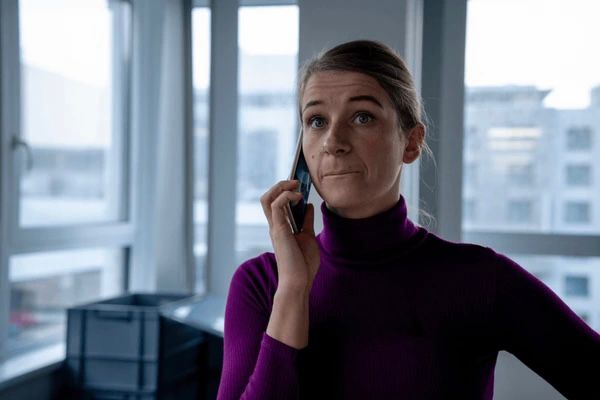
When the phone rang three days after my husband’s funeral, I was standing in our kitchen holding his favorite coffee mug—the one with the faded American flag that he’d used every morning for twenty years. The voice on the other end belonged to Theodore Vance, Elijah’s boss at Sterling & Grant Financial.
“Mrs. Odum, I need to see you urgently,” he said, his voice careful and measured. “There’s something about your husband you need to know. Something important.”
Then he added words that made my blood run cold: “And whatever you do, don’t tell your son or daughter-in-law about this call. You could be in danger.”
I agreed to meet him the next morning at ten. As I hung up, I caught my reflection in the hallway mirror—a sixty-eight-year-old widow with silver hair and questions multiplying in my mind like weeds after rain.
What I discovered in that office would shatter everything I thought I knew about my family. But I’m getting ahead of myself. Let me start at the beginning, because this story—this impossible, heartbreaking, ultimately liberating story—needs to be told from the first crack in the foundation.
The Funeral I Didn’t Plan
The small community church just off Highway 41 had American flags in every window box, leftovers from Memorial Day that no one had bothered to take down. Inside, the air was thick with the scent of old hymnals and lemon furniture polish. I’d helped clean those pews myself for years, back when my knees could still handle stairs without complaint.
But on the day of Elijah’s funeral, I sat in the front row feeling like a stranger at my own life’s most pivotal moment.
“Mama, just leave everything to us,” my son Marcus had told me that morning, his hand flat on our kitchen table like he was sealing a business deal. His navy tie was already perfectly knotted. “You just focus on staying calm.”
Beside him, my daughter-in-law Kira touched my shoulder with her manicured fingers, nails painted that perfect pale pink that probably had a French name. “We’ve got this, Lena. You shouldn’t be worrying about details right now.”
Details. That’s what they called the church where Elijah and I had been married forty-five years ago. Details were the cemetery where his father was buried after Vietnam. Details were the hymns he hummed while fixing the kitchen sink, the Bible passages he’d underlined in pencil, the life we’d built together brick by stubborn brick.
So I sat there, a widow in black, while people filed past Marcus and Kira, pressing their hands, murmuring condolences about “how strong they were being.” How well they were handling everything.
Me? I was apparently something to be managed.
“Grandma’s very fragile right now,” I heard Kira whisper to a neighbor near the back pews. “Marcus and I are taking care of everything.”
Fragile. The word cut deeper than any of the well-meaning sympathy. Elijah had never treated me like I was fragile. To him, I was Lena—the girl who’d worked double shifts at the diner so he could finish night school. The woman who could fix a leaky pipe with duct tape and determination. His partner in building a life that wasn’t fancy but was ours.
As the choir sang “It Is Well with My Soul,” my mind drifted back forty-seven years to a county fair on a sweltering July evening. Elijah had been standing in line for the ring toss, holding a paper tray of curly fries and humming Sinatra like he had a shot at sounding that smooth. He’d let me steal a fry. I’d let him talk me into the Ferris wheel even though heights made my palms sweat.
At the top, with the whole fairgrounds spread beneath us and the VFW flag snapping in the Georgia breeze, he’d told me he wanted a life that felt like that view—wide open and a little bit scary.
We didn’t get that exact life. We got something better. Something real. A brick house with a porch. A son. A mortgage we wrestled with for thirty years until we finally won. Sunday mornings with coffee and the newspaper spread across the table. Arguments about politics and whether to plant tomatoes or peppers in the garden. The kind of love that doesn’t make poetry but makes breakfast every day without complaint.
Now, watching Marcus deliver his eulogy, I saw something that bothered me. He cried in the right places, nodded at the appropriate moments, but there was something rehearsed about it. Something too smooth. Every time someone hugged him, his face reset too quickly, like an actor between takes.
Kira dabbed at her eyes with a monogrammed handkerchief, but her makeup stayed pristine. Even her tears seemed calculated.
When the pastor invited family members to share memories, Marcus stood at the microphone and talked about Elijah’s sacrifices. How hard Dad had worked so Marcus could go to college. How much Dad had given up for the family.
He mentioned my name exactly once.
“Mom’s very fragile right now,” he concluded. “So please give her space while we handle everything she needs.”
Space. What I needed was someone to look me in the eye and acknowledge that it wasn’t fair—that a healthy sixty-nine-year-old man shouldn’t just collapse in his own garage on a Tuesday morning. Instead, I got paper plates, plastic forks, and a sign-up sheet for casseroles.
The House That Suddenly Felt Like Enemy Territory
After the burial, our house filled with people dressed in black, carrying aluminum trays covered in foil. I took my usual spot by the front window—where Elijah and I used to drink morning coffee and watch our flag flutter on the porch.
Marcus had lowered that flag to half-mast that morning without asking me. As if my grief needed official confirmation from our own front yard.
From my chair, I watched Kira move through my kitchen like she owned it. She knew where I kept the serving spoons, which cabinet held the good dishes, where the napkins lived. Somewhere along the line, she’d memorized my kitchen like a general studying a battlefield map.
“Lena, you should lie down,” she said, appearing beside me with a cup of tea I hadn’t requested. Chamomile, from the smell. Calming. “It’s been such a long day.”
“I’m fine here,” I said, though my voice sounded thin even to me.
The truth was, I was afraid. Afraid that if I went into my bedroom and closed the door, I might open it again to find my entire life rearranged by people who thought they knew better than I did.
Marcus settled onto the sofa across from me, elbows on his knees in that pose he used when he was about to sell someone something.
“Mama, Kira and I have been talking,” he began.
My stomach clenched. Nothing good ever followed that particular sentence.
“We don’t think you should stay here alone,” he continued. “This house is too big for you. And after what happened to Dad…”
He couldn’t even say it. Couldn’t say “massive heart attack” or “died on the cold garage floor.” Just “what happened to Dad,” like it was a scheduling conflict instead of the explosion that had blown my world apart.
“What exactly are you suggesting?” I asked carefully.
Marcus and Kira exchanged one of those looks—the kind married couples develop when they’ve already decided something and are just waiting for the other person to catch up.
“There are some really nice senior communities now,” Kira said, her voice honey-smooth. “Not nursing homes—elegant places. With activities and people your own age. You’d be so much safer there.”
“I’m not going to a nursing home,” I said, heat rising in my chest.
“It’s not a nursing home,” Kira insisted, sliding onto the arm of my chair and taking my hand. Her fingers were cool and soft, like she’d never done a day’s worth of dishes in her life. “It’s assisted living. Very upscale. We toured one called Magnolia Place. They have a bistro and a salon and everything. We could visit every weekend.”
“This is my home,” I whispered.
But even as I said it, I could feel my resolve wavering under their pitying stares. They sounded so certain. So reasonable. Like this decision had already been made in some meeting I hadn’t been invited to, and now they were just walking me through the paperwork.
That’s when the phone rang.
Marcus jumped up like he’d been waiting for it. “I’ll get that.”
He disappeared into the kitchen, voice dropping to that controlled tone he used with clients. When he came back, his expression had changed—tightened somehow, like he was trying to hold something back.
“That was someone from Dad’s office,” he said. “They wanted to talk to you about some paperwork.”
“What kind of paperwork?” I asked.
He waved a hand dismissively. “I told them you were too upset to deal with business right now. I said they could work through me on everything.”
Something in my chest bristled—a small spark of heat, the first real warmth I’d felt all day.
“Marcus, your father worked at that company for thirty years. If they need to speak with me about something, I have a right to hear it.”
“Mama, don’t worry about any of that,” he said, using that gentle, patronizing tone I’d been hearing more and more lately. “We’ll handle all the paperwork and legal stuff. You just rest.”
There it was. The first hinge in the story I didn’t recognize as a hinge at the time—the moment my own son decided I didn’t need to hear something that was meant for my ears.
The Call That Changed Everything
I didn’t sleep that night. After everyone finally left and the house settled into its familiar creaks and sighs, I wandered from room to room like a ghost in my own life.
I straightened the folded flag on the mantel—the one Elijah’s father had been given when he came back from Vietnam, the one Elijah had polished every Memorial Day without fail. I picked up the little ceramic eagle our grandson had painted in bright, messy red and blue for a Veterans Day project in second grade. I opened the pantry and stared at rows of canned green beans and tomato soup like they might offer some kind of answer.
In our bedroom, I stood on my side of the bed, looking at Elijah’s pillow. He should have been there, snoring softly with one arm flung out like a man claiming his rightful half of the world we’d built together.
Instead, there was just a shallow indentation and the faint ghost of his aftershave lingering in the air.
Every creak of the house sounded like a voice I couldn’t quite understand.
Around midnight, my cell phone lit up on the nightstand, right next to Elijah’s flag mug that I’d carried upstairs without even realizing it.
The number was unfamiliar.
“Hello?” My voice came out small and uncertain.
“Mrs. Lena Odum?” a man asked.
“Yes.”
“This is Theodore Vance—Theo—from Sterling & Grant Financial. I was your husband’s boss.”
My pulse jumped. Elijah had always spoken of Theo with respect, almost affection. Said he was “one of the good ones” in a building full of people who loved spreadsheets more than they loved their families.
“Mr. Vance. I’m sorry I didn’t get a chance to speak with you at the funeral.”
“That’s perfectly all right, ma’am. I just wanted to say how sorry I am for your loss. Elijah was an extraordinary man. Everyone in the office respected him deeply.”
“Thank you,” I murmured, wondering why he was calling so late.
There was a pause, heavy with unspoken weight. When he spoke again, his voice had dropped into that careful register people use when they’re not sure how much truth you can handle.
“Mrs. Odum, I need to see you urgently. There’s something you need to know about the last few months of your husband’s life. Something very important.”
My heart began hammering against my ribs.
“What kind of thing?”
“I can’t discuss it over the phone,” he said. “Can you come to my office tomorrow morning at ten?”
He hesitated, then added words that made the room seem to tilt: “And ma’am—it’s crucial that you don’t tell your son or your daughter-in-law about this conversation. Your husband was very specific about that.”
The air left my lungs in a rush.
“Why?” I whispered. “What’s going on?”
“Elijah told me that if anything ever happened to him, I needed to make sure I spoke with you directly. But only you. Please, Mrs. Odum. Tomorrow at ten. It’s important.”
He hung up, and I sat there in the dark, the phone’s glow fading, Elijah’s flag mug cool under my fingertips.
For the first time since the paramedics had rolled my husband’s body out of our garage on a stretcher, I felt something other than grief.
I felt suspicion.
And beneath that, like a pilot light I’d forgotten was there, I felt anger beginning to burn.
The Woman in the Mirror
The next morning, I woke with a clarity I hadn’t felt in weeks.
Grief was still there, sitting on my chest like a stone, but something sharper had cut through the fog. I slid out of bed, opened the closet, and pushed past the floral dresses and soft cardigans until I found my navy blazer—the one Elijah always said made me look like I could run for Congress.
“You wear that when you mean business, Lena,” he used to tease.
I put it on and looked at myself in the mirror. For a second, I saw what Marcus and Kira saw: a woman with thinning silver hair, fine lines around her eyes, a black dress hanging a little looser than it had six months ago. A woman who could be convinced she was fragile if people repeated it often enough and confidently enough.
Then I squared my shoulders.
“That’s what they see,” I told my reflection. “But that’s not who you are. Let’s go remind them.”
Marcus called at eight-thirty sharp. He’d always been obsessively punctual, as if being five minutes early could somehow prevent bad things from happening.
“How did you sleep, Mama?” he asked. I could hear a television in the background and the clatter of dishes—Kira making breakfast in their open-concept kitchen that I’d helped them choose.
“I’ve had worse nights,” I said. “I need to go out this morning.”
There was a beat of silence. “Go out where?”
“The pharmacy,” I lied, surprising myself with how easily the falsehood came. “I’m almost out of my blood pressure medication.”
“I’ll pick it up for you,” he said immediately. “You don’t need to be driving around right now.”
“Marcus, I’m not an invalid,” I said, letting some steel into my voice. “I can manage a trip to the drugstore.”
He exhaled loudly, clearly frustrated. “All right, but please be careful. And if you need anything—anything at all—you call us immediately. Don’t try to do too much on your own.”
When I hung up, I grabbed my purse, picked up Elijah’s flag mug from the nightstand—I still don’t know why, it just felt like armor somehow—and walked out into the morning light.
The Tower of Glass and Secrets
The Sterling & Grant building downtown was a twenty-story glass tower that had always intimidated me whenever Elijah pointed it out from the interstate. He’d worked on the fifteenth floor in internal audit, and he used to joke that his job was making sure rich people didn’t accidentally lose track of a few million dollars here and there.
Today, as I pushed through the revolving door, it felt less like a workplace and more like entering enemy territory.
The lobby smelled like polished marble and expensive espresso from a small coffee bar tucked in one corner. Men in expensive suits moved around me like schools of fish, eyes glued to their phones, completely unaware of the elderly woman clutching a chipped coffee mug like a talisman. A tiny American flag pin glinted on the receptionist’s lapel when she looked up.
“Can I help you, ma’am?”
“I’m here to see Mr. Vance,” I said. “He’s expecting me. Lena Odum.”
She checked something on her computer screen, then smiled politely. “Fifteenth floor, Mrs. Odum. He’ll meet you at the elevator.”
The elevator ride felt endless. My reflection stared back at me from the brushed metal walls, multiplied and distorted into a dozen versions of myself—all of them looking scared.
When the doors opened with a soft chime, Theo was standing there, hands in his pockets, looking more tired than he’d sounded on the phone.
“Lena,” he said, offering his arm like we were at a church social instead of standing at the edge of whatever terrible truth he was about to reveal. “Thank you for coming. I know this must be difficult.”
His office had floor-to-ceiling windows overlooking the city, heavy mahogany furniture, and a framed American flag on the wall behind his desk. The flag was folded into a perfect triangle inside a shadow box, with a brass plate beneath it: For my father, Sgt. William Vance, 1946-2018.
It struck me then that we were both children of men who’d come home from wars carrying stories they’d never told. Maybe that’s why Elijah had trusted him.
“Please, have a seat,” Theo said.
I sank into a leather chair that squeaked softly under my weight. For a long moment, neither of us spoke.
“First of all,” he began carefully, “I want you to know that Elijah was one of our finest employees. In thirty years, we never had a single complaint about his work. He was diligent, honest, almost… old-fashioned in the very best way.”
“Thank you,” I said. “He respected you a great deal.”
Theo nodded, then crossed to a filing cabinet and pulled out a thick folder. When he set it on the desk between us, it landed with a sound that made my stomach flip.
“During the last six months of his life,” Theo said, each word chosen as carefully as if it might explode, “Elijah came to see me several times with some very specific concerns.”
He opened the folder. Inside were printed emails, typed notes, photocopies of legal documents, and pages covered in Elijah’s familiar block handwriting—the same handwriting that had filled out mortgage applications and birthday cards and grocery lists for forty-five years.
“Concerns about what?” My voice barely made it over the hum of the air conditioning.
“About your family,” Theo said quietly.
The floor seemed to tilt beneath my chair.
“My family?”
“He believed,” Theo continued, his eyes meeting mine with a mixture of compassion and something that looked like anger on my behalf, “that your son and daughter-in-law were trying to pressure him into making major changes to his will and banking arrangements. Specifically, they wanted him to sign documents giving Marcus immediate authority over all financial and medical decisions concerning you.”
The words hung in the air like smoke. Before that moment, the worst thing I’d ever imagined my son doing was forgetting to call on my birthday or maybe fibbing about why he couldn’t make it to Sunday dinner.
Now Theo was telling me that Marcus had been systematically trying to get legal control over my entire life.
I shook my head automatically, the denial rising before I could stop it. “That’s… that’s impossible. Marcus would never do something like that. He’s my son.”
“Did you know,” Theo interrupted gently, “that in the last eight months, Marcus and Kira visited Elijah at this office at least six times? Always without you. They would ask to use private conference rooms. And every single time, the subject of conversation was you.”
Images flashed through my mind like a slideshow I’d been too blind to see: Kira insisting I stay home and rest while she and Marcus “ran a few errands.” Marcus telling me that Dad’s office was too busy for visitors. The way their conversations always seemed to stop the moment I walked into a room, resuming only after I’d left with forced casualness that I’d mistaken for normality.
Theo slid a photocopied document across the polished desk.
“This is a draft that Elijah brought to me three months ago,” he said. “Marcus had asked him to sign it.”
I picked up the paper with trembling hands. The legal language swam before my eyes, but one phrase jumped out like it had been written in fire: durable power of attorney. It named Marcus Odum as the person with full legal authority over “all assets, properties, accounts, and medical decisions” in the event of Elijah’s incapacity or death.
At the bottom was a signature line.
Elijah’s name was there—crossed out with a thick black X.
“He told me Marcus said it was for your protection,” Theo added quietly. “So that if something happened to your husband, your son could ‘step in immediately’ without any legal red tape to delay your care.”
“But he didn’t sign it,” I whispered, touching the crossed-out signature like it was a lifeline.
“No,” Theo confirmed. “And that’s when he started getting worried. He said that when he refused, Marcus became angry. Told him he was being selfish and irresponsible. That he wasn’t thinking about what was ‘best for Mom.'”
My mind began stitching together scraps of memory I’d dismissed or ignored: Kira gently suggesting I write things down because I’d been “a little forgetful lately.” Marcus offering to “take a look” at our household bills because “online banking can be tricky at your age.” The way Kira had gradually taken over sorting the mail “so it wouldn’t overwhelm you.”
Each memory was small. Insignificant on its own. But together, they formed a pattern I’d been too trusting to see.
“There’s more,” Theo said, and his expression told me I wasn’t going to like what came next. He flipped to another page covered in Elijah’s careful handwriting. “Your husband told me that Kira had started making comments about you showing signs of memory problems. Repeating stories. Forgetting conversations. Mixing up days of the week. He said he didn’t see any of that behavior himself, but the comments bothered him enough that he started paying closer attention.”
I felt like someone had punched me in the chest.
“I’m not losing my memory,” I said. “I’m sixty-eight years old, not ninety-eight. My mind is fine.”
“I know,” Theo said. “Elijah knew it too. That’s why he started documenting everything. Every time they mentioned dementia or Alzheimer’s. Every time they suggested assisted living. Every time they brought up your house or your savings or your future care needs.”
He turned the folder so I could see the pages more clearly. Elijah had dated and time-stamped each entry with the precision of a man who’d spent thirty years in internal audit. There were even transcripts of conversations, with short lines marked M for Marcus, K for Kira, and E for Elijah.
One line hit me like a physical slap.
K: The house alone is worth almost 500,000 dollars, Elijah. You and Lena don’t really need that much space anymore. It’s just going to be a burden on her if you’re gone.
Another one made my hands start shaking.
M: If you sign the papers now, I can make sure Mom gets the absolute best care when she starts slipping. It’s better to be proactive about these things. You know how quickly dementia can progress.
“The house,” I whispered, my voice sounding hollow and far away. “They were discussing selling our house like it was already decided.”
Theo looked at me with deep compassion. “Lena, your husband believed—and the evidence supports this—that Marcus and Kira were actively preparing to have you declared legally incompetent. Once that happened, Marcus would control everything. Your house. Your bank accounts. Your medical decisions. Where you lived. Everything.”
That was the second hinge—the moment I understood that my son had been discussing my mental decline behind my back like it was a financial planning strategy.
“Why didn’t Elijah tell me?” I asked, tears burning hot behind my eyes.
“He didn’t want to worry you until he was absolutely certain,” Theo said. “He kept hoping he was wrong. Hoping that Marcus would come to his senses. That this was just temporary stress or financial pressure that would resolve itself.”
Theo hesitated, then leaned forward. “But when he realized how systematic it was, how deliberate, he came to me with a plan. I told him he was crazy. I told him it was the most outrageous thing I’d ever heard. And then I looked at the notes. I listened to some recordings he’d made. I watched the way your son looked at a spreadsheet with your name at the top of it.”
“What kind of plan?” I asked, though part of me wasn’t sure I wanted to know.
“We’ll get to that,” Theo said. “But first—”
A loud knock on the door interrupted him.
We both turned.
The door opened, and my heart plummeted straight through the floor.
Marcus and Kira stood in the doorway, and the expression on Marcus’s face was one I’d never seen before—a mixture of surprise rapidly hardening into something cold and calculating.
“Mama?” he said, his voice tight. “What are you doing here?”
The Confrontation
Kira stepped in behind Marcus, her soft smile already sliding into place like a mask she kept in her purse for emergencies. “Lena, we were so worried when you weren’t at home. You really should have told us you were coming here. You know we like to be kept informed about where you are.”
The way she said it—like to be kept informed—made my skin crawl. As if I were a child who needed constant supervision instead of a grown woman who’d been making her own decisions since before Kira was born.
Theo rose from his chair, his jaw tightening. “Mr. and Mrs. Odum, this is a private conversation between Mrs. Odum and myself. I’d appreciate it if you respected that and gave your mother some space.”
“With all due respect, Mr. Vance,” Kira said, that light laugh of hers tinkling through the office like broken glass, “Lena has been very fragile since Elijah passed away. We don’t think it’s appropriate for her to be making important decisions or having significant conversations without family supervision.”
There was that word again. Fragile.
But this time, instead of cutting me, it made something inside me go hard and cold.
“Family supervision,” I repeated slowly, heat climbing up my neck. “I’m sixty-eight years old, not six.”
“Mama,” Marcus said, using that calm, patronizing tone I’d been hearing more and more frequently—the tone that made me feel like a confused child instead of the woman who’d raised him. “We’re just trying to protect you from people who might take advantage of you during a vulnerable time. Especially now that there’s life insurance money, the house, Dad’s retirement accounts…”
Something in my stomach went cold and tight.
“How do you know the details of Elijah’s life insurance?” I asked carefully. “Your father never discussed the exact amounts with me. We were planning to sit down and go through everything together after his retirement party next month.”
Marcus shifted his weight, just slightly. “We… Dad mentioned it to me a while back. He wanted to make sure you’d be financially secure if anything happened to him.”
It was such a reasonable explanation. So plausible. But something about the way he said it—too smooth, too practiced—made it ring false.
I looked at the thick folder still open on Theo’s desk, then back at my son. “That’s interesting. Because according to what I’ve been learning this morning, you and Kira have been having a lot of conversations with your father about my future that somehow never included me.”
Marcus’s face went still. Kira’s smile flickered like a candle in the wind.
“Mama, I don’t know what this man has been telling you,” Marcus said, and now there was an edge to his voice, “but people can be very manipulative when significant money is involved. You have to be careful who you trust.”
“Money,” I repeated. “That’s what this is about? Money?”
“Of course not—” Kira started, but I cut her off.
“Then why were you discussing the value of my house with Elijah? Why were you asking him to sign papers that would give Marcus complete control over my finances and medical care?”
The silence that followed was deafening.
Then, from somewhere behind me, I heard a sound that made my entire world stop spinning.
A cough. Low and familiar. The same cough I’d heard in the middle of the night for forty-five years when Elijah’s allergies acted up in the spring.
All four of us turned toward a small door on the side wall of the office—a door I’d assumed led to a supply closet or bathroom.
It opened slowly.
Theo stepped aside, his face pale.
And then Elijah walked out of that small private bathroom, alive and breathing and looking directly at me with tears streaming down his face.
“Hello, Lena,” he said softly. “I’m so sorry.”
The Impossible Truth
I think I screamed. I’m not entirely sure. The sound that tore out of me was primal and raw—part terror, part joy, part fury at a reality that had just shattered into a thousand impossible pieces.
My vision tunneled. The edges of the office went dark. Elijah crossed the room in three strides and caught me before I could slide out of the chair, his hands warm and solid and real against my arms.
“What? How?” The words came out broken, barely coherent. My hands flew up to his face, touching skin that was warm, stubble that was rough, eyes that were wet with tears. “You’re dead. I buried you. I stood at your grave and—”
Behind us, Kira made a sound like she was choking. Marcus said something profane that I’d never heard him say in my presence before.
Elijah held me steady, his familiar hands—the ones that had fixed leaky faucets and held mine during our wedding vows and wiped away my tears when we lost our second baby at twelve weeks—grounding me in a moment that felt like falling through space.
“I’m sorry, my love,” he whispered, his voice cracking. “I am so, so sorry I put you through this. But it was the only way I could protect you.”
“Protect me from what?” I managed.
He lifted his gaze to Marcus and Kira, and his expression hardened into something I’d never seen directed at our son before—cold rage mixed with disappointment so deep it looked like grief.
“From them,” he said.
The next hour unfolded like a courtroom drama where I was simultaneously the defendant, the victim, and the shocked spectator in the gallery.
Marcus’s face had gone the color of old newspaper. “This is insane,” he stammered, taking a step backward. “You’re dead. We had a funeral. There was a death certificate. The whole town saw—”
“There was a falsified death certificate,” Elijah said, his voice eerily calm now, “created with the help of a very discreet doctor and a funeral director who happens to owe Theo a substantial favor. I’ll face whatever legal consequences come from that. But first, your mother deserves to know what you’ve been planning.”
“I don’t know what you’re talking about,” Kira said, but her voice had lost that smooth confidence. Now it just sounded shrill.
Elijah walked back to the desk and pulled out the stack of papers Theo had been showing me earlier. “You don’t recognize these?” He spread out printed emails, financial statements, and transcripts across the desk like a prosecutor laying out evidence. “These are your conversations—with each other, with that doctor you found, with the administrator at Magnolia Place. We hired a private investigator after I realized something was very, very wrong.”
He picked up one page and read aloud, his voice steady and cold: “Mama is definitely starting to show clear signs of dementia. I really think you should consider recommending full-time care sooner rather than later. If Dad signs the documents I’ve prepared, we can make sure she has the best possible facility when the time comes.”
My son’s words. My son’s voice captured on paper.
Elijah set that page down and picked up another. “And this one. From you, Kira: ‘The house alone is worth almost 500,000 dollars, and that’s not even counting their savings and retirement accounts. If we handle this correctly and get everything set up properly, we can finally pay off our debts and actually start living the life we deserve.'”
I felt like I was drowning.
“This is taken completely out of context,” Marcus said, his voice hoarse. “We were legitimately worried about Mama. We wanted to make sure she was taken care of properly.”
“Is that why you opened three credit cards in her name?” Theo’s voice cut through the room like a knife. He held up another document—a credit report with my name at the top and accounts I’d never heard of listed below it.
“What?” The word came out as barely a whisper.
“Credit cards?” I repeated, louder this time. “In my name?”
Kira’s carefully maintained composure finally cracked completely. “We were going to pay them off!” she cried, her voice rising to something close to hysteria. “It was just temporary! Marcus had some bad luck, and then there were medical bills and car repairs and we just needed—”
“Bad luck,” Elijah interrupted, his voice like ice. “Is that what we’re calling one hundred and fifty thousand dollars in gambling debt now?”
That number—$150,000—landed in the room like a bomb.
One hundred and fifty thousand dollars.
I heard it but couldn’t quite process it. The number was too big, too impossible. That was more than we’d paid for our first house. That was more than Marcus’s entire college education had cost.
“You had no right to dig through my personal finances,” Marcus said, but the anger in his voice sounded hollow now. Desperate.
“You had no right to use your mother’s identity to cover your debts,” Elijah shot back.
Theo pulled one final item from the folder—a small digital voice recorder. “And then there’s this,” he said quietly.
He pressed play.
Marcus’s voice filled the office, tinny but unmistakable: “Kira, we need to speed this whole thing up. Dad’s starting to ask too many questions, and frankly, Mom isn’t acting as confused and forgetful as we’d hoped she would be by now.”
My heart stopped. Then started again with a painful, irregular thud.
Kira’s voice came next: “I already spoke with the director at Magnolia Place like you asked. Did you talk to him about getting those medical documents prepared?”
“The forms are almost ready,” Marcus replied on the recording. “Once we get Mom into the facility, we can put the house on the market immediately.
The room went silent after the recording ended. Marcus stared at the floor. Kira was crying, but no one moved to comfort her. Elijah squeezed my hand, grounding me in the truth I could finally see clearly: I was never fragile. I had been targeted.
Theo closed the folder and said quietly, “Everything from this point forward is documented.”
I looked at my son—really looked at him—and felt something break free inside my chest.
“You don’t speak for me anymore,” I said.
And for the first time since the funeral, I wasn’t grieving.
I was taking my life back.

Ethan Blake is a skilled Creative Content Specialist with a talent for crafting engaging and thought-provoking narratives. With a strong background in storytelling and digital content creation, Ethan brings a unique perspective to his role at TheArchivists, where he curates and produces captivating content for a global audience.
Ethan holds a degree in Communications from Zurich University, where he developed his expertise in storytelling, media strategy, and audience engagement. Known for his ability to blend creativity with analytical precision, he excels at creating content that not only entertains but also connects deeply with readers.
At TheArchivists, Ethan specializes in uncovering compelling stories that reflect a wide range of human experiences. His work is celebrated for its authenticity, creativity, and ability to spark meaningful conversations, earning him recognition among peers and readers alike.
Passionate about the art of storytelling, Ethan enjoys exploring themes of culture, history, and personal growth, aiming to inspire and inform with every piece he creates. Dedicated to making a lasting impact, Ethan continues to push boundaries in the ever-evolving world of digital content.