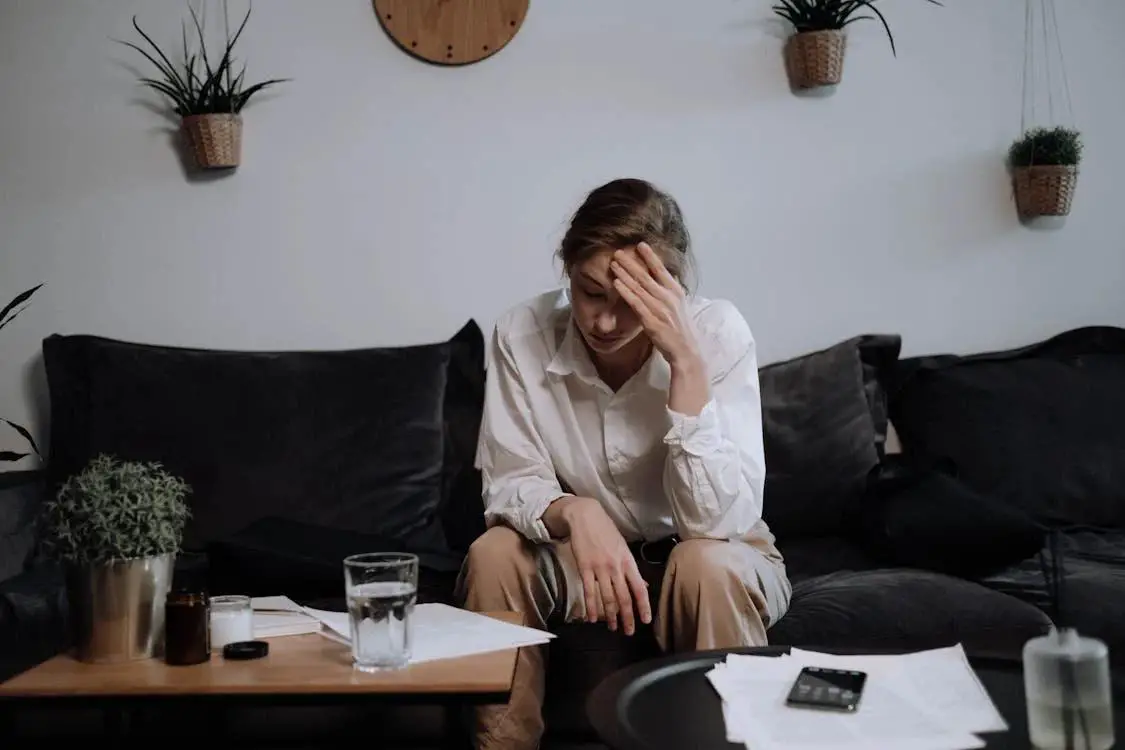
The Day They Tried to Return Me
The car ride was suffocating in its silence. My mother-in-law, Margaret, sat rigid in the driver’s seat, her knuckles white against the steering wheel, her jaw set in that particular way that meant she’d made up her mind about something and nothing would change it. I sat in the passenger seat, my stomach twisting with anxiety, watching the familiar streets of our town pass by the window.
“Where are we going?” I’d asked twice already. Both times, she’d ignored me completely, as if I hadn’t spoken at all, as if I were already invisible to her.
I’d been living with my husband Daniel and his parents for eight months now. Eight months of trying to please people who seemed determined to find fault in everything I did. Eight months of walking on eggshells, of second-guessing every word, every action, every breath. I worked full-time at a local nonprofit organization, helping coordinate community programs. The pay wasn’t much—five hundred dollars a month—but the work was meaningful. Or at least, I thought it was. Margaret had made it abundantly clear on multiple occasions that she considered my job “playing pretend at being productive.”
“A real woman would have a real career,” she’d said just last week over dinner, her eyes boring into me across the table. “Something that actually contributes to the household.”
Daniel had shifted uncomfortably but said nothing. He never said anything when his mother criticized me. He would just look down at his plate, fork frozen halfway to his mouth, waiting for the moment to pass. I’d learned not to expect him to defend me. It hurt less that way.
Now, as Margaret turned onto Oak Street, my heart began to race for a different reason. I recognized these houses. I knew this neighborhood. And when she pulled up in front of number forty-seven, I felt something between disbelief and pure panic flood through my system.
My parents’ house.
“Get out,” Margaret said, her first words to me in the entire twenty-minute drive.
“What? Why are we—”
“I said get out.” Her voice was cold, final.
I fumbled with the seatbelt, my hands shaking. This couldn’t be happening. This couldn’t actually be happening. But Margaret was already out of the car, already marching up the front walkway like a woman on a mission, and I had no choice but to follow, my legs feeling disconnected from my body.
She didn’t knock. She didn’t ring the doorbell. She just stood there on the front step and shouted, loud enough for the neighbors to hear, “Hey! Come out here!”
The front door opened almost immediately. My father, James, stood there in his work clothes—he must have just gotten home from the construction site. His face showed confusion, then concern as his eyes found me standing behind Margaret, tears already starting to blur my vision.
“Oh, can I help you?” he asked, his voice polite but wary. He knew who Margaret was, of course. We’d all had dinner together before the wedding. But this impromptu visit, the shouting, my obvious distress—none of it made sense.
Margaret lifted her chin, and what she said next would echo in my mind for years to come.
“Yes. I’ve come to return your useless daughter.”
The words hung in the air like poison. Return. As if I were a defective appliance. As if I were merchandise that hadn’t met expectations and could simply be brought back to the store for a refund.
For a moment, everything seemed to stop. The birds stopped singing. The wind stopped blowing. Even time itself seemed to pause, holding its breath.
My father’s face underwent a transformation I’d only seen a handful of times in my life—when a contractor had tried to cheat him, when someone had threatened our family, when he’d found out a business partner had been embezzling funds. His welcoming smile vanished as if it had never existed. His eyes, warm just seconds ago, went cold and hard as steel. His entire posture shifted, shoulders squaring, spine straightening, radiating a quiet, controlled fury that was somehow more terrifying than if he’d started yelling.
“What,” he said, his voice dangerously soft, “do you mean by ‘useless’?”
Margaret seemed oblivious to the warning signs. She plowed ahead, actually looking proud of herself, as if she were doing something noble and necessary.
“I mean exactly that. A wife who only makes five hundred dollars a month is defective. She’s not pulling her weight. She’s not contributing to the household in any meaningful way. Frankly, she’s an embarrassment to our family, and we don’t want her anymore. So I’m returning her to you. You raised her—you deal with her.”
The word “defective” hit me like a physical blow. I felt something inside me crumble, felt tears spill hot down my cheeks. I wanted to disappear, to sink into the ground, to cease existing entirely. How had I failed so completely? How had I become such a disappointment that I was literally being returned like a broken toaster?
“Defective,” my father repeated, and there was something in his voice now that made my spine straighten despite my tears. It wasn’t sadness. It wasn’t defeat. It was something else entirely—something that sounded almost like the calm before a storm.
Behind him, I heard movement. My mother, Elena, appeared in the doorway, her face immediately registering concern as she took in the scene: Margaret standing on their front step radiating contempt, me crying behind her, my father’s rigid posture.
“James?” she asked quietly. “What’s going on?”
My father didn’t take his eyes off Margaret. But something passed between my parents in that moment—some wordless communication that I’d seen happen a thousand times throughout my childhood. My mother’s eyes widened slightly. She looked at me, then at Margaret, then back at my father. And then she did something that seemed strange in the moment: she nodded.
Just once. A single, decisive nod.
And my father’s expression hardened even further.
“I understand,” he said, his voice perfectly level, perfectly controlled. “You want us to take responsibility for our daughter. Is that right?”
“Finally, you’re seeing sense,” Margaret said, actually sounding relieved. “Yes, exactly. She’s your problem now, not ours.”
“Then let’s take full responsibility,” my father said. “Let’s close the company.”
The words dropped into the conversation like a bomb. For a moment, no one moved. No one even breathed.
“What?” Margaret blinked rapidly, as if she’d misheard. “What company?”
“Our construction company,” my father said, and his tone was as flat and unyielding as steel. “Harrison & Sons Construction. We’ll close it. Today.”
I felt dizzy. Harrison & Sons was my father’s life’s work. He’d built it from nothing over thirty years, starting with just himself and a truck, growing it into one of the most respected construction firms in three counties. They did everything from residential work to major commercial projects. They employed over fifty people. They were successful, stable, thriving.
And now he was talking about shutting it down?
“Wait,” Margaret said, and for the first time, uncertainty crept into her voice. “You can’t be serious.”
But before my father could respond, another voice cut through the tension.
“What the hell is going on here?”
My father-in-law, Robert, was climbing out of his truck in the driveway, having apparently followed Margaret. He was a stocky man with graying hair and a perpetual scowl, owner of Morrison Electric, a mid-sized electrical contracting business. He strode toward us with the confidence of a man used to being in charge.
“Your wife just returned our daughter,” my father said evenly. “Called her useless and defective. So we’re taking responsibility. We’re shutting down Harrison & Sons Construction.”
Robert stopped in his tracks. His face, already red from the exertion of hurrying over, went pale.
“Hold on,” he said, raising his hands. “You’re joking, right? You can’t just shut down your business. That’s insane.”
“You’re asking us to take responsibility for our daughter,” my father said, taking a deliberate step forward. Each word was measured, controlled, devastating in its calmness. “Well, we raised her. We’re responsible for who she is. And who she is, apparently, is so defective and useless that she deserves to be returned like damaged goods. If we failed that badly as parents, if we created someone so fundamentally flawed, then clearly we have no business running a company either. Clearly our judgment is so poor, our standards so low, that we shouldn’t be trusted with major construction projects. Clearly we should shut everything down.”
“That’s not—” Robert started, but my father cut him off.
“That’s exactly what you’re saying,” my father continued, his voice rising slightly for the first time. “By bringing my daughter back here like this, by treating her like trash, you’re saying we raised someone worthless. So let’s follow that logic to its natural conclusion. If my daughter is worthless, then I’m worthless. My wife is worthless. Our business is worthless. Let’s end it all. Let’s shut down Harrison & Sons Construction today.”
The color was draining from both their faces now. Margaret’s mouth opened and closed, but no sound came out.
My mother spoke for the first time, her voice quiet but clear. “We have several major projects underway. The new hospital wing. The Jefferson Street apartment complex. The renovation of the old courthouse. If we shut down operations, those projects will stop immediately.”
“And,” my father added, his eyes locked on Robert, “that means all our subcontractors lose their contracts too. Including Morrison Electric.”
The silence that followed was absolute.
I’d forgotten. In my misery, in my self-doubt, in all those months of being made to feel small and inadequate, I’d forgotten a crucial fact: Morrison Electric got at least sixty percent of their business from Harrison & Sons Construction. My father’s company was their biggest client by far. It was the foundation of their financial stability, the backbone of their success.
“You wouldn’t dare,” Margaret whispered, but there was no conviction in her voice anymore. The arrogance had melted away, replaced by the first genuine fear I’d ever seen on her face.
“Try me,” my father said quietly, and something in those two words made it absolutely clear that he was not bluffing. This was not a negotiating tactic. This was not a threat meant to scare them. He would actually do it. He would burn his own life’s work to the ground before he let his daughter be treated this way.
My mother moved then, stepping forward to take my hand. Her grip was firm, warm, anchoring me to reality when everything felt like it was spinning out of control.
“Come inside, sweetheart,” she said softly, tugging me gently toward the door.
But I couldn’t move. I was frozen, watching this scene unfold, watching my father face down my in-laws with nothing but the force of his will and the weight of his words.
“James,” Robert said, and his voice was different now—smaller, almost pleading. “Let’s not be hasty. Surely we can talk about this reasonably.”
“Reasonable?” my father repeated. “Was it reasonable to call my daughter defective? Was it reasonable to drive her to my house and announce you were returning her? Was it reasonable to treat her like an object you could discard when she didn’t meet your arbitrary standards?”
“She doesn’t contribute anything!” Margaret burst out, her fear making her defensive. “Five hundred dollars a month! That’s nothing! That’s not a real job! She spends her days at that ridiculous nonprofit doing God knows what, pretending to have a career, when she should be—”
“Should be what?” my father interrupted, his voice sharp as a knife. “Should be what, exactly? Barefoot and pregnant? Staying home to serve your son hand and foot? Working whatever job you deem acceptable? Tell me, Margaret, what would make my daughter worthy in your eyes?”
Margaret sputtered, but no coherent answer came out.
“My daughter,” my father continued, “has a degree in social work. She coordinates programs that feed hungry children. She helps families find housing. She connects struggling parents with resources they need to survive. She makes five hundred dollars a month because she chose to work in the nonprofit sector, where the pay is low but the impact is real. She chose meaning over money. She chose to help people over helping herself. And you call that useless?”
I’d never heard my father sound so angry and so proud at the same time. Tears were streaming down my face, but they felt different now—not tears of shame but tears of something else, something that felt like relief, like vindication, like love.
“But—” Robert tried again.
“But nothing,” my father cut him off. “Here’s what’s going to happen. You’re going to get back in your cars. You’re going to go home. And you’re going to think very carefully about the consequences of your actions. Because right now, I’m giving you a choice. You can apologize to my daughter—genuinely apologize, not some half-hearted excuse—and commit to treating her with the respect she deserves. Or I can make a phone call to my lawyer right now and start the process of dissolving Harrison & Sons Construction.”
“You’re bluffing,” Margaret said, but her voice shook.
My father pulled out his phone. He scrolled through his contacts, found a name, and held his finger over the call button. “Am I?”
“Dad—” I started to say, finding my voice for the first time. “Dad, you don’t have to—”
“Yes,” he said firmly, looking at me, “I do. Because you’re my daughter. Because I brought you into this world and promised to protect you. Because no one—no one—gets to treat you like garbage and face no consequences.”
He turned back to Margaret and Robert. “So what’s it going to be? An apology and a change? Or do I make this call?”
The silence stretched out. Seconds felt like hours. Margaret and Robert looked at each other, some frantic silent communication passing between them. Robert’s face was red now, whether from anger or embarrassment or fear, I couldn’t tell. Margaret’s hands were trembling.
Finally, Robert spoke, his voice rough. “This is extortion.”
“No,” my mother said calmly, still holding my hand. “This is consequences. You don’t get to abuse people without repercussions. You don’t get to treat our daughter like trash and then walk away as if nothing happened. This is us showing you that actions matter. That words matter. That cruelty has a price.”
“I—” Margaret started, then stopped. She looked at me, really looked at me, for what felt like the first time in months. I saw something in her expression I hadn’t seen before—not respect exactly, but maybe the first glimmer of recognition that I was a real person with real feelings, not just an object to be evaluated based on my utility.
“I’m sorry,” she said, and the words sounded like they were being dragged out of her against her will.
“Sorry for what?” my father pressed. “Be specific.”
Margaret flinched. “I’m sorry for calling you useless. And defective.”
“And for trying to return her like damaged merchandise,” my father added, his tone making it clear this wasn’t optional.
“And for that,” Margaret mumbled.
“Look at her when you say it,” my mother commanded quietly. “Not at us. At her.”
Margaret’s eyes found mine. Up close, I could see she’d been crying—her mascara was slightly smudged, and her eyes were red-rimmed. How long had she been crying? Had it started before she came here, or after my father’s threat?
“I’m sorry,” she said again, this time directly to me. “I was wrong to say those things. I was wrong to bring you here like this.”
It wasn’t a good apology. It wasn’t heartfelt or genuine. But it was something. It was acknowledgment. It was, at the very least, a crack in the armor of her certainty that she’d been right to treat me the way she had.
“And?” my father prompted.
“And I won’t do it again,” Margaret added quickly.
My father held her gaze for a long moment, then nodded slowly. He didn’t put his phone away, though. He kept it in his hand, the threat still present, still real.
“Robert,” my father said, turning his attention to my father-in-law. “Do you have something to say?”
Robert’s jaw worked, grinding his teeth. He was clearly furious at being put in this position, at being forced to back down. But he was also clearly aware of exactly how much he had to lose.
“Your daughter is welcome in our home,” he said stiffly. “We won’t treat her this way again.”
“That’s not good enough,” my mother said sharply. “Try again. With actual sincerity this time.”
Robert’s face turned an even deeper shade of red. For a moment, I thought he might explode, might start yelling, might escalate this whole situation into something even worse. But then his shoulders sagged slightly, and when he spoke again, his voice was quieter.
“I apologize for my wife’s behavior. And for not stopping it. Your daughter doesn’t deserve to be treated like that. No one does.”
It still wasn’t great, but it was better. It was, at least, an acknowledgment of wrongdoing.
My father looked at me. “What do you think, sweetheart? Is this acceptable?”
The question surprised me. He was giving me power in this situation, making it clear that my voice mattered, that my opinion was important. It was such a stark contrast to the last eight months of having my thoughts and feelings dismissed at every turn that I almost started crying again.
“I—” I swallowed hard. “I think we need to have a longer conversation about this. All of us. Including Daniel. But this is a start.”
My father nodded. “Fair enough.” He looked back at my in-laws. “You heard her. There will be a family meeting. Daniel will be present. And we’re going to establish some ground rules for how my daughter is treated going forward. If those rules are broken, this conversation will happen again—except next time, I won’t give you a choice. I’ll just make the call. Are we clear?”
“Crystal,” Robert muttered.
“Margaret?” my father pressed.
“Yes,” she said quickly. “Yes, we’re clear.”
“Good.” My father finally, finally put his phone back in his pocket. “Now get off my property.”
They didn’t need to be told twice. Margaret practically ran back to her car, Robert following close behind. Within seconds, they were driving away, and I was left standing on my parents’ front step, my hand still clasped in my mother’s, my father standing guard like a sentinel.
The moment their cars disappeared around the corner, my knees gave out. I would have collapsed if my mother hadn’t been holding me up, if my father hadn’t immediately stepped forward to catch my other arm.
“I’ve got you,” he said softly. “We’ve got you.”
And I broke down completely, all the fear and shame and pain of the last eight months pouring out in great, gasping sobs. My parents held me between them, not saying anything, just being there, being solid and steady and unwavering.
When I could finally breathe again, when the crying had subsided to hiccups and sniffles, my mother guided me inside. My father locked the door behind us—a symbolic gesture, maybe, but it made me feel safe. Protected.
We sat in the living room, me curled up on the couch between my parents like I was a child again. My mother brought me tea. My father kept one arm around my shoulders, anchoring me.
“Did you mean it?” I finally asked, my voice hoarse from crying. “Would you really have closed the company?”
My father looked at me, and his eyes were completely serious. “In a heartbeat.”
“But it’s your life’s work. It’s everything you’ve built. I couldn’t ask you to—”
“You didn’t ask,” he interrupted gently. “And sweetheart, listen to me very carefully. The company is important. I’m proud of what we’ve built. But it’s just a business. It’s just money and contracts and construction projects. You’re my daughter. You’re not just important—you’re irreplaceable. I can rebuild a company. I can start over, find new clients, hire new people. But I only have one you. And I will never, ever let anyone treat you as disposable. Do you understand?”
Fresh tears spilled down my cheeks, but I nodded.
“Your father and I have been worried about you for months,” my mother said softly, stroking my hair. “We could see you weren’t happy. We could see you were struggling. But we didn’t want to interfere, didn’t want to make things harder for you by pushing.”
“I thought I was doing okay,” I whispered. “I thought if I just tried harder, if I could just figure out what they wanted from me, it would get better.”
“Oh, honey,” my mother said, and there was such sadness in her voice. “It was never about what you did or didn’t do. Some people are just determined to be cruel. Some people need someone to look down on to feel good about themselves. That’s not your fault. That’s not your failing. That’s theirs.”
We sat there for a long time, the three of us, processing what had just happened. Eventually, my father called Daniel. I could only hear one side of the conversation, but it was clear my husband was shocked, apologetic, and—I hoped—finally understanding the severity of the situation.
“He’s coming over,” my father said when he hung up. “He says his parents called him already, crying. He wants to talk to you.”
“I don’t know if I’m ready,” I admitted.
“You don’t have to be ready,” my mother assured me. “You don’t have to do anything you’re not comfortable with. But I think you should hear what he has to say. And then you can decide what you want to do next.”
Daniel arrived twenty minutes later. He looked terrible—his hair was disheveled, his eyes red, his shirt wrinkled as if he’d been clutching at it. He stood in my parents’ doorway looking lost and ashamed and young in a way I’d never seen before.
“Can I talk to her?” he asked my father, his voice barely above a whisper.
My father looked at me. Again, giving me the choice. I nodded.
We went to my old bedroom, the one I’d grown up in, that still had posters on the walls and books on the shelves from my teenage years. It felt strange to be there with Daniel, to bring my married life back into this space that represented who I’d been before.
“I’m so sorry,” he said immediately, the words tumbling out. “God, I’m so sorry. I should have stopped her. I should have defended you months ago. I should have stood up to them, drawn boundaries, made it clear that you’re my wife and my priority. I’ve been a coward. I’ve been weak. And you’ve paid the price for it.”
I wanted to argue with him, to make excuses for him, to do what I’d been doing for months—smoothing things over, minimizing the hurt, taking on the responsibility for everyone else’s feelings. But I was too tired. I was too wrung out. And maybe, for the first time, I was too angry.
“Yes,” I said simply. “You should have.”
He flinched as if I’d hit him. “I know. You’re right. I have no excuse.”
“Why didn’t you?” I asked, and I was surprised by how calm my voice sounded. “Why didn’t you ever defend me? Why did you just sit there and let your mother tear me apart over and over again?”
Daniel sat down on the edge of my old bed, his shoulders slumping. “Because I’m used to it,” he said quietly. “I’ve been dealing with her criticism my whole life. Her judgment, her impossible standards, her need to control everything. And I learned early on that it was easier to just keep your head down and wait for it to pass. I learned to become invisible, to not make waves, to survive by not engaging. And when you came into the picture, and she started doing the same thing to you… I just defaulted to that same survival mode. I know that’s not good enough. I know that’s not how a husband should act. But it’s the truth.”
I absorbed that, turning it over in my mind. It made sense, in a sad way. It didn’t excuse what he’d done—or rather, what he’d failed to do—but it helped me understand it.
“Your dad scared the hell out of my parents today,” Daniel said, and there was something like awe in his voice. “I’ve never seen them back down from anything. Ever. But he made them see consequences. Real consequences. He made them understand that they can’t just treat people however they want and expect no repercussions.”
“He shouldn’t have had to,” I said. “You should have done that. Or at the very least, you should have protected me from it.”
“I know. You’re absolutely right.” Daniel ran his hands through his hair, making it stand up even more. “I want to make this right. I want to be the husband you deserve. But I don’t even know where to start.”
We talked for over an hour. It was the most honest conversation we’d had since before we got married—maybe the most honest conversation we’d ever had. Daniel admitted things I’d suspected but he’d never confirmed: that he felt trapped between his wife and his parents, that he resented being forced to choose, that he’d hoped if he just waited long enough the problem would somehow resolve itself. I admitted things too: that I’d been miserable, that I’d felt alone and unsupported, that I’d started to wonder if our marriage was a mistake.
“I don’t want to give up on us,” Daniel said finally. “But I understand if you do. I understand if this is too much, if I’ve failed you too badly to come back from. Whatever you decide, I’ll respect it.”
I thought about that. About the last eight months. About the man I’d married and the man he’d become under his parents’ roof. About whether people could really change, or if patterns set in childhood were too deep to break.
“I don’t know what I want yet,” I admitted. “I need time. I need space to think. And I need to see real change, not just promises. Your parents apologized today, but it wasn’t genuine. It was forced. It was self-preservation. If we’re going to make this work, I need to see actual respect. Actual effort. From them and from you.”
“What do you need from me right now?” Daniel asked. “Specifically.”
“I need you to find us our own place to live,” I said immediately. “I’m not going back to your parents’ house. I can’t live there anymore. Even if things improve, even if they follow through on treating me better, I can’t be under their roof. It’s too much. I need our own space, where we can build our own life without them watching and judging and controlling everything.”
“Done,” Daniel said without hesitation. “I’ll start looking tomorrow. We’ll find an apartment, a rental house, whatever you want. And we’ll move out as soon as possible.”
“And I need you to go to couples counseling with me,” I continued. “We have things to work through. Communication issues. Boundary issues. All of it. I can’t do this alone anymore.”
“Yes. Absolutely. Whatever you need.”
“And I need you to stand up to your mother. The next time she says something cruel or dismissive or belittling to me, I need you to shut it down immediately. I need you to be my partner, not a bystander.”
“I will. I promise you, I will.” Daniel’s eyes were bright with unshed tears. “I’m sorry it took something this extreme for me to wake up. I’m sorry your father had to be the one to defend you when it should have been me. But I’m awake now. I see what I’ve been doing—and not doing. And I want to be better. I want to be the man you thought you were marrying.”
I nodded slowly. It was a start. It wasn’t everything—words were easy, and actions would be the real test—but it was a start.
We emerged from my bedroom to find my parents in the kitchen, quietly talking. They looked up when we entered, their faces questioning.
“We’re going to try to work things out,” I said. “But we’re moving out of Daniel’s parents’ house. And we’re going to counseling. And there are going to be a lot of changes.”
My mother smiled, but it was a cautious smile. “I’m glad you’re trying. But remember, sweetheart, trying isn’t the same as succeeding. You don’t owe anyone—not Daniel, not his parents, not even us—a relationship that makes you miserable. If it doesn’t get better, if they don’t follow through, you can always come home. There’s no shame in that.”
“Your mother’s right,” my father added. “The door is always open. Always. And the offer to close the company still stands if anyone treats you poorly again. That wasn’t a bluff. That was a promise.”
I hugged them both, feeling more loved and protected than I had in months.
Over the next few weeks, things slowly began to change. Daniel found us a small apartment across town—modest but ours, a space where we could establish our own rules and routines without interference. We started couples counseling, which was uncomfortable and emotional but necessary. And true to his word, Daniel began standing up to his parents.
The first time it happened, we were having dinner at their house—a tense, awkward affair where everyone was being overly polite. Margaret made a comment about my “little charity work,” her tone dripping with condescension.
And Daniel, my Daniel who had sat silent through eight months of abuse, put down his fork and said firmly, “Mom, that’s disrespectful. Anna’s work is important and meaningful. If you can’t speak about it respectfully, don’t speak about it at all.”
The silence that followed was deafening. Margaret’s mouth fell open. Robert’s eyes went wide. And I felt something in my chest loosen, just slightly—a tiny knot of tension unwinding.
It wasn’t perfect. There were setbacks and struggles. Margaret’s apology may have been forced, but over time, as she realized the consequences of her actions were real and lasting, her behavior genuinely began to change. She started asking about my work with actual curiosity rather than contempt. She stopped making comments about money. She was never warm exactly, but she became… tolerable. Civil. Sometimes even kind.
Robert remained distant, uncomfortable with the whole situation, but he no longer participated in the cruelty. That was something.
My father never closed his company. But the threat remained, an unspoken reminder that actions had consequences, that my parents would always, always choose me over money or business relationships or social harmony.
Six months after that terrible day, Daniel and I were sitting in our small apartment, eating takeout on our secondhand couch, and I realized something: I was happy. Not perfectly happy—we still had issues to work through, still had days when old patterns threatened to resurface—but genuinely, honestly happy in a way I hadn’t been since before the wedding.
“Thank you,” I said suddenly.
Daniel looked up from his food. “For what?”
“For fighting for us. For changing. For becoming the partner I needed.”
He smiled, but it was tinged with sadness. “I’m sorry I didn’t do it sooner. I’m sorry your father had to be the one to show me how.”
“He taught us both something that day,” I said. “About standing up for people you love. About consequences. About not letting cruelty go unchallenged.”
“Your dad is pretty terrifying when he wants to be,” Daniel said, but there was admiration in his voice.
I laughed. “He is. But he’s also the kindest man I know. He would have actually done it, you know. He would have closed the company. Walked away from everything he’d built. For me.”
“I know. That’s what made it so effective. Your parents weren’t bluffing. They were willing to sacrifice everything to protect you. That’s…” he paused, searching for words. “That’s real love. That’s the kind of love I want to give you. The kind where you’re always the priority, no matter what.”
We finished our dinner in comfortable silence, and I thought about that day. About standing on my parents’ doorstep feeling worthless and disposable. About my father’s quiet fury. About the moment when everything changed, when the balance of power shifted completely.
They’d thought I was weak because I was kind. They’d thought I was worthless because I chose meaning over money. They’d thought they could treat me however they wanted because I had no power, no support, no recourse.
They’d been wrong.
They’d picked a fight with the wrong family. They’d underestimated the strength of people who built their lives on integrity rather than wealth. They’d learned, in the hardest way possible, that true power doesn’t come from money or status—it comes from knowing your own worth and having people who will fight for you when you can’t fight for yourself.
I was never returned. I never needed to be. Because I was never useless or defective to begin with. I was exactly who I was supposed to be, doing exactly what I was meant to do, loved exactly as I deserved to be loved.
And anyone who couldn’t see that learned to keep their opinions to themselves—or face the consequences.
My father taught them that lesson. And it was one they never forgot.
THE END

Ethan Blake is a skilled Creative Content Specialist with a talent for crafting engaging and thought-provoking narratives. With a strong background in storytelling and digital content creation, Ethan brings a unique perspective to his role at TheArchivists, where he curates and produces captivating content for a global audience.
Ethan holds a degree in Communications from Zurich University, where he developed his expertise in storytelling, media strategy, and audience engagement. Known for his ability to blend creativity with analytical precision, he excels at creating content that not only entertains but also connects deeply with readers.
At TheArchivists, Ethan specializes in uncovering compelling stories that reflect a wide range of human experiences. His work is celebrated for its authenticity, creativity, and ability to spark meaningful conversations, earning him recognition among peers and readers alike.
Passionate about the art of storytelling, Ethan enjoys exploring themes of culture, history, and personal growth, aiming to inspire and inform with every piece he creates. Dedicated to making a lasting impact, Ethan continues to push boundaries in the ever-evolving world of digital content.