THE INHERITANCE
The air in the conference room was thick with expensive perfume and quiet triumph. Outside the floor-to-ceiling windows, Atlanta sprawled beneath us like a glittering promise, all steel and glass catching the late afternoon sun. Inside, my family was performing their favorite act: pretending I didn’t exist while simultaneously ensuring I knew exactly how little I mattered.
I sat perfectly still in my chair, hands folded in my lap, watching a scene I’d witnessed in various forms my entire life. My mother’s pearl earrings caught the light as she turned her head, her mouth curved in that particular smile she reserved for moments when she felt most powerful. My father stood behind my sister, one hand on her shoulder like a proud patriarch in an oil painting. And Ania—beautiful, brilliant Ania—was doing what she did best: documenting her victory for an audience of thousands who would never know the full story.
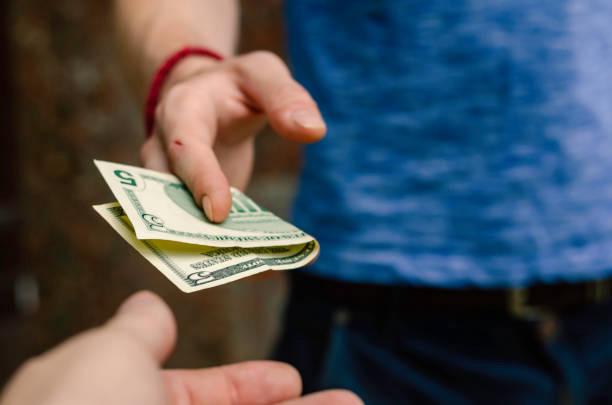
The five-dollar bill sat between us on the mahogany table. Crisp. Deliberate. A final punctuation mark on twenty-eight years of disappointment.
I didn’t reach for it.
The conference room of Bradshaw & Associates occupied the forty-second floor of one of Buckhead’s most prestigious buildings. The kind of place where million-dollar deals were made over scotch and handshakes, where the leather chairs cost more than most people’s monthly rent, where even the air seemed to smell like success. My parents loved it here. They’d been clients for fifteen years, ever since my father’s commercial real estate business had taken off and transformed us from comfortable to wealthy.
Or rather, transformed them.
I’d never quite made the transition.
“She deserves it,” my father was saying, his voice carrying that booming quality he used when he wanted everyone in earshot to hear him. His hand squeezed Ania’s shoulder. “She knows how to make money. Unlike some people in this family.”
Some people. He didn’t need to say my name. Everyone in the room knew who he meant.
Ania’s husband Marcus sat beside her, his Rolex glinting as he reached for his own phone to capture the moment. He’d been part of the family for three years now, ever since he and Ania had met at some charity gala in Midtown. He was exactly what my parents had always wanted: successful, connected, ambitious. Everything I wasn’t.
“Eighteen million,” my mother said, her voice dripping with satisfaction. She turned to look at me for the first time since we’d sat down. “That’s what happens when you apply yourself, dear. When you make something of your life instead of wasting it on…” She waved her hand dismissively. “Whatever it is you do.”
“I work at the High Museum,” I said quietly. Not that it mattered. Not that it ever had.
“Yes, well.” My mother’s smile didn’t reach her eyes. “Perhaps now you can buy yourself something nice. A new wardrobe, maybe. God knows you could use one.”
I looked down at my clothes—a simple black dress I’d bought at Target three years ago, comfortable flats that were practical for standing in museum galleries all day. Compared to Ania’s designer suit and my mother’s Chanel ensemble, I probably looked like I’d wandered in from a different tax bracket entirely.
Which, I suppose, I had.
Mr. Bradshaw sat at the head of the table, watching us with an expression that could have been amusement or pity or both. He was in his late sixties, with silver hair and the kind of face that had seen every possible variation of family drama. His firm had handled my parents’ estate planning for years, and he’d witnessed more than one uncomfortable family meeting in this very room.
But today, something was different.
I’d noticed it the moment I walked in. The way his eyes had flickered to me, held for just a beat longer than necessary. The way he’d arranged his papers with unusual care, as if setting a stage. The way he’d smiled—not his usual professional smile, but something deeper, something almost conspiratorial.
My parents hadn’t noticed. They were too busy celebrating.
“To Ania,” my father said, raising an imaginary glass. “And to the future of this family’s legacy.”
Marcus raised his phone, still recording. “This is incredible,” he said, his Wall Street polish showing through every word. “With proper investment strategies, we could turn this eighteen million into—”
“Thirty by the time we’re fifty,” Ania finished, grinning at him. They’d always been like this, finishing each other’s sentences about money and success and the beautiful life they were building together.
My mother stood, smoothing her skirt. “Well, I think that concludes our business here.” She picked up her Hermès bag. “Bradshaw, thank you as always. You have our gratitude.”
“Actually,” Mr. Bradshaw said, his voice cutting through the celebration like a knife through silk. “We’re not quite finished.”
Everyone froze.
My father’s smile faltered. “What do you mean? We’ve distributed the estate according to our wishes. Ania receives the trust, as we specified. We’ve covered all the—”
“Your estate, yes.” Bradshaw reached into his briefcase with deliberate slowness. “But there’s another matter to address.”
The temperature in the room seemed to drop ten degrees.
He withdrew an envelope—not the crisp white legal envelopes we’d been dealing with all afternoon, but something older. Yellowed with age, sealed with dark red wax that had cracked along the edges. The paper itself looked fragile, as if it had been carefully preserved for years.
“This,” Bradshaw said, placing it on the table with the reverence one might give a historical artifact, “is the last will and testament of Theodore Carrington Johnson.”
My grandfather’s name hung in the air like a ghost.
My mother’s face went pale. “That’s… that’s not possible. My father died seven years ago. His estate was settled. We handled everything through probate, we—”
“You handled his immediate assets,” Bradshaw interrupted gently. “The house in Virginia Highlands, the modest savings account, the car. What you didn’t know—what he specifically instructed me not to reveal until today—was that he had established a separate estate. One that was not to be disclosed until specific conditions were met.”
“What conditions?” my father demanded.
Bradshaw’s eyes found mine across the table. And suddenly, I understood why he’d been watching me. Why he’d worn that knowing smile.
“The first condition,” he said, “was that this will was to be read on the day that his daughter and son-in-law—” he nodded toward my parents “—distributed their own estate to their children.”
My heart started pounding.
“The second condition was that all family members had to be present. All of them. Including—” his gaze settled on me “—his granddaughter Caroline.”
My name sounded strange in the formal setting. I’d been invisible for so long that hearing myself acknowledged felt almost surreal.
Ania lowered her phone. For the first time since I’d arrived, she was looking at me with something other than dismissive pity.
“I don’t understand,” my mother said, but her voice had lost its confident edge. She was gripping the back of her chair, knuckles white.
“Your father,” Bradshaw said, “was a very deliberate man. He came to me twelve years ago—five years before his death—with very specific instructions.” He tapped the envelope. “He wanted to ensure that his true wishes would not be discovered until after he was gone. Until after he could see—” he paused “—how his family would treat each other without his presence to moderate their behavior.”
The words fell like stones into still water, ripples spreading outward.
My father made a sound somewhere between a laugh and a cough. “This is ridiculous. Theodore didn’t have any money. He lived in that tiny bungalow. He drove a fifteen-year-old Honda. He was a retired high school history teacher, for God’s sake.”
“Yes,” Bradshaw agreed. “That’s what he wanted everyone to believe.”
He broke the wax seal.
The sound—sharp, final—echoed in the silent room.
“Theodore Carrington Johnson,” Bradshaw began, reading from papers that looked as old as the envelope itself, “being of sound mind and body, do hereby make this my last will and testament, superseding all previous documents and declarations.”
My mother sat down heavily.
Bradshaw continued: “I have lived a simple life by choice, not by necessity. For thirty-five years, I invested carefully in the stock market, following the principles I learned from my own father during the Depression. I bought when others sold. I held when others panicked. I lived modestly and let compound interest work its magic.”
“No,” my mother whispered. “No, that’s not… he never said…”
“At the time of his death,” Bradshaw read, his voice steady and clear, “Theodore Johnson’s investment portfolio was valued at approximately forty-two million dollars.”
The silence that followed was absolute.
Forty-two million.
My grandfather—who had lived in a house smaller than my parents’ garage, who had clipped coupons and worn the same cardigan for twenty years, who had taught me to appreciate museum visits and library books and the simple pleasure of a Sunday afternoon walk—had been worth forty-two million dollars.
And none of us had known.
“That’s…” Marcus was doing calculations in his head, his financial analyst brain unable to stop itself. “That’s impossible. The compound growth rate would have had to be—”
“Eighteen percent annually,” Bradshaw said. “Which is exactly what Theodore achieved through a combination of careful stock selection, strategic reinvestment of dividends, and remarkable patience.”
My father found his voice. “Well then. Obviously that money comes to us. To his daughter. That’s how inheritance works.”
Bradshaw looked at him with something approaching pity.
“Actually,” he said, “Theodore was very specific about who should inherit his estate.” He turned the page. “I quote: ‘I have watched my daughter become someone I no longer recognize. I have watched my son-in-law build an empire of wealth while losing sight of every value I tried to teach. And I have watched them raise two granddaughters, treating one like a princess and the other like a burden.'”
The words hit like physical blows. My mother made a small sound of protest.
“‘I have watched Caroline,'” Bradshaw continued, “‘my youngest granddaughter, be overlooked, dismissed, and diminished by people who should have cherished her. I have watched her develop a love for art and history and knowledge—the things I valued most—while being told she was wasting her life. I have watched her choose meaning over money, and for this, her own family has treated her as a failure.'”
Tears were streaming down my face now, but I couldn’t look away.
“‘Therefore,'” Bradshaw read, “‘I leave the entirety of my estate—all assets, investments, properties, and holdings—to my granddaughter Caroline Elizabeth Johnson. It is my sincere hope that she will use this inheritance not to prove her worth to a family that never saw it, but to live a life true to her own values. To continue pursuing beauty and meaning. To never let anyone make her feel small again.'”
The room spun.
Forty-two million dollars.
To me.
“Furthermore,” Bradshaw continued, and I realized with shock that he wasn’t finished, “Theodore established a separate trust of five million dollars specifically for his daughter—” he nodded toward my mother “—with the following condition: it can only be accessed if she personally apologizes to Caroline and acknowledges the harm she has caused. This apology must be witnessed and deemed sincere by an independent arbiter—in this case, myself.”
My mother’s face had gone from pale to crimson. “This is… this is extortion. This is—”
“This is your father’s final wish,” Bradshaw said calmly. “And it is legally binding.”
He set down the will and picked up another document. “There’s one more thing. Theodore purchased a property in 1998—a building in Virginia Highlands, which he rented to various tenants over the years. He instructed that this property be given to Caroline immediately, separate from the rest of the estate.” He slid a set of keys across the table toward me. “It’s yours. Free and clear.”
I stared at the keys. They were old, brass, worn smooth from use.
“What building?” I whispered.
Bradshaw smiled. “The building that currently houses the Cornerstone Gallery. The art gallery where you’ve been volunteering every weekend for the past three years.”
My breath caught.
The Cornerstone Gallery. The small, struggling art space where I’d spent countless hours helping with exhibitions, where I’d met artists and dreamers and people who understood that some things mattered more than money. The place that was always on the verge of closing because the owners couldn’t quite make rent.
“Your grandfather purchased it specifically because he knew you loved it there,” Bradshaw said gently. “He wanted you to have a place where art and meaning could thrive without the constant pressure of profit margins.”
Ania stood up abruptly, her chair scraping against the floor. “This is insane. She doesn’t deserve—”
“Deserve?” The word came out sharper than I intended. I looked at my sister—beautiful, successful Ania, who had received everything she’d ever wanted and still couldn’t stand to see me get anything. “What have you ever done to deserve your inheritance, Ania? You were born first. You were born pretty. You were born with the ability to smile and charm and tell people what they want to hear. Is that deserving?”
“I worked hard,” she shot back. “I built a career, I—”
“You had every advantage handed to you,” I said, standing to face her. “The best schools. The connections. The opportunities. Mom and Dad’s unconditional support. You never had to prove yourself because they already believed in you.”
“And you never proved yourself because you were too busy feeling sorry for yourself!” Ania’s voice rose. “You could have done anything, Caroline. Anything! But you chose to work at a museum for thirty thousand a year. You chose to volunteer at a failing gallery. You chose to live in that tiny apartment and act like suffering made you noble.”
“I chose to do work that mattered to me,” I said quietly. “I chose to value things that couldn’t be measured in dollars. And for that, you all treated me like I was worthless.”
“We gave you opportunities,” my father said, his voice hard. “Opportunities you threw away.”
“You gave me opportunities to become like you,” I corrected. “To work in real estate. To marry someone wealthy. To measure my success by my bank account. And when I said no, when I chose a different path, you decided I was a failure.”
My mother stood, her whole body rigid with fury. “We are your parents. We raised you. We—”
“You raised Ania,” I interrupted. “I was just there. An afterthought. A disappointment. The daughter who didn’t fit the mold.”
“That’s not true,” my mother said, but her voice wavered.
“Isn’t it?” I picked up the five-dollar bill, held it up. “This was your final message to me. Even today, even at your own will reading, you couldn’t resist one last insult. One last reminder that I don’t measure up.”
Mr. Bradshaw cleared his throat. “If I may interject—Caroline, you don’t need to respond to any of this right now. The inheritance is yours regardless. Theodore’s instructions were clear. What your family thinks or feels about his decision is irrelevant, legally speaking.”
But I wasn’t done.
I turned to my mother, who stood frozen beside her expensive chair, her perfect makeup beginning to crack around her eyes.
“Do you want to know what Grandpa Ted used to tell me?” I asked softly. “When I was little, and you and Dad would ignore me at family dinners because I didn’t have anything impressive to report?”
She didn’t answer.
“He used to take me to his study. And he’d show me his books—first editions, some of them. Philosophy. History. Art. He’d tell me that the people who changed the world weren’t always the ones who made the most money. They were the ones who saw beauty in places others overlooked. Who asked questions nobody else thought to ask. Who valued knowledge for its own sake.”
My voice broke slightly.
“He told me I was exactly like him. That I had a gift for seeing meaning where others just saw price tags. And he promised me—” tears were streaming down my face now “—he promised me that one day, I’d understand that being different from this family wasn’t a flaw. It was a strength.”
The room was silent except for the soft hum of the air conditioning and the distant sound of Atlanta traffic forty-two floors below.
“He saw you,” Bradshaw said quietly. “Theodore saw exactly who you were, and he loved you for it. That’s why he did this. Not to punish anyone else, but to give you the freedom to be fully yourself.”
I looked at the keys in my hand. The building. The gallery. The forty-two million dollars that represented thirty-five years of patience and careful choices and quiet rebellion against the idea that wealth had to be displayed to have value.
My grandfather had given me more than money.
He’d given me validation. Vindication. The final proof that I hadn’t been crazy or naive or foolish to choose meaning over materialism.
He’d seen me when no one else would.
And he’d made sure I knew it.
Marcus was the first to speak, his voice carefully controlled. “I think we should contest this will. There are grounds—undue influence, mental incompetence, unclear language—”
“Feel free to try,” Bradshaw said coolly. “Theodore anticipated that possibility. He had three independent psychological evaluations performed in the year before his death, all confirming his complete mental competence. He had the will reviewed by two other law firms. He has video testimony explaining his reasoning. And he established an iron-clad legal trust structure that has been examined and approved by the Georgia probate courts.” He smiled thinly. “I assure you, any attempt to contest this will would be extraordinarily expensive and completely futile.”
My father slumped in his chair, the fight draining out of him.
My mother stared at me, her expression unreadable. Was it anger? Shock? Some long-buried feeling of shame?
“Mom,” I said softly. “He left you five million dollars. All you have to do is apologize.”
She flinched as if I’d struck her.
“I don’t…” She stopped, swallowed hard. “I don’t know how.”
The admission hung in the air—raw, honest, more vulnerable than I’d ever heard her sound.
“I don’t know how to apologize,” she said again, her voice breaking. “Because that would mean admitting I was wrong. About you. About everything. And I don’t…” She looked at me, really looked at me, perhaps for the first time in years. “I don’t know how to be wrong about this.”
Something in my chest cracked open.
“You made me feel invisible,” I whispered. “My whole life, you made me feel like I didn’t matter because I didn’t want what you wanted. Because I didn’t measure success the way you did. You have two daughters, Mom. But you only ever saw one.”
A tear rolled down her cheek, cutting through her carefully applied foundation.
“I thought I was helping you,” she said. “I thought if I pushed you hard enough, you’d become… successful. Like Ania. Like your father. I thought I was teaching you to survive in the real world.”
“You were teaching me that love is conditional,” I said. “That I had to earn your approval by becoming someone I’m not.”
“I’m sorry,” she whispered.
The words were so quiet I almost didn’t hear them.
“What?”
“I’m sorry.” Louder now, tears streaming down her face. “I’m so sorry, Caroline. I didn’t see you. I should have seen you. Your father and I, we… we got so caught up in our own definition of success that we couldn’t see any other way. And we hurt you. God, we hurt you so badly.”
She took a step toward me, then stopped, uncertain.
“I don’t expect you to forgive me,” she continued. “I don’t deserve it. But I need you to know—I’m sorry. For all of it. For every dismissive comment, every disappointed look, every time I made you feel like you weren’t enough. You are enough. You always were.”
Bradshaw was watching us carefully, his pen poised over his legal pad.
“Is this sincere?” he asked me gently. “Or would you like time to consider—”
“It’s sincere,” I said, my voice thick with emotion. “I can tell.”
My mother let out a sob and covered her face with her hands.
Ania stood frozen, watching our mother cry, perhaps processing her own role in all of this. Marcus had put away his phone.
My father sat with his head in his hands.
The family that had walked into this conference room an hour ago—confident, united in their judgment of me—had shattered like glass.
“The five million will be released to your mother,” Bradshaw said, making a note. “And Caroline, you have full access to Theodore’s estate. I’ll need you to come by the office later this week to sign some additional paperwork, but legally, it’s yours.”
I nodded, unable to speak.
“There’s one more thing,” Bradshaw added, reaching into his briefcase one final time. He pulled out a letter—not yellowed like the will, but crisp and white, with my name written on it in my grandfather’s familiar handwriting.
“He wrote this six months before he died,” Bradshaw explained. “He wanted you to have it after the will was read.”
My hands trembled as I took it.
I didn’t open it there, in front of everyone. Some things were meant to be private.
But I could feel the weight of it—not physical weight, but emotional weight. My grandfather’s final words to me, preserved across seven years of silence.
“I think,” Bradshaw said carefully, “we’re finished here.”
I stood, gathering my things. The keys to the gallery building. The letter from my grandfather. And yes, even the five-dollar bill—not as a reminder of my family’s cruelty, but as proof of how far I’d come from that moment.
At the door, I paused and turned back.
My family sat around the conference table like survivors of a natural disaster, trying to process what had just happened. Ania was holding my mother, who was still crying. My father stared at the table. Marcus looked like he was calculating losses in his head.
“For what it’s worth,” I said quietly, “I hope the eighteen million makes you happy, Ania. I really do. I hope you invest it wisely and build the life you want. I hope it gives you everything you’re looking for.”
She looked up at me, her eyes red.
“And Mom, Dad—I hope you figure out what actually matters. Before it’s too late.”
I walked out of Bradshaw & Associates and into the Atlanta afternoon, the sun warm on my face, the city sprawling before me like a canvas waiting to be painted.
In my pocket, my grandfather’s letter waited to be read.
In my hand, the keys to a building full of beauty and meaning jingled softly.
And in my future—vast, open, suddenly full of possibility—lay the freedom to be exactly who I was meant to be.
I didn’t go home right away. Instead, I drove to the Cornerstone Gallery, parked across the street, and just looked at it. The building was narrow and brick, sandwiched between a coffee shop and a vintage bookstore. The windows displayed a new exhibition—abstract paintings in blues and golds, catching the late afternoon light.
My building.
I could keep it as a gallery. I could turn it into something else. I could sell it. The choice was entirely mine.
For the first time in my life, everything was mine to choose.
I pulled out my grandfather’s letter and opened it with careful hands.
My dearest Caroline,
If you’re reading this, then Bradshaw has done his job, and you now know the truth about my estate. I imagine you’re shocked. Perhaps angry with me for keeping secrets. Perhaps overwhelmed by the sudden weight of wealth and responsibility.
Let me explain.
I could have given you this money while I was alive. I could have revealed it to the family, changed all of your circumstances immediately. But I needed to see something first. I needed to see who you would become without it. I needed to see if you would hold fast to your values when the world seemed to reward everyone but you. I needed to know if your love of art and meaning and beauty was real, or if it was just a phase you’d grow out of once life got hard enough.
You didn’t grow out of it, Caroline. You grew into it.
I watched you choose that museum job when your father offered you triple the salary to work for his company. I watched you volunteer at the gallery every weekend, giving your time freely to help artists who couldn’t afford to pay you. I watched you live in a tiny apartment with secondhand furniture while your sister moved into a mansion. And I watched you do it all without bitterness, without complaint, without losing your kindness.
That’s when I knew. You were exactly who I hoped you’d be.
The money I’m leaving you isn’t a reward. You don’t need rewards—you already found what matters. This money is a tool. A means to do more of what you love, to support more artists, to create more beauty in a world that desperately needs it. Use it wisely. Use it joyfully. Use it to prove that wealth and meaning aren’t enemies—they’re partners, if wielded by the right hands.
And Caroline? Don’t waste time trying to prove yourself to people who never wanted to see you. Your worth isn’t determined by their judgment. It never was.
I love you, my dear girl. I always have. I always will.
Keep seeing the beauty others miss.
All my love, Grandpa Ted
I sat in my car and cried—great, heaving sobs that felt like years of tension releasing all at once. Grief for my grandfather, who I missed every single day. Relief that someone had seen me. Joy at the possibilities ahead. And yes, anger at all the years I’d spent feeling small.
But mostly, I felt something I hadn’t felt in a very long time.
I felt free.
Over the following weeks, the reality of my inheritance began to sink in. I met with financial advisors, lawyers, and accountants. I learned about investment strategies and tax implications and estate planning. I discovered that forty-two million dollars, while an enormous sum, also came with enormous responsibility.
My parents called several times. My mother wanted to have lunch. My father wanted to “talk about the family.” Ania sent text messages that started with apologies and ended with suggestions about how I should invest my money.
I didn’t respond right away. I needed time and space to figure out who I was in this new reality.
I did go to the gallery, though. I walked through every room with the owner—a woman named Patricia who had been running the space for twelve years, always struggling, always barely making rent.
“I’m sorry,” she said when I told her I owned the building. “I know we’re behind on rent again. I promise we’ll catch up. We have a big show coming in next month, and—”
“Patricia,” I interrupted gently. “What if you didn’t have to worry about rent?”
She blinked at me. “What?”
“What if the gallery could operate rent-free? What could you do with the money you’d save?”
Her eyes filled with tears. “We could… we could pay artists actual money. We could fund educational programs for kids. We could stay open late on weekends. We could…” She stopped, shaking her head. “But that’s not how the world works.”
“Maybe it could be,” I said. “How it works here.”
We spent the next two hours talking about possibilities. By the time I left, Patricia was crying happy tears and planning exhibitions that had only been dreams before.
That was when I understood what my grandfather had meant.
The money wasn’t the point. The money was just a tool to amplify what was already in my heart.
Three months after the will reading, I stood in the gallery at the opening of our new exhibition—a showcase of local artists who had never had the resources to display their work professionally. The room was packed with people, wine glasses in hand, talking animatedly about the art on the walls.
My mother was there. She’d come tentatively, uncertain of her welcome, and spent the first hour standing awkwardly near the door. But eventually, she’d started looking at the paintings. Really looking. And I’d seen something shift in her face—a glimpse of understanding, maybe, of what I saw when I looked at art.
Ania came too, without Marcus. She’d pulled me aside early in the evening.
“I’m getting divorced,” she’d said quietly.
I’d stared at her. “What? Why?”
“Because…” She’d looked around the gallery, at the art and the people and the joy that filled the space. “Because I spent eighteen million dollars on a house I don’t love and a lifestyle I don’t enjoy, and I realized I’m just as trapped as I always was. Just with more expensive chains.”
“I’m sorry,” I’d said, and meant it.
“Don’t be.” She’d smiled, and for the first time in years, it looked genuine. “Maybe it’s time I figured out what I actually want. Instead of what everyone expects.”
Now, watching her examine a sculpture with actual interest, I felt something unexpected: hope. Not that we’d magically become close, but that maybe, eventually, we could become real to each other.
My father hadn’t come. But he’d sent a letter—stilted and formal, but trying. It was a start.
Mr. Bradshaw had arrived fashionably late, carrying a bottle of expensive champagne. He’d found me near the back of the gallery, watching the crowd.
“Your grandfather would be proud,” he’d said simply.
“I hope so.”
“I know so.” He’d smiled. “He told me once that the measure of a person isn’t what they do with advantages, but what they do with obstacles. You’ve turned every obstacle into art.”
As the evening wound down and people began to filter out, I stood alone in the gallery, surrounded by beauty that hadn’t existed three months ago. Art that was only here because someone—my grandfather—had believed in different definitions of value.
I thought about the five-dollar bill, which I’d framed and hung in my new apartment. Not as a reminder of insult, but as a reminder of transformation.
I thought about my grandfather, who had seen everything clearly and acted with precision.
And I thought about myself—Caroline Elizabeth Johnson, the granddaughter who didn’t fit the mold, who loved art more than money, who measured success in meaning rather than dollars.
I was exactly who I was supposed to be.
And now, I had the resources to be her even more fully.
The gallery door chimed. I turned, expecting Patricia returning for something she’d forgotten.
Instead, a young woman stood in the doorway—maybe twenty-two, twenty-three, dressed in thrift store clothes, clutching a portfolio.
“I’m sorry,” she said. “I know you’re closed. I just… I saw the exhibition, and I wondered if… if you ever look at new artists? I’ve been trying to get my work shown somewhere, anywhere, but everyone says I need connections or money or—”
“Come in,” I said, smiling. “Let me see what you’ve got.”
She hesitated, then entered, setting her portfolio on the table.
As she opened it, revealing paintings that were raw and honest and bursting with vision, I felt my grandfather’s presence like a warm hand on my shoulder.
This was why. This moment. This was what the money was for.
Not to prove anything.
Not to get revenge.
Not to win some competition I’d never wanted to enter.
But to create space for beauty. To see people who needed to be seen. To build a world where meaning mattered as much as money.
The young artist was talking nervously, explaining her process, apologizing for her inexperience.
I listened, really listened, the way my grandfather had always listened to me.
And when she finished, I said the words that would change her life the way they’d changed mine:
“I see you. And your work is extraordinary. Let’s talk about your first exhibition.”
Her eyes filled with tears.
Mine did too.
Outside, Atlanta glittered in the darkness, a city of millions of stories, millions of struggles, millions of people trying to be seen.
I couldn’t help them all.
But I could help some.
And in helping them, I honored the man who had helped me when I needed it most.
THE END

Ethan Blake is a skilled Creative Content Specialist with a talent for crafting engaging and thought-provoking narratives. With a strong background in storytelling and digital content creation, Ethan brings a unique perspective to his role at TheArchivists, where he curates and produces captivating content for a global audience.
Ethan holds a degree in Communications from Zurich University, where he developed his expertise in storytelling, media strategy, and audience engagement. Known for his ability to blend creativity with analytical precision, he excels at creating content that not only entertains but also connects deeply with readers.
At TheArchivists, Ethan specializes in uncovering compelling stories that reflect a wide range of human experiences. His work is celebrated for its authenticity, creativity, and ability to spark meaningful conversations, earning him recognition among peers and readers alike.
Passionate about the art of storytelling, Ethan enjoys exploring themes of culture, history, and personal growth, aiming to inspire and inform with every piece he creates. Dedicated to making a lasting impact, Ethan continues to push boundaries in the ever-evolving world of digital content.