The Silent Architect of Justice
The crystal wine glass felt cool against my fingertips as I raised it to my lips. Around the table, my family was celebrating—champagne flowing, laughter echoing off the vaulted ceilings of the King family mansion. They thought they had won. They thought this Thanksgiving dinner would mark my final humiliation.
They had no idea what was coming.
My name is Simone King, and this is the story of how I spent ten years building an empire in absolute silence, only to return home and reclaim everything that was stolen from me. But first, let me take you back to where it all began.
The Prodigal Daughter Returns
The ride-share pulled up to the familiar curved driveway, and for a moment, I just sat there, staring at the mansion that had haunted my dreams for a decade. Atlanta humidity hung thick in the air, and the weight of history pressed down on my chest. This was the place I had run from, the fortress of my father’s ego, and I was returning as a ghost to a feast where I was never truly wanted.
I stepped out in my simple black heels, the click against marble steps announcing my arrival. The dress was understated, tailored—chosen deliberately. I wanted them to see what they expected: the failure, the broken daughter, the family disappointment.
The front door stood open, warm light spilling onto the steps. Inside, the grand foyer was already filled with family members, champagne flutes glinting like tiny weapons in their manicured hands. My father, Marcus King, gave me a curt nod from across the room. My brother Jamal didn’t even look up. But my brother-in-law Chad did.
Chad Scott had married into our family five years ago and immediately appointed himself the arbiter of success. He lived off my sister’s allowance, called himself a consultant, and seemed to believe his presence elevated our family’s status. He was wrong about many things, but he was right about one: my father did favor him.
“Simone, my god,” Chad intercepted me, his smile all teeth and no warmth. He looked past me toward the driveway. “You’re not still driving that ancient Lexus, are you? Seriously?” His laugh was high and thin, designed to cut. “Kesha and I just put our deposit down on the new Rivian R1S. Electric, top-of-the-line. You know, you have to upgrade. Elevate.” He tapped his temple as if sharing some profound secret.
“Oh, and how’s that little analyst job up in New York? Still crunching numbers in that tiny cubicle for peanuts?”
My younger sister Kesha glided up beside him, sliding her arm through his. Her red dress probably cost more than most people’s monthly rent, and she made sure everyone knew it. She looked me up and down, her gaze lingering on my simple black suit with barely concealed disdain.
“Honey,” she said to Chad, her voice dripping with fake pity but loud enough for the entire room to hear, “be nice. She’s a minimalist now.” Then she turned her full attention to me, her smile poisonous. “Honestly, Chad, I think she’s just still not over the Oakwood embarrassment. She has to live a quiet life. It’s the only way she can cope, you know, after failing so publicly.”
There it was. The Oakwood embarrassment. The words echoed in the high-ceilinged room, the story they had been polishing for ten years. The very thing they had pinned on me. The very reason they thought I was here—broken, defeated, begging for scraps.
I said nothing. I just held Kesha’s gaze, my expression calm. Her smile faltered for a second, confused by my silence. She expected me to crumble. She expected me to fight. She did not expect this quiet confidence.
Chad’s smile tightened. He wasn’t used to being ignored. “Well,” he said, his voice taking on a sharper edge, “don’t just stand there. Go find a seat. Try not to break anything.”
They turned, laughing, and walked back to join the others. I took a deep breath. The first attack was over. The game had truly begun.
The Golden Boy’s Intervention
I let their words dissipate into the air like smoke from a dying fire. Kesha and Chad stood there, smug and satisfied, waiting for me to break, waiting for tears or angry protests. I gave them neither. I simply held my head high and looked past them toward the grand dining room as if they were two buzzing insects beneath my notice.
The confusion in Kesha’s eyes was palpable. My calm wasn’t part of their script. My refusal to play the victim was more infuriating than any outburst could have been.
My silence—that quiet strength—was something my brother Jamal could not tolerate. He strode over, breaking away from his conversation with our father. Jamal, the golden boy, the crown prince who had been handed the title of Chief Operating Officer while I, with twice his qualifications, had been offered an internship. He was the one who had truly destroyed the Oakwood project. But history, as written by our father, had erased his incompetence entirely.
He stopped directly in front of me, purposefully invading my personal space. Jamal was a big man, and he had always used his size to intimidate. “Sit down, Simone,” he commanded, his voice a low growl.
I simply looked at him, my expression neutral.
“I said, sit down,” he repeated, louder this time. He glanced around the room, which had grown quiet, everyone watching the confrontation. “You’ve been here less than two minutes, and you’re already making a scene.”
“I haven’t said a single word,” I stated, my voice even and measured.
“You don’t have to,” he sneered. “It’s that look on your face—that ‘I’m better than all of you’ look. You walk in here late, dressed like you’re going to a funeral, and you just stand there.” He leaned in closer, his voice dropping to a threatening whisper. “Listen to me. Dad is in a good mood tonight. He’s happy. We’re celebrating. He’s about to make a very important announcement.” He paused, his eyes narrowing. “Don’t ruin it. Don’t you dare ruin this for him.”
He continued, his voice dripping with condescension, as if speaking to a disobedient child. “We’re all trying to have a nice, normal Thanksgiving. For once, a day without your protests, your judgments, your drama. Can you do that? Can you just be normal for one night?” He scoffed as if the very idea was ridiculous. “Just go sit in the corner. Be quiet. Try not to be the family’s laughingstock for just one day, Simone. Is that really so much to ask?”
He didn’t wait for an answer. He just shook his head in complete disgust, adjusted the cuffs of his expensive shirt, and turned his back on me, walking away as if he had just disciplined an unruly pet.
I stood there, absorbing it all. The laughingstock. The drama. The problem. He had no idea how wrong he was about everything.
The Truth About Oakwood
The Oakwood embarrassment. That’s their favorite story, the one they’ve polished over the last decade, the one they use to define me, the one they use to justify their cruelty. They’ve said it so often, I think they’ve actually started to believe their own lies.
But I remember the truth. I remember every single devastating detail.
Ten years ago, I was twenty-eight years old and the brightest mind at King Development. But I was also my father’s daughter, and in his eyes, that meant I was not his son. I had developed the Oakwood project from scratch—my baby, my vision. It wasn’t just another luxury high-rise. It was a sustainable, multi-use community complex designed to revitalize the very neighborhood our family came from. It had green spaces, affordable housing units, and incubators for local Black-owned businesses. It was more than a project. It was a legacy, a way to give back to the community that had built us.
I spent six months perfecting the proposal. I brought it to the board. I presented it to my father, Marcus, with detailed financial projections, architectural renderings, and community impact assessments. And he laughed. He didn’t just smile or politely disagree. He leaned back in his leather chair in front of the entire executive team and laughed right in my face. He called it naive. He called it “a little girl’s fantasy.”
And then, in the ultimate act of public humiliation, he stood up, put his arm around Jamal, and announced, “My son will take it from here. Jamal will show you how to turn this little school project into actual money.”
And Jamal did what Jamal always does. He took my vision and butchered it beyond recognition. He scrapped the green spaces. He fired the local architects I had carefully selected. He turned Oakwood into a cheap, soulless, cookie-cutter condominium complex. He cut corners on materials. He bypassed safety inspections. And he pocketed the difference.
He gutted it from the inside out. It didn’t just fail. It collapsed.
Literally. A structural wall failed during a heavy rainstorm. The entire site was condemned. King Development lost twenty million dollars, and our family name was dragged through the mud all over the Atlanta news. And who did my father blame? Who stood in front of the press and took the fall? Not Jamal, his golden boy. No, he blamed me.
Marcus King told the world that the entire catastrophe was due to my “flawed initial design.” He was the one who first called me “the Oakwood embarrassment.” He made me the laughingstock of the entire city, destroying my professional reputation in a single press conference.
That was the day I stopped being his daughter. That was the day I walked away from Atlanta. And that was the day I started planning, in meticulous detail, how I would one day return and take back everything they had stolen from me.
The Announcement
I walked calmly past the smirking faces and took a seat at the far end of the long, polished mahogany table—as far away from my father as physically possible. I placed my small clutch on the floor beside me and waited.
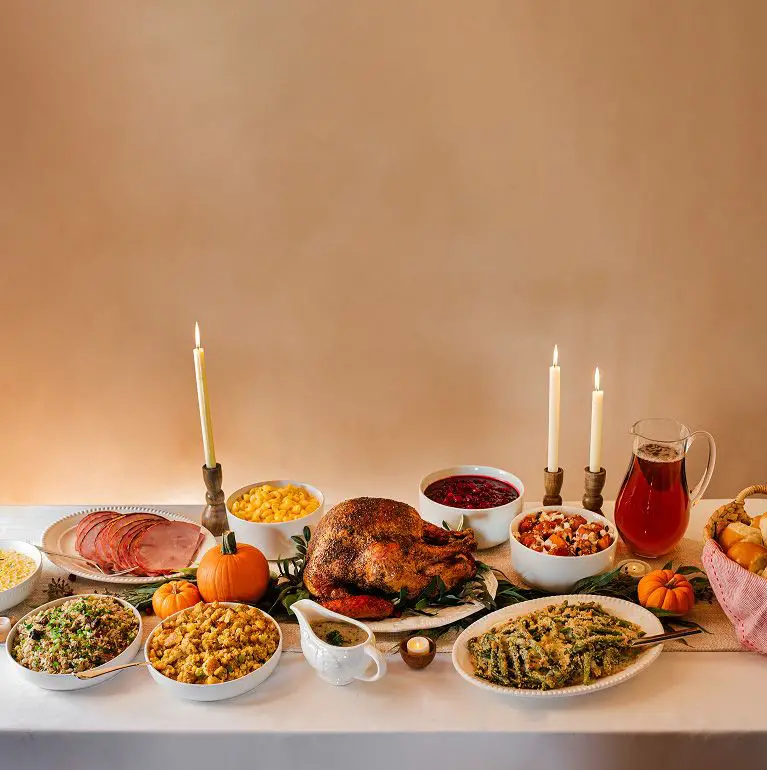
The dinner was, as always, a lavish performance. A twenty-pound turkey glistened at the center, surrounded by mountains of roasted vegetables, buttery mashed potatoes, and gourmet pecan pies. It was a feast designed to showcase wealth, to remind everyone how blessed the King family was. The conversation was loud but hollow. Kesha and Chad bragged about their upcoming ski trip to Aspen. Jamal loudly explained a stock market win he had clearly just read about that morning. My father, Marcus, sat at the head of the table like a king on his throne, observing his court with satisfaction.
And then it happened—the sound that always signaled the beginning of the end. Clink, clink, clink. My father tapped his crystal wine glass with a silver spoon. The room, which had been buzzing with fake laughter and boasts, fell into immediate, heavy silence. Every eye snapped to him. This was his stage, and we were his captive audience.
He rose from his chair slowly, deliberately. He was a tall man, still imposing at sixty-five. He wore an impeccably tailored suit even at his own Thanksgiving dinner—always the showman, always in control. He commanded the room. He owned it. He owned everyone in it.
Except me.
“Family,” his voice boomed, rich and deep, echoing off the high ceilings. He raised his glass. “We are gathered here today, as we are every year, to give thanks.” He smiled, but it never reached his cold, assessing eyes. “I look around this table and I see a legacy.” He looked at Jamal, who sat up straighter, preening under the attention. “I see the future of what my father, your grandfather, built from the red clay of Atlanta.” He looked at Kesha. “I see the beauty and grace that makes the King name respected.”
He did not look at me.
“King Development,” he continued, his voice swelling with pride, “is more than a company. It’s the blood, sweat, and tears of our lineage. I have spent my entire life honoring what my father started, and I have built it into an empire.” He paused, taking a deliberate sip of his wine, letting the tension build. He was a master showman. “But times change. A legacy is a heavy burden, and I am tired.”
Immediately, Kesha and Jamal launched into their rehearsed performance. “Oh, Daddy, no,” Kesha cooed, her hand flying to her chest dramatically. “You’re the strongest man we know.”
“He’s right, Dad,” Jamal added, his voice thick with false concern. “You’re not old. You’re in your prime.”
Marcus raised a single powerful hand. “Quiet.” They went silent instantly, like trained dogs responding to their master’s command.
He looked around the table, his gaze unreadable, calculated. “Every empire must evolve. Every king must know when to look to the next chapter, to secure the future.” Another pause. The silence was so thick I could hear the antique clock ticking on the mantle.
“And so,” he said, his voice dropping to a dramatic whisper, “after months of careful consideration, I have made a final executive decision.”
He locked his eyes—not on his favored children, but directly on me, across the expanse of that long table. The weight of his gaze was meant to crush me.
“I have decided to sell the company.”
The Celebration of Greed
The air in the room crackled with shock and manufactured surprise. Kesha and Jamal, the two loyal actors, immediately leaped into their roles with practiced precision.
“Sell?” Jamal half-shouted, standing up from his chair with theatrical outrage. “Dad, what are you talking about? Sell King Development?”
Kesha put her hand to her throat, her eyes wide with what she must have thought passed for genuine concern. “Oh my god, Daddy, no, you can’t. It’s Granddad’s legacy. Are you—you’re not sick, are you?”
I watched them, and it was pathetic. I could see the ghost of a smile on Jamal’s face even as he pretended to be shocked. They knew. Of course they knew. My father had rehearsed this entire evening with them. This whole dinner was theater, a carefully staged production, and I had been summoned for my public sentencing.
Marcus raised his hand again. “Enough. Sit down, Jamal.” The fake protest died instantly.
“This is not a tragedy,” my father continued, his voice smoothing out, becoming magnanimous. “This is a victory. This is the celebration of a lifetime of work.” He smiled—a genuine, proud smile, but directed only at his two favored children. “I am rewarding loyalty,” he announced to the room with the gravitas of a medieval king bestowing titles. “I am rewarding the two people who stood by my side, who honored this family, who worked day in and day out to protect our name.”
I almost laughed out loud. Loyalty. He called it loyalty. I called it complicity. These were the two people who had helped him run the company into the ground, who had spent every dollar he gave them without question, who had covered for each other’s incompetence for a decade.
“Jamal, Kesha,” my father beamed at them like a proud monarch, “you have been my loyal successors. You are the future of this family. Therefore, the entire proceeds of this sale will be split fifty-fifty between the two of you.”
For a second, the room was utterly silent. And then the real celebration began.
Kesha let out a genuine shriek of joy. “Oh, Daddy, thank you! Thank you!” She rushed to embrace him, tears of happiness streaming down her perfectly made-up face.
Jamal was more composed, but his eyes were lit up with a greedy fire I recognized all too well. “Dad, that’s—that’s incredible. Thank you. We won’t let you down.”
My father nodded, basking in their adoration like a plant turning toward the sun. He let the applause from Chad and the other relatives wash over him. He was the benevolent king, bestowing his riches upon his deserving heirs.
And then his head turned slowly, deliberately. His gaze traveled the entire twenty-foot length of the table, past the glistening turkey, past the crystal wine glasses reflecting candlelight, and it landed on me. The smile vanished. His face hardened, transforming into the cold granite mask of the man who had exiled me a decade ago.
The room went quiet again, sensing the shift in atmosphere. This was it. The main event. The real reason I had been summoned.
“Simone,” he said. My name sounded like a curse on his tongue. He had barely acknowledged me all night, but now, for this moment, he gave me his full, undivided attention.
“You,” he said, his voice sharp as a blade, “chose your own path. Ten years ago, you decided you were smarter than this family. You decided you were better. You spat on your grandfather’s legacy. You walked away from your father. You walked away from your blood.” His voice dropped, becoming even colder, each word a perfectly aimed stone. “You turned your back on this family. And now this family turns its back on you. In this transaction, in this new future, in this moment of celebration—”
He paused, letting the silence stretch, forcing every single person in that room to look at me, the outcast, the failure, the embarrassment.
“You get nothing.”
The words hung in the air, heavy and final. My father’s pronouncement. His judgment. His revenge.
The silence stretched for one second, two seconds, three seconds. And then it shattered—not by quiet applause, but by a sound I can only describe as a shriek of pure, unfiltered greed and victory.
“Oh my god, Daddy!” Kesha launched herself from her chair and ran to my father, throwing her arms around his neck. She was crying—actual tears of joy streaming down her face, ruining her expensive makeup. “Oh, Daddy, I love you! I love you so much! It’s the right decision. It’s such a fair decision!”
Jamal was on his feet too, his face flushed with triumph. He didn’t run, but he clapped my father hard on the back, a wide, triumphant grin splitting his face. “Dad,” he said, his voice thick with emotion, “you have no idea what this means. Thank you. Thank you.” He raised his glass to the room, to his sister, a conquering hero celebrating his spoils.
Then Chad, my slimy brother-in-law, started to clap. It wasn’t normal applause. It was a slow, deliberate, mocking clap, and it was aimed directly at me. “Absolutely fair,” he added, his voice slick with false sincerity as he walked over to join the huddle around my father. He looked over Kesha’s shoulder, his eyes finding mine across the long table. “You simply can’t give a family legacy to someone who tried to destroy it,” he said, his voice loud enough for the entire table to hear.
He wasn’t talking to my father. He was talking to me. He was performing for the crowd, playing the part of the loyal son-in-law defending the family honor.
And then he did it. He winked—a slow, condescending, “I win, you lose” wink that was meant to crush whatever dignity I had left.
That was the moment. The moment all the pieces of their pathetic, cruel little play clicked into place. They weren’t just celebrating their newfound wealth. They were celebrating my public execution. They were dancing on the grave they had spent the last ten years digging for me. They had gathered me here, in my childhood home, on a day meant for gratitude, to put a final, humiliating stamp on my failure.
I watched them. Kesha weeping with joy, Jamal beaming with pride, Chad smirking with superiority, and my father, Marcus King, soaking in their adoration like a starved man at a feast. They looked like vultures picking apart a carcass.
And I—I didn’t say a word.
I just smiled. A small, private, almost imperceptible smile.
I took a slow, deliberate sip of my wine. It was a full-bodied cabernet, rich and complex.
It tasted like victory.
They thought the show was over. They thought they had won.
But I knew the truth. The real show was just about to begin.
The First Question
The noise of their celebration was deafening. Kesha was still clinging to my father, and Jamal was pouring another round of champagne, his toast echoing through the room. “To the future!” he bellowed. “To the new Kings!”
Chad caught my eye again and raised his glass, his smirk wider than ever.
Every single person in that room, from my father down to the catering staff hovering nervously in the doorway, was waiting for me to break. They were waiting for the laughingstock to burst into tears, to scream, to protest, to beg for scraps from the table. They were waiting for the broken twenty-eight-year-old girl I used to be.
But I just sat there. I didn’t cry. I didn’t shout. I didn’t even flinch.
Instead, I let that small, private smile grow just a fraction. It wasn’t a happy smile. It wasn’t a sad smile. It was the smile of a chess player who has just seen the checkmate five moves away.
I slowly, deliberately picked up my heavy cloth napkin and dabbed the corners of my mouth with careful precision. I set my wine glass down on the polished mahogany table. The sound was soft but definitive—a period at the end of a sentence.
That tiny sound cut through the celebration like a knife. The laughter and cheering in the room tapered off gradually, like a radio dial being slowly turned down. My father, still being embraced by a sniffling Kesha, looked at me, his brow furrowed in confusion. Why wasn’t I crying? Why wasn’t I begging?
I met his gaze. I held it steadily.
“An interesting decision, Dad,” I said. My voice was calm, clear, crisp. It wasn’t the voice of a victim. It was the voice of an executive addressing a boardroom. It carried across the entire room with crystalline clarity.
The last bits of chatter died instantly. The silence was now absolute, profound.
Kesha let go of my father, her tear-stained, joyful face now a mask of pure baffled confusion. Jamal froze mid-pour, the champagne bottle hovering halfway to a glass. Even Chad’s smirk faltered slightly.
“What?” my father said, his voice no longer celebratory but wary, uncertain. “What did you just say?”
“I said,” I repeated, leaning forward just slightly, my eyes never leaving his, “that it’s an interesting decision. A fascinating business move.” I let the words hang in the air, watching them process, watching the wheels turn in their heads.
I could see the confusion spreading. This wasn’t in their script. This wasn’t the part where the victim weeps and the villains celebrate. I wasn’t following the rules of their carefully choreographed play.
I smiled a little wider this time, showing just a hint of teeth. “It makes me curious. I’m intrigued.” I looked at my father, the great, powerful Marcus King, who had just publicly disinherited me in front of our entire family.
“I’m just wondering,” I said, my voice as smooth as silk, “who is the buyer?”
My question—”Who is the buyer?”—echoed in the silent room like a stone dropped into still water.
My father’s face, which had been frozen in confusion, slowly began to change. He processed my calm tone, my smile, my complete lack of tears, and he made a fatal mistake. He misinterpreted my poise for pathetic desperation. He thought I was trying to find some tiny crack, some way to stay relevant to the conversation, to maintain some small connection to the family business. He decided, in his arrogance, to humor me one last time—to show me just how completely I had lost and how grand his victory truly was.
He let out a short, pitying laugh. “Who is the buyer?” he repeated, as if I were a child asking about his complex adult work. “You think you would know them? You think that little analyst job of yours in New York puts you in these kinds of circles?” He was loving this, clearly relishing the opportunity to put me in my place one final time.
He puffed out his chest, his voice swelling with pride, booming for the entire family to hear. He wasn’t just answering me—he was putting the final jewel in his own crown, the crowning achievement of his career.
“They’re a very serious fund, Simone. A private equity powerhouse. They’re based in New York, actually, but they’re in a league you couldn’t possibly understand. They’re extremely powerful and extremely discreet.” He leaned forward as if sharing a grand secret with the entire table, savoring every moment of his triumph.
“They’re called Everest Holdings.”
He let the name hang in the air, a name he thought sounded powerful and untouchable, a name that represented the highest echelons of finance.
“And they’re paying,” he said, his voice dropping to a low, theatrical rumble designed to inspire awe in his audience, “a number you can’t even comprehend. Eighty-six million dollars.”
Eighty-six million. The number landed on the table like a bomb detonating in slow motion.
Kesha gasped audibly, her hands flying to her mouth. Jamal’s eyes looked like they were about to pop out of his head. Chad just whistled low and long, clearly impressed. My father beamed, soaking it all in, his audience captivated. He had them back. He had won.
And I—I started to laugh.
It wasn’t a quiet chuckle this time. It wasn’t a polite giggle. It was a real, deep, uncontrollable laugh that started in my stomach and exploded out of me. I couldn’t stop it. I put my head back and I laughed, the sound echoing off the high ceilings and the polished wood paneling.
The celebration in the room died instantly, replaced by a stunned, horrified silence. They were all staring at me now, their expressions ranging from confusion to genuine concern. They thought I had finally snapped. They thought the laughingstock had officially become hysterical, that I had broken under the pressure of my complete defeat.
My father’s face turned a dark, angry shade of red. “What?” he snapped, his voice sharp and dangerous. “What is so funny? What is so funny about eighty-six million dollars? Simone, have you finally lost your mind?”
I took a deep breath, trying to control myself. I wiped a single tear of genuine laughter from the corner of my eye. I placed my hands flat on the table, centering myself, gathering my composure. I looked up, directly into the eyes of my father, the king on his throne.
“Everest Holdings,” I said, my voice finally steady but still vibrating with barely contained amusement.
I paused, letting the moment stretch.
“Dad,” I said, and I smiled—a full, bright, genuine smile that reached my eyes for the first time that evening.
“I am Everest Holdings.”
The Revelation
The silence in that room was no longer just quiet. It became a physical presence, a heavy, weighted blanket pressing down on all of us, suffocating in its completeness. I could hear the antique clock on the mantle ticking. Tick. Tock. Each sound was like a hammer blow against their collective shock.
Kesha’s mouth was hanging open in a perfectly round O of disbelief, her carefully applied lipstick suddenly looking garish in her frozen expression. Jamal was completely immobile, his arm still raised, the champagne bottle still hovering in mid-air like a stopped film. Chad’s smug wink was gone entirely, replaced by pale, slack-jawed confusion.
But all eyes eventually turned to my father, Marcus. He was staring at me, his face draining of color. The red anger had vanished, replaced by a strange, mottled, ashy gray. He seemed to be searching my face desperately, looking for the lie, looking for the hysterical, broken girl he had exiled a decade ago.
He found instead a CEO.
He was the first one to break the silence—not with a question, but with a roar. “Nonsense!” he bellowed. The word exploded from him so forcefully it made Kesha jump and nearly drop her glass. “Nonsense!” he repeated, slamming his fist down on the mahogany table with such force that the crystal glasses and silver forks jumped several inches. “You’re lying!” He pointed a thick, trembling finger at me from across the table. “You sit there in my house, on this day, and you lie to my face? You think this is a joke?”
He was regaining his confidence, his anger fueling him, giving him strength. “I’ve been in negotiations for six months. I know who I’m dealing with. I’ve spoken to their vice president. I’ve had multiple meetings with him. I know the man personally.” His voice grew stronger, more certain. “His name is Michael Harrison.”
Michael Harrison. He said the name like it was a trump card, like it was irrefutable proof of my deception.
He looked around at the family as if to say, “See? I have proof. He’s a serious man, a professional, a veteran of the industry with decades of experience.”
And then he delivered the line he thought would end the argument completely, the line he thought proved beyond any shadow of doubt that I was a desperate liar making up fantasies. He squared his shoulders and looked at me with absolute certainty.
“He’s a white man. A fifty-year-old white man.”
He stood there, panting slightly, triumphant. He thought he had caught me in an obvious lie. He thought he had exposed my desperate, childish bluff for everyone to see.
I didn’t flinch. I didn’t even look surprised. I simply nodded slowly, as if he had just confirmed a minor administrative detail.
“Exactly, Dad,” I said. My voice was still calm, but now it cut through the room like ice, sharp and clear. “Michael Harrison. He’s wonderful, truly. An excellent VP of acquisitions. He’s sixty-one, not fifty, but you were close.” I paused, allowing myself a small smile. “His golf game is terrible, but his negotiation skills are absolutely first-rate.”
My father’s face faltered, the certainty cracking. “What? What are you talking about?”
“I’m talking about Michael,” I said clearly. “I hired him. I hired him three years ago from a rival firm. I gave him that title. I gave him that generous bonus structure and equity package.” I leaned forward, making sure every person at that table could hear my next words with perfect clarity.
“I hired Michael for this specific deal because I knew, Dad—I knew you would never, ever take a meeting seriously with a thirty-eight-year-old Black woman, even if she was your own daughter. You would never respect me. You would never believe I could build an empire.”
I looked around the table, at Jamal, at Chad, at every man who had dismissed me. “You only trust the Michaels of the world. You only respect men who look just like the men you’ve always done business with, who fit your narrow definition of success and power. So I gave you a Michael. I gave you exactly what you needed to see to believe the deal was legitimate.”
My father’s face was a portrait of utter disbelief, but his arrogance was a fortress that wouldn’t fall so easily. He was still fighting, still grasping. “You’re lying,” he hissed, his voice low and dangerous now. “You’re insane. You’re a delusional, pathetic girl sitting here spinning fantasies to save face.” He laughed, but the sound was brittle and sharp, desperate. “You hired him? You?” He shook his head. “You couldn’t afford his dry cleaning.”
Jamal found his voice, joining the attack with renewed vigor. “She’s just trying to save face, Dad. She’s making it all up. She’s pathetic. This is just sad to watch.”
Chad nodded enthusiastically, his smirk returning as he sensed an opening. “It really is sad, Simone. Just give it up. You’re embarrassing yourself.”
I looked at them—the three of them united in their delusion, still so sure of their world, still so certain I was the failure they had created in their minds.
“You’re right, Dad,” I said, my voice soft but carrying perfectly. “You shouldn’t just take my word for it. I am, after all, the Oakwood embarrassment, the family failure. You need proof.”
I reached into my small, simple black clutch bag. I pulled out my phone—the latest model, sleek and black, though they didn’t notice that detail. They were too busy watching me like hawks waiting for a mouse to make a fatal mistake.
“What are you doing now?” Marcus sneered. “Are you going to Google Everest Holdings to show us the website? Are you going to call your little analyst friends to back you up?”
“Something like that,” I replied calmly.
I unlocked the screen with my thumbprint. I went to my favorites. I tapped the name at the very top of my contact list. The contact didn’t read “Michael.” It simply read “EH Ops.”
And I didn’t just call. I made a video call.
The room was utterly silent as the phone began to ring, the sound echoing unnaturally in the charged atmosphere. One ring. Two rings. I placed the phone flat on the polished table in the center, right next to my untouched plate of food, angling the screen so everyone—especially my father—could see it clearly.
On the third ring, the call connected.
The screen lit up, and the face that appeared was the exact man my father had just described with such certainty. Michael Harrison. He was older, distinguished, with silver hair carefully styled, sitting in what looked like a beautiful wood-paneled study with a fireplace roaring behind him. He looked powerful. He looked professional. He looked, as my father had so triumphantly pointed out, very white.

Sophia Rivers is an experienced News Content Editor with a sharp eye for detail and a passion for delivering accurate and engaging news stories. At TheArchivists, she specializes in curating, editing, and presenting news content that informs and resonates with a global audience.
Sophia holds a degree in Journalism from the University of Toronto, where she developed her skills in news reporting, media ethics, and digital journalism. Her expertise lies in identifying key stories, crafting compelling narratives, and ensuring journalistic integrity in every piece she edits.
Known for her precision and dedication to the truth, Sophia thrives in the fast-paced world of news editing. At TheArchivists, she focuses on producing high-quality news content that keeps readers informed while maintaining a balanced and insightful perspective.
With a commitment to delivering impactful journalism, Sophia is passionate about bringing clarity to complex issues and amplifying voices that matter. Her work reflects her belief in the power of news to shape conversations and inspire change.