The Woman in My House
The phone call came on a Tuesday morning, the kind of ordinary moment that later becomes impossible to remember without your hands shaking. I was standing in my kitchen, sunlight streaming through the window, when my youngest son’s voice came through the line—urgent, confused, wrong in a way that made my stomach clench before I even understood why.
“Mom,” Daniel whispered, his pilot’s confidence stripped away to something raw and frightened, “that can’t be her in our house.”
Those were the words that shattered everything I thought I knew about my family, about my daughter-in-law, about the woman who had lived under my roof for years. But I’m getting ahead of myself. To understand how it all unraveled, you need to know how perfectly normal that morning began, how completely unsuspecting I was, how the fabric of our daily life had been compromised without any of us realizing the threads were coming loose.
The morning had started like countless others before it. Steven left for work at quarter past seven, his coffee mug still warm on the counter when I went to rinse it. Matthew, my eight-year-old grandson, had bounded down the stairs with his shoelaces untied and his homework crumpled in his backpack, talking a mile a minute about a science project on volcanoes. I’d fixed his laces, smoothed his hair, and walked him to the bus stop at the end of our quiet suburban street, waving as the yellow bus carried him away toward another ordinary day at Riverside Elementary.
When I returned to the house, Sarah was in the kitchen, pouring herself a cup of tea from the pot I’d made earlier. She smiled at me—that soft, demure smile she always wore—and mentioned she was going to take a shower and maybe run some errands later. Her hair was pulled back in a loose ponytail, and she wore the blue cotton robe I’d given her last Christmas. Everything about the moment was unremarkable, forgettable, the kind of domestic scene that plays out in millions of homes every day.
“Take your time,” I’d told her, already thinking about the laundry I needed to fold and the grocery list I’d been putting together. “I’ll be down here if you need anything.”
She’d nodded and headed upstairs, her footsteps light on the carpeted stairs. I heard the bathroom door close, heard the pipes groan as the shower turned on, and went about my morning routine without a second thought. The dishwasher hummed. The clock on the wall ticked steadily. Outside, Mrs. Henderson walked her golden retriever past our house, the same as she did every morning at eight-thirty.
It was the kind of morning where nothing happens, where life just continues in its comfortable, predictable rhythm.
Until the phone rang.
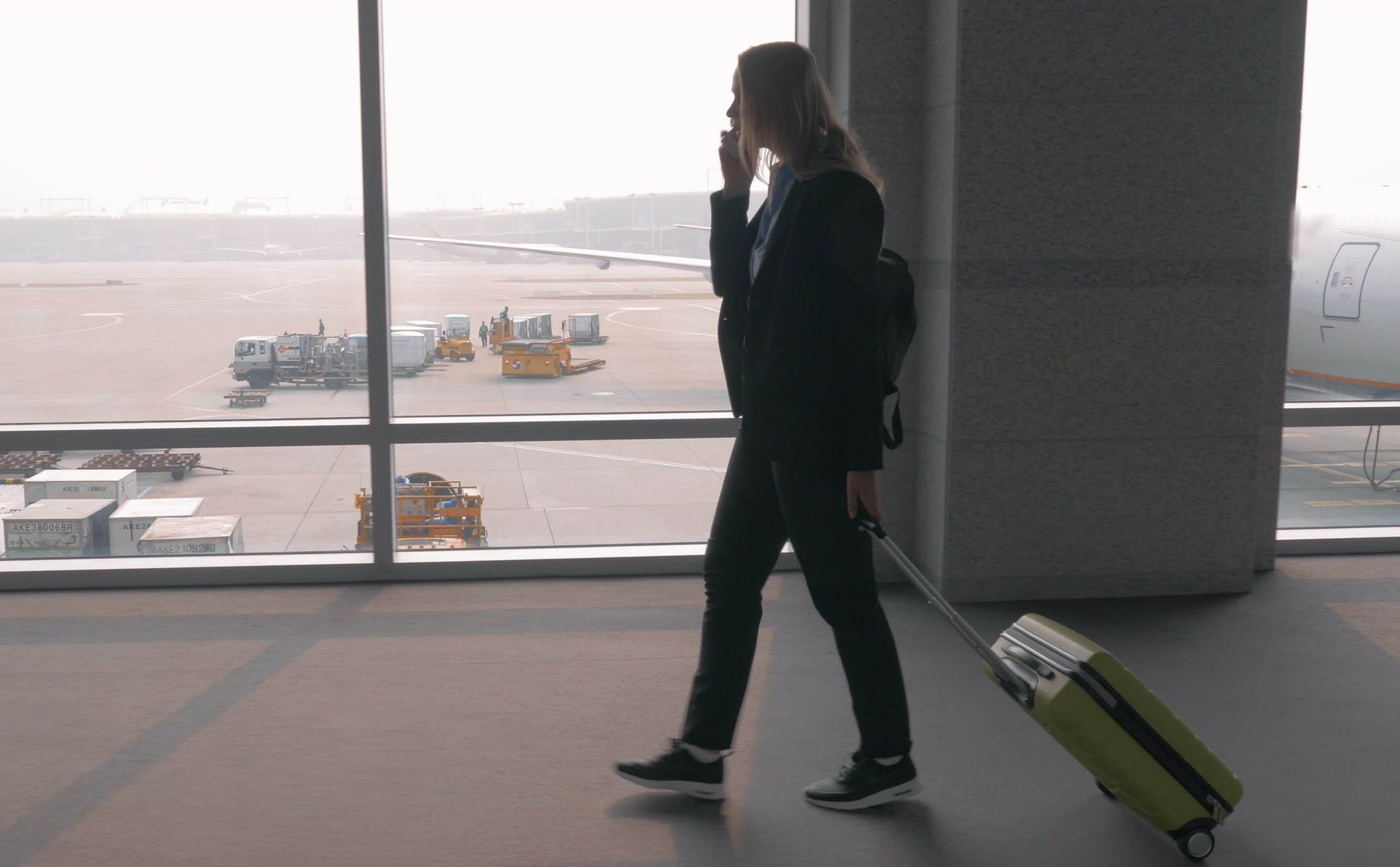
I answered without checking the caller ID, expecting a telemarketer or maybe my friend Janet calling about our book club meeting. Instead, it was Daniel, calling from somewhere with that echo-y quality of airport terminals, that blend of overhead announcements and distant conversations that I’d grown used to over his years as a commercial pilot.
“Hey, Mom,” he’d said, and his voice had that familiar warmth that always made me smile. “Just wanted to check in during my layover.”
We talked about nothing important—how his flight from Chicago had been bumpy over the Midwest, how he was looking forward to getting home next week, how he wanted to take Matthew to that new science museum that had opened downtown. Daniel had always been my sensitive one, the son who remembered birthdays and called just to chat, who seemed to understand that a mother never stops worrying no matter how old her children get.
Then, mid-conversation, he went quiet.
“Mom,” he said, and something in his tone made me set down the dish towel I’d been holding. “Is Sarah at the house right now?”
I glanced toward the ceiling, where I could still hear the faint sound of water running through the pipes. “Yes, honey. She’s upstairs taking a shower. Why?”
The pause that followed was too long, too heavy.
“That’s… that’s not possible,” Daniel said, his voice dropping to barely above a whisper. “Mom, I’m looking at her travel ID right now. I found it near my gate. And I just watched someone who looks exactly like Sarah board my flight to Paris. She’s sitting in first class right now with some guy I’ve never seen before.”
The kitchen tilted. Or maybe I did. I reached out to steady myself against the counter, my mind racing to make sense of what he was saying. People lose things. Documents get stolen. There had to be a rational explanation.
“Are you sure?” I asked, hearing the tremor in my own voice. “Maybe it’s someone who just looks like her—”
“I thought the same thing,” Daniel interrupted, and now I could hear something in his voice I’d never heard before—fear, real and sharp. “So I walked down the aisle to check. Mom, I got close enough to see her face clearly. It’s her. Same hair, same features, same little scar on her left eyebrow from when she fell off her bike as a kid—you know, the one she told us about at Thanksgiving. She didn’t see me, but I saw her. And the guy she’s with… he’s wearing a watch that costs more than my car. They’re drinking champagne. She looked happy, Mom. Really happy.”
My hand tightened on the phone until my knuckles went white. Upstairs, the shower shut off. In the sudden silence, I could hear my own heartbeat, loud and insistent in my ears.
“Daniel,” I whispered, “stay on the phone with me.”
Footsteps crossed the bathroom floor above my head. I heard the familiar creak of the door opening, heard Sarah’s voice drift down the stairs, casual and light: “Is everything okay down there? I thought I heard you talking to someone.”
She appeared at the top of the stairs, wrapped in that blue robe, her hair damp and hanging loose around her shoulders. She smiled down at me, her expression open and innocent, the face of the woman who’d married my son four years ago, who’d moved into this house when Steven’s job transfer brought them to town, who’d become part of our family.
But looking at her now, with Daniel’s words echoing in my mind, something shifted in my perception. The smile seemed too practiced. The eyes were familiar but somehow different. Or maybe I was losing my mind. Maybe the stress of the past few months—Steven’s long hours at work, Matthew’s struggles with reading, the general weight of keeping a household running—had finally caught up with me.
“I’m fine,” I called back, my voice sounding false even to my own ears. “Just Daniel checking in.”
“Oh, tell him I said hi!” she said brightly, already turning back toward the bedroom she shared with my son. “I’m going to get dressed and then maybe head out to do some shopping. Do you need anything while I’m out?”
It was such a normal question, delivered in such a normal way, that for a moment I almost convinced myself that Daniel had made a mistake. But then he spoke in my ear, urgent and low: “Mom, she’s still on my flight. The woman who looks like Sarah is literally fifty feet away from me right now, and she’s laughing at something the guy next to her just said. I don’t know what’s happening, but something is very, very wrong.”
I watched Sarah—or whoever she was—disappear into the bedroom and close the door. My legs felt weak. I sank into one of the kitchen chairs, pressing the phone against my ear like it was the only real thing in a world that had suddenly become impossible to trust.
“Describe the man she’s with,” I said quietly.
Daniel’s voice came through carefully, deliberately. “Late forties, maybe early fifties. Dark hair going gray at the temples. Expensive suit—I mean really expensive, the kind you get tailored on Savile Row. He’s got that look, you know? Like he owns things. Important things. He touched her hand when she laughed, and she didn’t pull away. Mom, they look… intimate. Like they’ve known each other a long time.”
I closed my eyes, trying to think, trying to make puzzle pieces fit that refused to go together. “What name is on the ID you found?”
“Sarah Elizabeth Harrison,” Daniel read. “Same date of birth as on the family birthday list you keep on the fridge. Same address as your house. Her passport too—it’s here with some boarding passes. Gate C-42. Flight AF-1247 to Charles de Gaulle. Departs in twenty minutes.”
Twenty minutes. My mind latched onto that detail, as if timing mattered when reality itself seemed to be splitting in two. How could Sarah be upstairs getting dressed and simultaneously boarding a plane to France? It violated every law of physics, every rule of the universe as I understood it.
Unless.
Unless the woman upstairs wasn’t Sarah.
The thought arrived fully formed, terrible and impossible and yet somehow inevitable. I thought about the past few months, about little things I’d noticed but dismissed, about moments that had felt slightly off in ways I couldn’t quite articulate. The way “Sarah” had seemed confused about where we kept the dish soap, even though she’d lived here for years. The afternoon she’d come home from “work” wearing perfume she’d never worn before. The morning I’d found her staring at family photos on the mantel as if seeing them for the first time, studying the faces with an intensity that seemed strange for pictures of your own life.
I’d attributed it all to stress. Steven had been working such long hours at the accounting firm, and Sarah had been picking up extra shifts at the hospital where she worked as a nurse. We were all tired, all stretched thin. People forget things when they’re tired. People change perfumes. People look at old photos and remember.
But now, with Daniel’s voice in my ear and the sound of drawers opening and closing upstairs, those little discrepancies took on a darker significance.
“I need you to do something,” I told Daniel, surprised by how steady my voice sounded. “I need you to take pictures. Of her, of the man, of everything. Don’t let her see you, but document everything you can.”
“Already doing it,” he said, and I heard the click of a camera phone. “Mom, what do I do when the plane lands? Should I confront her? Call Steven? Call the police?”
“Don’t do anything yet,” I said, though I had no idea what the right answer was. “Just… keep me updated. Let me know when you land. And Daniel? Be careful.”
“You too, Mom,” he said, and the worry in his voice made my throat tight. “If that’s not Sarah up there, then who is it? And where’s my sister-in-law?”
I didn’t have an answer. I hung up and sat in the kitchen, listening to the sounds of the woman upstairs moving around the bedroom, humming softly to herself. A song I didn’t recognize. Another small detail that might mean everything or nothing.
The next few hours passed in a surreal haze. The woman I’d been calling Sarah came downstairs in jeans and a sweater, kissed me on the cheek like she always did, and left to run errands with a cheerful “See you later!” I watched through the window as she drove away in Sarah’s Honda, the same car my daughter-in-law had been driving since before the wedding.
As soon as she was out of sight, I ran upstairs to the bedroom. My hands shook as I opened drawers, looked through the closet, searched for… what? Evidence? Proof that the woman living in my house was an impostor? It felt insane even as I was doing it, like I’d stepped into some television thriller where nothing made sense and everyone had evil twins.
But then I found the journal.
It was tucked under the mattress on Sarah’s side of the bed, a slim leather-bound notebook I’d never seen before. My conscience warred with my fear for exactly three seconds before I opened it and started reading. The handwriting inside was similar to Sarah’s but not quite right—the loops were different, the pressure of the pen lighter.
The entries were sparse and cryptic:
March 15th: V says it’s time. I told him I’m not ready, but he insists the window is closing. The resemblance is close enough now. Three more procedures and I’ll be perfect.
April 2nd: Met her again today. She’s so trusting, so genuine. I almost feel guilty. Almost.
April 28th: V has the tickets. Paris in three weeks. Then everything changes. She’ll never know what happened. None of them will.
May 10th: The switch went smoothly. She’s good at this. Better than I expected. But how long can we maintain it? How long before someone notices the differences?
I read the entries three times, my mind reeling. The switch. Three weeks ago. That would have been around the time I’d noticed Sarah seemed different, more distracted, sometimes confused about simple things.
My phone buzzed with a text from Daniel: Landed in Paris. She’s going through customs now. Still with the same man. They’re holding hands. Mom, what do we do?
I stared at the journal in my hands, at the evidence of something I still couldn’t fully comprehend. Then I did the only thing I could think of: I took pictures of every page, emailed them to myself, and put the journal back exactly where I’d found it.
When “Sarah” returned home that afternoon with grocery bags full of food we didn’t need, I smiled and helped her put things away, playing my role in whatever twisted performance this had become. She chattered about the sales at the store, about running into a friend from work, about plans for dinner. I nodded and responded and watched her carefully, cataloging every tiny difference I’d been too trusting to notice before.
The way she held her fork. The way she laughed, half a second too late at my jokes. The way she looked at Matthew when he came home from school—with affection, yes, but also with a careful attention, as if she was still learning how to play the role of mother.
That night, after Steven came home and we all sat down to dinner, I watched this woman interact with my family. She was good, I had to admit. She knew the right stories to reference, the right inside jokes to laugh at. She asked Matthew about his volcano project and Steven about his day at work. She moved through the evening like someone following a well-rehearsed script, and if I hadn’t known better, I might have believed she was exactly who she claimed to be.
But I did know better now. And sitting there at that dinner table, passing the salad and refilling water glasses, I realized that I had no idea what to do with that knowledge.
Because the question that kept echoing in my mind, the question that made it hard to breathe, was this: If this woman was here, pretending to be Sarah, then where was the real Sarah? And what had they done to her?
The answers started coming together over the next two weeks, piece by terrible piece.
Daniel sent photos from Paris: Sarah (the real Sarah, I had to keep reminding myself) dining at expensive restaurants, shopping on the Champs-Élysées, laughing in front of the Eiffel Tower with a man whose name I learned was Victor Quinn. A wealthy businessman, Daniel discovered through some judicious Googling, with connections to tech companies and real estate across Europe. Married twice before, no children, known for his lavish lifestyle and his preference for younger women who looked a specific way—petite, dark-haired, with delicate features.
Features exactly like Sarah’s.
At home, I began to notice more cracks in the impostor’s performance. She didn’t know that Matthew was allergic to strawberries until he reminded her. She put the coffee mugs in the wrong cabinet and seemed surprised when I corrected her. She mentioned going to her “office” one day, even though the real Sarah worked at a hospital and always called it the hospital, never the office.
I started keeping my own journal, documenting every inconsistency, every slip, building a case against a crime I still didn’t fully understand. And I began to investigate, carefully and quietly, following threads that led to places I’d never imagined.
It started with a receipt I found in the impostor’s purse—she’d left it on the kitchen counter while she was in the bathroom. The receipt was from a medical clinic I’d never heard of, for services that were listed only as “consultation” with a price tag that made my eyes water. I took a picture of it and searched the clinic’s name online.
The website was vague, full of stock photos and generic language about “personal transformation” and “becoming your best self.” But buried in the FAQ section was a line that made my blood run cold: “Our advanced procedures can help you achieve the exact look you’ve always dreamed of.”
I dug deeper, finding forums and message boards where people discussed cosmetic procedures that went far beyond normal plastic surgery. Facial reconstruction so precise it could make you look like someone else. Voice coaching that could match another person’s speech patterns. Contact lenses that could change eye color in subtle, undetectable ways.
The picture that emerged was horrifying: an underground network of clinics and specialists who could, for the right price, turn you into a copy of someone else. Not a clone—the technology for that didn’t exist. But something close enough that family members might not notice the substitution, especially if the impostor was skilled, if they studied their target carefully, if they had help from someone on the inside.
Someone like Victor Quinn, who had the money and connections to make it all happen.
But why? That was the question that kept me awake at night, staring at the ceiling while Steven snored beside me and the impostor slept in my son’s arms down the hall. Why would anyone go to such elaborate lengths to steal someone’s life?
The answer came from an unexpected source: Steven’s financial records.
I hadn’t meant to snoop. Or maybe I had. The lines had become blurred, my normal moral compass spinning wildly in the face of circumstances that defied normal rules. I’d been looking for something else in Steven’s home office when I found the bank statements, and once I started reading, I couldn’t stop.
Steven’s accounts had been drained. Not all at once—that would have been too obvious—but gradually, over the past three months. Transfers to accounts I didn’t recognize. Large cash withdrawals. Credit cards maxed out on purchases I’d never seen: jewelry, designer clothes, expensive electronics that had never appeared in our house.
The real Sarah had been stealing from us. Or maybe she and Victor had been planning this together all along. Maybe she’d never loved Steven at all, had never wanted this life, had just been waiting for the right moment to escape with enough money to start over somewhere else.
And the impostor? She was the cover story, the placeholder meant to keep us from noticing Sarah’s absence long enough for the real Sarah to disappear completely.
It was brilliant, in a sick way. While we lived our normal lives with a substitute Sarah, the real one was building a new existence in Paris, probably using our money to fund her escape. By the time we realized what had happened, she’d be impossible to find, and we’d be left with a stranger wearing her face.
The rage that filled me was unlike anything I’d ever felt. Not just at Sarah’s betrayal, but at my own blindness, at the way I’d trusted so completely that I’d missed all the signs. I thought about Matthew, who called this woman “Mom” and had no idea she was a fraud. I thought about Steven, who made love to her and shared his dreams and fears with someone who was studying him like a scientist studies a lab rat.
And I thought about Daniel, whose flight to Paris had accidentally exposed the entire scheme, whose phone call had been the thread that unraveled everything.
I confronted her on a rainy Tuesday afternoon, three weeks after Daniel’s initial call. Steven was at work, Matthew was at school, and it was just the two of us in the house—the impostor and me, the only two people who knew the truth.
She was folding laundry in the living room, humming that unfamiliar song again, when I walked in and closed the door behind me.
“We need to talk,” I said.
She looked up, and for just a moment, I saw fear flicker across her face before she schooled it into confusion. “Is everything okay? You look upset.”
“Cut the act,” I said, my voice harder than I’d ever heard it. “I know you’re not Sarah.”
The pretense dropped like a mask. Her expression went carefully neutral, and she set down the shirt she’d been folding with deliberate slowness. When she spoke, her voice was different—not dramatically so, but enough that I wondered how I’d never noticed before. “How long have you known?”
“Long enough. I want answers. Where is she? The real Sarah?”
She studied me for a long moment, and I could see her calculating, deciding how much to tell me. Finally, she sighed and sat down on the couch. “Paris. With Victor. She’s fine—better than fine, actually. She’s living the life she always wanted.”
“She abandoned her family. Her child.”
“She was drowning here,” the impostor said, and there was something almost sympathetic in her voice. “You want to blame her, I understand that. But she didn’t choose this life. Steven chose it for both of them when he took that transfer without really asking what she wanted. She was supposed to give up her career, her friends, her entire support system to move to a town where she knew no one. She was supposed to be grateful for it.”
“So she hired you to replace her? Is that it?”
“It’s more complicated than that.” She leaned back, looking tired suddenly. “Victor found me. I’d done this kind of work before—not exactly this, but similar. I’m an actress, actually. Or I was, before… Well, let’s just say the roles dried up and the bills didn’t. Victor pays extremely well for people who can disappear into someone else’s life.”
“You underwent surgery to look like her.”
“Some. Mostly it’s makeup, contact lenses, and a lot of research. You’d be surprised how much you can change about yourself without actually changing your bone structure. And people see what they expect to see. Steven sees his wife. You see your daughter-in-law. Matthew sees his mother. No one looks close enough to see the differences because no one wants to believe their loved one could be replaced.”
The casual way she explained it made me want to scream. “You’re helping her steal from us. From her own husband.”
“I’m doing a job,” she said simply. “What Sarah does with the money isn’t my business. I’m just here to maintain the illusion until she’s set up her new life. Then I’ll disappear, and you’ll think Sarah left you. You’ll be devastated, confused, maybe even hire a private investigator who’ll find exactly what we want you to find—evidence that Sarah ran off with another man. It’s sad but understandable. These things happen. Everyone will feel sorry for Steven and move on.”
“Except Daniel saw her. In Paris. The whole plan is blown.”
For the first time, she looked genuinely worried. “Does Steven know?”
“Not yet. But he will. I’m telling him everything tonight.”
She stood up abruptly, her composure cracking. “You can’t. You don’t understand what you’re dealing with. Victor Quinn is not someone you want to cross. He has lawyers, connections, ways of making problems disappear. If you expose this, Sarah could be in real danger. So could you.”
“Are you threatening me?”
“I’m warning you. This is bigger than a woman wanting to leave her marriage. Victor has… let’s call them business interests that require discretion. Sarah knows things she shouldn’t, and that makes her valuable to him as long as she stays quiet and compliant. If you force this into the open, if you make it public, he’ll have to protect his interests. Do you understand what I’m saying?”
I understood. I understood that my daughter-in-law had gotten involved with someone dangerous, someone who saw people as tools to be used and discarded. I understood that confronting this might put not just Sarah but all of us at risk.
But I also understood that I couldn’t let this continue. That every day this impostor stayed in our home was another day of deception, another betrayal of the trust that held our family together.
“I’m telling Steven tonight,” I repeated. “What you do with that information is up to you. But this ends now.”
She stared at me for a long moment, then nodded slowly. “You’re braver than I gave you credit for. Or maybe just more foolish. Either way, I hope you know what you’re doing.”
She went upstairs then, and I heard her moving around in the bedroom, gathering her things. When she came back down twenty minutes later with a small suitcase, she paused at the door.
“For what it’s worth,” she said, “Matthew’s a good kid. You did a good job with your family, even if Sarah didn’t appreciate it. I hope things work out for you.”
Then she was gone, walking out of our lives as easily as she’d walked in, leaving behind nothing but questions and the wreckage of a family built on lies.
Telling Steven was the hardest thing I’ve ever done. He didn’t believe me at first, thought I was having some kind of breakdown, that grief over something—he didn’t know what—had made me paranoid and delusional. It wasn’t until I showed him the journal, the bank statements, Daniel’s photos from Paris, the medical receipts, that his skepticism began to crack.
I watched his face as the truth settled over him: the denial, the anger, the devastation, the terrible moment when he realized that the woman he’d been sleeping next to for months wasn’t the woman he’d married, that his wife had abandoned him without a word, that everything he thought he knew was a carefully constructed lie.
He cried. My strong, stoic son who never cried, who’d held himself together through his father’s death and the hard years when money was tight and the stress of his demanding job, broke down in my kitchen and sobbed like a child. I held him while he shook, unable to offer any comfort that would make this better, knowing that some betrayals are too deep to heal.
We called the police, of course. Filed reports. But the truth is, there wasn’t much they could do. Sarah hadn’t technically committed a crime they could prosecute—the money she’d taken was from joint accounts she had legal access to, and while fraud was certainly involved, proving it would require cooperation from people in multiple countries, some of whom had no incentive to help.
As for the impostor, she’d vanished. The address she’d given when she’d started playing Sarah led to an empty apartment. The phone number was disconnected. The clinics I’d found online suddenly had no records of anyone matching her description. Victor Quinn, when a detective finally managed to speak with his lawyer, had ironclad alibis and no knowledge of any woman named Sarah.
Daniel did his best from Paris, but by the time he tracked down where Sarah and Victor had been staying, they’d already moved on. The trail went cold somewhere in Monaco, then disappeared entirely.
In the end, we were left with nothing but the truth and the task of picking up the pieces.
Matthew was the hardest part of all of this. How do you explain to an eight-year-old that his mother didn’t just leave, but that she’d been gone for months while a stranger pretended to be her? How do you help him process a betrayal that he wasn’t old enough to understand?
We did our best. Steven took a leave from work, and we all started therapy—individual and family both. Matthew struggled with nightmares and trust issues, would sometimes look at me with sudden fear, as if worried I might be a fake too. It broke my heart every time.
Steven threw himself into being the best father he could be, trying to make up for the mother Matthew had lost. I helped as much as I could, moving back into the house full-time to provide stability and care. We built new routines, new traditions, new ways of being a family that didn’t revolve around the gaping absence at the center of our lives.
Daniel came home more often, using his flight benefits to visit whenever his schedule allowed. He never said it, but I knew he felt guilty, as if his discovery had somehow caused all of this pain rather than just exposing what was already there.
Sometimes I wonder what would have happened if he hadn’t made that call, if he’d never been at that airport gate at that exact moment, if the real Sarah had managed to disappear completely while her double lived out the life she’d abandoned. Would we have been happier, believing a comfortable lie? Or would the truth have come out eventually in some even more devastating way?
I don’t know. I’ll never know. All I know is that the woman I welcomed into my family, the woman I taught to make my grandmother’s Christmas cookies and comforted through a miscarriage and celebrated birthdays with, was never quite who I thought she was. Maybe she loved Steven once, in the beginning. Maybe she loved Matthew too. But somewhere along the way, she’d decided that our kind of life—ordinary, middle-class, rooted in family and routine—wasn’t enough.
She’d wanted something else. Something bigger, more glamorous, more exciting. And when Victor Quinn offered her a chance at that life, she’d taken it, consequences be damned.
It’s been six months now since the impostor walked out of our house, since Steven learned the truth, since our family fractured and had to learn how to exist in this new, painful reality. We’re healing, slowly. Matthew laughs more often now, though sometimes I still catch him looking at photos of Sarah with a confusion that breaks my heart. Steven is dating someone new—a kind woman named Rebecca who knows our whole strange story and loves him anyway. Daniel got promoted to captain and called me crying with joy, the kind of good news we’d all desperately needed.
As for me, I’ve learned to trust my instincts more, to pay attention to the small details, to understand that sometimes the people we love are capable of unimaginable betrayal. It’s a hard lesson, one I wish I’d never had to learn. But it’s made me more aware, more present, more grateful for the genuine connections I do have.
We never found Sarah or Victor. They’re out there somewhere, living whatever life they built on the ashes of ours. Sometimes I imagine them in some European city, toasting champagne and laughing about how easy it was to fool us all. Other times I wonder if Sarah ever thinks about the son she left behind, if she has any regrets, if she lies awake at night haunted by the choice she made.
Mostly, though, I try not to think about her at all. She made her decision, and we made ours—to survive, to heal, to keep being a family even when the shape of that family changed.
The landline still rings sometimes, and my heart still jumps, wondering if it might be her calling to explain or apologize or ask to come home. But it never is. It’s just telemarketers or friends or Daniel calling to check in, to remind me that even when trust is broken, love can survive.
That morning in my kitchen, when Daniel whispered that impossible thing about seeing Sarah on his flight, when my world tilted and reality split in two—that was the moment everything changed. But it wasn’t the moment everything ended. We’re still here. We’re still fighting. We’re still family, whatever that means now.
And on the hard days, when Matthew asks questions I can’t answer or Steven stares at photos of a woman who stopped being his wife long before any of us knew, I remind myself that we survived. That truth, however painful, is better than living in a beautiful lie.
That we’re still standing.
That we’re still here.
THE END

Ethan Blake is a skilled Creative Content Specialist with a talent for crafting engaging and thought-provoking narratives. With a strong background in storytelling and digital content creation, Ethan brings a unique perspective to his role at TheArchivists, where he curates and produces captivating content for a global audience.
Ethan holds a degree in Communications from Zurich University, where he developed his expertise in storytelling, media strategy, and audience engagement. Known for his ability to blend creativity with analytical precision, he excels at creating content that not only entertains but also connects deeply with readers.
At TheArchivists, Ethan specializes in uncovering compelling stories that reflect a wide range of human experiences. His work is celebrated for its authenticity, creativity, and ability to spark meaningful conversations, earning him recognition among peers and readers alike.
Passionate about the art of storytelling, Ethan enjoys exploring themes of culture, history, and personal growth, aiming to inspire and inform with every piece he creates. Dedicated to making a lasting impact, Ethan continues to push boundaries in the ever-evolving world of digital content.