The Empty Chair
You know the moment a room goes dead silent. It wasn’t because of the shove. It was because not one person stood up.
But as my palms hit the cold floorboards, I realized I wasn’t the only one he had pushed out of her seat. Tonight, I decided to drag his entire kingdom into the light. Not with a scream, but with a stack of bank statements he thought my mother was too scared to read.
My name is London Clark, and I had been walking on eggshells in that house for exactly twenty years.
The drive back to Cedar Hollow, Pennsylvania had been three hours of gray highways and Christmas music I couldn’t bring myself to turn off. I lived in the city now, a deliberate geographical buffer between myself and the suffocating gravity of my family home. Every holiday I made this drive, telling myself it would be different. That Gordon Hail would acknowledge me as more than an inconvenience. That my mother Diane would stand up for me. That I wouldn’t leave with that familiar hollow ache.
The estate loomed through my windshield, draped in white lights that probably cost $5,000—the appearance of effortless wealth Gordon coveted more than oxygen.
I’d paid $400 for my dress, standing in a boutique making calculations that had become second nature. Modest enough to avoid criticism. Elegant enough he couldn’t call me frumpy. Expensive enough I didn’t look like the poor relation, but not so expensive he’d accuse me of wasting money. An equation I’d been solving since thirteen, and I was tired of being the only one doing the math.
Inside, the air smelled of pine needles, expensive red wine, and roast beef. The smell of performance. That’s what Christmas always was in the Hail household—a performance for Gordon’s business partners and extended family who only saw the glossy surface.
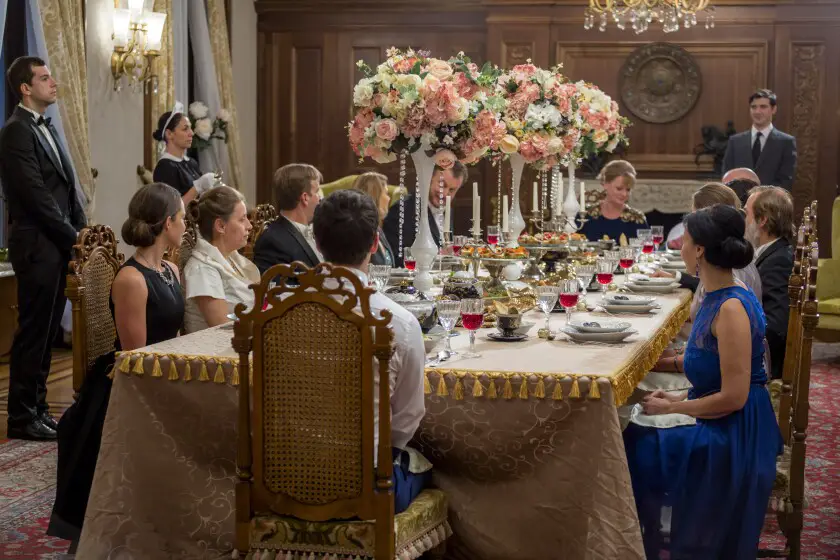
The dining room was magazine-perfect. Long mahogany table set for sixteen. Crystal glasses caught chandelier light, fracturing it into rainbows on white tablecloth. My mother adjusted a holly centerpiece, her smile tight and anxious, eyes darting to Gordon to gauge his mood before greeting me.
Gordon stood near the head holding scotch, looking the part of benevolent patriarch in a tailored suit that cost more than my first car. Broad-shouldered, laughing at Uncle Robert’s joke with a booming sound that didn’t reach his eyes.
Next to him stood Madison, his biological daughter. Twenty-five now, glowing with confidence that comes from never wondering if you belong. She twisted her gold bracelet over and over—a nervous tick she’d never outgrown.
I took a breath, holding it like a shield, and walked toward my usual seat. Fourth chair on the left—not at the head, not at the foot. Just a middle seat where I could eat quietly and disappear. The seat of the spectator. I’d occupied it for a decade.
I reached for the chair back. The room was loud with chatter, sixteen people taking places, scraping wood on floor, clinking silverware.
Then a hand landed on my shoulder. Heavy. Fingers digging into muscle with unnecessary force.
The air around me dropped ten degrees.
“Excuse me.” Gordon’s voice boomed. Not a question.
I turned. His face flushed from scotch, but his eyes were stone cold. He wasn’t looking at me—he was looking through me, erasing me.
“Gordon, I’m just sitting down.”
“Not there. Things change. Madison’s bringing her fiancé next month. We’re practicing the new seating arrangement.”
“But he’s not here tonight,” I pointed out.
Mistake. You don’t point out logic to a man who runs on power.
Gordon’s grip tightened. “This seat,” he announced loud enough that Uncle Robert stopped mid-sentence and the room fell into jagged silence, “is for my real daughter.”
The words hung there, suspended and ugly. Real daughter.
“Gordon, please,” my mother murmured from the table’s end.
He didn’t look at her. He looked at me, eyes gleaming with malicious challenge. “Get out.”
And then he shoved me.
Not a nudge. A violent physical thrust. He put his weight into it, using leverage on my shoulder to throw me backward.
I wasn’t expecting it. I was in heels on polished hardwood. My center of gravity vanished. I flailed, grabbing at tablecloth, but my fingers slipped.
I went down hard. Hip struck first—a sharp, blinding crack of pain—followed immediately by elbow and the side of my head bouncing against wood. The impact knocked the wind out of me. Everything was black spots and high-pitched ringing.
I lay sprawled in my expensive dress, legs tangled, staring at the underside of the mahogany table. I could taste something metallic. Blood. I must have bitten my tongue.
I waited.
In any normal universe, in any normal family, this is the moment chairs scrape back. Hands reach down. Voices rise in outrage. “Are you okay?” “What’s wrong with you, Gordon?”
But I lay there counting seconds. One. Two. Three. Four.
Silence. Absolute, suffocating silence, as if the room had been vacuum-sealed.
No one moved. No one spoke.
I could see Gordon’s polished dress shoes inches from my face. He hadn’t moved back. He was standing his ground, looming.
I looked past him, scanning the forest of legs. Uncle Robert. Aunt Viv. The business associates. Statues. Paralyzed by the sheer audacity of his violence, or perhaps simply relieved it wasn’t them on the floor.
I shifted my gaze to Madison six feet away, looking down at her shoes, face pale, fingers frantically twisting that gold bracelet. Twist. Twist, twist. She didn’t look at me. Didn’t step forward. She was twenty-five years old, an adult woman, and she was rendering herself invisible to survive him.
Then I looked at my mother. Diane had stood up. Yes. But she wasn’t coming to me. She was clutching her linen napkin in both hands, twisting it like she was trying to wring the life out of it. Her eyes were wide, filled with panic. But not for me. She was looking at the guests. At the spilled wine. At the tablecloth.
“Oh dear,” she whispered, voice trembling. “Let’s not make a fuss. London, please. Please.”
She was begging me. Begging the daughter on the floor not to ruin the dinner party of the man who had put her there. She made a fluttering, pathetic gesture with the napkin, as if she wanted to wipe away the incident like a gravy spill.
That was the moment the heat left my body. The shock vanished. The pain in my hip throbbed dull and heavy. But the emotional pain—the humiliation and stinging rejection that had defined my life since I was thirteen—suddenly evaporated, replaced by something icy and clear.
I placed my hands flat on the floorboards. They felt freezing against my palms. I pushed myself up slowly, deliberately. I didn’t scramble. I didn’t cry out. I rose to my knees, then to my feet, smoothing my dress down with mechanical precision.
I stood there swaying slightly, feeling the bruise forming. The metallic taste was sharp.
I looked at Gordon. He was smiling. A small, tight smile of satisfaction. He thought he’d broken me. He thought he’d just demonstrated to everyone exactly where the hierarchy stood. He’d put the intruder in the dirt and the pack had allowed it. He felt like a king.
I looked him dead in the eye and spoke in a voice that belonged to a stranger—low, flat, devoid of tremor. “I’m leaving.”
Gordon chuckled, a low rumble. “Good decision. Let’s eat, everyone. The roast is getting cold.”
The guests began to shift, a collective exhale of relief that the unpleasantness was over. They picked up their forks.
I turned and walked out. Down the long hallway past family photos featuring Madison’s graduation, Madison’s sweet sixteen, Gordon and Diane on a cruise. No pictures of me.
In the kitchen, my mother hurried after me, the door swinging shut behind her. She looked frantic, face flushed, hands still wringing that napkin.
“London, stop. Where are you going? You can’t just leave.”
I didn’t stop buttoning my coat. “He pushed me, Mom.”
My voice was calm, which seemed to frighten her more than shouting would have.
“He didn’t mean it like that. He’s under pressure with the merger. Too much to drink. You know how he gets. You shouldn’t have argued about the chair.”
“I didn’t argue.”
“London, please. Don’t do this. Don’t make a scene. Just come back in. Sit at the side table and we can smooth this over. Please don’t embarrass the family.”
The words hit harder than the floor. Embarrass the family.
“He x-rayed my dignity in front of sixteen people,” I said. “He shoved me onto the floor and you’re afraid of embarrassment.”
“I have to live here, London,” she said, voice cracking. It was the most honest thing she’d said all night.
“I know,” I said, “and that’s why I pity you.”
I walked out into the biting December cold, the air sharp and clean after the stifling perfume of the house. I walked to my car, heels crunching on gravel, hip screaming with every step—a reminder of the physical reality.
I got in the driver’s seat and locked the doors. Didn’t start the engine immediately. I sat gripping the steering wheel until my knuckles turned white, looking back at the house through the bay window. I could see them eating. Life had resumed.
Gordon thought he’d won. He thought by pushing me down, he’d put me in my place. He thought I was just London, the stepdaughter, the inconvenience, the girl who would cry in her car and come back next Easter begging for scraps of affection.
I started the engine. The dashboard lit up, casting blue glow over my hands.
I wasn’t crying. I checked my face in the rearview mirror. My eyes were dry. My pulse was steady.
As I pulled onto the main road, the Christmas lights smeared into long blurry streaks of gold and red, like watercolor running in rain. I reached up and touched my tongue to the roof of my mouth, tasting copper tang again.
He wanted me out of his seat. Fine. I was out.
But he’d made a fatal miscalculation. He’d assumed that because I was quiet, I was weak. He’d assumed that because I took the abuse, I didn’t keep receipts.
A thought crystallized in my mind, sharp and dangerous. It wasn’t about hurting him. It wasn’t about shouting. It was about balance.
Gordon Hail had built a kingdom on appearances, on control, and on the silence of the women around him. He thought the rules were set in stone: he commands, we obey.
“New rules,” I whispered to the empty car.
I wasn’t going home to sleep. I was going home to work.
Because while I sat on that floor staring at the underside of the table, I remembered something. I remembered the box of paperwork my mother had asked me to store in my apartment six months ago because she didn’t want Gordon to find it.
I had never opened it. Tonight I would.
I work as a senior compliance manager at Northbridge Risk Solutions. My entire professional life is dedicated to rules, to finding cracks in systems, to identifying where people are lying or cutting corners. I’m good at it. I make $110,000 a year finding the things people try to hide.
In the boardroom, I’m sharp, vocal, respected. But the moment I drive back into Cedar Hollow, the successful woman vanishes and the thirteen-year-old girl returns.
Gordon hadn’t stormed into our lives like a tyrant after Mom married him when I was thirteen. He didn’t yell. Didn’t break things. If he’d been a loud monster, perhaps I would have rebelled sooner. Instead, Gordon was a climate change—a drop in temperature so slow you didn’t realize you were freezing until you couldn’t feel your fingers.
At the first dinner after they married, Gordon asked Mom about her day. He turned to five-year-old Madison and asked about kindergarten. Then he picked up his fork and began eating. Did not look at me. Did not ask about my school. Simply acted as if my chair was empty.
It was subtle. Masterful. A lesson in geography—drawing a map of the family, showing me the borders.
When I cried to Mom, she sighed—that long, weary sound that became the soundtrack of my adolescence. I was being too sensitive. Gordon was awkward with teenagers. I needed to be less difficult.
That was the first time I heard it: my exclusion was my fault.
So I tried. Perfect stepdaughter. Straight A’s. Spotless room. Learned golf because he liked golf. But it was like waving down a ship from a deserted island. He saw me but never stopped.
By college, I was an expert in compliance—both professional and personal. But the cuts kept coming.
My bedroom became his storage unit. Christmas cards listed “The Hail family”—my name omitted. Seating arrangements pushed me further from the center. He was training them, conditioning everyone to view me as temporary, removable.
Tonight he’d broken the one rule: plausible deniability. A shove in front of witnesses was undeniable.
I pulled into my apartment at 1 AM. In the corner sat a gray plastic file box. Six months ago, Mom had brought it: “Just some papers. House things. Gordon moves things around and we can’t find them. He’s so disorganized with paperwork lately.”
Gordon Hail didn’t lose things. Gordon color-coded his socks. If papers were missing, he wanted them missing.
I opened the box at my dining table.
Inside was chaos. Unopened bank envelopes. Crumpled receipts. Printouts with red flags.
I opened a spreadsheet: date, amount, signatory.
First layer seemed innocent. Chimney repair invoice: $4,000. Payment: Diane Pierce Hail personal checking. Gordon had taken credit for the stewardship, but Mom’s savings account—left by my father—had paid for it.
Then credit card statements. Platinum rewards card in Mom’s name. Balance: $14,000. Green Valley Golf Pro Shop, $800. The Chop House, $400. Luxury Auto Detailers, $300.
Mom didn’t play golf. Didn’t eat steakhouse lunches. Didn’t drive luxury cars.
Gordon was living his life on credit legally attached to Mom’s social security number. If he defaulted, she’d lose everything.
Near the bottom: home equity line of credit approval. $150,000. Eighteen months ago. Signature page: Diane Pierce Hail. Digital stamp, not wet ink. No co-borrower. Gordon listed only as non-borrowing spouse—zero obligation to repay.
I found the email in Mom’s inbox. From the bank officer, forwarded by Gordon at 1:12 PM: “Diane, the rate lock expires at 2 PM. You need to click the link and sign immediately or we lose the deal. I’m in a meeting. Just get it done. Trust me. G.”
Confirmation: 1:17 PM.
Five minutes. She’d signed a sixty-page loan agreement in five minutes. Never saw the amortization schedule, variable interest clause, that she was sole obligor.
He’d manufactured false urgency to panic her into compliance.
Where did the money go? Dispersement record: $150,000 deposited to joint checking July 15th. July 16th, $75,000 wire transferred to Whitmore Holdings LLC.
I searched the business registry. Shell company. Registered agent: Delaware lawyer. Mailing address: P.O. box in the town where Gordon played poker.
This wasn’t renovation. This was embezzlement.
Then my phone buzzed. Credit monitoring alert: New inquiry using my social security number and Mom’s address.
Gordon. He’d burned through Mom’s liquidity, tapped out her equity. Now he was looking for a fresh host. Trying to steal my identity.
Until this moment, I was investigating to save Mom. Now I was the target. If he succeeded, he could destroy my career. In my line of work, bad credit or fraud flags could cost me my security clearance and job.
I knew a name. Miles Carter—civil litigation attorney specializing in high-conflict family law and financial fraud. Expensive, quiet, effective.
I booked his 2 PM appointment.
I wasn’t going to sleep. I washed my face. The woman in the mirror was pale with dark circles, but the fear was gone.
Gordon Hail had spent twenty years teaching me I had no voice. Tonight he’d tried to prove I had no seat at the table.
He was about to learn I didn’t need a seat at his table. I was building my own courtroom.
Miles Carter’s office was in a restored brick building. The waiting room smelled of lemon oil, old leather, and silence.
I walked in at exactly 10 AM. I hadn’t slept but I’d showered, changed into a fresh suit, consumed enough caffeine to kill a small horse.
Miles stood in the doorway—late fifties with silver hair and wire-rimmed glasses. “London Clark. I remember you. You found the clause in the insurance policy when your mother’s basement flooded. You read the fine print. Come in.”
His office was lined with legal texts that looked actually read. Large mahogany desk completely clear except for legal pad and pen.
I placed the folder I’d compiled on his desk. “I’m not here for emotional damages. I’m here because a crime is in progress and the victim is sleeping with the perpetrator.”
Miles studied the documents for ten minutes. “What’s your objective?”
“I want her to see it. I want to break the spell. She thinks he’s her savior. I need her to see he’s the termite eating the roof.”
“This is coerced debt. He maintains assets but places liability entirely on her. However, the inquiry on your credit report is different. Attempting to open credit in someone’s name without consent is identity theft. That’s a felony. That gives us leverage.”
Over two days, we assembled the case. Forensic accountant Sarah Jenkins found the trail: $500 weekly casino withdrawals, Vegas and Miami trips on Mom’s card while Gordon was supposedly at business meetings, $2,500 monthly “consulting fee” he paid himself from the LLC.
But the real weapons were three fraudulent liens on Mom’s house Gordon had manufactured to trap her. Roofing company: $22,000. Hail Associates Management (Gordon’s firm): $12,500 for garage work he did himself. Apex Landscape Design (his poker buddy’s company): $18,000.
Gordon had weaponized the very shelter Mom provided.
And the smoking gun: IP logs showing the loan signature came from Gordon’s desktop at 1:12 PM while Mom was at work with alibis. He’d logged in as her. Identity theft. Wire fraud. Federal crime.
Miles called Mom. “Diane, I found a compliance issue with the old insurance trust. Just you—client confidentiality. 2 PM.”
She came. Saw me, froze. “You tricked me. I can’t be here.”
“Mom, sit down.”
“If you walk out,” Miles said, voice grave, “you’re walking back into a financial burning building. London found the match.”
Miles laid out papers one by one. The loan. The DocuSign timestamp. The transfer to Whitmore Holdings. The credit card.
Mom touched the loan document. “That’s the renovation loan. Gordon handled it.”
“Read the borrower line.”
“Diane Pierce Hail. We took it out together.”
“Read the rest. His name isn’t there. You’re the sole borrower. You’re the only person responsible for $150,000.”
“No. He said he was handling payments.”
The transfer record. “July 15th, money hits joint account. July 16th, $75,000 to Whitmore Holdings—a shell company. We’re still tracing beneficiary, but Gordon’s fingerprints will be all over the withdrawals.”
Mom sat back, color draining. “But the patio.”
“Patio cost $12,000. Where’s the rest, Mom?”
She stared at papers. “He wouldn’t. He loves me.”
Miles pushed the credit card statement. “Does he, or does he use your credit score? Balance: $14,000. You’re paying 24% interest on his lifestyle.”
Mom covered her mouth. A tear slipped out. “I thought we were a team.”
“In a partnership, you share assets and liabilities. In this, you own the debt, he spends cash. If he walks away tomorrow, you owe $200,000.”
Mom’s purse vibrated violently. She reached down, pulled out her phone. Gordon.
Thumb hovered over green button—muscle memory, reflex.
“Don’t,” I said. “If you answer, you’re giving him permission to lie again. He’ll talk over you until you believe him.”
She looked at the loan document. The buzzing stopped. Started again immediately. He was redialing.
Mom took a shuddering breath. Placed the phone face down. Did not answer.
First time in ten years I’d seen her ignore him.
“He pushed you,” she whispered. Realization, not question.
“Yes.”
“I told you to be quiet.”
“You were more afraid of the noise than the pain I was in.”
“I was scared. I’m always scared. You don’t live there. He doesn’t hit me. He just stops speaking. Turns the air into ice. I wanted to keep the peace.”
“This isn’t peace, Mom. This is a ransom note. You’re paying for the privilege of not being yelled at. The price is your financial future. The price is my dignity.”
She sobbed. “I didn’t know.”
“He doesn’t have a team. He has a staff.”
Finally sobbing subsided. She wiped her face. “What do I do?”
“You cannot go home and confront him. He’ll destroy evidence. Transfer remaining money. Escalate.”
“He’s already escalating,” I said. “He tried to open a credit card in my name last night. The well is running dry.”
Horror dawned. “He tried to steal from you.”
“I caught him.”
She processed the shift. Deep breath. Sat up straighter. “I can’t go back.”
“You can stay with me.”
“I don’t have clothes. No toothbrush.”
“We’ll buy one. But we’re not going back until we have a court order.”
Miles nodded. “Separation provides safety and tactical advantage.”
Mom reached across the gap. Rested her hand on my chair arm. Fingers trembling. “I’m sorry. London, I’m so sorry.”
“Let’s get the paperwork started. We have a lot of freezing to do.”
Over two days, we waged war. Changed every password. Froze credit bureaus. Every time I clicked save, I imagined Gordon watching access blink out.
Then we found the life insurance. Dad had left Mom $2 million. Gordon had convinced her to transfer it to an irrevocable trust three years ago. Trustee: Gordon Hail. Sole discretion over distributions.
“He stole my death,” Mom whispered. “He bet on my mortality.”
But Miles found Gordon’s mistake. Same fake notary—Sarah Jenkins, who died in 1998—for all shell company liens. Tampering with public records. Mail fraud. Federal crime.
IP address traced to Gordon’s office. But security footage showed Madison entering the building at that timestamp. Blonde hair, designer coat, laptop bag, Gordon’s key card.
He’d made his own daughter an accessory to federal fraud.
Final confrontation came next morning in Miles’s conference room. Gordon arrived late, saw the bank investigator, smile faltered.
Miles showed the timeline. Forged notary. IP logs. Video of Madison.
Madison was there, terrified. “Dad, you said they were insurance forms.”
“Shut up, Madison.”
“He made you upload a forged federal document. If this goes to FBI, you’re on camera.”
Madison realized. “You set me up.”
Gordon exploded. “I was saving the business! I did it for you! I needed that equity! If I didn’t get cash, we’d lose everything!”
To Mom: “You ungrateful woman. I managed everything. You let your jealous daughter drag us into the mud over a few signatures.”
“You stole $150,000. You put three fake liens on my home. You tried to refinance out from under me. You tried to frame your daughter.”
“She deserved it! She sat in the wrong chair. She needed to learn her place. The house needs a leader. You’re too weak. You would’ve signed eventually if I badgered you. I saved us the time.”
The bank investigator: “Mr. Hail, did you just admit you signed Mrs. Hail’s name because you believed she would’ve signed eventually?”
Gordon saw the court reporter typing everything. He’d confessed on record.
Miles slid the agreement. “Option A: we hand video and recording to FBI. Twenty years. Madison faces accessory charges. Option B: you sign this separation agreement. Acknowledge debt is yours. Transfer shell company funds back. Vacate property within two hours. Waive all claims. Permanent restraining order. You leave with freedom. It’s the only fatherly thing left to do.”
Gordon looked at Madison, tears streaming, silently begging.
He picked up the pen. Didn’t look at Madison or Mom. Signed with angry strokes.
“I want the video deleted.”
“Video stays in my safe. If you ever come near them, contact employers, step foot in Cedar Hollow, it goes to authorities.”
Gordon walked to door, paused. “Are you coming?” he asked Madison.
She looked at the man who’d shoved her stepsister and framed her for felony.
“No. I’ll stay with Mom.”
Gordon sneered. “A sinking ship deserves rats.”
He walked out. The latch click was the loudest sound I’d ever heard—the sound of a prison breaking open.
Mom pulled me into a fierce hug. “I’m sorry I didn’t stand up sooner.”
“You stood up when it mattered.”
We walked out into brilliant blue winter sky. Mom stopped on the sidewalk, inhaling freezing air like oxygen after years underwater.
“Where do you want to go?”
“Let’s get coffee somewhere with small tables.”
Mom smiled—a real smile. “Small tables sound perfect.”
I didn’t need to go back to claim my seat. I didn’t need Gordon to acknowledge me. I’d audited his kingdom and found it bankrupt.
The truth didn’t just set you free. It gave you ground to stand on so no one could ever push you down again.
We turned and walked down the street. Three women walking away from the wreckage, leaving the empty chair behind us.

Ethan Blake is a skilled Creative Content Specialist with a talent for crafting engaging and thought-provoking narratives. With a strong background in storytelling and digital content creation, Ethan brings a unique perspective to his role at TheArchivists, where he curates and produces captivating content for a global audience.
Ethan holds a degree in Communications from Zurich University, where he developed his expertise in storytelling, media strategy, and audience engagement. Known for his ability to blend creativity with analytical precision, he excels at creating content that not only entertains but also connects deeply with readers.
At TheArchivists, Ethan specializes in uncovering compelling stories that reflect a wide range of human experiences. His work is celebrated for its authenticity, creativity, and ability to spark meaningful conversations, earning him recognition among peers and readers alike.
Passionate about the art of storytelling, Ethan enjoys exploring themes of culture, history, and personal growth, aiming to inspire and inform with every piece he creates. Dedicated to making a lasting impact, Ethan continues to push boundaries in the ever-evolving world of digital content.