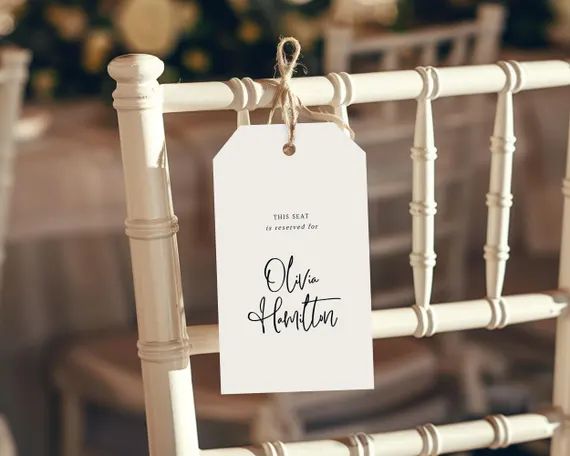
The Name Tag That Changed Everything
At my granddaughter’s wedding, something happened that would change everything. I arrived at the reception with hope in my heart, dressed in my finest, ready to celebrate a day I’d been looking forward to for months. But within minutes of walking through those grand ballroom doors, I discovered a truth that had been hiding in plain sight for three long years—a truth about how my family really saw me. And five minutes after that revelation, my late husband’s attorney handed me a sealed envelope that made my knees go weak.
But I’m getting ahead of myself. Let me start from the beginning.
I’ve always believed family celebrations should be moments of pure joy—the kind of memories you hold close on difficult days, the kind that warm your soul when winter comes. My granddaughter Jennifer’s wedding was supposed to be exactly that: a perfect day filled with love, laughter, and the beginning of a beautiful new chapter. I’d spent months helping with preparations, writing checks without hesitation, offering advice when asked. I wanted everything to be perfect for her.
Instead, it became the day I finally opened my eyes to what I’d been refusing to see.
The morning of the wedding, I took my time getting ready. At sixty-five, I’m no longer young, but I’m not ready to fade into the background either. I selected a pale blue dress from my closet—the one my late husband Robert always said brought out my eyes. I styled my silver hair carefully, pinning it up the way he used to like. I even dabbed on a touch of the perfume he’d given me for our last anniversary together, three years ago, before the cancer took him from me.
Standing before my bedroom mirror, I studied my reflection. The dress still fit well. My posture was straight. My eyes, though marked by grief and time, were still bright.
“You look beautiful, Alice,” I whispered to myself, imagining Robert’s voice saying the words. For just a moment, I could almost feel his presence beside me, his hand resting gently on my shoulder the way it always had. Those small gestures of affection—I missed them more than I could express.
Robert and I had been married for forty-two years. He was my anchor, my greatest supporter, my best friend. When he died, I felt like half of myself had been torn away. The first year was a fog of grief so thick I could barely see through it. But gradually, slowly, I learned to navigate life alone. Or so I thought.
The ceremony at St. Mark’s Church was everything a wedding should be. Sunlight streamed through stained glass windows, casting colorful patterns across the assembled guests. The organist played beautifully. When the doors opened and Jennifer appeared in her white gown, a collective sigh rippled through the crowd. She looked radiant, her face glowing with happiness and anticipation.
My son Richard walked her down the aisle, his expression a mixture of pride and the bittersweet awareness that his daughter was beginning her own journey. Even my daughter-in-law Pamela, usually so composed and controlled, seemed genuinely moved, dabbing at her eyes with a silk handkerchief.
For those precious moments, everything felt exactly right. This was family. This was love. This was what Robert and I had worked so hard to build—a legacy of connection and care that would outlive us both.
If only it had stayed that way.
The reception was held at the Westbrook Hotel, an elegant venue with soaring ceilings and crystal chandeliers. I arrived feeling lighter than I had in months, looking forward to celebrating with family and friends, to dancing perhaps, to toasting the happy couple.
I made my way to the check-in table near the entrance, where a cheerful young woman sat surrounded by alphabetized name tags and table assignment cards. The table was beautifully decorated with small flower arrangements and ivory ribbons.
“Name, please?” she asked with a bright smile.
“Alice Edwards,” I replied. “Grandmother of the bride.”
She rifled through the cards efficiently, her fingers dancing across the alphabet. “Ah, here you are, Mrs. Edwards,” she said, handing me my name tag with a flourish.
I glanced down at it, expecting to see my name neatly printed, perhaps with a small designation like “Grandmother of the Bride” or simply “Family.” Instead, the elegant calligraphy spelled out something that made my blood run cold:
“The old lady who will pay for everything, my gal.”
My hand froze midway to pinning it on. I read it again, certain I must be misunderstanding. But no—there it was, in beautiful script that made the cruelty somehow worse. Someone had actually written this. Someone had approved it. Someone thought this was appropriate.
“Is something wrong?” the young woman asked, noticing my expression.
I forced my face into a smile, though my heart was hammering. “There seems to be a mistake with my name tag,” I managed to say.
She leaned over to look at it, and I watched her eyes widen. Her cheeks flushed. “Oh my goodness, I’m so sorry. That’s… I don’t know how that happened. Let me check if there’s another one.”
She began searching frantically through the remaining cards, but I already knew. This wasn’t an accident. This was deliberate.
“It’s fine,” I said quickly, not wanting to cause a scene. Not wanting to ruin Jennifer’s day. “I’ll just speak with my family about it later.”
Despite every instinct screaming at me to throw the offensive thing away, I pinned it to my dress with trembling fingers and walked into the ballroom. My cheeks burned with humiliation. My hands shook. But I held my head high because that’s what Robert would have wanted. That’s what I’d been taught to do.
The ballroom was magnificent—round tables draped in ivory linens, centerpieces of roses and peonies, soft lighting that made everything glow. A string quartet played gentle classical music. Waiters circulated with champagne and hors d’oeuvres. It was exactly the elegant affair I’d envisioned when I’d written the check for the venue.
When I’d written the check for the catering.
When I’d written the check for the flowers.
The reality of that name tag settled over me like a cold fog.
During the cocktail hour, I tried desperately to enjoy myself. I chatted with distant relatives I hadn’t seen in years. I complimented the decorations. I smiled until my face ached. Most guests either didn’t notice my name tag or were too polite to mention it.
But I noticed the ones who did see it.
I watched their eyes flick down to my chest, watched the moment of recognition, watched the quick flash of surprise or discomfort before they looked away. Each glance felt like a small knife wound.
Then I overheard a conversation that made everything so much worse.
I’d stepped away to a quiet corner near the windows, taking a moment to collect myself, when I heard voices behind a decorative partition.
“Did you see the grandmother’s name tag?” someone whispered, followed by barely suppressed laughter.
“Pamela said they thought it would be hilarious,” another voice replied. “Apparently, she’s been their personal ATM since Robert died. They’re not even subtle about it anymore.”
“I heard she paid for everything today. The venue, the catering, even the bride’s dress.”
“Well, she can afford it, can’t she? Robert left her loaded.”
More laughter, and then the voices moved away, leaving me standing frozen behind that partition, my champagne glass trembling in my hand.
Pamela. My daughter-in-law. She’d been involved in this humiliation. Maybe she’d even suggested it.
I set down the champagne before I dropped it and tried to steady my breathing. Don’t make a scene. Don’t ruin Jennifer’s day. Those thoughts repeated like a mantra.
But then Richard spotted me from across the room and waved me over enthusiastically. He was standing with a group of well-dressed older couples, all of them looking comfortable and prosperous.
“Mom!” he called, his voice carrying. “Come meet the Andersons. Dad used to golf with Bill.”
I had no choice but to cross the room, feeling every eye on my name tag, feeling the weight of judgment and pity from strangers who now knew exactly how my family valued me.
Bill Anderson was a tall man with silver hair and kind eyes. His wife Martha had a warm smile that faltered slightly when her gaze inevitably dropped to my chest.
“Mom, this is Bill and Martha Anderson,” Richard said, then added with a laugh that sounded loud in my ears, “And this is Mom—our family’s walking bank account.”
The smile froze on Martha’s face. Bill looked distinctly uncomfortable, shifting his weight from foot to foot.
“Alice Edwards,” I said firmly, extending my hand to Bill and meeting his eyes directly. “Robert’s widow.”
“Of course,” Bill said, and his handshake was warm, sympathetic. “Robert spoke of you often. He was immensely proud of you, Alice. He was a good man.”
“The best,” I agreed softly.
The conversation continued, but I barely heard it. Bill and Martha were gracious enough to ignore Richard’s comment and my horrifying name tag, but the damage was done. This was how my son saw me. Not as his mother. Not as the woman who’d raised him, supported him, loved him unconditionally. But as a source of money.
When the Andersons excused themselves, I grabbed Richard’s arm and pulled him aside to a quiet corner.
“What is the meaning of this?” I demanded in a fierce whisper, pointing at the name tag.
Richard glanced down at it and actually laughed. “Oh, Mom, don’t be so sensitive. It’s just a joke. Everyone knows you’re the one with the deep pockets since Dad left you everything.”
“It’s humiliating,” I said, my voice shaking despite my efforts to control it.
“Oh, please,” he rolled his eyes in a gesture so dismissive it felt like a slap. “Lighten up. It’s a party. You’re supposed to be having fun.”
“Fun?” I repeated. “You think this is fun for me?”
Before he could respond—or more likely, before he could make another dismissive comment—Pamela appeared at his side. She looked stunning in her mother-of-the-bride dress, a designer creation that had cost more than most people’s monthly mortgage. I knew because I’d heard her bragging about it to someone earlier.
“There you are, Alice,” she said brightly, her smile not quite reaching her eyes. “Has Richard been introducing you around? We wanted to make sure everyone knows who’s responsible for this gorgeous wedding.”
She actually winked at me.
Richard laughed, and they exchanged a look—a knowing, conspiratorial glance that excluded me entirely while simultaneously being entirely about me.
“Excuse me,” I managed to say, and fled toward the restroom before they could see the tears threatening to spill over.
In the ladies’ room, I stood before the mirror and dabbed at my eyes with tissue, trying not to ruin my makeup. The woman looking back at me seemed older somehow, more tired. When had I become invisible as a person and visible only as a checkbook?
The door opened behind me, and I quickly turned away, not wanting anyone to see me crying. But instead of another guest, an older gentleman in a well-tailored suit backed out quickly.
“I’m so sorry, I—” He stopped, peering at me more carefully. “Mrs. Edwards? Alice?”
I recognized him then. Martin Reynolds, Robert’s attorney. He’d handled the estate, had been unfailingly kind during those terrible months after Robert’s death when I could barely function.
“Martin,” I said, forcing a smile. “I didn’t know you were here.”
“Jennifer invited me,” he said, staying carefully in the doorway. “Robert and I were close, and I’ve known Jennifer since she was born.” His gaze flicked down to my name tag, and his expression darkened. “Alice, what is that?”
I looked down, having almost forgotten about it in my distress. “Apparently, it’s someone’s idea of a joke.”
“It’s not funny,” Martin said flatly. “And Robert would have been furious.”
Something in his tone made me look up sharply. Martin’s face was troubled, and he seemed to be wrestling with some internal decision.
“There’s something you should know,” he said finally, lowering his voice and glancing around to make sure we were alone. “Something Robert insisted I not tell you unless it became absolutely necessary.”
My heart began to pound. “What do you mean?”
Martin reached into his inner jacket pocket and withdrew a cream-colored envelope, the paper thick and expensive. I recognized Robert’s personal stationery.
“This is a codicil to Robert’s will,” Martin said carefully. “He added it about six months before he passed away. He made me promise not to mention it unless…” He trailed off, looking at my name tag again with clear distaste. “Unless something like this happened.”
With trembling hands, I took the envelope and opened it. Inside was a single sheet of paper, covered in legal language that I had to read twice to fully understand.
The meaning, once it became clear, nearly buckled my knees.
Any descendant who publicly humiliated me—who treated me with disrespect, who reduced me to nothing more than a source of money—would be immediately and completely disinherited from Robert’s estate.
And Robert’s estate, I was beginning to understand, was far larger than I’d realized.
“Why?” I whispered. “Why wouldn’t he tell me about this?”
Martin’s expression softened. “He hoped it would never be necessary. Robert wanted them to treat you with love and respect because they genuinely cared about you, not because they feared losing their inheritance. He believed in giving people the chance to be their best selves.” Martin paused. “But he was also realistic about human nature.”
I stared down at the document in my shaking hands. In one moment, everything had shifted. I had power here. Real power. The ability to change lives with a word.
“What do you want to do?” Martin asked gently.
I carefully folded the document and handed it back to him. “Nothing,” I said. “Not yet. I need to see…” I stopped, searching for the right words. “I need to see how deep this goes. I need to understand who they really are when they think I’m powerless.”
Martin nodded slowly. “That’s wise. But Alice—” He met my eyes directly. “Don’t let this go on too long. Don’t let them hurt you more than they already have.”
“I won’t,” I promised, though I wasn’t entirely sure what that meant yet.
As I returned to the reception, the name tag felt different against my chest. Not lighter—it still burned with humiliation. But now it represented something else too. Evidence. Proof. The beginning of a reckoning that was long overdue.
I spent the rest of the reception watching. Really watching. I saw Richard and Pamela laughing with friends, occasionally glancing my way with expressions I could now read clearly: satisfaction mixed with contempt. I saw Jennifer, beautiful and happy, oblivious to the undercurrents swirling around her grandmother. I saw my grandson Michael, twenty-one and serious, watching his parents with an expression I couldn’t quite interpret.
And through it all, I felt Robert’s presence beside me. Not literally, of course. But I could almost hear his voice in my mind.
“I’m sorry, darling,” he seemed to say. “I hoped they’d be better than this. But I made sure you’d have a choice. You always have a choice.”
By the time the last dance ended and the guests began to leave, I’d made my decision. I would watch. I would wait. I would give them every opportunity to show me whether the people they’d become were who they truly were—or whether something of the family Robert and I had tried to raise still existed beneath the greed and entitlement.
But I would not be silent anymore. And I would not be invisible.
The name tag that humiliated me had also, in a strange way, freed me. It had shown me the truth. And truth, however painful, is always better than comfortable delusion.
As I drove home that night, still wearing that offensive name tag like a badge of dishonor, I thought about Robert. I thought about the life we’d built together, the values we’d tried to instill in our son. I thought about the grandmother I’d tried to be.
And I thought about the woman I was about to become.
The morning after Jennifer’s wedding, I sat at my kitchen table in my bathrobe, staring at the name tag I’d placed in front of me. In the harsh light of day, the elegant calligraphy seemed even more cruel: “The old lady who will pay for everything, my gal.”
I traced the letters with my fingertip, memorizing every curve and flourish. This small piece of cardstock represented three years of my life—three years I’d spent trying to fill the void Robert left behind by giving everything my family asked for. Money, time, support, unconditional generosity.
And somewhere along the way, I’d stopped being Alice Edwards, beloved wife and mother, and become nothing more than an ATM with legs.
“They’ve changed,” I whispered to the empty room, imagining Robert sitting across from me with his morning coffee. “Or maybe they were always this way, and we just didn’t want to see it.”
That thought haunted me as I moved to the living room, drawn to the large family portrait hanging above the fireplace. It had been taken five years ago, for Robert’s and my fortieth anniversary. A professional photographer had spent two hours positioning us, adjusting lighting, trying to capture something authentic.
In the photo, Robert sat in the center, still robust despite the early signs of the illness that would claim him three years later. I stood beside him, my hand resting on his shoulder. Richard and Pamela flanked us on the right, both smiling broadly. Jennifer and Michael, then teenagers, sat cross-legged in front.
We looked happy. We looked like a real family—the kind you see in commercials and holiday cards. The kind that weathered storms together and celebrated victories as one.
When exactly had that changed?
The question gnawed at me as I made my morning tea. Maybe the transformation had been gradual, so subtle I hadn’t noticed the erosion of respect until it was too late. Or maybe I simply hadn’t wanted to notice.
My first clear memory of the shift came about six months after Robert’s funeral.
I’d been invited to dinner at Richard and Pamela’s house—a rare occurrence, even then. They lived in an upscale neighborhood in a sprawling colonial with perfectly manicured lawns and a three-car garage. Robert had helped them with the down payment years ago, back when Richard was just starting his career.
That evening, they’d been unusually attentive. Pamela cooked my favorite meal—pot roast with roasted vegetables. Richard kept my wine glass filled. They asked about my health, about how I was managing living alone, about whether I needed help with anything around my house.
It felt wonderful, actually. Like they genuinely cared. Like I still mattered to them beyond just being Richard’s mother.
Then, over dessert, they revealed the real reason for the invitation.
“Mom,” Richard had said, refilling my wine glass for the third time, “Pamela and I have been talking about remodeling our kitchen. Nothing too fancy—just updating the appliances, maybe new countertops and a backsplash. The current setup is really outdated.”
I’d looked around at their kitchen, which seemed perfectly fine to me—certainly nicer than the one Robert and I had shared for forty years. But I smiled and said, “That sounds lovely, dear.”
“The thing is,” Pamela had continued, her voice smooth as silk, “with Jennifer’s college tuition and Michael starting at the private academy next year, we’re a bit stretched financially right now.”
There had been a pause. An expectant silence.
That’s when it hit me: they were asking for money.
“Are you… do you need help with the remodel?” I’d asked slowly.
“We wouldn’t ask if it wasn’t important,” Richard said quickly. “But Dad left you quite comfortable, and we thought maybe you’d want to help out the family.”
The way he said it—so casual, so matter-of-fact—made it seem like refusing would be selfish. Like it was expected. Like I owed them.
I’d written them a check for thirty thousand dollars that night.
Looking back now, standing in my living room with morning light streaming through the windows, I could see that moment for what it was: the beginning of a pattern. The first time they’d successfully reframed my grief and generosity into obligation and expectation.
The requests that followed came more frequently, each one larger than the last. The kitchen remodel somehow expanded into a full renovation of the first floor. “Tuition assistance” became brand-new luxury cars for both Jennifer and Michael when they turned eighteen. “Help with a down payment” on a vacation condo became me purchasing it outright while they enjoyed the benefits.
I opened my hallway closet and pulled out a box of financial records I’d been meaning to organize. Sitting cross-legged on the floor like a schoolgirl, I began sorting through bank statements, canceled checks, and wire transfer receipts.
The evidence was overwhelming and nauseating. Over the past three years, I had given Richard and Pamela nearly two hundred and fifty thousand dollars. Quarter of a million dollars in “loans” that were never repaid, “investments” in their lifestyle that I never questioned, “emergencies” that always somehow required immediate and substantial cash.
And not once had they said, “Mom, this is too much.” Not once had they said, “We can manage without your help.” Not once had they treated my generosity as the extraordinary gift it was rather than their natural entitlement.
The phone rang, startling me from my financial archaeology. The caller ID showed Pamela’s number.
For a moment, I considered not answering. But curiosity—or maybe the remnants of old habits—made me pick up.
“Alice, there you are!” Pamela’s voice was bright and cheerful. “I’ve been trying to reach your cell phone.”
I glanced at my purse, where my cell phone still sat, forgotten since yesterday. “I’m sorry, Pamela. I must not have heard it. Is everything all right?”
“Everything’s wonderful!” she gushed. “Richard and I just wanted to call and thank you again for everything yesterday. Wasn’t the wedding absolutely beautiful? Everyone was talking about how elegant it was.”
“Yes,” I said carefully. “It was lovely.”
“Jennifer and Mark are just over the moon. They couldn’t have had such a perfect day without your incredible generosity.”
I waited, knowing from experience that gratitude was usually the preamble to the next request.
“Actually,” Pamela continued, right on cue, “that’s partly why I’m calling. There’s a tiny problem with the honeymoon situation.”
Of course there was.
“Mark’s parents were supposed to cover the honeymoon to Bali,” Pamela explained, her voice taking on a sympathetic tone. “But Mark’s father’s business has been struggling—you know how tough the economy has been—and they’ve had to back out at the last minute. Jennifer is absolutely devastated.”
I closed my eyes, picturing the inevitable request forming.
“So Richard and I were wondering,” Pamela continued, “if you might be able to help. They’ve had their hearts set on this trip for months. It’s two weeks in Bali with a beachfront villa. Richard and I would love to contribute, of course, but after everything we spent on the wedding preparations…”
Everything they spent. I had covered ninety percent of the wedding costs. They’d paid for their own attire and possibly the rehearsal dinner—though even that, I suspected, had been partially subsidized by me through various “unexpected expenses” they’d mentioned in the weeks leading up to the wedding.
“How much would the trip cost?” I heard myself ask.
“Around fifteen thousand, including flights, accommodations, and spending money,” Pamela said quickly, as if she’d been waiting for the question. “I know it sounds like a lot, but this is their once-in-a-lifetime honeymoon. And Jennifer has been through so much stress with wedding planning…”
Stress I had alleviated by paying for everything. Stress that most young couples managed by setting realistic budgets and making compromises.
“I’ll think about it,” I said, surprising both of us with my noncommittal response.
There was a pause on the other end of the line—a silence filled with confusion and barely concealed frustration.
“Oh,” Pamela said, her voice losing some of its warmth. “Well… they really need to book soon to get the best rates. The travel agent said if they don’t reserve by the end of the week—”
“I understand,” I interrupted gently but firmly. “I’ll let you know my decision tomorrow.”
“Tomorrow?” Pamela repeated. “Alice, is everything okay? You seem… different.”
Different. Because I wasn’t immediately agreeing to write another enormous check.
“I’m fine, Pamela. Just tired after yesterday. I’ll call you tomorrow.”
After I hung up, I sat in the quiet of my kitchen, surrounded by evidence of three years of one-sided generosity, and felt something shift inside me. It was subtle but unmistakable—like the first crack in ice before it shatters.
I wasn’t angry yet. Not quite. But I was done being used.
I returned to the financial records, tallying numbers with new eyes. Every check, every wire transfer, every “small favor” that had emptied my accounts while filling theirs. I created a spreadsheet, categorizing expenses: home improvements they’d requested, vehicles I’d purchased, vacations I’d funded, emergencies that never seemed to end.
By mid-afternoon, I had a complete financial picture. The numbers were staggering.
A knock at the door interrupted my work. Through the peephole, I saw Michael—my twenty-one-year-old grandson—standing on the porch, hands shoved in his jeans pockets, looking uncertain.
I quickly gathered the scattered papers and shoved them back into the box before opening the door.
“Grandma,” Michael said, stepping forward to hug me. He was tall like Robert had been, with the same kind eyes and thoughtful demeanor. “Are you okay? I’ve been texting you all morning.”
“I’m sorry, sweetheart,” I said, holding him tight for a moment. “My phone was off. Come in.”
He followed me into the kitchen, where I busied myself making tea—Earl Grey for both of us, the way we’d always shared it.
“About yesterday,” Michael began as he sat at the kitchen table. “The name tag and… everything. I wanted to apologize. It wasn’t right, Grandma. None of it was right.”
I set the kettle on the stove and turned to face him. “You noticed?”
“Of course I noticed,” he said, pain evident in his voice. “So did a lot of other people. I heard them talking about it. Some thought it was funny, but most…” He trailed off, looking down at his hands. “Most seemed uncomfortable. And I should have said something. I should have stood up for you.”
Emotion clogged my throat. “It’s not your responsibility to correct your parents, Michael.”
“Maybe not,” he said. “But it is my responsibility to stand up for what’s right. And treating you like that was wrong.”
I brought the teapot and cups to the table, sitting across from him. For a long moment, we just looked at each other—this young man I’d helped raise, whose soccer games I’d attended, whose college essays I’d proofread, whose dreams I’d encouraged.
“Can I ask you something?” Michael said quietly. “And will you be honest with me?”
“Of course.”
“How long has this been going on? Them treating you like…” He struggled for words. “Like you’re just there to fund their lifestyle?”
I poured tea into both cups, watching the amber liquid swirl. “Openly? Since your grandfather died. But I suspect it was building before that, just more subtle.”
Michael nodded slowly. “Dad and Mom have changed,” he said. “Or maybe I just didn’t see it clearly before. All they talk about anymore is money. Your money.” He met my eyes. “Last week, I overheard them discussing your house.”
My hand froze on the teapot. “My house?”
“They were in Dad’s study, and I was walking past to get something from my old room. Dad said something about how it’s too big for one person, and how you’d be better off in a retirement community.” Michael’s jaw tightened. “Mom agreed. They talked about how they could help you ‘downsize’ and how the money from selling could help ‘the whole family.'”
The words hit me like a physical blow. They wanted my house. The home Robert and I had built together, where we’d raised Richard, where every room held memories I treasured. They wanted to take that from me too.
The kettle began to whistle—a sharp, insistent sound that matched the rising fury in my chest.
“Grandma?” Michael’s voice brought me back. “Are you sure you’re okay?”
I turned off the stove and poured the water, focusing on the simple task to calm my racing heart. When I finally sat down, I felt different. Clearer. Like fog lifting to reveal a landscape I hadn’t seen before.
“I’m better than okay, Michael,” I said quietly. “I think I’m finally seeing things clearly for the first time in three years.”
“What does that mean?”
I wrapped my hands around my teacup, feeling its warmth. “It means things are going to change. It means I’m done being treated like a checkbook instead of a person.” I looked at him directly. “And it means I’m going to find out exactly who in this family truly cares about me—and who only cares about what I can give them.”
Michael nodded slowly. “Is there anything I can do?”
“Be honest with me,” I said. “Always. And maybe…” I hesitated. “Maybe help me understand when things changed. You’ve lived with them. You see things I don’t.”
We talked for another hour, Michael carefully, almost reluctantly, revealing details about his parents’ conversations, their spending habits, their casual references to “Mom’s money” as if it were a shared family resource rather than my personal property.
By the time he left, promising to visit again soon, I had a fuller picture of the past three years. It wasn’t just that Richard and Pamela had asked for help—it was that they’d come to see my help as their right. My generosity had become their expectation. And somewhere in that transition, they’d stopped seeing me as Robert’s widow, as Richard’s mother, as a person in my own right.
I was just the old lady who paid for everything.
That evening, I pulled out the name tag again and stared at it. Then I did something I hadn’t done since Robert died: I called my old friend Eleanor.
Eleanor and I had been close before Robert got sick, but during his illness and after his death, I’d withdrawn from most friendships. Grief had made me solitary. And then, without really noticing it happening, filling Richard and Pamela’s endless requests had consumed the time and energy I might have spent rebuilding my social life.
“Alice?” Eleanor’s voice was warm but surprised. “Is that really you?”
“It’s me,” I said. “I know it’s been a long time, and I’m sorry about that. But I was wondering… would you like to have lunch this week?”
“I would love that,” Eleanor said immediately. “Are you all right? You sound different.”
“I’m fine,” I replied. And for the first time in three years, I meant it. “Actually, I’m better than fine. I think I’m finally waking up.”
That night, I slept better than I had in months. In the morning, I would call Pamela and give her my answer about the honeymoon. I would start setting boundaries. I would begin reclaiming my life.
But first, I needed to understand exactly what Robert had left me—and what power I actually held.
It was time to pay Martin Reynolds another visit.
THE END

Lila Hart is a dedicated Digital Archivist and Research Specialist with a keen eye for preserving and curating meaningful content. At TheArchivists, she specializes in organizing and managing digital archives, ensuring that valuable stories and historical moments are accessible for generations to come.
Lila earned her degree in History and Archival Studies from the University of Edinburgh, where she cultivated her passion for documenting the past and preserving cultural heritage. Her expertise lies in combining traditional archival techniques with modern digital tools, allowing her to create comprehensive and engaging collections that resonate with audiences worldwide.
At TheArchivists, Lila is known for her meticulous attention to detail and her ability to uncover hidden gems within extensive archives. Her work is praised for its depth, authenticity, and contribution to the preservation of knowledge in the digital age.
Driven by a commitment to preserving stories that matter, Lila is passionate about exploring the intersection of history and technology. Her goal is to ensure that every piece of content she handles reflects the richness of human experiences and remains a source of inspiration for years to come.