The House I Built: A Story of Betrayal and Justice
There are sounds that change your life forever. For some, it’s a doctor’s diagnosis. For others, it’s a phone call in the middle of the night. For me, it was laughter—strangers laughing in my living room on a Tuesday afternoon when I thought I was alone.
I had just returned from a routine checkup, my keys still in my hand, when I heard it. Voices that didn’t belong. Footsteps in rooms that were mine. And then I saw something that made my blood run cold: my daughter-in-law showing my house to a buyer, discussing a price I had never agreed to, planning a future that erased me completely.
“I thought about selling it, Mom,” she said when she finally noticed me standing there. “After all, you’ve already lived your life.”
Those words hung in the air like poison. I looked at her—this woman I had welcomed into my home, fed, sheltered—and something inside me that had been sleeping for too long finally woke up.
“And you?” I replied, my voice calmer than I felt. “You’ve just started ruining yours.”
What followed was a silence that hit like a slap. She turned pale, her carefully constructed mask slipping for just a moment. But that moment was enough. Because in that instant, I realized something crucial: I had been blind, but now I could see. And what I saw was going to change everything.
The Woman I Used to Be
My name is Alisa Miller. I’m 68 years old, and there was a time when that number seemed like a distant impossibility. There was a time when I was a force of nature—a young architect in a world that didn’t make room for women with blueprints and hard hats.
This house isn’t just walls and windows. It’s proof that I existed, that I mattered, that I could take raw land and transform it into something permanent. I designed every angle, every window placement, every closet. But more than that—I built it. With my own hands.
It was 1990 when David and I started. He was an accountant with steady work but modest pay. I was a young architect earning half what my male colleagues made, working three jobs simultaneously to save enough for our dream. Ryan, our son, was only three years old then, running barefoot through our cramped rental apartment where the neighbors upstairs sounded like they were moving furniture at midnight.
“One day,” David would tell me over instant coffee in the early morning hours, “we’re going to have our own house. One that you design.”
I didn’t just believe him. I made it happen.
For five years, I worked like someone possessed. I designed houses during the day, taught technical drawing in the afternoons, and took freelance projects at night after putting Ryan to bed. I slept four hours if I was lucky. I turned down parties, vacations, anything that might slow us down. David never complained. He took care of Ryan during my deadlines, massaged my shoulders when they ached from hunching over drafting tables, made tea when my eyes could no longer focus.
“You’re the strongest woman I know,” he’d whisper.
And I had to be, because giving up wasn’t an option.
In 1995, we finally bought the land—4,000 square feet in what was then almost rural. It was covered in tall grass and rocks, muddy from recent rain. When I stepped onto that soil for the first time, David took my hand.
“What do you see?” he asked.
I closed my eyes and saw everything. The walls rising. The morning light streaming through perfectly placed windows. A garden where Ryan could play. A kitchen where we’d cook Sunday meals together. A library filled with the books we loved.
“I see our life,” I told him.
And then I got to work.
I didn’t just design every inch of this house—I built it. We couldn’t afford to hire all the labor, so I learned. I learned to mix cement, lay bricks, level floors. I learned to use tools that left my hands covered in calluses and scars. My body, which had only known pencils and rulers, became strong in ways I never imagined.
David worked beside me every weekend. Ryan played among the sandbags, building his own castles while we raised the walls of ours. It took three years—three years of literal blood, sweat, and tears. Three years of waking before dawn to check our progress. Three years of falling into bed with aching muscles and returning the next day to do it again.
But in 1998, we moved in.
I remember the first night sleeping on the floor of the master bedroom because we didn’t have a new bed yet. I lay there looking at the ceiling I had planned, feeling the walls I had helped raise, and I cried. I cried so hard David got scared.
“What’s wrong?” he asked, holding me.
“Nothing,” I whispered. “It’s just… we did it. We really did it.”
This house wasn’t just shelter. It was living proof that when a woman decides something, the universe has to step aside.
The Years That Followed
The years passed gently within these walls. Ryan grew up here—learned to ride a bike in this garden, celebrated birthdays in this living room, brought home friends and girlfriends and dreams. David and I grew old together here, celebrating anniversaries and mourning losses, planting trees and repainting rooms.
Every corner held memories. The kitchen where David taught Ryan to make pancakes on Saturday mornings. The garden where we planted the lemon tree when Ryan was born—it’s massive now, its branches shading half the yard. The bedroom where David and I slept for 30 years, where we dreamed our dreams and made our plans.
And then, eight years ago, everything changed.
Pancreatic cancer. Stage 4. Six months to live, the doctor said.
David lived for eleven months. Eleven months where this house transformed into a hospital, a refuge, a temple of goodbye. I cared for him in our bedroom, in that bed where we’d shared three decades of our lives. I gave him his medicine, bathed him when he couldn’t do it himself, read him his favorite books, held his hand when pain tore through him.
He died here, in my arms, looking at me with eyes that had seen me build empires from nothing.
His last words weren’t about himself. They were about the house.
“Take care of her,” he whispered. “She’s yours, too.”
He knew. He knew this house was more than a place—it was my legacy, my masterpiece, my proof that Alisa Miller had existed and left her mark on this world.
After his death, Ryan wanted me to move in with him.
“Mom, this house is too big for you alone,” he’d say with concern in his voice.
But I refused. How could I abandon the only place where I could still feel David? How could I leave the trees we planted together, the rooms we painted, the garden where I scattered his ashes?
I stayed alone, yes. But I stayed home.
The Arrival
That was my life for six years after David’s death—quiet, solitary, but mine. And then, two years ago, everything changed again.
It was an October afternoon. I was pruning roses in the garden when the doorbell rang. I opened the door to find Ryan standing there with a suitcase in each hand and an unfamiliar woman by his side.
“Mom,” he said with that nervous smile he used when he was about to ask for something big, “this is Vanessa, my girlfriend.”
Not fiancée. Not even partner. Just girlfriend.
Vanessa was 32 then—Ryan was 41. She had long black hair, perfectly straight, and impeccable blood-red nails. She wore tight clothes that screamed designer labels without actually being them. And that smile—God, that smile looked practiced.
“A pleasure to meet you, Mrs. Miller,” she said in a soft, almost childish voice. “Ryan has told me so much about you.”
Her hand was cold when I shook it. Too cold for such a warm day.
“Please, come in,” I said, already sensing something I couldn’t quite name.
It turned out Ryan had lost his job three months earlier. “Company restructuring,” he explained. “Last hired, first fired.”
And Vanessa worked in sales but was “between jobs”—an elegant way of saying unemployed.
“We need to stay here for a while,” Ryan said without quite meeting my eyes. “Just until I find something new. A couple of months at most.”
A couple of months. Those words would haunt me.
I should have said no. I should have asked why they didn’t seek help from her family. I should have set clear boundaries, specific timelines, iron-clad rules.
But I looked at my son and saw something in his eyes that frightened me—desperation mixed with a fragile hope. How could I turn him away?
“All right,” I said. “You can stay.”
Vanessa’s smile widened, victorious but disguised as gratitude. “Thank you, Mom. You don’t know how much this means to us.”
Mom. She was already calling me Mom without even being married to my son.
That should have been my first warning.
The Slow Erosion
The first few days were tolerable, even pleasant. Vanessa seemed helpful—she cleaned, made breakfast, asked if I needed anything from the store. Ryan spent mornings sending resumes and doing video interviews. They seemed like any young couple trying to get back on their feet.
But then the changes began. Small at first, almost imperceptible.
Vanessa started reorganizing the kitchen. “It’s just more practical this way, Mom,” she’d say, moving my pots from places I’d kept them for decades. She changed the living room curtains without asking. “The old ones were so dated,” she explained with a dismissive wave.
She brought in new furniture—a sofa she claimed was “on sale” and relegated my favorite armchair to the basement. “This one’s more modern,” she assured me.
Every time I protested, Ryan intervened. “Mom, it’s not a big deal. She’s just trying to help.”
Help. That word became a weapon used against me in my own home.
I kept quiet because I didn’t want to be that mother-in-law—the one who complains about everything, who makes drama, who drives wedges between couples. So I swallowed my discomfort and smiled.
The couple of months stretched into six, then a year, then eighteen months. Ryan found sporadic freelance work but nothing stable. Vanessa kept “looking” but never found anything that “felt right.”
And meanwhile, my house stopped being mine.
Vanessa invited friends over without telling me. They’d arrive in the afternoons, settle into my living room as if it belonged to them, drink my wine, use my bathroom, leave lipstick marks on my crystal glasses. When her friends asked about the house, she’d say with casual ownership, “Yes, we live here. It’s a family home.”
As if I were just a tenant in my own property.
The dinners were perhaps the worst part. Vanessa started cooking elaborate meals for herself and Ryan—steak, fresh pasta, homemade desserts. But for me, there were always excuses.
“Oh Mom, I thought you’d already eaten.”
“I only made a little because Ryan and I are watching our portions.”
“There’s leftover lunch in the fridge if you’re hungry.”
Always leftovers. Always cold. Always alone at the breakfast nook while they laughed and poured wine in the dining room I had built with my own hands.
One night, as I ate a ham sandwich I’d made for myself while they enjoyed baked salmon with roasted potatoes, I felt something inside me crack. But still, I said nothing.
Ryan seemed blind to it all. Or maybe he chose not to see.
Six months ago, after Vanessa redecorated my dining room without even asking, I finally confronted my son.
“We need to talk,” I said when we were alone.
He sighed like he already knew what was coming, like he was tired of hearing it. “Mom, please don’t start.”
“Start what? Defending what’s mine? Asking for basic respect?”
“Vanessa respects you,” he said, but his voice sounded hollow. “She just wants the house to look nice, to be pleasant for everyone.”
“It was pleasant before she arrived.”
His eyes flashed with something—anger or pain, I couldn’t tell. “I know it’s your house. You think she doesn’t remind me every day how grateful I should be? How lucky we are?”
I froze at that admission.
“I love her, Mom,” he continued, his voice breaking slightly. “I need you to make an effort to get along with her. Please.”
Those three words—I love her—explained everything. My son was so completely in love, so thoroughly blinded, that he couldn’t see what was crystal clear to me. Vanessa didn’t love this house. She didn’t love him. She loved the security, the comfort, the free roof over her head.
But I couldn’t tell him that. When you tell a man the woman he loves is using him, he doesn’t hear you. He just learns to resent you.
So I nodded. I swallowed the words that might have saved us both months of pain. And I let him believe he’d won.
That night, lying in the bed I’d shared with David for three decades, I knew something had broken between my son and me—something that might never heal.
I didn’t know then that it would get so much worse.
The Discovery
It was a Tuesday afternoon—ironically, the same day of the week when everything would later come to a head—when I returned from a doctor’s appointment and heard that laughter. Strangers in my living room. Vanessa showing my house like she owned it.
When I confronted her, when I sent the potential buyer away, Vanessa’s mask slipped. The sweet, helpful daughter-in-law vanished, replaced by someone cold and calculating.
“How dare you humiliate me like that?” she hissed once we were alone. “I was trying to help. This house is falling apart. You can’t maintain it anymore.”
“This is my house,” I said, my voice deadly calm. “Mine. Not yours. And if I find you trying to sell what doesn’t belong to you again, you’ll discover exactly what I’m still capable of.”
She turned pale—actually pale—and for the first time, I saw uncertainty in her eyes.
I went to my room and locked the door. Only then, in the privacy of my sanctuary, did I allow myself to shake. Only then did I let the rage and violation wash over me.
But I also made a decision. I was going to find out exactly what Vanessa was up to. And I was going to stop her.
That night, after everyone had gone to bed, I crept through my own house like a thief. I searched the living room, the study that used to be David’s. And what I found made my blood run cold.
Invoices. Credit card statements. Vanessa owed $89,000 across four different cards. For someone supposedly unemployed, she’d been spending like a lottery winner.
Then I found the emails to a lawyer, dated two months earlier, asking about declaring me incompetent—about taking away my legal control over my own property.
A home appraisal I’d never authorized: $480,000.
A handwritten note: “Buyer interested, 30k deposit.”
She’d already received money for my house. Money for a sale I never agreed to.
I photographed everything, my hands shaking so badly I nearly dropped my phone. Then I went to my closet and checked the metal safe box where I kept cash for emergencies.
There should have been $15,000.
I counted what remained: $7,300.
She’d been stealing from me. Literally breaking into my safe and stealing my money.
I sat on my bed, surrounded by evidence of betrayal, and felt something I hadn’t felt in years—not sadness, but pure, crystallized rage.
The next morning, I called Richard Shaw, an old colleague who’d become a real estate lawyer. I told him everything and showed him the photographs.
His face grew graver with each image. “This is document forgery, fraud, attempted theft. She could face serious prison time for this.”
“Good,” I said. “Because I’m not going to be her victim.”
“There’s something else you need to know,” Richard said carefully. “If she’s done this before—and people this calculating usually have—we need to find out. I have a contact who can investigate her background.”
“Do it,” I said without hesitation. “I need to know who my son is sleeping next to.”
Three days later, Richard called me to his office. The look on his face when I arrived told me it was bad.
“Sit down,” he said, closing the door.
On his desk was a thick folder bursting with documents.
“Alisa, Vanessa Kuroga is not who she says she is.”
He opened the folder and my world tilted.
“She’s married. Legally married to a man named Javier Ruiz for eight years. They never divorced.”
I stared at the marriage certificate, at her signature, dated 2017.
“That means her relationship with Ryan is a lie,” I whispered.
“It gets worse.” Richard pulled out more documents. “Houston, 2019—she was reported for fraud by a family whose son she was dating. She tried to steal their property. They paid her $20,000 to go away. Phoenix, 2021—she drained a man’s bank account of $40,000. Denver, 2022—she scammed a family out of $35,000 as a fake real estate agent.”
Each document was a hammer blow. “She’s a professional con artist,” Richard said. “This is what she does. You and Ryan are just her latest targets.”
I couldn’t breathe. My son was in love with a predator who’d done this to multiple families before us.
“I need to tell Ryan,” I said.
“Be prepared,” Richard warned. “When you tell him, his world is going to collapse.”
But I had no choice. The truth had to come out, no matter how much it would hurt.
The Trap
I could have confronted them immediately. I could have shown Ryan the evidence and thrown Vanessa out that same day. But something stopped me—the knowledge that Vanessa was a professional. She’d talked her way out of situations before. She’d cry, claim misunderstandings, manipulate Ryan’s feelings.
No. I needed Ryan to see the truth himself, clearly and undeniably.
So I set a trap.
Over the next two weeks, I played the part of a confused old woman losing her grip. I forgot things, misplaced keys, repeated questions. I complained about paperwork being too complicated, about being tired of managing everything.
And I watched Vanessa’s eyes light up with each slip, like a shark smelling blood in the water.
“Mom,” I told her one afternoon, “sometimes I think I should just give power of attorney to Ryan so he can handle everything. I’m too old for all this.”
“That’s not a bad idea,” she said, barely containing her eagerness. “That way you wouldn’t have to worry about anything.”
Meanwhile, Richard was installing tiny hidden cameras throughout the house. We recorded Vanessa entering my room when I was out, searching through my papers, photographing my documents. We recorded her phone conversations planning the fraud, calling me “the old woman” who was “on her last legs.”
“She’s walking right into it,” Richard said when we reviewed the footage. “Every second is evidence.”
Then came the final piece. Vanessa tried to take me to a fake notary to sign over power of attorney. I went along with it, wearing a hidden camera, and at the last moment refused to sign.
The look on her face—panic mixed with fury—was captured perfectly.
“We have everything we need,” Richard told me. “It’s time.”
The Dinner
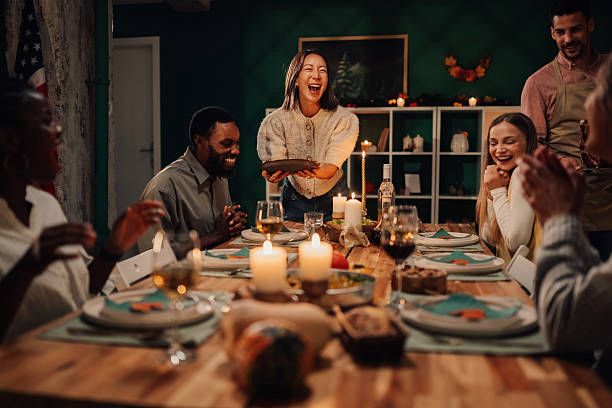
On Friday evening, I hosted a dinner party. I told Vanessa and Ryan it was to “discuss the future as a family.” I invited Richard, the real estate agent she’d contacted, the legitimate notary she’d tried to impersonate.
And I invited one guest nobody expected: Javier Ruiz, Vanessa’s legal husband, who’d traveled from Houston to tell his story.
At seven o’clock, everyone gathered around my dining room table. I’d cooked David’s favorite dishes, set out the good china, dressed in a navy suit I hadn’t worn since his funeral.
When Javier walked in and Vanessa saw him, all color drained from her face.
“Javi,” she whispered.
Ryan looked between them, confused. “Who is this?”
“Ryan,” I said calmly, “I’d like you to meet Javier Ruiz. Vanessa’s husband.”
The silence that followed was absolute.
“What?” Ryan’s voice cracked.
I nodded to Richard, who set up a laptop and projector. On my dining room wall, the evidence appeared: the marriage certificate, the debt statements, the recorded videos of her stealing from me, the forged documents, the complaints from previous victims.
Each image was another nail in her coffin.
Ryan sat frozen, watching his entire reality crumble. His face went through shock, disbelief, devastation, and finally—rage.
When the presentation ended, Vanessa tried to speak. “I can explain—”
“Don’t,” Ryan said, his voice breaking. “Don’t you dare.”
He turned to her, and I saw my son’s heart break in real time. “Was any of it real? Did you ever actually love me?”
She opened her mouth, closed it, opened it again. No words came.
“I want you out of this house now,” Ryan said quietly.
As if on cue, two officers from the district attorney’s office arrived. They had a warrant.
“Vanessa Kuroga, you’re under arrest for document forgery, fraud, and theft.”
They handcuffed her right there, on the hardwood floor I’d laid with my own hands 27 years ago.
As they led her away, she looked at me with pure hatred. “This isn’t over.”
“For you it is,” I replied. “It ended the moment you decided Alisa Miller was an easy victim.”
The door closed behind her, and silence filled the house.
The Aftermath
After everyone left, Ryan and I sat in the dining room for hours. He cried—sobbed, really—in a way I hadn’t seen since he was a child.
“I’m so sorry, Mom,” he kept saying. “I’m so sorry.”
“I know you are,” I said, holding his hand.
“How can you even look at me? I let her treat you like garbage in your own home.”
“You were manipulated by a professional,” I told him. “She’s done this to others before you. But now you know, and you’ll never let it happen again.”
The next morning, I gave him an envelope. Inside was the deed to a small apartment I’d bought years ago as an investment.
“It’s yours,” I said, “but with conditions.”
His eyes widened. “Mom, I can’t—”
“You’re going to live alone,” I interrupted. “You’re going to learn who you are without depending on anyone—not me, not any woman. You’re going to work and support yourself. And every Sunday, you’ll come here for dinner, and we’ll rebuild what was broken.”
He took the deed with trembling hands. “Why are you doing this for me after everything?”
“Because you’re my son,” I said simply. “And I believe in second chances. But this is your only one. Don’t waste it.”
He moved out the next day. For the first time in two years, my house was truly mine again.
Epilogue: The House That Stood
Vanessa was sentenced to eight years in prison. Her history of previous victims weighed heavily in the judgment. The real estate agent got his deposit back. Javier finally filed for divorce.
And me? I renovated my house—not the structure, but the soul of it. I painted walls, replaced furniture, removed every trace of Vanessa’s presence. I turned the study into a small architecture workshop and started teaching free classes to older women who wanted to learn design.
Ryan kept his word. Every Sunday, he arrives with flowers or pastries. We eat together, we talk—really talk—and slowly, we’ve rebuilt our relationship. He’s working now, supporting himself, learning to be the man I always knew he could be.
Today, as I sit in my garden looking at the lemon tree David and I planted 43 years ago, I understand something fundamental about life. True wealth isn’t what you possess—it’s what you refuse to let be taken from you. Your dignity. Your peace. Your home. Your soul.
Vanessa tried to take everything from me. She thought I was weak because I was old, that I was finished because I was alone, that I’d be easy to destroy because I’d been kind.
She learned what many before her have learned: never underestimate a woman who built her castle with her own hands. We don’t surrender easily. And when pushed to fight, we remember exactly how strong we are.
I’m 68 years old. I’ve buried a husband, raised a son, built a house, and defeated a predator who thought she could destroy me. My hands are scarred and my hair is gray, but I’m still standing—stronger, actually, than I’ve ever been.
Because women like me aren’t built on easy days. We’re forged in storms. And when the storm passes, we’re the ones left standing, ready to rebuild, ready to defend, ready to remind the world that age is just a number—but strength, real strength, is forever.
This house stands as proof. And I stand with it.
THE END

Ethan Blake is a skilled Creative Content Specialist with a talent for crafting engaging and thought-provoking narratives. With a strong background in storytelling and digital content creation, Ethan brings a unique perspective to his role at TheArchivists, where he curates and produces captivating content for a global audience.
Ethan holds a degree in Communications from Zurich University, where he developed his expertise in storytelling, media strategy, and audience engagement. Known for his ability to blend creativity with analytical precision, he excels at creating content that not only entertains but also connects deeply with readers.
At TheArchivists, Ethan specializes in uncovering compelling stories that reflect a wide range of human experiences. His work is celebrated for its authenticity, creativity, and ability to spark meaningful conversations, earning him recognition among peers and readers alike.
Passionate about the art of storytelling, Ethan enjoys exploring themes of culture, history, and personal growth, aiming to inspire and inform with every piece he creates. Dedicated to making a lasting impact, Ethan continues to push boundaries in the ever-evolving world of digital content.