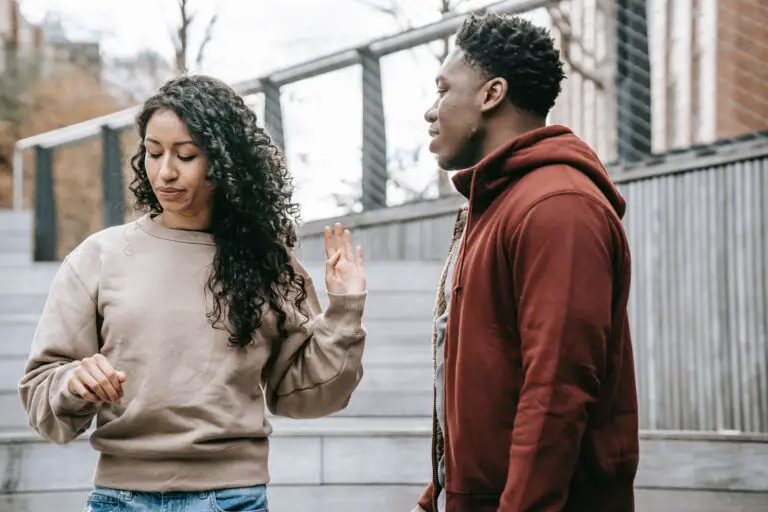
The Day I Became the Family Failure
Some families have a golden child. Mine had Brooke. And then there was me—the one they forgot existed until they needed someone to compare her to.
I was twenty-six when my parents finally said out loud what I’d felt my entire life. The words didn’t surprise me. What surprised me was how much they still hurt, even when you’ve been bracing for impact since childhood.
We were gathered around that old oak table, the one that had witnessed every milestone, every argument, every silent dinner where achievements were celebrated or ignored depending on whose name was attached to them. The overhead light hummed its familiar tune, and the scent of Mom’s meatloaf—once my favorite meal—now turned my stomach.
Brooke’s face filled Dad’s iPad screen, calling from her apartment three thousand miles away in San Francisco. Her hair was styled perfectly, her makeup flawless even through the slightly pixelated video feed. Her voice had that bright, confident ring to it, the sound of someone who’d never been told they weren’t enough.
In the background, I could hear Evan, her fiancé, laughing at something she’d said before the call connected.
“So,” Brooke began, her eyes sparkling with excitement, “Evan and I found this amazing place in Marin County. It’s absolutely perfect—three bedrooms, a gorgeous garden, and it’s in this incredible school district for when we have kids. There’s just one tiny thing…”
She paused for effect, the way she always did when she wanted something.
“We need a little help with the down payment. Nothing crazy. Just a hundred thousand to make it comfortable and avoid the higher mortgage payments.”
She said it so casually, as if she were asking to borrow a cup of sugar.
The fork slipped from my hand and clattered against my plate.
Dad’s head swiveled toward Mom. I watched that silent communication pass between them, that wordless conversation married couples develop after decades together. Mom’s slight nod. Dad’s barely perceptible smile.
“Consider it done, sweetheart,” Dad said, his voice warm in a way I rarely heard directed at me. “We’ll have it wired to your account tomorrow morning.”
“Wait—” I heard myself say, though part of me knew I should stay quiet. “You’re just… giving her $100,000? Just like that?”
Mom finally looked at me, her expression blank, as if she didn’t understand why this would be surprising. “We’re investing in her future, Lina. Brooke and Evan are building something real. A home. A life. This is what parents do when their children are ready for it.”
The implication hung in the air like smoke.
“And I wasn’t worth an investment?” The question came out smaller than I’d intended.
Dad set down his own fork with deliberate care. His eyes—gray and cold as February sleet—fixed on me with an intensity that made me want to shrink into my chair.
“You’ve accomplished nothing, Lina.” Each word was measured, precise, like he’d rehearsed this speech. Maybe he had. “You’ve coasted through life. You’ve never had a plan, never committed to anything substantial. Brooke proved herself. She went to UCLA, graduated top of her class, landed a position at a Fortune 500 company. She’s responsible. She’s built something meaningful.”
He gestured vaguely at me—my worn thrift-store sweater, the stack of overdue bills I’d brought hoping to ask for a small loan, my scuffed shoes.
“You’re still trying to figure things out. At twenty-six. When are you going to grow up?”
There it was. The verdict I’d been waiting for my entire life, finally delivered in clear, unambiguous terms.
I was the failure daughter.
I stood up slowly, my chair scraping against the floor. My hands were shaking, but my voice came out steadier than I expected.
“Okay,” I said.
Mom’s head snapped up. “Sit down. We’re not finished with dinner.”
“I am,” I said, reaching for my coat on the rack by the door. “I’m very finished.”
“Lina, don’t be dramatic,” Brooke’s voice chimed in from the iPad. “They’re just trying to help you understand—”
“Understand what?” I turned back to face them all. “That I don’t matter? That I never did? I understand perfectly.”
I walked out into the November cold, and I didn’t look back.
That was the last time I saw them for two years.
Growing up as the second Martinez daughter was like living in a shadow that stretched longer with each passing year, no matter how fast I ran or how hard I tried to step into the light.
Brooke was what my parents called their “miracle child.” She walked at nine months when the pediatrician said most babies took twelve. She spoke in complete sentences before her second birthday. By fifteen, she was the varsity volleyball captain, and Dad recorded every single match like she was training for the Olympics.
I had different interests. I drew. I spent hours in the art room after school, filling sketchbooks with graphite landscapes and portrait studies. I loved the quiet concentration of shading, the way you could create depth from nothing but pressure and technique.
Mom forgot to pick me up from art club so many times that Mrs. Parker, our faculty adviser, started just driving me home herself. She lived ten minutes out of her way to do it, but she never complained. She’d ask about my drawings, actually look at them, tell me which ones she thought were strongest.
“You have real talent, Lina,” she’d say. “Don’t let anyone tell you otherwise.”
I didn’t tell her that no one at home ever looked at my work long enough to have an opinion about it.
When Brooke turned sixteen, my parents threw her a surprise party at the house and presented her with a brand-new Honda Civic—burgundy, with a bow on the hood. She cried happy tears while Dad filmed and Mom hugged her, and relatives I barely knew cheered and took pictures.
My sixteenth birthday was dinner at Applebee’s—just the four of us—and a fifty-dollar Visa gift card.
“Be grateful we remembered this year,” Mom said with a laugh that might have been a joke but didn’t feel like one.
The pattern continued through high school. Brooke’s honor roll achievements went on the refrigerator. Mine went in a drawer somewhere. Her volleyball trophies lined the mantel. My art show ribbons—I’d won third place at a regional competition—stayed in my room.
“We don’t want to clutter the common spaces,” Mom explained when I asked if we could display just one.
College was where the inequality became impossible to ignore.
Brooke got into UCLA—early admission, partial academic scholarship, the whole package. My parents threw her a going-away party that filled the entire house. Relatives flew in from three states. There were balloons, a cake with her photo printed on it, a slide show of her accomplishments set to emotional music.
Dad cried during his toast. “My brilliant daughter,” he said, his voice breaking. “We’re so proud of everything you’ve become.”
I got into a decent state school three hours north—not prestigious, but solid academics, a good art program, and enough financial aid that it seemed manageable.
When I told them at dinner, Dad didn’t look up from his plate.
“That’s nice,” he said.
“It’s a good school,” I added. “They have an excellent fine arts department, and I got—”
“We’re not paying for it,” Dad interrupted, still not looking at me.
The room went silent except for the scrape of his fork.
“What?”
“You heard me. We’re not paying.”
“But you paid for Brooke! Full tuition, room and board, everything!”
Now he looked up, and I wished he hadn’t. “She earned UCLA. She worked for it. You picked the easy route—some state school that accepts anyone. That’s on you.”
“It’s still college,” I said, my voice barely above a whisper. “It’s still an education. It’s still my future.”
Mom cleared her throat. “Your father and I discussed this. Brooke has a clear path. She’s going places. You’ve never really… applied yourself. We’re not comfortable throwing money at someone who’s just going to waste it.”
“Waste it?” I repeated. “I want to study art. I want to—”
“Art.” Dad said it like it was a dirty word. “You’re going to major in art? That’s exactly what we’re talking about. No direction. No real career. Just expensive hobbies.”
“So I get nothing.”
“You get the same thing everyone gets—the opportunity to make your own choices and live with them. If this school matters to you, find a way to pay for it yourself. Build some character.”
I signed every student loan document myself. Every single one. By the time I graduated, I’d accumulated over eighty thousand dollars in debt at interest rates that made me sick to calculate.
I worked two jobs through school—retail on weekends, tutoring during the week. I lived on instant ramen and day-old bread from the grocery store markdown section. I shared a cramped apartment with three other girls where we rotated who got the bedroom with the broken heater.
I graduated with honors—3.7 GPA, dean’s list three semesters. I invited my parents to the ceremony. They said they couldn’t make the drive. “It’s a long way,” Mom said. “And your father has that work thing.”
Brooke’s UCLA graduation two years earlier had been a weekend affair. They’d booked a hotel, taken her to fancy dinners, posed for professional photos.
For mine, they sent a card with a $25 gift certificate to Olive Garden inside.
The real breaking point—before THE breaking point at dinner two years ago—came during my sophomore year.
I got sick. Not just cold sick, but genuinely, frightening sick. Pneumonia that settled into my lungs and wouldn’t let go. I was coughing so hard I couldn’t breathe properly, running a fever that spiked to 103, and I finally dragged myself to urgent care when my roommate threatened to call an ambulance.
Sitting in the waiting room, shivering under a thin jacket, I called home.
Dad answered.
“I’m at urgent care,” I told him. “I think I have pneumonia. I’m really sick, and I’m scared, and I don’t know—”
“That’s what happens when you overextend yourself,” he said, his tone clipped. “You’re probably not sleeping enough, not eating right. This is a time management issue, Lina. You need to learn to balance your responsibilities better.”
I could hear the TV in the background. Some sports game.
“I just… I wanted you to know. In case it’s serious.”
“Have you been taking your vitamins?” Mom’s voice chimed in. She must have been listening on speaker.
“What?”
“Your multivitamin. I told you to take one every day. This is what happens when you don’t listen.”
They didn’t offer to come. They didn’t offer to help with the medical bills. They didn’t call back to check if I’d survived the visit.
I sat in that plastic waiting room chair, burning with fever and shame, and cried silent tears while a toddler two seats over stared at me with concern his parents never showed.
Three days later, a package arrived at my apartment. Inside was a thermos of homemade chicken soup—still warm somehow—and a check for $500 with a note written in careful handwriting:
“Not a loan. An investment in your future. Get well soon, dear. – Mrs. Parker”
Mrs. Parker. My high school art teacher who had no obligation to remember me, who had no reason to care, who had nothing to gain from helping.
I cried harder than the fever had ever made me cry.
That’s when I understood what family actually meant, and it had nothing to do with blood.
After I walked out of my parents’ house that night, after they chose Brooke’s house down payment over any acknowledgment of my existence, I made a decision.
No more calls. No more texts. No more showing up to holidays hoping this year would be different. No more making myself small and apologetic for the crime of existing outside their expectations.
I blocked their numbers. I blocked Brooke too, even though she sent me a dozen messages that first week calling me “immature” and “selfish” and telling me I was “throwing away family over money.”
It wasn’t about the money. It had never been about the money.
It was about twenty-six years of being invisible. Twenty-six years of watching love and pride and attention flow toward my sister like she was the sun and I was some distant, cold planet no one bothered to name.
I threw myself into my life—my real life, the one I’d been building in the margins.
I worked at a small graphic design firm, barely scraping by, but I was good at it. Really good. My portfolio grew. I started taking freelance clients on the side. Slowly, painfully slowly, I started to build something that was mine.
I made friends—real friends who showed up when I needed them, who celebrated my small victories, who didn’t compare me to anyone else.
I started therapy. Learned about complex family dynamics and golden child/scapegoat roles. Learned that I wasn’t crazy for feeling hurt. Learned that I deserved better.
And slowly, slowly, the weight of being “not Brooke” started to lift.
I didn’t miss my parents. Sometimes I felt guilty about not missing them, but mostly I felt… lighter.
Two years passed.
I was doing better than surviving—I was actually thriving. I’d moved into a small house I was renting with an option to buy. Nothing fancy, but it had a yard and good light for my home studio and it was mine.
I’d started painting again, something I’d given up in college because “it wasn’t practical.” I’d sold three pieces. Three! People had paid actual money for my art.
I was seeing someone—Alex, who worked at the coffee shop where I grabbed my morning caffeine and who thought my paint-stained hands were “incredibly sexy.” We were taking it slow, but I was happy. Genuinely happy.
Then my phone rang.
Unknown number. I almost didn’t answer.
“Lina?” Brooke’s voice, tight and strange.
“How did you—”
“I drove by your place. I’m in town for work. Lina, we need to talk about Mom and Dad.”
“No, we don’t.”
“I’m calling Dad. You need to—”
I hung up.
Ten minutes later, my phone exploded with calls. Dad’s number. Mom’s number. Brooke again. I blocked them all again, but the messages kept coming through from new numbers, friends’ phones, even Evan’s cell.
Finally, I answered.
“WHAT?”
“Your house.” Brooke’s voice was shaking. “Your house, Lina. How did you—”
“I’m renting it. It’s none of your—”
“It’s gorgeous. The garden, the paint job, the car in the driveway. You did this? Without any help?”
There was something in her voice I’d never heard before. Something that might have been respect but sounded more like shock.
“Yes. I did this. By myself. With my job and my work and my—”
“Dad needs to see this.” She wasn’t listening. “He needs to understand. He said things, Lina. He said you’d never amount to anything. He said you were probably living in some apartment with roommates, probably in debt, probably struggling. He said—”
“And you believed him?”
Silence.
“You believed him,” I said again. “For two years, you never once wondered if he was wrong. You never reached out. You never asked. You just accepted their version of me.”
“Lina—”
“I’m doing fine, Brooke. Better than fine. I have a life. I have friends. I have a career. I’m happy. And I did it all without them. Without any of you.”
“But they should know—”
“Why?” The word came out harsh. “Why should they know? So they can take credit? So they can pretend they always believed in me? So they can feel better about how they treated me?”
“Because they’re family.”
“No,” I said quietly. “Mrs. Parker was family. My friends are family. The people who showed up when I was sick and scared and alone—they’re family. Blood doesn’t make you family. Love does. Action does. Being there does.”
More silence.
“I drove away,” Brooke finally said, her voice small. “I called Dad screaming that he needed to see what you’d done. I was so angry at him for lying about you. But now I’m thinking… maybe I should have called you first. Maybe I should have asked if you even wanted them to know.”
“I don’t,” I said. “I really don’t.”
“Okay,” she whispered. “Okay.”
She hung up.
For a week, I braced for them to show up. For Dad’s car to pull into my driveway, for Mom to knock on my door with apologies or accusations or whatever they’d decided I deserved.
They didn’t come.
Instead, I got a letter. Actual paper, actual stamp, addressed in Mom’s handwriting.
I almost threw it away. I held it over the trash can for a full minute.
But curiosity won.
Inside was a check for $100,000 and a note that said: “We were wrong. We hope this helps. – Mom and Dad”
No apology. No explanation. No acknowledgment of the years of pain.
Just money. Because that’s what they thought mattered. That’s what they thought love was.
I ripped up the check.
I wrote my own letter back:
“Thank you, but no. I don’t need your investment now. I needed your belief then. I needed you to see me. I needed you to show up. You can’t buy back what you never gave. I hope Brooke’s house is everything she dreamed. I hope you’re proud of what you built with her. But I built something too, without you, and it’s mine. That’s worth more than any check. – Lina”
I mailed it before I could change my mind.
Three days later, Dad called from yet another new number. This time, I answered.
“Your mother and I would like to take you to dinner,” he said, formal and stiff.
“No thank you.”
“Lina, we’re trying—”
“You’re trying now. Where were you when I was sick? Where were you at my graduation? Where were you every time I needed parents and got strangers instead?”
“We made mistakes—”
“You made choices,” I corrected. “Every single day, you chose Brooke over me. You chose to give her everything and give me nothing. Not even basic respect.”
“We want to fix this.”
“Some things can’t be fixed,” I said. “They can only be grieved and moved on from.”
“So that’s it? You’re just going to throw away your whole family?”
“No,” I said softly. “You threw me away a long time ago. I’m just finally accepting it.”
I hung up.
It’s been five more years now.
I bought that house I was renting. I expanded my freelance business until I could quit my day job. I paint in the mornings when the light is best. I have a studio space downtown where I teach art classes to kids who remind me of teenage me—talented and invisible and desperately needing someone to see them.
I make sure I see them.
Alex and I got married in a small ceremony in our backyard garden. Mrs. Parker was there. My friends were there. The people who actually showed up for me over the years were there.
My parents received an invitation. They sent a gift card.
They didn’t come.
Brooke sent a text: “I understand why you didn’t want us there. I’m sorry for everything. I hope you’re happy.”
I didn’t respond, but I appreciated it.
Sometimes I wonder what would have happened if they’d just seen me. If they’d come to one art show. If they’d celebrated one achievement. If they’d said “I’m proud of you” even once.
But mostly, I don’t think about them at all.
I think about the family I built. The one made of choice and presence and love that shows up not just for the big moments, but for the small ones too.
I think about Mrs. Parker, who’s retired now but still comes to my art shows and buys at least one piece every time “to support the artist.”
I think about my friends who helped me paint this house, who brought food when I was overwhelmed, who celebrated when I made my first big sale.
I think about Alex, who sees me exactly as I am and thinks that’s more than enough.
That’s what I learned from being the family failure:
Sometimes the people who are supposed to love you won’t. Sometimes the people who are supposed to see you are looking somewhere else. Sometimes you have to walk away from the family you were born into to find the family you deserve.
And that’s not failure.
That’s survival.
That’s strength.
That’s choosing yourself when no one else will.
I’m not the failure my parents labeled me. I never was.
I was just the daughter they forgot to love.
And now I’m the woman who learned to love herself instead.
THE END

Adrian Hawthorne is a celebrated author and dedicated archivist who finds inspiration in the hidden stories of the past. Educated at Oxford, he now works at the National Archives, where preserving history fuels his evocative writing. Balancing archival precision with creative storytelling, Adrian founded the Hawthorne Institute of Literary Arts to mentor emerging writers and honor the timeless art of narrative.