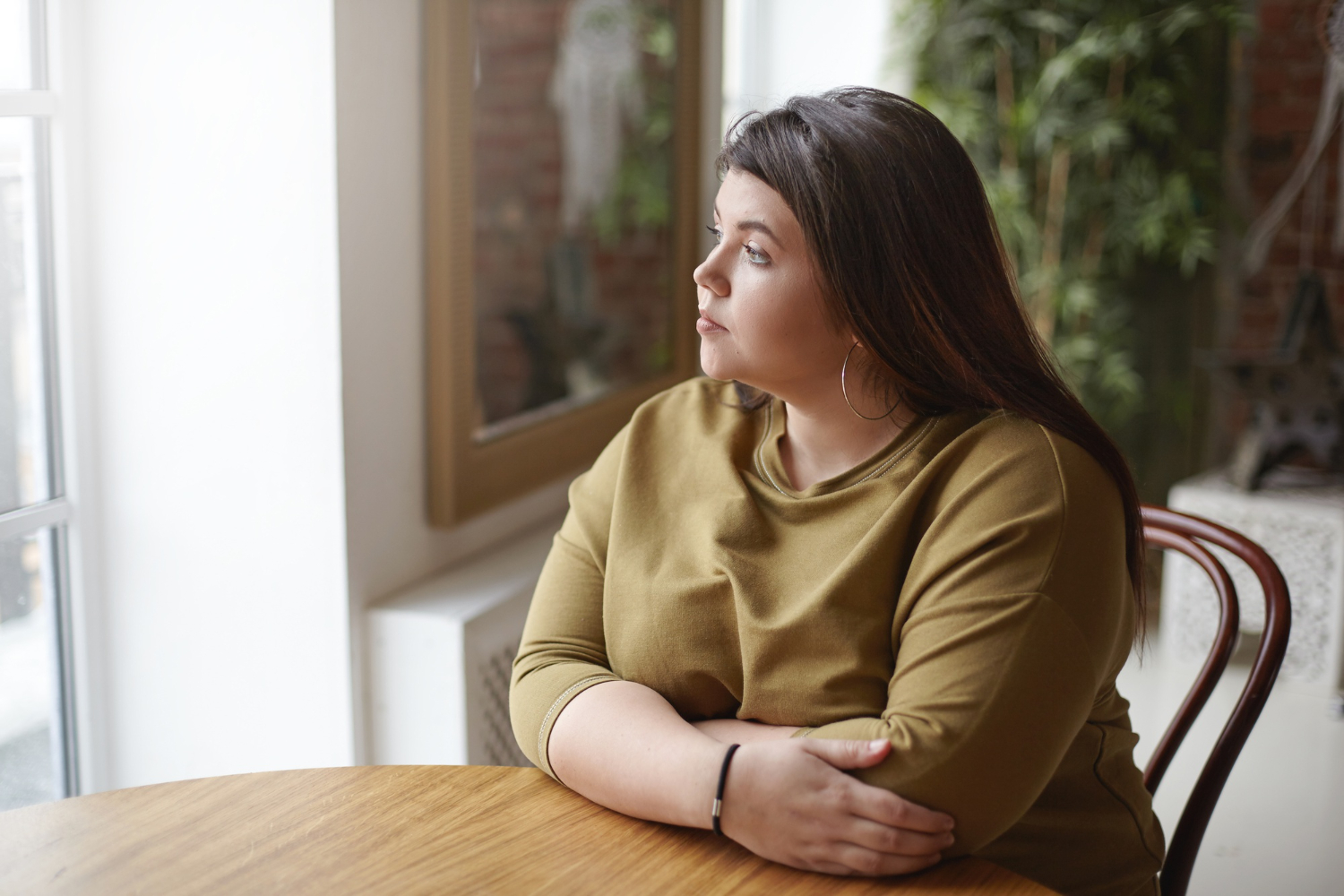
When Mark walked out on me two months ago, he didn’t bother to soften the blow or search for kind words. He stood in our living room on a Tuesday evening in September, his gym duffel slung over his shoulder like he was heading to a casual workout rather than walking out on eight years of marriage, and delivered the sentence that would simultaneously shatter and remake my life.
“Emily, you’ve put on a lot of weight. I can’t be attracted to someone who’s let herself go like this. I need someone who actually takes care of herself, someone who makes an effort. Claire does.” He paused, adjusting the strap of his bag, then added with a careless shrug, “I’m moving in with her. I’ll come back for my stuff later.”
Then he simply left. No apology. No acknowledgment of the years we’d built together. No recognition that the woman standing in front of him, whose weight had become suddenly unacceptable to him, was the same woman who’d supported him through two job losses, who’d paid the mortgage when he was “finding himself,” who’d believed in him when no one else did.
I stood frozen in that living room for what felt like hours but was probably only minutes, replaying every syllable, every inflection, every dismissive gesture. Yes, I had gained weight—about forty-five pounds over three years, to be precise. I knew this because I’d watched the number climb on the scale with a mixture of resignation and self-loathing. Long workdays as a senior financial analyst, constant stress from carrying our household expenses, and the emotional exhaustion of a marriage that had been slowly dying had all taken their toll.
But instead of asking what I was going through, instead of offering even a sliver of understanding or support, Mark had reduced me to a body he no longer approved of and replaced me with a “fitter” option. Claire was twenty-six, taught spin classes at the gym where Mark had started spending six evenings a week, and apparently represented everything I was no longer worthy of being.
For the first week after he left, I barely moved from the couch. I called in sick to work, which I’d never done in my entire career. I cried until my head throbbed and my eyes were so swollen I looked like I’d been in a fight. I ordered takeout I barely touched. I let his words echo in my mind on an endless loop, transforming into shame, into self-hatred, into the belief that maybe he was right, maybe I had become unlovable, maybe I deserved to be abandoned.
My best friend Rachel came over on day five, took one look at me, and literally pulled me off the couch. “Emily, I love you, but you cannot let that man destroy you. He doesn’t get that power. He doesn’t deserve that power.”
“But he’s right,” I sobbed. “Look at me. I’m a mess.”
“You’re a mess because your husband is a shallow, cruel coward who walked out instead of having an actual conversation,” Rachel said fiercely. “You’re a mess because the person you trusted most betrayed you. But you are not unlovable. You are not worthless. And your value has never, ever been about a number on a scale.”
Her words didn’t fix everything immediately. Trauma doesn’t work that way. But they planted a seed.
On day eight, I walked past the full-length mirror in the hallway—the same mirror I’d been avoiding since Mark left—and forced myself to stop and look. Really look. I saw swollen eyes, tangled hair that hadn’t been washed in days, skin that was pale from lack of sunlight. But I saw something else too, something I hadn’t noticed in the depths of my grief: anger.
Not anger at Claire, who was just another person Mark had probably lied to. Not even anger at Mark, though that would come later. This was anger at myself. Anger that I’d allowed his opinion to carry so much weight in my life. Anger that I’d internalized his cruelty. Anger that I’d forgotten who I was before I became Mrs. Mark Henderson.
That morning, I went for a walk. Just three miles around our neighborhood in comfortable leggings and an old college t-shirt, my first time outside in over a week. The September air was crisp, and with each step, I felt like I was walking away from something heavy. The next day, I walked four miles. Then five. I wasn’t trying to become thin or to win Mark back or to prove anything to anyone except myself. I was trying to remember what it felt like to take up space in the world without apologizing for it.
I began cooking real meals again—not sad frozen dinners eaten standing over the kitchen sink, but actual food that nourished me. I bought vegetables at the farmers market and experimented with recipes I’d bookmarked but never tried. I drank water instead of wine. I went to bed at reasonable hours and actually slept instead of lying awake torturing myself with questions about what I’d done wrong.
I started keeping a journal, something my therapist had suggested years ago that I’d always been too busy for. In it, I wrote everything I’d been holding inside—the hurt, the rage, the relief, the fear of being alone, the unexpected liberation of not having to manage Mark’s moods anymore. Some entries were barely coherent, just emotions splattered across pages. Others were clear-eyed assessments of a marriage that had probably been dying long before Mark worked up the courage to leave.
The therapy itself was harder than the walking or the cooking. Sitting in Dr. Sarah Chen’s comfortable office with its soft gray couch and carefully curated bookshelf, I had to confront truths I’d been avoiding for years. I had to admit that Mark had been subtly cruel long before his final pronouncement. The comments about my second helpings at dinner. The suggestions that I might want to try yoga like Claire. The way he’d stopped touching me casually—no hand on my back when we walked, no kiss hello after work, no reaching for me in bed.
“You’ve been living with rejection for years,” Dr. Chen said during our third session. “His leaving wasn’t the beginning of the rejection. It was just the moment he finally said out loud what he’d been communicating nonverbally for a long time.”
That realization was both painful and liberating. I hadn’t suddenly become unlovable when I gained weight. I’d been married to someone who was incapable of loving me beyond surface level, someone who saw me as an accessory rather than a partner.
My body did change over those two months. I lost twenty-eight pounds, gained muscle definition I’d never had even in my twenties, and felt stronger than I’d felt in years. But the deeper change was internal. My confidence returned, not because I was thinner but because I remembered who I was without someone constantly critiquing me. I reconnected with friends I’d neglected during my marriage. I threw myself into my work and earned a promotion I’d been overlooking. I took up painting, something I’d loved in college but abandoned because Mark thought it was “a waste of time.”
For the first time in years, I remembered the Emily who’d existed before she became defined by her relationship—the Emily who was sharp, funny, ambitious, creative, and worthy of love regardless of her dress size.
Then yesterday, eight weeks after he walked out, my phone buzzed with a text from Mark: “Need to pick up the rest of my stuff. I’ll come by tomorrow around 10am.”
No “how are you.” No acknowledgment of the destruction he’d left in his wake. Just a utilitarian message assuming I’d be available at his convenience, that I’d let him walk back into the apartment we’d shared and take what he wanted without consequence.
I stared at that text for a long time. The old Emily, the one who’d existed two months ago, would have spent the evening cleaning the apartment, would have made herself scarce during his visit, would have avoided confrontation at all costs. But the woman I’d become had different plans.
I replied simply: “Fine. Key still works.”
Then I called my attorney, a sharp woman named Margaret Tran who’d been helping me quietly for the past six weeks. “He’s coming tomorrow. I think it’s time.”
“Are you ready?” Margaret asked.
“I’m ready.”
I spent the evening preparing, though not in the way Mark would expect. I laid out the red envelope on the dining table, positioning it where he couldn’t miss it. I chose my outfit carefully—not to impress him, but as armor, as proof of my commitment to myself. A fitted black dress that made me feel powerful, heels that gave me height and confidence, simple jewelry that had belonged to my mother.
I barely slept that night, but it wasn’t from anxiety. It was from anticipation.
When the key turned in the lock at precisely ten o’clock the next morning, I was sitting in the living room, a cup of coffee in my hands, completely calm. Mark pushed the door open and stepped inside, and I watched in real-time as his brain tried to process what he was seeing.
He stopped mid-step, his entire body going rigid with shock. His eyes widened, traveling over me with an expression I couldn’t quite identify—surprise, definitely, but also something that looked uncomfortably like regret. For several seconds, he just stood there in the doorway, his hand still on the doorknob, staring at me like I was someone he’d never met.
“Emily?” he finally said, his voice uncertain.
“Hello, Mark.” My voice was steady, pleasant even. I took a sip of coffee and watched him struggle to find words.
“You… you look…” He trailed off, apparently unable to complete the thought.
“Different?” I supplied helpfully. “Yes, I suppose I do.”
He closed the door behind him, moving further into the apartment—our apartment, though legally it had always been mine, purchased before we married with my inheritance from my grandmother. His eyes kept returning to me, as if he couldn’t quite believe what he was seeing, as if the woman he’d left crumpled on this same couch had been replaced by someone entirely new.
“I wasn’t expecting…” He gestured vaguely in my direction, still unable to articulate whatever he was thinking.
“Expecting what? That I’d still be devastated? That I’d still be broken? That I’d be sitting here waiting for you to come back and save me?” Each question came out calmly, conversationally. I wasn’t angry anymore. I was simply done.
He opened his mouth, closed it, then seemed to notice the red envelope on the dining table. The color—bright, impossible to miss, deliberately chosen—drew his attention like a beacon. He moved toward it slowly, picking it up with hands that trembled slightly.
I watched as he opened it and pulled out the papers inside. Watched as his eyes scanned the first page. Watched as understanding dawned and the color literally drained from his face, leaving him pale beneath his carefully maintained tan.
“You’re… you’re filing for divorce?” His voice came out strangled, higher than normal.
“Yes,” I said evenly, setting down my coffee cup. “The papers were filed three days ago. You’ve been served.”
“But—” He looked up from the papers, genuinely shocked. “But why? I mean… isn’t this a bit extreme?”
I did laugh then, a short, sharp sound that held no humor. “Extreme? Mark, you walked out on me, told me I was physically repulsive to you, moved in with another woman, and cut off all communication for two months. But filing for divorce is extreme?”
“I just thought… I mean, we could have worked through things. Maybe gone to counseling or something.”
“You thought that after abandoning me for being fat, I’d be interested in working things out? You thought I’d want to fight for a marriage to someone who only values me when I meet his physical specifications?” I shook my head slowly. “That tells me everything I need to know about how well you actually knew me.”
He looked back down at the papers, flipping through them, his frown deepening with each page. “Wait. What does this mean—’All assets remain solely with petitioner’?”
“It means exactly what it says. The apartment, the savings account, the investment portfolio, the car—all of it stays with me. All of it was earned by me. My attorney has documented everything thoroughly.”
His jaw tightened, a muscle jumping in his cheek. “Emily, come on. The house? All the savings? That’s not fair.”
“Fair?” I stood up, setting my coffee cup down with deliberate care. “Let’s talk about fair, Mark. For eight years, I paid the mortgage on this apartment. I paid it when you lost your job at the marketing firm. I paid it when you decided to take six months to ‘find your passion.’ I paid it while you figured out what you wanted to be when you grew up. The savings account? Funded by my bonuses, my raises, my inheritance. The investment portfolio? Built with money I earned while you were finding yourself.”
“I contributed,” he protested weakly.
“You contributed approximately eighteen percent of our household expenses over the course of our marriage. I have spreadsheets. My attorney has spreadsheets. You lived in my apartment, spent my money, enjoyed my success, and then left me when I wasn’t physically appealing enough to suit your standards.” I picked up a folder from the coffee table. “Oregon is an equitable distribution state, not community property. And given the documentation of who earned what, paid what, and owned what prior to the marriage, you have no legal claim to any of this.”
He stared at me like I’d grown a second head. “Who are you? This isn’t… you’re not like this.”
“You’re right. The woman you married—the woman you took advantage of for eight years—wouldn’t have done this. She would have let you take whatever you wanted. She would have apologized for making you feel guilty. She would have signed papers giving you half of everything she’d worked for while you were figuring yourself out.” I met his eyes directly. “But that woman doesn’t exist anymore. You destroyed her. What’s left is someone who knows her worth.”
He set the papers down on the table, then moved closer to me, his expression shifting to something I recognized—the look he used to give me when he wanted something, a calculated softness designed to manipulate. “Emily, listen. Claire and I… it’s not working out. She’s immature, she’s clingy, and honestly, I think I made a huge mistake.”
There it was. The real reason for his sudden interest in talking, for his shock at seeing me transformed.
He reached out as if to touch my arm, but I stepped back smoothly. “You look incredible, Em. You’ve done this amazing transformation, and I… I realize now that I reacted badly. I was going through my own stuff, feeling insecure about getting older, about my career not being where I wanted it. I took that out on you, and that wasn’t fair.”
“No, it wasn’t,” I agreed calmly.
“But we could start over. You’ve clearly been working on yourself, and I’ve learned a lot from this experience. We could go to therapy, really communicate this time. Don’t you think what we had is worth fighting for?”
I looked at him—really looked at him—and felt absolutely nothing. No anger, no hurt, no lingering love. Just a mild curiosity about how I’d ever found this man attractive, this person who thought personal growth was a transaction, who believed that changing my body meant I should take him back.
“Mark, my appearance isn’t the point. You didn’t lose me because I gained weight. You lost me because you never actually respected me.” I walked over to the window, looking out at the street below where life continued oblivious to the small drama unfolding in my apartment. “You lost me when you made comments about my food choices every night at dinner. You lost me when you stopped touching me but couldn’t explain why. You lost me when you made me feel like my worth was tied to how I looked in a dress. You lost me long before you walked out that door.”
“Emily—”
“But most importantly, Mark, I don’t want you back. Not thin, not fit, not transformed. I don’t want the version of you that’s only interested because I’ve lost weight. I don’t want the version of you that left when things got hard. I don’t want any version of you at all, because I’ve spent the last two months remembering what it feels like to be valued for who I am, not what I look like.”
He had no response to that. His practiced expression of remorse slipped, revealing something uglier underneath—frustration that his manipulation hadn’t worked, anger that I wasn’t playing my assigned role.
I gestured toward the hallway. “Your things are in boxes in the spare bedroom. I’ve separated out anything that was clearly yours. Please take it and leave your key on the counter when you go.”
He stood there for another moment, perhaps waiting for me to change my mind, to crack, to reveal that this was all a front. When I simply looked at him calmly, he finally moved toward the hallway, his movements stiff with suppressed anger.
I stayed in the living room, listening to him move boxes, open closets, mutter under his breath. After about twenty minutes, he came back into the living room carrying a framed photo—our wedding picture, the two of us laughing on the steps of the courthouse where we’d gotten married in a simple ceremony eight years ago. I looked so young in that photo, so hopeful.
He held it up. “What about this?”
“You can have it if you want it.”
He looked down at the photo, and I saw his expression change as he noticed the small yellow sticky note I’d placed on the glass. He peeled it off and read what I’d written in my careful handwriting: “I hope you treat the next person better.”
Not angry. Not vengeful. Just honest.
His hand tightened on the frame. “You really think I’m that terrible.”
“I think you’re human, Mark. I think you’re selfish and you’re insecure and you have a lot of growing up to do. I think you hurt me deeply, but I also think holding onto anger about it would only hurt me more.” I folded my arms. “I genuinely do hope you figure yourself out. I hope you learn to value people for who they are. I hope you develop empathy and emotional maturity. But I hope all of that happens far away from me.”
He set the photo down on the coffee table, the note still attached. “I don’t want it.”
“Fine. I’ll donate it with the rest of the things you’re leaving behind.”
He looked around the apartment one more time, his gaze lingering on the changes I’d made—the new plants bringing life to formerly bare corners, the bright throw pillows on the couch, the art on the walls that reflected my taste rather than his preference for minimalism. “This place looks different.”
“It should. It’s mine now. Actually mine, not just legally but in every way that matters.”
He picked up his keys from his pocket, worked the apartment key off the ring, and set it on the counter with a small click that sounded final. “So this is really it. You’re really done.”
“I’m really done.”
“What if I fight the divorce? What if I contest the asset distribution?”
I smiled, and it wasn’t a nice smile. “Then you’ll lose, you’ll rack up legal fees you can’t afford, and you’ll still end up with nothing except the satisfaction of dragging this out. Margaret is very, very good at her job. But by all means, if you want to try, go ahead. I have time and resources. Do you?”
He stared at me for a long moment, perhaps finally understanding that the woman who’d supported him for eight years, who’d paid his bills and listened to his dreams and believed in his potential, had also been documenting every financial transaction, saving every email, keeping meticulous records that would bury him in any legal proceeding.
“Goodbye, Emily.”
“Goodbye, Mark.”
He walked to the door, turned back once as if to say something else, then apparently thought better of it. The door closed behind him with a soft click, and I listened to his footsteps recede down the hallway, growing fainter until they disappeared entirely.
The silence that followed felt different from the silence that had haunted this apartment for two months. That silence had been heavy, oppressive, filled with grief and questions and self-doubt. This silence was light, peaceful, complete. Not the empty quiet of loss, but the calm that follows a storm after the damage has been assessed and the rebuilding has begun.
I walked to the window and watched Mark emerge from the building, carrying two boxes to his car. He loaded them in the trunk, got in the driver’s seat, and sat there for a moment before pulling away. I watched his car disappear into traffic, taking with it the last physical remnant of our marriage.
Then I looked down at my hands, noticing how steady they were. My chest wasn’t tight with grief or anxiety. My eyes weren’t burning with tears I was holding back. I felt… okay. Better than okay. I felt like someone who’d just put down a burden she’d been carrying so long she’d forgotten how heavy it was.
I spent the rest of the day reclaiming my space. I took down the last few photos that still showed us together and packed them in a box for the donation pile. I rearranged furniture in the bedroom, positioning the bed where I wanted it rather than where Mark had insisted it should go for “optimal feng shui.” I hung new art in the hallway—bright, colorful pieces from a local artist whose work I’d always loved but Mark had dismissed as “too cheerful.”
The apartment reflected the changes I’d made over two months—fresh plants, brighter décor, open space. But now it felt complete. It finally felt like mine. Like me.
That evening, I cooked salmon with roasted vegetables—a meal Mark used to criticize for being “too fancy for a weeknight.” I poured myself a glass of good white wine and ate slowly, savoring every bite without anyone commenting on my portions or suggesting I might want to skip dessert. I wasn’t eating from sadness or to fill a void. I was eating because the food was delicious and I’d prepared it well and I deserved to enjoy it.
After dinner, I changed into comfortable clothes and went for an evening walk. The October air was crisp, carrying the scent of fallen leaves and wood smoke from someone’s fireplace. The sky was painted in shades of orange and pink as the sun set behind the trees. I walked for an hour, not for exercise but just to be outside, to move through the world taking up space without apologizing for it.
When I got home, I drew a bath—something I never did when Mark lived here because he thought baths were “a waste of water”—and soaked in lavender-scented water while reading a novel I’d been saving. I stayed until my fingers pruned and the water cooled, completely at peace.
Before bed, I opened my journal to a fresh page and wrote one line: “I’m proud of myself.”
Not because I’d lost weight or gotten revenge or made Mark sorry. I was proud because I’d chosen myself when it would have been easier to stay small and accept crumbs. I was proud because I’d done the hard work of therapy and self-reflection instead of numbing myself with distractions. I was proud because I’d built a life I actually wanted to live rather than a life I thought I was supposed to want.
The divorce was finalized three months later on a gray January morning. Margaret called me at work with the news. “It’s done. He didn’t contest. You’re officially divorced.”
“How do I feel?” I asked, half to Margaret and half to myself.
“How do you feel?” she replied.
I thought about it for a moment. “Free.”
“Good answer.”
That evening, Rachel took me out to celebrate at the same restaurant where Mark had proposed eight years earlier. It felt fitting, somehow—returning to a place of beginnings to mark an ending.
“To Emily,” Rachel raised her glass of champagne. “Who showed the world what happens when you remember your own worth.”
“To new beginnings,” I countered. “And to friends who pull you off the couch when you need it.”
We clinked glasses and drank, and I felt the last weight lift from my shoulders. The weight wasn’t just Mark or the failed marriage. It was every belief I’d carried about my value being tied to someone else’s approval, about love being conditional on meeting impossible standards, about needing to be smaller—physically and emotionally—to be worthy of care.
Six months after that red note changed everything, I was sitting in my apartment on a Sunday morning, coffee in hand, planning my week. I had a date on Friday with a kind man I’d met at a painting class—our third date, and he’d never once commented on my body or my food choices. I had a promotion interview at work on Tuesday for a position I’d once thought was beyond my reach. I had dinner plans with friends, a solo hiking trip scheduled for next month, and a life that felt full in ways I’d never experienced when I was married.
My phone buzzed with a text from an unknown number. Against my better judgment, I opened it.
“I heard you got promoted. Congratulations. You deserve it.”
Mark. Still keeping tabs, apparently.
The old Emily might have responded, might have thanked him or asked how he was doing. The new Emily simply deleted the message and blocked the number. His opinion about my accomplishments was no longer relevant to my life.
I thought about writing this all down, about sharing my story with others who might be going through their own versions of the same experience—trapped in relationships where their worth was constantly questioned, where their value was tied to their appearance, where they’d forgotten who they were beneath the weight of someone else’s expectations.
So that’s what I’m doing now. I’m writing this for anyone who needs to hear it: your worth has never been about a number on a scale or a size on a tag. Your value doesn’t decrease because someone couldn’t see it. And choosing yourself—really, truly choosing yourself—isn’t selfish. Sometimes it’s the only way to survive.
The weight I lost wasn’t just physical. It was emotional, mental, relational. It was the burden of trying to be enough for someone who would never think I was enough. It was the exhaustion of performing happiness in a marriage that made me miserable. It was the shame of having internalized someone else’s shallow standards as truth.
Letting go of Mark felt like setting down luggage I’d been carrying up a mountain for eight years. I hadn’t realized how heavy it was until I finally put it down and discovered I could breathe again.
That night, I returned to my journal and wrote something longer than usual:
“Today, someone asked me if I regretted the years I spent with Mark. They wanted to know if I wished I could get that time back. I thought about it carefully before answering.
I don’t regret the years. They taught me what I don’t want, what I won’t accept, what I deserve. They showed me that I’m stronger than I knew. They proved that I can survive devastation and come out better on the other side.
I don’t regret the weight I gained, either. It was my body trying to tell me something was wrong, trying to protect me, trying to get my attention. And eventually, I listened.
What I regret is all the time I spent believing I was the problem. All the apologies I made for taking up space. All the years I thought being small would make me more lovable.
But even those regrets serve a purpose. They remind me never to make myself small again. Never to accept less than I deserve. Never to let someone else’s limited capacity for love define my worth.
I am proud of myself. Not for losing weight, not for leaving Mark, not for the red note or the divorce or any single dramatic moment.
I’m proud of myself for the quiet morning walks when I didn’t want to get out of bed. For the therapy sessions where I cried until I couldn’t breathe. For the decision to cook real food when takeout would have been easier. For choosing to rebuild rather than to simply survive.
This wasn’t about revenge or proving anything to anyone. It was about taking my power back. About remembering that I am the author of my own story, and I don’t have to accept a narrative where I’m reduced to someone’s ‘before’ picture.
If you’re reading this—maybe in Portland or Phoenix or Pittsburgh, scrolling on your phone between sips of morning coffee or lying in bed unable to sleep—and you’re in a relationship that makes you feel small, that makes you question your worth, that makes you believe love is supposed to hurt this much: please know that choosing yourself is the bravest thing you can do.
It might be terrifying. It might feel selfish. It might mean disappointing people who’ve come to expect your sacrifice.
But sometimes, choosing yourself changes everything.”
I closed the journal and looked around my apartment—my space, my sanctuary, my home. Everything in it reflected choices I’d made for myself, values I actually held, a life I genuinely wanted to live.
And I realized with startling clarity that I didn’t need Mark to regret leaving me. I didn’t need him to understand what he’d lost. I didn’t need his validation or his remorse or his belated realization that he’d made a mistake.
What I needed was exactly what I had: a life that was wholly and completely mine, built on a foundation of self-respect, populated with people who valued me for who I actually was, filled with days I looked forward to living.
The red note had stopped Mark cold, had forced him to confront consequences he’d assumed he could avoid. But its real power wasn’t in what it did to him.
It was in what it did for me—giving me the courage to close a door that should have been closed years ago, to choose myself when every instinct trained into me said to choose someone else, to build a new life from the ashes of the old one.
And that new life? It was better than anything I’d imagined while I was still trying to fit myself into the shape of someone else’s expectations.
I was finally, fully, unapologetically myself.
And I wouldn’t trade that for anything in the world.

Adrian Hawthorne is a celebrated author and dedicated archivist who finds inspiration in the hidden stories of the past. Educated at Oxford, he now works at the National Archives, where preserving history fuels his evocative writing. Balancing archival precision with creative storytelling, Adrian founded the Hawthorne Institute of Literary Arts to mentor emerging writers and honor the timeless art of narrative.