The Uninvited Homecoming
Something was wrong the moment I turned onto my street.
I couldn’t put my finger on it at first—just a feeling, the kind that settles in your bones when the world tilts slightly off its axis. The Chicago conference had been exhausting, three days of presentations and networking that left me drained, but I’d cut it short. My gut had been churning with unease since the second morning, a persistent whisper that something back home needed my attention. Now, pulling my rental car up to the curb, I understood that whisper had been a warning.
My suitcase wheels clicked rhythmically against the pavement as I made my way up the driveway. It was barely seven in the morning, one of those cold Midwestern dawns that bites through your coat and wakes you faster than any cup of coffee. The neighborhood was still quiet, windows dark, the kind of peaceful stillness I’d always loved about living here.
But my heart wasn’t peaceful. It was hammering.
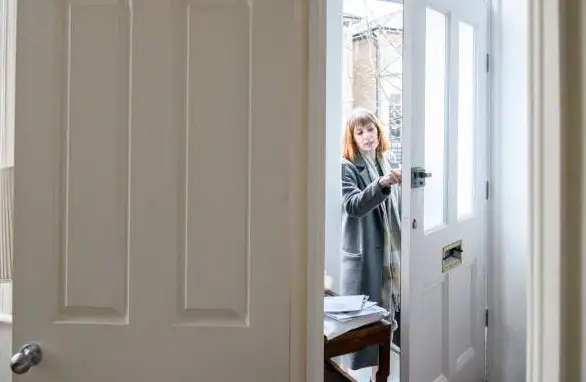
I stopped at the front door, my hand hovering over the knob. Something about the house felt different—inhabited in a way it shouldn’t be. The door was unlocked. I never left my door unlocked. Never.
When I pushed it open, the hinges moved silently. Someone had oiled them. The realization hit me like ice water. I stood in my own entryway, momentarily paralyzed by the wrongness of it all. The air didn’t smell like home. There was no trace of the lavender sachets I kept in every room, no lingering warmth of yesterday’s coffee, no familiar comfort. Instead, the house smelled of fresh paint and sawdust, sharp and intrusive.
Laughter drifted from somewhere deeper in the house. The kitchen, I thought. The easy sound of it—unbothered, casual—made my skin prickle. There was the clink of mugs, voices rising and falling in comfortable conversation, the kind of sounds people make when they believe they’re alone, when they have nothing to hide.
I took a step forward, then another, my feet silent on the hardwood floor. That’s when I saw them.
The walls.
My family photos were gone. Every single one. Decades of memories that had lined this hallway—Desmond’s first day of school, our family vacation to the Grand Canyon, Randall’s proud smile at our thirtieth anniversary—all stripped away. Pale rectangles remained where the frames had hung, ghost images of a life that had been deliberately erased. The walls looked wounded, naked, like skin after a bandage has been torn away too quickly.
The entry table stood bare. The gold-framed mirror my grandmother had left me, the one she’d carried across three states when her own family moved west, was missing. Gone. In its place, nothing. Just the outline of dust where it had rested for fifteen years, since the day Randall and I moved into this house.
I felt my breath catch, sharp and painful in my chest.
From the kitchen, a woman’s voice carried down the hall, bright and casual: “These cabinets are so outdated. We should replace them entirely. I’m thinking white shaker style—clean, modern. Something Instagram-worthy.”
I knew that voice immediately. Sutton. My daughter-in-law of eight months, three weeks, and two days. Not that I was counting.
“Whatever you want, babe.” That was Desmond, my son, his voice soft with an affection I hadn’t heard directed at me in years. “You’ve got great taste.”
There was a pause, and then he said something quieter, like he thought the walls themselves couldn’t hear him, or perhaps like he’d forgotten the walls were mine: “It’s all ours now.”
Those four words landed like stones in my stomach.
I forced myself to move, to walk down the hallway toward my own kitchen, each step feeling both inevitable and surreal. When I reached the doorway, I stopped, and for a moment I could only stare at the devastation before me.
Drop cloths covered my kitchen floor, paint-splattered and careless. Cabinet doors leaned against the wall like broken ribs, hinges torn away, leaving dark holes in the wood. The floral wallpaper I’d hung with Randall one summer weekend fifteen years ago—blue hydrangeas that matched my mother’s garden, that Randall used to trace with his fingers while we had morning coffee—was torn and dangling in ragged strips. Some sections had been pulled away completely, leaving adhesive residue and torn drywall underneath.
My old rooster cookie jar sat on the counter, wrapped carefully in newspaper like it was waiting to be carried out. Randall had given it to me for our twentieth anniversary, a silly thing he’d found at an antique shop because he knew I collected them. I’d kept it filled with chocolate chip cookies for thirty years.
Desmond sat at my kitchen table—our kitchen table, the one Randall had refinished by hand—with his chair tilted back, phone in one hand, feet propped up on another chair like a guest who planned to stay indefinitely. He wore jeans and an old college sweatshirt, the same casual clothes he wore when he came over for Sunday dinners. Except this wasn’t Sunday, and this wasn’t dinner.
Sutton stood near the wall holding a paint swatch, her platinum ponytail swinging as she turned her head, comparing colors. She wore expensive athleisure—the kind that costs more than my weekly grocery bill—all sleek lines and perfect coordination. Everything about her was polished: her manicure, her makeup, her practiced ease in my kitchen.
“Excuse me,” I said.
They both jolted like I’d fired a gun. Desmond’s chair scraped violently against the floor as he shot to his feet, his phone clattering onto the table. His face went pale, then flushed red.
“Mom—” His voice cracked. “You’re not supposed to be back until Friday.”
Not “Mom, what are you doing here?” Not “Mom, let me explain.” Just shock that I’d interrupted their plans.
Sutton recovered faster. She always did. Her smile slid into place with the practiced ease of someone who’d spent years perfecting it—polished, bright, and strangely empty. “Cordelia! What a surprise. We’re just freshening things up a bit before we move in. Desmond told me you’d love the updates.”
“Move in,” I repeated, letting the words sit heavy in the air between us. “Into my house.”
Her smile flickered, just barely. She glanced at Desmond like he’d promised her this conversation would be easy, that I’d be grateful, that I’d understand. “He said you were downsizing,” she said, her voice taking on a careful, reasonable tone. “He mentioned you wanted something more manageable. A condo, maybe? We thought we could help with the transition.”
I didn’t raise my voice. I didn’t have to. Instead, I stepped further into the kitchen, my eyes scanning the destruction they’d wrought. That’s when I saw it: a cardboard box on the counter, the word “GIVE AWAY” scrawled across the side in thick black marker.
I walked over and looked inside.
My mother’s ceramic mixing bowls sat there, nested inside each other just like she’d always kept them. The blue one with the tiny chip on the rim from when I’d dropped it as a child. The yellow one she’d used for every birthday cake I’d ever had. The green one that had belonged to her mother before her. Three generations of hands, three generations of Sunday dinners and holiday baking and whispered recipes, reduced to a cardboard box labeled for disposal.
Something cold and sharp twisted in my chest.
“How long has this been going on?” I asked Desmond, my voice low and steady.
He couldn’t meet my eyes. His gaze dropped to the floor, to the paint-splattered drop cloth, anywhere but my face. “Two weeks,” he mumbled.
Two weeks.
Two weeks of coming into my home while I was gone. Two weeks of trust broken, of keys I’d given him in good faith used to dismantle my life. Two weeks of packing up my memories, stripping my walls, planning to erase me from my own home.
“Two weeks,” I repeated. “I’ve been gone three days. So this started—”
“Before you left,” he said, and at least he had the decency to sound ashamed. “I was going to tell you. I just… Sutton said it would be better to have everything ready first. To show you how nice it could be.”
I looked at Sutton. She stood very still now, the paint swatch dangling from her hand, her polished smile finally fading into something more guarded.
“And the photos?” I asked. “My grandmother’s mirror? My mother’s bowls?” I gestured at the box. “You thought I’d appreciate that?”
“We packed everything carefully,” Sutton said quickly. “It’s all safe. We were going to help you move it to your new place. Desmond said—”
“I don’t have a new place,” I said, my voice cutting through her explanation. “I never said I was moving. I never said I wanted to downsize. This is my home. Mine.”
Desmond’s face crumpled. “Mom, you’re getting older. This house is too big for one person. The maintenance, the stairs—”
“I’m sixty-three,” I said. “Not ninety. And even if I were, this is my decision to make. Not yours.”
“We’re trying to help,” Sutton insisted, her voice taking on an edge. “Desmond has been so worried about you being alone here. And honestly, Cordelia, a house this size in this neighborhood? It’s too valuable to just sit here with one person rattling around in it.”
There it was. The truth, finally, stripped of all pretense. This wasn’t about helping me. This wasn’t about concern for my wellbeing. This was about real estate, about square footage and property values and what they wanted.
I lifted my phone—not to make a call, just to make a point. My hand was steadier than I expected. “This stops today,” I said, my voice cold and clear. “Both of you. Leave. Now.”
“Mom—” Desmond started.
“Now,” I repeated. “Or I call the police and report a break-in.”
They moved fast after that. Too fast. Like people who already knew they were wrong but had hoped they wouldn’t get caught. Desmond grabbed his jacket from the back of a chair. Sutton collected her purse, her paint swatches, her phone. They didn’t speak to each other, didn’t look at me.
At the door, Desmond paused. “I really thought—” he started.
“Don’t,” I said. “Just go.”
The door closed behind them with a soft click. I stood alone in the hallway, listening to the Mercedes start up outside, listening to it pull away down the street. Then I locked every bolt I had—the deadbolt, the chain, the handle lock—and stood in the silence.
The house felt emptier than it ever had, even in those first terrible weeks after Randall died. At least then, the walls had still held our memories. The photos had still hung in their places, witnesses to a life well-lived. Now there were just pale rectangles and the smell of paint.
I walked through each room slowly, cataloging the damage. In the living room, they’d removed the curtains Randall and I had picked out together. In the den, they’d taken down his bookshelves. In our bedroom—my bedroom—they’d stripped the bed and left new linens folded on a chair, as if they could simply replace everything I loved with their own choices.
They hadn’t been “freshening up” anything.
They’d been rewriting me out of my own home.
I spent the rest of that day putting things back as best I could. I hung the photos they’d left stacked in boxes in the garage. I unwrapped my mother’s mixing bowls and placed them back in their cabinet. I found my rooster cookie jar and put it back on the counter, filling it with cookies I didn’t want but needed the ritual of making.
By evening, my body ached and my hands were raw, but the house felt more like mine again. Not the same—it would never be quite the same—but mine.
I made myself dinner, ate it at the kitchen table, and tried not to think about Desmond’s face, about the son I’d raised to be kind and honest, and what had happened to him.
Just as I was washing my plate, the doorbell rang.
I froze, dish soap dripping from my hands. For a moment, I considered not answering. But curiosity won out. I dried my hands and went to the door, checking the peephole first.
No one was there.
I unlocked the door and found a package on my doorstep—a small box with no return address, no shipping label, just my name written in neat block letters. I brought it inside, locked the door again, and carried it to the kitchen table.
The box was light, almost weightlessly so. Inside, wrapped in tissue paper, was my mother’s jewelry box. The wooden one with the inlaid mother-of-pearl flowers, the one that played “Clair de Lune” when you opened it. The one I’d kept in my bedroom, in the top drawer of my dresser, where I’d thought it was safe.
My hands trembled as I opened it. The music box mechanism was broken—it wouldn’t play. Inside, most of the jewelry was still there: my mother’s pearl necklace, my grandmother’s garnet ring, a few pairs of earrings. But my wedding ring from Randall was gone. So was the silver bracelet he’d given me when Desmond was born.
At the bottom of the jewelry box, folded carefully, was a piece of notepaper. I unfolded it and saw Sutton’s handwriting—looping, practiced, the same script she used on the thank-you cards she sent after dinner parties.
“You’ll understand eventually. This is for the best. – S”
I read it three times, each time feeling the words sink deeper. The audacity of it. The presumption. The sheer entitlement to believe she could decide what was best for my life, my home, my future.
But beneath the anger, there was something else. A cold, hard clarity.
This wasn’t just about the house. This was about Desmond—my son, who I’d raised to value honesty and respect, who’d somehow become someone I didn’t recognize. Someone who could lie to me for weeks, who could dismantle my life while I was gone, who could stand in my kitchen and plan my erasure.
I sat at that table for a long time, holding my mother’s jewelry box, thinking about the choices that had led us here. Thinking about the red flags I’d ignored when Desmond started dating Sutton, the way she’d slowly isolated him from his friends, from me. The way she’d made comments about the house, about “wasted space” and “investment opportunities.” The way Desmond had started canceling Sunday dinners, started being too busy to call.
I’d told myself it was normal. New marriage, new priorities. I’d told myself to give them space, to not be that mother-in-law. But I’d been wrong. I should have spoken up. I should have fought harder for my son.
Now it might be too late.
The next morning, I called my lawyer. Margaret had handled Randall’s estate, had helped me navigate those terrible months after he died. She listened to my story without interruption, and when I finished, she was quiet for a long moment.
“I’m so sorry, Cordelia,” she said finally. “But legally, your position is strong. The house is yours, titled only in your name. They had no right to enter or make changes without your permission. The key access was a privilege you granted Desmond for emergencies, not carte blanche to renovate.”
“I want to change the locks,” I said.
“Absolutely. Do it today. And Cordelia? Document everything. Take photos of all the damage, keep that note from Sutton, make a timeline of events. Just in case.”
“In case of what?”
“In case they try to claim you promised them the house. In case this becomes uglier than it already is.”
I spent that afternoon taking photos of every stripped wall, every missing item, every piece of damage. I wrote down everything I could remember—dates, conversations, the contents of that “GIVE AWAY” box. I created a file, organized and thorough, because Margaret was right. I needed to protect myself.
The locksmith came that evening. As he worked on the doors, changing every lock, I felt something shift inside me. Not quite peace, but something adjacent to it. A sense of taking back control.
“All done,” he said, handing me the new keys. “No one’s getting in here without your permission now.”
Three days passed without contact from Desmond. No calls, no texts, no apologies. The silence hurt more than I wanted to admit. But on the fourth day, my phone rang. His name appeared on the screen, and I almost didn’t answer.
But he was still my son.
“Mom,” he said, his voice thick. “I’m sorry. I’m so, so sorry.”
I waited.
“Sutton said—” He stopped himself. “No. That’s not fair. I made my own choices. I knew what we were doing was wrong, and I did it anyway. I told myself it was for your own good, but that was just an excuse. I was selfish and I betrayed your trust.”
“Yes,” I said quietly. “You did.”
“I want to make it right. I don’t know how, but I want to try. Can I come over? Can we talk?”
I looked around my kitchen, at the cabinet doors I’d rehung myself, at the wallpaper I’d decided to leave torn—a reminder of what had happened, of what I’d overcome. “Not yet,” I said. “I’m not ready yet.”
“When?”
“I don’t know, Desmond. Maybe soon. Maybe not. But I need you to understand something: this house is mine. My life is mine. My decisions are mine. If you can’t respect that, if you can’t respect me, then we don’t have anything to talk about.”
He was crying. I could hear it in his breathing. “I understand,” he said. “I do. And Mom? I left Sutton. Moved out yesterday. I should have done it weeks ago, but I was too weak. Too afraid of being alone. But I’d rather be alone than be the person I became with her.”
Something in my chest loosened, just slightly.
“That was your choice to make,” I said. “Just like this is mine.”
We talked for another twenty minutes. It wasn’t easy, and it didn’t fix everything, but it was a start. When we hung up, I sat in the quiet of my kitchen and felt something I hadn’t felt in weeks: hope.
It would take time. Trust, once broken, doesn’t repair overnight. Desmond would have to prove himself, would have to show me through actions, not words, that he’d learned from this. And I would have to decide if I could forgive him, if I could let him back into my life in the way he’d been before.
But for now, I had my house. I had my memories. I had the life Randall and I built together, and no one could take that away from me.
I walked to the entry table and ran my hand over the bare wood where my grandmother’s mirror had been. Tomorrow, I’d go to the police station and file a report about the missing items. Tomorrow, I’d start the process of making Desmond accountable for what he’d taken.
But tonight, I just stood in my home—my home—and felt the weight of it settle around me like a blanket.
Two months later, most of the damage had been repaired. I’d found someone to restore the wallpaper, matching the pattern as closely as possible. The cabinet doors were back up, reinforced and oiled. I’d bought new frames for the photos, hung them in slightly different arrangements. The house looked different, but it was still mine.
Desmond came by for dinner once a week now, Sunday evenings. We were careful with each other, polite, slowly rebuilding what had been broken. He’d returned some of the items—my grandmother’s mirror, my wedding ring—and paid for the repairs. Sutton, I learned, had moved to California. Desmond didn’t talk about her, and I didn’t ask.
We were healing, both of us. Slowly.
One Sunday evening, as we sat at the kitchen table after dinner, Desmond looked around and said, “The wallpaper looks good. You can barely tell what happened.”
“But I know,” I said. “I’ll always know.”
He nodded, his eyes bright. “I’ll spend the rest of my life making this up to you, Mom. However long it takes.”
“I know,” I said. And for the first time in months, I meant it.
We sat together in the kitchen, in the house that was mine, surrounded by memories that no one could erase. Outside, the sun was setting, painting the walls gold. Inside, we were finding our way back to each other.
It wasn’t perfect. It might never be perfect again. But it was ours—this fragile, hopeful moment—and that was enough.
THE END

Lila Hart is a dedicated Digital Archivist and Research Specialist with a keen eye for preserving and curating meaningful content. At TheArchivists, she specializes in organizing and managing digital archives, ensuring that valuable stories and historical moments are accessible for generations to come.
Lila earned her degree in History and Archival Studies from the University of Edinburgh, where she cultivated her passion for documenting the past and preserving cultural heritage. Her expertise lies in combining traditional archival techniques with modern digital tools, allowing her to create comprehensive and engaging collections that resonate with audiences worldwide.
At TheArchivists, Lila is known for her meticulous attention to detail and her ability to uncover hidden gems within extensive archives. Her work is praised for its depth, authenticity, and contribution to the preservation of knowledge in the digital age.
Driven by a commitment to preserving stories that matter, Lila is passionate about exploring the intersection of history and technology. Her goal is to ensure that every piece of content she handles reflects the richness of human experiences and remains a source of inspiration for years to come.