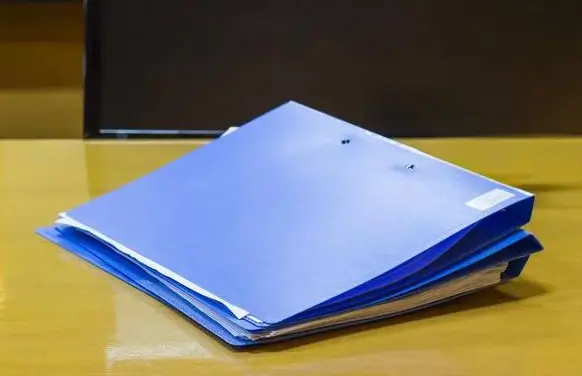
The Blue Folder
I woke up on Thanksgiving to an empty driveway and a note that said they’d gone to Hawaii without me—so I opened the blue folder they forgot existed and made one call before the coffee finished brewing.
The first thing I noticed wasn’t the cold, or the early light slipping through the curtains. It was the sound of nothing—the kind of silence that doesn’t feel peaceful, just wrong. A house that should have been full of voices and footsteps and the smell of butter melting in a hot pan was instead holding its breath, waiting for me to understand what had happened.
I’m seventy-three years old, and I’ve lived long enough to know that a home has its own heartbeat. That morning, mine had stopped.
I lay there for a moment, staring at the ceiling, listening for the familiar sounds that always marked Thanksgiving morning in our family. The parade starting on the television. My grandson Jake asking if he could have chocolate chip pancakes before turkey. My granddaughter Lily practicing her ballet moves in the hallway, her feet making soft thumping sounds against the hardwood I’d helped refinish two summers ago.
Nothing.
I pulled on my robe—the old blue one with the fraying cuffs that Amanda kept suggesting I replace—and shuffled into the hallway. The guest room door was open, and I could see inside without even trying. The beds were made with military precision, corners tucked tight, pillows arranged just so. The stuffed animals that usually spilled across the floor were gone. Even the little nightlight shaped like a moon that Lily insisted she needed was unplugged, leaving a dark outlet and a rectangle of clean wall where dust hadn’t settled.
It looked like they’d never been there at all.
Downstairs, the wrongness intensified. The kitchen—my kitchen, though I’d stopped calling it that out loud—was spotless in a way that made my stomach turn. No mixing bowls on the counter waiting for me to start the stuffing. No cutting board with celery and onions already chopped because Amanda liked to prep the night before. No twenty-pound turkey taking up half the refrigerator, no butter softening on the windowsill, no pie crusts waiting to be filled.
The kitchen looked like it did in the real estate photos before we moved in. Sterile. Staged. Empty.
I pressed my palm against the window above the sink and stared at the driveway until my eyes began to sting from not blinking. Both vehicles were gone—Michael’s dark blue truck that he was always so proud of, and Amanda’s white SUV with the stick figure family on the back window. All that remained were faint oil stains on the concrete and tire marks in the thin layer of frost.
The driveway had never looked so wide.
That’s when I saw it: a note on the counter, held down by the ceramic turkey magnet I’d bought years ago at a craft fair in Vermont, back when Tom was still alive and we’d drive up to see the leaves change. The magnet was cheerful and bright, painted in oranges and reds that suddenly felt like a cruel joke.
I picked up the note with hands that weren’t shaking yet, though they would be soon. Amanda’s handwriting was neat and confident, the kind of penmanship that always looked effortless, like everything else she did.
Mom, please don’t worry. We decided to spend Thanksgiving in Hawaii this year. You wouldn’t have liked the flight, so we thought it best to let you rest at home. We’ll bring you back something nice. Back in a week. Love, Amanda, Michael, and the kids.
I read it once. Then again. Then a third time, waiting for my throat to tighten, waiting for the tears to come and prove that some part of me was still capable of being surprised by cruelty disguised as consideration.
The tears didn’t come. And that scared me more than crying would have.
I set the note down and made coffee anyway, because my hands needed something to do and my mind needed time to catch up with what my heart already knew. While the machine hissed and dripped, I sat at the kitchen table—the one I’d helped pick out because their old one was “too scratched up for the new house”—and stared at the refrigerator I’d bought when they said theirs was “too small for a growing family.”
The room was filled with things I’d paid for but didn’t own, in a house I lived in but didn’t belong to.
After you’ve been alone long enough, people learn how to talk you into things using the softest words. They learn exactly which buttons to press, which fears to whisper to, which hopes to dangle just out of reach. Three years ago, when my life cracked open and spilled everything I’d built onto the ground, Michael had been there with kind eyes and reasonable explanations for why I shouldn’t be by myself anymore.
“You shouldn’t have to rattle around in that big house alone, Mom,” he’d said, sitting across from me at my old kitchen table, the one Tom and I had bought at an estate sale thirty years earlier. “The kids would love having you close. Think about it—you could see them every day. We could be a real family again.”
I believed him because I wanted to. Because six months earlier, Tom had died in his sleep beside me, and I’d woken up to a coldness that had nothing to do with temperature. Because the house we’d filled with forty-two years of marriage suddenly felt like a museum of memories I couldn’t bear to walk through alone. Because my son was offering me a lifeboat, and I was too grief-stricken to see the holes in it.
So I sold my house—the one Tom and I had painted and repaired and loved into being a home—and I moved into theirs. Or rather, into the bigger house they “needed” but couldn’t quite afford the down payment on. The house with the extra bedroom that would be “perfect for me” and the big backyard where the kids could play.
“We’re just a little short on the down payment,” Michael had said, not quite meeting my eyes. “Maybe twenty thousand? We’ll pay you back once Amanda’s promotion comes through.”
Twenty thousand became thirty when the inspection revealed problems. Thirty became forty when they decided they needed new appliances to go with the new house. Forty became a number I stopped counting when the “little emergencies” started appearing with the regularity of monthly bills.
The washing machine broke. The roof needed repairs. The fence needed replacing because the homeowners’ association said so. Jake needed braces. Lily needed tutoring. The car needed new tires. Amanda’s mother was sick and they had to fly out to help her, could I cover the tickets?
And I did. Every time. Because that’s what family does, isn’t it? Because I wanted to be useful, needed, essential. Because somewhere along the way, I’d started believing that my value to them was measured in dollars and deposits, in problems solved and gaps filled.
“You’re such a lifesaver, Mom,” Amanda would say, squeezing my hand with her perfectly manicured fingers. “I don’t know what we’d do without you.”
I’d believed that too. Right up until I woke up to an empty house and a note that proved exactly what they’d do without me: leave.
The coffee finished brewing, its familiar smell filling the kitchen, and still the house stayed silent. No footsteps above me. No cartoon theme songs. No life.
I walked upstairs slowly, my hand on the railing Tom had insisted on installing himself, even though this wasn’t his house and never would be. My bedroom was exactly as I’d left it the night before—neat, small, taking up as little space as possible. The guest room, they called it, even though I lived here. Even though I paid for half of everything and all of most things.
I opened my nightstand drawer and pulled out the blue folder I’ve kept for years. It was thick, rubber-banded shut, stuffed with papers I’d saved without knowing exactly when I’d need them, only that one day I might. Some instinct older than trust had made me keep every receipt, every bank statement, every canceled check, every text message confirming a transaction.
I sat on the edge of my bed and opened the folder, spreading the contents across the quilt I’d made the winter Tom got sick, when my hands needed to stay busy and my mind needed to stay blank.
Page after page, document after document: the sofa they’d just had to have because their old one “didn’t fit the aesthetic.” The sixty-five-inch television because the fifty-inch wasn’t “quite big enough for family movie nights.” The dishwasher, the refrigerator, the washer and dryer, all purchased because theirs were “on their last legs.” The new dining room set because we “needed something that could seat everyone for holidays.”
Every “little upgrade” that had added up to a life they treated as entirely theirs.
Forty-three thousand, seven hundred and sixteen dollars. That’s what my calculator told me when I added it all up, not counting the down payment or the monthly “help” I provided with utilities and groceries and the endless parade of emergencies that only ever seemed to happen when I had money in my account.
I held that folder in my lap and felt something shift inside me—something that had been bent for so long I’d forgotten it was supposed to be straight. It wasn’t anger, not exactly. It was clarity, cold and bright and sharp as winter light.
For three years, I’d been trying to buy my place in their lives. For three years, I’d been proving my worth in payments and sacrifices. For three years, I’d been so afraid of being alone that I’d accepted being invisible.
And they’d left me anyway. On Thanksgiving. Without a conversation, without an invitation, without even the courtesy of a lie I could pretend to believe.
I picked up my phone, my fingers steady, my mind clearer than it had been in years. I searched for moving companies, then narrowed it down to ones that offered same-day or next-day service. When a man answered—cheerful despite the early hour, clearly accustomed to holiday emergencies—I heard myself say, “I need a team there tomorrow morning,” like it was the simplest decision in the world.
“Tomorrow’s the day after Thanksgiving, ma’am,” he said carefully. “We do operate, but there’s a holiday rate—”
“That’s fine,” I interrupted. “How early can you be here?”
“Seven a.m.?”
“Perfect. I’ll text you the address and a list.”
“What are we moving, if you don’t mind my asking?”
I looked at the folder in my lap, at the careful documentation of everything I’d given. “Everything I paid for. I’ll have it itemized.”
There was a pause. Then: “Yes, ma’am. We’ll see you at seven.”
I spent the rest of Thanksgiving Day doing something I hadn’t done in three years: making decisions for myself. I went through the house room by room with my folder and a notepad, making a list of everything that was mine by right of purchase. The list grew longer with every room.
The movers would take the living room furniture—all of it. The television and sound system. The kitchen appliances, including the refrigerator that would leave them with the “too small” one in the garage. The washer and dryer. The dining room set. The decorations I’d bought to make their house feel like a home. Even the beds in the guest room, because I’d replaced those too when Amanda said the old ones were “terrible for the kids’ backs.”
I worked through the afternoon, and for the first time in years, I wasn’t cooking a turkey or setting a table. I was taking inventory of my own worth, and it turned out I’d been undervaluing myself for a very long time.
By evening, I’d made other calls too. To a real estate agent about apartments for seniors—the nice kind, with activities and a community, where being alone didn’t mean being lonely. To my bank about setting up new accounts they couldn’t “accidentally” access. To a lawyer, just to make sure everything I was planning was legal, which it was, since the receipts proved ownership and my name wasn’t on the deed they’d somehow never gotten around to adding it to.
“You have every right to remove your property,” the lawyer said. “Though I’d recommend leaving a copy of the receipts and an itemized list, just so there’s no confusion.”
“Oh, there won’t be any confusion,” I assured him.
That night, I slept better than I had in months. The house was still silent, still empty, but it no longer felt like it was waiting for something. Neither was I.
The movers arrived at seven a.m. sharp—three young men with a truck and the kind of efficiency that comes from doing difficult jobs on difficult days. I had coffee ready and my list laminated, each item cross-referenced with its receipt.
“This is impressive, ma’am,” the crew leader said, looking at my documentation. “Most people don’t keep records like this.”
“Most people aren’t planning for the day their family forgets they exist,” I replied, and his expression shifted into something between respect and sympathy.
They worked fast. By noon, the house looked like it had been stripped by locusts—every room suddenly revealing its bones, its empty corners, its essential emptiness. The living room was an expanse of carpet indentations where furniture used to be. The kitchen had gaps like missing teeth. Even the guest room—my room—was bare except for a lamp they’d owned before I arrived.
I walked through each space one final time, and instead of regret, I felt something close to satisfaction. Let them come home to this. Let them see in physical form what I’d been to them all along: a provider they’d made invisible until I removed myself and everything I’d provided.
Before I left, I did exactly what the lawyer suggested. I left an itemized list on the kitchen counter, held down by that turkey magnet. Next to it, I left a note of my own, written in my careful handwriting on the back of theirs:
Michael and Amanda,
I hope Hawaii was beautiful. I’m sure the kids loved it.
As you can see, I’ve removed everything I purchased for this house over the past three years. Attached is a complete list with receipts. Everything on it was bought with my money, which means it’s my property, which means I’m entitled to take it.
I’ve moved into a lovely apartment at Meadowbrook Senior Living. The address is included below if you’d like to visit, though I won’t be holding my breath.
I spent three years trying to buy my place in your life. It took you abandoning me on Thanksgiving for me to realize I was paying for a seat at a table that was never really set for me.
I’m not angry. I’m just done.
You’re welcome for everything. And I mean everything.
— Mom
P.S. The refrigerator in the garage still works. You’re welcome for that too.
I placed my key on top of the note, picked up my two suitcases—the only things I’d arrived with three years ago—and walked out the front door without looking back.
The moving truck was already gone, its contents safely stored until my new apartment was ready in three days. In the meantime, I’d checked into a hotel—a nice one, with room service and soft robes and nobody asking me for anything.
My phone started ringing two days later, while I was sitting in my hotel room watching a movie I’d actually chosen for myself. Michael’s name appeared on the screen. I let it go to voicemail. He called six more times that evening. Then Amanda called. Then Michael again.
I listened to the voicemails in order, and they formed a perfect narrative arc of denial, anger, bargaining, and desperation.
“Mom, what the hell? Why is the house empty? Call me back right now.”
“This isn’t funny, Mom. Where’s all the furniture? You can’t just take our stuff.”
“Okay, I get that you’re upset, but this is insane. The kids are crying because their beds are gone. Their BEDS, Mom.”
“We need to talk about this like adults. You’re being incredibly selfish.”
“Please call me back. Amanda’s parents are asking questions and I don’t know what to tell them.”
“Fine. Keep the stupid furniture. But you need to come back and help us figure this out.”
I deleted every voicemail and blocked both numbers. If they wanted to talk, they had my new address. They could write me a letter like civilized people, or better yet, they could show up in person and apologize.
They did neither.
Instead, three weeks later, I received a text from an unknown number—Michael, using Amanda’s mother’s phone. It said: We’re struggling here. The kids keep asking about you. Can we please talk?
I replied: The kids have two parents with jobs. They’ll be fine. You all will be. You managed before me, and you’ll manage after me. Good luck.
Then I blocked that number too.
Six months have passed now, and I’m sitting in my apartment at Meadowbrook, which turns out to be exactly what I needed. I have friends here—real ones, who like me for reasons that have nothing to do with my bank account. We play cards on Tuesday nights. We take day trips to museums and gardens. We laugh about our children and grandchildren with the kind of honest affection that can only come from distance and perspective.
My apartment is small but it’s mine. Every piece of furniture I chose myself. Every decoration means something. The silence here isn’t empty—it’s peaceful.
Last week, I got a letter. Not from Michael or Amanda, but from Jake, my grandson. His handwriting was messy, the letters big and uneven:
Dear Grandma,
I miss you. Mom says you got mad and left but I don’t think that’s the whole story because Mom gets mad all the time and she doesn’t leave. Can I come visit you? Dad says you live somewhere with a pool. I’m sorry if we made you sad. I didn’t know. Love, Jake
I cried when I read it—the first tears I’d shed since that Thanksgiving morning. Not because I was sad, but because my grandson saw me in a way his parents never had: as a person who could be hurt, who deserved an apology, who was worth visiting for reasons beyond what I could provide.
I wrote him back the same day:
Dear Jake,
You didn’t make me sad, sweetheart. You never did, not once. And yes, you can absolutely come visit me. We do have a pool, and a game room, and I think you’d really like it here. Ask your parents to call me and we’ll arrange it.
I love you more than you know. — Grandma
I included my phone number—the new one they didn’t have.
They haven’t called yet. Maybe they will, maybe they won’t. Either way, I’ll be okay.
Because here’s what I learned on that Thanksgiving morning when I woke up to abandonment and chose action over despair: you can’t buy love, but you can buy back your dignity. You can’t force people to value you, but you can refuse to devalue yourself. And sometimes the bravest thing you can do is stop making yourself smaller to fit into spaces that were never meant to hold you in the first place.
I’m seventy-three years old, and for the first time in three years—maybe in longer than that—I’m not trying to earn my place in anyone’s life.
I’m just living mine.
THE END

Ethan Blake is a skilled Creative Content Specialist with a talent for crafting engaging and thought-provoking narratives. With a strong background in storytelling and digital content creation, Ethan brings a unique perspective to his role at TheArchivists, where he curates and produces captivating content for a global audience.
Ethan holds a degree in Communications from Zurich University, where he developed his expertise in storytelling, media strategy, and audience engagement. Known for his ability to blend creativity with analytical precision, he excels at creating content that not only entertains but also connects deeply with readers.
At TheArchivists, Ethan specializes in uncovering compelling stories that reflect a wide range of human experiences. His work is celebrated for its authenticity, creativity, and ability to spark meaningful conversations, earning him recognition among peers and readers alike.
Passionate about the art of storytelling, Ethan enjoys exploring themes of culture, history, and personal growth, aiming to inspire and inform with every piece he creates. Dedicated to making a lasting impact, Ethan continues to push boundaries in the ever-evolving world of digital content.