THE DECEPTION AT THANKSGIVING
My name is Margaret, and for most of my life, I believed that love could survive anything—even distance, even silence, even the kind of quiet abandonment that creeps in so slowly you mistake it for normal. I spent two years convincing myself that my son was simply busy, that grief had rearranged our family in ways I couldn’t control, and that a mother’s job was to understand, not to complain. But on one ordinary Thanksgiving afternoon, surrounded by the smell of roasting turkey and the weight of unspoken truths, I discovered that some silences aren’t born from absence at all. They’re manufactured. And the people you trust most can become strangers wearing familiar faces.
I clean office buildings for a living. It’s honest work, the kind that leaves your knees aching and your hands rough, the kind that makes you invisible to the people whose trash you empty and whose desks you wipe down after they’ve gone home. For two winters in a row, I wore the same coat—a navy blue puffer with a broken zipper that I safety-pinned shut every morning. I stretched every grocery trip like it was a mathematical equation, calculating which meals could be made with the least, which corners could be cut without cutting into my dignity entirely.
There were nights I sat at my kitchen table with my checkbook open, moving numbers around like puzzle pieces that refused to fit. Heat or new shoes. Medicine or the overdue electric bill. Small choices that shouldn’t define a life but somehow do when you’re living paycheck to paycheck and pretending you’re fine. I never told David about those nights. What would I say? That his mother, who once hosted holiday dinners for twenty people, now debated whether she could afford both butter and milk in the same week?
My husband, Richard, passed away three years ago. Heart attack, sudden and cruel, the way death sometimes is when it wants to make a point about how little control we actually have. Richard had been my partner in every sense—the person who split the bills, the worries, the weight of being human. Without him, everything doubled. The rent felt heavier. The silence felt louder. And David, my only child, the boy I’d raised to be kind and ambitious, seemed to drift further into a life I couldn’t reach.
But I was proud of him. God, I was so proud. David had built a tech company from absolutely nothing—just an idea, a laptop, and the kind of relentless drive that turns college dropouts into cover stories. He’d done what Richard and I had always hoped for. He’d made something of himself. And if that meant fewer phone calls, shorter visits, a life too crowded for his aging mother, well, wasn’t that the price of success? Wasn’t that what I’d raised him for—to soar beyond me?
I told myself that often enough that I almost believed it.
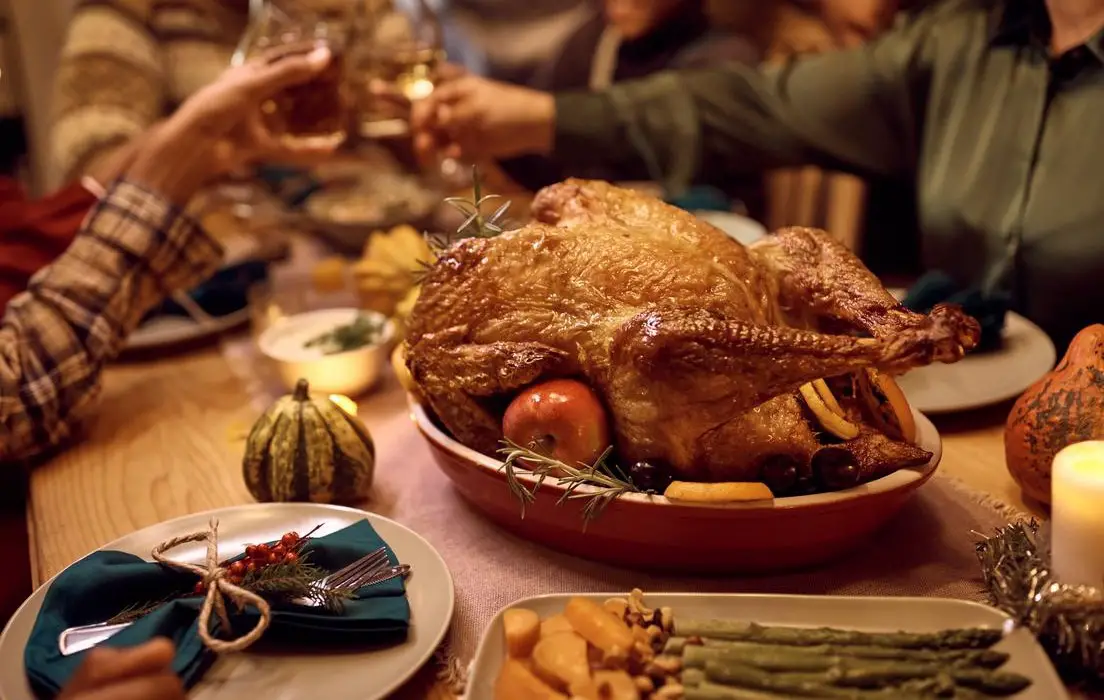
That Thanksgiving morning, I woke up at five. I couldn’t afford the meal I was about to cook, not really, but I cooked it anyway because some traditions matter more than sense. Turkey, stuffing made from scratch, green bean casserole, mashed potatoes with real butter, and two pies—pumpkin and apple, David’s childhood favorites. Every ingredient had been carefully chosen, budgeted for, justified against the reality that my bank account wouldn’t forgive me come December.
But I wanted one day. One single day where we felt like a family again, where the table was full and the laughter was real and nobody was checking their phone or glancing at their watch. I wanted to pretend, just for a few hours, that nothing had changed, that Richard was still here in spirit, that David still needed me the way children need their mothers before the world teaches them not to.
When the doorbell rang at two o’clock, I wiped my hands on my apron, checked my reflection in the hallway mirror—smoothed my hair, forced a smile—and opened the door to my son.
David walked in like he was entering a board meeting he was already late for. The first thing I noticed was the cologne, something expensive and sharp that didn’t belong in my small rental house with its secondhand furniture and faded wallpaper. The second thing was his watch, a sleek piece of silver and black that probably cost more than I made in three months. It caught the overhead light when he hugged me, briefly, the kind of hug that’s more ceremony than connection.
“Hey, Mom,” he said, and his smile was warm enough, genuine enough, but distracted. Even in that first moment, I could see his attention sliding past me, already measuring the afternoon against whatever came next.
Victoria followed behind him like an accessory, perfectly matched to his success. She wore a cream-colored coat that looked like it had never seen weather, and underneath, a cashmere sweater and tailored pants that belonged in a magazine spread about elegant holiday entertaining. Her heels clicked against my linoleum floor with little sharp sounds that seemed to announce her judgment with every step.
“Margaret,” she said, leaning in to kiss the air somewhere near my cheek, her perfume mingling with David’s cologne until my own kitchen smelled like a department store. Her eyes traveled across my living room—the worn couch, the outdated television, the stack of library books on the coffee table—and I watched her take inventory like she was cataloging evidence of something she’d suspected all along.
We sat down at the table I’d set with my mother’s old china, the plates I only used once or twice a year now, the ones with the delicate floral pattern and the chip on the edge of the serving platter that I always turned toward the wall. David complimented the turkey. Victoria picked at her plate with the kind of careful eating that suggests food is more obligation than pleasure. I smiled and served and asked questions and pretended not to notice that my son couldn’t quite meet my eyes for more than a few seconds at a time.
He talked about work—the company was expanding, opening offices in two new cities, hiring faster than they could onboard people. He mentioned flights he’d taken, meetings in San Francisco and New York, deals that were almost closed. Victoria sprinkled in details about their recent kitchen renovation, a weekend trip to Napa, plans for a European vacation in the spring. I nodded and made the appropriate sounds, the encouraging murmurs that mothers make when their children are telling them about lives that have nothing to do with mops and time clocks and the particular mathematics of poverty.
I didn’t tell them about my world. What would I say? That I’d picked up an extra shift at the medical building downtown because the pay was slightly better, even though it meant getting home after midnight? That I’d started buying the store-brand everything, that I’d taught myself to live on less sleep and smaller portions and the kind of hope that’s more stubbornness than optimism?
They didn’t ask, and I didn’t offer. We were experts at this dance by now, the careful choreography of family members who love each other in theory but have forgotten how to actually see each other.
Then dessert came out. I brought the pies to the table, sliced them with Richard’s old pie server, the wooden one he’d used every Thanksgiving of our marriage. David’s face lit up the way it used to when he was ten years old and the world was simpler.
“Mom, this looks amazing,” he said, and for a moment, he sounded like my son again, not the CEO, not the man in the expensive watch, just David.
He took a bite, closed his eyes in appreciation, and then leaned back in his chair with that satisfied, slightly smug expression people get when they think they’ve done something particularly good.
“So, Mom,” he said, casual as anything, like he was asking about the weather, “how do you like the lake house I gave you?”
The words landed in the middle of the table like a foreign object, something that didn’t belong in this conversation, in this kitchen, in my life. I stared at him, genuinely confused, my brain trying to process a question that made no sense in any context I understood.
“The what?” I asked.
“The lake house,” David repeated, and now he was smiling, proud, like he was waiting for me to catch up to the punchline of a joke I hadn’t realized he was telling. “The one I set up for you two years ago. After Dad died. I wanted to make sure you had somewhere nice, somewhere you could relax, get away when you needed to.”
I felt my face go hot, then cold, then numb. Two years ago. Two years of struggling, of patching together a life from scraps and willpower, of falling asleep exhausted and waking up defeated. And he thought I’d been… what? Relaxing at a lake house?
“David,” I said slowly, carefully, the way you speak when you’re trying not to shatter something fragile, “I don’t have a lake house. I’ve never had a lake house. I don’t know what you’re talking about.”
His smile faltered. Confusion flickered across his face, then something sharper—concern, or maybe the beginning of alarm. His eyes cut sideways to Victoria, quick and questioning, and I watched understanding start to dawn like a sunrise nobody wanted to see.
Victoria’s fork stopped halfway to her mouth. Her shoulders went rigid, her posture transforming from relaxed to defensive in the space of a heartbeat. She set down her fork with a small, precise click against the china and stood up too quickly, her napkin sliding from her lap to the floor.
“I need to make a call,” she said, her voice tight and bright and absolutely false. “Work thing. Won’t take a minute.”
She walked toward the kitchen, heels clicking, and I watched David watch her go, his expression shifting into something I’d never seen before—something hard and calculating and cold.
When he turned back to me, his voice had changed entirely. Gone was the casual son, the proud benefactor. What remained was the CEO, the man who built companies by seeing through lies and firing the people who told them.
“Mom,” he said quietly, “that can’t be right. I set everything up personally. The deed transfer, the property management, everything. The house was supposed to be in your name two years ago. And the monthly assistance—”
“Monthly assistance?” I interrupted, and my voice cracked on the words. “David, I haven’t received any assistance. I’ve been… I’ve been barely making it. Working double shifts. Cutting corners everywhere. I thought—” I stopped, swallowed hard against the sudden burn in my throat. “I thought you were just busy. I thought you’d forgotten about me.”
The color drained from David’s face. He looked stricken, physically ill, like I’d reached across the table and slapped him. His hands gripped the edge of the table, knuckles white.
“How much?” he asked hoarsely. “How much was I sending?”
“David, you weren’t sending anything—”
“How much was supposed to be sent?” he said again, harder this time. “The amount I authorized. Do you know?”
I shook my head, helpless, lost in a conversation that was rewriting two years of my life in real-time.
David grabbed his phone from the table, fingers moving fast across the screen. “I’m calling Mitchell. He handled everything—the property transfer, the monthly deposits, all of it. He reports directly to—”
He stopped mid-sentence. His eyes lifted from his phone to the kitchen doorway, where Victoria’s urgent, low voice had suddenly cut off into silence.
And in that silence, I understood.
Not everything. Not yet. But enough to know that the woman who’d looked at my home with barely concealed contempt, who’d picked at my cooking like it wasn’t good enough, who’d spent the last two hours radiating judgment—that woman had answers David was about to demand.
“Victoria,” David called out, his voice flat and dangerous. “Can you come back in here, please?”
The kitchen stayed silent. I could almost feel her on the other side of that wall, calculating, deciding how to play this, what story might still save her.
“Victoria,” David said again, louder now. “Now.”
She appeared in the doorway, and everything about her had changed. The polish was still there—the perfect hair, the expensive clothes—but underneath, I could see something crumbling, some carefully constructed façade developing cracks.
“Mitchell’s not answering,” David said, holding up his phone. “But that’s fine, because you can tell me yourself. Where’s my mother’s lake house? And where are the monthly deposits I authorized for her care?”
Victoria’s mouth opened, closed, opened again. “David, this isn’t—”
“Where?” he repeated, and his voice could have frozen water.
She lifted her chin, defiant now, angry at being cornered. “The lake house is fine. It’s been generating excellent rental income. I thought it was wasteful to just give away prime real estate when we could—”
“You rented out my mother’s house?” David’s voice was so quiet I almost couldn’t hear it. “The house I bought for her? You’ve been collecting rent on property I gave to my mother?”
“We’ve been collecting rent,” Victoria corrected, and there was a edge to her voice now, a bitterness that suggested this was an old argument finally breaking surface. “We’re married, David. Your assets are my assets. And honestly, your mother was fine. She has her job, her apartment. She didn’t need—”
“She’s been wearing the same coat for two years!” David exploded, standing so fast his chair scraped across my floor. “She’s been struggling! While you were spending her money on what—another vacation? Another renovation?”
“It wasn’t her money,” Victoria shot back. “It was our money. And I made smart decisions with it. Investments. That lake house has appreciated thirty percent. The rental income has been substantial. I was thinking about our future, about—”
“About my mother dying alone while I thought she was taken care of!” David roared, and I’d never heard him like this, never seen him lose control, never witnessed the full force of his anger directed at someone he loved.
Victoria flinched but held her ground. “She’s not your responsibility anymore, David. She’s a grown woman. She can take care of herself.”
“She’s my mother,” David said, and his voice broke on the word. “She raised me. She sacrificed everything for me. And you—” He stopped, seemed to physically restrain himself from saying something he couldn’t take back. “The monthly deposits. Where did they go?”
Victoria’s silence was answer enough.
David’s phone was already back in his hand, fingers flying. “I’m checking the account statements right now. Every transaction. And if I find out you’ve been—”
“It was for us,” Victoria interrupted, desperate now. “For our life. Our home. You’re always working, always building the company, and someone has to think about our life, our future. That money was just sitting there, and your mother was fine—”
“She wasn’t fine!” I heard myself say, and both of them turned to look at me like they’d forgotten I was there. “I wasn’t fine, Victoria. I was cold and hungry and scared. I was working myself sick trying to survive. I was falling asleep wondering if my own son had forgotten I existed.”
Tears were streaming down my face now, and I didn’t bother wiping them away. “I told myself you were busy, David. I told myself grief had changed things. I told myself that love doesn’t always look like phone calls and visits. I made excuses for you because I’m your mother and that’s what mothers do. But you didn’t forget me. You tried to take care of me. You just trusted the wrong person to make sure it happened.”
Victoria’s face had gone pale, all her earlier defiance collapsing into something that looked like genuine fear. “David, I can explain—”
“Get out,” David said softly.
“What?”
“Get out of my mother’s house.” His voice was steady now, calm in the way that’s more frightening than rage. “Take your coat. Take your car. Go back to our house—which I’m guessing you’ve been ‘investing’ in with my mother’s money—and pack your things.”
“You can’t be serious.”
“Pack your things,” David repeated, “and find a lawyer. Because I’m filing for divorce. And I’m filing charges for embezzlement and fraud. And I’m going to make sure everyone knows exactly what kind of person you are.”
Victoria opened her mouth, closed it, looked at me like I might intervene, might save her. I looked back at her with all the accumulated exhaustion and hurt of two hard years, and said nothing.
She grabbed her coat and left without another word. The door clicked shut behind her, and the house fell into a silence that felt like the aftermath of a storm.
David sank back into his chair, his head in his hands. “Mom,” he whispered, “I’m so sorry. I’m so, so sorry.”
I went to him then, this man who was my son, who’d been my whole world once, who I’d raised and loved and tried to prepare for a life I couldn’t quite imagine. I put my hand on his shoulder, and he grabbed it like a drowning man grabbing a lifeline.
“I thought I was taking care of you,” he said, his voice muffled and broken. “I thought I’d set everything up perfectly. The house, the money, everything. I thought you were okay. I thought I could focus on work because you were taken care of. God, Mom, what kind of son—”
“The kind who trusted his wife,” I said gently. “The kind who was trying to honor his father by being successful. The kind who had no way of knowing that the person he trusted most was lying to him.”
We sat there together while the afternoon light faded outside my windows and the remains of Thanksgiving dinner grew cold on the table. Eventually, David made phone calls—to lawyers, to accountants, to someone named Mitchell who apparently had been lied to as thoroughly as everyone else. I heard words like “wire transfer” and “property deed” and “immediate action.”
He promised me the lake house would be in my name by the end of the week. He promised me the monthly assistance would resume immediately, backdated, compensated, corrected. He promised me a future that looked different from the past two years.
But more than that, he promised me something simpler: that he would show up. That he would call. That he would stop letting work be an excuse for absence. That he would learn to see me again, not as a problem solved or a responsibility delegated, but as his mother.
I didn’t tell him that those promises mattered more than money or houses. He’d figure that out himself.
Three weeks later, I stood in the doorway of a lake house I’d never seen before, my name on the deed in black and white, sunlight streaming through windows that overlooked water so blue it looked painted. David stood beside me, and together we watched the waves lap at a dock I would learn to sit on, in a future I was only beginning to imagine.
“It’s yours, Mom,” David said quietly. “Really yours this time. And I’m going to make sure—”
“I know,” I interrupted gently. “I know you will.”
The divorce proceedings were ugly, public, and thorough. Victoria fought and lost. The money was recovered. The lies were exposed. Justice, whatever that means, was served.
But standing there in that doorway, watching light dance on water, I realized something: I didn’t need a lake house to feel loved. I didn’t need monthly deposits or deeds or restitution. I needed my son to see me. I needed him to show up, to call, to remember that success means nothing if it costs you the people who loved you when you had nothing.
And that Thanksgiving—the one where everything fell apart and came together—taught me that sometimes the greatest gift isn’t what someone gives you.
It’s what they finally understand they almost lost.
I moved into the lake house the following month. I quit my cleaning job and started volunteering at the local library instead. I learned to fish and to sit still and to let the quiet be something other than lonely. David visited every Sunday without fail, sometimes bringing takeout, sometimes just himself.
We never talked about Victoria unless we had to. She became a cautionary tale, a lesson about trust and greed and the ways love can be weaponized by the wrong person.
But we talked about Richard. We talked about the past and the future and everything in between. We talked the way families do when they’ve almost lost each other and decided that was too close, too frightening, too much to risk ever again.
And on the following Thanksgiving, when David showed up at my lake house with armfuls of groceries and offered to cook while I supervised, I realized something else: redemption looks a lot like showing up. Grace looks a lot like second chances. And family, real family, looks like learning to see each other clearly enough to know when something’s wrong—and caring enough to make it right.
The lake stretched out beyond my windows, endless and forgiving, and I thought about how easy it is to lose people even when they’re still alive. How distance can be measured in broken promises and unanswered calls. How trust, once broken, becomes something you have to rebuild one conversation at a time.
But I also thought about how love, real love, survives betrayal. How it finds its way back through the wreckage. How sometimes the worst moments become the ones that save you, because they force you to finally tell the truth.
David and I cooked together that day, and we told stories about Richard until the past felt present again. We laughed and we cried and we sat at my new table overlooking that impossible blue water, and I realized I’d been wrong about something important.
I’d thought love could survive anything—distance, silence, abandonment.
But I’d learned something better: love shouldn’t have to survive those things. Love, real love, shows up. It calls. It pays attention. It doesn’t delegate care to liars or disappear behind the excuse of being too busy.
Real love is present. And if it can’t be present, it’s honest about why.
David learned that lesson the hard way, and so did I. But we learned it together, and that made all the difference.
The sun set over the lake that evening, painting the sky in colors I didn’t have names for. David sat beside me on the dock, our feet dangling over water that reflected the last light of day.
“I love you, Mom,” he said quietly.
“I love you too,” I answered.
And this time, we both knew what that meant.
THE END

Lila Hart is a dedicated Digital Archivist and Research Specialist with a keen eye for preserving and curating meaningful content. At TheArchivists, she specializes in organizing and managing digital archives, ensuring that valuable stories and historical moments are accessible for generations to come.
Lila earned her degree in History and Archival Studies from the University of Edinburgh, where she cultivated her passion for documenting the past and preserving cultural heritage. Her expertise lies in combining traditional archival techniques with modern digital tools, allowing her to create comprehensive and engaging collections that resonate with audiences worldwide.
At TheArchivists, Lila is known for her meticulous attention to detail and her ability to uncover hidden gems within extensive archives. Her work is praised for its depth, authenticity, and contribution to the preservation of knowledge in the digital age.
Driven by a commitment to preserving stories that matter, Lila is passionate about exploring the intersection of history and technology. Her goal is to ensure that every piece of content she handles reflects the richness of human experiences and remains a source of inspiration for years to come.