The Christmas I Took Back
There’s a particular kind of loneliness that comes from being forgotten by the people who are supposed to remember you most.
It doesn’t announce itself with drama or tears. It settles in slowly, year after year, like dust gathering on photographs no one looks at anymore. You tell yourself it’s fine. You tell yourself they’re busy. You tell yourself that love doesn’t always look like invitation, that family doesn’t always mean inclusion.
You tell yourself a lot of lies when the truth is too painful to hold.
Five years. That’s how long I went without a real Christmas with my own children. Five years of sitting in my living room on December 25th, watching the lights blink on a tree I’d decorated for no one, eating leftovers I’d prepared with the hope that maybe, just maybe, someone would stop by.
They never did.
Not because I lived far away—I was twenty minutes from my oldest son’s house, thirty from my daughter’s, forty from my youngest. Not because we’d had some terrible falling out or unforgivable argument. We hadn’t. We were fine. We were always fine.
That was the problem, maybe. We were fine enough that they didn’t worry about me, but not close enough that they thought to include me.
The excuses changed every year, but they all had the same result.
“We’re keeping it small this year, Mom. Just us and the kids. You understand.”
“The twins have been sick. We don’t want to risk getting you sick too. Maybe New Year’s?”
“We decided to do Christmas at Sarah’s parents’ house this year. It’s complicated with the in-laws. You know how it is.”
“Everything’s just so hectic. We’ll do something after the holidays when things calm down.”
And I’d say, “Of course, honey. I understand. Family is complicated.”
Because what else could I say? That I was hurt? That I’d been counting down the days? That I’d already bought presents and planned meals and held space in my heart for people who hadn’t held space for me?
You can’t beg your own children to love you. You can’t force yourself into their lives. So you smile and you understand and you tell yourself that next year will be different.
Except it never was.
This year started the same way. Late November came and went without plans being made. Early December arrived, and I still hadn’t heard anything definite. My daughter-in-law posted photos on Facebook of her Christmas decorations—elaborate, Pinterest-perfect displays that must have taken days—but when I called to ask about holiday plans, she was vague.
“We’re still figuring things out, Eleanor. You know how it is with three kids.”
I did know. I’d raised three kids myself, and I’d still managed to include my own mother every single year until she died.
Then, on December 1st, my phone rang with a FaceTime from my youngest grandson, Noah. He was eight years old, gap-toothed and earnest, the kind of kid who still believed adults meant what they said.
“Grandma!” His face filled my screen, backlit by twinkling Christmas lights. The tree behind him was already up and decorated, which meant they’d done it over Thanksgiving weekend. Without mentioning it to me. Without inviting me to help, even though I used to do it with them every year.
“Hi, sweetheart,” I said, trying to match his energy. “How are you?”
“Good! I got an A on my spelling test and Dad said I could get a new video game if I’m good until Christmas.” He paused, his expression shifting to something more uncertain. “Grandma… why aren’t you coming for Christmas again?”
The question hit me like a physical blow. I felt my smile freeze on my face.
“What do you mean, honey?”
He frowned, confused, like I was the one who wasn’t making sense. “Dad said you’re busy. He said you’re doing something else this year.”
I could see the living room behind him now—stockings hung on the mantel, garland wrapped around the banister, wrapped presents already accumulating under the tree. They were preparing for a holiday. A big one, by the looks of it.
Just not one that included me.
“Who… who else is coming?” I asked, keeping my voice carefully neutral.
Noah’s face brightened. “Everyone! Aunt Melissa and Uncle Tom and the cousins. Aunt Sarah’s parents. Uncle David and Aunt Jennifer. Mom has a whole list. She has a folder with everybody’s names and what food they’re bringing and everything.”
A folder. A list. An organized, planned holiday celebration with assigned dishes and confirmed attendance.
And nobody had mentioned it to me.
“Is my name on the list?” I asked quietly.
Noah opened his mouth to answer, and that’s when his mother appeared. My daughter-in-law, Rachel. Perfect blonde hair, perfect makeup, perfect smile that didn’t reach her eyes.
“Noah, honey, let Grandma go. She’s busy.” She looked at the screen, her expression pleasant but firm. “Sorry, Eleanor. He’s testing boundaries lately. You know how eight-year-olds are.”
She said it like I was a teacher she needed to manage, not the woman who’d raised the man she married. Not the grandmother who’d babysat those kids every week for the first three years of Noah’s life, until Rachel decided she didn’t need my help anymore.
“I was just asking Noah about Christmas,” I said calmly. “He mentioned you’re having a gathering.”
Rachel’s smile tightened. “We’re still figuring things out. It’s complicated with everyone’s schedules.”
“It sounds like you’ve figured it out for everyone else.”
“Like I said, we’re still working on the details. I’ll let you know.”
And just like that, the call ended.
I sat in my living room—forty years of memories on these walls, photos of my children at every age, artwork they’d made in school, the growth chart marks still visible on the kitchen doorframe—and felt something inside me finally break.
Not dramatically. Not loudly.
Just… cleanly. Like a bone that had been cracked for years finally snapping all the way through.
I was done.
Done waiting for invitations that never came. Done making excuses for people who didn’t make time for me. Done shrinking myself to fit into the margins of my own children’s lives.
I opened my laptop and started searching.
Mountain houses. Remote properties. Places far enough away that “just stopping by” wouldn’t be an option, but close enough that if they really wanted to see me—if they really cared—they still could.
I found it three days later.
A two-story home nestled in the pine woods, two hours north of the city. Big windows that overlooked a valley. A wraparound porch. Three bedrooms, a fireplace, a kitchen with enough space to cook for an army—or for just myself, which was looking more and more like the reality I needed to accept.
The price was steep, but I’d been saving for years. Saving for what, I wasn’t sure. Maybe for this. Maybe for the moment when I’d finally choose myself.
I made an offer that night. It was accepted the next morning.
I didn’t tell my children. I didn’t ask their opinion. I didn’t “run it by the family” the way I’d done with every other major decision for the past forty years.
I just moved.
The first week in the mountain house was the quietest I’d experienced in decades. No phone calls to make, no schedules to coordinate around, no hoping that today would be the day someone remembered I existed.
I unpacked slowly, deliberately. I hung my own pictures on the walls—not just photos of my children, but photos of me. Me traveling with my late husband before he died. Me with my college friends. Me at my retirement party, surrounded by colleagues who’d thrown me a surprise celebration my own family hadn’t attended.
I bought new furniture that I liked, not furniture that matched some imagined family gathering. I set up the guest room not with hopeful anticipation, but simply because I had the space.
I cooked what I wanted when I wanted. I read books by the fireplace. I took walks in the woods and felt my shoulders unknot in ways they hadn’t in years.
For the first time since my husband died seven years ago, I felt something close to peace.
Two weeks passed before my oldest son, Michael, finally called.
Not to ask how I was. Not to make plans for Christmas. He called because he’d driven by my old house—the one twenty minutes from his—and noticed the lights were off. The driveway was empty. The “For Sale” sign was up.
“Mom? Where are you?”
“I moved,” I said simply.
Silence on the other end. Long enough that I checked to make sure the call hadn’t dropped.
“You… moved? When? Where?”
“Two weeks ago. To the mountains.”
“The mountains? What mountains? Why?”
I could hear the confusion in his voice, the genuine bewilderment that I might make a major life decision without consulting him. The irony would have been funny if it weren’t so painful.
“I wanted a change,” I said. “A fresh start.”
“But… you didn’t tell anyone. You didn’t ask for help. What if something goes wrong? Are you alone out there? Is it safe?”
Questions that sounded like concern but felt like something else. Like control. Like the assumption that I couldn’t possibly manage my own life without their oversight.
“I’m fine, Michael. I’m happy here.”
“Can you send me the address? I want to make sure you’re okay.”
I hesitated. Then I sent it, because refusing felt like proving his point—that I couldn’t handle things, that I needed monitoring.
That was my first mistake.
Two days later, my security app pinged. I’d installed cameras after moving in, not because I was paranoid, but because I was a woman living alone in a remote area. It seemed practical.
I pulled up the app and watched as a familiar car pulled into my driveway. Michael’s SUV.
He sat there for a moment, staring up at my house. Then he got out, phone in hand, and started taking pictures. Of the house. Of the driveway. Of the surrounding property.
He didn’t knock. Didn’t call out to see if I was home. Just photographed my house like he was documenting evidence, then got back in his car and left.
I stood in my kitchen, watching the footage replay, feeling something cold settle in my stomach.
The next morning, my phone exploded.
All three of my children, suddenly remembering my number.
Text after text. “Mom, we need to talk.” “This is a family conversation.” “We’re worried about you.” “Are you sure you should be doing this?”
I didn’t answer. Instead, I went into town, bought groceries for Christmas Eve dinner—just me and two friends I’d made at the local bookstore, women my age who’d welcomed me without questions or conditions—and picked up candles and fresh evergreen branches to decorate my mantel.
When I got home that afternoon, something felt off.
Not obviously wrong. Nothing looked disturbed. But there was a quality to the air, a sense that someone had been there.
I checked the camera history.
And there they were.
My daughter, Melissa, and my youngest son, David. Walking up to my front door like they owned the place, glancing around to make sure no one was watching.
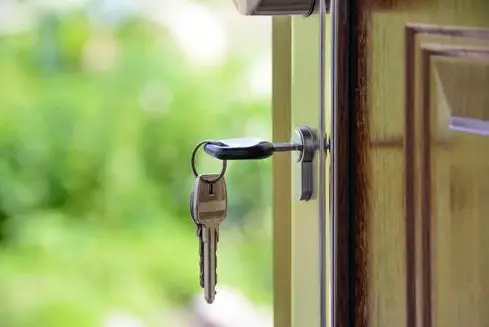
Then Melissa pulled a key from her purse.
My key. The spare I’d given Michael years ago for emergencies. The one he apparently felt entitled to copy and distribute without asking.
She slid it into my lock, and the door opened.
I watched, hands shaking, as they walked through my house. Through my living room, examining my furniture choices. Through my kitchen, opening cabinets. Upstairs, where they looked in all three bedrooms.
Melissa stood in what I’d designated as my reading room—a small space with a comfortable chair, good light, and shelves I was slowly filling with books—and said something to David. I couldn’t hear the audio, but I could read her expression. Judgment. Disapproval.
They stayed for twenty minutes, then left, locking the door behind them like they’d done nothing wrong.
I sat on my couch, watching the footage over and over, and felt a strange calm settle over me.
So that’s how this was going to be.
I called a locksmith that afternoon. Changed every lock on the house. Added deadbolts to the front and back doors. Updated my security system to send me alerts for any approach to the property.
Then I waited.
Christmas Eve arrived cold and clear, the kind of winter day that makes everything look like it belongs on a postcard. My friends were coming over at six. I’d made a roast, prepared sides, baked a pie that filled the house with the smell of cinnamon and apples.
At four o’clock, my security app went wild.
Four cars pulling into my driveway. Doors opening. People climbing out.
Michael and Rachel and their three kids. Melissa and Tom and their twins. David and Jennifer and their daughter. Rachel’s parents, who I’d met twice in ten years.
Ten people total.
Carrying luggage. Wrapped presents. Casserole dishes covered in foil.
They walked up to my front porch like they’d been invited, like this was some wonderful surprise I’d surely be grateful for.
Michael reached my front door first and rang the bell.
I took a deep breath, checked my reflection in the hall mirror, and opened the door.
“Mom!” Michael’s smile was big, performative. “Merry Christmas!”
Behind him, the others chorused their greetings, their faces bright with an excitement that made my skin crawl.
“What are you doing here?” I asked calmly.
Michael’s smile faltered slightly. “We’re here for Christmas! We wanted to surprise you. We felt bad about how things worked out, so we decided to bring Christmas to you!”
“How thoughtful,” I said. “Except I didn’t invite you.”
Rachel stepped forward, her smile still in place but her eyes hardening. “Eleanor, we know you’ve been going through a difficult time. All of this—” she gestured vaguely at my house “—this sudden move, isolating yourself… we’re worried. We thought spending the holiday together would help.”
“Help with what, exactly?”
“With whatever you’re going through,” Melissa chimed in. “Mom, this isn’t like you. Buying a house without telling anyone? Moving away from everyone who loves you? We just want to make sure you’re okay.”
I looked at them—really looked at them. At my children, who’d forgotten me for five straight Christmases but suddenly cared deeply about my wellbeing the moment I stopped being available on their terms. At my grandchildren, confused and cold on the porch, being used as props in whatever intervention this was supposed to be.
“How did you get in the other day?” I asked Melissa directly.
Her eyes widened slightly. “What?”
“Tuesday. You and David. How did you get into my house?”
She glanced at Michael, then back at me. “We were worried. Michael had a key—”
“A key I didn’t give you. A key to my old house, which you somehow had copied for a new lock you had no permission to open.”
“Mom, we just wanted to make sure the place was safe,” David said. “Make sure you weren’t being taken advantage of or—”
“Or what? Making my own decisions? Living my own life?”
The temperature on the porch seemed to drop another ten degrees.
Michael tried again, his voice taking on that reasonable tone men use when they think women are being hysterical. “Mom, let’s talk about this inside. It’s cold. The kids are freezing. Let’s at least—”
“No,” I said simply.
“No?”
“No. You’re not coming in. You weren’t invited. You broke into my house. You made plans for Christmas without including me for five years, and now you show up at my door expecting me to be grateful?”
“We’re your family,” Rachel said, her voice sharp now. “You can’t just shut us out.”
“I didn’t shut you out,” I said. “You shut me out. For years. And I accepted it. I told myself you were busy, that family is complicated, that it was fine. But it wasn’t fine. And I’m done pretending it was.”
“This is ridiculous,” Melissa snapped. “We drove two hours—”
“Without asking if I wanted you to.”
“You’re our mother!”
“And yet somehow that didn’t matter when you were making your seating charts and planning your menus and organizing your holidays. It only seems to matter now that I’ve stopped waiting for you to remember I exist.”
One of the twins started crying. Noah looked up at his mother, confused. “Are we going home?”
“No, honey,” Rachel said firmly. “Grandma’s just having a moment. She’ll calm down.”
That did it.
“I am perfectly calm,” I said, my voice cold and clear. “And you are leaving. Now. All of you.”
“Mom—” Michael started.
“If you don’t leave, I’m calling the police. You broke into my home. You came here without invitation. You have no right to be on my property.”
“You can’t be serious,” David said.
I pulled out my phone, opened it to the emergency screen, and held it where they could all see it. “Try me.”
For a long moment, nobody moved. Then Michael’s face hardened in a way I’d never seen before.
“You’ll regret this,” he said quietly.
“The only thing I regret,” I replied, “is wasting five years hoping you’d care enough to include me. I’m done hoping. I’m done waiting. And I’m done with this conversation.”
I closed the door.
Through the window, I watched them stand there for another minute, arguing among themselves. Rachel was crying now. Melissa looked furious. The kids looked confused and sad, and I felt a pang of guilt for that—but not enough to change my mind.
They eventually loaded back into their cars and left, the convoy disappearing down the mountain road like a parade that had gotten the wrong address.
I stood in my entryway, shaking, and then I started to cry. Not sad tears, exactly. Something more complicated. Relief and grief and anger and freedom, all mixed together.
My phone rang. Michael.
I declined the call.
It rang again. Melissa this time.
I turned it off.
My friends arrived at six, bringing wine and stories and the kind of easy companionship that comes from people who actually want to be around you. We ate dinner, we laughed, we toasted to new beginnings and second chances.
They left around ten, and I cleaned up the kitchen slowly, washing dishes by hand even though I had a dishwasher, just to have something to do with my hands.
Then I sat by the fireplace with a cup of tea and thought about Christmases past. About the years I’d hosted huge family gatherings, cooking for days, decorating for weeks, making everything perfect. About how those traditions had slowly eroded, how I’d been gradually written out of my own family’s story.
About how I’d let it happen because I was afraid that fighting back would mean losing them entirely.
But here’s what I’d learned: you can’t lose what you never really had.
My phone stayed off for three days. When I finally turned it on, there were 127 missed calls and 89 text messages.
Most were variations on “how dare you” and “we were trying to help” and “you’re being selfish.”
But there was one, sent late Christmas night from Michael: “The kids asked why you wouldn’t let us in. I didn’t know what to tell them.”
I stared at that message for a long time.
Then I typed back: “You could have told them the truth. That you forgot about me for five years, and when I finally stopped waiting for you to remember, you decided it was more convenient to blame me than to apologize.”
I hit send before I could reconsider.
His response came thirty minutes later: “That’s not fair.”
“Neither is breaking into my house,” I wrote back. “Neither is excluding me from Christmas for half a decade. Neither is showing up uninvited and expecting gratitude. But here we are.”
He didn’t respond.
New Year’s came and went quietly. I made resolutions—real ones, not the vague promises people make and forget by February. I resolved to choose myself. To stop accepting crumbs and calling it love. To build a life that felt like mine, not like a waiting room where I sat hoping someone would call my name.
In mid-January, my daughter called. Not texted—called. And I answered, because I’m not cruel. I’m just done being used.
“Mom,” Melissa said. Her voice was different. Smaller. “Can we talk?”
“We’re talking now.”
“In person. Can I come see you?”
“Just you?”
“Just me.”
I thought about it. “When?”
“This weekend? I could drive up Saturday morning.”
“Okay,” I said. “But Melissa? Come alone. And come prepared to actually listen.”
“I will,” she said. “I promise.”
She arrived Saturday morning with coffee from my favorite shop—the one near my old house, which meant she’d driven forty minutes out of her way to get it. A small gesture, but I noticed.
We sat on my porch, wrapped in blankets, drinking coffee and watching the snow fall through the pines.
“I’m sorry,” she said finally. “For all of it. For not including you. For breaking into your house. For showing up on Christmas like we had any right to be here.”
“Why did you?” I asked. “Show up, I mean. After five years of excuses, why suddenly did it matter?”
She was quiet for a long time. “Because you stopped needing us,” she said finally. “You stopped calling every week. You stopped asking about plans. You stopped… waiting. And it scared us.”
“Scared you how?”
“It made us realize we’d been taking you for granted. That you were always going to be there, in that house, ready whenever we finally made time. And when you weren’t…” She trailed off, then tried again. “It felt like losing control. Like if you didn’t need us, then maybe we weren’t as important as we thought we were.”
“So you broke into my house.”
“We panicked. We thought maybe you were being scammed, or having some kind of crisis. We didn’t know what to think.”
“You could have asked me.”
“Would you have told us the truth?”
“I don’t know,” I admitted. “Maybe not. I’ve spent a lot of years telling you what you wanted to hear instead of what I actually felt.”
We talked for three hours. She cried. I cried. She told me about the family dynamics I’d only seen from the outside—how Rachel controlled all the holiday planning, how she’d explicitly said she didn’t want “too many” people at Christmas because it got overwhelming, how my name kept getting dropped from the list because it was easier than arguing.
“Why didn’t you argue?” I asked.
“Because it was easier not to,” she said. “And I’m ashamed of that. I let Rachel make decisions that should have been family decisions. I let her exclude you because it was more convenient for me. And I’m so, so sorry.”
It wasn’t everything. It wasn’t five years of loneliness erased. But it was honest, and that counted for something.
“I need time,” I told her. “I need you to understand that you can’t just apologize and have everything go back to normal. There is no normal anymore. There’s only what we build from here.”
“I understand,” she said. “Can I come visit sometimes? Just me? No agenda, no family intervention. Just… us?”
“I’d like that,” I said.
She left that afternoon, and I stood on my porch watching her drive away, feeling something I hadn’t felt in a long time.
Hope. Cautious and careful, but real.
Michael called a week later. That conversation was harder—he still seemed to think I’d overreacted, that I owed them access to my life because they were family. We didn’t find resolution, but we found a truce. Time would tell if that was enough.
David sent a long email apologizing for breaking in. Rachel sent nothing, which told me everything I needed to know about where the real resistance lived.
My grandchildren sent cards. Noah’s said “I miss you Grandma” in careful third-grade handwriting, and I cried when I read it.
This year, I’m hosting Thanksgiving. Just Melissa and her family, because we’re rebuilding trust one meal at a time. I told her everyone else can come when they’re ready to actually apologize instead of just waiting for me to get over it.
She said that was fair.
I’m sixty-seven years old, and I’m learning that it’s never too late to choose yourself. It’s never too late to say no. It’s never too late to decide that you deserve more than waiting in the margins of someone else’s life.
My mountain house is everything I needed it to be—a sanctuary, a fresh start, a place where the only expectations are the ones I set for myself.
And if my family wants to be part of this new life, they’re welcome.
But only if they knock first.
THE END

Adrian Hawthorne is a celebrated author and dedicated archivist who finds inspiration in the hidden stories of the past. Educated at Oxford, he now works at the National Archives, where preserving history fuels his evocative writing. Balancing archival precision with creative storytelling, Adrian founded the Hawthorne Institute of Literary Arts to mentor emerging writers and honor the timeless art of narrative.