The Garbage Can Seat
It should’ve been the happiest day of my life. After twenty-nine years of being a mother—twenty-nine years of scraped knees and school plays and late-night talks and everything that comes with raising a child alone—my son was getting married.
I stood at the entrance to the Riverside Grand Estate, a venue so expensive I’d needed to sit down when Damon first told me the price. The late afternoon sun streamed through floor-to-ceiling windows, casting golden light across marble floors and crystal chandeliers. Everything was perfect. Elegant. The kind of wedding you see in magazines, the kind I’d secretly dreamed about since Damon was born.
Fresh flowers everywhere—white roses and peonies, thousands of dollars worth of blooms arranged in towering centerpieces. A string quartet played softly in the corner. Guests in designer suits and couture dresses mingled with champagne flutes, their laughter echoing off the vaulted ceilings.
And somewhere in this beautiful, expensive celebration was my seat.
I approached the seating chart—a massive gold-framed display near the entrance, with calligraphied cards arranged in alphabetical order. Each card listed a guest’s name and table number. I ran my finger down the list, past the H’s, searching.
Henderson, Table 7. Hopkins, Table 4. Jackson, Table 9.
But no Mitchell. No Rhonda Mitchell.
I went through again, more slowly this time, thinking maybe I’d missed it. My heart started beating faster—that panicky feeling you get when something is wrong but you don’t yet understand what or how wrong it is.
Nothing.
My name wasn’t there.
The young woman at the check-in desk noticed me hovering. She was maybe twenty-two, wearing a black dress and a professional smile, hired to manage the seating assignments and welcome guests. “Can I help you find your table?” she asked brightly.
“I’m Rhonda Mitchell,” I said, trying to keep my voice steady. “Mother of the groom.”
Her smile didn’t quite falter, but something shifted in her eyes. A flicker of recognition, followed by what looked like discomfort. “Oh,” she said. “Let me… let me just check with someone. One moment, please.”
She hurried away before I could respond, disappearing into the gathering crowd.
I stood there, feeling suddenly very visible and very invisible at the same time. Guests walked past me, laughing and greeting each other, while I remained frozen at the entrance, a woman without a seat at her own son’s wedding.
The young woman returned a few minutes later, not alone but with Indie trailing behind her.
Indie. My future daughter-in-law. Soon to be my son’s wife in less than two hours.
She was beautiful—I had to give her that. Twenty-six years old, with the kind of effortless blonde beauty that looks natural but probably costs a fortune to maintain. Perfect skin, perfect hair swept up in an elaborate updo that must have taken hours. Her pre-ceremony dress—something elegant and cream-colored that she’d change out of before the actual wedding—probably cost more than my monthly rent.
“Oh, Rhonda,” she said, her voice that particular kind of sweet that always set my teeth on edge. Too sweet. Artificial sweet, like saccharin. “I’m so sorry for the confusion. We had to make some last-minute changes to the seating arrangements. Some family complications, you understand. Why don’t you follow me? I’ll show you to your seat.”
Relief washed over me, tinged with embarrassment. Of course it was just a mistake. A last-minute change. These things happen at weddings. I was being paranoid.
“Thank you,” I said, forcing a smile. “I was worried there’d been some mix-up.”
“No mix-up,” Indie assured me, her heels clicking on the marble as she led me into the grand hall. “Everything is exactly as planned.”
We walked through the reception area. Past the head table where Damon and Indie would sit, elevated on a small platform, decorated with cascading flowers and candlelight. Past Table 1, where I could see name cards for Indie’s parents—her mother and father, both successful real estate developers who’d made it very clear they thought their daughter was marrying beneath her station.
Past Table 2, where Indie’s grandparents would sit. Past Table 3, filled with her siblings and their spouses. Past Table 4, Table 5, Table 6—all occupied by Indie’s extended family and close friends.
We kept walking. Past the main cluster of tables. Past the bar area where the bartender was setting up bottles of premium liquor. Past the dessert station that would later be unveiled with its four-tier wedding cake.
To the very back of the hall. To the corner. To the space where they’d stacked extra chairs and where the staff had set up a small station for dirty dishes and trash.
And there, pushed against the wall in the shadows where the elegant lighting didn’t quite reach, was a single folding chair.
Not the ornate chairs with white cushions and gold trim that filled the rest of the venue. Not even a basic banquet hall chair.
A cheap, metal folding chair. The kind you’d find in a church basement.
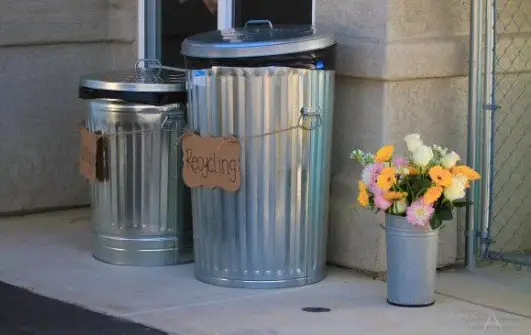
And beside it, not even trying to be subtle, was an industrial-sized garbage can.
I stopped walking. My brain refused to process what I was seeing.
“Here we are,” Indie said brightly. “Your seat.”
I couldn’t speak. Couldn’t move. I just stared at that folding chair, at that garbage can, at the space that was so clearly not meant for guests, at the humiliation so perfectly constructed that it couldn’t possibly be accidental.
“What is this?” I finally whispered.
Indie’s laugh was light, musical even. The kind of laugh you’d hear at a garden party or a charity luncheon. Pleasant and social and completely devoid of warmth.
“Your seat,” she repeated, as if explaining something to a slow child. “Right here, next to the trash. Perfect, don’t you think? A fitting place.”
The words hung in the air between us. A fitting place. For trash. That’s what she was saying. That’s what she meant.
I am trash. That was her message.
“You can’t be serious,” I said, my voice barely audible.
“Oh, I’m completely serious.” Her smile never wavered, but her eyes—those cold blue eyes—held something ugly. Satisfaction. Triumph. “You’re lucky to be here at all, frankly. Damon wanted to invite you out of obligation, but honestly? You don’t belong here. You’ve never belonged. You’re not our kind of people, Rhonda. You never were.”
“I’m his mother.” The words came out broken, desperate.
“You’re a woman who raised him in a trailer park,” Indie said, her voice dropping lower, more intimate, making sure no one else would hear. “You’re a woman who worked as a waitress your entire life. You wear department store clothes to events where everyone else is wearing designer labels. You don’t understand wine, or art, or any of the things that matter in our world. Damon has moved beyond you. He’s part of my family now. My world. And in my world, people like you sit in the corner next to the trash, grateful to even be allowed in the building.”
Each word was a knife. Each sentence a carefully calculated wound.
“Damon wouldn’t—” I started.
“Damon knows exactly where I put you,” Indie interrupted. “In fact, it was his idea. Well, our idea together. We both thought it was hilarious. Don’t worry though, we’ll make sure someone brings you a plate of food eventually. Can’t have the help going hungry.”
She turned and walked away before I could respond, her perfect dress swishing, her perfect hair catching the light, leaving me standing next to a garbage can at my own son’s wedding.
I sank into the folding chair because my legs wouldn’t hold me anymore.
Around me, the reception hall buzzed with life. Guests laughed and talked and sipped champagne. The string quartet played something classical and beautiful. Waiters circulated with trays of hors d’oeuvres—fancy things on tiny plates that I couldn’t have named if my life depended on it.
And I sat in the corner. In the shadows. Next to the trash.
Alone.
The ceremony started thirty minutes later.
I could barely see it from where I sat. The officiant was a blur in the distance. My son—my beautiful boy who I’d raised alone after his father abandoned us when Damon was three, who I’d worked double shifts to put through college, who I’d loved with every fiber of my being—was too far away for me to see his expression.
But I heard him say “I do.”
I heard Indie say “I do.”
I heard the applause.
And I sat next to a garbage can, crying silently, trying not to make a sound because I didn’t want to embarrass myself any more than I already had been.
The reception began. Dinner was served—some kind of chicken with sauce I couldn’t identify, vegetables arranged artfully, bread that probably came from an expensive bakery. Everyone ate at their assigned tables, talking and laughing, while waiters buzzed around making sure glasses stayed filled and plates were cleared promptly.
No one brought me food.
I sat in my corner, forgotten or ignored, watching my son’s wedding reception like I was watching it on television. Distant. Removed. Unreal.
The first dance happened. Damon and Indie swayed to some romantic song while everyone watched and applauded. Then the father-daughter dance. Indie’s father—a tall man in an expensive suit who I’d met exactly twice—walked his daughter around the floor with obvious pride.
There was no mother-son dance.
I hadn’t even known that was cut from the program until this moment, watching it not happen.
Speeches came next. The best man told funny stories about Damon’s college years, years I hadn’t been part of because I’d been working to pay for those years. Indie’s maid of honor gave a tearful speech about how perfect the couple was together. Indie’s mother stood and gave a toast about welcoming Damon into their family, about how they were so happy to have such a “promising young man” marry their daughter.
No one asked me to speak.
No one even acknowledged I was there.
Hours passed. The sun set. The elegant lighting took over, making everything glow with a warm, romantic ambiance. The dance floor filled with couples. The bar stayed busy. The cake was cut with great ceremony, Damon and Indie feeding each other bites while everyone cheered.
I sat in my corner and felt something inside me shift.
The hurt was still there—God, the hurt was enormous, a physical ache in my chest that made it hard to breathe. But alongside the hurt, something else started to grow.
Anger.
Not the hot, explosive kind of anger. Not the kind that makes you shout or throw things or make a scene.
Cold anger. The kind that settles into your bones and hardens there, turning into something sharp and purposeful.
I had spent twenty-nine years sacrificing for my son. Twenty-nine years putting his needs above my own. I’d worked sixty-hour weeks as a waitress at a diner off the interstate, standing on my feet until they bled, smiling at customers who treated me like I was invisible or worse, saving every penny I could for his future.
I’d paid for his college. Every cent of it. When he’d been accepted to that prestigious university—the one where he’d met Indie and all her wealthy friends—I’d worked triple shifts to make sure he could go without student loans. I’d driven a car held together with duct tape and prayer so he could have spending money. I’d lived in that trailer park Indie had sneered about, in a home not much bigger than a large bedroom, so my son could have opportunities I’d never had.
And he’d let them seat me next to a garbage can.
He’d laughed about it.
He’d thought it was funny.
The reception wound down. Guests started leaving, calling for their cars, saying their goodbyes. Damon and Indie made their rounds, thanking people for coming, glowing with happiness.
They never came to my corner.
Finally, around eleven o’clock, the venue started to empty. The staff began cleaning up, breaking down tables, clearing away the remnants of the celebration. I sat in my folding chair, still and silent, watching it all disappear.
Damon and Indie left for their honeymoon suite without saying goodbye to me.
When the venue was nearly empty, I finally stood. My legs were stiff from sitting for so many hours. My dress—a nice dress, I’d thought, though clearly not nice enough for this crowd—was wrinkled.
I walked out of the Riverside Grand Estate and sat in my fifteen-year-old Honda Civic in the parking lot, watching the remaining guests drive away in their luxury cars.
Then I pulled out my phone.
I scrolled through my contacts to a name I hadn’t called in almost three years. A name I’d saved for a different kind of emergency, the kind I’d hoped would never come.
Marcus Brennan. My brother.
We hadn’t spoken since our mother’s funeral. We’d never been close—he’d been the successful one, the one who’d gone to law school and made something of himself, while I’d been the disappointment who’d gotten pregnant at nineteen and derailed all my plans. We’d lived in different worlds, and he’d made it clear over the years that he was ashamed of his sister the waitress.
But Marcus was a lawyer. A very good lawyer. The kind who specialized in family law and estate planning and all the complicated legal things that people like me usually didn’t have to worry about.
The kind who knew exactly how to protect assets and unravel financial arrangements and make sure that people who tried to take advantage of you faced consequences.
The phone rang three times before he answered.
“Rhonda?” His voice was cautious, surprised. “Is everything okay?”
“No,” I said quietly. “It’s not. I need to talk to you about something important. Something I should have told you years ago.”
What Marcus didn’t know—what nobody knew except my late mother and me—was that I wasn’t as poor as everyone thought.
My mother had died three years ago, leaving behind a small estate. Her house, fully paid off. Some investments she’d quietly built over decades of careful saving. A life insurance policy.
All of it had come to me—her only daughter. About $340,000 total.
I’d kept it secret. I’d kept living in my trailer, kept working at the diner, kept acting like nothing had changed. Because I’d wanted to see if my son would stay in touch with me once he graduated, once he got his fancy job, once he entered Indie’s world.
I’d wanted to see if he’d remember me when I couldn’t give him anything anymore.
I’d failed that test before the wedding even happened.
But I’d made one critical decision when my mother died. I’d put that entire inheritance into a trust—a trust that Marcus had helped me set up at the time, though we hadn’t discussed the details since. A trust that I controlled completely, that could be distributed however I chose, whenever I chose.
A trust that I’d intended to leave entirely to Damon.
“Marcus,” I said into the phone, sitting in my old Honda in the parking lot of the venue that had just humiliated me, “I need to change my trust documents. All of them. As soon as possible.”
There was a long pause.
“What happened?” he asked finally.
So I told him. Everything. The missing name on the seating chart. The walk to the corner. The folding chair and the garbage can. Indie’s words. Damon’s complicity. The hours sitting alone, watching my son’s wedding from beside the trash while everyone else celebrated.
When I finished, Marcus was quiet for a long time.
“I’m sorry,” he said finally, and he sounded like he meant it. “I’m so sorry, Rhonda. You deserved better than that.”
“I did,” I agreed. “And now I’m going to do something about it.”
“What do you want to change?” he asked.
“Everything. I want Damon removed as beneficiary. Completely. I want that money to go somewhere else. Somewhere it will actually do good instead of funding his and Indie’s lifestyle.”
“Are you sure?” Marcus asked carefully. “This is your son. I know he hurt you tonight, but—”
“He didn’t just hurt me tonight,” I interrupted. “He’s been pulling away for three years. Ever since he met Indie. She’s made him ashamed of me, ashamed of where he comes from, and instead of standing up for me, he joined her. He let them seat me next to a garbage can at his wedding, Marcus. He thought it was funny. That’s not a momentary mistake. That’s who he’s chosen to become.”
“Okay,” Marcus said. “Okay. I’ll draft new documents. We can have them ready by the end of the week. But Rhonda? You should tell him. Give him a chance to apologize, to make this right.”
“Oh, I’m going to tell him,” I said. “Just not yet. First, I want to see what happens when he comes back from his honeymoon. I want to see if he calls. If he apologizes. If he even notices that he hurt me.”
“And if he doesn’t?”
“Then he’ll find out exactly what he lost when he learns to read legal documents.”
Damon and Indie went to Bora Bora for their honeymoon. Two weeks in an overwater bungalow that cost more than I’d made in six months at the diner.
I didn’t hear from my son. Not a text. Not a call. Not even a postcard.
When they returned, I waited another week. Still nothing.
Finally, I called him.
“Hey, Mom,” he answered, sounding distracted. “What’s up?”
“I wanted to see how the honeymoon was,” I said, keeping my voice neutral.
“It was great. Really amazing. Hey, I’m actually kind of busy right now—can I call you back?”
“Damon, we need to talk about the wedding.”
A pause. “What about it?”
“About where you seated me.”
“Oh, that.” He laughed. Actually laughed. “Mom, come on. It was just a joke. You’re being too sensitive. Indie thought it would be funny, and honestly, it kind of was. You should have seen your face.”
Something crystallized inside me in that moment. Any remaining hope that he might apologize, that he might realize what he’d done, died completely.
“I see,” I said quietly.
“Look, I really do have to go. We’re meeting Indie’s parents for dinner. I’ll talk to you later, okay?”
He hung up before I could respond.
I sat in my trailer—my home, the one they’d been so ashamed of—and made the call to Marcus.
“Do it,” I said when he answered. “Change everything. Remove Damon completely. I want that money to go to charity. Set up a scholarship fund for single mothers trying to go to college. Something that will actually help people instead of funding overpriced honeymoons.”
“Consider it done,” Marcus said.
The new trust documents were signed by the end of that week.
Six months passed.
I quit my job at the diner. After working there for twenty-seven years, I turned in my apron and walked out for the last time. With my mother’s inheritance—the money I no longer needed to keep secret—I could afford to retire early, to finally rest.
I moved out of the trailer park. Nothing extravagant, just a small two-bedroom house in a quiet neighborhood. A place with a yard where I could plant flowers. A place that was mine.
I didn’t tell Damon about any of it.
He called occasionally, usually when he wanted something or when Indie wasn’t around to discourage him. Our conversations were brief and hollow, full of small talk that meant nothing. He never apologized for the wedding. Never even acknowledged that anything had been wrong.
Then, about eight months after the wedding, I got a call from him that was different.
“Hey, Mom, I was thinking,” he said, his voice friendly in a way it hadn’t been in years. “Indie and I are looking at houses. Real houses, not apartments. We found this amazing place in Indie’s parents’ neighborhood, but it’s a bit more than we can afford right now. I was wondering if you might be able to help us with the down payment?”
The audacity took my breath away.
“How much?” I asked.
“Well, the place is $750,000. We’d need about $150,000 for a proper down payment.”
$150,000. Fifty thousand more than they thought I’d have access to even if I liquidated everything I supposedly owned.
“That’s a lot of money,” I said carefully.
“I know, but Mom, you said you got some inheritance from Grandma, right? And didn’t you always say you wanted to help me get established? This would be such a huge help. Indie’s parents are helping too, of course, but we’re a little short.”
“I see.”
“So can you help?” The entitlement in his voice was staggering.
“No,” I said simply.
“What?” He sounded genuinely shocked, like the possibility of me saying no had never occurred to him.
“I said no, Damon. I can’t help you buy a house.”
“Can’t or won’t?” His voice hardened.
“Both.”
“Are you serious? After everything I—” He stopped himself, but I knew what he was about to say. After everything I’ve done for you. As if being my son was some kind of burden he’d nobly borne.
“I’m completely serious.”
“You know what? Fine. Fine. I should have known better than to ask you for help. You’ve always been selfish. Indie was right about you all along.”
“What did Indie say about me?” I asked, though I already knew.
“That you’re bitter. That you’ve never been happy for me. That you’re jealous of our success because you never made anything of your own life. And you know what? She’s right. You’re sitting there in your trailer, working at a diner, and you can’t stand that I made something better for myself.”
Each word was meant to hurt, and they did. But not in the way he intended.
They hurt because my son—my baby boy, the child I’d sacrificed everything for—had become someone capable of saying them.
“I see,” I said again.
“Don’t call me again unless you’re ready to apologize and help us like a real mother should,” he said, and hung up.
I sat with the phone in my hand for a long time after that call ended.
Then I did something I should have done years ago.
I moved on.
A year after the wedding, I got a call from Marcus.
“Rhonda, I think you should know—Damon contacted me. He was asking questions about your trust, about whether you’d made any provisions for him in your estate planning.”
“What did you tell him?”
“The truth. That you had made provisions but recently changed them. He asked why, and I said he’d have to discuss that with you.”
“And?”
“And he wasn’t happy. He threatened to contest whatever changes you’d made, claimed he had a right to his inheritance as your only child.”
“He doesn’t have a right to anything,” I said firmly.
“I know. And legally, he has no grounds to contest. The trust was always yours to distribute however you wanted. But Rhonda, I think this is going to get ugly.”
He was right.
Two days later, Damon showed up at my house. My new house, the one he hadn’t known about because he’d never bothered to ask how I was or where I was living.
He stood on my front porch, looking shocked at the neat yard and the house that was clearly not the trailer he’d expected.
“What is this?” he demanded when I opened the door.
“My home,” I said simply.
“Where did you get the money for this?”
“That’s really none of your business anymore.”
“It is my business! Marcus said you changed your trust, that you cut me out! You can’t do that!”
“I can. And I did.”
His face went red. “That’s my inheritance! I’m your son!”
“You’re the son who seated me next to a garbage can at your wedding and thought it was funny,” I said calmly. “You’re the son who called me selfish and bitter when I wouldn’t fund your luxury lifestyle. You’re the son who chose his wife’s contempt for me over any relationship with me. So yes, I changed my trust. Every penny of my mother’s inheritance—the $340,000 you never knew about—is now going to fund scholarships for single mothers trying to get an education. Women like I was. Women who work multiple jobs and sacrifice everything for their children and deserve a chance to better themselves.”
He stared at me, his mouth opening and closing like a fish.
“That money was mine,” he said finally.
“No,” I corrected gently. “It was never yours. It was mine. My mother left it to me, not to you. And I chose to use it to help people who would appreciate it instead of someone who thinks I belong next to the trash.”
“You’re doing this because you’re mad about a seating arrangement? Jesus, Mom, grow up! It was a joke!”
“It wasn’t a joke, Damon. It was cruelty. It was your wife telling me—and you agreeing—that I wasn’t good enough to sit with your real family. That I was an embarrassment to be hidden away. And you know what? Maybe I wasn’t good enough for Indie’s world. But my money isn’t good enough for you either.”
“I’ll contest this,” he threatened. “I’ll get a lawyer. You can’t just—”
“I already have a lawyer. One of the best in the state, actually—your uncle. And there’s nothing to contest. I was completely mentally competent when I changed those documents. I have medical records proving it. I have clear, documented reasons for my decision. You have no legal standing.”
“This is because of Indie,” he said desperately. “She can be… difficult sometimes. I’ll talk to her. She’ll apologize. Just don’t do this, Mom. Please.”
“This isn’t about getting an apology, Damon. This is about recognizing who you’ve become and accepting that I don’t owe you anything anymore. I gave you everything I had for twenty-nine years. My time, my money, my health, my happiness—all of it went to making sure you had opportunities I never had. And the first time you had to choose between your mother and your wife’s cruelty, you chose the cruelty. You chose to laugh while I sat next to the garbage.”
Tears started running down his face. “I’m sorry. Okay? I’m sorry. I’ll do better. Just please don’t take away my inheritance.”
“You were only sorry when you found out there was money involved,” I said softly. “You weren’t sorry when I called you after the honeymoon. You weren’t sorry when you asked me for $150,000. You’re only sorry now that you realize what you’ve lost.”
“Mom—”
“Goodbye, Damon. I hope you and Indie have a wonderful life together. I really do. But that life won’t be funded by my sacrifice anymore.”
I closed the door while he was still standing on my porch, still crying, still trying to understand how he’d lost something he’d always assumed would be his.
That was three years ago.
I’m seventy-five now. I live in my little house with my garden and my books and my peace. The scholarship fund I established has helped eight single mothers go back to school so far. I get letters from them sometimes, thanking me, telling me about their dreams, about how much the financial help meant.
Those letters mean more to me than any relationship with my son ever could now.
Damon tried to contact me a few more times after that confrontation. Once to tell me Indie was pregnant and he was going to be a father—he seemed to think that news would make me change my mind, make me want to restore his inheritance so my grandchild would benefit. I congratulated him and said nothing about the trust.
Once more when the baby was born—a girl named Charlotte. He sent me a picture. She was beautiful. I sent a card with a small gift. I didn’t change the trust.
And once, about six months ago, to tell me he and Indie were getting divorced. She’d been having an affair with her personal trainer. In the divorce, she got the house they’d somehow managed to buy without my help, and Damon got custody of Charlotte every other weekend and a mountain of debt.
He didn’t ask me for money that time. He just wanted to talk, he said. Wanted to apologize properly. Wanted to rebuild our relationship.
I told him I’d think about it.
I’m still thinking.
Maybe someday I’ll forgive him. Maybe someday we’ll find a way back to each other that doesn’t involve him seeing me as a bank account or a source of support he can take advantage of.
But that day isn’t today.
Today, I’m sitting in my garden, reading letters from young women who are building better lives because of my mother’s legacy and my choice to honor her memory properly.
Today, I’m at peace with my decision.
Because here’s what I learned from that humiliating day at my son’s wedding, from sitting next to a garbage can while everyone else celebrated:
Your worth is not determined by how other people treat you.
Your love is not measured by how much you’re willing to sacrifice for people who don’t value it.
And being a parent doesn’t mean allowing your children to destroy you financially, emotionally, or otherwise.
I spent twenty-nine years being a good mother. I worked myself to exhaustion. I gave up everything I wanted so my son could have everything he needed. And when he repaid that sacrifice by treating me like trash, I learned the hardest lesson of parenthood:
Sometimes loving your children means letting them face the consequences of their choices.
Sometimes the greatest gift you can give them is not another bailout, not another sacrifice, not another instance of putting their wants above your dignity.
Sometimes the greatest gift is the truth: that actions have consequences, that relationships require respect, and that unconditional love doesn’t mean unconditional tolerance of abuse.
My son wanted my inheritance. What he got instead was a lesson he should have learned long before he turned thirty: that the people you take for granted will eventually stop being available to take.
I don’t know if he’s learned it yet. I don’t know if he ever will.
But I know that I finally learned to value myself. To recognize that I deserved better than a folding chair next to a garbage can. Better than a son who laughed at my humiliation. Better than a life of endless sacrifice for people who saw me as nothing more than a resource to be exploited.
I’m seventy-five years old. I live modestly but comfortably. I help people who appreciate it. I tend my garden and read my books and enjoy my peace.
And I have no regrets.
THE END

Ethan Blake is a skilled Creative Content Specialist with a talent for crafting engaging and thought-provoking narratives. With a strong background in storytelling and digital content creation, Ethan brings a unique perspective to his role at TheArchivists, where he curates and produces captivating content for a global audience.
Ethan holds a degree in Communications from Zurich University, where he developed his expertise in storytelling, media strategy, and audience engagement. Known for his ability to blend creativity with analytical precision, he excels at creating content that not only entertains but also connects deeply with readers.
At TheArchivists, Ethan specializes in uncovering compelling stories that reflect a wide range of human experiences. His work is celebrated for its authenticity, creativity, and ability to spark meaningful conversations, earning him recognition among peers and readers alike.
Passionate about the art of storytelling, Ethan enjoys exploring themes of culture, history, and personal growth, aiming to inspire and inform with every piece he creates. Dedicated to making a lasting impact, Ethan continues to push boundaries in the ever-evolving world of digital content.