The envelope arrived at my office on a Tuesday afternoon, delivered by a courier who asked me to sign for it as if it were just another contract, another piece of routine paperwork crossing my desk at the marketing firm where I’d worked for the past eight years. I signed without thinking, set it aside while I finished a client call, and only opened it twenty minutes later when I finally had a moment to breathe.
Inside were divorce papers—sixty-three pages of legal documentation that reduced twelve years of marriage to clauses and stipulations, asset divisions and custody arrangements. No letter. No explanation. Just a yellow sticky note affixed to the first page in Caleb’s precise handwriting: “Please don’t make this difficult.”
That was Caleb Dawson in a nutshell—polite when he wanted to be cruel, cordial when delivering devastating news, always maintaining that veneer of reasonableness that made you feel like you were the problem if you dared to react emotionally to something inherently emotional.
I sat in my office with the door closed, staring at those papers, and felt my hands begin to shake. Not from surprise—our marriage had been deteriorating for months, maybe longer—but from the coldness of it. The clinical precision. The way he’d reduced us to a transaction that needed to be concluded efficiently, without mess or inconvenience.
There had been no conversation. No suggestion of counseling or therapy. No moment where he’d looked at me and said, “This isn’t working, and we need to talk about what comes next.” Just these papers, delivered like a termination notice, with instructions not to make it difficult.
But it was what I read on page seventeen that made my blood run cold: Caleb was seeking full custody of our ten-year-old daughter, Harper.
Full custody. Not shared, not joint, not the kind of reasonable arrangement where a child gets to maintain relationships with both parents. He wanted Harper entirely, wanted to reduce my role in her life to supervised visits, wanted to erase me from the daily rhythms of motherhood as completely as he was erasing me from his life.
I called him immediately, my hand shaking so badly I could barely hold the phone.
“Caleb, what is this? Full custody? You can’t be serious.”
His voice when he answered was calm, measured, infuriatingly reasonable. “Julia, I think it’s best for Harper to have stability during this transition. You’ve been under a lot of stress lately, and I just think she needs—”
“Stress? You’re divorcing me without warning and trying to take our daughter, and you’re concerned about my stress levels?”
“This is exactly what I’m talking about,” he said, and I could hear the subtle shift in his tone—the way he was already building his narrative, already casting me as the hysterical ex-wife who couldn’t handle reality rationally. “I don’t want to fight, Julia. I just want what’s best for Harper.”
“What’s best for Harper is having both her parents in her life.”
“Of course,” he said smoothly. “And you’ll have visitation. But primary custody should be with the more stable parent, and I think we both know who that is.”
I hung up before I said something I’d regret, before my anger could be used against me as evidence of exactly the instability he was claiming.
That night, I sat Harper down in her bedroom—the room I’d painted yellow when we moved into this house, the room where I’d read her bedtime stories every night for years, where I’d comforted her through nightmares and celebrated small victories and tried to build a childhood that felt safe and loved.
“Sweetheart,” I said, sitting on the edge of her bed, “Daddy and I need to talk to you about something.”
“I know,” she said quietly, not meeting my eyes. “Dad already told me you’re getting divorced.”
The words hit me like a slap. “He told you? When?”
“Last week. He said you were going to be upset and that I shouldn’t worry, that everything would be okay.”
Last week. He’d told our daughter about the divorce before he’d even filed the papers, before he’d given me any indication this was coming. He’d controlled the narrative from the beginning, positioned himself as the calm parent preparing their child while painting me as the unpredictable variable.
“Harper, I want you to know that both Daddy and I love you very much, and that’s not going to change. But there are going to be some changes in how we live, and I need you to know that no matter what happens, you’re always going to have me. Okay?”
She nodded, but something in her expression—a guardedness I’d never seen before—told me Caleb had already been working on her, already shaping how she saw this situation.
The first custody hearing was scheduled for six weeks later. In the interim, I hired a lawyer—Diane Foster, a family law attorney who came highly recommended and had a reputation for not backing down. She was in her fifties, with sharp eyes and a no-nonsense demeanor that I found reassuring after weeks of feeling like I was drowning.
“Tell me everything,” Diane said at our initial consultation, her pen poised over a legal pad. “And I mean everything. The good, the bad, the embarrassing. I can’t help you if I don’t know what we’re dealing with.”
So I told her. About Caleb’s increasing emotional distance over the past two years. About the late nights at work that became more frequent, the business trips that seemed to multiply, the way he’d gradually withdrawn from family dinners and weekend activities. About the credit card statements I’d discovered six months ago showing charges at restaurants I’d never been to, hotels in cities where he claimed to be staying with colleagues.
About the separate bank account I’d found by accident, the one in his name only, where he’d been transferring money for the past eighteen months—our money, from our joint accounts, systematically moved to a place I couldn’t access.
“Do you have documentation?” Diane asked.
“Screenshots. Bank statements. Text messages where I asked him about the charges and he gave vague explanations that didn’t add up.”
“Good. That’s good. What about his relationship with Harper? How involved is he?”
I hesitated, trying to be fair even though fairness felt impossible. “He’s… present. He shows up to some school events. He helps with homework sometimes. But I’m the one who manages her schedule, takes her to doctor’s appointments, handles playdates and birthday parties. I’m the one who knows her teachers’ names and her best friend’s allergies and which songs help her fall asleep when she’s anxious.”
Diane made notes. “And he’s claiming you’re unstable. What’s he basing that on?”
“I don’t know. I’ve never been diagnosed with any mental health conditions. I’ve never been violent or neglectful. I work full-time, I volunteer at Harper’s school, I…” I felt tears building and forced them back. “I’ve been a good mother. Maybe not perfect, but good. Present. Engaged.”
“Then we’ll prove that,” Diane said firmly. “We’ll bring in witnesses—teachers, friends, family members who can testify to your character and your involvement in Harper’s life. We’ll present the financial evidence of his deception. We’ll make it very clear to the judge who the stable parent actually is.”
I wanted to believe her. But I’d lived with Caleb long enough to know how persuasive he could be, how easily he could present a version of reality that served his purposes while making anyone who disagreed seem irrational.
The courtroom was smaller than I’d expected, less dramatic than the legal dramas on television but more oppressive—a beige space with fluorescent lighting and an air of institutional weariness. Caleb sat at the opposite table with his attorney, a woman named Patricia Montgomery who wore expensive suits and had a reputation for aggressive tactics in custody cases.
He looked exactly like himself—neat charcoal suit, perfectly styled hair, the calm expression of someone completely certain of their righteousness. He glanced at me once when I entered, held my gaze for perhaps two seconds, then looked away as if I were an unpleasant obligation he’d already moved past in his mind.
What broke my heart was Harper. Caleb had insisted she be present for the hearing, claimed the judge needed to see the family dynamic firsthand. Diane had objected, argued that subjecting a ten-year-old to this was traumatic and unnecessary, but the judge had allowed it.
So Harper sat next to me in the gallery, her small feet not quite reaching the floor, wearing the blue dress I’d bought her for her school’s spring concert. Her hands were folded carefully in her lap, and she had that overly composed expression children get when they’re trying very hard to behave perfectly in situations they don’t understand.
That careful posture, that rigid self-control in a child who should have been free to be messy and imperfect—it broke something in me.
Patricia Montgomery spoke first, standing and addressing the judge with the kind of practiced smoothness that comes from years of courtroom experience. “Your Honor, my client, Mr. Caleb Dawson, is here today requesting primary custody of his daughter, Harper Elizabeth Dawson, age ten. Mr. Dawson has always been deeply involved in his daughter’s upbringing and has provided consistent stability and structure in her life.”
I felt Diane tense beside me, preparing to object, but Montgomery continued.
“Unfortunately, Ms. Julia Dawson has exhibited increasingly erratic behavior over the past year. She has frequent mood swings, has created conflict in front of the child, and has shown a pattern of financial irresponsibility that raises concerns about her ability to provide a stable home environment.”
Erratic behavior. Mood swings. Financial irresponsibility. Each word was chosen carefully, designed to paint me as unreliable, as someone whose emotions were weapons rather than natural responses to discovering your spouse’s betrayal.
I wanted to stand up and scream that I had evidence—text messages showing Caleb’s lies, bank statements proving his financial deception, emails where he’d promised to be transparent and then continued hiding money. But Diane had coached me: stay calm, stay composed, don’t give them ammunition to use against you.
Even so, I watched the judge’s face as Montgomery spoke, looking for any sign that she saw through the narrative being constructed. But Judge Sharon Martinez maintained the kind of professional neutrality that made you feel invisible, as if your pain and your truth were irrelevant data points in a process that had already reached its conclusion.
When Montgomery finished her opening statement, it was Diane’s turn. She stood with the confidence of someone who’d fought these battles before and knew how to counter every tactic.
“Your Honor, what we’re witnessing here is a classic case of projection. Mr. Dawson is the one who has been financially deceptive, secretly transferring marital assets to accounts his wife couldn’t access. He’s the one who has been emotionally absent from his daughter’s daily life, leaving the actual work of parenting to Ms. Dawson while taking credit for being ‘involved.’ And he’s the one who filed for divorce without warning, without attempting any form of reconciliation, demonstrating exactly the kind of impulsive decision-making he’s accusing my client of.”
She laid out our evidence methodically—the bank statements, the credit card charges, the documented timeline of my involvement in Harper’s school and activities. She called witnesses: Harper’s teacher, who testified that I was the parent who attended every conference and volunteered in the classroom; my colleague Sarah, who spoke about my work ethic and stability; my sister Rachel, who described the hours I’d spent caring for Harper while Caleb was mysteriously “working late.”
But Montgomery was good at what she did. She took each piece of evidence and twisted it, reframed it, made it sound like paranoia or vindictiveness rather than legitimate concern.
The bank account? “My client established a separate account to protect family assets during a difficult period in the marriage, when Ms. Dawson’s spending had become concerning.”
The late nights? “Mr. Dawson is a dedicated professional whose career demands sometimes require long hours—something Ms. Dawson apparently resents rather than supports.”
The credit card charges? “My client occasionally dines with colleagues and stays at hotels for legitimate business purposes. The fact that Ms. Dawson has monitored his expenses obsessively suggests a level of control and suspicion that must have been suffocating.”
By lunchtime on the first day, I felt like I was losing ground, like the truth was being buried under layers of carefully constructed alternative facts. Diane tried to reassure me during the break, but I could see the concern in her eyes.
“He’s good,” she admitted. “Montgomery is good. But we’re not done yet. This afternoon, we’ll present the pattern of deception. We’ll show that this isn’t about one bank account or a few late nights—it’s about systematic dishonesty.”
We returned to the courtroom after lunch. Harper was still with us, still sitting with that terrible composure, and I kept glancing at her, trying to read her expression and finding only carefully maintained blankness.
Diane was preparing to call her next witness when something unexpected happened.
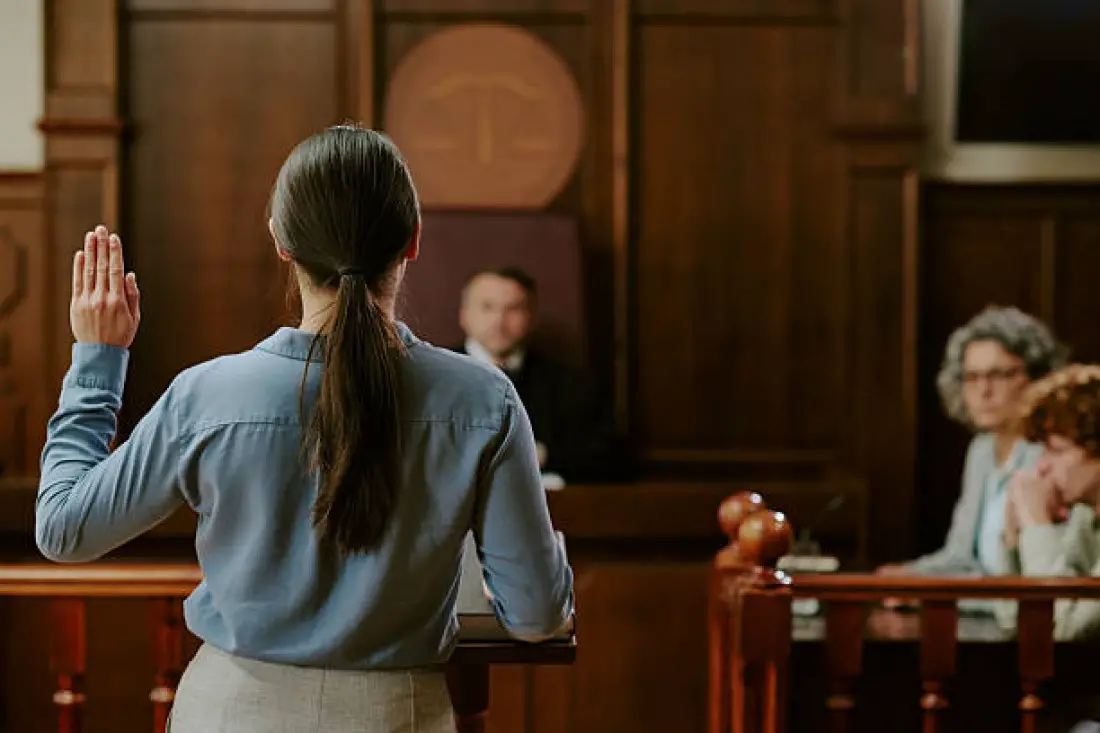
Harper raised her hand.
It was such a childlike gesture in that adult space—the automatic response of a girl who’d been taught to wait her turn, to signal when she had something to say. Her hand went up, small and tentative but unmistakably deliberate.
“Harper…” I whispered, reaching toward her instinctively, trying to gently stop whatever she was about to do. I didn’t want her in the middle of this. I didn’t want her feeling responsible for choosing between her parents or saying something that would haunt her later.
But she stood up anyway, ignoring my whispered protest. She looked directly at Judge Martinez with a seriousness that seemed far too old for her ten years, a gravity that came from carrying burdens children shouldn’t have to carry.
“Your Honor,” she said, her voice trembling but audible in the suddenly silent courtroom, “can I show you something? Something Mom doesn’t know about?”
Every head turned toward her. The court reporter’s fingers stilled over her keys. Even the bailiff, who’d maintained professional disinterest throughout the proceedings, looked alert.
Caleb’s reaction was immediate. He turned in his chair to face her, his composed expression cracking for the first time that day. “Harper, sit down,” he said, his voice tight with barely controlled tension. “This isn’t appropriate.”
She didn’t sit down. If anything, she stood straighter, her small frame radiating a determination I recognized—it was my own stubbornness reflected back at me, the quality Caleb had always claimed was one of my more difficult traits.
Judge Martinez leaned slightly forward in her chair, her neutral expression shifting into something more engaged. “What do you want to show me, Harper?”
Harper swallowed hard enough that I could see her throat move. “A video. It’s on my tablet. I saved it because I didn’t know who else to tell.”
My stomach dropped through the floor. A video? What video? Why didn’t I know about this?
Patricia Montgomery was on her feet instantly. “Your Honor, we object strenuously to this. This is clearly a coached performance, and introducing evidence that hasn’t been properly disclosed—”
“I’ll review it,” Judge Martinez interrupted, her voice carrying the authority of someone who’d heard every courtroom maneuver and wasn’t impressed by any of them. She looked back at Harper, her expression softening slightly. “But tell me first, Harper—why doesn’t your mother know about this video?”
Harper’s chin trembled, the first crack in her composure. When she spoke, her voice dropped to barely above a whisper. “Because Dad told me not to tell anyone.”
The courtroom seemed to contract around those words. Caleb had gone pale, his lawyer was frantically whispering to him, and Diane’s hand found my arm in a gesture that was either reassurance or restraint—I wasn’t sure which.
“Bailiff,” Judge Martinez said firmly, “please retrieve the child’s device.”
Harper walked to the front of the courtroom—such a long walk for such small legs—and handed over her tablet with both hands, as if offering something precious and fragile. The bailiff carried it to the judge’s bench, and Martinez spent a moment examining it before connecting it to the courtroom’s display system.
“I’m going to play this video,” she announced. “Given the nature of this hearing and the child’s voluntary disclosure, I believe it’s relevant. If anyone has objections that go beyond procedural concerns, state them now.”
Caleb’s lawyer opened her mouth, closed it, opened it again. “Your Honor, without knowing the contents, I can’t adequately—”
“Then we’ll all find out together,” Martinez said, and pressed play.
The video appeared on the screen at the front of the courtroom—grainy smartphone footage, clearly taken without the subject’s knowledge. It showed our kitchen, the one I’d spent countless hours in making school lunches and family dinners, now rendered strange and ominous by the nighttime lighting and secret recording.
And there was Caleb, standing by the kitchen island, looking directly into what must have been Harper’s hidden phone camera. He was smiling, but it was a smile I’d never seen on his face—cold, calculating, completely devoid of the warmth he showed in public.
Then his voice filled the courtroom, and my heart began pounding so hard I felt dizzy:
“Harper, sweetheart, you understand why this needs to stay between us, right? What we talked about tonight—about Mommy and her problems—that’s private family business. If you tell her what I said, or if you tell anyone else, it would hurt her very badly. And if she gets hurt, if she gets upset and does something… unstable… then I’ll have to make sure you don’t see her anymore. For your own safety. Do you understand?”
There was a pause where Harper’s voice, small and frightened, answered off-camera: “I don’t want to not see Mommy.”
“Of course not,” Caleb said, his tone shifting to something approximating fatherly reassurance. “And you won’t have to, as long as you keep our conversations private. As long as you help me protect you from her mood swings and her problems. Can you do that for me?”
“I guess so.”
“That’s my good girl,” Caleb said, and the smile he gave the camera was triumphant, satisfied—the expression of someone who’d just secured a valuable asset.
The video ended. The silence that followed felt like something physical, pressing down on everyone in the courtroom.
I couldn’t breathe. Couldn’t think beyond the rushing sound in my ears and the image of my husband—my husband—manipulating our daughter, threatening her with the loss of her mother if she didn’t keep his secrets, weaponizing a child’s love and fear for his own purposes.
Judge Martinez paused the video and sat back in her chair. Her neutral expression was gone, replaced by something I couldn’t quite read—anger, certainly, but also a kind of weary recognition, as if she’d seen variations of this cruelty before and it never stopped being shocking.
She looked at Caleb for a long moment. Then at me. Then back at Harper, who was still standing at the front of the courtroom, visibly shaking now that her courage had been expended.
“The court will take a brief recess,” Martinez announced, her voice carrying steel beneath the professional calm. “All parties will remain in the building. Bailiff, please ensure that Harper is comfortable and has access to water and a quiet space. We’ll reconvene in thirty minutes.”
She stood, and everyone rose automatically as she exited to her chambers. The moment she was gone, chaos erupted. Patricia Montgomery was arguing with Caleb in urgent whispers. Diane was already on her phone, presumably contacting someone about this bombshell. And I was moving toward Harper, needing to reach her, to hold her, to tell her she was safe and brave and everything was going to be okay.
But Caleb got there first.
“Harper, what did you do?” His voice was low but sharp, designed to cut without causing a scene. “We talked about this. We talked about not bringing family business into public—”
“Mr. Dawson,” Diane stepped between them, her voice calm but unyielding, “you need to step back from your daughter right now.”
“She’s my daughter, and I’ll—”
“Step back,” Diane repeated, “or I’ll ask the bailiff to intervene. You’ve just been caught on video threatening a child with parental alienation. I’d suggest you take a moment to think very carefully about your next move.”
Caleb backed away, his face a mask of barely contained fury, and I finally reached Harper. She collapsed into my arms, all that careful composure dissolving into tears that soaked into my shoulder.
“I’m sorry, Mommy,” she sobbed. “I’m sorry I didn’t tell you before. I was scared. He said if I told you, he’d make it so I couldn’t see you, and I didn’t want to not see you, but I also didn’t want him to keep saying those things about you, and I didn’t know what to do—”
“Shh,” I whispered, stroking her hair, trying to absorb her fear and guilt and give her back only safety and love. “You did the right thing, sweetheart. You were so brave. You did exactly the right thing.”
The thirty minutes felt like hours. Diane explained that the video constituted evidence of attempted parental alienation and potentially witness tampering, given that Caleb had been coaching Harper on what to say or not say during custody proceedings. It fundamentally changed the nature of the case.
“He’s done,” Diane said with quiet certainty. “That video shows premeditation, manipulation, and a willingness to psychologically harm his own child to win custody. No judge is going to reward that behavior.”
But I barely heard her. I was focused on Harper, on keeping her calm and safe in a room adjacent to the courtroom where we’d been directed to wait. She clung to me the way she used to when she was younger, before she learned to be careful and controlled, before her father taught her that expressing needs was a weakness.
When we were called back, Judge Martinez had a different energy—the neutrality was gone, replaced by barely controlled anger.
“I’ve reviewed the video three times,” she began without preamble. “I’ve also reviewed the text messages between Mr. Dawson and Harper that were on her device—messages where he continued to reinforce this narrative that Ms. Dawson was dangerous and unstable, messages where he explicitly told Harper not to share certain information because it would ‘upset Mommy and make things worse.'”
She looked directly at Caleb, who’d lost all his earlier composure and sat slumped in his chair.
“Mr. Dawson, what you’ve done constitutes parental alienation—a form of psychological abuse. You’ve attempted to damage the relationship between your daughter and her mother by planting fear and doubt. You’ve coached her on what to say and what to hide. You’ve used her as a pawn in your custody battle. And you’ve done all of this while presenting yourself as the stable, reliable parent.”
She paused, and the silence was absolute.
“This court finds your behavior reprehensible and directly contrary to the best interests of the child. Not only am I denying your petition for primary custody, I’m ordering a full psychological evaluation before we even discuss your visitation schedule. Any contact between you and Harper will be supervised until such time as a licensed therapist determines you’re not a risk to her emotional wellbeing.”
Caleb’s lawyer tried to interject, but Martinez held up her hand.
“I’m not finished. Additionally, this court is ordering you to immediately cease all private communication with Harper. Any messages, calls, or attempts at contact must go through a court-appointed intermediary. You will also undergo parenting classes and counseling focused on appropriate parent-child boundaries. And I’m referring this matter to the district attorney’s office for review, as your attempts to coach Harper regarding her testimony may constitute witness tampering.”
She turned to me then, her expression softening fractionally. “Ms. Dawson, I’m granting you temporary primary physical custody with full legal custody. Mr. Dawson’s supervised visitation will be reassessed after the psychological evaluation. I’m also ordering him to provide full financial disclosure within thirty days—every account, every asset, every transaction. The financial deception you’ve documented is concerning, and this court intends to ensure proper support for the child.”
I couldn’t speak. Could only nod as tears streamed down my face—not grief tears this time, but relief so profound it felt like physical pain releasing from my body.
“One more thing,” Martinez said, and now she was looking at Harper, who sat pressed against my side. “Harper, what you did today took tremendous courage. Speaking truth when you’re scared, when you’ve been told to keep secrets—that’s one of the hardest things anyone can do, let alone a child. I want you to know that you’re safe now. No one is going to take your mom away from you. Do you understand?”
Harper nodded, her small voice carrying clearly in the quiet courtroom: “Yes, ma’am.”
“Good. This hearing is adjourned.”
The aftermath was complicated—months of supervised visits where Caleb sat in a counseling office while Harper played with toys and mostly avoided talking to him; a psychological evaluation that found evidence of narcissistic tendencies and controlling behavior; financial forensics that revealed he’d been planning his exit for over two years, systematically hiding money and assets while presenting himself as the reasonable spouse.
The divorce itself took nearly a year to finalize. Caleb fought every detail, every asset division, every term of the custody arrangement. But his credibility had been destroyed by that video, by Harper’s testimony, by the accumulating evidence of his calculated deception.
In the end, I got primary custody with Caleb relegated to every-other-weekend visits, still supervised for the first year. The financial settlement was favorable—not because I wanted to punish him, but because the hidden accounts and transferred assets had to be accounted for and divided equitably. The house became mine. The savings became shared. The future became something I could imagine again without feeling like I was walking through fog.
Harper thrived once the pressure of keeping secrets was lifted. She started seeing a therapist who specialized in helping children navigate divorce and parental conflict. She talked about her fears—about losing me, about disappointing her father, about being the reason our family fell apart. And slowly, with support and consistency and the safety of knowing she could tell the truth without consequences, she began to relax back into childhood.
She’s thirteen now. We live in the same house where she grew up, but it feels different—lighter somehow, without the undercurrent of tension that characterized those final years with Caleb. She sees her father every other weekend, visits that have gradually become less supervised as he completed his court-ordered therapy and parenting classes. Their relationship is cordial but distant—she goes because she’s supposed to, but there’s a wariness there that I don’t think will ever fully disappear.
Sometimes she talks about that day in court, about the decision to show the video she’d secretly recorded months earlier when she’d sensed something was wrong but couldn’t articulate it.
“I was so scared,” she told me recently, now old enough to process what happened with more nuance. “I thought if I showed it, maybe Dad would hate me. Or maybe it wouldn’t matter, and the judge would believe him anyway because he’s so good at making people believe him.”
“What made you decide to do it anyway?” I asked.
She thought about it for a moment. “Because he kept saying things about you that I knew weren’t true. And I realized that if I let him keep saying them, if I let the judge think you were the bad parent when you’re not… that would be worse than him being mad at me. Some things you have to tell even when you’re scared.”
At thirteen, my daughter understands something about courage and truth that some adults never learn. She understands that silence in the face of injustice—even when breaking that silence is terrifying—is its own form of harm.
I wish she’d never had to learn that lesson so young. I wish she’d never been put in a position where she had to choose between protecting herself and protecting the truth. But she was, and she chose truth, and that choice saved both of us.
Caleb is getting remarried next year—I learned through the grapevine that he’s been dating someone from his office, a relationship that apparently started before our divorce was final, though I have no desire to pursue that information further. He’s built a new life, one that doesn’t include much space for the daughter he claimed to want full custody of. Harper reports that he asks about her grades and her activities with polite interest but doesn’t really engage, doesn’t dig deeper, doesn’t seem particularly invested in knowing who she actually is.
She’s okay with that now. “He can be my dad without being my favorite person,” she told me with the pragmatic wisdom of a teenager who’s learned to manage her expectations. “And you’re enough. You’ve always been enough.”
That video Harper showed in court—that unexpected moment when truth arrived in the voice of a ten-year-old child—didn’t just change the custody arrangement. It changed how I understood my own worth. For months, I’d believed Caleb’s narrative about my instability, my inadequacy, my failure as a spouse and parent. I’d internalized his criticisms even as I’d fought against them.
But watching that video, seeing his calculated manipulation of our daughter, hearing him threaten a child with the loss of her mother if she didn’t keep his secrets—I understood that his version of reality was a construction designed to serve his purposes. The “unstable” mother he described wasn’t me. It was a character he’d created to justify his betrayal and his cruelty.
The truth may take time to arrive. It may hide in secret recordings and whispered confessions. It may require courage to speak and courage to hear. But when it finally comes—when someone brave enough to risk everything brings it into the light—it changes everything.
My daughter taught me that.
And I will spend the rest of my life being worthy of the courage she showed in that courtroom, standing up in a space designed for adults and saying, “I have something to show you. Something you need to see.”
Some truths wait years to be told.
And some truths come from the smallest, bravest voices in the room.

Ethan Blake is a skilled Creative Content Specialist with a talent for crafting engaging and thought-provoking narratives. With a strong background in storytelling and digital content creation, Ethan brings a unique perspective to his role at TheArchivists, where he curates and produces captivating content for a global audience.
Ethan holds a degree in Communications from Zurich University, where he developed his expertise in storytelling, media strategy, and audience engagement. Known for his ability to blend creativity with analytical precision, he excels at creating content that not only entertains but also connects deeply with readers.
At TheArchivists, Ethan specializes in uncovering compelling stories that reflect a wide range of human experiences. His work is celebrated for its authenticity, creativity, and ability to spark meaningful conversations, earning him recognition among peers and readers alike.
Passionate about the art of storytelling, Ethan enjoys exploring themes of culture, history, and personal growth, aiming to inspire and inform with every piece he creates. Dedicated to making a lasting impact, Ethan continues to push boundaries in the ever-evolving world of digital content.