The Stable Girl
My parents gave my sister a $450,000 house and handed me an old blender as if I should be grateful.
I watched them do it in front of sixty people, in a private dining room with crystal chandeliers and waiters in crisp white shirts who kept the champagne flowing. I watched my mother’s hands—manicured, steady, practiced—slide that thick envelope across the table to my sister Belle while simultaneously pushing a cardboard box toward me like an afterthought, like something she’d found in the garage that morning and figured she might as well get rid of.
What they forgot was I’m an accountant.
Not the kind who does taxes for small businesses or helps people maximize their returns. I’m the kind who traces money through shell companies and offshore accounts. I’m the kind corporations call when someone’s been very clever about where the numbers went. I’m the kind who knows that when a family suddenly starts talking about “legacy” and “helping while we’re still here,” it usually means someone’s trying to move something before someone else notices.
So when my parents smiled at me across that table—expectant, indulgent, certain I’d play my role—I calmly made the phone call during dinner. Right there. Speakerphone.
And their “gift” turned into a formal review, with the actual paperwork suddenly becoming incredibly important, something they hadn’t anticipated.
My name is Olivia Sanchez. I’m thirty-four years old. I live in Chicago in a studio apartment that costs too much and looks out at a brick wall, and I spend my days doing what most people avoid: tracking down money that everyone prays no one will notice.
I’m good at it. Very good. Which is why it’s particularly ironic that my own parents thought they could run this kind of play on me.
The day of their thirty-fifth wedding anniversary celebration, I woke up at six in the morning to an email notification I’d been monitoring for three weeks. It was from a property records database I subscribe to for work—one that flags unusual transfers, liens, or changes in ownership status for any address I’m tracking.
The subject line was simple: ALERT: 847 Maple Row – Status Change Pending
847 Maple Row. The brownstone in the arts district. The property my father had purchased twelve years ago for $180,000 and watched appreciate to nearly half a million. The house he always called “an investment for the future.”
I opened the email and read through the details with the kind of cold focus that comes from years of seeing patterns other people miss. There it was: a pending transfer of deed, scheduled to be finalized within thirty days. No sale. No mortgage exchange. Just a transfer.
From my parents’ names to Belle’s.
I sat on my bed in the gray morning light, laptop balanced on my knees, and felt something cold and sharp settle in my chest. Not surprise—I’d suspected something like this was coming—but confirmation. The kind that makes everything else fall into place.
Because this wasn’t just a gift. This was strategic.
And I knew, even before I got dressed, even before I drove to that restaurant, that today was the day they were going to make it official. Public. Irreversible.
They hadn’t invited me to their anniversary party.
They’d summoned me.
Because I was the one who’d paid the deposit for the private room two days earlier, when my mother had called with that specific tone in her voice—the one that sounds like a request but is actually a command.
“Olivia, darling, we’re having a little celebration. Nothing too formal. Just family and close friends. Could you handle the booking? You know how your father hates dealing with restaurants.”
“How much?” I’d asked.
“Oh, just the room deposit. We’ll cover the rest.”
The deposit was $1,200. I’d put it on my credit card without argument, because that’s what the stable daughter does. That’s what I’d always done.
The restaurant was one of those places that tries very hard to make you feel like you’re somewhere more important than you are. Dark wood. Low lighting. Waiters who speak in hushed voices and present the wine list like it’s a religious text.
I arrived exactly on time—not early, not late—wearing the navy dress I keep for professional events and the pearls my grandmother left me, the only piece of jewelry I own that’s worth anything.
The private room was already full. Sixty guests, maybe more. My parents’ friends from their country club. Colleagues from my father’s firm—he’d been a commercial real estate attorney before he retired. My mother’s book club. People I’d met at holidays and family events but couldn’t name if you paid me.
And Belle, of course. Belle in a white dress that probably cost more than my rent, her blonde hair swept up in the kind of casual elegance that takes an hour and a professional to achieve. Belle with her perfect smile and her perfect life and her perfect husband Marcus, who worked in finance and wore cufflinks that probably cost more than my car.
She saw me come in and waved—bright, enthusiastic, genuine. Belle has always been genuine. That’s the worst part. She’s not cruel or calculating. She’s just always been the one they love more.
“Liv!” she called, weaving through the crowd to hug me. “You look beautiful. Is that a new dress?”
“It’s five years old,” I said.
“Well, it’s timeless,” she replied, because Belle is the kind of person who finds compliments in everything.
My mother appeared next, resplendent in emerald green, her silver hair styled in perfect waves. She air-kissed both my cheeks and smiled with her mouth but not her eyes.
“Olivia. You made it.”
“You asked me to,” I said.
“Of course.” She glanced at my dress, my shoes, my hair pulled back in a simple bun. “You look… practical.”
Practical. The stable girl. The reliable one. The one who doesn’t need big gestures or fancy gifts because she’s content with function over form.
My father was holding court near the bar, laughing too loud at someone’s joke, a glass of scotch already in his hand though it was barely noon. He was sixty-three but looked fifty—good genes, expensive skincare, the kind of wealth that keeps you preserved like a museum piece.
When he saw me, he raised his glass in my direction. “There’s my girl. Come here, Livvy.”
I crossed the room, aware of the eyes tracking me, the whispers that followed. That’s the other daughter. The quiet one. The one who doesn’t quite fit.
He wrapped an arm around my shoulders—heavy, possessive, slightly too tight. “You look lovely. Your mother was worried you wouldn’t make it.”
“I paid the deposit,” I said. “I figured I should show up.”
He laughed like it was a joke. “Always so practical. That’s my Livvy.”
Dinner was elaborate. Seven courses. Wine pairings. Speeches between each one.
I was seated at table twelve, sandwiched between one of my father’s former law partners and a woman from my mother’s yoga class who spent twenty minutes telling me about her daughter’s art gallery in SoHo. Belle and Marcus were at the head table with my parents, positioned like royalty.
The lobster bisque arrived. Then the salad. Then the main course—filet mignon that cost more per plate than I spent on groceries in a week.
And then, between the entrée and dessert, my father stood up.
The room quieted immediately. Glasses stopped clinking. Conversations faded. Everyone turned to face him, expectant.
“I want to thank you all for being here,” he began, his voice carrying that practiced authority he’d honed over forty years in law. “Thirty-five years ago, I married the most incredible woman I’ve ever known.”
Applause. My mother smiled, demure and perfect.
“And in those thirty-five years, we’ve built a life. A family. A legacy.” He paused, letting the word hang in the air. Legacy. “Now, as we get older—and yes, Margaret, we are getting older—”
Laughter.
“We’ve been thinking about what comes next. About how to help our children while we’re still here to see them thrive. About how to pass on what we’ve built in a way that’s meaningful.”
I watched his face, the way his smile didn’t quite reach his eyes. I watched my mother’s hands, folded carefully in her lap. I watched Belle, who was starting to look confused, like she wasn’t sure what was happening but suspected it involved her.
“So tonight,” my father continued, “we want to make an announcement. A gift. A transfer of something that’s been in the family for years, something that represents not just financial investment, but emotional investment. A home.”
My mother stood, pulling an envelope from her purse—thick, cream-colored, expensive. She crossed to Belle’s seat and placed it in front of her with both hands, like a priest presenting communion.
“Belle,” my father said, his voice softening, “you and Marcus have built such a beautiful life together. You’ve been talking about wanting a place with more space, something with history and character. So we want you to have 847 Maple Row. The brownstone. It’s yours.”
The room erupted. Applause, cheers, someone whistled. Phones came out. People started taking photos.
Belle opened the envelope with shaking hands. Inside was a deed transfer document, already signed by my parents, waiting for her signature. Her mouth opened. Tears filled her eyes.
“Mom, Dad, I don’t—I can’t—this is—”
“You deserve it,” my mother said firmly. “You’ve worked so hard. You’ve been such a devoted daughter. This is our way of saying thank you.”
Belle stood, hugged my mother, then my father. Marcus was grinning like he’d won the lottery. Someone yelled “Maple Row!” and everyone laughed.
And I sat at table twelve, fork frozen halfway to my mouth, watching the performance.
Because that’s what it was. A performance. The timing, the audience, the public declaration—all of it designed to make this moment irreversible, unquestionable, documented by sixty phones and uploaded to social media before the night was over.
Then my mother turned to me. Finally. Like she’d just remembered I existed.
“And Olivia,” she said, her voice honey-sweet, “we haven’t forgotten you.”
She produced another item from beneath the table—a cardboard box, taped shut, worn at the corners. She pushed it across the table toward me.
No envelope. No ceremony. Just a box.
I stared at it.
“Open it,” she encouraged, still smiling.
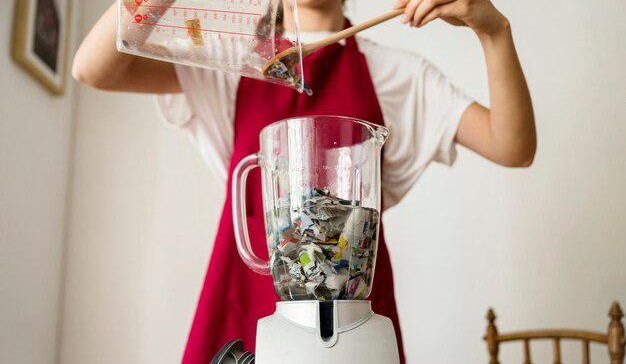
I pulled the tape off slowly, aware that people were watching now, curious. Inside was an old blender. Not new. Not even clean. The plastic base was yellowed with age, the buttons faded. And taped to it, with Scotch tape that was peeling at the edges, was a coffee gift card.
For fifteen dollars.
My mother leaned close, her voice dropping to a whisper meant only for me. “It’s the blender you gave Grandma years ago. I thought you’d like to have it back. And the coffee card—well, you always liked coffee, didn’t you?”
My father chuckled from his seat. “Olivia’s a realist. She doesn’t need big gifts. She’s our stable girl. Practical. Grounded. Not caught up in material things like some people.”
The stable girl.
That’s when I felt it—the click. The cold, sharp clarity that comes when you finally see the whole picture.
This wasn’t about gifts. This wasn’t about love or legacy or helping children thrive.
This was a transfer. A strategic move. They were giving Belle the house—publicly, irrevocably—because they needed someone to own it. Someone whose name would be on the deed when whatever they were hiding came to light.
And they’d given me a blender because the stable daughter doesn’t ask questions. The practical one doesn’t make waves. The reliable one accepts what she’s given and says thank you and pays for the next deposit when they ask.
Except I wasn’t that person anymore.
Maybe I never had been.
I set down my fork. The sound of it hitting the china plate was sharp in the suddenly quiet room.
Then I picked up my phone.
I didn’t argue. I didn’t cry. I didn’t demand to know why my sister got a $450,000 house while I got used plastic and a fifteen-dollar coffee card.
I scrolled through my contacts, found the name I was looking for, and pressed call.
Then I hit the speaker button and set the phone on the table between the blender and the envelope.
The sound of the ringtone filled the room—sharp, electronic, jarring against the soft jazz that had been playing in the background.
My father’s fork clattered against his plate. My mother’s smile froze. Belle looked confused.
“Olivia, what are you—” my father started.
Then the call connected.
“Gerald Patterson,” a voice said—male, professional, no-nonsense.
“Mr. Patterson,” I said clearly, “this is Olivia Sanchez. We spoke three weeks ago about the property at 847 Maple Row.”
There was a brief pause. Then: “Ms. Sanchez. Yes. I remember. Have there been developments?”
“The transfer is happening tonight. Public announcement, sixty witnesses, deed documents already signed. I’m sitting across from my parents and my sister right now.”
Another pause, longer this time. I could hear him typing.
My father’s face had gone from tan to gray. My mother’s hands were gripping the edge of the table.
“Ms. Sanchez,” Mr. Patterson said slowly, “I need you to listen very carefully. Whatever they’ve given your sister—deed, documents, anything—do not let it leave your sight. Do you understand?”
“I understand.”
“I’m going to send a team to meet you within the hour. Don’t sign anything. Don’t let anyone sign anything. And most importantly, make sure every document related to that property is photographed and preserved.”
“Why?” I asked, though I already knew. I just needed him to say it out loud, in front of everyone.
Mr. Patterson’s voice was grim. “Because 847 Maple Row isn’t an asset. It’s a liability. And your parents are trying to transfer that liability to your sister before the IRS completes their audit.”
The room went silent.
Not the polite, expectant silence from before. This was the silence of a bomb going off—the moment after the explosion when everyone’s ears are ringing and they’re not quite sure if they’re still alive.
Belle’s face crumpled. “What?”
My father stood up so fast his chair tipped backward. “Olivia, hang up the phone. Right now.”
“I don’t think so,” I said calmly.
My mother’s voice was shrill. “This is inappropriate. This is our celebration—”
“Mr. Patterson,” I continued, ignoring her, “can you explain to my sister what she’s about to inherit?”
“Your parents purchased 847 Maple Row twelve years ago,” he said, his voice flat and factual. “They used it as a rental property and reported the income for the first three years. Then they stopped reporting. They continued collecting rent—approximately $3,800 per month—but none of it appears on their tax returns for the last nine years. That’s approximately $410,000 in unreported income.”
Belle made a sound like she’d been punched.
“Additionally,” Mr. Patterson continued, “they took out a home equity line of credit against the property two years ago—$180,000—which they also failed to report. The IRS flagged the discrepancy six months ago and opened an audit. If the property is transferred to your sister before the audit completes, she becomes legally responsible for the back taxes, penalties, and interest. Current estimate: approximately $340,000.”
I looked at my father. “Did I miss anything?”
He was shaking. Actually shaking. “You had no right—”
“I had every right,” I said. “You tried to make my sister the fall guy for your tax fraud. You wrapped it up with a bow and made it public so she couldn’t refuse without looking ungrateful. And you gave me a blender so I’d feel too insignificant to ask questions.”
My mother’s face was white. “We were trying to help her—”
“You were trying to help yourselves,” I cut her off. “You knew the audit was coming. You knew you couldn’t hide this anymore. So you decided to transfer the property to Belle, let her name be on the deed when the IRS came calling, and hope she wouldn’t figure it out until it was too late.”
Belle was crying now, mascara running down her perfect face. Marcus had his arm around her, but he looked like he might be sick.
“Is this true?” Belle whispered, looking at our father. “Did you know?”
He didn’t answer.
“Dad,” she said, louder. “Did you know?”
“It’s complicated,” he finally managed.
“It’s fraud,” I corrected. “It’s tax evasion. And you were going to let Belle take the fall for it because you thought she’d be too grateful and I’d be too insignificant to notice.”
The room was still silent. Sixty people watching this family implode over lobster bisque and champagne.
I turned to Belle. “Don’t sign anything. Don’t touch those documents. And get your own lawyer. Not Dad’s lawyer. Your own.”
She nodded, still crying.
I looked at my parents. “Mr. Patterson’s team will be here within the hour to collect all the documentation. I suggest you cooperate.”
Then I stood, picked up the blender box, and walked toward the door.
My mother’s voice followed me, shrill and desperate. “Olivia, you’re ruining everything! This is our anniversary—our celebration—”
I turned back one last time. “No, Mom. This is your reckoning. And you brought it on yourselves.”
I walked out of that restaurant into the bright afternoon sunlight, the blender box under my arm, and got into my car. My hands were shaking—not from fear, but from the adrenaline of finally, finally saying what needed to be said.
My phone rang before I even started the engine. Belle.
“Liv,” she sobbed when I answered. “I didn’t know. I swear I didn’t know.”
“I know you didn’t,” I said.
“What do I do?”
“Exactly what I told you. Don’t sign anything. Get a lawyer. And don’t let Mom and Dad convince you this is all a misunderstanding. It’s not.”
“Are they going to jail?”
“I don’t know,” I said honestly. “Maybe. Probably not—they’ll settle, pay the fines, agree to payment plans. But they’ll lose the house. And they’ll lose a lot more.”
“I can’t believe they would do this to me.”
“They didn’t do it to you,” I corrected gently. “They did it for themselves. You were just collateral damage.”
She was quiet for a long moment. Then: “Why didn’t they give you the house? Why me?”
I laughed—bitter, sharp. “Because I’m an accountant, Belle. They knew I’d look at the numbers. They knew I’d ask questions. You… you just see the best in people. You always have.”
“I’m so stupid.”
“You’re not stupid. You’re kind. Those aren’t the same thing.”
The aftermath was messy.
Mr. Patterson’s team arrived at the restaurant an hour after I left and seized every document related to the property transfer. My parents tried to argue, tried to claim this was all a misunderstanding, tried to paint me as a vindictive daughter seeking revenge.
But the numbers don’t lie. And I had copies of everything—bank statements, rental income records, the HELOC documents, the property tax filings that showed increasing discrepancies over nine years.
The IRS completed their audit six weeks later. Total amount owed: $387,000 including penalties and interest.
My parents couldn’t pay it. They tried to sell the house, but between the back taxes and the HELOC, there was barely any equity left. They ended up surrendering the property to the IRS, who sold it at auction to cover the debt.
They also had to liquidate their retirement accounts to pay the remaining balance. The country club membership went. The luxury cars went. They downsized from their four-bedroom house to a two-bedroom condo on the edge of town.
And they blamed me for all of it.
I didn’t go to Thanksgiving that year. Or Christmas. Belle invited me—she’d separated from the family drama after hiring a lawyer who confirmed everything I’d told her—but I wasn’t ready.
My mother left me voicemails. Dozens of them. Some angry, some pleading, all variations on the same theme: You ruined us. You destroyed this family. We gave you everything and you threw it back in our faces.
I never responded.
My father sent me an email six months after the auction. Subject line: “Consequences.”
I deleted it without reading it.
Belle and I started having lunch once a month. She apologized—over and over, though she had nothing to apologize for. “I should have seen it,” she kept saying. “I should have known something was wrong.”
“They didn’t want you to see it,” I told her. “That was the whole point.”
“Are you okay?” she asked one day, over salads at a café near my office. “Really okay?”
I thought about it. “Yeah,” I said. “I am.”
“I’m not sure I would be.”
“You would,” I said. “You’re stronger than you think.”
She smiled—sad but genuine. “I used to think you had it so easy. No expectations, no pressure. Just… steady. Stable.”
“The stable girl,” I said.
“I’m sorry they called you that.”
“Don’t be,” I replied. “They meant it as an insult. But stable is good. Stable means you can’t be knocked down. Stable means you see the ground shifting before everyone else feels it.”
“When did you figure out what they were doing?”
“The morning of the party,” I said. “I got an alert about the property transfer. But honestly? I think I’ve known something was wrong for years. I just didn’t want to admit it.”
“What made you call Mr. Patterson?”
I shrugged. “The blender. Seeing them hand you a $450,000 house and hand me used plastic… it just clicked. This wasn’t about loving you more. It was about using you. And I couldn’t let that happen.”
Belle reached across the table and took my hand. “Thank you.”
“You don’t have to thank me.”
“Yes,” she said firmly. “I do. You saved me from something I didn’t even see coming. And you did it knowing it would destroy your relationship with our parents.”
“They destroyed it themselves,” I said. “I just stopped pretending otherwise.”
Two years later, I’m still in Chicago. Still in the studio with the brick wall view. Still tracking money for corporations who need someone who knows how to see what’s hidden.
My parents never apologized. I didn’t expect them to.
Belle and I are closer now than we ever were growing up. She got divorced—Marcus couldn’t handle the scandal, couldn’t stomach being associated with the “Sanchez tax fraud case” that made the local business news. She’s dating someone new now, a high school teacher who doesn’t care about country clubs or brownstones or legacy.
I still have the blender. I keep it on a shelf in my apartment, right next to my framed CPA license. A reminder that sometimes the smallest insult reveals the biggest truth.
And sometimes—not often, but sometimes—I get calls from people who heard about what happened. People whose parents are acting strange about money, whose siblings just got surprise gifts that don’t make sense, whose families are suddenly very interested in “helping” with estate planning.
I listen to their stories. I ask questions. I look at the numbers.
And when I see the pattern—the same pattern I saw that day in the restaurant—I tell them what I told myself:
Don’t let them make you feel insignificant. Don’t let them make you feel crazy for asking questions. And never, ever let them convince you that love looks like a trap wrapped in a bow.
Because I’m an accountant. I know what things cost. And I know that sometimes the most expensive gift is the one that comes with invisible strings attached.
So when someone hands you a blender and tells you to be grateful, remember: the person who sees through the performance isn’t the problem.
The person who writes the script is.
And when you finally refuse to play your part—when you make that phone call, when you ask those questions, when you turn the spotlight on what they were trying to hide—they’ll call you ungrateful, vindictive, cruel.
But you’ll know the truth.
You’ll know you were just finally being honest about what was always there.
And that’s worth more than any house they could give you.
THE END

Lila Hart is a dedicated Digital Archivist and Research Specialist with a keen eye for preserving and curating meaningful content. At TheArchivists, she specializes in organizing and managing digital archives, ensuring that valuable stories and historical moments are accessible for generations to come.
Lila earned her degree in History and Archival Studies from the University of Edinburgh, where she cultivated her passion for documenting the past and preserving cultural heritage. Her expertise lies in combining traditional archival techniques with modern digital tools, allowing her to create comprehensive and engaging collections that resonate with audiences worldwide.
At TheArchivists, Lila is known for her meticulous attention to detail and her ability to uncover hidden gems within extensive archives. Her work is praised for its depth, authenticity, and contribution to the preservation of knowledge in the digital age.
Driven by a commitment to preserving stories that matter, Lila is passionate about exploring the intersection of history and technology. Her goal is to ensure that every piece of content she handles reflects the richness of human experiences and remains a source of inspiration for years to come.