The Woman Who Played Helpless
At five in the morning, my cabin security alarm shattered the silence.
The sound cut through the mountain quiet like a blade—sharp, insistent, wrong for that hour. My phone lit up on the nightstand, buzzing with the urgency of someone who needed to speak but didn’t want to shout. I reached for it with the kind of calm that comes from years of handling teenagers who thought they could surprise you, and saw the name on the screen: Marcus, the young guard at the gate.
His voice came through in a whisper, tight and uncertain. “Ma’am, your daughter-in-law just arrived with a moving truck and three men. She’s saying she owns the place now.”
I sat up in the darkness, the mountain air cold against my skin through the open window. Outside, the Colorado peaks were just beginning to catch the first pale light of dawn—that fragile blue-gray that comes before the sun remembers how to burn. I could hear Marcus breathing on the other end of the line, waiting for me to panic, to demand answers, to tell him to call the police.
I didn’t run to the door. I didn’t beg or argue.
I stared at those mountains—the ones I’d watched through every season for fifteen years—and simply told him, “Let her in.”
There was a pause. “Ma’am?”
“Open the gate, Marcus. Let her in.”
“But she said—”
“I know what she said,” I interrupted gently. “Let her in, make sure the cameras are recording everything, and then call the number I gave you last week. Tell them it’s time.”
Another pause, longer this time. Then: “Yes, ma’am.”
I hung up and sat there in the dark for a moment, listening to the silence settle back over the cabin. Somewhere in the distance, an owl called. The pines rustled. The world kept turning, indifferent to the small human drama about to unfold in my driveway.
My hands didn’t shake as I reached for my robe.
Down in the dark, two hours from Denver, this cabin isn’t some vacation cottage I stumbled into. It’s not an inheritance or a lucky investment or a gift from a wealthy relative. It’s thirty years of lesson plans graded at kitchen tables after my son went to bed. It’s brown-bag lunches packed in Tupperware while other teachers bought takeout. It’s secondhand coats from thrift stores and one pair of good shoes resoled four times because new ones weren’t in the budget.
I’m a retired biology teacher who used to explain ecosystems to teenagers—predators and prey, symbiotic relationships, parasites that feed on hosts until there’s nothing left. Now I drink my tea on a wooden porch surrounded by real ecosystems, watching hawks hunt and aspens change color and snow fall so quiet you can hear your own heartbeat.
That morning, my tea had gone cold on the nightstand, but my mind was very, very clear.
Because the woman in that truck—Melissa—hadn’t just appeared out of nowhere with three hired men and a fraudulent claim. This had been building for months, each piece laid carefully like stones in a path she thought only she could see.
It had started nine months earlier.
My son Daniel had called on a Tuesday evening, voice bright with the particular shine of someone who thinks they’ve found something rare. “Mom, I met someone incredible.”
He’d been divorced for three years by then—his ex-wife Sarah had been kind but ultimately incompatible, and they’d parted as friends who occasionally texted about their shared dog. I’d stopped expecting him to call with news of romance. He was forty-two, comfortable in his routines, happy with his work as a structural engineer. If he found someone, wonderful. If not, that was wonderful too.
But this call was different. He talked fast, interrupted himself, laughed at nothing. “Her name is Melissa. She works in financial planning. Mom, she’s so smart—she can look at a portfolio and just see things other people miss. And she’s kind. She volunteers at an animal shelter. She wants to meet you.”
Something in my chest tightened, just a little. Not suspicion, not yet. Just the old teacher instinct that says: When someone sounds too perfect, check their homework.
“I’d love to meet her,” I said.
Two weeks later, she arrived.
Melissa pulled up in a silver Lexus that looked like it had been detailed that morning, everything gleaming and deliberate. She stepped out wearing a cream cashmere sweater that probably cost more than my monthly utilities, dark jeans that fit like they’d been tailored, and boots that clicked efficiently on my gravel driveway. Her hair fell in perfect waves—the kind that takes time or money or both—and when she smiled, it was bright and wide and somehow just a fraction too practiced.
“Mrs. Harland,” she said, taking both my hands in hers before I could offer one. Her grip was warm, firm, confident. “You have no idea how much I’ve been looking forward to this.”
“Call me Patricia,” I said, gently extracting my hands.
“Patricia.” She tested the name like she was trying on jewelry. “Daniel talks about you constantly. And this place—” She turned to look at the cabin, and I watched her eyes move across it in a way that wasn’t admiration. It was assessment. Square footage. Property value. Resale potential.
“You’re so lucky to have this view,” she continued, but the word lucky landed wrong, like she thought I’d won it in a raffle instead of earning every nail in every board.
Daniel was beaming, completely oblivious. “Isn’t it amazing up here, Mel?”
“It’s stunning,” she agreed, and slid her hand into his. “You must feel so isolated, though, Patricia. So far from everything.”
“I feel peaceful,” I corrected.
She smiled—that same bright, practiced smile—and glided past me into the cabin.
I watched her move through my living room like she was already calculating how to rearrange it. She touched the back of my reading chair, trailed her fingers along my bookshelf, paused at the window to stare out at the mountains with an expression that wasn’t wonder. It was consideration.
“Have you thought about what you’ll do when you can’t manage the upkeep anymore?” she asked, turning back to face me. “A place like this requires so much maintenance. The driveway alone must be a nightmare in winter.”
“I manage fine,” I said.
“For now,” she replied, and the words hung in the air like a threat wrapped in concern.
It started small after that. Phone calls from Daniel, his voice tinged with worry that hadn’t been there before. “Mom, Melissa mentioned you seemed a little unsteady when she visited. Are you feeling okay?”
“I feel fine.”
“She said you forgot you’d invited us for lunch. That you seemed confused about the date.”
I had never invited them for lunch. Melissa had texted me saying they were “in the area” and “stopping by” with barely an hour’s notice. But when I tried to explain this, Daniel just sighed. “Mom, she’s trying to help. She works with elderly clients all the time. She knows the signs.”
Elderly. The word felt like a label she’d stuck on me when I wasn’t looking.
The visits increased. Melissa began dropping by without Daniel—always with something in hand. Pastries from a bakery in Denver that I never asked for. Brochures for senior living communities “just to browse.” Thick bundles of printed pages she called “simple arrangements” to “take the pressure off” me.
“This is just a basic power of attorney,” she’d say, setting the papers on my kitchen table with a pen placed just so. “It means if anything happens—if you fall, if you get sick—Daniel can make decisions without having to go through courts and lawyers. It’s what smart people do.”
I’d pick up the papers, start reading the fine print, and she’d laugh—light and friendly but somehow condescending. “You don’t need to read all that legal jargon, Patricia. That’s what I’m here for. I’ve explained the important parts. You’re overthinking it.”
Overthinking. Another label.
When I insisted on taking the documents to my own attorney to review, she’d sigh with exaggerated patience. “Of course, if you want to waste money on that. I’m just trying to save you the expense.”
She told Daniel I seemed “confused.” That I was “forgetting conversations.” That she was “worried about my judgment.”
I wasn’t confused. I was taking notes.
I had a journal—plain, spiral-bound, hidden in my bedroom closet—where I recorded every visit, every statement, every time the story she was building didn’t match reality. Dates, times, witnesses. Marcus at the gate saw every car that came up. My neighbor Tom, who lived two miles down the mountain and checked on me weekly, could confirm I was as sharp as I’d ever been.
But the real chill—the one that made my hands go cold despite the warmth of my cabin—came on a Thursday afternoon in late August.
I’d driven into town to pick up my mail from the post office box I kept for official correspondence. Bills, mostly. Pension statements. A letter from my old school’s alumni association. And then, at the bottom of the stack, an envelope addressed to a name I had never created:
Harland Family LLC
My last name, attached to something I didn’t recognize, using my cabin’s address as the business location.
I stood there in the post office parking lot, truck door open, mountain wind tugging at the paper in my hands, and felt something cold settle into my bones.
The letter inside was cheerful, professional, printed on expensive stationery. It thanked “Harland Family LLC” for inquiring about asset management services, mentioned an upcoming consultation to discuss “protecting family wealth for future generations,” and referenced a phone call that had apparently taken place two weeks earlier.
I had made no such call.
I had created no such LLC.
But someone had.
I drove home carefully, mind working through scenarios like I was constructing a lesson plan. Who had access to my information? Who had my address, my legal name, my property details? Who stood to benefit from creating a legal entity that could claim control over assets they didn’t own?
By the time I pulled into my driveway, the answer was obvious.
Melissa hadn’t just been flattering me and fussing over my “safety.” She’d been slowly writing a story where I was the frail, forgetful old woman who needed help managing her affairs, and she was the sensible daughter-in-law who “steps in” to handle everything—first with my blessing, then without it if necessary, then retroactively claiming I’d agreed but “forgotten.”
And if I objected? Well, she’d already planted seeds with Daniel. Confused. Unsteady. Forgetting conversations. Who would he believe—his elderly mother who lived alone on a mountain, or his capable, professional girlfriend who worked in finance and only wanted to help?
I sat in my truck for a long time, that letter in my lap, staring at the cabin my hands had paid for.
Then I did what any decent teacher does when she realizes someone thinks they’re clever enough to cheat on the whole exam.
I stopped arguing.
I stopped warning.
I started preparing.
The first call I made was to Eleanor Vance.
Eleanor had been my attorney for fifteen years—since the day I’d first closed on this property and needed someone to handle the paperwork. She was seventy-three, sharp as broken glass, and had exactly zero patience for people who tried to take advantage of her clients.
“Eleanor,” I said when she answered, “I need to talk to you about elder fraud.”
There was a pause. Then: “What happened?”
I told her everything. The visits, the documents, the pressure, the LLC I’d never created. I read her the letter word for word. When I finished, she was quiet for a long moment.
“Patricia,” she said finally, “do you still have all those documents she tried to get you to sign?”
“Every single one. I made copies before I said no.”
“Good. Bring them to my office. And bring that letter. We’re going to need to move carefully, but we’re going to move now.”
The next call was to Tom, my neighbor. Tom was a retired cop who’d moved up here for the same reasons I had—too much noise in the city, too many people who didn’t know how to leave each other alone. He knew my routines, knew my mind, and more importantly, knew I wasn’t the kind of woman who forgot whether she’d created a business entity.
“Tom,” I said, “I need a favor.”
“Name it.”
“I need you to document that I’m competent. That I’m making my own decisions. That nobody’s confused about anything up here except the woman trying to make it look that way.”
“When do you need it?”
“Yesterday.”
“I’ll be there in twenty minutes.”
He showed up with a handheld video camera—the kind police used for witness statements—and we spent an hour in my living room while I explained everything on camera. Dates, names, documents, the LLC. Tom asked questions like he was interviewing a witness: What did she say? What did you say? Do you remember the dates? Can you verify this timeline?
By the end, we had a recorded statement that would hold up in any court in the country.
The third call was to a friend from my teaching days—Janet Morris, who’d gone on to become a social worker specializing in elder abuse. She drove up from Denver the next day and spent six hours with me, conducting what she called a “cognitive assessment.”
Memory tests. Problem-solving exercises. Timeline verification. She checked my medications, my bill-paying history, my ability to manage my own affairs.
At the end, she sat across from me at my kitchen table and said, “Patricia, you’re sharper than most forty-year-olds I know. If anyone tries to claim you’re incompetent, I’ll testify otherwise, and I’ll bring the assessment results to prove it.”
“Thank you,” I said.
“No,” she replied. “Thank you for catching this. Most people don’t see it coming until it’s too late.”
The fourth thing I did was install cameras.
Marcus at the gate already kept a log of everyone who came and went—that was his job. But I had cameras installed at every entrance to the cabin, every window, the driveway, the porch. If someone tried to claim I’d invited them in, agreed to something, handed over keys or documents—there would be video proof of exactly what happened.
The installation tech—a young guy named Ryan who drove up from Boulder—looked at my setup and whistled. “Ma’am, this is serious security for a cabin.”
“I’m a serious person,” I said.
And then I waited.
Melissa came back twice more over the next month, both times without Daniel.
The first visit, she brought more documents—a “simplified estate plan” that would name Daniel as primary beneficiary of the cabin, effective immediately, with her as co-trustee of any assets he inherited.
“Just a formality,” she said brightly. “You want Daniel to have this place eventually anyway, right? This just makes it easier.”
I smiled and told her I needed to think about it.
Her expression flickered—just for a second—with something that wasn’t patience.
The second visit, she was more direct. “Patricia, I’m worried about you. Daniel’s worried too. This place is too much for you to handle alone. Have you considered selling? Moving somewhere with more support?”
“I like it here,” I said.
“But what if something happens? What if you fall and no one finds you for days?”
“I have Marcus at the gate. Tom checks on me. I’m fine.”
“For now,” she said again, and this time it didn’t sound like concern. It sounded like a countdown.
The morning she showed up with the truck, I was ready.
I heard the vehicles before the alarm even went off—the low rumble of a diesel engine, the crunch of tires on gravel. I was already awake, already dressed, already standing at the window when my phone buzzed.
“Let her in,” I told Marcus.
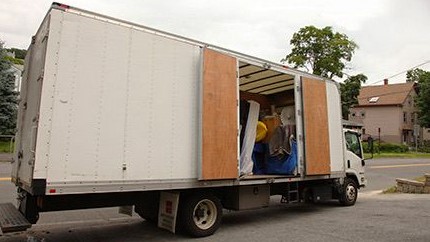
I watched from my bedroom as the gate opened and three vehicles rolled up the driveway: Melissa’s silver Lexus, a large moving truck, and a white van with the logo of a storage company on the side.
Three men climbed out of the truck—young, fit, hired labor who probably had no idea they were part of a fraud. They started unloading equipment: dollies, straps, boxes.
Melissa got out of her car dressed like she was going to a business meeting—blazer, slacks, heels that clicked on the driveway with authority. She had a clipboard in one hand and her phone in the other.
She walked up to my front door and knocked—three sharp raps that echoed through the cabin.
I waited thirty seconds. Then I opened the door.
“Patricia!” she said, smile wide and warm and utterly false. “I’m so glad you’re up. I know this is early, but we’ve got a lot to do today.”
“Do we?” I asked mildly.
“Yes! Remember? We talked about this last week. You agreed it was time to start moving some things into storage so we can get the cabin ready to list.”
I had not talked to her last week. I had not agreed to anything. But I also didn’t argue.
“I see,” I said.
Her smile widened. She thought she’d won.
“The movers are going to start with the furniture—the couch, the dining table, the bed in the guest room. We’ll inventory everything, get it safely stored, and then we can start staging the place for showings.”
“Showings,” I repeated.
“For potential buyers! Patricia, you remember. We talked about how much easier your life would be in a condo. Somewhere with an elevator, with people around, with medical support nearby.”
One of the men—tall, bearded, wearing a company polo—approached with a dolly. “Ma’am, where do you want us to start?”
Melissa answered before I could. “Guest bedroom, first door on the left. Everything in there gets loaded.”
“Actually,” I said, voice still calm, still mild, “nothing gets loaded.”
The man looked confused. Melissa’s smile tightened.
“Patricia, we discussed this—”
“We didn’t,” I interrupted. “You discussed it. I didn’t agree to any of it.”
Her expression shifted—concern sliding into place like a mask. “Honey, I know change is hard. But this is what’s best for you. Daniel and I have talked about it extensively—”
“Have you?” another voice cut in.
Everyone turned.
A black SUV had pulled up behind the moving truck, and Eleanor Vance was climbing out, briefcase in hand, looking like exactly what she was: a lawyer who’d spent fifty years making people regret underestimating her.
Behind her, two more people emerged: a woman in a sheriff’s department uniform, and a man in a suit who had “federal agent” written all over him even without the badge he pulled from his pocket.
Melissa went pale.
“Mrs. Harland,” Eleanor said, walking up the porch steps to stand beside me, “are you expecting movers this morning?”
“I am not,” I said clearly.
“Did you sign any documents authorizing the removal of your property?”
“I did not.”
“Did you create a business entity called Harland Family LLC?”
“I did not.”
Eleanor turned to Melissa, and her smile was the kind that could cut diamonds. “Then I believe we have a problem.”
What happened next was almost anticlimactic.
The federal agent—his name was Roberts, and he worked in financial crimes—had been investigating Melissa for six weeks. It turned out I wasn’t the first person she’d targeted. There were three other elderly clients from her “financial planning” business who’d mysteriously signed over property, drained accounts, or discovered they’d “agreed” to arrangements they had no memory of making.
Eleanor had contacted them as soon as she’d started her investigation into my case. Together, they’d built a file that would make any prosecutor’s career.
“Ms. Brennan,” Agent Roberts said, approaching Melissa with his badge held up, “I need you to come with me. We have questions about several financial transactions conducted under fraudulent business entities.”
Melissa’s face went from pale to red to pale again. “I don’t—this is a misunderstanding—I was trying to help—”
“Help?” Eleanor cut in, and her voice could have frozen the mountain air. “You forged documents creating an LLC using my client’s name and address. You attempted to file fraudulent powers of attorney. You hired movers to remove property that doesn’t belong to you based on agreements that don’t exist.”
“Patricia agreed—”
“Show me where,” Eleanor demanded. “Show me the signed document. Show me the video of her agreeing. Show me anything other than your word, which I can already prove is worthless.”
Melissa looked at me then, and for the first time, the mask came all the way off. What was underneath wasn’t desperation or fear. It was rage.
“You acted confused,” she hissed. “You acted like you didn’t understand. You—”
“I acted exactly how I needed to act,” I said quietly, “to give you enough rope.”
The sheriff’s deputy stepped forward. “Ma’am, you need to come with us.”
Melissa was still arguing as they walked her to the SUV, her voice rising high and frantic. The movers stood frozen by their truck, clearly realizing they’d almost been accessories to a crime. Agent Roberts spoke to them briefly—I couldn’t hear what he said, but they nodded quickly and started packing up their equipment without taking a single item from my cabin.
Within twenty minutes, all three vehicles were gone. Only Eleanor remained, standing on my porch with her briefcase and a satisfied expression.
“You,” she said, “are one hell of a chess player.”
“I had a good teacher,” I replied. “My father always said: when someone shows you who they are, don’t interrupt.”
“Your father was a smart man.”
We went inside, and Eleanor walked me through what would happen next. Charges—fraud, attempted theft, forgery, elder abuse. Evidence—every document Melissa had tried to get me to sign, every recorded visit, the LLC paperwork, statements from her other victims. Testimony—mine, Tom’s, Janet’s, Marcus’s, the video footage.
“She’ll go to prison,” Eleanor said. “Years, not months.”
“Good,” I said, and meant it.
Daniel showed up three hours later, driving too fast, tires spitting gravel. He burst through my door without knocking, face stricken, eyes red.
“Mom,” he said, voice breaking. “Mom, I’m so sorry. I didn’t know. I swear to God I didn’t know.”
I looked at my son—my beautiful, trusting, heartbroken boy—and opened my arms. He collapsed into them like he was ten years old again, and I held him while he cried.
“She told me you were declining,” he sobbed into my shoulder. “She showed me articles about dementia, about how people hide it. She said she was trying to protect you.”
“I know,” I said softly, stroking his hair.
“I believed her. I believed everything. How could I—how could I not see—”
“Because you loved her,” I said. “Because you wanted to believe the best. Because you’re a good person who thinks other people are good too.”
“I’m so stupid.”
“You’re not stupid. You’re kind. Those aren’t the same thing.”
He pulled back, wiping his eyes. “Did she really try to steal the cabin?”
“She tried to steal more than that,” I said. “She tried to steal my competence. My autonomy. My right to be treated like an adult who can make her own decisions.”
“I’ll never forgive myself.”
“Yes, you will,” I said firmly. “Because I forgive you, and you’ll learn from this, and you’ll be more careful next time.”
He stayed for three days. We hiked the trails behind the cabin. We sat on the porch and watched the stars come out. We talked about what manipulation looks like, how it starts small, how it wraps itself in concern and love until you can’t see the hooks underneath.
On the last morning, over coffee, he asked, “How did you know? When did you figure it out?”
I thought about it. “The first time she called me ‘lucky’ about this place. People who understand what work means don’t call the results of work luck.”
He nodded slowly. “I’m going to be more careful.”
“Good,” I said. “But don’t be so careful that you close yourself off. The world still has good people in it.”
“Like you.”
“And like you,” I replied.
The trial was eight months later. I didn’t attend—Eleanor said I didn’t need to, that my video testimony and documentation would be enough. But I followed the news, and Eleanor called me with updates.
Melissa fought it at first, claiming she’d been trying to help, that I was confused, that this was all a misunderstanding. But when the prosecution presented evidence of her three other victims—an eighty-one-year-old widower who’d lost $200,000, a seventy-six-year-old woman who’d nearly lost her house, a retired couple who’d been convinced to sign over their savings—the defense collapsed.
She was convicted on fourteen counts: fraud, forgery, attempted theft, elder abuse.
The judge sentenced her to twelve years.
“Justice,” Eleanor said when she called me with the news, “doesn’t always work. But this time it did.”
Two years later, I’m still here in my cabin, drinking tea on my porch, watching the seasons change. Daniel visits monthly—he’s dating again, someone quieter this time, someone who asks questions instead of offering solutions, someone who calls me Patricia and means it with respect.
Tom still checks on me. Marcus still waves when I drive through the gate. Eleanor and I have lunch quarterly in Denver, where she tells me about her other cases and I remind her that not all old women need saving—some of us just need to be left alone to enjoy what we’ve earned.
I still have that journal, hidden in my closet. Sometimes I take it out and flip through the pages, reading my own notes, remembering the cold clarity that came when I finally saw what Melissa was trying to do.
But mostly, I just live.
I watch the hawks hunt. I track the seasons by which wildflowers bloom. I read books and grade old lesson plans for fun and think about ecosystems—about predators and prey, about parasites and hosts, about the moment when prey becomes predator and the hunter becomes the hunted.
Because that’s what happened, in the end.
Melissa thought she was hunting an old woman who wouldn’t fight back.
But I was never prey.
I was a teacher who knew how to wait, how to document, how to let someone think they were getting away with it right up until the moment they weren’t.
I was a woman who’d spent thirty years explaining biology to teenagers who thought they were smarter than they were, and I recognized the pattern when I saw it: the predator who gets so confident, so certain of success, that they stop watching for danger.
That’s when ecosystems correct themselves.
That’s when the mountain remembers how to bite back.
And I—sitting on my porch, tea warm in my hands, Colorado sky vast and clear above me—I remember it all, and I smile.
THE END

Ethan Blake is a skilled Creative Content Specialist with a talent for crafting engaging and thought-provoking narratives. With a strong background in storytelling and digital content creation, Ethan brings a unique perspective to his role at TheArchivists, where he curates and produces captivating content for a global audience.
Ethan holds a degree in Communications from Zurich University, where he developed his expertise in storytelling, media strategy, and audience engagement. Known for his ability to blend creativity with analytical precision, he excels at creating content that not only entertains but also connects deeply with readers.
At TheArchivists, Ethan specializes in uncovering compelling stories that reflect a wide range of human experiences. His work is celebrated for its authenticity, creativity, and ability to spark meaningful conversations, earning him recognition among peers and readers alike.
Passionate about the art of storytelling, Ethan enjoys exploring themes of culture, history, and personal growth, aiming to inspire and inform with every piece he creates. Dedicated to making a lasting impact, Ethan continues to push boundaries in the ever-evolving world of digital content.